
Review · BERLIN
Berlin: Urbex Abandoned Places & History Tour
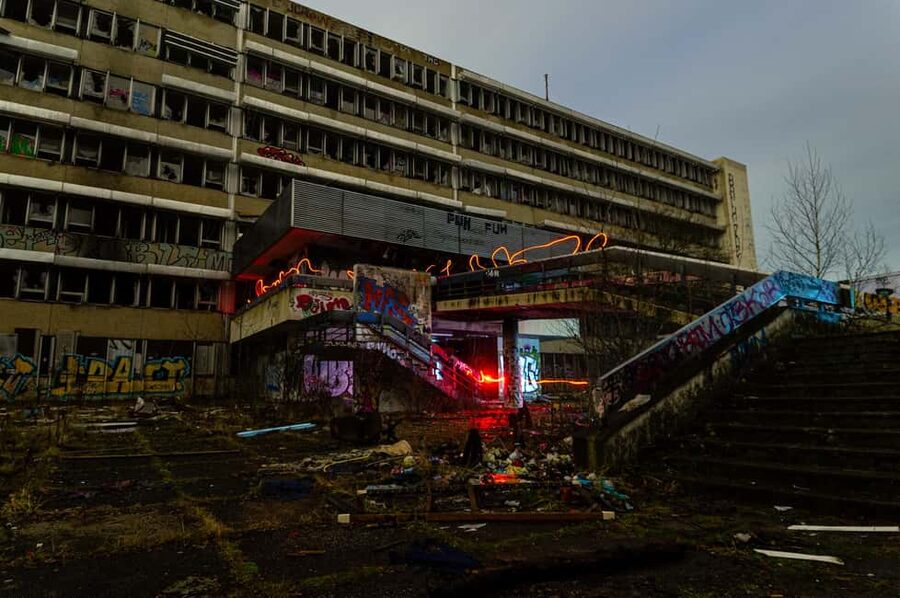
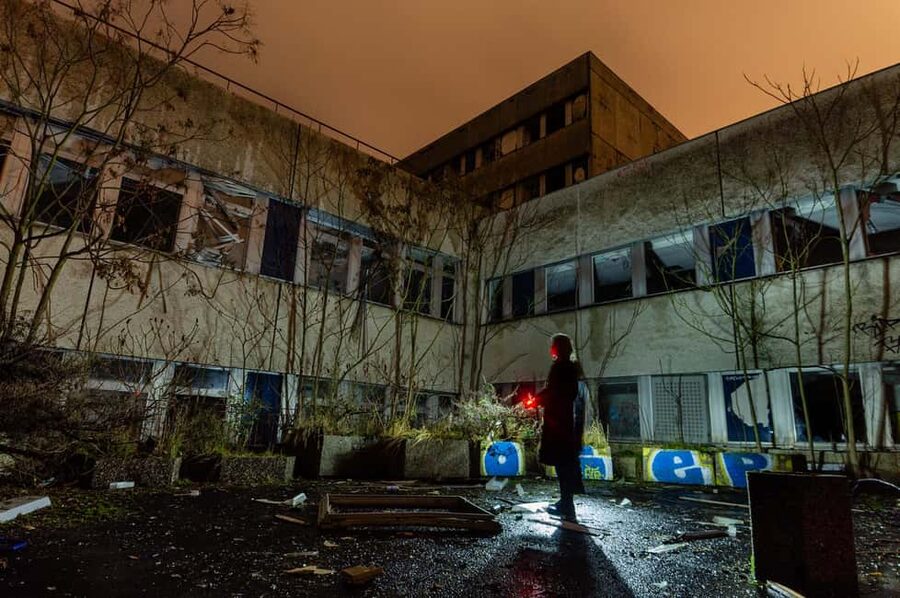
The most unusual thing about this Berlin tour is its setting: a former Stasi hospital complex left behind after East Germany collapsed. You’ll move through silent rooms, old flooring, scattered documents, tunnels, graffiti-covered spaces, and high viewpoints. I like the small six-person group, which gives you room to ask questions, and I like that guide Yoorii combines local history with practical urbex skills.
I also like the chance to photograph a place that feels far removed from central Berlin’s museums and grand avenues. The main caution is the site’s condition. Broken glass, fire damage, demolition, and restricted areas can limit what you see, so the tour may feel less complete than the price suggests.
Key points to know before you book
- Former Stasi hospital complex: Learn how East Germany’s secret police built a closed medical system for its own agents and senior officials.
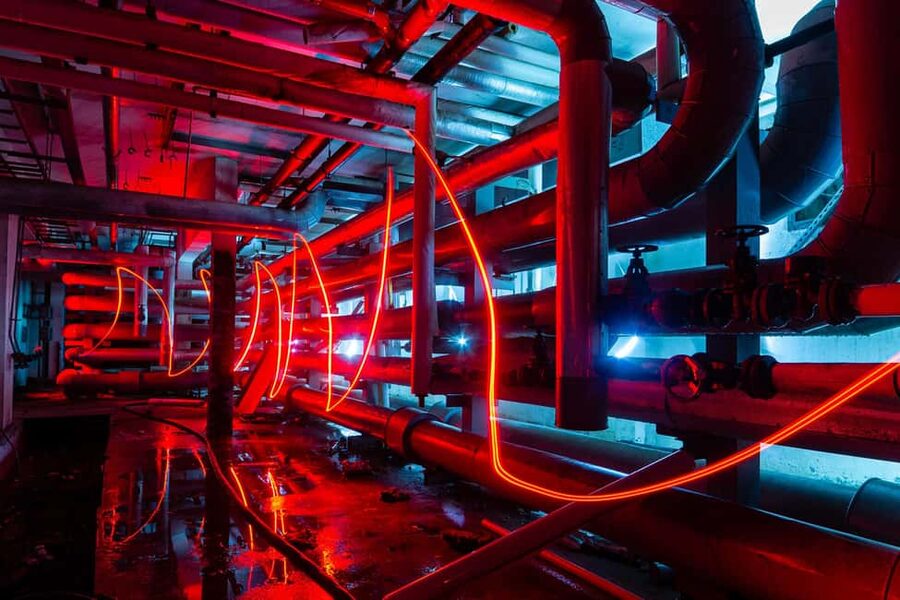
- Tunnels and dark interiors: Descend underground with a supplied torch and look for graffiti in the bunker and tunnel areas.
- Guide Yoorii: Expect an English-speaking urban explorer who adds history, humor, safety advice, and photography help.
- Small group of six: The tight group suits a site where you need to move carefully and stay together.
- Serious clothing advice: Wear clothes that can get dirty, a hat or cap, and comfortable shoes. Skip large backpacks, high heels, and formal clothing.
- Site condition matters: Some buildings have been damaged or demolished, and a bunker may not be accessible.
Berlin’s abandoned Stasi hospital is the real attraction
This is not a polished museum with labels, barriers, and restored rooms. It is a walk through the remains of a secretive medical world that served East Germany’s Stasi, the state security police.
The hospitals were intended mainly for Stasi officers, senior officials, and people connected with the regime. The facilities had modern equipment for their time, trained medical staff, and strict secrecy. That purpose gives the site a particular weight. You are not simply looking at an empty building. You are seeing the remains of an institution built around control, privacy, and political power.
After the Berlin Wall fell in 1989 and East Germany disappeared, the hospital complex lost its function. The buildings were abandoned, and time, weather, fire, vandalism, and demolition changed the site. That decay is part of the setting, but it also affects what you can see.
I like this kind of history because it is physical. Old flooring, documents, corridors, and damaged rooms can make the past easier to picture than a display case in a museum. At the same time, you should not expect every room to contain an important artifact. Some areas are empty or look much like the last one.
More History Tours in Berlin:
- Berlin: 3-Hour World Heritage Cruise to Potsdam
★ 4.5 · 1,569 reviews - Berlin: History of the Third Reich Guided Walking Tour
★ 4.7 · 791 reviews - Berlin: Berlin Charité Guided History Tour
★ 4.4 · 660 reviews
Meeting the guide near S-Bahn Buch
Your meeting point is at the exit from S-Bahn Buch, on the side facing the Netto supermarket. After coming downstairs, turn left. This detail matters because Buch is outside the central sightseeing area, and you will want to allow enough time to reach the station without rushing.
The tour lasts three hours. That is long enough to cover several types of space, but not long enough to inspect every building or linger at every photo point. The small group helps here. Six people can move through narrow or damaged areas more easily than a large tour group, and you can usually ask about details as they appear.
Guide Yoorii is a central part of the experience. He is described as an enthusiastic English-speaking urban explorer who mixes serious information with humor and keeps an eye on the group. That combination matters in a place where the mood can become gloomy and where you need clear instructions about safe movement.
You are not being trained to trespass. The point is to experience urbex in a legal and controlled way. You’ll get a sense of how explorers assess rooms, move through abandoned structures, notice details, and frame photographs without treating the site like a playground.
Walking through rooms left behind
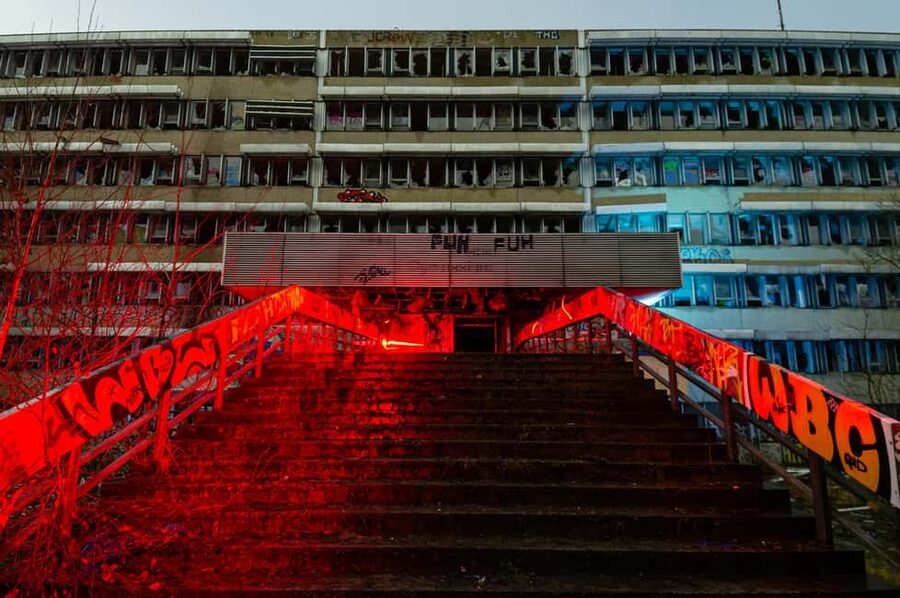
The first part of the visit takes you into the abandoned hospital buildings. Expect a rough environment rather than a neat historic site. Rooms may have peeling surfaces, broken windows, graffiti, scattered debris, and signs of fire or demolition.
The strongest parts are the details that survived. Original flooring and old documents can connect the empty rooms to their former purpose. A corridor or medical area may not look dramatic at first, but Yoorii’s explanation can help you understand why the building existed and who used it.
You should keep your expectations realistic. The site has suffered damage from young people entering the buildings, and much of the complex is no longer intact. You may pass spaces that look nearly identical, with little left to see. A guide is especially useful here because he can point out the parts worth your attention and prevent the visit from becoming a slow walk through repetitive rooms.
That guidance is a real part of the value. Without it, you could spend time wandering into empty sections and miss the remaining documents, unusual architectural details, or the best views.
Going underground with a torch
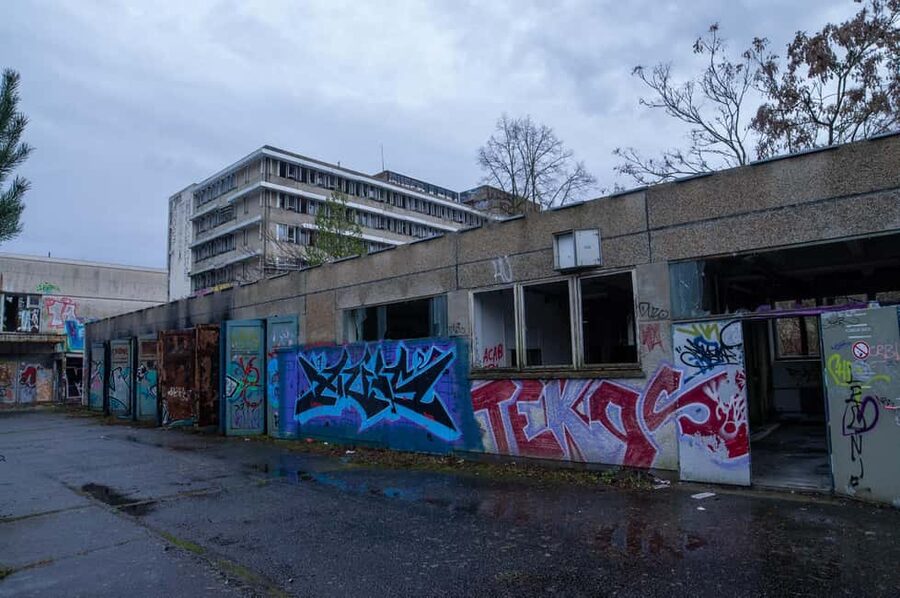
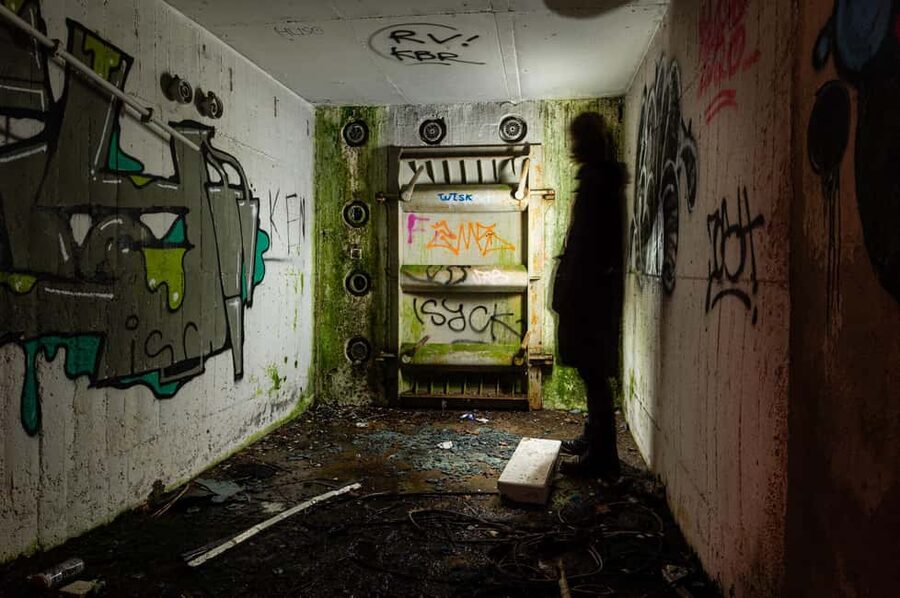
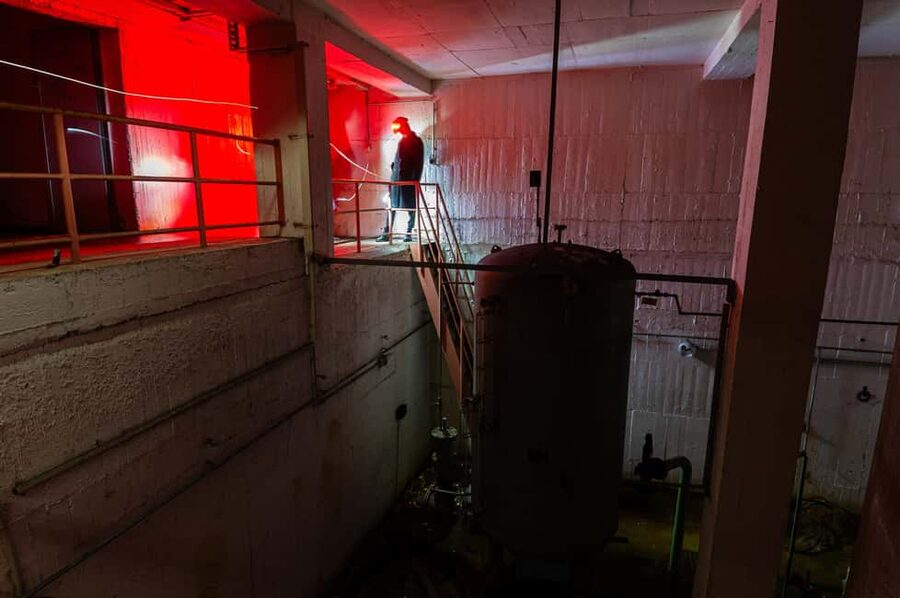
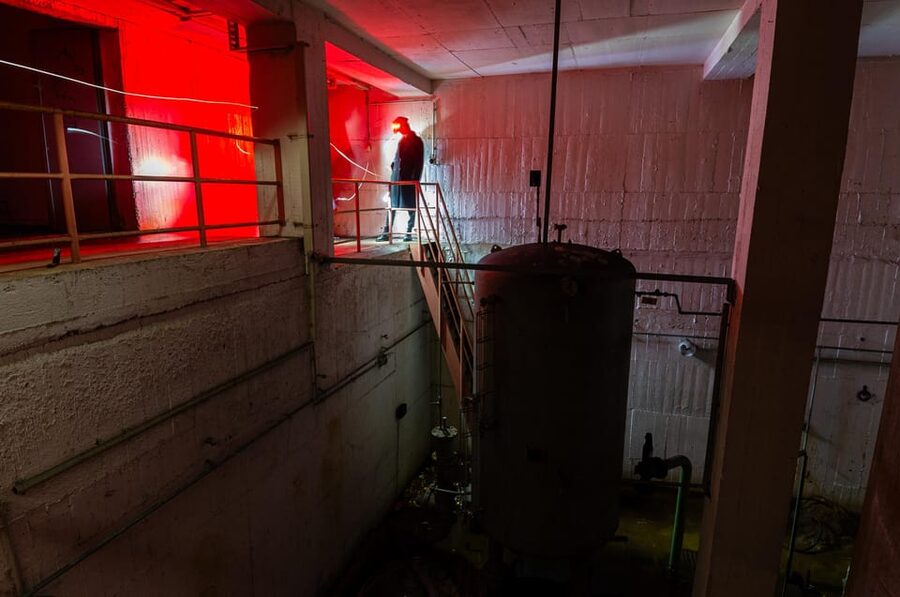
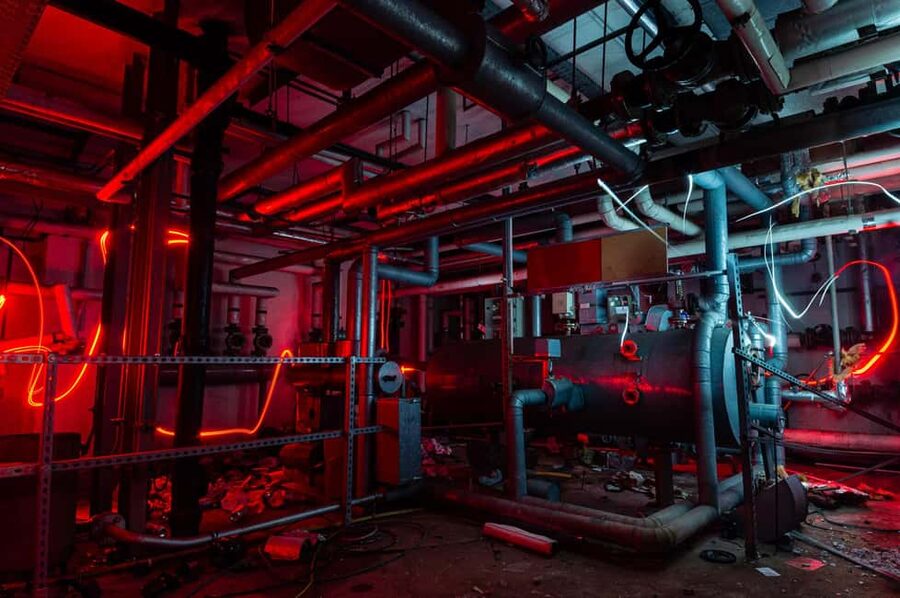
The underground section adds a different mood. You’ll use a headlamp or torch to move through darker tunnels and bunker-like spaces, where graffiti appears in the beam of light.
Torches are included, so you do not need to bring your own. Still, comfortable shoes and clothing are essential. Broken glass is a reported issue at the site, and the tour’s advice to wear clothing that can get dirty is practical, not decorative.
The tunnels can be one of the most memorable parts of the visit because the light is limited and the graffiti becomes visible in patches. You are not simply looking at a wall in daylight. You are moving through a darker, enclosed setting where every turn changes what you can see.
There is an important limitation. Access to a bunker is not guaranteed, and one bunker was reported as closed. The tour includes underground exploration, but you should not book expecting every bunker or tunnel on the property to be open.
If you dislike confined or uneven spaces, this section may be uncomfortable. Pregnant people, wheelchair users, people with high blood pressure, and people over 70 are specifically advised not to take the tour. Children under 10 are also not permitted.
Same old streets, another chapter:
- Berlin Historical Highlights Walking Tour
★ 4.9 · 657 reviews - Berlin Private Complete History All Day Walking Tour
★ 5.0 · 474 reviews - Berlin: Cold War & Berlin Wall History Guided Bike Tour
★ 4.8 · 422 reviews - Berlin: Historic Boat Sightseeing City Center Tour
★ 4.5 · 415 reviews
Rooftops, views, and photography
The tour also includes ascending to rooftop or elevated areas, and the views are one of the rewards of the large site. From above, you can take in the scale of the abandoned complex and see how different the setting feels from central Berlin.
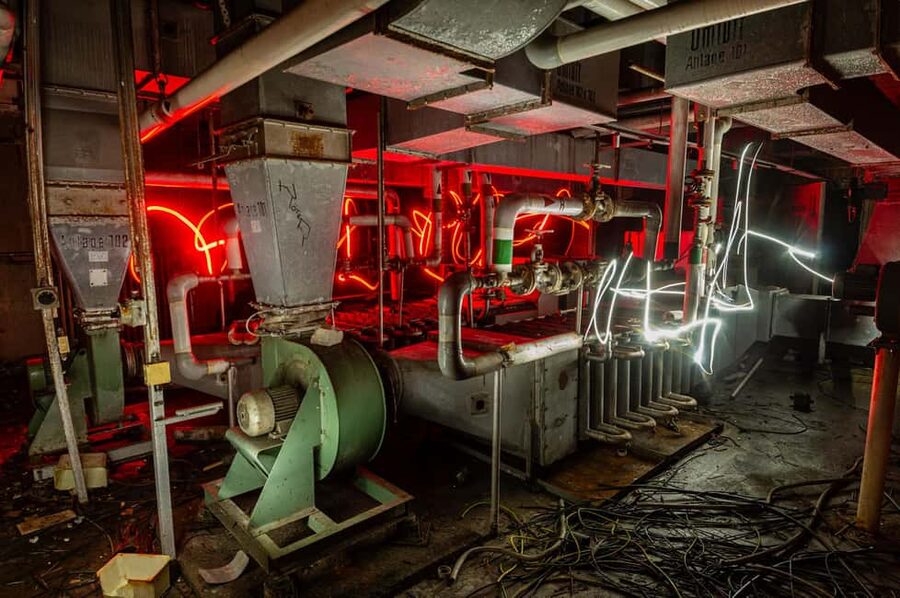
Photography is encouraged, and this is a good tour for anyone who enjoys unusual textures, old interiors, graffiti, shafts of light, and broad views. Bring a tripod if you want sharper images in dim rooms or longer exposures in the tunnels.
You can also use the visit to improve how you photograph abandoned places. The guide introduces you to urbex culture and helps you notice composition, light, surfaces, and the difference between a room that looks empty and one with a strong visual story.
Do not bring a massive backpack. It can catch on doorways, make narrow passages harder, and become an annoyance in a damaged building. A small bag is more sensible. A cap or other head covering is also recommended because you may pass beneath rough surfaces or dusty areas.
What the three hours feel like
The tour moves between four kinds of experience:
- Historical explanation about the Stasi medical system and the hospital’s former role
- Interior exploration through abandoned rooms and damaged buildings
- Underground movement through tunnels or bunker areas with torches
- Rooftop or elevated viewpoints and time for photography
That mix keeps the visit from becoming just a history lecture or just a photo walk. You get context, atmosphere, movement, and practical advice.
The pace may feel active because the site is large and the surface is uneven. This is not a stroll where you can wear smart clothes and focus only on taking pictures. You need to watch where you step, follow instructions, and accept that some sections may be closed or damaged.
A guide is especially useful because the complex can become confusing. Several rooms may look alike, and the best details are not always obvious. The group size of six lets you stop for explanations without creating a long delay for dozens of people.
Is $116 a fair price?
At $116 per person, this is an expensive three-hour activity. The price makes the most sense if you place high value on a rare location, a very small group, an English-speaking guide, and an organized way to enter a difficult site.
You are paying for more than entry. The guide provides the route, historical background, safety direction, torch rental, and help finding the strongest parts of the complex. At a large abandoned site, that can save you from getting lost or spending much of your limited time in empty buildings.
Still, the price deserves a careful look because the property is no longer fully intact. Demolition, vandalism, fire damage, broken glass, and closed sections reduce what you can see. If you expect a preserved hospital with many original rooms and artifacts, you may find the cost hard to justify.
I would book it for the guide and the setting, not for a guarantee of spectacular ruins at every turn. The experience is strongest for people who already like abandoned architecture, Cold War history, urban photography, and places that show decay rather than restoration.
Who should take this tour?
You are a good match if you enjoy:
- Abandoned buildings and industrial-style photography
- Berlin’s Cold War and East German past
- Small guided groups rather than large city tours
- Uneven, dirty, dark, or physically demanding environments
- Learning how to explore abandoned places legally and safely
It is less suitable if you want a comfortable sightseeing walk, a fully preserved historic building, or a family outing for young children. It is also not suitable for wheelchair users, pregnant women, people with high blood pressure, people over 70, or anyone weighing more than 287 pounds, or 130 kilograms.
The tour is limited to six participants, which makes it a better choice for people who want to ask questions and take photographs without being pushed along by a large crowd. It also means spaces and time are limited, so do not expect a private tour unless you book the whole group.
Clothes, camera gear, and practical preparation
Wear sturdy, comfortable clothing that you are not afraid to dirty. Comfortable trousers, a practical top, and shoes suited to broken or uneven surfaces are more useful than stylish city clothes.
Bring a hat or cap. The instruction may sound casual, but abandoned buildings can have rough surfaces and dusty areas. Leave the tuxedo and high heels at your hotel.
A tripod is worth packing if photography is a main goal. The included torches handle the basic lighting, but a tripod can help with dark interiors and tunnel images. Keep your camera bag small, since large backpacks are discouraged.
Do not bring bikes, baby strollers, alcohol, or drugs. Children under 10 are not allowed. The tour is conducted in English, and the meeting point is by S-Bahn Buch near the Netto supermarket.
Should you book the Berlin Urbex Tour?
Book this if you want Berlin history in a raw, physical setting and you are comfortable with dirt, broken surfaces, dark tunnels, and incomplete ruins. The guide, the small group, the Stasi connection, and the chance to photograph original details give the tour real appeal.
Think twice if $116 feels high for a three-hour outing or if you need a fully preserved site. The hospital complex has changed, and some areas may be empty, damaged, demolished, or closed. For an urbex fan, that uncertainty is part of the setting. For someone seeking a polished historic attraction, it may be a disappointment.
Free cancellation is available up to 24 hours before the tour, and you can reserve now and pay later. That flexibility helps, but the main booking decision comes down to expectations: choose this as a guided encounter with a damaged former Stasi site, not as a restored museum visit.
FAQ
How long does the Berlin Urbex Tour last?
The tour lasts three hours.
Where is the meeting point?
Meet at the exit from S-Bahn Buch on the side facing the Netto supermarket. After coming downstairs, turn left.
What language is the tour conducted in?
The live tour is conducted in English.
How many people are in the group?
The group is limited to six participants.
Are torches provided?
Yes. Torch rental is included in the tour.
Can I bring a tripod?
Yes. A tripod is recommended if you want to take photographs, especially in darker rooms and tunnel areas.
What should I wear?
Wear comfortable clothing that can get dirty, practical shoes, and a cap or other head covering. Do not wear high heels or formal clothing, and avoid bringing a massive backpack.
Who should not take this tour?
The tour is not suitable for children under 10, pregnant women, wheelchair users, people with high blood pressure, people over 70, or people weighing more than 287 pounds, or 130 kilograms.
Latest history tours reviewed in Berlin
- Berlin: History and Sightseeing with Kids (Free for Kids)★ 4.9 · 19 reviews
- Berlin: Nazi History Walking Tour★ 4.8 · 33 reviews
- Berlin: Historic Boat Sightseeing City Center Tour★ 4.5 · 415 reviews
- Berlin: Historical Sights & Berlin Wall Tour with a Berliner★ 5.0 · 62 reviews
- Berlin: Guided Craft Beer & Cultural Tour With Snacks★ 5.0 · 68 reviews
- Berlin (E)Bike Tour Historical Highlights in Small groups★ 4.5 · 24 reviews
- Berlin: Historic Center Walking Tour with a Real Berliner★ 5.0 · 134 reviews
- Berlin Beers & Battlefields Tour: War History & German Beer★ 4.9 · 29 reviews
Berlin History Tours, compared.

Berlin: 3-Hour World Heritage Cruise to Potsdam
Read our review →
Berlin: History of the Third Reich Guided Walking Tour
Read our review →

Berlin Private Complete History All Day Walking Tour
Read our review →
Berlin: Cold War & Berlin Wall History Guided Bike Tour
Read our review →
Berlin: Historic Boat Sightseeing City Center Tour
Read our review →
Small group Potsdam: A Journey Through History and Palaces
Read our review →Browse the lists this tour appears in