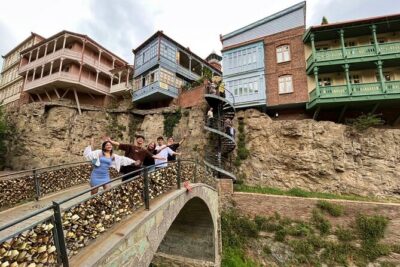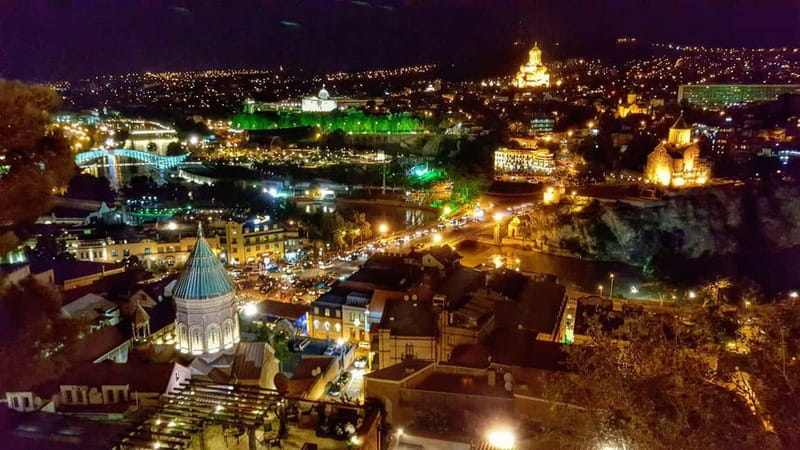
Review · TBILISI
Tbilisi: Guided Walking Tour of Historic City
Old Tbilisi makes its strongest impression through contrasts: a mosque, churches, and a synagogue close together; ancient brick baths beneath a sleek glass bridge; and a medieval-looking church above the Mtkvari River. This three-hour walk brings those contrasts together in one useful introduction to Georgia’s capital.
I like the small group of up to 10 and the way the route mixes major sights with less obvious corners such as Devil Street and Samghebro Street. I also like the practical advice on food, wine, shopping, and tourist scams. The main drawback is the terrain: stairs, slopes, and uneven paving can make this a tiring outing for anyone with limited mobility.
Key points at a glance

- Five Religions Connecting Square: Begin with one of Tbilisi’s clearest examples of religious coexistence.
- Metekhi Church and King Gorgasali: Look across the river from one of the city’s most memorable historic viewpoints.
- Abanotubani sulfur baths: See the domed bath roofs and learn why this district helped shape Tbilisi.
- Bridge of Peace and Rike Park: Enjoy a sharp visual contrast between old masonry and modern design.
- Leghvtakhevi Waterfall: Add a pocket of nature and running water to the Old Town walk.
- Sally and Nick’s local advice: Expect history with suggestions for Georgian food, wine, and other places to visit.
Why this walk is a smart first look at Tbilisi

Tbilisi is not a city you understand by checking off one grand monument. Its character comes from layers pressed close together. Religious buildings, old trading lanes, bathhouses, balconies, public parks, and modern architecture all appear within a compact area.
That makes a walking tour useful at the start of your stay. You get a map in your head, a basic timeline, and a chance to ask questions while the city is still new. The route lasts about three hours, long enough to cover the central sights without turning the day into an endurance test.
The price is $14 per person, which is strong value if you want a guide to explain what you are seeing. A self-guided walk can show you the same streets, but it will not easily explain the local legends, the meaning of the Tamada figure, or why the sulfur baths matter to the city’s identity.
The tour is limited to 10 people, so it should feel more personal than a large group outing. That matters in narrow streets and at busy viewpoints, where a smaller group can stop without blocking the way. The guide speaks English or Russian, and English is the regular language unless another arrangement is made ahead of time.
More History Walking Tours in the world:
- History and Hauntings of Salem Guided Walking Tour
★ 5.0 · 14,564 reviews - Lisbon: History, Stories and Lifestyle Walking Tour
★ 4.8 · 10,902 reviews - Boston: Freedom Trail History Small Group Walking Tour
★ 5.0 · 6,450 reviews
Starting near Rustaveli Avenue
The meeting point is in front of the Magti Office at 20 Shota Rustaveli Avenue. Arrive about 10 minutes early. That is especially sensible here because the route moves through a number of streets and public spaces, and a late start can cut into time at the later stops.
The walk finishes at 1 Samghebro Street, near the historic Armenian Church. Since the tour does not return to the starting point, you should think of it as a useful way to move from central Tbilisi into Old Town rather than as a loop.
Bring water and wear shoes that can handle stone paving. The tour runs in rain or shine, so your clothing should match the forecast. Some sections include stairs and uneven surfaces. Although the activity is described as wheelchair accessible, the stated terrain warning means you should contact the provider first if you need step-free access.
Five Religions Connecting Square and the old trading quarter
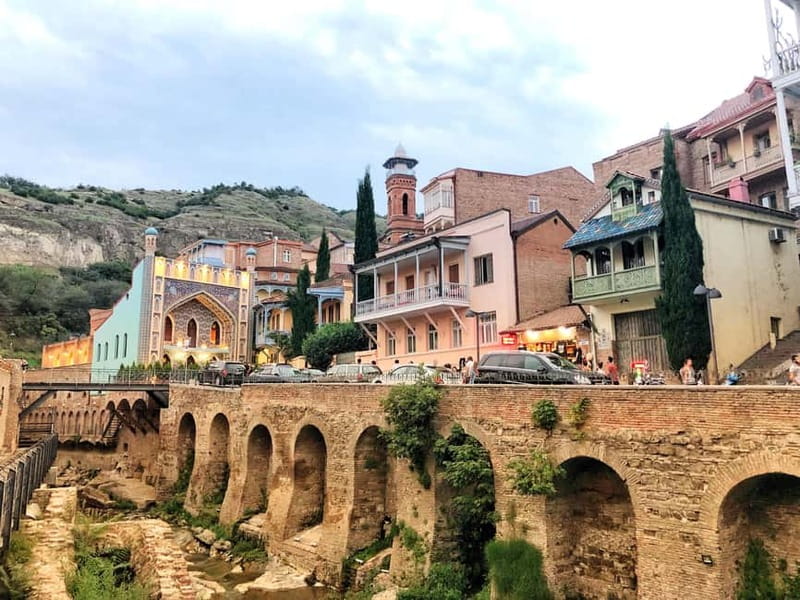
The tour begins with one of the most meaningful ideas in Tbilisi: different faiths existing close together. At the Five Religions Connecting Square, you see churches, a mosque, and a synagogue in the same broad area. The point is not simply architectural variety. This stop gives your guide a natural way to explain how trade, migration, and empire shaped the city.
From there, the walk heads toward the remains of the Ancient Bazaar. Tbilisi grew as a trading stop between regions, and the old commercial lanes help you picture a city where merchants, goods, languages, and customs crossed paths.
This is a good early part of the tour because it gives context before the route turns to individual monuments. You are not just looking at old walls. You are learning why this part of Tbilisi became a meeting place.
The area can feel crowded and visually busy, especially around popular food and shopping streets. Keep your attention on the guide and your footing. The best details may be in the walls, doorways, and side lanes rather than in one grand building.
Jan Shardeni Street, Devil Street, and the Tamada
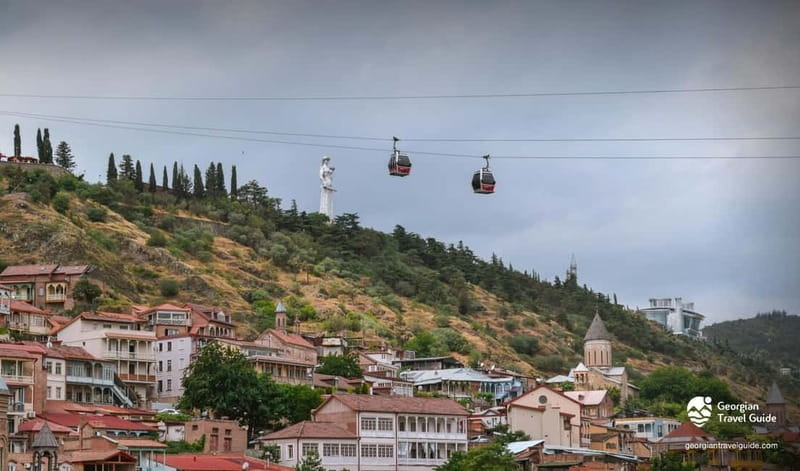
Jan Shardeni Street brings you into one of the better-known parts of Old Tbilisi. It is a lively pedestrian area with cafés, shops, and photo opportunities, but the tour keeps the focus on the city beneath the modern activity.
A stop connected with Devil Street adds a more mysterious note. Local legends are part of Tbilisi’s appeal, and this is where the walk moves beyond dates and rulers. Your guide can connect the street’s name with the stories that have gathered around it.
Then comes the Tamada Sculpture, dedicated to the toastmaster. In Georgia, the tamada is not just someone who raises a glass. The role is tied to hospitality, formal toasts, humor, and the social rhythm of a meal. This stop helps explain why Georgian food and wine are not separate from Georgian culture.
I would pay close attention here if you plan to eat out later. Guides Sally and Nick are praised for practical suggestions about Georgian dishes, wine, restaurants, and places to visit. Optional wine tasting or lunch can also be arranged in advance, but it is not part of the standard price.
More Guided Tours in the world:
- Edinburgh: Edinburgh Castle Guided History Tour with Tickets
★ 4.8 · 9,933 reviews - Historic Charleston Guided Sightseeing Walking Tour
★ 5.0 · 6,216 reviews - Rome: Colosseum with Arena, Roman Forum and Palatine Guided Tour
★ 4.0 · 5,598 reviews - Venice: St. Mark’s Basilica Guided Tour & VR History Intro
★ 3.9 · 4,880 reviews
Bridge of Peace and Rike Park
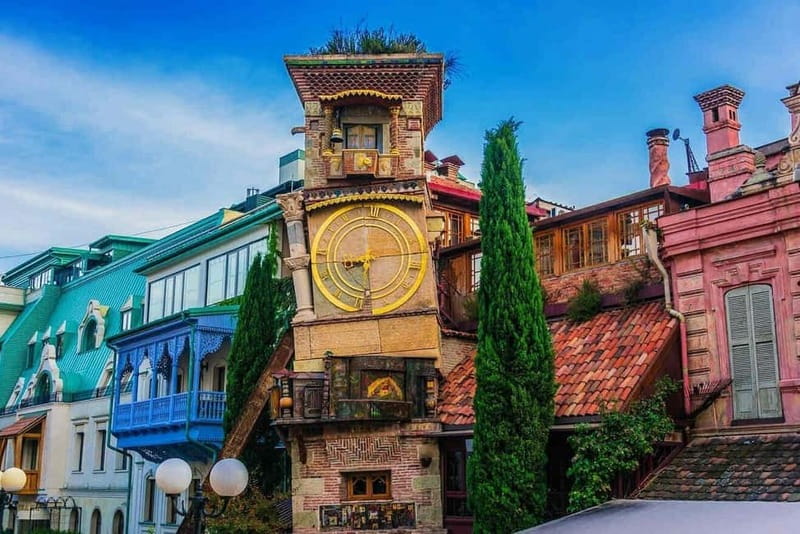
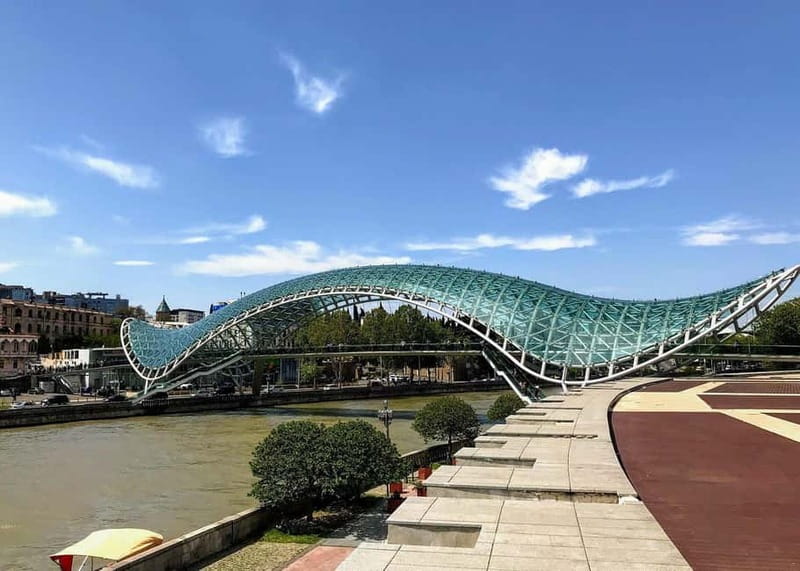
The Bridge of Peace is one of Tbilisi’s most recognizable modern structures. Its curved glass and steel form looks very different from the old lanes and masonry around it. That contrast is exactly why it belongs on this route.
You cross or view the bridge with the older city behind you and Rike Park nearby. The park gives the group a little breathing room after the tighter streets of the historic quarter. It also provides good places for photographs, although the main value is visual: you can see how Tbilisi has tried to connect its older center with newer public spaces.
The guide’s job here is not only to identify the bridge. It is to help you read the city’s changing style. Old Tbilisi is not preserved as a frozen museum. New structures sit beside old ones, sometimes gracefully and sometimes in sharp disagreement.
The Bridge of Peace can be busy, and its open design offers limited shelter in poor weather. Still, it is a worthwhile pause and one of the clearest photo stops of the walk.
Europe Square and the Berlin Wall Stone

The route continues toward Europe Square, an open area by the Mtkvari River. This section gives you a different sense of Tbilisi’s position between regions and political traditions.
A Berlin Wall Stone is included along the way. It is a small monument, but its meaning is larger than its size. The stone points to the idea of freedom and to the wider European story that Georgia has often connected itself with.
This is one of the stops where a guide adds real value. Without explanation, you might walk past it in a few seconds. With context, it becomes part of a larger conversation about Georgia’s modern identity.
Do not expect a major museum visit here. The stone is a brief outdoor stop, best treated as a conversation point rather than a headline attraction.
Metekhi Church and King Vakhtang Gorgasali
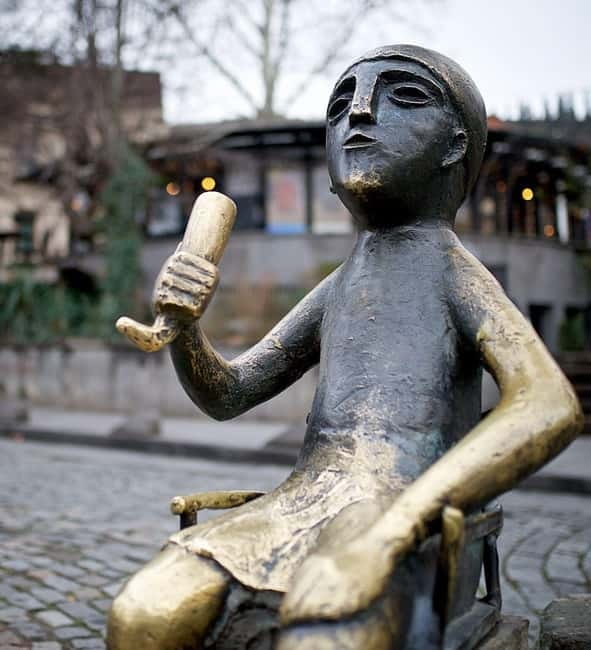
Metekhi Church is one of the emotional high points of the walk. The church sits above the Mtkvari River, giving you a strong view over the water and toward the city’s older quarters.
Nearby, the statue of King Vakhtang Gorgasali recalls the ruler traditionally linked with the founding of Tbilisi. The story of the city’s origin is closely tied to the sulfur springs, so this stop prepares you for Abanotubani later in the route.
Inside the church, dress respectfully and follow local instructions. The tour can sometimes include time to enter churches, though the exact access may depend on conditions during the visit. This is also a good place to ask questions, since the view helps connect the river, the old town, and the city’s early development.
Metekhi requires some attention to footing. The approach can include slopes or steps, and the elevated setting is not ideal for anyone who finds uneven ground difficult. For most walkers, though, the combination of church, river, and statue makes this one of the most rewarding stops.
Abanotubani and the domed sulfur baths

Abanotubani is the district most closely tied to Tbilisi’s name and origin story. Its low brick domes mark the roofs of the sulfur baths, fed by the hot springs beneath the city.
The baths are still a major part of Tbilisi’s identity, though this walking tour focuses on the district and its history rather than promising a bathing session. You get to see the domed roofs, hear how the springs shaped the settlement, and understand why this part of town has remained important.
The architecture is compact and atmospheric. From street level, the bathhouses can look modest, but their domes reveal the purpose of the buildings. This is a useful reminder that some of Tbilisi’s most important places are not monumental from the outside.
If you want to book a bath separately, ask your guide for current advice, but do not assume that entry is included. The listed tour price covers the guided walk and does not include a bath, meal, or wine tasting.
Love Bridge and Leghvtakhevi Waterfall
The route then reaches the Bridge of Love and Leghvtakhevi Waterfall. This is a pleasant change of pace after the churches, bridges, and political landmarks.
Leghvtakhevi is a narrow area where water and rock cut into the city near Abanotubani. The waterfall gives you a quick nature break without leaving the central district. It is also one of the more photogenic sections of the walk, especially if you enjoy details such as stone paths, water, and the close walls of the gorge.
The route is not a flat promenade. Stairs and uneven paths are part of the experience, so comfortable footwear matters here. After rain, you should take extra care with your footing.
This stop also shows why a walking route can offer more than a list of major sights. You move from religious buildings and royal history to a small waterfall within minutes. That variety is one of the tour’s main strengths.
Samghebro Street and the Armenian Church
The final stretch follows Samghebro Street, described as a quieter route with stories built into its walls. It is the sort of section where you should slow down and look around rather than hurry toward the finish.
The walk ends at the historic Armenian Church on Samghebro Street. Like the Five Religions Connecting Square, this final stop reinforces Tbilisi’s mixed cultural background. Armenian communities have long formed part of the city’s social and religious life, and the church gives the tour a fitting closing point.
The finish is practical for anyone who wants to keep exploring Old Tbilisi afterward. You are already in the historic center, close to streets, cafés, and other places that your guide may recommend. It is also a good moment to ask for directions and suggestions while the local advice is fresh.
What the guide adds to the walk
The strongest part of this experience is the guide’s role. Sally is frequently praised for her warmth, energy, clear explanations, and useful advice. Nick is also described as a strong history guide who can answer questions and add meaning to familiar sights.
That difference matters. Tbilisi’s landmarks are attractive on their own, but the stories explain how they fit together. You learn about Georgia’s hospitality through the Tamada, religious coexistence through the city’s worship sites, and the founding story through Metekhi and the sulfur springs.
The best guides also leave room for questions. This tour appears suited to that style, with time for photos and conversation rather than a nonstop march. Families can benefit too. One especially useful detail is that the guide kept children aged 11 and 13 engaged during the walk, suggesting that the presentation is not aimed only at history specialists.
At times, the amount of information may feel heavy. If you prefer a very light overview, you may find three hours of dates, legends, and cultural context a lot to absorb. Ask questions, take short notes, or ask the guide to pause on the subjects you care about most.
Price, pace, and who should book
At $14, this is inexpensive for a three-hour guided introduction to central Tbilisi. The value is strongest if you are visiting for the first time, have only a day in the city, or want help deciding where to eat and what to see next.
The tour suits:
- First-time visitors who want to get their bearings quickly
- History and culture fans
- Families with older children
- Solo visitors who like a small social group
- People who want local food and wine suggestions
- Anyone staying near central Tbilisi who prefers to explore on foot
It is less suitable if you want private transport, a slow route with no stairs, or a deep visit inside each church. This is an overview walk, not a series of long indoor tours. You will see many places and hear the story connecting them, but you will not spend hours at one monument.
Free cancellation up to 24 hours before the start and reserve-now, pay-later booking make it easier to fit into a changing itinerary. The minimum group size is two people, so confirm availability before you build your day around it.
Should you book this Old Tbilisi walk?
I would book it as an early activity, especially for a first stay in Tbilisi. The route covers the city’s main historic themes, but it also includes smaller details, local legends, the waterfall, the Tamada, and useful advice for the rest of your time in Georgia.
Book it if you want a friendly introduction with real local context and do not mind walking over uneven streets. Skip it if you need a fully step-free route or prefer to explore independently with no fixed pace.
For the best experience, arrive early, bring water, wear solid shoes, and prepare a few questions about Georgian food, wine, history, or places you want to see next. Those conversations are likely to be as useful as the route itself.
FAQ
Where does the Tbilisi walking tour begin?
The meeting point is in front of the Magti Office at 20 Shota Rustaveli Avenue. You should arrive 10 minutes before the scheduled start.
Where does the tour finish?
The walk finishes at 1 Samghebro Street, near the historic Armenian Church.
How long is the tour?
The walking tour lasts three hours.
What languages are available?
The tour is conducted in English or Russian. Other languages may be possible with advance notice.
Is the tour suitable for wheelchair users?
The activity is described as wheelchair accessible, but some sections include stairs and uneven surfaces. It is not recommended for people with limited mobility, so check the route with the provider before booking.
Are lunch and wine tasting included?
No. Optional wine tasting or lunch can be arranged in advance, but these are not included in the standard tour.
Latest history tours reviewed in the world
- From Athens: Ancient Olympia Full-Day Private Tour★ 4.8 · 22 reviews
- From Athens: Explore Ancient Corinth & Charming Nafplion★ 4.6 · 102 reviews
- From Athens: Explore Ancient Greece 4-Day Tour★ 4.7 · 73 reviews
- From Albufeira: Wine Tasting & Historic Silves Tour★ 4.9 · 421 reviews
- From Albufeira: Historical Algarve Region Tour★ 4.7 · 585 reviews
- From Alexandria: Full-Day Guided Tour of Historical Sights★ 4.5 · 54 reviews
- Franklin: Ghost Tour in Historic Franklin★ 4.8 · 65 reviews
- Freiburg: Exciting City Tour with sightseeing and history★ 4.3 · 103 reviews
Tbilisi History Tours, compared.
Mtskheta, Jvari, gori, uflistsikhe, history and panorama (group tours)
Read our review →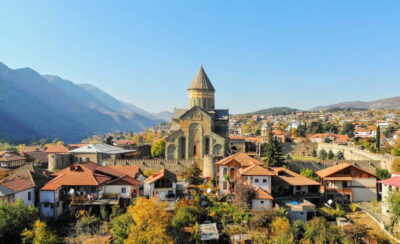
Mtskheta: Ancient Capital of Georgia Half-Day Tour
Read our review →