
Review · TBILISI
Tbilisi old town & soviet heritage – Private driver-guided Tour
Tbilisi’s appeal comes from its quick changes: a medieval church, a glass bridge, sulfur baths, Soviet-era city streets, and a flea market full of old Georgian objects can all fit into one half-day. This private tour gives you an easy first look without making you solve the city’s hills, traffic, and scattered sights on your own.
I like the private car and flexible route, especially for families or anyone short on time. I also like the human touch reported by guests who toured with guides such as Giga, Timo, Makho, and Goga. The main drawback is pace: 16 stops in five to six hours means many visits are brief, and the Soviet heritage side is less focused than the title suggests.
Key points at a glance
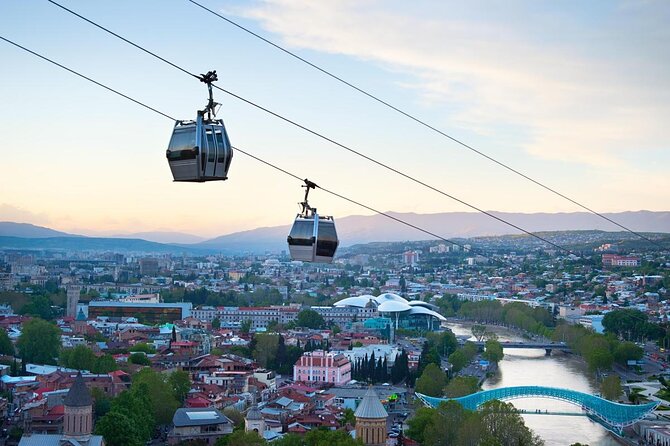
- See Tbilisi’s major sights in one half-day: Churches, Narikala Fortress, Old Town, markets, baths, Rustaveli Avenue, and the Bridge of Peace are all covered.
- Use a private car to handle the hills: Air conditioning, hotel pickup, bottled water, WiFi, and private transportation are included.
- Expect a flexible, people-focused guide: Giga, Timo, Makho, and Goga are named in the feedback, with special praise for local tips and family-friendly adjustments.
- Ride the aerial tramway to Narikala: The cable car takes only a few minutes but gives you broad views over Tbilisi.
- Allow extra time for Dry Bridge Market: The market is one of the best places to browse old coins, postcards, books, cameras, dishes, and Soviet-era objects.
- Know the trade-off: This is a broad introduction to Tbilisi, not a slow architectural tour or a detailed study of Soviet buildings.
A fast introduction to Tbilisi’s many faces
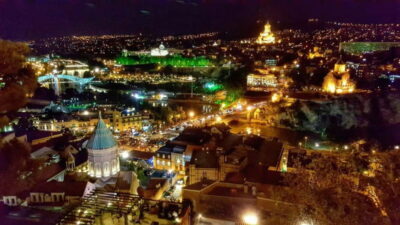
This tour works because Tbilisi is not a city you understand from one monument. Its character comes from the mix. Metekhi Church sits above the Mtkvari River. Holy Trinity Cathedral rises high over the city. Narikala gives you the classic hilltop view. Below, Abanotubani’s domes mark the sulfur baths, while Shardeni Street, Meidan Bazaar, and the Bridge of Peace bring you back into the modern visitor center.
You begin at about 9:30 a.m. with pickup from your Tbilisi hotel or apartment. Since the activity is private, your group does not share the vehicle with strangers. That matters here. Tbilisi’s attractions are spread across slopes, riverbanks, and busy streets, so a car saves time and energy between stops.
The vehicle is air-conditioned and includes WiFi and bottled water. You also get an English-speaking driver-guide rather than a separate driver and guide. That arrangement can feel more relaxed, since you can ask questions as you move through the city and request a photo stop when something catches your eye.
The tour is described as five to six hours, but the scheduled stop times add up quickly. Some visits last only five or ten minutes, and driving time must fit between them. Think of this as a well-packed orientation tour, not a day of long visits inside each site.
More Cold War and Communism Tours in the world:
- Prague: Communism History and Nuclear Bunker Guided Tour
★ 4.7 · 2,417 reviews - Prague Communism History and Nuclear Bunker Tour
★ 5.0 · 1,742 reviews - Bucharest: Communism and History Guided City Walking Tour
★ 4.9 · 918 reviews
Metekhi Church and Holy Trinity Cathedral
Metekhi Church is a strong first stop. The 13th-century church sits above the river, near the old part of town, and introduces you to Tbilisi’s dramatic setting. You have about 20 minutes here, enough to see the church, take in the position above the Mtkvari, and begin your walk through narrow streets.
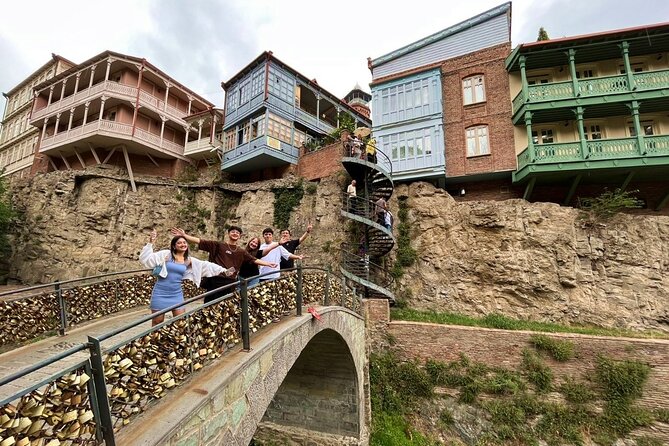
The nearby Old Town streets show off one of Tbilisi’s most recognizable details: patterned wooden balconies and colorful façades. These are the small features that make the city more interesting than a list of famous buildings. Ask your guide to point out details as you go, since the private format allows more conversation than a large group tour.
Next comes Holy Trinity Cathedral, known locally as Sameba. At 101 meters, it is the highest church in Georgia and one of the most visible buildings in Tbilisi. The grounds and scale can be striking, even if your 30-minute visit does not allow for a slow examination of every corner.
The contrast between Metekhi and Holy Trinity is useful. One gives you a sense of old Tbilisi’s hilltop churches and tight streets. The other shows a much larger, more recent religious complex with wide views and imposing proportions.
Chronicles of Georgia and the hilltop view
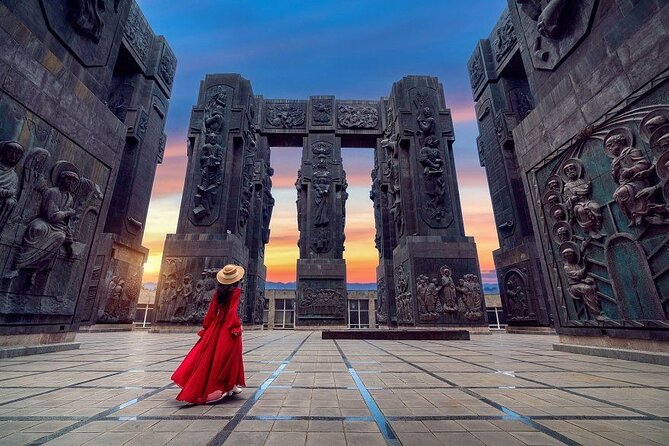
The Chronicles of Georgia sits outside the compact Old Town circuit, so the private vehicle is especially useful here. The monument is made of 16 massive pillars showing scenes connected with Georgian rulers, Georgian history, and the life of Jesus. Its size and position make it one of the more unusual stops on the route.
You get about 30 minutes. That is enough to walk around, study the carved panels, and take photographs. The nickname Georgian Stonehenge gives you a rough idea of the monument’s scale, though the subject matter is distinctly Georgian and Christian rather than prehistoric.
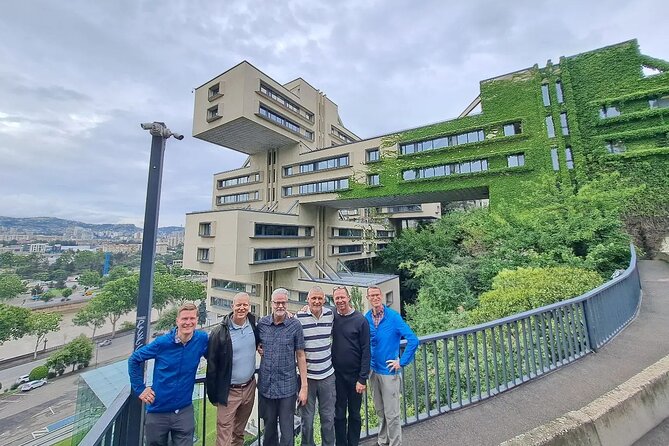
This stop also helps break up the city-center sightseeing. After churches and old streets, you see a large outdoor monument with a different feel. If you care most about Soviet architecture, note that the itinerary does not provide a detailed walk through a Soviet housing district or a long explanation of Soviet design. Chronicles of Georgia is better understood as a monumental 20th-century site than a focused Soviet heritage lesson.
Narikala by cable car from Rike Park
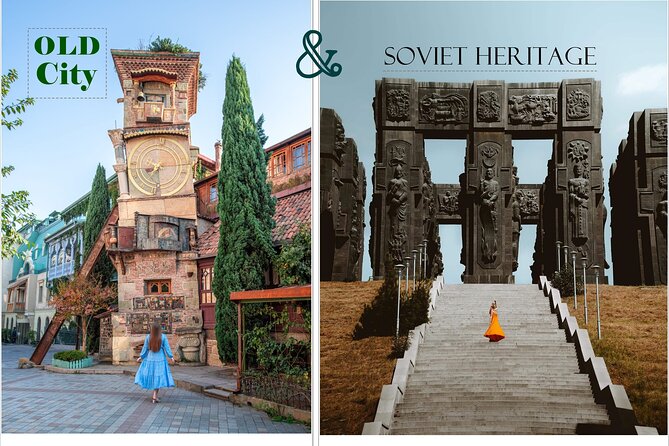
The aerial tramway is one of the tour’s most practical pleasures. It links Rike Park, on the left bank of the Mtkvari, with Narikala Fortress. The ride takes only a couple of minutes, but the windows open up a broad view of the river, Old Town, and surrounding hills.
The cable car ticket is included. You will want your camera ready, since the ride is short. From the upper station, you continue to Narikala Fortress, the old defensive monument often described as the heart and soul of Tbilisi.
The fortress visit is listed at about 15 minutes. That is enough for the main view and a quick look around, but not a long exploration of every wall. The stone ruins and high position matter as much as the remaining structure. From here, Tbilisi spreads below you in a way that makes the city’s geography clear.
If you have limited mobility, ask about the walking involved before booking. The tour requires a moderate level of physical fitness, and the route includes hills, steps, uneven historic surfaces, and short walks around the attractions. The private setup makes it easier to adjust the pace, but it does not remove the terrain.
More Old Town and Historic Centre Walks in the world:
- Madrid Essential: Historic Center, Plaza Mayor & Royal Palace
★ 5.0 · 6,416 reviews - Lisbon: Live Fado Show with Port Wine in Historic Center
★ 4.7 · 4,166 reviews - Valencia Old Town Tour with Wine & Tapas in 11th Century Historic Monument
★ 5.0 · 3,234 reviews - Prague Old Town, Medieval Underground and Dungeon Historical Tour
★ 4.5 · 3,227 reviews
Rike Park, the Bridge of Peace, and Old Town streets
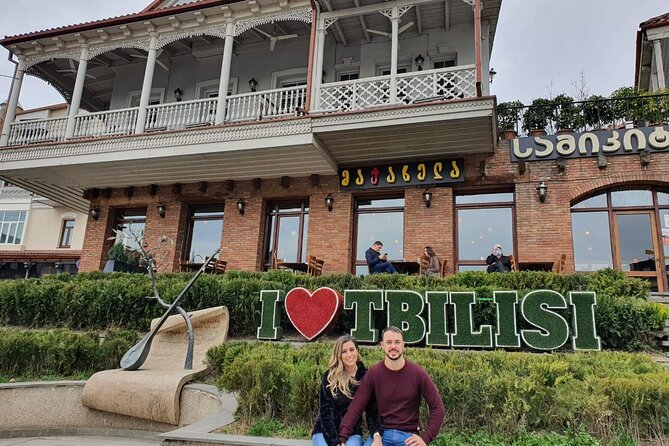
Rike Park is a short stop, listed at about ten minutes. It sits beside the river and connects naturally with the Bridge of Peace. The park and Europe Square show Tbilisi’s newer public face, with open spaces and contemporary design beside the older neighborhoods.
The Bridge of Peace opened to the public in 2010. It is a pedestrian bridge linking Old Town and Rike Park, and its modern form creates a sharp contrast with the historic buildings nearby. You get roughly ten minutes here, enough to cross part of it and take photographs.
Jan Shardeni Street offers a different kind of city scene. It is pedestrian-only and lined with places to eat and drink, though the short 15-minute stop is mainly for a look rather than a leisurely meal. I would save a return visit for later if you want time to sit, browse, or watch the street life.
This section is a good example of the tour’s broad reach. You move from fortress views to a modern bridge, then into the pedestrian lanes of Old Town. The benefit is variety. The cost is that none of these stops receives much time.
Jumah Mosque and the sulfur baths of Abanotubani
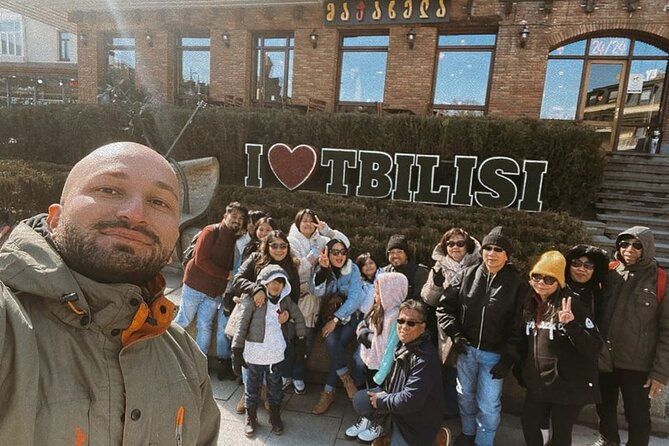
Jumah Mosque is a brief five-minute stop, but it adds cultural context to the Old Town route. The red-brick mosque is described as the only Muslim shrine in the city and as a place of worship for both Sunni and Shia Muslims. Because the visit is so short, expect an outside look and a quick explanation rather than an extended religious visit.
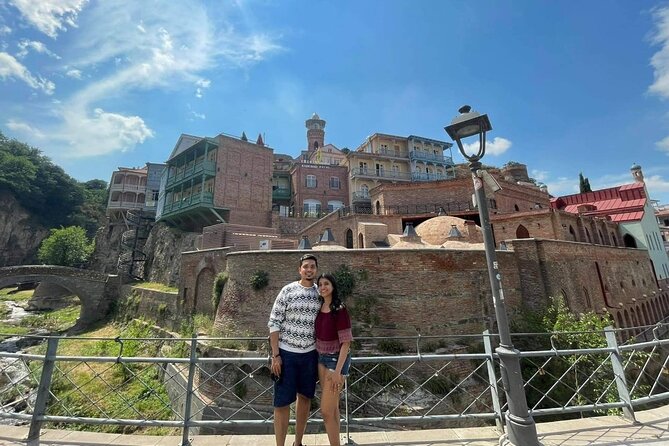
Abanotubani is one of the essential Tbilisi sights. Its sulfur bathhouses sit below street level, with rounded, beehive-like domes rising above the tiled façades. This is the area tied to the traditional story of how Tbilisi began, and the bathhouses remain one of the city’s defining images.
You have about 20 minutes here. Admission to a bath is not included, so treat this as a sightseeing stop rather than a bathing session. If you want to use a bath, you would need to make separate plans and allow more time than this tour provides.
I like that the route includes Abanotubani without pretending that a quick visit is the same as a full bath experience. You see the architecture, hear why the district matters, and can decide later if you want to return.
Meidan Bazaar and two looks at Dry Bridge Market
Meidan Bazaar is an underground tunnel-shop near the Old Town. It focuses on Georgian-made goods such as wine, jams, sauces, spices, tea, postcards, and handmade items. The stop lasts about ten minutes, so it is useful for getting ideas and checking prices rather than doing a long shopping session.
Dry Bridge Market is more distinctive. The market is known for old coins, postcards, dishes, paintings, books, accessories, vintage telephones, and cameras. You might find household objects brought out for sale, personal collections, and Soviet-era pieces mixed with ordinary flea-market goods.
The schedule lists Dry Bridge twice, once for 30 minutes and again for 15 minutes. That may reflect two parts of the route or a repeated market entry in the schedule. Either way, ask your guide how much time you will have there on the day. If you enjoy old objects, this is one place where you may want to trade a shorter stop elsewhere for more browsing.
Dry Bridge is also the clearest part of the tour for anyone interested in Soviet-era material culture. It is not a formal museum, and you should not expect labels or a guided study of every object. Its value is in the chance to look at everyday items and ask your guide what they are, where they came from, and how they fit into Georgia’s past.
Rustaveli Avenue and the city beyond Old Town
The Shota Rustaveli statue introduces the city’s central avenue. Rustaveli Avenue stretches about 1,500 meters and is lined with government, public, cultural, and business buildings. The scheduled 20 minutes gives you a short look at this more formal part of Tbilisi.
This stop helps balance the Old Town focus. You see that Tbilisi is not only churches, balconies, and bath domes. Rustaveli is the broad civic spine of the city, with a different scale and purpose.
For a tour marketed partly around Soviet heritage, this is an important qualification. Rustaveli Avenue can help you see layers of modern Georgian city life, but the route does not promise a detailed architectural reading of Soviet buildings. If that is your main goal, ask the guide in advance how much attention can be given to Soviet-era sites, streets, and public buildings.
Gabriadze’s clock tower and Bazari Orbeliani
The Rezo Gabriadze Marionette Theater is one of Tbilisi’s most memorable modern attractions. Its clock tower is made with hundreds of tiles, and an angel appears each hour with a small hammer to ring the bell. The tower contains a puppet theater, with performances listed at noon and 7 p.m.
The tour allows about ten minutes here. Timing matters. You may see the tower but miss the show, since the excursion begins at 9:30 a.m. and the theater schedule is limited to noon and 7 p.m. Ask your guide whether the route timing lines up with the noon performance, but do not assume it is included.
The final stop is Bazari Orbeliani, a food hall with 35 modern food facilities and restaurants offering Georgian and international food. You get about 25 minutes, which works well for a quick look, snack, or early lunch. The tour does not list food as included, so plan to pay for anything you eat.
Ending at a food hall is practical. You can finish with Georgian flavors, compare dishes, or use the stop to decide where to return later. It also gives the half-day route a less formal finish than ending at a church or monument.
What the $77.93 price gives you
At $77.93 per person, the price makes the most sense for people who value time, comfort, and a private schedule. You receive hotel or apartment pickup in Tbilisi, private transportation, an English-speaking guide, WiFi on board, bottled water, and the included aerial tramway ride.
A group of two pays more per person than a larger private group, but the tour offers group discounts. Since only your group participates, you can ask questions freely, request photo stops, and adjust the pace within the available half-day. Reviews give special praise to the guides’ local advice, hospitality, and handling of different needs.
The strongest personal examples are useful. Giga is described as sharing local customs and food tips while offering unusually warm hospitality. Timo is praised for clear information, transport, and time management. Makho adjusted the day for a family with two small children and an elderly person, while Goga is described as friendly and enthusiastic.
Those comments point to the tour’s best feature: the guide can make a packed route feel personal. Still, guide quality can vary by assignment, so if you want a particular guide, request that person when booking rather than assuming availability.
There are no major paid attractions listed beyond the cable car. Admission to Abanotubani is not included, and food, shopping, and any puppet performance would also be extra. Free cancellation is available if you cancel at least 24 hours before the start time. Changes or cancellations inside that window are not accepted for a refund.
Who should book this Tbilisi tour?
I would choose this tour if you have one free morning, are staying in Tbilisi, and want to cover the city’s main sights without managing taxis or public transport. It also suits families, older adults who prefer a private vehicle between walks, and first-time visitors who want a clear overview before exploring on their own.
It is a good fit for photographers because the route includes high viewpoints, river views, balconies, bridges, monuments, markets, and colorful streets. It also works for shoppers who want both Georgian food products at Meidan Bazaar and old objects at Dry Bridge.
I would look for a different experience if you want a slow food tour, a long church visit, a full sulfur bath, or a specialist study of Soviet architecture. The itinerary is packed, and several stops are photo visits rather than extended explorations.
Should you book it?
Book it if convenience and range matter most. In five to six hours, you can see Tbilisi’s major churches, fortress, cable car, Old Town, baths, markets, central avenue, and modern riverfront without changing hotels or planning a complicated route.
Before paying, confirm how the guide will handle the pace, the repeated Dry Bridge listing, and your interest in Soviet heritage. If the answer matches your priorities, the private format, included pickup, and strong guide-focused feedback make this a sensible first day in Tbilisi.
FAQ
How long does the Tbilisi private tour last?
The tour lasts approximately five to six hours.
What time does the tour start?
The stated start time is 9:30 a.m.
Is hotel pickup included?
Yes. Pickup and drop-off are offered from your hotel or apartment in Tbilisi.
Is this a private tour?
Yes. Only your group participates in the activity.
Is an English-speaking guide provided?
Yes. The tour is offered in English and includes guide service from an English-speaking driver-guide.
Is the aerial tramway ticket included?
Yes. The aerial tramway admission is included.
Is entry to the sulfur baths included?
No. Admission to Abanotubani is not included.
What happens if I cancel?
You can receive a full refund if you cancel at least 24 hours before the experience start time. Cancellations or changes made less than 24 hours before the start are not accepted for a refund.
More Private History Tours in the world
- Private Historical Walking Tour of York
★ 5.0 · 1,324 reviews - Private Guided Historic Electric Cart Tour of St. Augustine
★ 5.0 · 1,194 reviews - Istanbul: Acemoglu Historical Turkish Bath w/Private Options
★ 4.6 · 1,190 reviews - From Cairo: Private Full-Day Tour of Historical Alexandria
★ 4.1 · 1,155 reviews
Latest history tours reviewed in the world
- From Athens: Ancient Olympia Full-Day Private Tour★ 4.8 · 22 reviews
- From Athens: Explore Ancient Corinth & Charming Nafplion★ 4.6 · 102 reviews
- From Athens: Explore Ancient Greece 4-Day Tour★ 4.7 · 73 reviews
- From Alexandria: Full-Day Guided Tour of Historical Sights★ 4.5 · 54 reviews
- From Albufeira: Wine Tasting & Historic Silves Tour★ 4.9 · 421 reviews
- From Albufeira: Historical Algarve Region Tour★ 4.7 · 585 reviews
- Franklin: Ghost Tour in Historic Franklin★ 4.8 · 65 reviews
- Freiburg: Exciting City Tour with sightseeing and history★ 4.3 · 103 reviews
Tbilisi History Tours, compared.
Mtskheta, Jvari, gori, uflistsikhe, history and panorama (group tours)
Read our review →
Mtskheta: Ancient Capital of Georgia Half-Day Tour
Read our review →Browse the lists this tour appears in