Review · FRANCE
Strasbourg: Private Walking Tour of the Historical Center
Strasbourg’s old center packs French and German history into a remarkably walkable island. This private tour takes you from Place du Quartier Blanc to the cathedral, medieval churches, covered bridges, and Place Broglie, with a guide to connect the sights instead of leaving you to decode the city map alone. The 13th-century covered bridges are the visual highlight for me, while the cathedral gives the walk its grand focal point.
I like the private format because you can ask questions and set the pace, and I like the choice of stops: the Grand Island, Place Broglie, and the cathedral show different sides of Strasbourg. The main consideration is value. At $235 per person for two hours, this is a costly short tour, especially since it includes no entry tickets or transportation and covers only the cathedral exterior.
Key points at a glance
- The covered bridges date from the 13th century, offering one of Strasbourg’s most memorable medieval views.
- The cathedral visit is exterior only, and talking inside the Cathedral of Notre-Dame is prohibited.
- Place du Quartier Blanc is both the meeting point and return point, making the route simple to follow.
- The tour is private, so you can ask for more detail on French-German culture, architecture, or local language.
- Guiding is available in seven languages, including English, French, German, Italian, Spanish, Portuguese, and Japanese.
- The route includes lesser-known corners, though the amount of explanation may depend heavily on the individual guide.
Starting at Place du Quartier Blanc

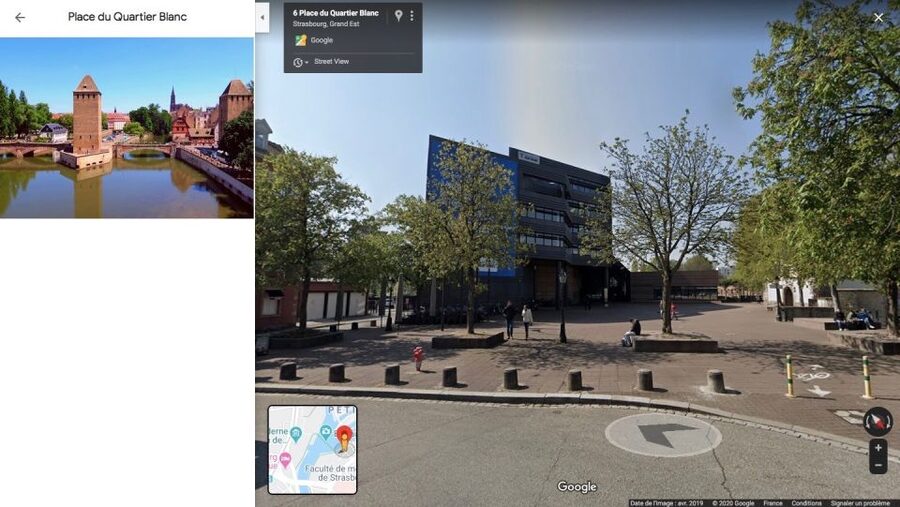
Your meeting point is in front of the black building at 9 Place du Quartier Blanc, 67000 Strasbourg. The tour returns here after two hours, so you do not need to arrange a separate pickup or figure out a new location at the end.
That fixed start and finish work well for a short city walk. You can arrive with only the essentials, keep your schedule open for lunch or another sight, and avoid spending part of the experience on transport. Transportation is not included, but that matters less here because the historical center is intended to be explored on foot.
The first stop is described as the white district square, referring to the area around Place du Quartier Blanc. From here, your guide begins placing Strasbourg in context. The city sits close to the German border, and both French and German influence shape its culture, language, and architecture.
That border setting is more than a geography note. Strasbourg represents the long, complicated relationship between France and Germany, while the European Parliament, Council of Europe, and European Ombudsman give the city a wider role in European affairs. The historic Grand Island brings those ideas down to street level, with old buildings, churches, canals, and squares gathered into a compact area.
More History Walking Tours in France
- Paris: Dark History and Ghostly Guided Walking Tour
★ 4.7 · 1,000 reviews - Vieux Lyon Cultural & Historical Walking Guided Tour (English)
★ 5.0 · 942 reviews - Strasbourg: Guided Historical Neighborhoods Walking Tour
★ 4.9 · 275 reviews
Walking through Strasbourg’s Grand Island
Grand Island is the historic center of Strasbourg and the core of this tour. Its importance comes from the way the old city has been preserved, but the real pleasure is the variety packed into a small area.
You can move from a broad square to a narrow medieval street, then reach a canal or church within minutes. A private guide can help you notice how the city’s French and German connections appear in its buildings and public spaces. That context is useful because Strasbourg can otherwise feel like a collection of attractive sights without a clear story linking them.
The walk is also a practical introduction to the city. If this is your first time in Strasbourg, two hours gives you a quick orientation before you explore on your own. You will see the main landmarks, learn where the historic center begins and ends, and get a sense of which areas deserve a longer return visit.
The pace should suit people who want a focused introduction rather than a full-day history lesson. Still, a private tour is only as strong as the person leading it. One guide might spend more time on architecture, while another may focus on Alsatian culture and language. If you have a particular interest, tell the guide early so the conversation does not settle too narrowly on one subject.
The Cathedral of Notre-Dame from the outside
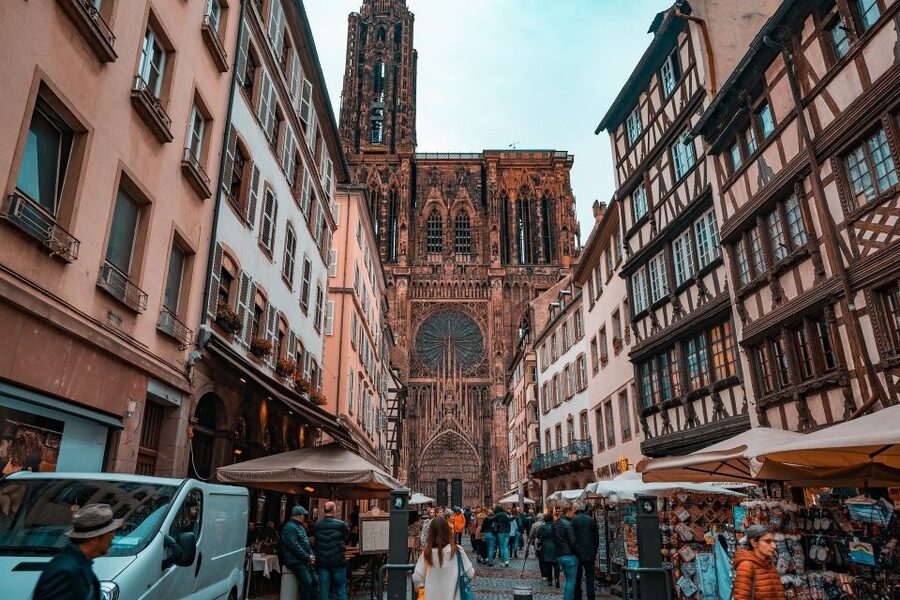
The Cathedral of Notre-Dame gives the walk its most recognizable landmark. The tour takes you to the cathedral exterior, allowing you to study the building and hear about its place in Strasbourg without an interior visit.
That distinction matters. Entrance tickets are not included, and the information provided specifies that talking inside the cathedral is prohibited. You should therefore treat this as an exterior stop rather than a cathedral interior tour. If seeing the inside is important to you, plan that separately and check the current visiting rules before you go.
Even from outside, the cathedral is a natural anchor for the walk. It helps you understand Strasbourg’s scale and gives the route a clear center. Your guide can point out the building’s setting within the old city and explain why the cathedral remains central to the city’s identity.
The stop may appeal most to people who want history without a long formal lecture. A private guide can answer questions as they arise, but you should not expect a silent look around to be replaced by commentary inside. Keep voices low and follow the cathedral’s rules.
Medieval churches beyond the main landmark
The Cathedral of Notre-Dame is not the only religious building on the route. Strasbourg preserves medieval churches such as Église Saint-Thomas and Église Saint-Guillaume, giving you a chance to see how the city’s story extends beyond its most famous facade.
These churches help balance the tour. The cathedral is the grand public symbol, while smaller churches can show a more local and less monumental side of the old center. The supplied route does not promise an interior visit to either church, so consider them primarily as exterior and historical stops unless your guide confirms otherwise.
I like having these buildings included because they keep the walk from becoming a simple march between the cathedral and the main square. They also give you more ways to compare Strasbourg’s religious architecture and urban layout.
The amount of detail may vary. Some guides explain several layers of local history, while others keep the pace brisk. If you enjoy church architecture, ask direct questions about Saint-Thomas or Saint-Guillaume rather than assuming each stop will receive a long explanation.
More Old Town and Historic Centre Walks in France
- Bordeaux: Historic Center & Chartrons District Bike Tour
★ 4.8 · 709 reviews - Strasbourg on Foot: Historic Center and Petite France with a Local Guide
★ 4.7 · 223 reviews - Rouen: Guided Tour of the Historic Center
★ 4.8 · 145 reviews - Avignon: Historic District Guided Food & Wine Walking Tour
★ 4.8 · 84 reviews
The 13th-century covered bridges
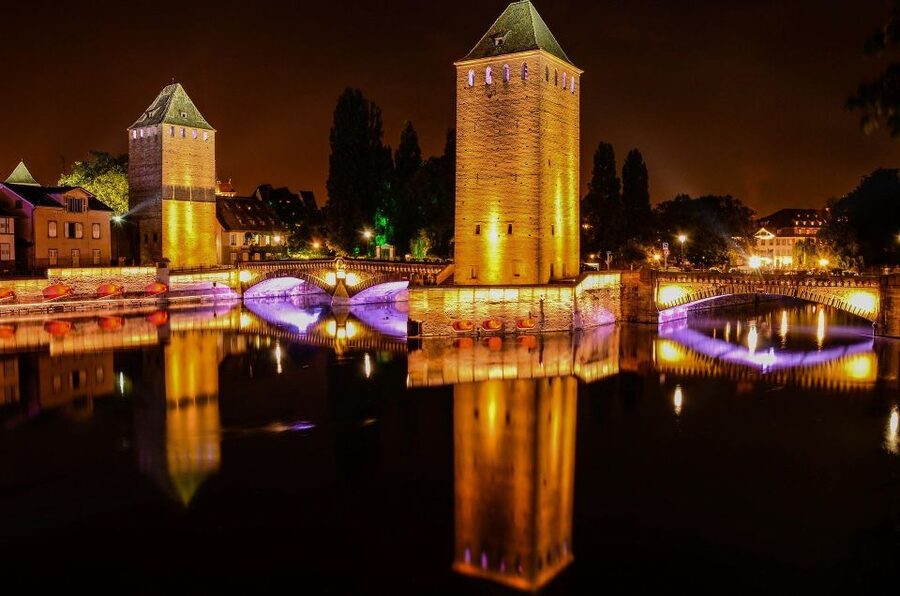
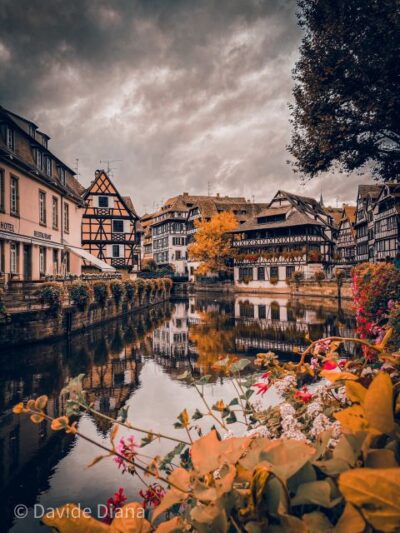
The covered bridges are among the clearest reasons to choose this route. These well-preserved structures date from the 13th century and give the city a strong medieval character without requiring a museum visit.
Their appeal is immediate. You get stone, water, old defensive structures, and changing views in one part of the walk. The canals make the scene feel different from the squares and cathedral area, and the bridges show how Strasbourg’s waterways shaped the old city.
This is also where a guide adds practical value. A good explanation can connect the bridges to the city’s defenses and to the way the old center developed around the water. You may find that the guide points out angles or nearby corners you would have missed while walking directly to the next major landmark.
The route does not promise a long stop at every bridge, so photographers may want to ask for a moment to take pictures. The tour lasts only two hours, and the guide must balance the bridges with the cathedral, churches, and Place Broglie.
Place Broglie and Strasbourg’s open squares
Place Broglie offers a change of mood. After streets, canals, and medieval structures, this historic square gives you a broader urban space where Strasbourg’s civic side comes forward.
The square is one of the named highlights, so it is not treated as a passing corner. Your guide can use it to explain how the city grew beyond its older defensive core and how public spaces shaped daily life. The information available does not promise a particular market, event, or building interior, so approach it as a historical and architectural stop.
I find this kind of contrast useful on a short walk. Without an open square, the old center can feel like one continuous run of narrow lanes and landmark facades. Place Broglie creates a pause and helps you see Strasbourg as a living city, not only a preserved medieval setting.
If you have limited time in Strasbourg, this stop also helps you decide where to return later. You may prefer the canals and bridges, the cathedral area, or the larger civic spaces. A private guide can help you compare those areas based on your own interests.
What the private format really gives you
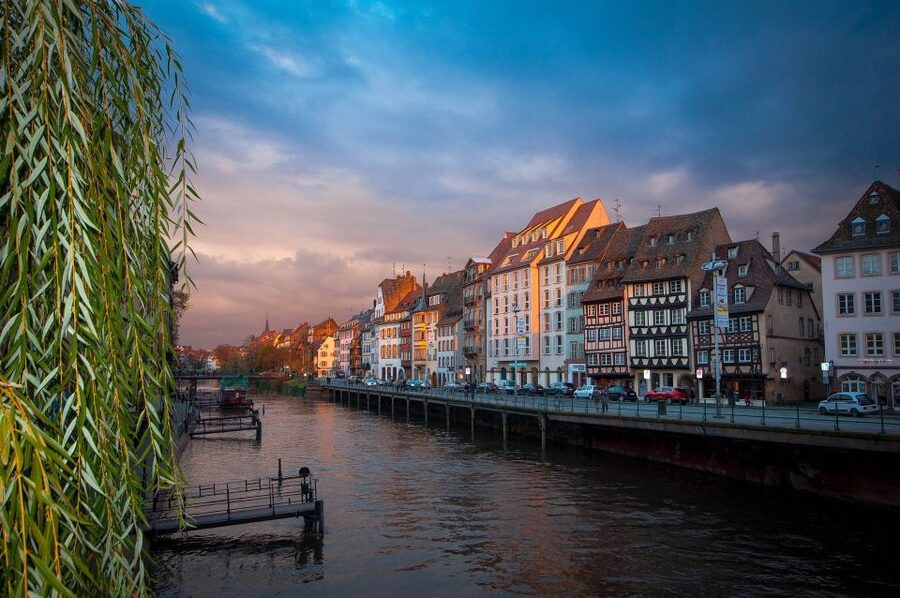
The tour is for a private group, which is the strongest practical feature for many people. You are not sharing the guide’s attention with a large crowd, and you can ask for clarification whenever a name, date, or French-German connection needs more explanation.
The private setup is especially helpful for groups with different interests. One person may care about medieval churches, another about Alsatian culture, and another about the city’s European institutions. A guide can adjust the conversation more easily than on a fixed large-group walk.
It can also help families, but you should set expectations clearly. A German-language guide named Regine received praise for being entertaining and informative, yet one family felt the tour did not engage enough with their 10-year-old. If you are bringing children, say so when booking and ask the guide to include age-appropriate explanations and questions.
The guide’s language options are unusually broad for a two-hour private walk: English, French, German, Italian, Spanish, Portuguese, and Japanese are available. Confirm your preferred language when arranging the tour, especially if the cultural and language history of Alsace is a key reason for booking.
How much explanation should you expect?
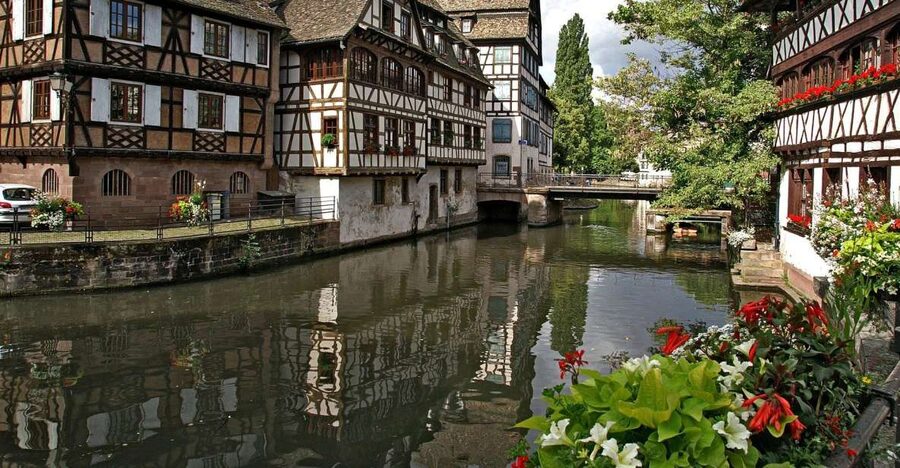
The strongest feedback points to guides who make the walk lively, funny, and informative. Regine is specifically praised for a tour that was entertaining and full of useful information, while another guide was appreciated for showing pleasant lesser-known corners.
At the same time, the quality of explanation can be uneven. One account describes a guide who knew many interesting spots but gave too little detail overall. Another found the guide too focused on Alsatian culture and language, with not enough attention paid to a child in the group.
That tells you how to get the best result from a private tour: share your priorities before the walk begins. Ask for a balance of architecture, local culture, medieval history, and modern Strasbourg. If you want stories about the European institutions, say so. If you prefer hidden corners over major landmarks, mention that too.
The tour has a 4.2 rating from 107 bookings, which suggests a generally positive but not flawless experience. I would read that as a reminder that the guide matters greatly. The private format creates potential for a tailored walk, but you may need to take the first step and explain what you want.
Is $235 per person a fair price?
At $235 per person, this is an expensive two-hour activity. For two people, the total is $470 before any other sightseeing costs. The fee covers a private guide, not transportation, entrance tickets, or a cathedral interior visit.
The price makes more sense for a larger private group because the guide’s cost can be shared among several people. It may also suit visitors who value a private language-specific tour and want a quick orientation at the start of a Strasbourg stay.
For a solo guest or couple on a tight budget, the value is harder to justify. You can walk through much of Grand Island independently, see the cathedral exterior, reach Place Broglie, and find the covered bridges without paying an entry fee. The tour earns its price only if the guide’s explanations, route choices, and personal attention matter to you.
I would book it for a family group, a multigenerational party, or anyone who wants a private introduction in a language other than English. I would skip it if you mainly want to wander, take photographs, or visit the cathedral interior.
Timing, mobility, and booking details
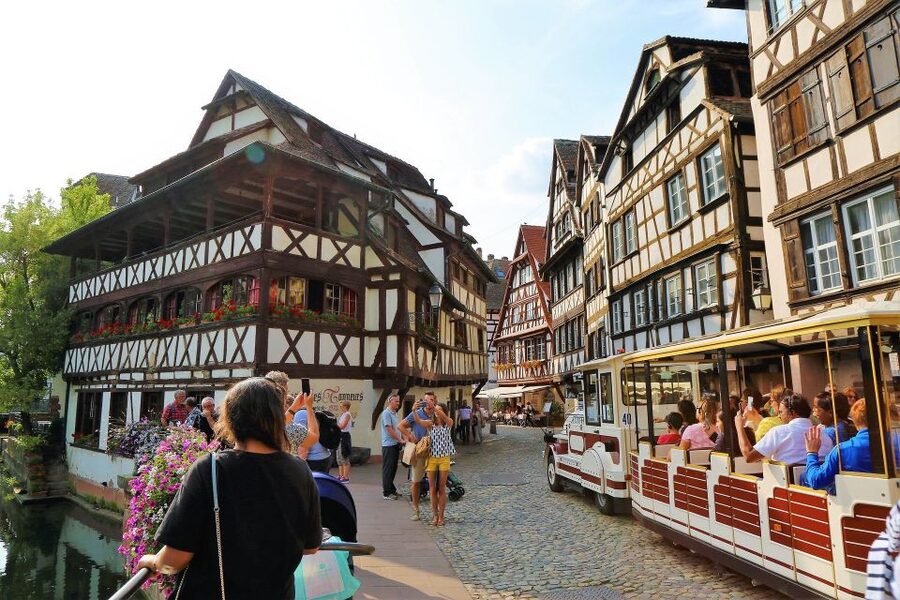
The walk lasts two hours, with starting times available according to the date you choose. That makes it easy to place before lunch, after arrival, or early in a Strasbourg visit when you want to get your bearings quickly.
The operator can accommodate wheelchair users if you provide advance notice. Because the route includes historic streets, squares, canals, and covered bridges, it is sensible to communicate mobility needs before booking rather than waiting until the meeting point.
Free cancellation is available up to 24 hours in advance for a full refund, and you can reserve now and pay later. Those terms reduce the risk if your schedule is still moving. Travel agents should provide accurate participant contact details so the guide can reach the right people.
Who should book this Strasbourg walk?
You should consider this tour if you want a private introduction to the historic center, prefer a choice of seven guiding languages, or enjoy asking questions as you walk. It is also a good fit if the covered bridges, Place Broglie, and the cathedral exterior are your main priorities.
Families should contact the operator with the children’s ages and interests. The private setting can work well for a family, but do not assume every guide will automatically adapt the discussion for younger listeners.
You may want to pass if you need cathedral interior access, included transportation, or a lower-cost group activity. You should also think twice if you prefer a long, detailed lecture at every stop, since the two-hour route covers several areas and the amount of explanation depends on the guide.
Should you book it?
Book this private walk if you value personal attention more than low price. The covered bridges, Grand Island, cathedral exterior, medieval churches, and Place Broglie create a well-chosen introduction to Strasbourg, and the language range is a real advantage.
Before confirming, tell the operator your preferred language, the ages of everyone in your group, and the subjects you want covered. If you want a lively orientation and a chance to ask questions, this can be a useful first look at the city. If you want indoor cathedral access or the freedom to wander at your own pace, save the $235 and explore independently.
FAQ
How long is the Strasbourg private walking tour?
The tour lasts two hours.
Where does the tour begin?
The guide waits in front of the black building at 9 Place du Quartier Blanc, 67000 Strasbourg, France.
Where does the tour finish?
The walking tour returns to 9 Place du Quartier Blanc.
Is the tour private?
Yes. It is offered for a private group.
Which languages are available?
Guiding is available in English, French, German, Italian, Spanish, Portuguese, and Japanese.
Does the tour enter Strasbourg Cathedral?
The experience visits the exterior of the Cathedral of Notre-Dame. Talking inside the cathedral is prohibited, and entrance tickets are not included.
Are entrance tickets included?
No. Entrance tickets are not included in the tour price.
Is transportation included?
No. Transportation is not included.
Can wheelchair users join the tour?
Yes, the tour can accommodate wheelchair users if you inform the operator beforehand.
More Private History Tours in France
- Paris City of Fashion History Private Guided Walking Tour
★ 5.0 · 221 reviews - History of Paris City Center w/ Notre Dame Semi-Private 12ppl Max
★ 5.0 · 194 reviews - Private Guided History tour of Lourdes
★ 5.0 · 64 reviews - Private Half Day Historic Tour
★ 5.0 · 58 reviews
Latest history tours reviewed in France
- Explore the Marais: History, Art & Local Culture★ 4.6 · 105 reviews
- Discover Caen like never before: Guided tours between history & secrets!★ 4.9 · 67 reviews
- Culture History & Secrets: Lyon with a local artist -english★ 4.9 · 29 reviews
- Champagne Cellar Experience: Explore our historic cellars★ 4.7 · 46 reviews
- Bordeaux: Walking Tour of the City’s Best Bakeries★ 4.8 · 69 reviews
- Bordeaux: Top Landmarks & Historic Bike Tour★ 4.9 · 346 reviews
- A locals’s guide to Bordeaux’s historic market★ 4.8 · 23 reviews
- Avignon: Historic District Guided Food & Wine Walking Tour★ 4.8 · 84 reviews
France History Tours, compared.
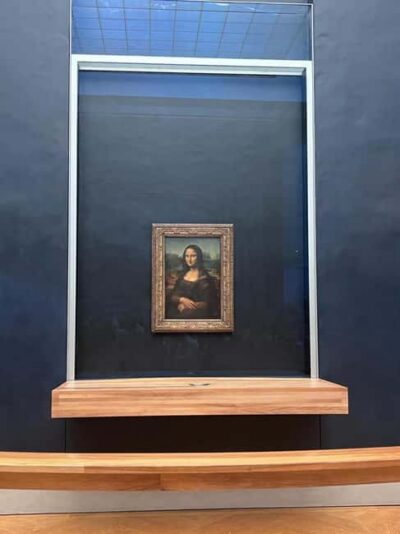
Paris: Louvre Museum Entry with History of Mona Lisa
Read our review →
Paris: Dark History and Ghostly Guided Walking Tour
Read our review →
Vieux Lyon Cultural & Historical Walking Guided Tour (English)
Read our review →
Bordeaux: Historic Center & Chartrons District Bike Tour
Read our review →
Strasbourg: Guided Historical Neighborhoods Walking Tour
Read our review →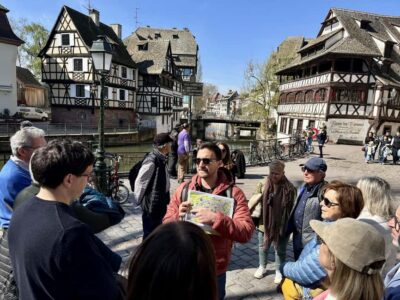
Strasbourg on Foot: Historic Center and Petite France with a Local Guide
Read our review →