
Review · ANTWERP
Antwerp: Private Historical Highlights Walking Tour
Antwerp packs a lot into a small historic center, and this private walk gives you a quick route through its best-known sights and lesser-seen corners. You’ll move from medieval guild houses to Baroque churches, old trading halls, a fashion museum, a printer’s workshop, and a narrow medieval passage.
I like the private format, which lets the guide adjust the pace and answer your questions. I also like the mix of major landmarks and places you could easily miss, especially Vlaeykensgang and the old Bourse. The main drawback is the price: $206 for up to two people is a serious cost for a two-hour walk, particularly since no drink or food stop is included.
Key points at a glance
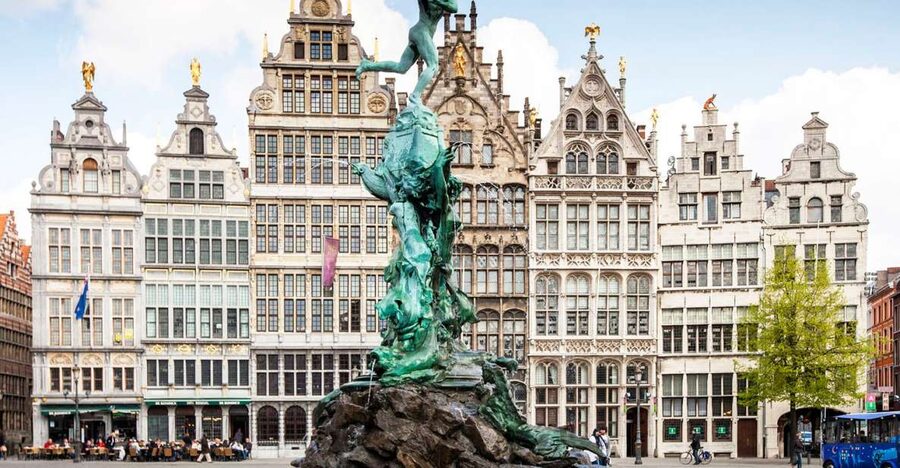
- Grote Markt sets the scene: Begin among medieval guild houses, Antwerp’s City Hall, and the Brabo Fountain.
- A broad slice of Antwerp: See churches, trade halls, art, fashion, printing, and medieval streets in one compact walk.
- Private and flexible: Your guide can shape the conversation around art, architecture, food, or local life.
- Guides add personality: Guides including Flip and Arie have been praised for clear explanations, warmth, humor, and enthusiasm.
- Good practical setup: The tour is wheelchair accessible, runs in rain or shine, and offers English, Dutch, and Spanish.
- Best for a first visit: Two hours gives you orientation and context, but not time to tour every museum interior.
Why this short private walk works well in Antwerp
Antwerp can seem easy to visit because its central sights sit close together. That is true, but the city’s story is spread across different periods and different kinds of buildings. A medieval square leads to a Baroque church, then to a former financial center, a painter’s home, a fashion museum, and a printing museum.
A guide helps connect those pieces. Instead of seeing attractive façades one by one, you learn how Antwerp grew through trade, printing, art, religion, and fashion. The route also brings in legends and funny local stories, which keeps the information from feeling like a lecture.
The private setup matters most if you have limited time or specific interests. You can ask about Peter Paul Rubens, Antwerp’s food, church architecture, or the city’s commercial past without waiting for a group to move on. One guide, Flip, has been praised for making history feel relevant, while Arie has been noted for clear, lively explanations and contact before the walk.
At $206 per group of up to two, this is not a budget stroll. For two people, it works out to $103 each. For a couple who wants a personal introduction to Antwerp, that may be fair. For one person, the price is harder to justify. The booklet with coupons and discounts adds some value, but the walk itself is the main product.
More History Walking Tours in Belgium
- Historical Walking Tour: Legends of Bruges
★ 5.0 · 2,541 reviews - Historical Walking Tour: Legends of Antwerp
★ 5.0 · 1,837 reviews - Historical Walking Tour: Legends of Gent
★ 5.0 · 1,761 reviews
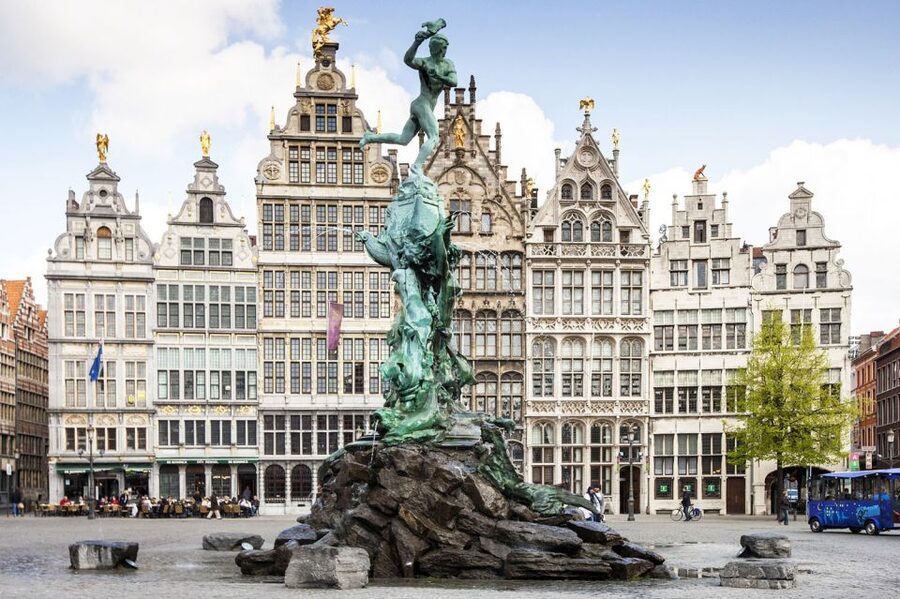
Starting in Grote Markt with Antwerp’s medieval face
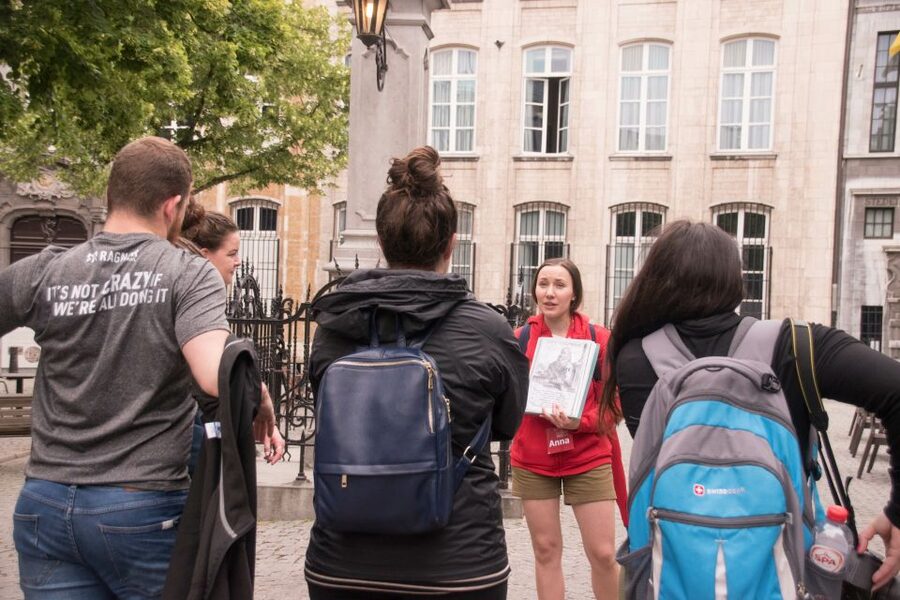
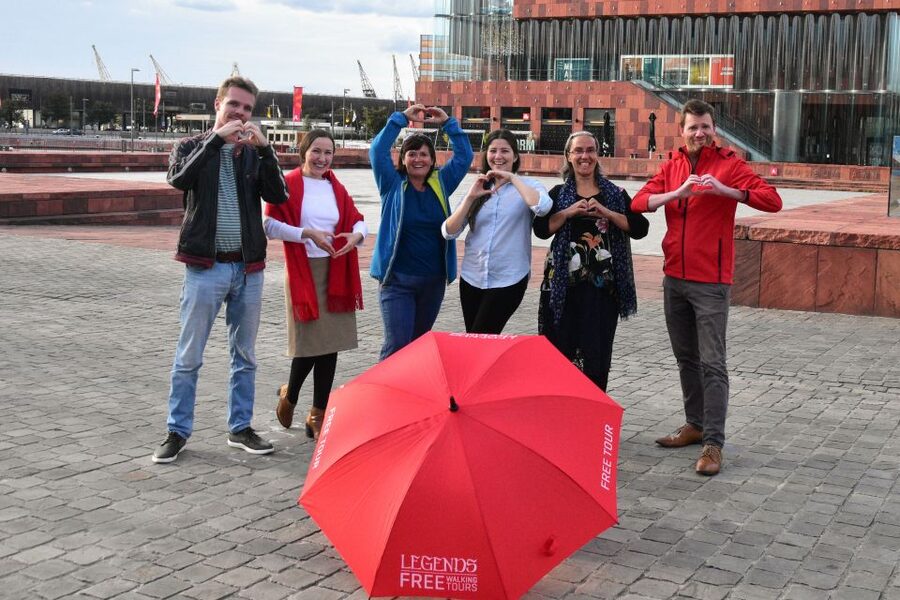
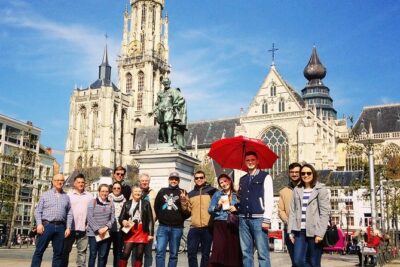
Meet your guide by the statue in Grote Markt and look for the red umbrella. This is a useful meeting point because the square is central, memorable, and easy to recognize.
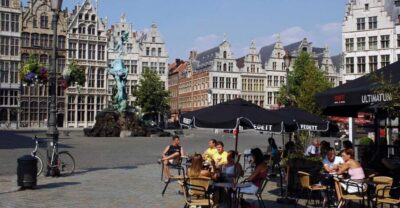
Grote Markt gives you an immediate lesson in Antwerp’s past. The square is lined with guild houses, each tied to the trades and civic groups that helped shape the city. The City Hall adds a grand public building to the scene, while the Brabo Fountain brings in one of Antwerp’s best-known legends.
This opening is more than a photo stop. It introduces the city as a place built on commerce, civic pride, and storytelling. Your guide explains the buildings, the people connected to them, and the stories behind the symbols.
Take a moment here before the walk begins. The ornate façades are easy to photograph, but you’ll get more from the square if you look at how the buildings form one public stage. The guide can point out details that are easy to miss from a casual glance.
Hendrik Conscience and the city’s literary side
From Grote Markt, the walk continues to the statue of Hendrik Conscience, a Flemish writer whose name is attached to this part of the old center. The stop also brings you to an impressive Baroque church and the former city library.
This section broadens the story beyond merchants and rulers. Antwerp’s identity is also tied to language, literature, learning, and religious art. A short stop here helps explain how the city’s cultural life developed alongside its commercial power.
The church’s Baroque detail gives you a change of mood after the open square. Look for the layered decoration and theatrical design typical of the period. You should not expect a long interior visit or a full art lecture in a two-hour tour, but the guide can give you the essentials and explain why the building matters.
Carolus Borromeus Church and Antwerp’s Baroque style
Carolus Borromeus Church is one of the strongest architectural stops on the route. Its 17th-century Baroque details show the period’s taste for movement, drama, ornament, and visual impact.
The church is linked with Antwerp’s artistic reputation, and it helps prepare you for the later discussion of Rubens. Even if you are not a church specialist, you can appreciate the contrast between the restrained lines of some medieval buildings and the more theatrical Baroque approach.
The practical limit is time. The tour is designed to show you the city’s key places, not to give every church a long inspection. If Carolus Borromeus is especially important to you, ask your guide how much time can be given to it, or plan to return independently.
More Private History Tours in Belgium
- Private Historical Tour: The Highlights of Bruges
★ 5.0 · 315 reviews - Private tour: Highlights & History of Antwerp
★ 5.0 · 299 reviews - Bruges: Private Historical Highlights Walking Tour
★ 4.7 · 191 reviews - Private Historical Tour: Legends of Antwerp
★ 5.0 · 125 reviews
The Bourse of Antwerp, where trade changed the city
Handelsbeurs Antwerpen, or the Bourse of Antwerp, offers a different kind of history. Here the focus shifts from religion and civic display to international business.
The Bourse is described as the world’s first Wall Street, a phrase that captures Antwerp’s role as a major trading center in the 16th century. Your guide explains how merchants, goods, money, and information helped the city grow into an international marketplace.
This stop is valuable because it gives economic context to the grand buildings around you. Antwerp was not simply a pretty medieval town. Its wealth came from networks that linked it to other parts of Europe and beyond.
If you like social or business history, pay close attention here. The story helps explain why art, printing, architecture, and food all flourished in Antwerp. The city’s cultural life was tied to money moving through its streets.
Rubens House and the making of an artistic career
The next major stop is Rubens House, the former home and workshop of Peter Paul Rubens. Rubens was not only a painter. He was also a public figure, a businessman, and a person who built a successful professional life around his art.
Your guide uses the house to explain his career and some of the choices behind his success. That makes this more useful than simply attaching a famous name to a building. You get a sense of how an artist worked, lived, and gained influence.
The tour does not include a full museum visit, so think of Rubens House as an orientation stop. You’ll learn why it matters and decide if you want to return for a longer visit. If art is your main reason for coming to Antwerp, tell the guide at the start. The private format makes that request practical.
The route’s Rubens connection also ties back to Carolus Borromeus Church and Antwerp’s Baroque character. Architecture, painting, religion, and patronage begin to fit together as parts of one period.
MoMu brings the city into the present
MoMu, the fashion museum, changes the subject again. Antwerp is known for fashion as well as older art, and this stop shows that the city’s creative identity did not end with the Baroque period.
You may not have time to explore the museum’s galleries during the walk, but you will get a useful pointer to one of Antwerp’s leading cultural institutions. The stop can also help if you plan to shop or want to understand why fashion matters here.
This is one of the tour’s more modern touches. It prevents the walk from becoming a procession of old stones and famous names. You see Antwerp as a city with an active creative scene, not only as a historic center.
Plantin-Moretus and the power of the printed word
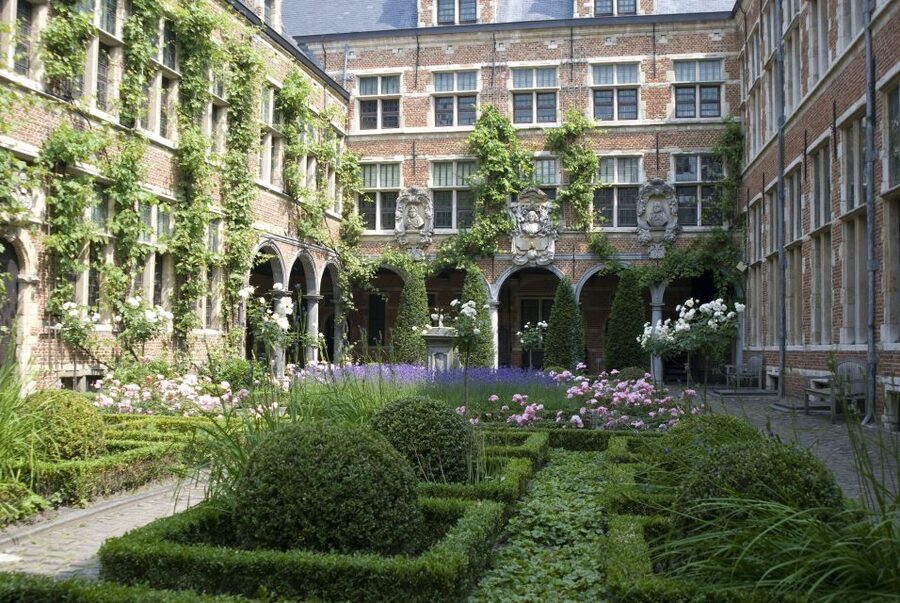
Museum Plantin-Moretus is one of the most distinctive places on the route. It was the first museum to receive UNESCO World Heritage status, and it preserves the world of printing connected with the Plantin family.
The museum adds a practical layer to Antwerp’s story. Trade and art are important, but printed books, maps, and ideas also helped the city influence a much wider world. Your guide can explain why the museum matters and how printing shaped the city’s cultural reach.
Again, the two-hour format means you should not expect a complete museum visit. Treat this as a smart introduction. If you enjoy books, typography, publishing, or early technology, you may want to return with more time.
This stop is also a good example of the route’s range. In one morning or afternoon, you move from guild houses to a printing house, with churches, a trading hall, an artist’s home, and a fashion museum in between.
Vlaeykensgang, the tucked-away medieval lane
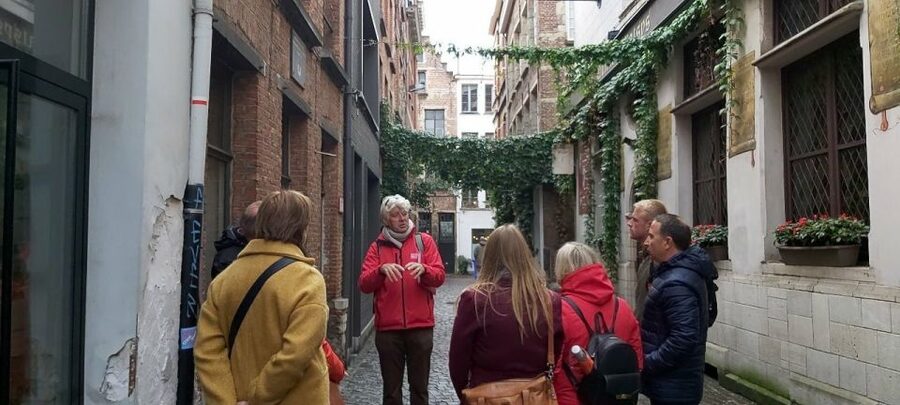
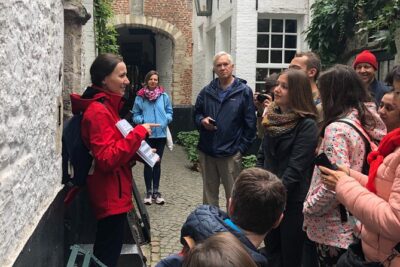
Vlaeykensgang is one of the walk’s most appealing stops because it is not obvious to first-time visitors. This narrow medieval alley is easy to miss if you are simply following the main streets.
The passage offers a look at some of the best-preserved remnants of medieval Antwerp. Its small scale creates a sharp contrast with Grote Markt and the grand churches. This is the kind of place where a local guide earns the fee, since finding it on your own is not guaranteed.
Keep your camera ready, but do not rush. The lane’s appeal comes from its quiet, enclosed character and the sense that you have stepped away from the main route. It is said to be the city’s most photographed place, so you may want to wait for a clear view rather than snapping the first picture you see.
The alley also gives the tour a needed pause. After several major buildings, a narrow lane brings the focus back to daily urban life and the small spaces where people once lived and worked.
Nello and Patrasche, a storybook finish before the cathedral
The Nello and Patrasche Statue is another popular stop and a good place for a quick photograph. It refers to the central characters of A Dog of Flanders, a story strongly linked with Antwerp.
The statue adds a more emotional and literary note to the walk. After the grand history of merchants, painters, churches, and museums, you get a reminder that cities are also shaped by stories that become part of local memory.
Your guide can explain the connection and point out why the statue attracts attention. It is a brief stop, but it helps keep the tour varied. You are not simply moving from one institutional building to another.
Ending at the Cathedral of Our Lady
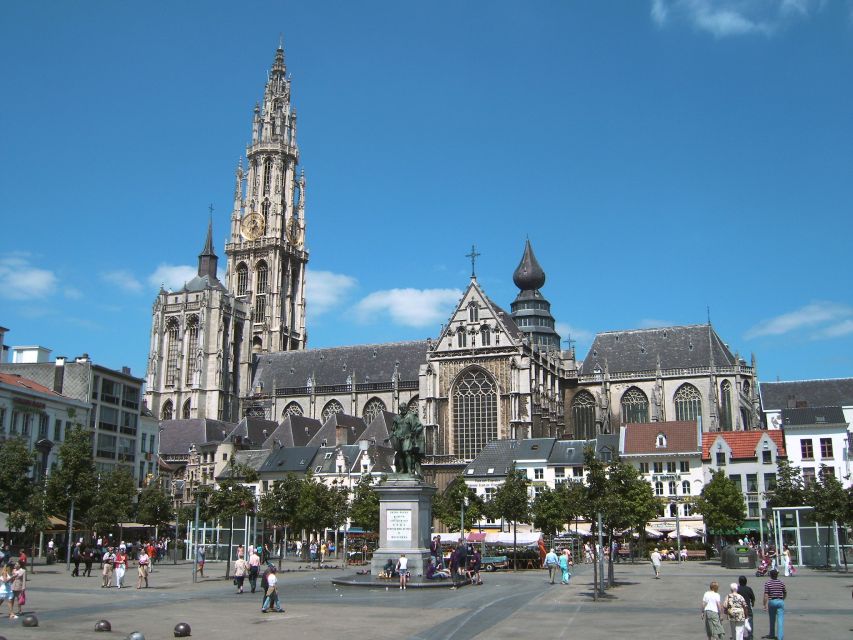
The walk finishes in front of the Cathedral of Our Lady, one of Antwerp’s defining landmarks. Its construction history gives the guide a final chance to pull together the city’s religious, artistic, civic, and commercial past.
The cathedral is also closely connected with Rubens, making it a fitting endpoint after Rubens House and the Baroque churches. You learn about the building itself, the stages of its construction, and curious details that may not be obvious from the square.
Ending here is practical. The cathedral is a major reference point in the historic center, so you can continue sightseeing afterward or return for a more complete visit. The tour gives you context first, which can make a later interior visit more meaningful.
Timing, pace, and what the two hours really mean
Two hours is enough for orientation, not exhaustive sightseeing. You will see a lot from the outside and receive explanations at each stop, but the schedule does not leave room for long museum visits, a full church tour, or a leisurely food break.
That brisk pace is a strength if Antwerp is one stop on a wider Belgium trip. You can learn the shape of the old center without spending half a day on a single subject. It is also useful at the beginning of your stay because you can mark places for a return visit.
Comfortable shoes are essential. The tour takes place rain or shine, so bring suitable clothing and be ready for changing weather. The route is wheelchair accessible, which is an important practical benefit, though you should still confirm any personal mobility needs when booking.
The meeting point is simple, and the red umbrella should make the guide easy to identify. The guide may contact you before the walk, as Arie did with one couple, which can reduce uncertainty about the meeting place.
Who will get the most from this tour
I would recommend this walk to first-time visitors who want a clear introduction without joining a large group. It also suits couples who enjoy asking questions and shaping the conversation around their interests.
Art lovers will get useful context from Rubens House, Carolus Borromeus Church, and the Cathedral of Our Lady. History fans will appreciate Grote Markt, the Bourse, Plantin-Moretus, and the story of Antwerp’s rise as a trading center.
Food-minded visitors can also ask for local suggestions. One guide helped a couple find a good Belgian waffle, showing how the private format can include practical eating advice even though food is not part of the tour.
I would hesitate to recommend it to someone who wants a slow museum day or a food-focused walk. There is no stated tasting or included drink, and one two-hour outing during the Christmas period felt expensive to one participant for that reason.
The guides’ style appears to be a major part of the experience. Arie is described as friendly, clear, and entertaining, while Flip is praised for warmth, positive energy, and adapting to individual interests. Those personal touches matter more on a private walk than a long list of sights.
Price, flexibility, and the final call
At $206 for a private group of up to two, the price is best judged against privacy rather than against a standard group walking tour. You are paying for a guide focused on your questions, a route that covers a wide range of sights, and the option to adjust the conversation.
For two people, the cost may feel reasonable if you value personal attention and have only a short stay. For a solo visitor, it is a much larger commitment. The discount booklet may help, but I would not book this expecting meals, drinks, or museum admission to be included.
The tour offers free cancellation up to 24 hours before departure and a reserve-now, pay-later option. Guides speak English, Dutch, and Spanish, and the experience is offered for private groups.
Should you book Antwerp’s Historical Highlights Walking Tour?
Book it if you want a well-planned first look at Antwerp, prefer a private guide, and like history delivered with humor and local stories. The strongest reasons are the varied route, the tucked-away Vlaeykensgang, the Bourse’s trading history, and the chance to tailor the conversation.
Think twice if $206 feels high for two hours or if you want extended time inside museums and churches. In that case, use this route as a guide to Antwerp’s priorities and explore the interiors on your own.
For a couple arriving in Antwerp with limited time, I think the private format can pay off. You leave with a map in your head, a better sense of the city’s past, and several places worth revisiting at a slower pace.
FAQ
How long is the Antwerp Historical Highlights Walking Tour?
The tour lasts two hours.
What is the price of the private tour?
The price is $206 per group of up to two people.
Where does the tour meet?
Meet your guide by the statue in Grote Markt Square in Antwerp. Look for the guide carrying a red umbrella.
Which languages are available?
The tour is offered in English, Dutch, and Spanish.
Is this a private group tour?
Yes. The experience is organized as a private and customizable tour.
Is the walking tour wheelchair accessible?
Yes, the tour is listed as wheelchair accessible.
What should I bring, and does the tour run in bad weather?
Bring comfortable shoes. The tour takes place rain or shine.
Latest history tours reviewed in Belgium
- Brussels: Museum Art & History Entry Ticket★ 4.5 · 58 reviews
- Brussels on Foot: Historic Center with a Local Guide in 2 hours★ 4.3 · 36 reviews
- Brussels: BELvue Belgium History Museum Entry Ticket★ 4.6 · 27 reviews
- Bruges: History, Chocolate and Beer Walking Tour★ 4.9 · 65 reviews
- Unforgettable Bruges: Sightseeings, History and Tasting.★ 4.3 · 27 reviews
- Bruges: Historical Walking Tour with Food Tasting★ 3.6 · 22 reviews
- Bruges: Nightly Tales and Untold History Walking Tour★ 4.9 · 154 reviews
- Antwerp: Private 3-Hour Historical Sightseeing Walking Tour★ 4.8 · 70 reviews
Antwerp History Tours, compared.
Antwerp: Private 3-Hour Historical Sightseeing Walking Tour
Read our review →Browse the lists this tour appears in