
Review · BRUGES
Private Historical Tour: The Highlights of Bruges
Bruges gives you medieval drama at every turn, but the best stories are easy to miss when you only follow the canals and take photos. This private walk connects the grand Markt and Burg with quieter corners, explaining everything from Bruges’ trade wealth to its quarrels with French kings and Emperor Maximilian.
I like the private format, which lets your guide set a comfortable pace and answer your questions without a large group slowing you down. I also like the local advice: guides such as Martin, Piet, Sam, Patrick, and Mauricio have offered restaurant, chocolate, beer, and museum tips that can shape the rest of your stay.
The main consideration is time. Two hours is enough for a strong first look, but not enough to explore every museum or linger at every stop. One past booking also missed the Beguinage and Minnewater Lake, so I would confirm the route and starting time with the guide before setting out.
Key points to know before you book
- A private walk for your party: You do not share the guide with a large public group, and the pace can suit your group.
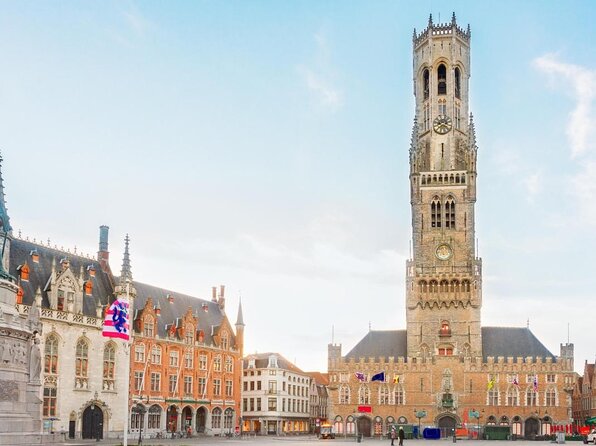
- A useful first tour of Bruges: The route links the Markt, Belfort, Burg Square, churches, museums, and southern sights.
- History with memorable stories: Expect tales about medieval trade, swans, the nickname Fools of Bruges, and a beer pipeline beneath the city.
- Several interior stops are explained from outside: Admission to the Gruuthusemuseum, Sint-Janshospitaal, Onze-Lieve-Vrouwekerk, Groeningemuseum, and De Halve Maan Brewery is not included.
- Local food and drink advice: Guides can point you toward places for waffles, fries, Flemish food, chocolate, and Belgian beer.
- Good timing matters: Early or evening departures can make the walk easier in a city that gets crowded with day visitors.
Why a private two-hour walk works well in Bruges
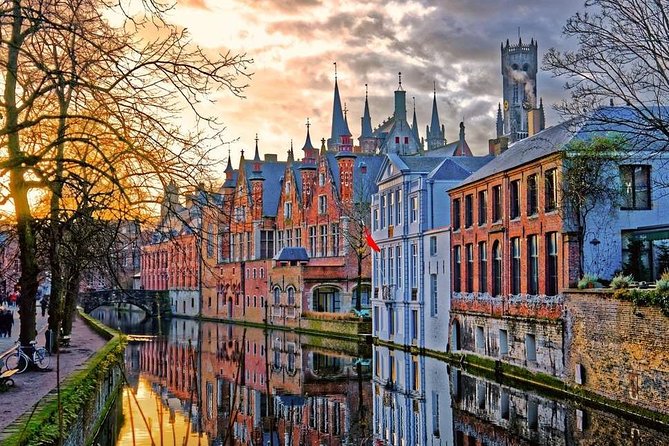
Bruges is compact enough to explore on foot, but its beauty can make it hard to know where to begin. You can admire a canal, a stepped gable, or a carved doorway without understanding why it is there. A guide gives those details a place in the larger story.
This tour is built as an introduction rather than a museum marathon. You move through the city center and toward Minnewater, stopping often for short explanations. The listed stops range from five to fifteen minutes, so you should expect a steady walk with time for questions and photographs, not long visits inside each attraction.
The private setup is the biggest practical advantage. If someone in your group walks slowly, wants extra time for pictures, or has a strong interest in church art or medieval politics, the guide can respond. One booking specifically praised the comfortable pace compared with larger walks, while another included family members from age nine to seventy-five.
The price is listed at $99.81 per person. That is not the cheapest way to see Bruges, especially for a solo visitor, but the calculation changes as your party grows and group discounts apply. You are paying for a private English-speaking guide, hotel pickup and drop-off, and a tailored introduction. Museum admission, food, and drinks are extra.
More Private History Tours in Belgium
- Private tour: Highlights & History of Antwerp
★ 5.0 · 299 reviews - Bruges: Private Historical Highlights Walking Tour
★ 4.7 · 191 reviews - Private Historical Tour: Legends of Antwerp
★ 5.0 · 125 reviews
Starting at the Markt and Belfort
The walk begins at Pieter de Coninck en Jan BreydelMarkt, beside the Markt, although hotel pickup and drop-off are also included. Confirm the exact meeting arrangement and your preferred start time when booking, since the tour asks you to state when you want to begin.
The Markt is the right place to set the scene. Here, your guide explains how Bruges became a major medieval trading center and why the city’s relationship with the French king was so difficult. This is more useful than a string of dates because it shows how money, power, and local pride shaped the city you see today.
Next comes the Belfort, or bell tower. The visit focuses on the halls behind the tower and its role in medieval civic life. The bell tower was not simply a pretty landmark. It represented the city’s power and helped organize public life, so this short stop gives the skyline a political meaning.
The Belfort is listed as a free stop, but that does not mean you climb the tower. The description specifies an explanation in the halls behind the belfry, not admission to the full tower climb. If climbing is important to you, ask the guide what is possible during your departure.
Gruuthuse and St. John’s Hospital
The Gruuthusemuseum introduces you to a city palace once owned by a wealthy Bruges family. The family held a monopoly in one part of the trade, giving your guide a chance to explain how commercial power worked in medieval Bruges.
This is a useful correction to the simple picture of Bruges as a town made wealthy by anonymous merchants. Specific families controlled specific trades, and homes such as Gruuthuse reveal how business success could become social and political influence.
The stop at Sint-Janshospitaal offers a different view of medieval life. It was one of the oldest surviving hospitals in the world and a key part of medieval society. Your guide explains the building and its purpose, but admission is not included. If you want to see the art and interiors at greater length, plan a separate visit after the walk.
The short format matters here. Ten minutes can give you the basic story and help you decide which museum deserves your own time later. It cannot replace a full museum visit.
The Beguinage and Minnewater Lake
The route then moves toward the Princely Beguinage Ten Wijngaarde, a peaceful complex where a community of women lived together for more than eight hundred years. The walk into this area provides a change of mood after the busy central squares.
The Beguinage is free to enter on this tour. Its value is not only visual. It helps you understand how women could live in a shared religious community without becoming nuns in the usual sense. The guide gives the place a human scale, connecting its quiet courtyards to the social structure of old Bruges.
From there, you reach Minnewater Lake, often called the Lake of Love. This is where the guide explains why swans appear on Bruges’ canals and tells the story of the city’s conflict with Emperor Maximilian of Austria.
The swan story is exactly the kind of small local tale that makes a walking tour worthwhile. You will remember it more easily than a list of rulers, and it gives a practical detail in the city’s scenery a place in local tradition.
These two stops deserve special attention when you confirm your route. One poor experience ended before reaching both the Beguinage and Minnewater Lake, despite those places being part of the planned walk. The tour normally allows time for them, but the exact path can change with weather, crowding, or the group’s pace. Ask directly if these are priorities for you.
Same old streets, another chapter:
- Historical Walking Tour: Legends of Bruges
★ 5.0 · 2,541 reviews - Historical Walking Tour: Legends of Antwerp
★ 5.0 · 1,837 reviews - Historical Walking Tour: Legends of Gent
★ 5.0 · 1,761 reviews - Brussels: Historical Tour with Chocolate & Waffle Tasting
★ 4.8 · 1,206 reviews
Beer stories at De Halve Maan
At De Halve Maan Brewery, the guide stops outside to tell the story behind Bruges’ nickname, the Fools of Bruges. You also see a piece of the beer pipeline running beneath the city.
This is not a brewery tasting or a brewery tour. Admission is not included, and the stop is mainly about the history and practical oddity of the pipeline. That distinction matters if you are expecting a drink. You will need to arrange food or beer separately.
Still, it is a good local story. Bruges is often presented through its churches and canals, but beer is part of how the city works today. The pipeline also shows that the old center is not only a preserved picture postcard. Modern infrastructure can run beneath the historic streets.
Guides frequently offer advice on breweries and places to eat after the walk. Sam, for example, has been noted for beer and dining suggestions, while Martin has recommended local chocolate and authentic Flemish food. Use this stop to ask for specific advice based on your plans.
Church art and Burgundian power
Onze-Lieve-Vrouwekerk, the Church of Our Lady, brings together architecture, art, and dynastic history. Your guide explains that its brick tower is the second tallest brick tower in the world and points out its Michelangelo statue and the tombs of the last Dukes of Burgundy.
That is a lot for a ten-minute stop, so think of it as a preview. The church is one of the places where Bruges’ wealth becomes visible in stone, sculpture, and memorials. If Michelangelo or the Burgundian court matters to you, return for a longer visit after the tour. Admission is not included.
The Groeningemuseum follows with a short stop in its garden. You can hear about Flemish masters and see the setting of a major art collection, but the museum entry is not part of the tour. Five minutes gives you orientation, not a gallery visit.
I like this approach for a first day. You learn which places deserve more of your limited vacation time instead of trying to force every interior visit into one rushed route.
Tanner’s Square and the city’s political heart
Huidenvettersplein, the old Tanner’s Square, offers one of the most grounded stops on the walk. This was where skins were greased and made into leather, a smelly but necessary trade.
The square helps balance the grand churches and palaces. Bruges was not built only by princes, artists, and wealthy merchants. It depended on trades that left strong odors, created useful goods, and shaped where people worked in the city.
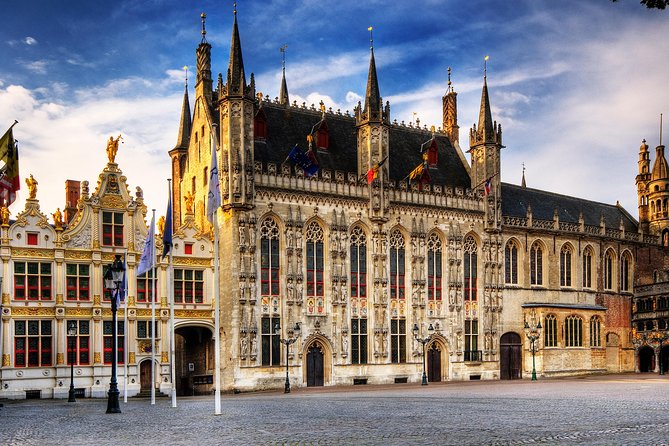
After passing the old Fishmarket, the tour ends at Burg Square. This was the political center and birthplace of Bruges. It is a fitting finish because the walk began with trade and power, then moved through religious life, industry, art, and local legend before returning to the city’s civic core.
The end point is Burg Square, not the Markt. That is convenient if you want to continue toward city hall and the surrounding center, but it is worth planning your next move. Hotel drop-off is included, yet the stated end point is Burg, so confirm how that part will work for your group.
What the guides add to the walk
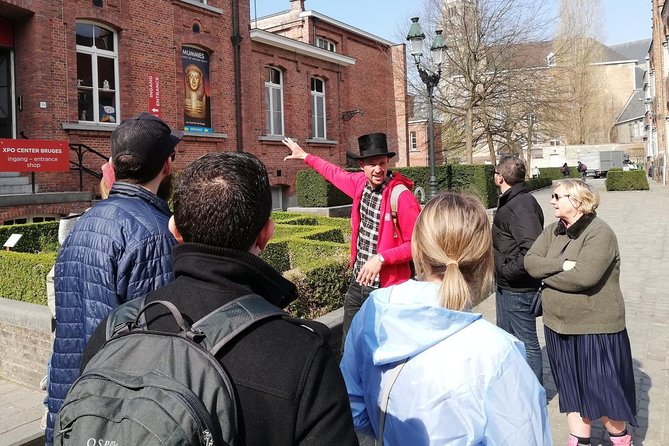
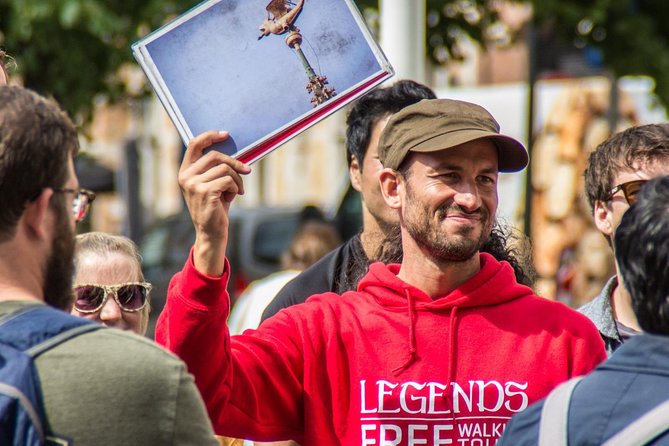
The strongest part of this experience is the guide’s storytelling. Martin is described as personable, precise, and good at sharing specific dates, local figures, humorous stories, and less obvious corners of Bruges. He has also used old photographs and laminated images to show how buildings looked in earlier periods.
Piet has been praised for keeping a group comfortable in cold weather, checking the pace, and making the city’s past easy to follow. Patrick is noted for being accommodating and engaging, while Sam combines clear history with humor and practical advice. Mauricio has tailored the walk to particular interests and used visual aids to show how Bruges changed over time.
You may not receive the same guide each day, so do not book based on one person alone. The useful question is what sort of experience you want. Tell the guide if you prefer political history, architecture, art, food, or a lighter overview. One disappointing experience came from asking for a history-focused walk and receiving a fairly light version instead.
The rating is 4.9 from 315 reviews, with 98 percent recommending the experience. That is a strong signal, but it does not remove the need to state your expectations clearly.
Timing, crowds, and comfort
A private walk is especially useful during busy periods. Bruges can become crowded around the main squares and Christmas markets, and a small group can move more easily than a large one. An early departure is a smart choice if you want clearer views and a calmer pace.
Evening departures are also available and can work well as an introduction before dinner. The tour lasts about two hours, so allow extra time afterward for a museum, meal, brewery visit, or canal experience.
Wear shoes suited to walking on city streets and bring protection from cold or rain. This is practical advice rather than a special requirement, but one guide had to keep the group comfortable on a very cold day. Service animals are allowed, public transportation is nearby, and most people can take part.
Free cancellation is available up to 24 hours before the local start time. Changes or cancellations inside that window are not accepted for a refund.
Is the private Bruges tour worth booking?
Book this tour if you want a clear first orientation to Bruges, value a private guide, and plan to continue exploring on your own afterward. It suits couples, families, and small groups who want a flexible walking speed and direct answers rather than a large public tour.
The $99.81 per-person price makes the most sense for a group that will use the local advice and keep exploring after the two-hour walk. You will not receive full admission to the museums, a brewery tasting, or a long visit inside every church. Think of the tour as a well-placed introduction.
Before booking, state your preferred start time and ask the guide to confirm the Beguinage and Minnewater Lake are included. If you want detailed art study or a slower historical lecture, ask for that too. For a first look at Bruges that combines major sights with odd, memorable local stories, this is a strong choice.
FAQ
How long does the private Bruges tour last?
The tour lasts approximately two hours. The individual stops range from about five to fifteen minutes, with walking time between them.
Is the tour private?
Yes. Only your group participates, and the tour is offered as a private activity.
Is hotel pickup and drop-off included?
Yes. Hotel pickup and drop-off are included, although the stated meeting point is Pieter de Coninck en Jan BreydelMarkt and the stated end point is Burg Square. Confirm the exact arrangement when booking.
Which language is offered?
The tour is offered in English.
Are museum and church admission fees included?
No. Admission is not included for the Gruuthusemuseum, Sint-Janshospitaal, De Halve Maan Brewery, Onze-Lieve-Vrouwekerk, or Groeningemuseum. The Markt, Belfort explanation, Beguinage, Minnewater Lake, Huidenvettersplein, and Burg Square are listed as free stops.
Can I cancel for a full refund?
Yes. You can cancel at least 24 hours before the local start time for a full refund. Cancellations or changes made less than 24 hours before the start are not accepted for a refund.
Latest history tours reviewed in Belgium
- Brussels: Museum Art & History Entry Ticket★ 4.5 · 58 reviews
- Brussels on Foot: Historic Center with a Local Guide in 2 hours★ 4.3 · 36 reviews
- Brussels: BELvue Belgium History Museum Entry Ticket★ 4.6 · 27 reviews
- Bruges: History, Chocolate and Beer Walking Tour★ 4.9 · 65 reviews
- Unforgettable Bruges: Sightseeings, History and Tasting.★ 4.3 · 27 reviews
- Bruges: Historical Walking Tour with Food Tasting★ 3.6 · 22 reviews
- Bruges: Nightly Tales and Untold History Walking Tour★ 4.9 · 154 reviews
- Antwerp: Private 3-Hour Historical Sightseeing Walking Tour★ 4.8 · 70 reviews
Bruges History Tours, compared.
THE Storytelling Tour of Bruges | First Day Must | History & Tips
Read our review →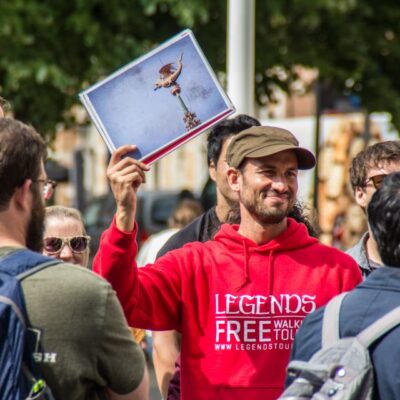
Bruges: Nightly Tales and Untold History Walking Tour
Read our review →
Bruges: History, Chocolate and Beer Walking Tour
Read our review →
Bruges: Historical Walking Tour with Food Tasting
Read our review →Browse the lists this tour appears in