
Review · ANTWERP
Historical Walking Tour: Legends of Antwerp
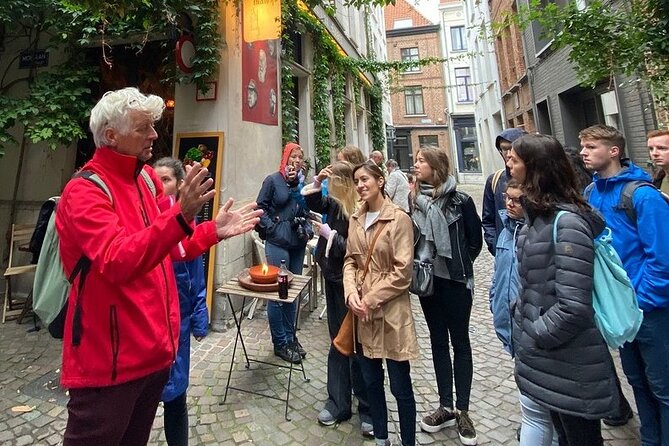
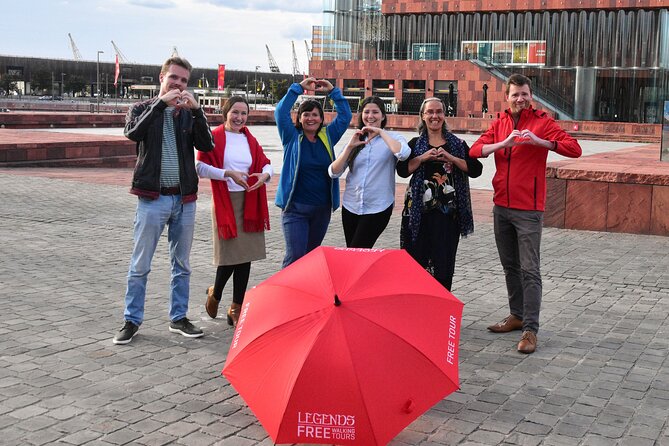
Antwerp’s old center is compact, but its stories are not. This two-hour walk links medieval guild houses, Rubens landmarks, secret lanes, and trading halls in a tidy route from Grote Markt to the Cathedral of Our Lady. Guides such as Arie, Luc, Beren, Marc, and Marleen bring different personalities, but the goal is the same: help you understand the city before you explore it on your own.
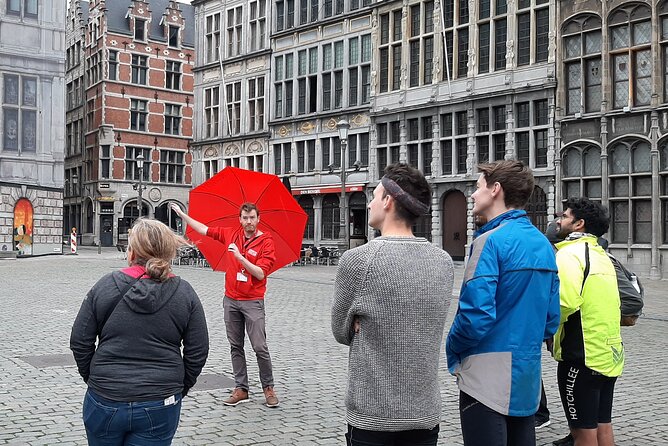
I like the route for two clear reasons. First, it gives you a fast introduction to Antwerp’s art, commerce, printing, fashion, and local legends. Second, it includes places you could easily miss, especially Vlaeykensgang and the Plantin-Moretus garden. The main drawback is the group size, which can reach 35 people, so hearing every word may be difficult in street noise.
Key points to know before you book
- A useful first walk: The route covers Antwerp’s historic core and ends with practical suggestions for the rest of your stay.
- Ten focused stops: You see Grote Markt, Rubens landmarks, the old Bourse, the fashion district, Vlaeykensgang, and the cathedral.
- Tip-based value: The advertised booking price is $3.62 per group of up to six, while the tour operates on a tip-based model.
- English-speaking guides: Arie, Luc, Beren, Marc, Marleen, Gaston, Sergio, Flip, and others have led this walk.
- A lot of standing: Two hours on foot is manageable for most people, but hot weather, crowds, and street noise can affect comfort.
- Mostly outdoor sightseeing: Entry is included at certain stops when open, but the Rubens House does not include admission.
Why this two-hour route works in Antwerp
I like a first-day city walk that teaches you how the pieces fit together. This one moves through Antwerp’s historic center without sending you across town, so you spend your time looking at buildings and listening to stories rather than figuring out public transport.
The route also has a useful range. You get grand civic sights at Grote Markt, religious art at Carolus Borromeus Church and the Cathedral of Our Lady, business history at Handelsbeurs Antwerpen, and everyday atmosphere in a narrow medieval alley. The later stops add printing, fashion, and children’s literature to the usual parade of churches and monuments.
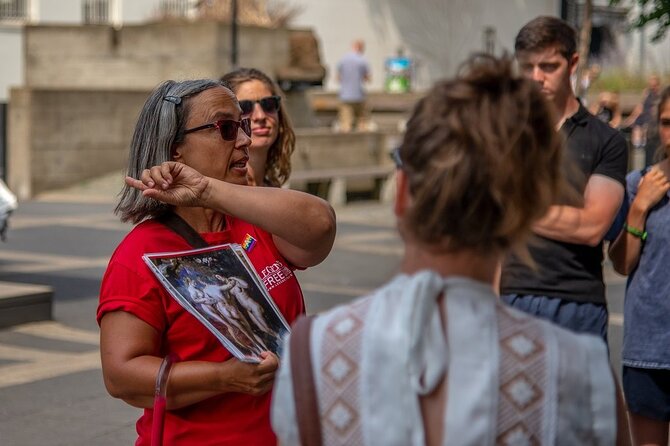
The guides bring much of the character. Arie is noted for a warm, clear presentation, while Luc B has a calm pace and expressive storytelling. Beren is lively and funny, and Marc is praised for placing Antwerp’s events in chronological order. Marleen is attentive to questions and time, while Gaston has worked especially well with families.
That variation matters. This is not a recorded audio route with one fixed tone. Your experience depends partly on the person leading the group and the conditions on the day. The strongest guides turn facts into stories, but a large group or a noisy square can make even a good explanation harder to follow.
More History Walking Tours in Belgium
- Historical Walking Tour: Legends of Bruges
★ 5.0 · 2,541 reviews - Historical Walking Tour: Legends of Gent
★ 5.0 · 1,761 reviews - Brussels: Historical Walking Tour with Chocolate & Waffle Tasting
★ 5.0 · 1,165 reviews
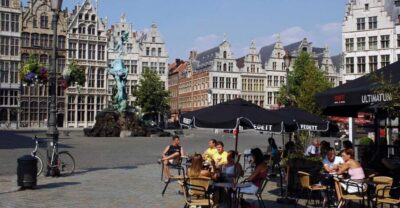
Grote Markt begins with Antwerp’s grand front door
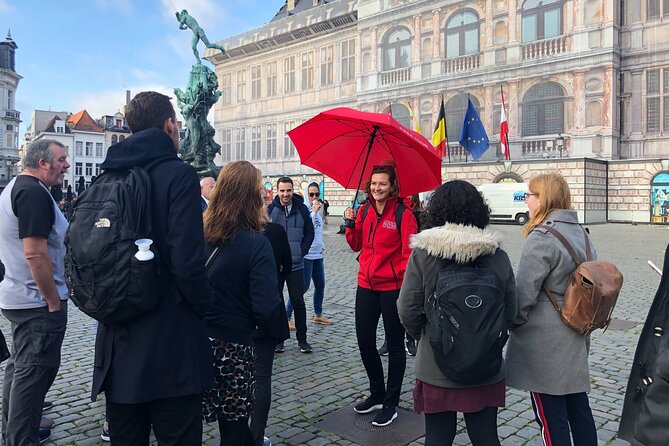
The meeting point is Grote Markt, the central square of old Antwerp. Give yourself enough time to find the guide and settle in, since the square is the natural starting point for exploring the historic center.
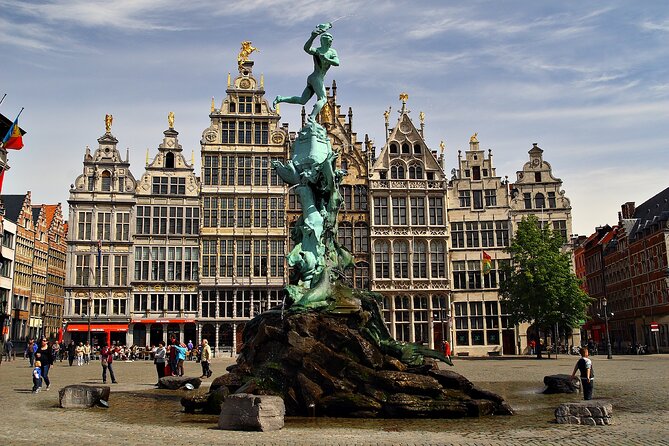
Look up before the walk begins. The square is framed by elaborate guild houses, the City Hall, and the Brabo Fountain. The guide explains the legends tied to the fountain and the story behind the square’s buildings. This is a good opening because Antwerp’s identity as a trading city, a political center, and a place of local folklore begins here.
The stop lasts about 10 minutes. That is enough for an introduction, but not enough for a detailed architectural study. I would treat it as a visual orientation rather than a full museum visit. If you want careful photographs of the guild houses, take a few before the group moves on.
Hendrik Conscience Square adds books and Baroque style
The next stop is the square named for Flemish writer Hendrik Conscience. It has a quieter, more reflective feel than Grote Markt, with an impressive Baroque church and the old city library.
The visit lasts about five minutes, so expect a short explanation rather than a long pause. The value here is context. Antwerp’s story is not only about merchants, painters, and grand buildings. Literature, language, religion, and learning also shaped the city.
This is one of several places where a guide saves you time. You can walk past the square without understanding why the statue, church, and library belong together. A short stop gives the area a purpose before you continue.
Carolus Borromeus Church brings Rubens indoors
Carolus Borromeus Church is one of the route’s strongest art stops. This 17th-century Baroque church is linked closely with Peter Paul Rubens, whose work contributed to the paintings, interior, and facade decoration.
The planned visit takes about 10 minutes. Entry is included during opening hours, but that qualification matters. Churches can have services, special events, or restricted access, so you should not assume the interior will always be available exactly as planned.
When you can enter, focus on the relationship between painting and architecture. Rubens was not merely asked to supply a picture for a wall. His influence reaches into the overall decoration, which helps explain why he was such a powerful figure in Antwerp’s artistic life.
The short stop works well as an introduction. If you want extended time with the church, return later on your own. The guide’s explanation gives you a framework, while a second visit lets you look more slowly.
Same old streets, another chapter:
- Brussels: Historical Tour with Chocolate & Waffle Tasting
★ 4.8 · 1,206 reviews - THE Storytelling Tour of Bruges | First Day Must | History & Tips
★ 5.0 · 925 reviews - Historical Walking Tour: The Story of Bruges – by Legends
★ 4.7 · 483 reviews - Antwerp: Historical Walking Tour in the Old City
★ 4.8 · 373 reviews
Handelsbeurs explains Antwerp’s commercial rise
Handelsbeurs Antwerpen, the Bourse of Antwerp, shifts the story from art to money. The tour presents it as the world’s first Wall Street and uses the building to explain Antwerp’s role as an international trading center during the 16th-century Golden Age.
The stop lasts about 10 minutes and includes a visit during opening hours. This is one of the most useful parts of the route because it explains why Antwerp became important in the first place. The city’s churches and paintings are impressive, but its wealth came from trade, finance, shipping, and links with markets beyond Belgium.
The building also gives you a chance to see how business needed grand public spaces. Listen for the connection between Antwerp’s commercial success and the monuments you have already seen. The city’s art and architecture were not separate from trade. They were supported by it.
Rubenshuis and the designer quarter show modern Antwerp
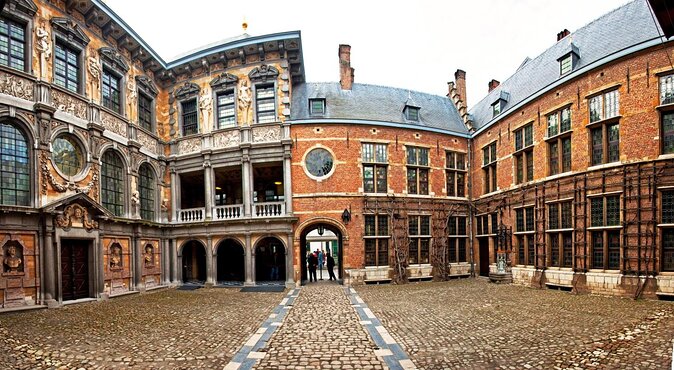
At Rubenshuis, the guide tells the story of Rubens’s former home and workshop. The stop lasts about 10 minutes, and admission is not included. That makes this section more of an exterior orientation unless you decide to return and pay for entry separately.
The guide’s focus is Rubens’s life, work habits, and the reasons behind his success. That is useful even if you do not visit the interior. You get a sense of the painter as a working professional with a home, a studio, assistants, and a public reputation, not just as a name attached to museum labels.
The route then passes through the MoMu area and Antwerp’s designer quarter. Here the subject changes from Baroque painting to fashion. Antwerp is presented as one of the world’s leading fashion capitals, with advice on where to shop and why the city developed that reputation.
This is a smart contrast. You see that Antwerp’s creative identity did not end with Rubens. The city continues to connect design, commerce, and international attention. The 10-minute fashion section is brief, but it can help you decide where to return if clothing and design interest you.
Plantin-Moretus connects Antwerp to the printed word
Museum Plantin-Moretus is one of the most distinctive stops on the walk. It tells the story of books and printing, and its historical importance is reflected in its status as the first museum listed as a UNESCO World Heritage site.
The guide usually includes a visit to the historic garden during opening hours. As with the churches and Handelsbeurs, access depends on the site being open at the time of the walk. The museum itself deserves more than the roughly 10 minutes available here, so consider the tour stop an introduction rather than a substitute for a full visit.
I especially value this part because printing explains how ideas, religious arguments, maps, literature, and business information traveled. It gives Antwerp another layer beyond monuments and paintings. The garden also provides a change of pace after several public squares and busy streets.
If you plan to return to the museum, note the guide’s explanation carefully. It will help you know what to look for inside instead of wandering through without a clear sense of why the place matters.
Vlaeykensgang is the route’s best small surprise
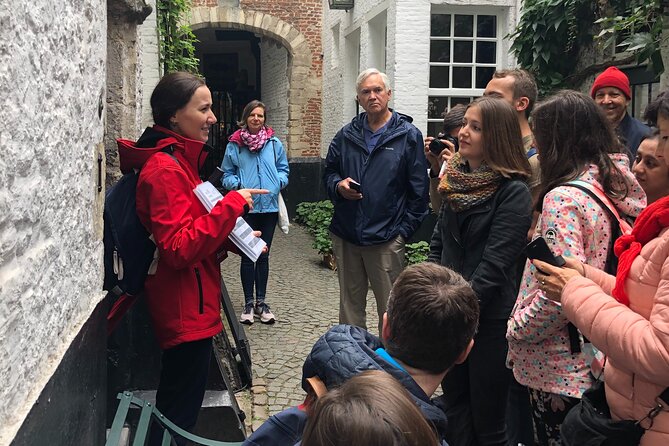
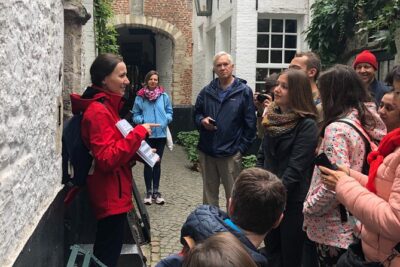
Vlaeykensgang is a narrow medieval street tucked away from the main routes. It is not easy to find without local guidance, which makes it one of the most worthwhile parts of the walk.
The guide takes about 10 minutes to lead you through the alley and explain its connection with medieval Antwerp. The setting is close and quiet compared with the open squares, so the group may need to bunch up. Keep your pace steady and listen for the explanation before taking photographs.
This is also one of the places where group size matters most. A large group can fill a small lane, and people at the back may have trouble hearing. Stay near the guide if you want the full story.
Still, the stop adds something the major monuments cannot. Grote Markt shows Antwerp at its grandest. Vlaeykensgang shows the city at a human scale, with a route that feels easy to miss and rewarding to find.
Nello and Patrasche bring a local story to the pavement
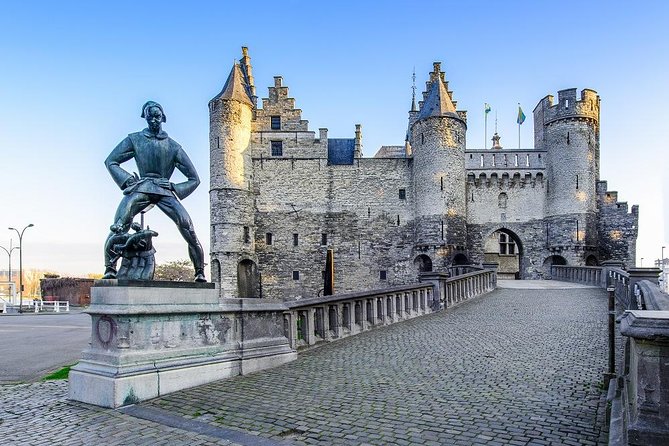
The Nello and Patrasche Statue is a small but memorable stop. It refers to the boy and dog at the center of the novel A Dog of Flanders, a story with a particularly strong following among visitors from Asia.
The stop lasts about five minutes. The guide explains the story and why the statue draws attention, even though many local people may not know it well. This is a good example of how legends and cultural memory can cross borders in unexpected ways.
The statue is also visually appealing, so it works as a quick photograph stop. Do not expect a long literary lecture. The point is to understand why this modest monument has become part of Antwerp’s visitor map.
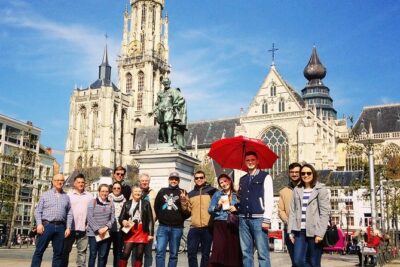
The Cathedral of Our Lady provides a clear finish
The walk ends at Handschoenmarkt, in front of the Cathedral of Our Lady. The final 15 minutes cover the cathedral’s construction, history, and curious details.
This is a sensible ending. You finish near one of Antwerp’s most important landmarks, with the rest of the old center still within easy reach. The guide also offers suggestions for what to do next, which can be more useful than a generic goodbye. You can use those ideas to choose a museum, meal, shopping area, or evening walk.
The cathedral itself deserves more time than the tour allows. Use the final explanation to decide if you want to go inside later. The route gives you the setting and background, but it is not designed as a full cathedral tour.
How the price affects the value
The listed price is $3.62 per group of up to six, which is unusually low for a two-hour guided city walk. The low fee is tied to a tip-based format, so you should think of the booking price as access to the tour rather than the full measure of its cost.
That arrangement can be good value if you want a broad introduction without committing to an expensive private tour. You get an English-speaking guide, a planned route, and local suggestions at the end. For a first look at Antwerp, the price makes it easy to add this walk to your plans.
The tradeoff is that the experience is not private. The group can reach 35 people, and you may have to stand near busy streets or in open squares while the guide speaks. The best value comes when you stay close, listen actively, and use the walk to choose which places deserve a longer visit.
Pace, comfort, and group size
Bring comfortable shoes. The route covers about two hours of walking and standing, though the distance itself is not excessive. Several people can manage it without trouble, but hard pavement, warm weather, and long pauses can make it tiring.
One particularly hot day, with temperatures around 32 degrees Celsius, made the outdoor explanations harder. That is not a flaw in the route, but it is a real planning point. A cooler morning or an overcast day will likely feel more comfortable than a hot afternoon.
Most people can take part, and service animals are allowed. The route is near public transportation, and the mobile ticket keeps arrival simple. The tour is offered in English and is often booked about 14 days ahead, so reserve early if your dates are fixed.
Families can do well here. Guides such as Gaston and Luc have been praised for keeping children involved, and the mix of statues, legends, churches, artists, and narrow lanes gives younger visitors several different things to notice. Still, two hours of listening requires children who can manage a walking tour.
Who should choose this Antwerp walk
I would choose it for a first visit, especially if you have one day in Antwerp and want a clear sense of the old center. It is also useful at the start of a longer stay because the closing recommendations can shape the rest of your plans.
It suits you if you like history, art, architecture, local stories, and a guide who can connect separate sights. It also works for families and independent visitors who want orientation before returning to museums alone.
I would think twice if you dislike standing, struggle to hear in a crowd, or want long indoor visits at each monument. The tour gives you many introductions, not extended time inside every site. The Rubens House admission is not included, and access to the church, Bourse, and Plantin-Moretus garden depends on opening hours.
Should you book Legends of Antwerp?
Book it if you want a low-cost, English-language introduction to Antwerp that mixes famous sights with places you might miss on your own. The route is broad, practical, and well suited to a first morning or afternoon.
Skip it if you want a private guide, a small group, or a slow art-focused visit. For everyone else, the combination of Grote Markt, Rubens, the old trading center, fashion, printing, Vlaeykensgang, Nello and Patrasche, and the cathedral gives you a useful map of Antwerp in two hours. Wear good shoes, stay near the guide, and save time afterward for the places that catch your eye.
FAQ
How long does the Historical Walking Tour: Legends of Antwerp last?
The tour lasts approximately two hours.
Where does the tour start?
It starts at Grote Markt, 2000 Antwerpen, Belgium.
Where does the tour end?
It ends at Handschoenmarkt, in front of the Cathedral of Our Lady, 2000 Antwerpen, Belgium.
What language is the tour offered in?
The tour is offered in English.
How large can the group be?
The tour can include a maximum of 35 people.
Is admission to the attractions included?
All fees and taxes are included in the tour price. Entry to Carolus Borromeus Church, Handelsbeurs Antwerpen, and usually the Plantin-Moretus historical garden is included during opening hours. Admission to Rubenshuis is not included.
What should I bring?
Bring comfortable shoes. The experience includes about two hours of walking and standing.
Can I cancel for a full refund?
Yes. You can cancel at least 24 hours before the start time for a full refund. Cancellations or changes made within 24 hours are not refunded or accepted.
Latest history tours reviewed in Belgium
- Brussels: Museum Art & History Entry Ticket★ 4.5 · 58 reviews
- Brussels on Foot: Historic Center with a Local Guide in 2 hours★ 4.3 · 36 reviews
- Brussels: BELvue Belgium History Museum Entry Ticket★ 4.6 · 27 reviews
- Bruges: History, Chocolate and Beer Walking Tour★ 4.9 · 65 reviews
- Bruges: Historical Walking Tour with Food Tasting★ 3.6 · 22 reviews
- Unforgettable Bruges: Sightseeings, History and Tasting.★ 4.3 · 27 reviews
- Bruges: Nightly Tales and Untold History Walking Tour★ 4.9 · 154 reviews
- Antwerp: Private 3-Hour Historical Sightseeing Walking Tour★ 4.8 · 70 reviews
Antwerp History Tours, compared.
Antwerp: Private 3-Hour Historical Sightseeing Walking Tour
Read our review →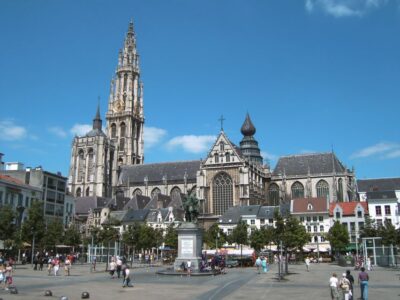
Browse the lists this tour appears in