
Review · ANTWERP
Private Historical Tour: Legends of Antwerp
Antwerp’s old center is best understood as a chain of stories, and this private walk links them neatly. You’ll hear why a hand became the city’s symbol, how Antwerp grew into Europe’s richest 16th-century city, and why its fortunes later faded. I especially like the giant legends and the route from Grote Markt to the cathedral, two places that can feel far more meaningful with a guide beside you.
I also like that the walk is private, so your guide can adjust the speed and answer your questions. Guides including Beren, Luc D, Joske, and Flip have been singled out for their warmth, strong local knowledge, and ability to make the past easy to follow. The main drawback is that two hours is tight for so many stops, and the cobblestones may be tiring if you are not comfortable walking.
Key points at a glance
- Antwerp’s hand symbol: Learn the legend behind the hand that appears throughout the city.
- Golden Age context: Connect Antwerp’s trade, wealth, and decline in one clear introduction.
- Private pacing: Your guide can slow down or adjust the route for your group.
- Medieval street scenes: Walk through Het Steen and the tiny Vlaeykensgang.
- Rubens connections: Pass the home and working place of Antwerp’s most famous painter.
- Central finish: End beside the Cathedral of Our Lady, only about 50 meters from Grote Markt.
Why Antwerp’s legends make a good walking tour
Antwerp can look easy to cover on foot. The main square, river castle, cathedral, shopping street, and old lanes all sit close together. The trouble is that a quick stroll gives you impressive buildings without always explaining how they fit together.
This tour takes the opposite approach. It uses the streets as a timeline, beginning with Antwerp’s identity and medieval legends, then moving through the city’s commercial rise, religious art, guild life, printing, and famous residents. You get a useful introduction without giving up half a day.
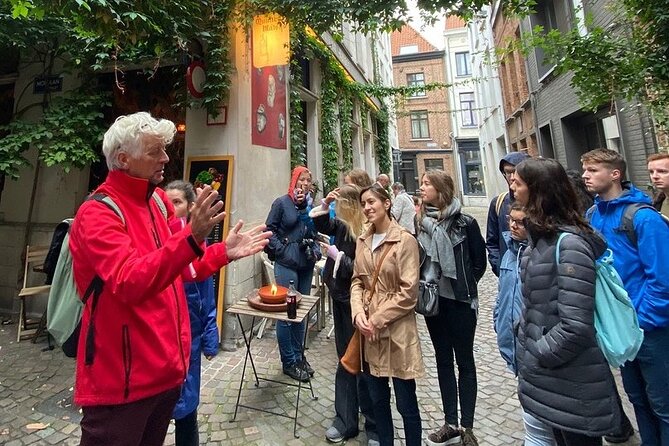
The private format matters here. A guide can stop when you want a closer look, shorten an explanation if the children are losing interest, or spend more time on painting, religion, trade, or local legends. Beren is noted for adjusting the pace, while guides such as Luc D and Joske have been praised for making the past feel lively rather than academic.
At $105.82 per person, this is not the cheapest way to see Antwerp. It makes better financial sense for a small private group, especially if you value personal attention and do not want to join a larger party. The price includes the guide, but the details provided do not list museum admission, so think of this primarily as a guided exterior walking tour.
More Private History Tours in Belgium
- Private Historical Tour: The Highlights of Bruges
★ 5.0 · 315 reviews - Private tour: Highlights & History of Antwerp
★ 5.0 · 299 reviews - Bruges: Private Historical Highlights Walking Tour
★ 4.7 · 191 reviews
Starting with giants at Grote Markt
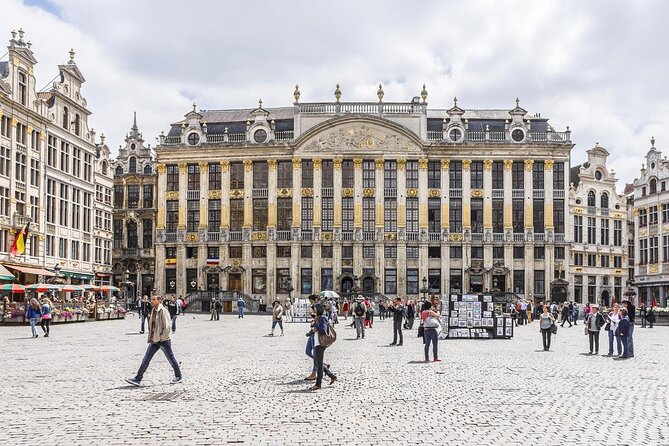
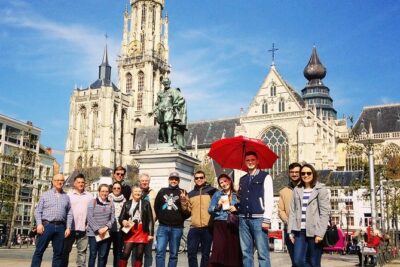
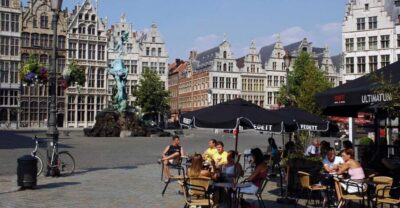
The tour begins at Grote Markt, Antwerp’s grand central square. This is the right place to get your bearings because the square gathers several themes that return throughout the walk: civic power, merchant wealth, local identity, and legend.
Your introduction covers the city’s nickname as the city of giants and explains why the hand became Antwerp’s symbol. Those stories give you something specific to watch for as you continue through the old center. Instead of seeing a hand as a random souvenir design, you begin to recognize it as part of the city’s visual language.
The guide also lays out Antwerp’s rise during the 16th century, when it became Europe’s richest city, and explains the causes of its later decline. That broad economic story is one of the most useful parts of the tour. It helps connect the handsome square to the merchants, guilds, churches, artists, and printers you encounter later.
Allow about 15 minutes here. The stop is free, and you should expect to remain outside while the guide sets the scene. If you want photographs of the square, arrive a little early so you are not trying to take them while the introduction is underway.
Het Steen and the city’s oldest building
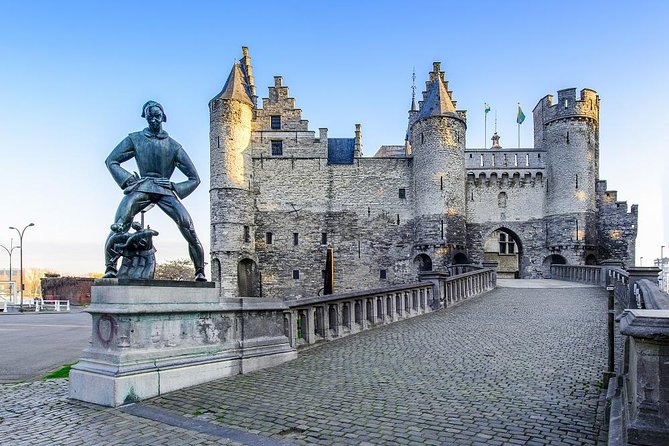
From Grote Markt, the route continues to Het Steen, known in English as the Stone Castle. It is described as Antwerp’s oldest building and was once linked with the city’s famous giant.
The stop lasts about 10 minutes and focuses on the building’s changing functions over time. That approach is more useful than treating Het Steen as a single-purpose castle. You hear how this old structure took on different roles as Antwerp changed around it.
The giant story also brings the tour back to its opening theme. Grote Markt explains the city’s identity, while Het Steen gives that identity a physical setting. If legends are not your main interest, the historical uses of the building provide a more solid reason to pay attention.
Guild life at Museum Vleeshuis
The next stop is Museum Vleeshuis, the old Butcher’s Hall. It was the city’s oldest guild house and carries a grim, practical connection to the trade that once operated there.
This is a short stop, about five minutes, but it adds texture to the tour. Antwerp’s wealth did not come only from grand merchants and painters. It also depended on working guilds, regulated trades, and the daily business of feeding a growing city.
The building’s past is described as bloody, which is fitting for a butcher’s guild hall. You should not expect a long museum visit here. The guide uses the exterior and its setting to explain guild life before moving on.
Same old streets, another chapter:
- Historical Walking Tour: Legends of Bruges
★ 5.0 · 2,541 reviews - Historical Walking Tour: Legends of Antwerp
★ 5.0 · 1,837 reviews - Historical Walking Tour: Legends of Gent
★ 5.0 · 1,761 reviews - Brussels: Historical Tour with Chocolate & Waffle Tasting
★ 4.8 · 1,206 reviews
Baroque splendor at Carolus Borromeus Church
Carolus Borromeus Church brings the tour into Antwerp’s Baroque period. The church is known for its ornate style and its connection with Rubens, who played an important part in its decoration.
The guide explains that the church was once a playground for the famed painter. That phrase points you toward the close link between religious art and Antwerp’s leading artists. Rubens was not simply a name attached to a museum. His work and influence were woven into the city’s churches, public spaces, and cultural life.
Expect about 10 minutes here. The experience does not state that interior admission is included, so you should treat this as a guided stop rather than a guaranteed church visit. If entering the church matters to you, ask about the plan when booking or at the start.
This is also one of the places where a private guide can help. A guide who knows the city well can point out what to look for in the building and explain why the church matters, even if your time inside is limited.
Rubens, the Meir, and a famous Antwerp address

The walk then passes the Farmers Tower and Meir shopping street before reaching the Rubens museum. The route shifts from medieval streets to one of Antwerp’s main commercial corridors, giving you a quick sense of how old and modern parts of the city sit side by side.
Rubens House was where Peter Paul Rubens lived and worked throughout his life. The tour takes you to the museum, but the supplied details do not promise entry. That distinction matters because fans of the painter may want to schedule a separate museum visit.
Even without an interior visit, the stop gives Rubens a clear place in Antwerp’s story. You have already encountered his connection to Carolus Borromeus Church, and now you see the address where his personal and professional life was based. For art lovers, this link between church and home makes the route more satisfying.
The Meir section is also practical. It helps you understand Antwerp as a city that did not freeze in the Middle Ages. Historic buildings, shopping, fashion, and museums all occupy the same compact center.
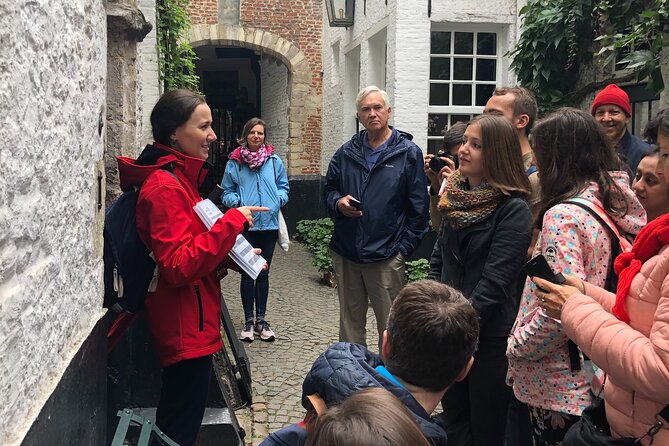
A medieval turn through Vlaeykensgang
Vlaeykensgang is one of the most atmospheric parts of the walk. It is described as Antwerp’s smallest street and offers a sharp change from the open Grote Markt and broad Meir.
The passage gives you a brief look at a tighter, older side of the city. After hearing about wealth, churches, and famous painters, you move into a lane that feels much more intimate. The stop lasts about 10 minutes, enough to explain its place in the medieval center without turning the tour into a long architectural lecture.
This is a good point to remember the practical warning about cobblestones. The route is a walking tour through historic streets, and Joske’s advice is especially relevant if you are not comfortable walking on uneven surfaces. Wear shoes with firm support and expect to remain on your feet for most of the two hours.
The Cathedral of Our Lady and the final legends
The tour ends at the Cathedral of Our Lady, Antwerp’s grandest landmark. The guide discusses the cathedral’s history and returns to legends from long-ago Antwerp.
This closing stop works well because it gathers the tour’s main subjects in one place. The cathedral connects religion, art, civic pride, and the city’s long rise and decline. It also brings you back to Rubens, whose work is closely associated with Antwerp’s artistic identity, though entry to the cathedral is not stated as part of the tour.
The end point is on Handschoenmarkt, beside the cathedral and about 50 meters from Grote Markt. That is convenient if you want to return to the square, continue sightseeing, or stop for lunch nearby. It also means the tour does not leave you stranded at an unfamiliar edge of town.
Plantin-Moretus and Antwerp’s printing story
The route also passes the Plantin-Moretus Museum after moving through the fashion quarter and fashion district. The museum marks the place where industrial printing was born, adding an important commercial and intellectual chapter to the walk.
This is a valuable inclusion because Antwerp’s story is not only about castles, churches, and paintings. Printing helped spread ideas, religious texts, maps, and books far beyond the city. The stop gives you another reason for Antwerp’s influence during its great period of wealth.
The listed route places this stop after the cathedral, although the exact walking order may vary with the guide. Since it is presented as a stop in front of the museum, do not assume museum entry is included. If printing history interests you, you may want to return for a separate visit.
What the private format adds
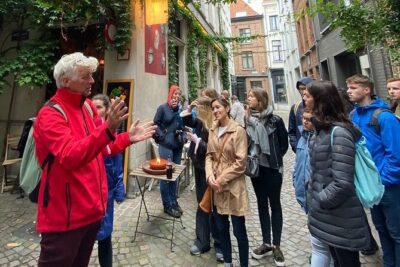
A private tour changes the feel of a two-hour walk. You are not trying to hear over a large crowd, and the guide can respond to your interests. If you are focused on Rubens, you can ask for more art context. If you prefer medieval legends, the guide can give those stories more room.
The tour is offered in English and includes a mobile ticket. Optional hotel pickup is listed as available, which can make the start easier if you are staying in Antwerp. The meeting point is Grote Markt, so confirm the pickup arrangement when you book rather than assuming the guide will come to your hotel automatically.
The experience is described as suitable for most people, with service animals allowed and public transportation nearby. Still, the walking surface matters. Two hours on Antwerp’s old streets can feel longer than two hours on smooth pavement.
The guide quality appears to be a major part of the experience. Beren is praised for knowing a great deal about Antwerp, including the city’s hand symbols and the Red Star Line’s history. Luc D is described as personable and well informed, while Joske is praised for making the past come alive and adapting to the group. Flip is also described as passionate about the city.
One caution is worth keeping in mind. A private guide’s style can shape the experience strongly. One assessment found a guide too imposing, too fond of asking questions, and not always accurate, with little attention to Antwerp’s Jewish community. If that subject matters to you, ask in advance if the guide can include it. A private format gives you room to request a focus, but it cannot guarantee every topic will receive equal time.
Is $105.82 per person a fair price?
The price is easiest to justify when you are splitting it among a small group. You receive about two hours with a guide dedicated to your party, rather than a standard group walk with a fixed pace. For a couple, the cost is a bigger decision. For a family or group of friends, the personal format can offer better value.
The tour does not include a long museum visit, a meal, or a major attraction ticket. Its value comes from interpretation: understanding the hand symbol, the giant legends, Antwerp’s Golden Age, Rubens’s place in the city, guild life, and the importance of printing.
I would book it early if your schedule is fixed. It is commonly reserved around 50 days ahead, which suggests that popular departure times can fill well before a visit. You can cancel for a full refund up to 24 hours before the start time. Changes or cancellations inside that window are not accepted for a refund.
Who should choose this Antwerp walk?
I would recommend it to first-time visitors who want a clear introduction before exploring museums on their own. It also suits couples, families, and small groups who prefer a guide focused only on them.
History and art fans will get the most from the connections among Het Steen, Carolus Borromeus Church, Rubens House, the cathedral, and Plantin-Moretus Museum. The tour is also a good fit if you enjoy legends and local symbols, especially the stories of giants and Antwerp’s hand.
I would think twice if you want substantial time inside museums or churches. The route covers many sites in two hours, but the emphasis is on walking, explanation, and exterior views. You should also choose another plan if uneven cobblestones are a serious problem.
Should you book Legends of Antwerp?
Book this tour if you want Antwerp explained as a living city rather than a set of attractive buildings. The strongest features are the private format, the clear Golden Age story, the giant and hand legends, and the guide’s ability to connect Rubens, guilds, churches, printing, and medieval streets.
It is not the right choice if you want slow museum visits or a completely flat, low-effort outing. For everyone else, it is a compact way to get your bearings, learn the stories behind the center, and finish beside Antwerp’s cathedral with plenty of time left for your own exploring.
FAQ
Where does the tour begin?
The tour begins at Grote Markt, 2000 Antwerpen, Belgium.
Where does the tour end?
It ends at Handschoenmarkt, beside the Cathedral of Our Lady in Antwerp.
How long does the experience last?
The walking tour lasts approximately two hours.
Is this a private tour?
Yes. Only your group participates in the private activity.
What language is offered?
The tour is offered in English.
What is included in the price?
A tour guide is included. The supplied details do not list museum or church admission.
Is hotel pickup available?
Optional hotel pickup is listed as included for convenience. Confirm the arrangement when booking.
What places are covered?
The route includes Grote Markt, Het Steen, Museum Vleeshuis, Carolus Borromeus Church, the Meir area, Rubens House, Vlaeykensgang, the Cathedral of Our Lady, and Plantin-Moretus Museum.
Is the tour suitable for most people?
Yes. Most people can participate, though the route includes walking on cobblestones.
Can I cancel for a full refund?
Yes, if you cancel at least 24 hours before the experience begins. Cancellations made less than 24 hours before the start time are not refunded.
Latest history tours reviewed in Belgium
- Brussels: Museum Art & History Entry Ticket★ 4.5 · 58 reviews
- Brussels: BELvue Belgium History Museum Entry Ticket★ 4.6 · 27 reviews
- Brussels on Foot: Historic Center with a Local Guide in 2 hours★ 4.3 · 36 reviews
- Bruges: History, Chocolate and Beer Walking Tour★ 4.9 · 65 reviews
- Unforgettable Bruges: Sightseeings, History and Tasting.★ 4.3 · 27 reviews
- Bruges: Historical Walking Tour with Food Tasting★ 3.6 · 22 reviews
- Bruges: Nightly Tales and Untold History Walking Tour★ 4.9 · 154 reviews
- Antwerp: Private 3-Hour Historical Sightseeing Walking Tour★ 4.8 · 70 reviews
Antwerp History Tours, compared.
Antwerp: Private 3-Hour Historical Sightseeing Walking Tour
Read our review →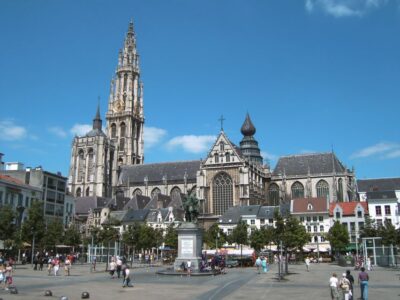
Browse the lists this tour appears in