
Review · VENICE
Venice: The History of St. Mark’s Basilica Tour
St. Mark’s Basilica is Venice at its most dazzling: golden mosaics, shining marble, and Byzantine treasures packed into one church beside the Doge’s Palace. This ticket gets you past the regular entrance line, then lets you look around at your own pace rather than keeping you tied to a long group tour.
I like the choice of four ticket levels, especially the option that adds the Pala d’Oro and terrace. I also like the quick orientation from an escort or guide before you enter. The catch is that this is mainly a ticket-and-audio-guide visit, not a full guided tour, and the phone commentary may feel basic.
Key points to know before you book
- The line-saving access matters: Regular queues can be long even outside the main summer season.
- The Pala d’Oro is worth the upgrade: This Byzantine altarpiece contains more than 1,900 precious stones.
- The terrace gives you Venice from above: You look across St. Mark’s Square, the domes, and nearby canals.
- The museum holds the famous bronze horses: The original horses are displayed inside, not left exposed on the basilica facade.
- The guide usually stops after the introduction: You should expect to explore the interior with an audio guide or on your own.
- Dress for a church: Knees and shoulders must be covered, and large backpacks are not allowed.
Why St. Mark’s Basilica deserves your time
St. Mark’s Basilica is not simply a pretty church to glance at before moving on. It was built to house the relics of St. Mark the Evangelist and became the religious and symbolic heart of Venice.
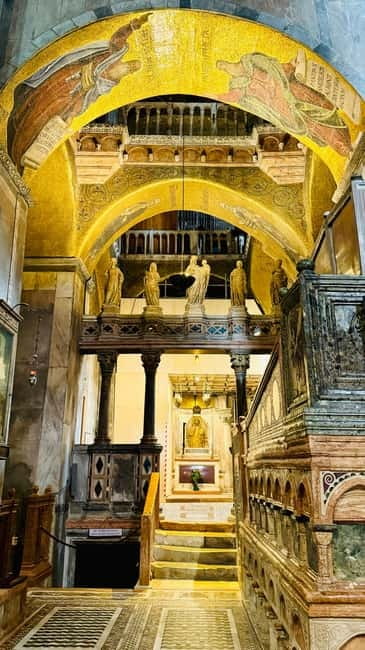
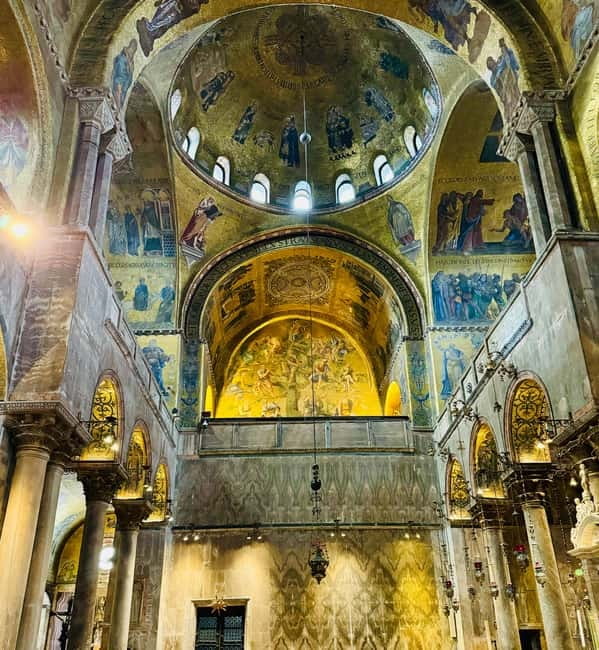
The building reflects Venice’s position between East and West. Byzantine forms, Romanesque structure, and Gothic details meet here, creating a church that feels different from the great churches of Rome or Florence. Inside, light catches on thousands of square feet of mosaics, turning the walls and domes into a golden surface.
That gold was not just decoration. It showed the wealth and reach of the Venetian Republic, which brought materials and artistic ideas from across the Mediterranean and beyond. You will also see precious marbles and polished stonework that make the interior feel almost jewel-like without needing any modern display tricks.
The basilica can be crowded, so the ticket type affects how much you get from the visit. If you only want to see the main church, the standard option is enough. If you want the best sense of its art, history, and views, the full ticket makes more sense.
More Architecture and Landmark Tours in Italy
- Venice: St. Mark’s Basilica Guided Tour & VR History Intro
★ 3.9 · 4,880 reviews - Venice’s Best: Basilica, Doge’s Palace, Gondola & History Gallery
★ 4.5 · 2,478 reviews - Pantheon Elite Guided Tour – Rome’s Iconic Ancient Temple
★ 5.0 · 1,447 reviews
Meeting in Piazzetta dei Leoncini
The stated meeting point is Piazzetta dei Leoncini, the small area between the two lions beside St. Mark’s Square. Look for the tour escort there and have your booking details ready.
Allow extra time to reach the meeting point. Some ticket arrangements require you to collect or convert a voucher before reaching the basilica, and the collection office can be several minutes away. That detail matters because the basilica uses timed entry, the ticket is issued in your name, and late arrivals may not be admitted.
I would arrive early rather than cut it close. Venice’s narrow lanes, bridges, and crowds can make a short walk take longer than expected. Check the exact instructions attached to your booking, since the meeting procedure can vary by service.
The escort takes you to the entrance door. Depending on the option selected, you may also receive a short live explanation on the ground floor. Guides named Daniela, Lila, and Lili have been praised for clear explanations of the basilica and Venetian history, but the precise guide depends on the departure.
Inside the basilica: gold, marble, and controlled movement
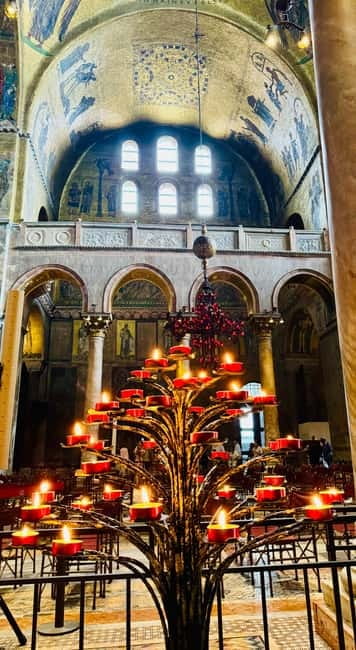
Once inside, take a moment to look upward. The first impression is a blend of dim interior light and bright gold mosaic. The domes, arches, and upper walls are covered with scenes that are easy to miss if you only follow the flow of people.
The standard ticket is best for a short visit. You pass through the Porta San Pietro and view the central interior, with time to study the mosaics and marble at your own speed. This option works if your Venice schedule is tight or if you plan to visit other major sights the same day.
The short advertised duration, 15 to 45 minutes, refers to the scheduled activity and entry process. You should not read that as a firm limit on the amount of time you can spend inside. Your time in the basilica depends on the ticket option, the crowd, and how quickly you move through the permitted areas.
The audio guide is downloaded to your phone. Bring a charged device and headphones if needed. The supplied commentary can help you identify the main features, but it is not always as detailed as the official basilica audio guide available inside. One useful approach is to use the escort’s introduction to get your bearings, then take your time with the church’s visual details.
The Museum and Loggia dei Cavalli
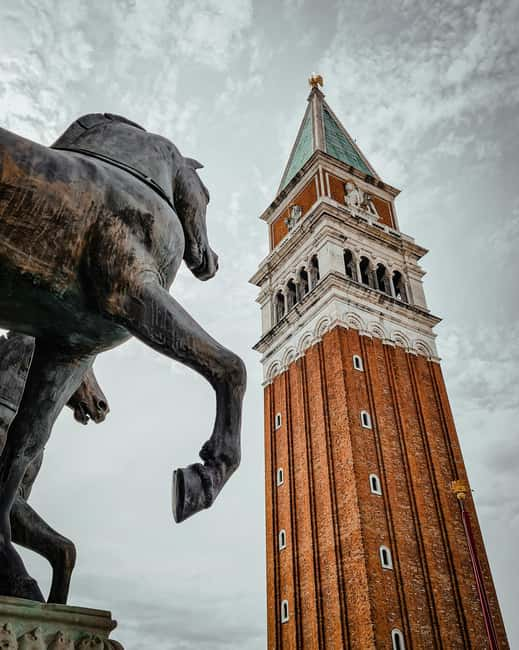
The museum is one of the best reasons to pay more than the basic entry price. It brings you closer to the basilica’s original mosaics and displays the famous bronze horses, known as the Cavalli di San Marco.
The horses are particularly important because they connect the basilica to Venice’s long relationship with the eastern Mediterranean and Constantinople. Up close, you can see details that disappear from ground level. The museum also gives you a better view of the building’s materials and decorative work than you get while moving through the main church.
From the museum, you can reach the Loggia dei Cavalli, the upper gallery on the facade. The setting gives you a fresh angle on the square and the basilica’s exterior. You are no longer looking at the building as a single grand facade. You are close to its sculptures, arches, and horses, with the square opening below.
There are steep stairs to reach the upper areas. That makes this option a poor fit for anyone with mobility impairments or wheelchair users. The museum and terrace also require more time and energy than the standard ticket, so do not add them if you have a very tight schedule.
Same old streets, another chapter:
- Colosseum: Underground and Ancient Rome Tour
★ 4.7 · 12,691 reviews - Rome: Colosseum with Arena, Roman Forum and Palatine Guided Tour
★ 4.0 · 5,598 reviews - Colosseum with Arena, Roman Forum and Palatine Hill Guided Tour
★ 4.5 · 3,526 reviews - Colosseum & Ancient Rome with Arena Floor Option I Max 6 People
★ 5.0 · 3,306 reviews
The Pala d’Oro and its 1,900 stones
The Pala d’Oro is the most important upgrade for many visitors. This gold and silver altarpiece is decorated with more than 1,900 precious stones and is one of the basilica’s finest examples of Byzantine art.
It is displayed behind the main altar, so the Pala d’Oro can be easy to miss if you are focused on the domes and mosaics. The Pala d’Oro ticket includes entry to the basilica and gives you access to this separate treasure.
I would choose this option over the museum-only ticket if you care most about religious art and craftsmanship. The museum and terrace ticket is better for original mosaics, bronze horses, and city views. The full ticket combines both choices and is the strongest option if you may not return to Venice.
The altarpiece is not a quick decoration along the route. Give yourself time to look at the small figures, metalwork, and stones. The scale is intimate compared with the basilica itself, which makes the detail easier to appreciate.
The terrace view over St. Mark’s Square
The terrace is the high point of the full visit in a literal sense. From above, you can look across St. Mark’s Square, the basilica’s domes, and the canals around the heart of Venice.
The view helps you understand the relationship between the basilica, the Doge’s Palace, and the square. At ground level, the buildings can feel almost too large and close together. From the Loggia, their arrangement becomes clearer.
The terrace is also a good place for photographs, although flash photography is not allowed inside. Bring a phone or small camera, but avoid large bags and backpacks. The climb involves steep stairs, so wear comfortable shoes and take care on the way up.
This area can become crowded, and your time may be affected by the pace of other visitors. Still, the terrace adds something the basic interior visit cannot provide: a view that links the church to the city around it.
How much value do you get for $34?
At $34 per person, this costs more than buying a simple basilica admission directly. The difference pays for the reserved arrangement, escort, ticket handling, and audio system, so the value depends heavily on how long the regular queue is and which option you select.
For standard entry alone, the price is easiest to justify during busy periods, when skipping the regular line can save a large part of your morning or afternoon. It is less compelling if you already have a confirmed official ticket and do not mind waiting.
The fuller packages offer better value if you want several parts of the basilica. The museum, terrace, Loggia dei Cavalli, and Pala d’Oro can add up as separate interests, and the full option avoids having to make another visit just to see what you missed.
The ticket information notes that the named basilica admission itself may represent €12 for basic entry, €24 when the museum or Pala d’Oro is included, or €36 for full access. The remaining price covers operational supervision, required audio equipment or guides, and the escort service. That breakdown helps explain why the ticket costs more than a basic entrance fee.
My advice is simple: select the standard ticket only if the main church is your goal. Choose the full experience if St. Mark’s Basilica is one of the main reasons you came to Venice.
What the guiding is really like
Do not book this expecting a continuous lecture through every room. The usual format is an escort to the entrance, a short ground-floor explanation when offered, and self-guided exploration afterward.
That setup has a clear advantage. You can pause in front of the mosaics, move at your own pace, and spend extra time at the Pala d’Oro or terrace without waiting for a group. It also means you must take responsibility for understanding the route and using the audio guide.
The quality of the live introduction can vary. Daniela, Lila, and Lili have each been singled out for engaging explanations, while other departures may feel more like a quick handoff. Audio equipment can also be awkward in the basilica’s thick-walled spaces, and a receiver or microphone may not always be easy to hear.
If you want a detailed art-history lesson, look for a clearly advertised guided tour rather than assuming this ticket provides one. If you prefer freedom after a short orientation, this arrangement may suit you well.
Practical rules for a smooth visit
Wear clothing suitable for a sacred place. Short skirts, shorts above the knee, and sleeveless shirts are not permitted. Cover your shoulders and knees before you arrive, since you may not be allowed inside otherwise.
Leave large backpacks and bags behind. Flash photography is forbidden. Comfortable shoes matter, especially if you choose the museum, Loggia, and terrace, where stairs are part of the route.
The activity is not suitable for wheelchair users or people with mobility impairments. The upper sections involve steep stairs, and the basilica itself can be difficult to navigate when crowded.
Cancellation is allowed up to 24 hours before the scheduled time for a full refund, and reserve-now-pay-later booking is available. The named entry ticket is non-refundable and non-transferable once issued, so punctuality remains important even if your wider booking can be changed.
Who should book this basilica visit?
I would recommend it to a first-time Venice visitor who wants to see St. Mark’s Basilica without gambling on a long queue. It is also useful for anyone whose dates overlap with sold-out official tickets.
The full option suits you if you want the bronze horses, terrace, Pala d’Oro, and basilica interior in one visit. Families and independent sightseers may like the freedom to stop and look without staying beside a guide.
I would be more cautious if you need step-free access, want a fully guided tour, or already hold a direct basilica ticket. In those cases, the extra cost may not bring enough benefit.
Should you book it?
Book this experience if saving time matters and you want more than a quick look at the main church. The Pala d’Oro and terrace are the strongest reasons to upgrade, while the museum adds the original mosaics and bronze horses.
Choose the standard ticket for a short, focused visit. Choose the full package if St. Mark’s Basilica is high on your Venice list and you want to leave knowing you saw its major public areas. Just arrive early, dress properly, travel light, and treat the audio guide as a useful aid rather than a full private tour.
FAQ
Where is the meeting point?
The meeting point is in St. Mark’s Square, at Piazzetta dei Leoncini between the two lions.
Does the ticket include skip-the-line access?
Yes. The activity includes priority access and skip-the-ticket-line entry to St. Mark’s Basilica.
Is this a fully guided tour?
No. The escort accompanies you to the entrance, and some options may include a live guide for the ground floor. Most of the visit is self-guided with an audio guide downloaded to your phone.
What does the standard ticket include?
The standard ticket includes access to St. Mark’s Basilica. It does not include the museum, Loggia dei Cavalli, terrace, or Pala d’Oro.
Which ticket includes the terrace and museum?
The Museum and Terrace Ticket includes access to the museum and panoramic terrace. The Full Experience Ticket also includes the Loggia dei Cavalli and Pala d’Oro.
Is the Pala d’Oro included in every ticket?
No. The Pala d’Oro is included with the Pala d’Oro Ticket and the Full Experience Ticket. It is not included with the standard or Museum and Terrace options.
What clothing and bags are allowed?
You must cover your shoulders and knees. Short skirts, shorts above the knee, sleeveless shirts, large backpacks, and bags are not permitted inside the basilica.
Latest history tours reviewed in Italy
- Forte di Bard: history tour★ 4.5 · 31 reviews
- Florence Wine &Food: Taste Tuscan Flavors in Historic Cellar★ 4.6 · 31 reviews
- Florence Medici Bike Tour – Cycle Through History and Power★ 4.2 · 23 reviews
- Florence: Medici Family History Tour★ 4.3 · 93 reviews
- Florence: Fashion History Guided Walking Tour & Museum Visit★ 4.2 · 72 reviews
- Essential Florence Walking Tour to discover its history★ 5.0 · 21 reviews
- Discover Herculaneum: A guided tour of the ancient Roman city★ 4.9 · 34 reviews
- Day drinking in Rome – Scandalous Roman History★ 4.8 · 31 reviews
Venice History Tours, compared.
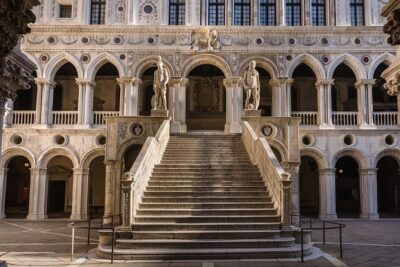
Venice’s Best: Basilica, Doge’s Palace, Gondola & History Gallery
Read our review →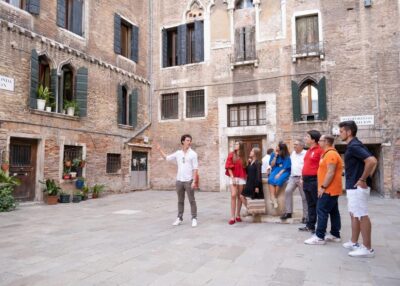
Venice: City Center Historical Guided Walking Tour
Read our review →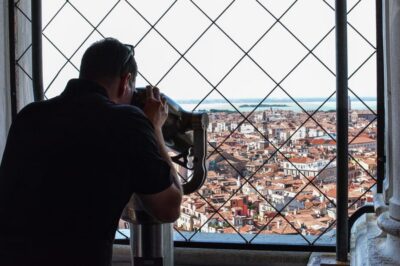
Venice: Bell Tower & St Mark’s Square History Gallery Ticket
Read our review →Browse the lists this tour appears in