
Review · FLORENCE
Essential Florence Walking Tour to discover its history
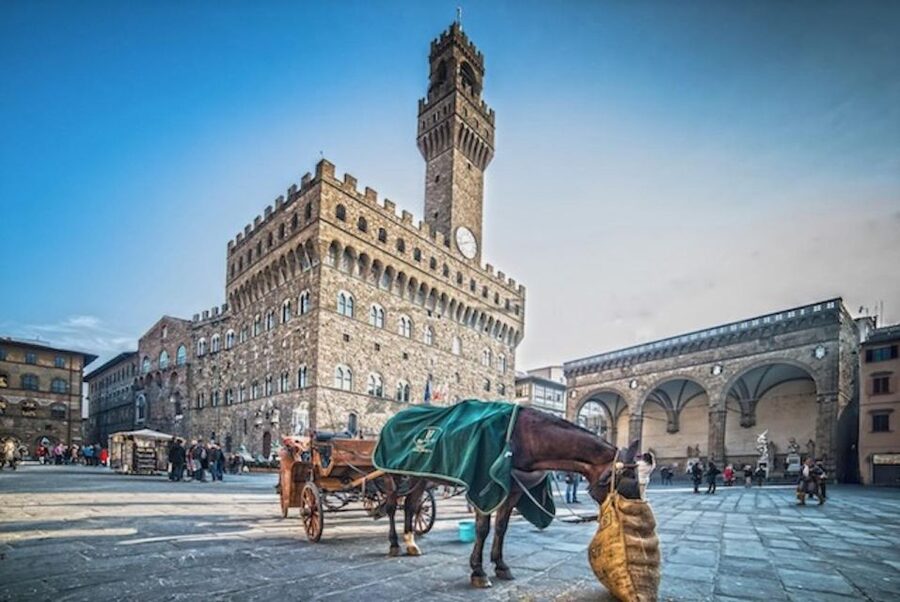
Florence packs Roman foundations, medieval towers, Medici power, famous art, and designer shopping into a compact historic center. This three-hour walk makes sense of that jumble, moving from Piazza della Repubblica across the Duomo district, Ponte Vecchio, and the artisan streets of Oltrarno.
I like the strong historical storyline, which links Florence’s rise to its buildings instead of treating each sight as a disconnected photo stop. I also like the gelato tasting and headsets, especially when your guide is explaining details in a crowded square.
The main drawback is simple: this is a brisk walking tour with cobblestones, steps, and no wheelchair access. You will see most major sights from outside, with the main interior visit at Santa Trinita, so anyone wanting museum time should add separate tickets.
Key points to know before booking

- Roman beginnings in Piazza della Repubblica: The tour opens by explaining how Florence began before medieval towers and Renaissance palaces changed its shape.
- Medici power comes alive: Stories of wealth, political control, murder, betrayal, and patronage give meaning to the city’s grand buildings.
- A useful art and architecture lesson: You compare medieval, Renaissance, and High Renaissance styles while walking through the city.
- Major sights without museum entry: See the Duomo complex, Ponte Vecchio, Pitti Palace, Dante’s house, and more from the street.
- Santa Trinita adds an interior stop: You go inside to see frescoes by Ghirlandaio, a welcome change from outdoor viewing.
- Finish with Florence’s working side: Oltrarno brings artisan workshops, old churches, Medici residences, and a less formal feel than the central shopping streets.
Why this three-hour Florence walk works
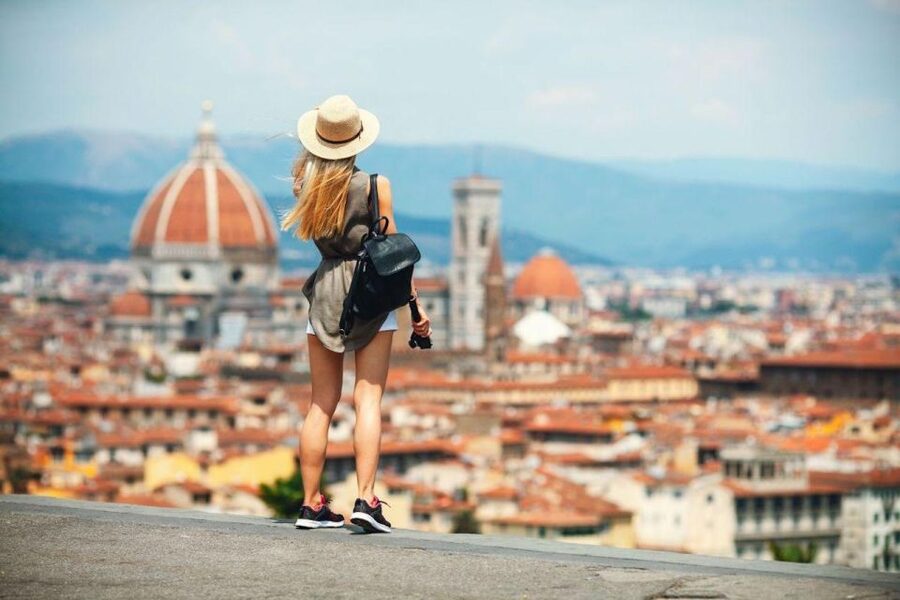
Florence can be confusing at first. The center is small, but every corner seems to carry a church, palace, statue, or famous name. This tour gives you a map in your head and a story to follow.
You begin at Piazza della Repubblica, where the guide explains Florence’s Roman foundation. That opening matters because it shows that the city did not appear fully formed in the Renaissance. Its later wealth grew from earlier layers of settlement, trade, religion, and political struggle.
From there, the walk moves through medieval Florence and explains how the city gained power and money. You will hear about the tower houses that once shaped the skyline, then compare them with the grand Renaissance palaces that came later. I like this approach because architecture becomes evidence. A building is not just pretty stone; it tells you who had money, who needed protection, and who wanted to display control.
The tour is conducted in English, with headsets included. That is useful in Florence, where traffic, church bells, and crowds can swallow a guide’s voice. You can keep your eyes on the buildings rather than standing close to the guide at every stop.
More History Walking Tours in Italy
- Venice: City Center Historical Guided Walking Tour
★ 4.2 · 1,873 reviews - Palermo: Street Food and History Walking Tour
★ 4.9 · 1,486 reviews - Verona: History and Hidden Gems Guided Walking Tour
★ 5.0 · 1,379 reviews
Piazza della Repubblica and the making of Florence
Piazza della Repubblica is a practical starting point because the tour begins with the city’s Roman origins. You get a sense of Florence before the Medici, before Michelangelo, and before the city became the Renaissance capital most people picture.
The historical explanation then moves into medieval Florence. Your guide connects the city’s growth with the forces that helped it become wealthy and influential. The tour does not treat Florence as a collection of famous names. It shows how political and economic power shaped streets, homes, churches, and public spaces.
This early section is particularly helpful if you are new to the city. You will hear plenty of names during a Florence visit, and it is easy to lose track of who belonged to which period. A good guide helps you sort medieval Florence from Renaissance Florence and understand why the change mattered.
The route also introduces the darker side of the city. Expect stories of murder, betrayal, rivalry, and family power. That material keeps the history lively, but it also explains why the Medici story is about politics as much as art.
Orsanmichele, Dante, and the religious center
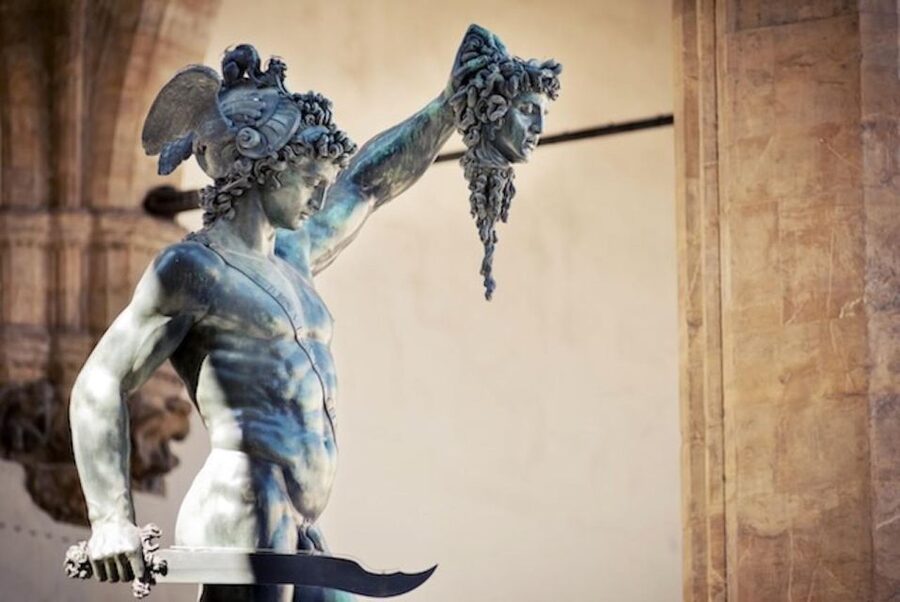
The walk continues to Orsanmichele, a church and former grain market known for its exterior statues. You will see work connected with artists such as Donatello and Ghiberti. This is one of those stops where a guide adds real value, since the statues can be easy to pass without understanding their role or importance.
You also pass Dante’s house. The stop connects Florence’s medieval literary world with the city’s political and religious life. You should not expect a long museum visit here. The value is in placing Dante within the streets where Florence’s medieval story unfolded.
The religious center follows, with the Duomo, Baptistery, and Campanile viewed from outside. The group learns how these buildings worked together as Florence’s spiritual heart. The scale is impressive, but the architectural comparison is even more useful. You can look from one structure to the next and see how the city expressed religious ambition in stone and marble.
This part of the route is likely to be busy. The Duomo area draws crowds throughout the day, so the headsets are more than a small convenience. Keep your attention on the guide, but also allow time to look up. Florence rewards you for noticing details above street level.
Santa Maria Novella and Renaissance palace style
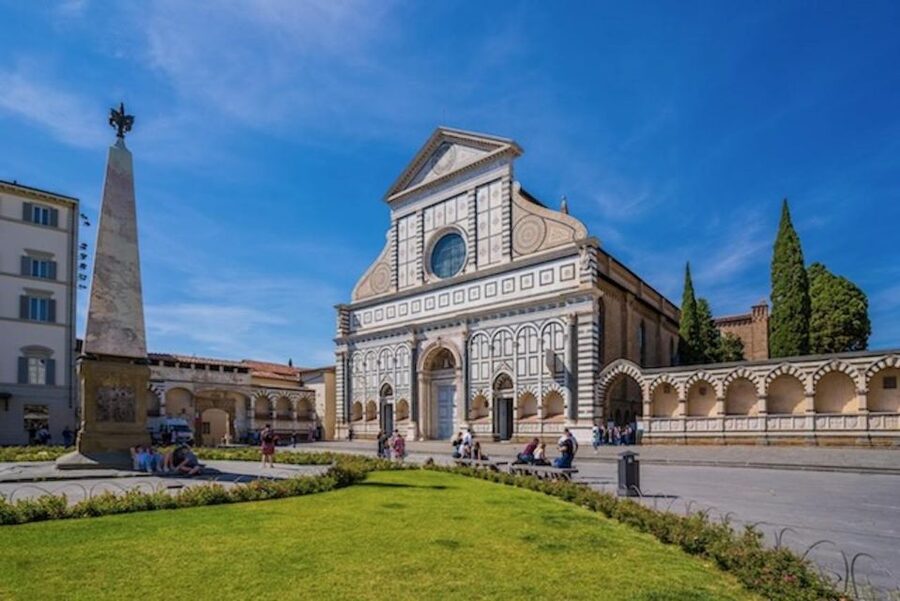
Santa Maria Novella is another exterior stop. The church helps broaden the picture beyond the Duomo. Florence’s religious identity was not concentrated in one building, and the route shows how churches helped organize daily life and civic identity.
The walk then brings in the architecture of the wealthy. You see Ruccellai Palace and Strozzi Palace, both useful examples of Renaissance design. Here, the guide can explain the difference between defensive medieval forms and the more ordered, confident look of Renaissance palaces.
I find this one of the strongest reasons to choose a guided walk rather than simply follow a map. Without context, a palace may look like another handsome facade. With the right explanation, you start noticing symmetry, proportion, stonework, and the ways powerful families used architecture to announce their place in Florence.
The tour also passes Via Tornabuoni, Florence’s best-known designer shopping street. This adds a modern commercial note to the historical route. You can see how a street associated with luxury today still fits into a city long shaped by wealth, fashion, and status.
Via Maggio offers a different mood, with its reputation for antique shopping and historic buildings. The contrast between polished designer retail and older artisan and antique streets gives you a better feel for Florence as a living city, not only an outdoor museum.
Same old streets, another chapter:
- Colosseum: Underground and Ancient Rome Tour
★ 4.7 · 12,691 reviews - Rome: Colosseum with Arena, Roman Forum and Palatine Guided Tour
★ 4.0 · 5,598 reviews - Venice: St. Mark’s Basilica Guided Tour & VR History Intro
★ 3.9 · 4,880 reviews - Colosseum with Arena, Roman Forum and Palatine Hill Guided Tour
★ 4.5 · 3,526 reviews
Santa Trinita and Ghirlandaio’s frescoes
At Santa Trinita, you go inside to admire frescoes by Ghirlandaio. This is an important detail when comparing tours. Much of this experience takes place outdoors, so the interior visit gives you time to see actual artwork rather than only exterior architecture.
The frescoes also connect the walking route with the artists who made Florence famous. The tour discusses the painters of the Renaissance and the workshops where artists worked. You will learn about the world that produced David and other celebrated works, although this tour does not include an indoor visit to see Michelangelo’s David.
That distinction matters. You should book this for orientation, storytelling, architecture, and outdoor sights. If David is your top priority, arrange a separate Accademia visit. The tour helps you understand the artistic setting, but it does not replace an art museum ticket.
Santa Trinita is also a useful pause in the route. Three hours on foot can feel long, especially on hard pavement. The church offers a change of pace before the walk continues toward the river and Oltrarno.
Ponte Vecchio, Vasari’s corridor, and Medici power
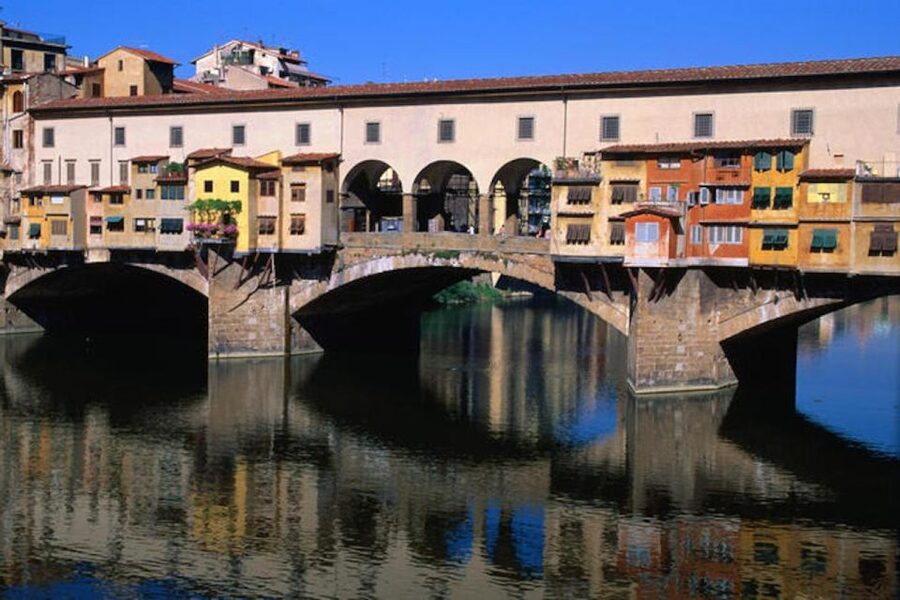
The route crosses Santa Trinita Bridge and Ponte Vecchio. These bridges are more than scenic crossings. They connect the central city with Oltrarno and help show how Florence developed on both sides of the Arno.
Ponte Vecchio is one of the city’s most recognizable sights, but the guide adds context by pointing out the Vasari corridor. You see it from outside rather than walking through it. The corridor is tied to the Medici family’s need to move between residences and government spaces with privacy and protection.
This is where the Medici story becomes especially vivid. You can connect family power with the physical layout of the city. Palaces, bridges, corridors, churches, and public spaces all helped the family manage its position.
The tour does not promise a quiet bridge. Ponte Vecchio is a major stop on almost every Florence itinerary, so expect people and a steady stream of movement. The benefit of going with a guide is that you do not need to stop in the middle of the crowd to figure out what you are seeing.
Oltrarno, Pitti Palace, and artisan Florence
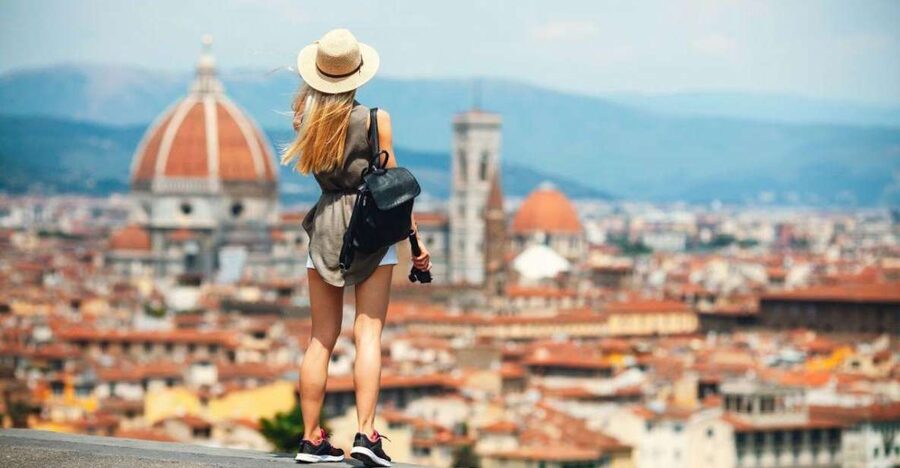
Across the river, the route enters Oltrarno. The streets here bring a different character, with artisan workshops, older churches, and Medici residences. You see Pitti Palace from outside, once a Medici residence, and learn how it fits into the family’s wider network of power.
Santa Felicita is another stop. It is one of Florence’s oldest churches and sits close to the Vasari corridor. That location makes it a useful place to understand how religion, private access, and Medici life overlapped.
Oltrarno is valuable because it prevents the tour from becoming a parade of central Florence highlights. You get a wider view of the city’s neighborhoods and its working traditions. The artisan workshops are part of the appeal, even though the tour does not promise a hands-on craft visit or shopping session.
You should also expect more uneven walking here. The tour uses cobblestone streets and includes steps. Wear sturdy, comfortable shoes. The operator does not accept wheelchair users or people with mobility impairments, and the walk is not suitable for people with back problems, recent surgery, or other conditions that make extended walking difficult.
What guides Becky, Lisa, and Andrea bring
The guide can vary, but Becky, Lisa, and Andrea are among the names associated with this experience. The strongest praise centers on guides who make the history personal, interactive, and easy to follow.
Becky is noted for an art history background and for explaining architecture from the medieval period through the Renaissance and High Renaissance. That range suits Florence particularly well because the city’s main lesson is change over time. You are not simply looking at beautiful buildings; you are learning how styles and ideas developed.
Lisa is described as friendly and interactive, while Andrea is praised for bringing energy to the city tour. The guide’s personality will shape the experience, since three hours is a long time to listen to a flat presentation. The available feedback gives a consistent picture of lively storytelling and careful answers to questions.
I would choose this tour if you like history told through incidents and people. If you prefer to wander silently, stop for long photographs, or spend most of the morning inside museums, the pace and format may feel less suitable.
Gelato, headsets, and the practical value of $41
The price is $41 per person. For three hours with a local guide, headsets, and an Italian gelato tasting, that is a fair price if you want a strong first look at Florence.
The value comes from the connections. You see many major landmarks, but you also learn why they matter and how they relate to one another. Hiring separate guides for every church, palace, bridge, and historic street would cost far more, though this walk does not include museum admissions or extended interior visits.
The gelato tasting is a small but welcome part of the experience. It gives you a taste of Italy without taking time away from the route. Do not book this only for the gelato, but enjoy it as a pleasant reward during a history-heavy morning or afternoon.
You can cancel up to 24 hours before the start for a full refund, and the reserve-now, pay-later option keeps your plans flexible. Starting times vary, so check availability before booking. Children under eight are not accepted.
Who should book this Florence walking tour?
I would recommend it to a first-time visitor who wants a clear introduction before choosing which museums and churches to visit alone. It also suits anyone who enjoys art, architecture, family politics, and stories with a little scandal.
It is a good fit for English-speaking adults and older children who can manage three hours on foot. The guide’s explanations should help you notice details you might otherwise walk past, especially on palace facades, church exteriors, statues, and bridges.
I would hesitate if your main goal is indoor art. You will see Santa Trinita inside, but the Duomo, Baptistery, Campanile, Pitti Palace, and other major sights are viewed from outside. You should also choose another plan if you have mobility limits, back problems, recent surgery, or difficulty with steps and cobblestones.
Should you book it?
Book this tour if you want Florence to make sense quickly. The route covers Roman beginnings, medieval growth, religious power, Renaissance art, Medici politics, designer streets, bridges, and artisan Oltrarno in one well-planned walk.
The best reason to go is the guide-led storytelling. Becky, Lisa, and Andrea are praised for making the city lively and for explaining art and architecture in a way that stays with you. Just bring proper shoes, expect a steady pace, and remember that this is an outdoor introduction rather than a museum tour.
FAQ
How long does the Essential Florence Walking Tour last?
The tour lasts three hours.
What language is the tour conducted in?
The live tour guide speaks English, and the included audio support is also in English.
What is included in the price?
The tour includes an expert local guide, an Italian gelato tasting, and headsets so you can hear the guide clearly.
Does the tour enter the Duomo?
The Duomo, Baptistery, and Campanile are viewed from outside. The stated interior visit is at Santa Trinita, where you can see frescoes by Ghirlandaio.
Is Michelangelo’s David included?
The tour discusses the creation of David and the artists and workshops of Florence, but an indoor visit to see the statue is not included.
Where does the tour begin?
The tour begins in Piazza della Repubblica.
Is the walk suitable for wheelchair users?
No. The tour is not suitable for wheelchair users or people with mobility impairments because it includes walking and steps.
What should I wear?
Wear comfortable clothes and sturdy, comfortable shoes. Sandals and flip flops are not allowed.
Can children join the tour?
Children under eight years old are not accepted.
Latest history tours reviewed in Italy
- Forte di Bard: history tour★ 4.5 · 31 reviews
- Florence Wine &Food: Taste Tuscan Flavors in Historic Cellar★ 4.6 · 31 reviews
- Florence Medici Bike Tour – Cycle Through History and Power★ 4.2 · 23 reviews
- Florence: Medici Family History Tour★ 4.3 · 93 reviews
- Florence: Fashion History Guided Walking Tour & Museum Visit★ 4.2 · 72 reviews
- Discover Herculaneum: A guided tour of the ancient Roman city★ 4.9 · 34 reviews
- Day drinking in Rome – Scandalous Roman History★ 4.8 · 31 reviews
- Communal dinner in an ancient Tuscan farmhouse★ 4.2 · 29 reviews
Florence History Tours, compared.
Guided Medici Tour Florence: Discover Mysteries & History
Read our review →
Tipsy Tour: Guided Bar Crawl In Florence with Dark History
Read our review →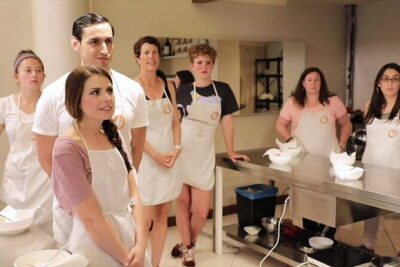
Florence Cooking Course with Historic Local Market Visit
Read our review →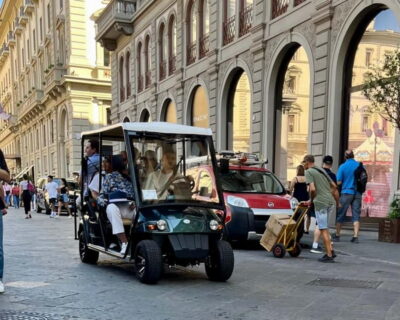
Florence to Fiesole golf cart tour:History & Panoramic views
Read our review →
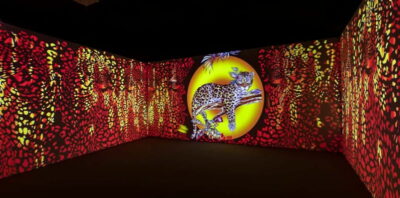
Florence: Fashion History Guided Walking Tour & Museum Visit
Read our review →
Florence Wine &Food: Taste Tuscan Flavors in Historic Cellar
Read our review →
Florence Medici Bike Tour – Cycle Through History and Power
Read our review →Browse the lists this tour appears in