
Review · SAN ANTONIO
Small-Group World Heritage San Antonio Missions Guided Tour
San Antonio’s missions are best understood as a connected system, not five separate old churches. This tour links the sites by air-conditioned vehicle, giving you a useful view of how worship, farming, water, work, and daily life fit together along the river. Mission San Jose gets the most time, including a 10 am Park Ranger program.
I like the small maximum of 10 people, which makes it easier to ask questions and easier for the guide to adjust the pace. I also like that the tour covers the Espada Aqueduct, a practical piece of engineering often missed by people who visit only the mission buildings. The main caution is timing: the advertised four hours can run to four and a half or five, and the guide’s steady stream of commentary may be too much if you prefer a quiet ride.
Key points at a glance
- Five meaningful stops: Four missions plus the Espada Aqueduct give you a connected view of the San Antonio mission system.
- Mission San Jose anchors the tour: You spend about 75 minutes here and arrive in time for a 10 am Park Ranger tour.
- A genuinely small group: The vehicle carries no more than 10 people, allowing for personal questions and a less crowded feel.
- Guides bring strong Texas background: Joseph is especially praised for his mission and Texas history, while Matthew, Matt, and Stewart also lead tours.
- Plan for a late finish: Four hours is an estimate, and some departures last closer to five hours.
- Bring breakfast or a snack: Bottled water is supplied, but food and souvenirs are not included.
Why San Antonio’s missions deserve more than a quick stop
The Alamo gets most of the attention in central San Antonio, but the four missions south of downtown tell a broader story. They show how religious communities were organized, how farming depended on water, and how Spanish colonial plans shaped the area.
That wider view is the real strength of this experience. You are not simply looking at stone walls and church facades. You are moving between sites and seeing how each one had a different role and character.
I would choose this tour if you want context without arranging a rental car or working out the route yourself. The missions are spread out, so independent visits take more planning than a walk along the River Walk. Here, the transport connects the sites while the guide explains what you are seeing.
More UNESCO World Heritage Tours in the USA:
- San Antonio Missions UNESCO World Heritage Sites Tour
★ 4.5 · 918 reviews - World Heritage Shirakawa-go and Experience Tours from Kanazawa
★ 5.0 · 4,049 reviews - From Tirana: Berat UNESCO Heritage & Belshi Lake Tour
★ 4.9 · 3,863 reviews
Meeting downtown at 9 am
The tour begins at 401 Villita Street, near the central tourist area, at 9 am. From there, you ride in an air-conditioned vehicle to the mission sites. That matters in San Antonio, where even a short outdoor visit can feel tiring, especially when several stops include walking around open grounds.
The group limit of 10 is a useful middle ground. You get the efficiency of organized transport without the scale of a large coach tour. Joseph is the name most often associated with the experience, and he is described as warm, patient, and able to answer detailed questions. Matthew, Matt, and Stewart also lead departures.
The guide may talk throughout much of the drive. That can be a treat if you want a history lesson with your sightseeing, and Joseph has even been praised for his clear voice and audiobook work. If you prefer time to look out the window in silence, bring that expectation with you. One of the few criticisms is that the commentary can become long and range beyond the missions into Texas politics, local issues, and general San Antonio history.
Mission Concepcion: a brief first look
Your first stop is Mission Concepcion, with about 25 minutes to explore the grounds. This is a short visit, so you should not expect a full, slow examination of every detail.
The value here is orientation. You begin to see the mission as a working community rather than an isolated church. The guide can point out features that are easy to pass over when you are reading signs on your own, then place Concepcion in the larger route.
Because the stop is brief, use your time well. Listen for the guide’s main points first, then take photographs or look around. If you need a long visit at each mission, this schedule may feel brisk. If your goal is to understand the group of sites, the shorter first stop works well.
Mission San Jose and the 10 am Park Ranger program
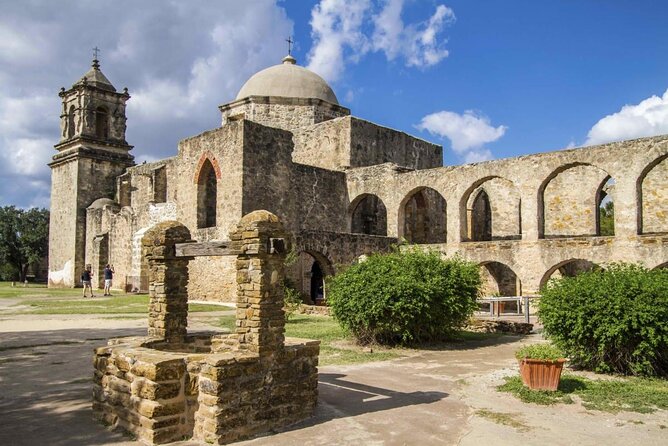
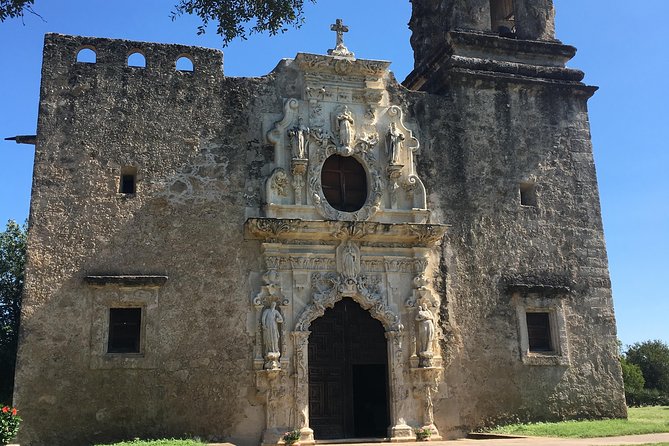
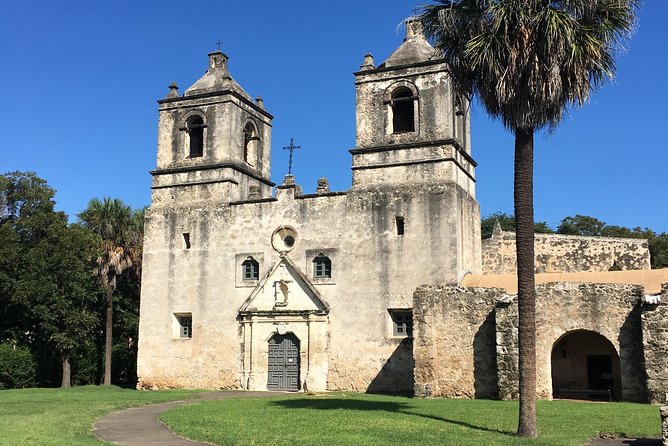
Mission San Jose is the centerpiece of the morning. It is the largest of the current missions, and the schedule allows about one hour and 15 minutes here. The tour is planned to arrive in time for the 10 am guided program led by a Park Ranger.
This is a strong pairing. Your tour guide provides the broader route and historical connections, while the ranger program gives you another informed voice on the site itself. You get more than a quick photo stop, and the longer visit lets you look around with less pressure.
San Jose is also where the tour’s theme becomes clearest. The church and grounds help show the scale of a mission community and the work required to keep it going. Pay attention to the way the guide compares San Jose with the smaller missions. Those differences are part of what makes visiting all four worthwhile.
The drawback is that a scheduled ranger program gives the morning a fixed rhythm. You will need to follow the tour’s timing rather than linger as long as you wish in one corner of the grounds. Still, this is the stop where the extra time pays off most.
More Small-Group History Tours in the USA:
- Boston: Freedom Trail History Small Group Walking Tour
★ 5.0 · 6,450 reviews - Hidden Alleyways and Historic Sites Small-Group Walking Tour
★ 5.0 · 2,335 reviews - New Orleans Small-Group Haunted History Carriage Tour
★ 4.5 · 2,289 reviews - Boston: Freedom Trail History Small Group Walking Tour
★ 4.9 · 1,590 reviews
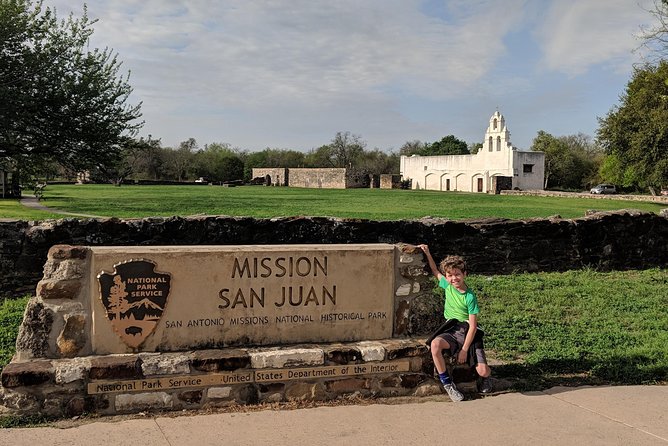
Mission San Juan: a quieter change of pace
Mission San Juan Capistrano receives about 20 minutes. After San Jose, the shorter visit feels more like a focused introduction than a full guided exploration.
This stop helps you compare the missions instead of treating them as identical ruins. The guide points out differences in layout, purpose, and setting, giving you a reason to keep looking closely even when the visit is brief.
I would use this stop to ask a specific question. With a small group, you have a fair chance to get a direct answer rather than waiting for a large crowd to move along. The short schedule also means you should stay aware of the departure time.
The Espada Aqueduct: the most practical stop
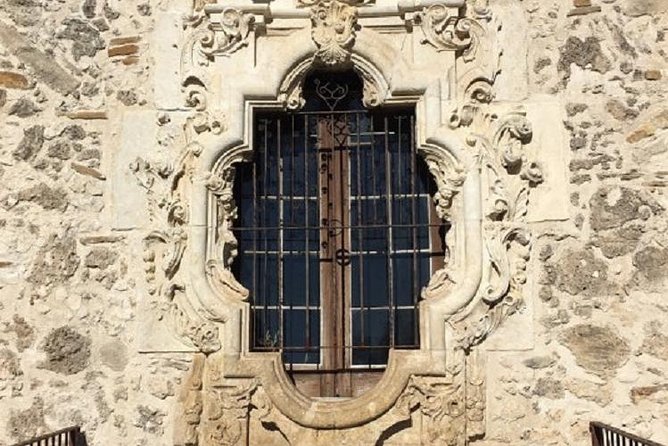
The Espada Aqueduct gets only about 10 minutes, but it may be the most revealing stop for understanding how the southern mission functioned. The aqueduct carried water to the southernmost mission and helped make farming possible.
That small detail changes how you see the entire route. A mission was not only a place of worship. It needed water, food, labor, and systems for keeping a community alive. The aqueduct shows the practical side of that plan.
Do not expect a long walk or extended exploration here. This is a brief look, but it connects the religious buildings to the work of agriculture. I appreciate that the tour includes it rather than focusing only on the most photogenic church exteriors.
Mission Espada: finishing at the southernmost mission
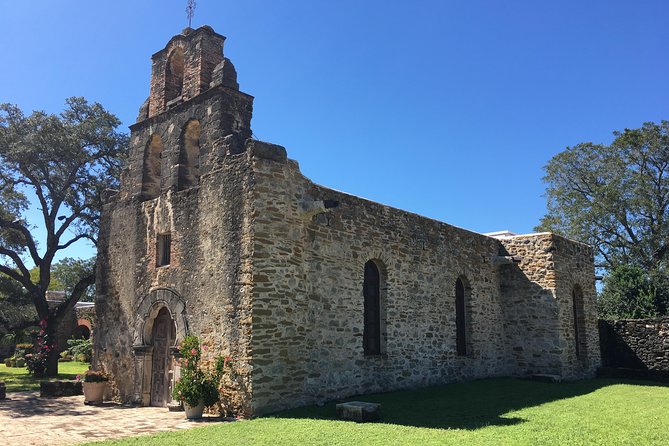
The final mission is Mission Espada, where you spend about 20 minutes. Coming after the aqueduct, this stop has a clear purpose: you can connect the water system with the mission it supported.
The visit is again brief, so the guide’s explanation matters. Without context, Espada could seem like another small historic site. With the aqueduct and the earlier comparisons in mind, it becomes part of a larger pattern.
By this point, you will have visited four missions and one related water structure. That is a lot to take in during one morning. If you enjoy history, the density is a benefit. If you prefer slow photography and long periods on your own, the schedule may feel packed.
How the guides shape the experience
The guide can make or break a history tour, and this experience depends heavily on that personal connection. Joseph receives the strongest praise in the supplied material. He is described as personable, enthusiastic, and exceptionally well informed about both the missions and Texas history. He also gives practical San Antonio suggestions, including restaurant ideas.
Matthew is described as friendly and professional, with a strong grasp of the area’s culture and history. Matt has been praised for enthusiasm and for continuing a departure even when only one person was booked. Stewart is noted for using researched anecdotes to explain the city and its past.
The common thread is a high level of preparation. You should expect plenty of spoken explanation, not just a ride between photo stops. That suits me when the subject is complicated, because a good story can connect details that signs leave separate.
The tradeoff is pace and volume. One departure was described as four-plus hours of talking, and another was called almost too full of information. Ask questions, but do not feel obliged to absorb every detail. You can enjoy the tour more if you accept that it is a teaching-heavy experience rather than a quiet sightseeing shuttle.
Timing, walking, and what to bring
The stated duration is about four hours, from a 9 am start. In practice, you should keep your schedule open until roughly 2 pm. The route can run long, especially when questions continue or the guide allows more time at a stop.
That extra time is not automatically a flaw. Several people found the longer visit worth it, and a relaxed pace is better than being hurried through every mission. The problem comes if you have a lunch reservation, museum ticket, or other fixed plan immediately afterward.
Wear comfortable shoes. The tour includes time on mission grounds, and one departure was described as tiring despite having no complaints about the experience. Bottled water is included, but snacks are not. Eat a substantial breakfast or carry a snack if you need food between 9 am and the finish.
The vehicle is air-conditioned, a real advantage after walking outdoors. The tour returns to the starting point at 401 Villita Street. Individual drop-off help has happened, including a hotel drop-off, but you should not treat that as a guaranteed part of the tour.
Value, group size, and practical limits
No tour price is provided here, so I cannot judge the exact cost in dollars. I can judge what you receive for the fee: transportation between five stops, a small group capped at 10, bottled water, and several hours of live interpretation.
That can be good value if you would otherwise need to arrange transportation and research the missions yourself. The tour also saves you from guessing how the sites connect. The strongest value comes from the guide’s explanations and the scheduled Park Ranger program at Mission San Jose.
You are not paying for food, souvenirs, or a private vehicle. The tour is offered in English, and children under 8 are not permitted. Service animals are allowed, the route is near public transportation, and most people can participate.
Confirmation is provided at booking. You can cancel for a full refund up to 24 hours before the start time. Changes or cancellations inside that window are not accepted for a refund, and poor weather can lead to a new date or full refund.
Who should book this mission tour?
I would recommend it most strongly to first-time San Antonio visitors who have already seen the central sights and want a fuller picture of the city. It is also a good match for solo visitors, couples, and history-minded families with children aged 8 and older.
You should book if you value a guide who explains context, enjoy asking questions, and want to see all four missions without arranging your own route. The small group is particularly helpful for solo visitors and anyone who wants personal attention.
Think twice if you need a strict four-hour schedule, dislike extended narration, or want lots of unstructured time at each site. Sunday visits may also have limits if worship affects access to some church interiors, so ask about that before you commit.
Should you book it?
Book this tour if the idea of hearing a detailed Texas history lesson while riding between four missions appeals to you. The Espada Aqueduct, the 10 am Park Ranger program, and the small group make it more useful than simply visiting the buildings on your own.
Skip it if your priority is a quick outing with minimal commentary. For everyone else, keep the afternoon open, eat breakfast, wear good shoes, and be ready for a guide who may have much more to say than the clock suggests.
FAQ
How long does the tour last?
The tour is advertised as approximately four hours, beginning at 9 am. It can run to four and a half or five hours, so keep your afternoon flexible.
Where does the tour start?
It starts at 401 Villita Street, San Antonio, Texas 78205.
Where does the tour end?
The activity ends back at the meeting point.
What time does the tour start?
The scheduled start time is 9 am.
Which missions are included?
The route includes Mission Concepcion, Mission San Jose, Mission San Juan Capistrano, and Mission Espada.
Is the Espada Aqueduct included?
Yes. The tour includes a brief visit to see the aqueduct that helped carry water to Mission Espada and support farming.
Does the tour include a Park Ranger program?
Yes. The schedule aims to arrive at Mission San Jose in time for the 10 am guided program led by a Park Ranger.
How large is the group?
The tour has a maximum of 10 people.
Is food included?
No. Bottled water is included, but snacks and souvenirs are not.
Latest history tours reviewed in the USA
- Franklin: Ghost Tour in Historic Franklin★ 4.8 · 65 reviews
- Fort Worth: Stockyards History Tour Pub Crawl★ 4.8 · 39 reviews
- Downtown Flagstaff Haunted History Walking Tour★ 4.7 · 46 reviews
- New York City: Flatiron Food, History, and Architecture Tour★ 4.8 · 43 reviews
- Fairbanks: Gold Dredge 8 Historic Train Tour★ 4.7 · 219 reviews
- Fairbanks: Private Mush on the Historic Yukon Quest Trail★ 5.0 · 30 reviews
- Charleston:Evening Haunted History Horse-Drawn Carriage Tour★ 4.7 · 38 reviews
- Philadelphia: Valley Forge National Historical Park Tour★ 4.9 · 39 reviews
San Antonio History Tours, compared.
San Antonio Missions UNESCO World Heritage Sites Tour
Read our review →
Browse the lists this tour appears in