

Review · INDIA
Candolim: Heritage Walk of Fort Aguada Port and Jail Complex
Fort Aguada’s lower fort is more than a postcard viewpoint. Behind its Portuguese walls, you’ll find a chapel, freshwater spring, old kitchens, prison cells, and stories about Goan freedom fighters held here. The one-hour walk also opens parts of the complex that ordinary ticket holders cannot enter.
I like the way this tour connects military history with Goa’s liberation movement, rather than stopping at dates and architecture. I also like the small private-group format, which gives your English-speaking storyteller room to explain details and answer questions.
The main drawback is the heat. A noon start can be uncomfortable, and this is a walking tour with no vehicle inside the monument. At just $10, though, admission is included, making it a strong value if you want more than a quick look around the fort.
Key Points About the Fort Aguada Heritage Walk
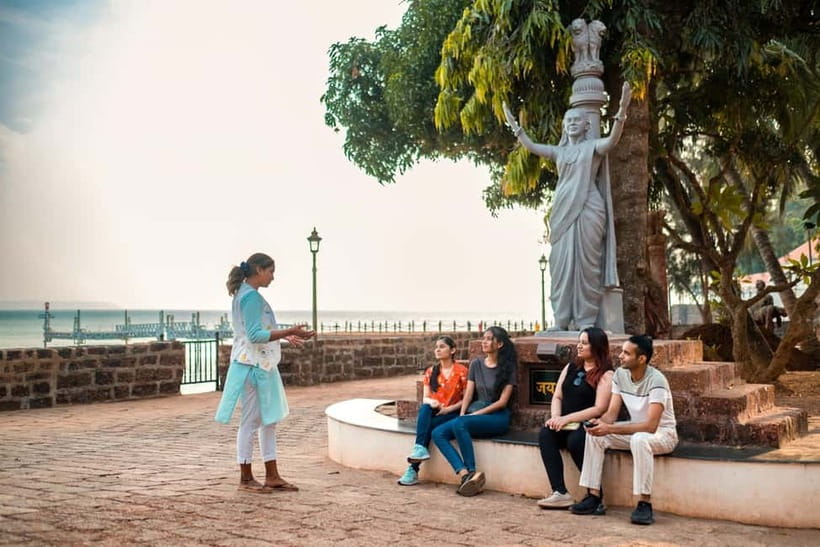
- Exclusive lower-fort access: Enter the chapel, freshwater spring, former kitchens, and prison cells.
- A different side of Fort Aguada: Learn how the defensive fort later became a prison for Goan freedom fighters.
- English-speaking local storytellers: Guides including Veron Franco, Niranjan, and Yashashvi are known for clear, lively explanations.
- Private one-hour format: The walk is designed for a private group rather than a large crowd.
- Seaside views and Portuguese design: See the fort’s architecture while looking out over the coast.
- Good value at $10: The Fort Aguada monument entry ticket is included, including the foreign admission fee noted by one participant.
Why the Lower Fort Aguada Port and Jail Complex Matters

Fort Aguada is often treated as a quick sightseeing stop: take a few photographs, look over the sea, and move on. This walk gives you a reason to slow down. It focuses on the lower port and jail complex, where the building’s later use adds a more personal and difficult chapter to Goa’s colonial story.
The fort was built as a strategic defense point for the Portuguese colony. Its position helped protect the coast from attacks by the Dutch and the Marathas, while its water supply supported ships and soldiers. The site therefore makes sense on two levels: it was a military stronghold, and it was part of the working infrastructure of Portuguese Goa.
You also hear about the struggle for control between Indian kingdoms and the Portuguese colonial empire. That context matters because the fort was not an isolated monument. It sat inside a long contest over territory, trade, religion, and political power.
The lower complex later took on a very different role. During the rule of Portuguese dictator Antonio Salazar, parts of Fort Aguada were repurposed as a prison. Goan freedom fighters who opposed Portuguese rule were held there, giving the cells a direct link to the movement for Goa’s independence.
I find this shift in purpose especially useful. The same walls that once guarded a colonial outpost later confined people challenging that colonial system. You are not simply looking at old stonework. You are tracing how the meaning of a place changed over four centuries.
More Castle and Palace History Tours in India
- Private Heritage Walking Tour in Jaisalmer Fort and Old Bazaar
★ 5.0 · 306 reviews - Private Jaisalmer Fort & old city tour
★ 5.0 · 168 reviews - Mehrangarh Fort and Blue City Historic Tour with Local Guide
★ 5.0 · 134 reviews
Meeting Your Storyteller at the Lower Port
You meet your guide at the ticket counter of the Lower Fort Aguada Port and Jail Complex Heritage Walk. The tour begins and ends at the same place, so you do not need to arrange a separate transfer between the start and finish.
The group type is private, and the guide speaks English. That is helpful if you want to ask about a particular detail, pause to take in a room, or steer the conversation toward colonial rule, religion, military history, or Goa’s independence movement.
Several storytellers have received especially strong praise for their delivery. Veron Franco is described as passionate and detailed, covering subjects from dictatorship and religion to colonialism. Niranjan has been noted for making the history enjoyable, while Yashashvi is praised for clear explanations of the jail complex and Goan culture.
Guide assignments can vary, so you should not assume a particular person will lead your walk. Still, the experience is clearly built around the quality of the local storyteller rather than a recorded audio track or a simple route through the monument.
One useful practical detail is that arriving early is not a problem. A walk has begun around 15 minutes ahead of schedule for an early-arriving participant, so you can reach the ticket counter with time to spare.
Walking Through a 400-Year-Old Portuguese Fort
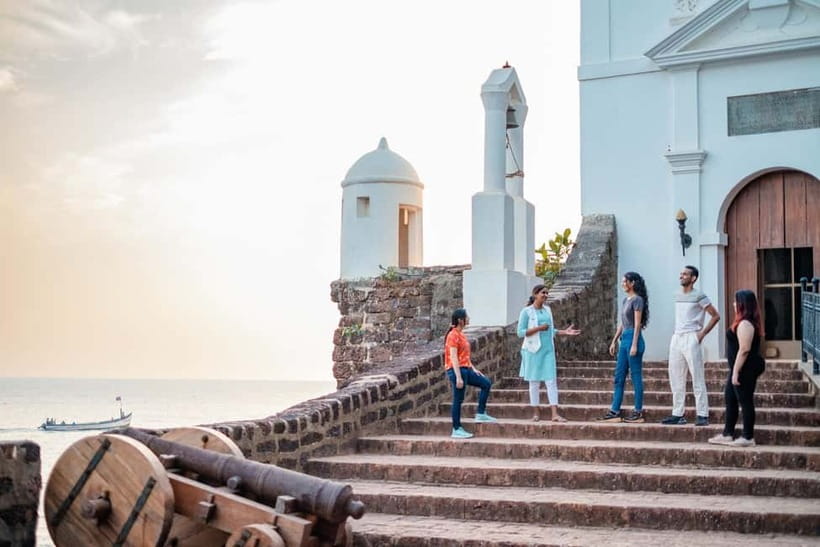
The first part of the walk sets up Fort Aguada as a defensive structure. You learn why the Portuguese selected the location and how the fort helped protect their interests along the Goan coast.
Expect Portuguese-style architecture, heavy fort walls, and views toward the sea. The setting gives the military story some force. From the fort, you can understand why control of the coastline mattered, even if you are not particularly interested in military design.
Your guide also explains the battles fought over the fortress. The story includes the Dutch, the Marathas, and Indian kingdoms that challenged Portuguese control. This is more useful than a list of rulers because it shows how unstable colonial power could be.
The fort’s physical features become easier to read once you know their purpose. A wall is not just a wall. A water source is not just a pleasant feature. A port complex connects the monument to ships, supplies, and the wider colonial network.
You should also expect a fairly brisk pace. The entire experience lasts one hour, so the guide cannot spend unlimited time at each feature. That short format works well if you are combining Fort Aguada with other sightseeing in Goa, but it may feel quick if you want long periods for photography or quiet exploration.
The Chapel and Freshwater Spring
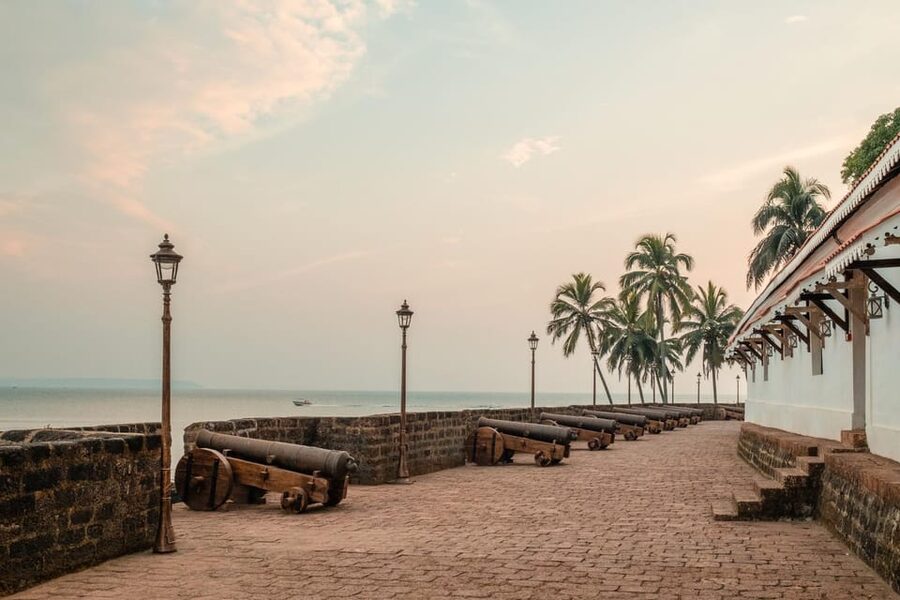
One of the most appealing parts of the walk is access to areas that are not normally open to the public. The chapel and freshwater spring give you a closer look at everyday life inside the fort.
The chapel shows that the complex was not only a military site. Religion formed part of Portuguese colonial life, and a small worship space inside the fort helps you understand how soldiers, officials, and residents might have used the site.
The freshwater spring is another important stop. Water was a practical concern for any coastal fort, especially one expected to support ships and defenders. Seeing the spring helps explain the name Aguada and the importance of water storage and supply to the fort’s role.
These areas are not grand showpieces. That is part of their value. They offer the small, functional details that a quick visit often misses. I would pay close attention to the guide here, because the significance of these spaces comes from the explanation rather than from dramatic decoration.
More History Walking Tours in India
- Fontainhas Heritage Walk by Make It Happen
★ 5.0 · 2,834 reviews - The Great Indian Food Tour: Old Delhi Food and Heritage Walk
★ 5.0 · 1,698 reviews - Old Goa Heritage Walk by Make It Happen
★ 5.0 · 797 reviews - Old Delhi Food, Heritage&Cultural Walk with Rickshaw ride to Masterji Kee Haveli
★ 5.0 · 742 reviews
Former Kitchens and the Working Side of the Fort

The former kitchens add another layer to the visit. They help you picture the fort as a working community rather than a vacant monument.
Military sites are often presented through cannons, walls, and battles. Kitchens point to the less glamorous work that kept the place running. Food had to be prepared, people had to be supplied, and the fort needed routines beyond moments of conflict.
The access is particularly worthwhile because these areas are not part of the ordinary public route. You are seeing spaces that tell you how people lived inside the structure, not only how it defended itself.
The walk does not promise a long stop in each room, and you should not expect a fully restored domestic interior. Instead, treat the kitchens as evidence of the fort’s daily operation. The guide’s explanation is what turns a plain room into a useful historical clue.
The Jail Cells and Goa’s Liberation Movement

The jail is the most serious part of the walk. Its cells connect Fort Aguada to Goan freedom fighters who opposed Portuguese rule and were imprisoned here.
Your guide explains how the lower fort was repurposed under Antonio Salazar’s dictatorship. That change gives the prison a clear political setting. The cells were not simply an old jail attached to a fort. They formed part of the Portuguese response to people fighting for Goan independence.
I appreciate that the walk places attention on unsung heroes rather than only on famous leaders. The history of independence is often told through major names and public events. Inside the cells, the focus shifts toward the people who endured confinement for opposing colonial rule.
The rooms are described as dingy prison cells, and you should expect a stark atmosphere rather than a polished museum setting. That plainness makes the stop more affecting, but it may not suit someone looking only for architecture and sea views.
A small modern museum inside the prison can also be visited after the walk, with admission included in the price. Since the guided part lasts one hour, the museum gives you a chance to continue at your own pace once the storytelling ends.
What the Guide Adds to the Experience
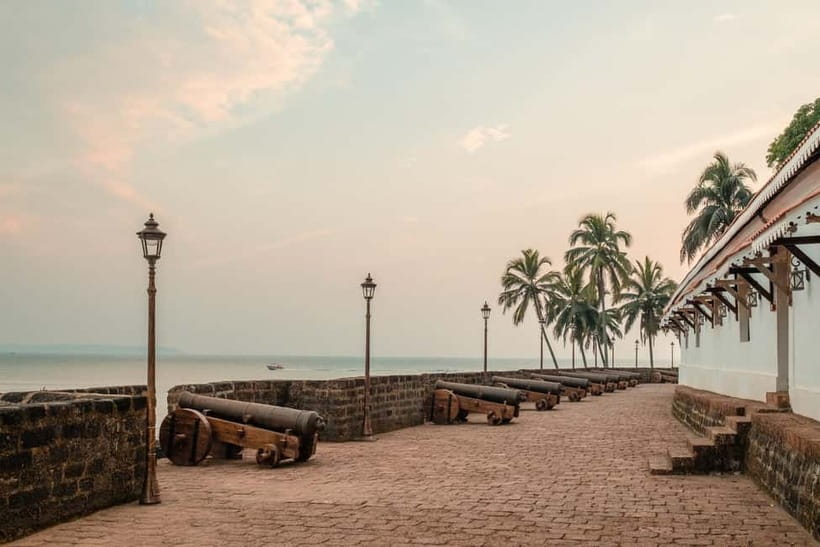
The value of this tour depends heavily on the person leading it. Fort Aguada can be visited without a guide, but the walls and rooms do not explain themselves. A good storyteller links the spaces to events, people, and political changes.
Veron Franco has been praised for covering a wide range of topics in a detailed and passionate way. If you enjoy history that moves beyond architecture, his approach sounds particularly suited to you. He has discussed dictatorship, religion, and colonialism alongside the fort itself.
Niranjan has been praised for his storytelling, while Yashashvi has been described as clear and well informed about the jail complex. These comments point to the experience’s main strength: you are not simply following a route. You are listening to a local interpretation of Goa’s past.
The private format helps here. In a large group, a guide may need to keep moving and repeat the same information for everyone. With a private group, you have more room to ask about a particular cell, the fort’s water supply, or the transition from Portuguese defense post to prison.
Timing, Heat, and the Practical Side

The walk lasts one hour and uses no vehicles inside the monument. You should be ready to walk between the lower fort’s sections and stand outdoors during parts of the explanation.
Heat is the main practical concern. One participant found a noon start very hot, so I would check the available times and choose a cooler period if possible. The provider does not supply umbrellas, raincoats, hats, caps, face masks, or sanitizers, so bring what you need for the weather and your own comfort.
There is no pickup or drop-off. You make your own way to the ticket counter at the Lower Fort Aguada Port and Jail Complex. Meals and snacks are also not included, and the walk covers only the stated route rather than every sightseeing point in the wider monument area.
The short duration is both a benefit and a limit. You can fit it into a busy Goa day, but you will not get a long, leisurely visit to every corner of Fort Aguada. I would pair it with extra independent time at the fort if you want more photographs or a slower look at the museum.
Is $10 Good Value?

At $10 per person, this is a strong-value history walk. The entrance ticket to the Fort Aguada monument is included, and one participant specifically noted that the foreign admission fee of 400 rupees was covered. Admission prices can change, but the central value remains the same: you are paying for both entry and a private guided explanation.
The exclusive access matters too. A standard visit may show you the main fort, but this experience includes the freshwater spring, chapel, former kitchens, and prison cells. Those areas give the tour its edge over simply arriving at Fort Aguada and walking around with no context.
You should not book it expecting a full-day experience or a broad tour of Goa. It is a focused one-hour walk. Its value comes from depth in a small area, not from the number of attractions covered.
Free cancellation up to 24 hours before the start and the option to reserve now and pay later make it easier to fit into a changing itinerary. Those policies are useful, but the real reason to book is the access and storytelling.
Who Should Book This Walk?
I would recommend it to anyone interested in Goa’s Portuguese period, colonial politics, military sites, or the independence movement. It also suits you if you prefer a short private tour to a large group excursion.
History-minded families may find the prison and fort stories more meaningful than a basic sightseeing stop, although the guide’s pace and subject matter may suit older children better. Architecture fans will enjoy the Portuguese details, while photographers will appreciate the coastal views and old stonework.
You may want to skip it if you dislike walking in heat, have only a few minutes for a quick photograph, or want to explore every part of the fort independently. The tour follows a defined route, and the provider does not cover sightseeing points outside it.
Should You Book the Fort Aguada Heritage Walk?
Book it if you want Fort Aguada to make sense. The fort’s defensive role, the freshwater supply, Portuguese religious presence, former kitchens, and prison cells all become part of one connected story.
I especially recommend it for a first visit to Goa because the walk gives you useful context for the state’s colonial past and liberation movement in just one hour. Choose a cooler start time, arrive at the lower-fort ticket counter early, and allow extra time afterward for the small prison museum.
At $10, with admission and private English-language guiding included, this is an easy recommendation for history fans. If you only want a quick view of the sea, go on your own. If you want to understand why these walls matter, book the walk.
FAQ
Where does the Fort Aguada heritage walk begin?
You meet the storyteller at the ticket counter of the Lower Fort Aguada Port and Jail Complex Heritage Walk.
Where does the walk finish?
The walk returns to the Lower Fort Aguada Port and Jail Complex, the same place where it begins.
How long does the tour last?
The guided walk lasts one hour.
What language is the tour conducted in?
The tour is conducted in English with a live guide.
Is the tour private?
Yes. The activity is offered for a private group.
What does the $10 price include?
The price includes the heritage walk, the Fort Aguada monument entry ticket, and access to the freshwater spring, former kitchens, and prison cells.
Is transportation included?
No. This is a walking trail, and vehicles are not used inside the monument complex. Pickup and drop-off are not included.
Can I visit the prison museum after the walk?
Yes. The small modern museums inside the prison are included in the price.
Can I cancel for a full refund?
Yes. You can cancel up to 24 hours in advance for a full refund.
Latest history tours reviewed in India
- Fort Kochi Heritage Day Cycling Tour★ 4.2 · 26 reviews
- Agra Fort: Guided UNESCO Heritage Walking Tour★ 4.9 · 21 reviews
- World heritage Ahmedabad city tour in private car with guide and lunch★ 5.0 · 44 reviews
- Private Elephanta Caves UNESCO World Heritage Site Tour★ 5.0 · 34 reviews
- Mumbai: South Mumbai Heritage Walking Guided Tour★ 4.5 · 69 reviews
- Hill-station & Heritage: Lonavala & Karla Caves Tour from Mumbai★ 5.0 · 60 reviews
- Best South Mumbai Heritage Walk★ 5.0 · 122 reviews
- Heritage Walk: Recommended by Gigi Hadid as a must-do in Mumbai★ 5.0 · 122 reviews
India History Tours, compared.


The Great Indian Food Tour: Old Delhi Food and Heritage Walk
Read our review →

Old Delhi Food, Heritage&Cultural Walk with Rickshaw ride to Masterji Kee Haveli
Read our review →
Blue City Heritage Private Walking Tour With Pickup and Drop-Off
Read our review →
Private Heritage Walking Tour in Jaisalmer Fort and Old Bazaar
Read our review →
Old Delhi Food-Spice Market-Temples Tour Soon Featured on NETFLIX
Read our review →
Panaji: Heritage Walk through Goa’s Latin Quarter
Read our review →Browse the lists this tour appears in