
Review · MUMBAI
Best South Mumbai Heritage Walk
South Mumbai’s best sights are close enough to connect on foot, but far too layered to appreciate from a car window. This walk links the Gateway of India, Kala Ghoda, Flora Fountain, the Taj Mahal Palace, and Chhatrapati Shivaji Terminus, using the streets themselves as part of the lesson.
I like the choice of morning or afternoon departures, and I like the small maximum group of 15. The main drawback is simple: three hours on city streets means walking, traffic noise, and limited time at each stop. One cancellation report also shows why it is wise to confirm your plans and keep booking contact details handy.
Key points at a glance
- Eight major South Mumbai stops: See the Gateway of India, Kala Ghoda, Town Hall, Flora Fountain, Horniman Circle, Bombay High Court, the Taj Mahal Palace, and CST.
- A useful architectural mix: Compare Victorian Gothic Revival, Neoclassical, colonial-era civic buildings, a grand hotel, and an early twentieth-century arch.
- Small walking group: The maximum is 15 people, a sensible size for street commentary and questions.
- Choose your timing: Morning and afternoon options help you fit the walk around other Mumbai plans.
- Strong guide-led element: Aakash, Gautam, Sandesh, and Sanika are named guides associated with especially warm feedback for historical detail, conversation, and personable delivery.
- Good value at $17.89: For roughly three hours and eight central landmarks, the cost is modest, though admission inside buildings is not part of the experience.
Why this walk is a smart first look at South Mumbai
South Mumbai can feel like several cities stitched together. Grand colonial buildings sit beside busy roads, office districts, cultural venues, train lines, shops, and waterfront monuments. A guided walk helps you read those contrasts instead of simply passing them.
The route focuses on public sights, so you are not paying for a string of expensive admissions. That keeps the price at $17.89 per person, which I consider fair for a three-hour introduction with a local guide. The value rests on the explanations, not on entry tickets or luxury transport.
Walking also gives you a better sense of scale. You can stop for photographs, look up at carved facades, and notice how one district changes into another. A car can cover more ground, but it tends to turn South Mumbai into a slideshow through glass.
The walk is listed as suitable for most people and stays within the city center. Still, you should be comfortable walking for about three hours. The format is not designed for someone who wants a seated tour or a long, quiet visit inside each building.
More History Walking Tours in India
- Fontainhas Heritage Walk by Make It Happen
★ 5.0 · 2,834 reviews - The Great Indian Food Tour: Old Delhi Food and Heritage Walk
★ 5.0 · 1,698 reviews - Old Goa Heritage Walk by Make It Happen
★ 5.0 · 797 reviews
Starting near CST and finding your bearings
The meeting point is at the McDonald’s in Empire Building, on Dr Dadabhai Naoroji Road, next to the restaurant and opposite CST Station in Fort. That is a practical place to begin because Chhatrapati Shivaji Terminus is one of the city’s major reference points.
Give yourself enough time to locate the exact meeting spot. The address includes the building, shop, road, nearby restaurant, and CST landmark, so using the supplied map location is sensible. The tour is near public transportation, but the information provided does not specify which train, bus, or metro service you should use.
The walk ends at Regal Cinema in Apollo Bandar, near the Gateway of India. This gives the experience a clear east-to-west feel across the historic center, although the listed sights may not be visited in the exact order shown. Ask your guide at the start how the route will run that day.
The mobile ticket is useful for a city tour. Keep the confirmation accessible on your phone, and make sure your battery is charged. You will want your phone for the ticket, directions, and photographs.
Gateway of India and the Taj Mahal Palace
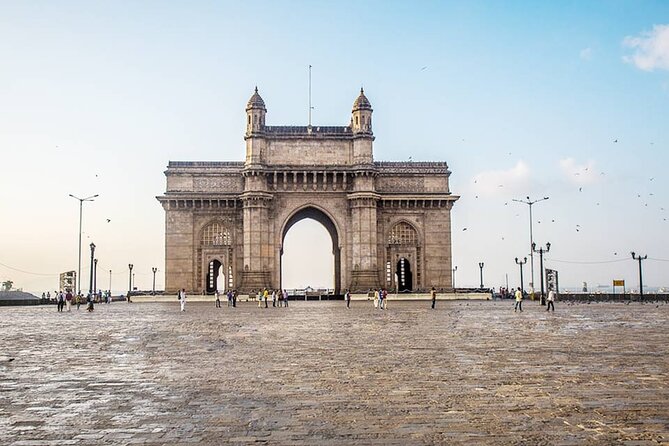
The Gateway of India is the obvious headline stop. This early twentieth-century arch-monument faces the waterfront and has become one of Mumbai’s best-known symbols. You get time to see it up close, frame photographs, and hear how colonial rule shaped the city’s public image and major buildings.
The Gateway is also a good place to understand the tour’s method. You are not just checking off a monument. You are looking at how architecture, power, ceremony, and the sea meet in one public space.
Nearby, the Taj Mahal Palace gives the walk a different kind of grandeur. This heritage five-star hotel in Colaba is not a public civic building, but it is closely tied to the visual identity of the area. Your visit is an exterior stop, with no hotel admission included.
That distinction matters. You should expect to see and photograph the building from outside, not tour its rooms or facilities. The short ten-minute allocation keeps the pace moving, but it also means the guide’s explanation will need to be focused.
Kala Ghoda, where art meets old Fort
Kala Ghoda is one of the most enjoyable areas on the route because it connects architecture with Mumbai’s cultural life. The district is known for the Kala Ghoda Arts Festival, held each February. If your visit falls during that period, the area may have an added festival atmosphere, but the walk itself is not presented as a festival tour.
The stop lasts about 30 minutes, giving your guide time to point out the area’s character and explain how its buildings fit into South Mumbai’s development. This is a place where you should pause rather than rush through a photo.
I would pay close attention to the guide’s local examples here. The named guides have different strengths. Aakash is praised for extensive historical detail and an easy manner. Gautam is noted for photo spots and Bollywood-related conversation. Sandesh is described as clear and informative around historic landmarks, while Sanika brings broad conversation and a friendly, personal style.
Guide assignments can change, so you should not book expecting one particular person unless the operator confirms it. The useful point is that the experience depends heavily on the individual guide, and the available feedback suggests a strong focus on storytelling rather than memorized dates alone.
Same old streets, another chapter:
- Old Delhi Food, Heritage&Cultural Walk with Rickshaw ride to Masterji Kee Haveli
★ 5.0 · 742 reviews - Blue City Heritage Private Walking Tour With Pickup and Drop-Off
★ 5.0 · 441 reviews - Private Heritage Walking Tour in Jaisalmer Fort and Old Bazaar
★ 5.0 · 306 reviews - Old Delhi Food-Spice Market-Temples Tour Soon Featured on NETFLIX
★ 5.0 · 304 reviews
Town Hall and Mumbai’s Neoclassical face
The Asiatic Society Library, also called Mumbai Town Hall, is a Neoclassical building in the Fort district. Its formal design gives you a useful contrast with the Victorian Gothic Revival buildings elsewhere on the walk.
This is one of the stops where a guide adds real value. Architecture can look like a collection of columns and staircases until someone explains why a building was designed that way, who used it, and what it says about the period when Mumbai was expanding under British rule.
The stop is scheduled for about 30 minutes. That is enough time for exterior viewing and photographs, but do not assume you will go inside. The tour information identifies the building as a landmark stop, not as an interior visit with an admission ticket.
Town Hall also helps show that South Mumbai is not built in one single style. The city’s public buildings reflect changing ideas about authority, commerce, education, and civic life. That comparison is one of the better reasons to choose a walking tour over a basic monument transfer.
Flora Fountain and the civic heart of Fort
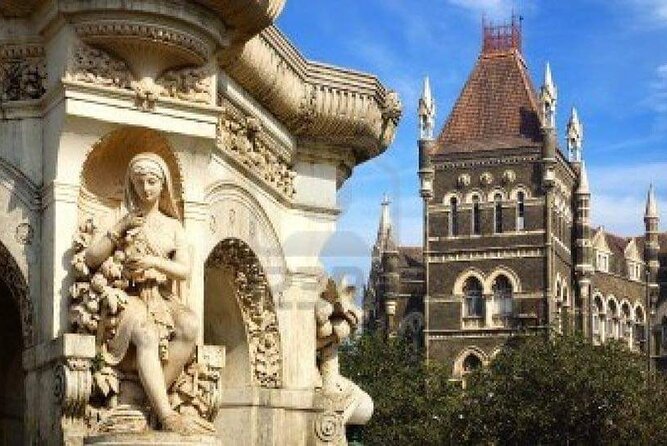
Flora Fountain sits at Hutatma Chowk, at the southern end of Dadabhai Naoroji Road. It is an ornamentally sculpted heritage monument, and its location makes it a useful stop for understanding the Fort area as a center of roads, offices, and public buildings.
The tour allows about 30 minutes here. You can expect time to examine the fountain, take photographs, and listen to an explanation of the surrounding district. The guide may also help you make sense of the names and civic memory attached to the square, though the supplied details do not promise a particular talk.
This is a busy urban setting, so do not expect the calm of a garden or museum courtyard. That is part of the point. South Mumbai’s heritage is woven into working streets, not sealed away from everyday life.
For me, this is the kind of stop that makes the $17.89 price worthwhile. A fountain alone is easy to overlook. In a connected walk, it becomes part of a larger story about the city’s public spaces and colonial-era planning.
Horniman Circle, High Court, and the working city
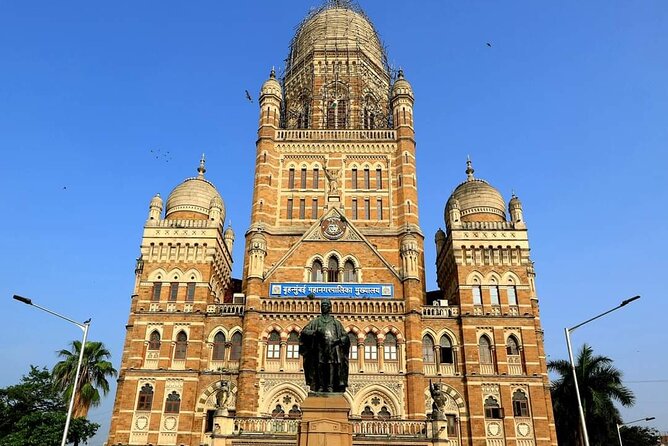
Horniman Circle Garden offers a short pause within the Fort district. The garden covers about 2.5 acres, or roughly 10,100 square meters, and is surrounded by office buildings. The planned open space helps you see how the district was organized around commerce and administration.
Only about ten minutes are assigned here, so this is more of a viewpoint and orientation stop than a long garden visit. If you want a slow break, you may find the timing brief. On the other hand, the short visit keeps the whole route from becoming too drawn out.
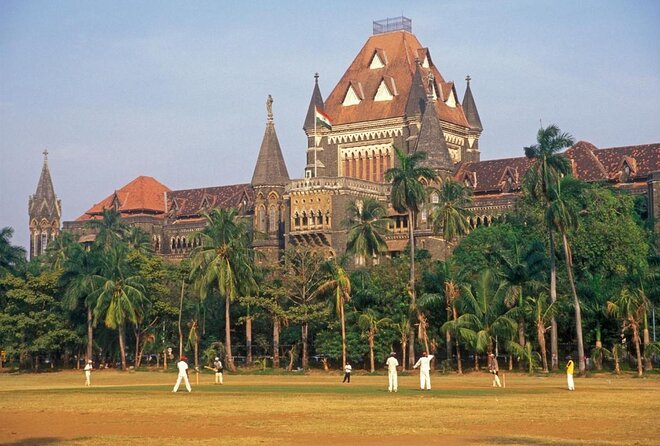
The Bombay High Court’s principal bench is another exterior landmark. It serves Maharashtra and Goa and adds a legal and institutional note to the walk. Along with Town Hall and the civic buildings around Fort, it shows how this part of Mumbai became a center of government and public authority.
Again, the value comes from the connection between places. You see a garden, a court, a library, a fountain, and office blocks within a compact part of the city. The guide can explain the district as a functioning center, not just a row of handsome facades.
CST, the grand finale or an early landmark
Chhatrapati Shivaji Terminus is a UNESCO World Heritage Site and one of Mumbai’s most striking railway stations. It is also the starting reference point for the meeting address, while the supplied stop list gives it a 30-minute visit.
The station is important for both architecture and daily life. It is not merely a monument. It remains a major transport point, which makes the contrast between heritage design and modern use especially clear.
The Victorian Gothic Revival style is one of the architectural themes highlighted by the walk. CST gives you a strong chance to compare Gothic forms with the Neoclassical Town Hall and the ceremonial design of the Gateway of India.
Because the exact walking order may vary, CST could come early or later in practice. Either way, allow time to look carefully at the exterior and listen to the guide’s explanation. If you are especially interested in railway architecture or photography, tell the guide at the beginning so you can use the stop well.
What the three-hour format feels like
Three hours is long enough to create a useful picture of South Mumbai, but not long enough for every building to receive a detailed lecture. The schedule gives about 30 minutes to the Gateway, Kala Ghoda, Town Hall, Flora Fountain, and CST, with shorter stops at Horniman Circle, the High Court, and the Taj Mahal Palace.
That balance makes sense. The major locations receive room for photos and questions, while the shorter stops keep the group moving. You should think of this as a guided introduction, not a full architectural study.
The maximum group size is 15. That is small enough for a guide to keep the group together and answer questions without turning every stop into a crowd scene. It is not a private tour, so you may still need to stay close to hear clearly near traffic or busy public spaces.
Morning and afternoon options are useful. Choose morning if you want to leave the rest of the day open for Colaba or other Mumbai plans. Choose afternoon if you prefer a slower start. The available information does not state exact departure times, so check those before booking.
Who will get the most from this experience
I would recommend this walk to a first-time visitor who wants a fast, structured introduction to South Mumbai. It suits people who care about architecture, colonial-era city planning, public monuments, photography, and local stories.
It also works well for anyone who wants an eco-friendly alternative to driving. You cover the district at street level and see how the buildings relate to one another. The walk is especially useful early in a Mumbai stay because it gives you landmarks and neighborhoods to revisit later.
Families and older visitors should consider the three-hour walking demand. The information says most people can participate, but it does not promise step-free access, seating at each stop, shade, or special mobility support. If those details matter to you, ask the operator before booking.
This is less suitable if you want interiors, museum admission, or a food-focused route. The supplied stops are public landmarks and exterior sights, and no meal or entry ticket is included.
Price, group size, and booking cautions
At $17.89 per person, the tour is priced as an accessible city introduction. You are paying for a guide, a planned route, and context across eight major sights. Since the stops are free to view from outside, the price is easiest to justify if you value explanation and would otherwise struggle to connect the landmarks yourself.
The tour has a 4.8 rating from 122 reviews, with 96 percent recommending it. That is a strong record, and the most praised qualities are consistent: guides who explain the city clearly, friendly personalities, useful photo advice, and a walk that can make Mumbai feel easier to approach.
There is one important caution. One booking was canceled without advance communication, and the person had to make several calls before receiving a refund. That appears to be an exception rather than the main pattern, but I would still confirm the departure details if your schedule is tight.
Free cancellation is available up to 24 hours before the start time for a full refund. Cancellations within 24 hours are not refunded, and changes inside that period are not accepted. Cutoff times use Mumbai’s local time, so check the clock carefully if you are booking from another country.
Should you book the South Mumbai Heritage Walk?
Book it if you want a compact, guide-led introduction to South Mumbai’s architecture and major public sights. The route covers more ground than a single monument visit, the cost is reasonable, and the three-hour length fits neatly into a busy city stay.
I would be most likely to choose it for a first day in South Mumbai, especially if I wanted to understand the relationship between CST, Fort, Kala Ghoda, Colaba, and the Gateway of India. Aakash, Gautam, Sandesh, and Sanika are names associated with especially strong guide feedback, but the assigned guide may vary.
Skip it if you dislike walking, need guaranteed indoor access, or want a relaxed tour with long stops. For everyone else, it offers a practical way to see South Mumbai at street level, with enough structure to make the city’s grand buildings feel connected rather than scattered.
FAQ
How long does the South Mumbai Heritage Walk last?
The walk lasts approximately three hours.
How much does the tour cost?
The listed price is $17.89 per person.
Are morning and afternoon departures available?
Yes. You can choose from morning and afternoon tour options.
Where does the tour start?
The meeting point is at McDonald’s, Building 142, Shop 12, Empire Building, Dr Dadabhai Naoroji Road, next to McDonald’s and opposite CST Station in Fort, Mumbai.
Where does the tour end?
The tour ends at Regal Cinema in Apollo Bandar, Colaba, near the Gateway of India.
Which landmarks are included?
Stops include the Gateway of India, Kala Ghoda, Town Hall and the Asiatic Society Library, Flora Fountain, Horniman Circle Garden, the Bombay High Court, the Taj Mahal Palace, and Chhatrapati Shivaji Terminus.
How large is the group?
The maximum group size is 15 people.
Is the tour available as a mobile ticket?
Yes. A mobile ticket is available, and confirmation is received at the time of booking.
What is the cancellation policy?
You can cancel at least 24 hours before the start time for a full refund. Cancellations or changes made less than 24 hours before the experience are not accepted or refunded.
Latest history tours reviewed in India
- Fort Kochi Heritage Day Cycling Tour★ 4.2 · 26 reviews
- Candolim: Heritage Walk of Fort Aguada Port and Jail Complex★ 4.9 · 25 reviews
- Agra Fort: Guided UNESCO Heritage Walking Tour★ 4.9 · 21 reviews
- World heritage Ahmedabad city tour in private car with guide and lunch★ 5.0 · 44 reviews
- Private Elephanta Caves UNESCO World Heritage Site Tour★ 5.0 · 34 reviews
- Hill-station & Heritage: Lonavala & Karla Caves Tour from Mumbai★ 5.0 · 60 reviews
- Heritage Walk: Recommended by Gigi Hadid as a must-do in Mumbai★ 5.0 · 122 reviews
- Mumbai: South Mumbai Heritage Walking Guided Tour★ 4.5 · 69 reviews
Mumbai History Tours, compared.

Heritage Walk: Recommended by Gigi Hadid as a must-do in Mumbai
Read our review →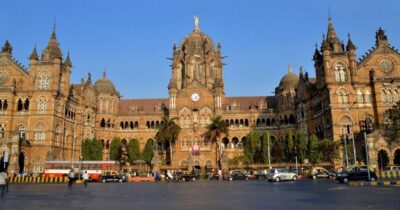
Mumbai: South Mumbai Heritage Walking Guided Tour
Read our review →
Hill-station & Heritage: Lonavala & Karla Caves Tour from Mumbai
Read our review →
Private Elephanta Caves UNESCO World Heritage Site Tour
Read our review →Browse the lists this tour appears in