

Review · BUCHAREST
Bucharest: Communism and History Guided City Walking Tour
Bucharest’s communist past is easiest to understand on foot, where grand plans, demolished neighborhoods, moved buildings, and ordinary grocery shops all sit within the same city blocks. This tour connects those pieces, from the Patriarchal Cathedral to the former House of People and the streets where the 1989 Revolution unfolded.
I like the way the tour joins political history with daily life, including food shortages, nationalization, religion, and the influence of the Secret Police. I also like the short café break and the small communist-era snack, which give the story a human scale. The main drawback is that you see the Parliament only from outside, and three hours on foot may be tiring in poor weather or for anyone with back or mobility problems.
Key points at a glance
- See the Parliament from the best practical angle: Learn why the House of People was built and what its scale meant under Nicolae Ceausescu.
- Follow the city’s forced changes: Nationalization, demolition, and the moving of buildings are explained through real streets and surviving structures.
- Hear about ordinary Romanian life: An old Alimentara grocery shop provides a setting for shortages, rationing, and daily survival.
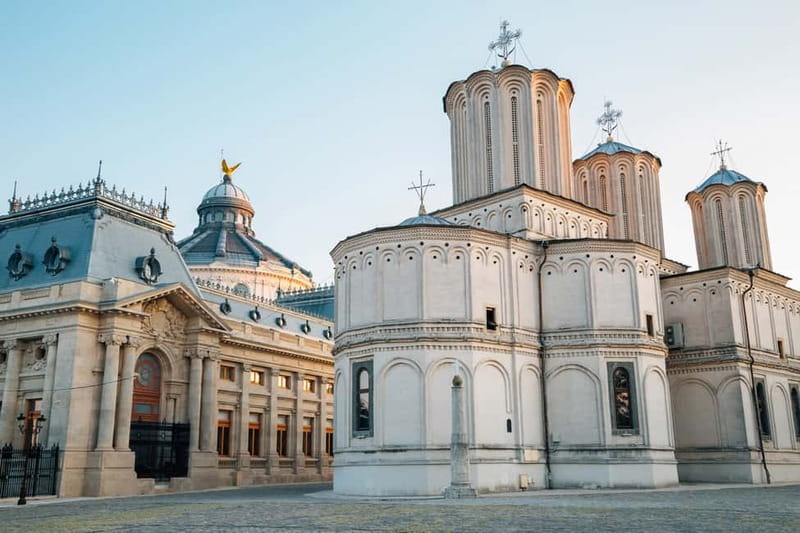
- Connect religion to politics: The Patriarchal Cathedral helps explain both Romanian religious life and the rise of communism.
- Walk the road to 1989: The route finishes at Revolution Square, where the end of dictatorship and the start of democracy are put in context.
- Expect a strong guide-led experience: Guides including Andreea, Daniela, Mihai, Octavian, and Ion are praised for clear English, personal stories, visual aids, and patient answers.
Starting at the Patriarchal Cathedral
The tour begins in front of the Patriarchal Cathedral, reached from Piata Unirii metro station by walking uphill. Allow a little extra time for that climb and for finding the meeting point. It is not a difficult approach for most people, but it is worth knowing about if you are carrying luggage or have limited mobility.
This first stop is a smart choice. The cathedral is not treated simply as a pretty church. It opens a discussion about religion under communism and the political events that brought the communist regime to power in Romania. You begin with the tension between religious institutions and a state that wanted broad control over public life.
I find this kind of opening useful because it avoids dropping you straight into a list of dates and dictators. You start by asking what happened to faith, authority, and public institutions when the new regime took hold. That gives the rest of the walk a clear thread.
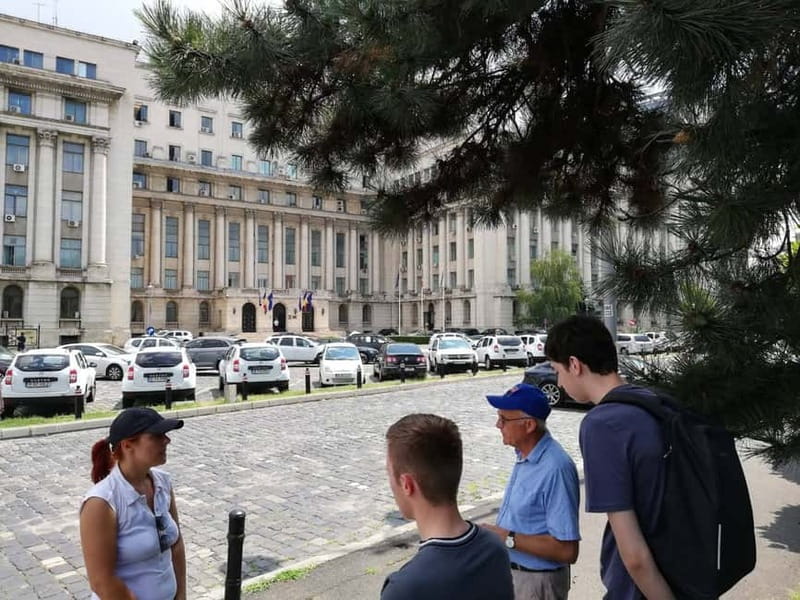
The guide-led format matters here. Guides such as Andreea and Daniela are praised for explaining difficult subjects in plain English, while Mihai and Octavian are noted for answering questions in detail. The exact guide varies, but the experience depends heavily on how well that person connects the political story to the places around you.
More Cold War and Communism Tours in the world:
- Prague: Communism History and Nuclear Bunker Guided Tour
★ 4.7 · 2,417 reviews - Prague Communism History and Nuclear Bunker Tour
★ 5.0 · 1,742 reviews - Berlin: Cold War & Berlin Wall History Guided Bike Tour
★ 4.8 · 422 reviews
Nationalization in an ordinary Bucharest neighborhood
After the cathedral, the route moves through a nearby neighborhood where you see the results of nationalization. This is one of the tour’s most useful shifts in scale. The story moves from state policy to the homes and streets affected by it.
Nationalization meant that private property could be taken by the state. On a walking route, that idea becomes easier to grasp because you are looking at actual buildings rather than hearing an abstract explanation. The guide points out how ownership and residence changed, and how the communist system altered the relationship between people, homes, and government.
This stop also helps explain why Bucharest can feel architecturally uneven. Older buildings, imposing state projects, altered homes, and surviving religious sites all reflect different stages of the city’s recent past. The tour does not present communism as a single style or a single building project. It shows how the regime reached into streets where people lived.
You should expect to walk at a normal pace, with several stops for explanation. The route includes roughly 15 objectives, though some are viewed from outside or passed along the way. That makes the tour broad rather than museum-like. You get a connected city walk instead of spending three hours in one interior.
The House of People and Ceausescu’s grand plan
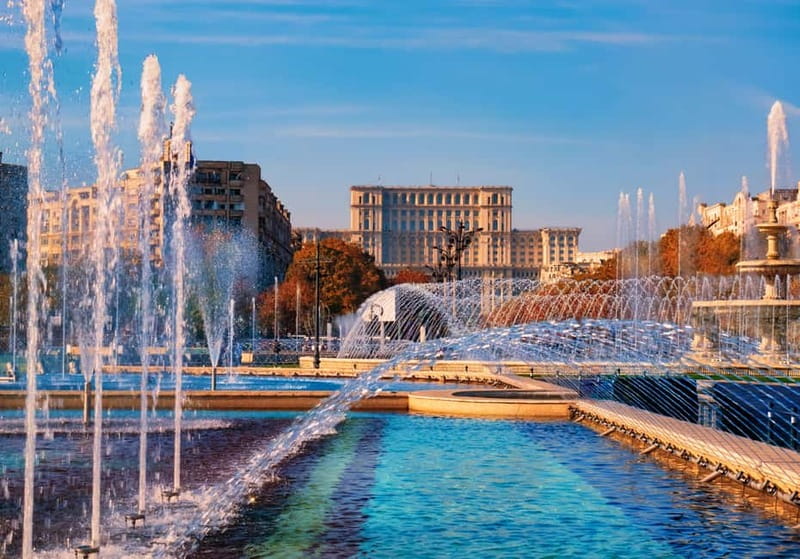
The approach to the Palace of the Parliament, still widely called the House of People, is one of the main visual moments. The building is seen from outside, with time for photographs and an explanation of its construction.
The structure represents Nicolae Ceausescu’s megalomania, but the guide also places it within the wider plans for Bucharest. The project required enormous resources at a time when ordinary Romanians faced serious hardship. That contrast is central to understanding why the building remains such a powerful symbol.
You will learn about the destruction connected with the regime’s redevelopment plans and the reshaping of large sections of the city. The tour presents this as one of the biggest acts of urban destruction carried out in a European city during peacetime. The point is not only architectural loss. It is also the human cost of clearing established neighborhoods and replacing them with a monumental political center.
The exterior visit is worth setting expectations for. You do not enter the Parliament on this experience, and there is no interior tour of its halls. If you specifically want to see the inside, you will need to arrange a separate visit. Here, the value is the context: the guide explains why this huge building was built, what it was meant to communicate, and how it fit into the regime’s wider display of power.
The open views around the building also give you a better sense of scale than a quick photograph can. You can compare the government project with the surrounding city and understand why the site still dominates Bucharest’s image of the communist period.
Antim Monastery and the buildings that escaped demolition
One of the more unusual parts of the walk is the discussion of buildings that were moved to save them from destruction. Antim Monastery is an important example.
At first glance, this may seem like a side story beside the Parliament. It is not. The monastery helps show that the redevelopment of Bucharest was not simply a matter of adding new roads or offices. Existing religious and historic buildings were placed in the path of a major transformation, and some were physically relocated rather than demolished.
The stop at Antim Monastery adds texture to the tour because it shows resistance through preservation. You see how a building can survive a political project that was willing to erase entire areas of the city. The guide uses the site to explain the practical and cultural consequences of communist redevelopment.
I would pay attention to the contrast between the monastery and the massive state buildings nearby. That contrast is one of the clearest visual lessons of the walk. Bucharest’s past is not hidden in one district. It is layered into the same streets.
More History Walking Tours in the world:
- History and Hauntings of Salem Guided Walking Tour
★ 5.0 · 14,564 reviews - Lisbon: History, Stories and Lifestyle Walking Tour
★ 4.8 · 10,902 reviews - Boston: Freedom Trail History Small Group Walking Tour
★ 5.0 · 6,450 reviews - Historic Charleston Guided Sightseeing Walking Tour
★ 5.0 · 6,216 reviews
A communist snack and a useful pause
Around the middle of the tour, you stop at a local café for about 15 minutes. Your coffee or other purchase is not included, so bring a little money if you want something to drink. This is also the planned bathroom and rest break, which makes the three-hour route easier to manage.
You receive a communist-type snack as part of the experience. One guide has used a rum-flavored biscuit from that period to help explain the limits of food choice and the struggle to feed a family during rationing. It is a small detail, but it makes the subject more tangible.
I like this pause because it prevents the tour from becoming a nonstop lecture. You can sit, ask follow-up questions, and let the earlier material settle before continuing. Guides have also used the break to discuss other parts of Romanian history from a local point of view.
The break does not turn the tour into a food experience. The snack is symbolic, and anything you order at the café costs extra. Still, it adds a personal touch that photographs of grand buildings cannot provide.
Everyday life outside the monuments
After the break, the route returns to ordinary streets and an old Alimentara grocery shop. This stop focuses on well-being and daily life during communism.
The Alimentara is important because it shifts attention away from Ceausescu’s buildings and toward the practical problems faced by Romanian families. The guide discusses shortages and the experience of shopping when supply was uncertain. You get a clearer sense of how political decisions affected kitchens, workdays, family routines, and personal choices.
This part is often where the tour becomes most relatable. You may know the broad outline of dictatorship, but it is harder to understand until you consider what it meant to find food, plan meals, or manage a household under pressure.
Personal stories add much of the force here. Guides including Andreea, Mihai, and Ion have brought family experiences and childhood memories into their explanations. Those stories are useful when they support the wider facts, and the strongest guides keep both elements in balance.
The tone is serious, but it is not presented as a dry school lesson. Several guides are praised for using humor carefully, visual aids, and clear examples. You should still expect a lot of information, so this tour suits people who enjoy asking questions and thinking about recent history.
Calea Victoriei and the former Secret Police sites
The route then reaches Calea Victoriei, one of Bucharest’s most attractive boulevards. The walk here is at a normal pace and includes communist symbols along the way.
This is a good section for showing how a famous city street can carry several historical meanings at once. You see the boulevard as part of present-day Bucharest while learning how it was used and marked during the communist era.
One stop concerns a former center associated with the Secret Police and the torture of people. The subject is difficult, but it is necessary if you want to understand the reach of the regime. The Secret Police were not just a distant political force. Their influence shaped what people said, whom they trusted, and how safely they could express disagreement.
The route does not turn this into a sensational horror stop. Its value is in explaining the climate of fear and control. I would listen closely to the guide’s explanation of how state pressure affected ordinary people, not only well-known opponents.
Calea Victoriei also gives you a chance to catch your breath after the denser sections around the Parliament and the grocery shop. The walking is manageable for most reasonably fit people, but comfortable shoes are essential. The tour continues in rain or sunshine unless conditions become unsafe, so a weather check matters.
Caru’ cu bere and the city between old and new
Caru’ cu bere appears as one of the route’s sightseeing stops. The famous restaurant and historic setting help widen the story beyond concrete political buildings.
The appeal here is contrast. Bucharest’s older cultural life did not disappear simply because the communist regime tried to remake the capital. Places connected with food, social life, and the city’s earlier identity remain part of the route, even as the guide explains what changed around them.
You pass by rather than stopping for a meal, so do not treat this as a restaurant booking. The point is to see another piece of the city while the guide connects it to the changing political and social setting.
That balance is one of the tour’s strengths. It does not isolate communism from the rest of Bucharest. Instead, you see how older buildings, public boulevards, religious sites, restaurants, government projects, and residential areas sit together.
Revolution Square and the end of dictatorship
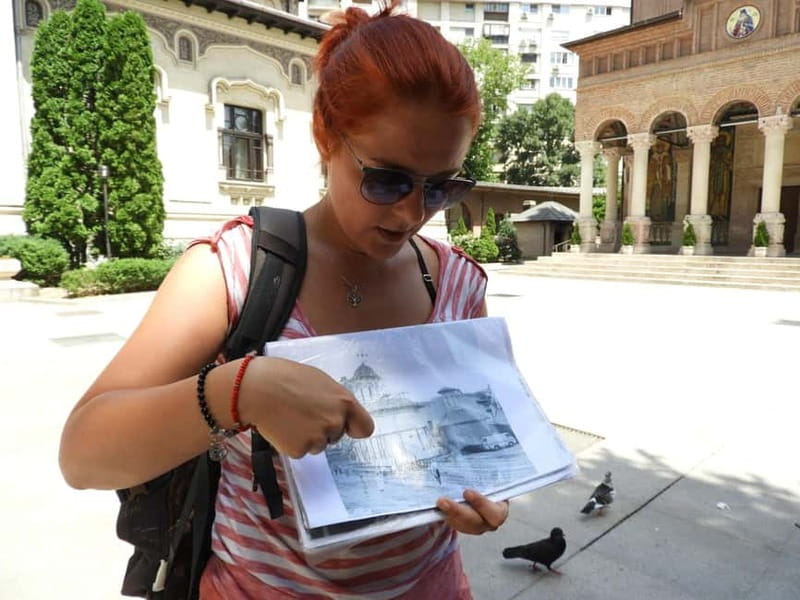
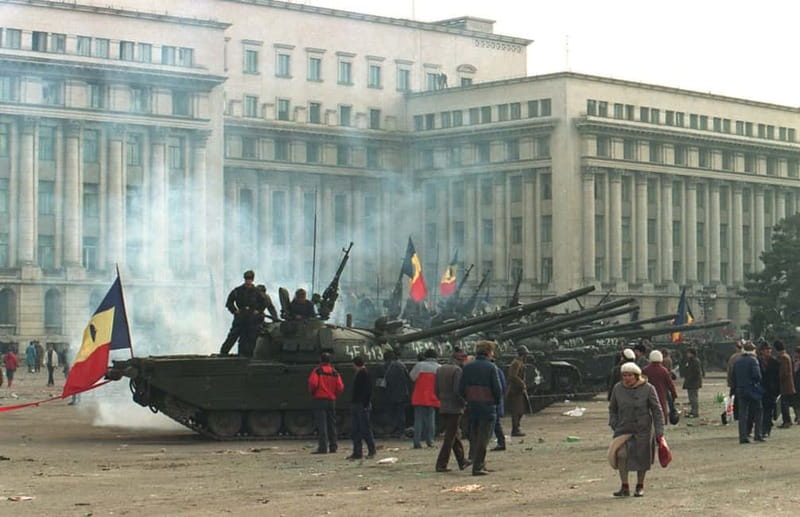
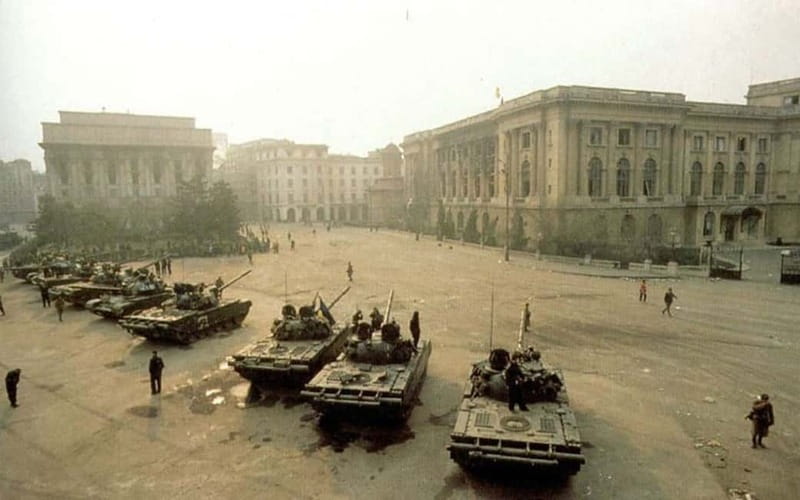
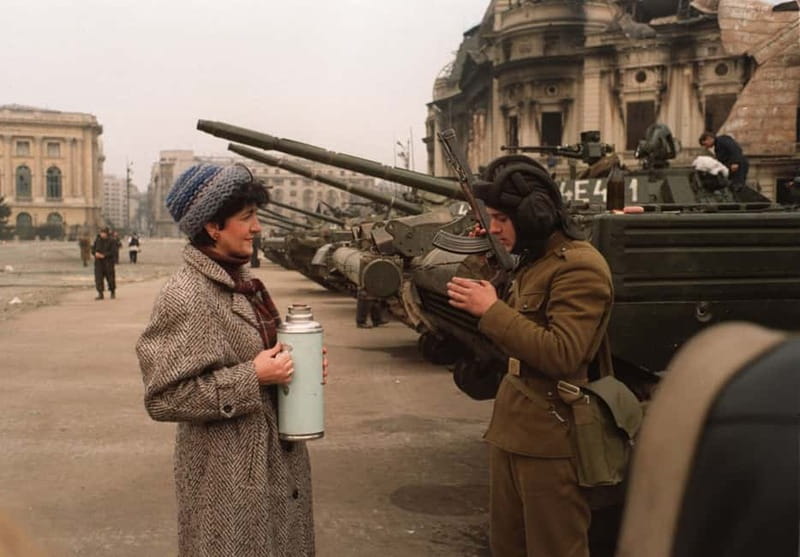
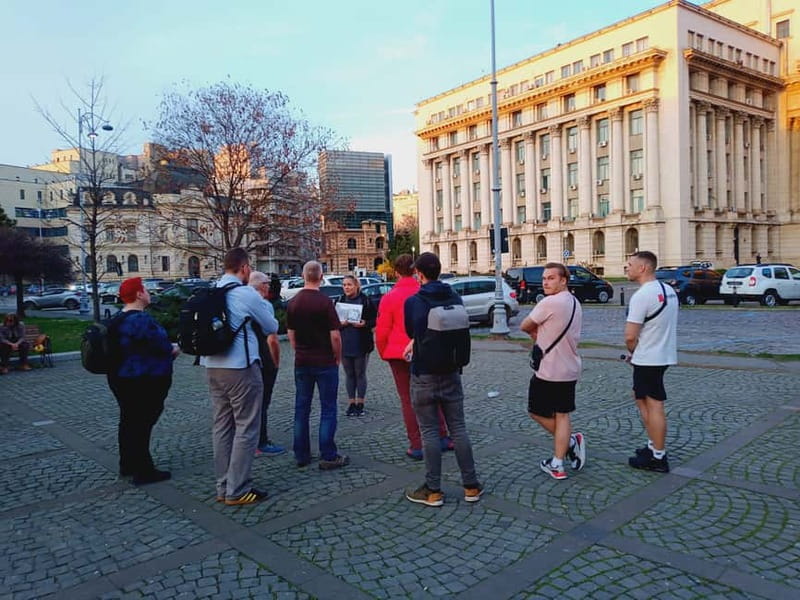
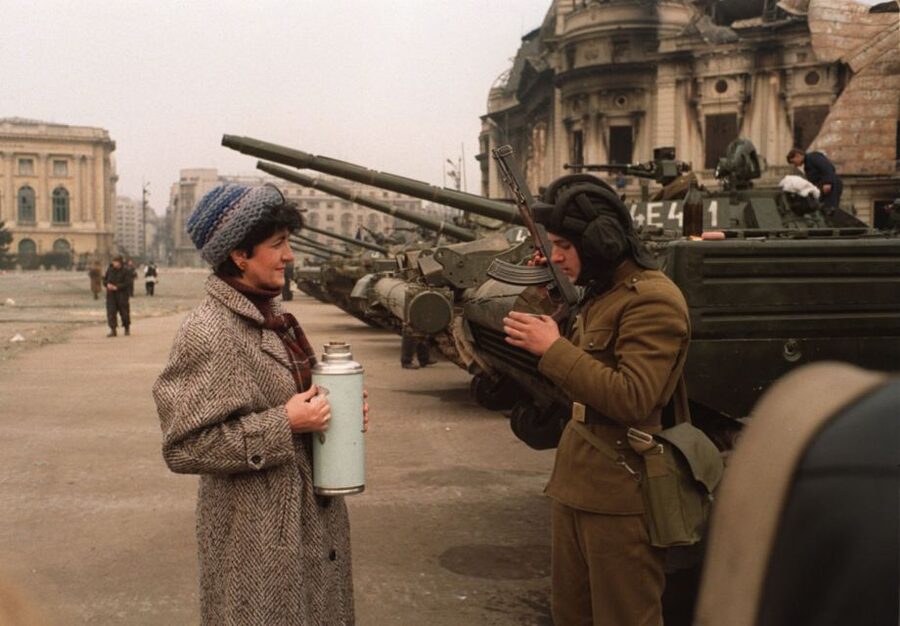
The walk finishes at Revolution Square, where the guide explains the events of 1989 and the beginning of democracy. This is the natural ending because it brings the earlier subjects together: control, public fear, economic hardship, national demolition, and the demand for political change.
You learn about the final days of the communist regime and the role of the square in the Revolution. The guide also explains how the transition began, rather than stopping at the fall of Ceausescu.
This ending gives the three-hour route a clear shape. You start with the forces that helped bring communism to Romania, move through its effects on buildings and daily life, and finish with its collapse. The goal is not to tell you only what happened. It is to help you understand why the period still affects Romania today.
Several guides use photographs or other visual aids, which can be especially helpful when discussing events from 1989. The square itself is an important place to pause and ask questions. If you want to explore further afterward, you finish in a central part of Bucharest rather than at an isolated attraction.
Is $31 a fair price?
At $31 per person, this is a solid value if you want interpretation rather than a simple sightseeing walk. You are paying for three hours of guiding, around 15 historical objectives, local stories, a planned café break, and a coherent explanation of Romania’s communist period.
The value is strongest for a first visit. Several people who took the tour early in their Bucharest stay found that it gave them useful context for the rest of the city. I agree with that logic. Once you understand why certain neighborhoods were altered and why the Parliament dominates the center, later sightseeing becomes easier to read.
The price is less attractive if you want to enter the Parliament, visit museums, or spend most of the time inside buildings. This is an outdoor walking experience, and the Parliament is viewed only from outside. You also pay for your own café order.
The rating of 4.9 from 918 ratings suggests consistently strong satisfaction, and the praise centers on clear explanations, personal stories, good English, and guides who take questions seriously. Guide quality can vary by person, but names repeatedly associated with the experience include Andreea, Daniela, Mihai, Octavian, Ion, and John.
Practical advice before you go
Wear comfortable shoes. The route includes uphill walking at the start, regular city walking, and several standing explanations.
Plan for the weather. The tour runs in rain or sunshine unless heavy rain, blizzards, extreme wind, or extreme heat make it unsafe. An umbrella and a light rain layer are sensible. One guide has supplied extra umbrellas in wet conditions, but you should not rely on that.
The tour is offered in English. It is not suitable for wheelchair users or people with back problems according to the stated conditions. A participant once found the pace comfortable even with a wheelchair, but the formal guidance says wheelchair users should not book, so treat that as the rule.
You can cancel up to 24 hours before the start for a full refund, and you can reserve while paying later. Those policies are useful if your Bucharest plans are still shifting.
Who should book this walking tour?
Book it if you want to understand Bucharest through its recent past, especially if you are interested in dictatorship, democracy, urban destruction, religion, or daily life under state control. It is also a strong choice for your first day, since it gives meaning to buildings and neighborhoods you will see again.
Families with older teenagers can benefit from the clear storytelling, provided they are comfortable with serious subjects. History and politics fans will have plenty to discuss, but the tour also works for first-time visitors who know little about Romania.
Skip it if you dislike walking, need step-free access, or want an interior visit to the Parliament. If you prefer a light introduction to Bucharest’s food, architecture, or medieval past, choose another city tour first.
For most visitors, I would book this experience early in a Bucharest stay. Its greatest value is not a single monument. It is the connection between the city’s grandest building, its ordinary shops, its religious sites, and the people who lived through the years between communism and democracy.
FAQ
Where does the tour start?
The tour starts in front of the Patriarchal Cathedral. The closest metro station is Piata Unirii, also called Union Square. From there, you need to walk uphill to reach the cathedral.
Where does the tour finish?
The tour finishes at Revolution Square in Bucharest.
How long does the tour last?
The walking tour lasts three hours.
Is the Parliament building visited inside?
No. You see the Palace of the Parliament, also called the House of People, from outside. The guide explains its construction, symbolism, and connection with Nicolae Ceausescu’s regime.
Is food or coffee included?
A communist-type snack is included. Anything you choose to order during the café break is at your own expense.
What happens if the weather is bad?
The tour runs in rain or sunshine unless heavy rain, a blizzard, extreme wind, or extreme heat makes the walk unsafe. In those cases, the tour may be canceled with a full refund or moved to another day.
Latest history tours reviewed in the world
- From Athens: Ancient Olympia Full-Day Private Tour★ 4.8 · 22 reviews
- From Athens: Explore Ancient Corinth & Charming Nafplion★ 4.6 · 102 reviews
- From Athens: Explore Ancient Greece 4-Day Tour★ 4.7 · 73 reviews
- From Albufeira: Historical Algarve Region Tour★ 4.7 · 585 reviews
- From Alexandria: Full-Day Guided Tour of Historical Sights★ 4.5 · 54 reviews
- From Albufeira: Wine Tasting & Historic Silves Tour★ 4.9 · 421 reviews
- Franklin: Ghost Tour in Historic Franklin★ 4.8 · 65 reviews
- Freiburg: Exciting City Tour with sightseeing and history★ 4.3 · 103 reviews
Bucharest History Tours, compared.
Bucharest: 3-Hour Dark History Tour with a Local
Read our review →
Bucharest: Small Group History, Art & Secrets Tour
Read our review →
Bucharest: Sweet Delights History and Desserts Walking Tour
Read our review →Browse the lists this tour appears in