
Review · HISTORY WALKING TOURS
Belgrade: 3-Hour Serbian History Walking Tour
Belgrade’s story is easiest to grasp on foot, where a church, fortress wall, grand boulevard, and battered building can all appear within the same short walk. This 3-hour tour links the capital’s Ottoman, Austro-Hungarian, Roman, Yugoslav, and modern chapters without turning the city into a dry classroom.
I like the route for two clear reasons: it gives you your bearings quickly, and it tackles difficult Serbian and Balkan history in plain English. I also like the guides’ local touch. Marija, Pedja, Tibi, Jovana, and Aleksandar are repeatedly praised for answering questions, adding humor, and connecting old events with life in Serbia today.
The main consideration is the pace. You cover about 4 kilometers in three hours, with several stops and plenty of explanations, so anyone wanting detailed time inside museums or churches may find the schedule tight. Bring good shoes and expect a history lesson with steady walking.
The key points at a glance
- A 4-kilometer route through central Belgrade: You move from Terazije Square along the main pedestrian center and up to the fortress.
- History tied to real places: Churches, squares, streets, monuments, and fortress walls give the discussion a physical focus.
- Strong guides with different personalities: Marija, Pedja, Tibi, Jovana, Aleksandar, and others are praised for clarity, humor, patience, and local insight.
- A useful introduction to Serbia: The tour covers culture, politics, religion, geography, and the Balkans in a compact format.
- A good first-day choice: The final stop at Rajićeva Shopping Center leaves you near central sights and city services.
- Simple planning: The tour is in English, wheelchair accessible, and allows cancellation up to 24 hours before departure for a full refund.
Why Belgrade makes such a good history walk
Belgrade sits at the meeting point of the Sava and Danube rivers, close to the old frontier between major powers. That location explains much of the city’s character. It was not simply a capital that grew in a straight line. It was a prize, a border post, a military base, a trading point, and a place where political change arrived with force.
The tour uses that setting well. Instead of presenting Serbian history as a long list of rulers, your guide can point to the ground where different powers fought for control. Celts, Romans, Byzantines, Ottomans, Austro-Hungarians, Germans, and Russians all shaped the city in different ways.
You also get help with the parts of Serbian history that are harder to sort out on your own. The discussion can extend from medieval rulers and religion to Yugoslavia, the wars of the 1990s, modern politics, and the wider Balkan region. The value is not just learning dates. You begin to understand why Belgrade looks and feels different from many other European capitals.
More History Walking Tours in the world:
- History and Hauntings of Salem Guided Walking Tour
★ 5.0 · 14,564 reviews - Lisbon: History, Stories and Lifestyle Walking Tour
★ 4.8 · 10,902 reviews - Boston: Freedom Trail History Small Group Walking Tour
★ 5.0 · 6,450 reviews
Starting at Terazije and meeting Serbia’s modern capital
The meeting point is Terazije Square, next to the fountain. From here, the tour begins in the center of present-day Belgrade, where traffic, shops, public buildings, and daily city life provide a useful contrast to the older places ahead.
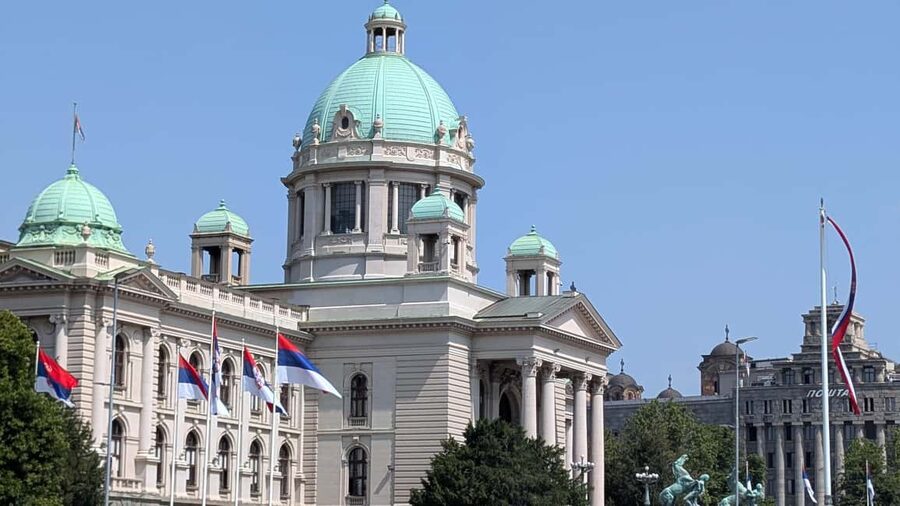
The first formal stop is the National Assembly of the Republic of Serbia, with about 20 minutes for explanation, sightseeing, and free time. This is a good early stop because it introduces Serbia as a modern state, not only as a place of medieval churches and old fortifications.
Your guide can also help you understand the role of Belgrade as the country’s political center. The tour’s strength is its ability to connect architecture and public space with the forces that shaped Serbia. You are not just looking at an impressive government building. You are learning why this part of the city matters.
Kneza Mihaila and Republic Square
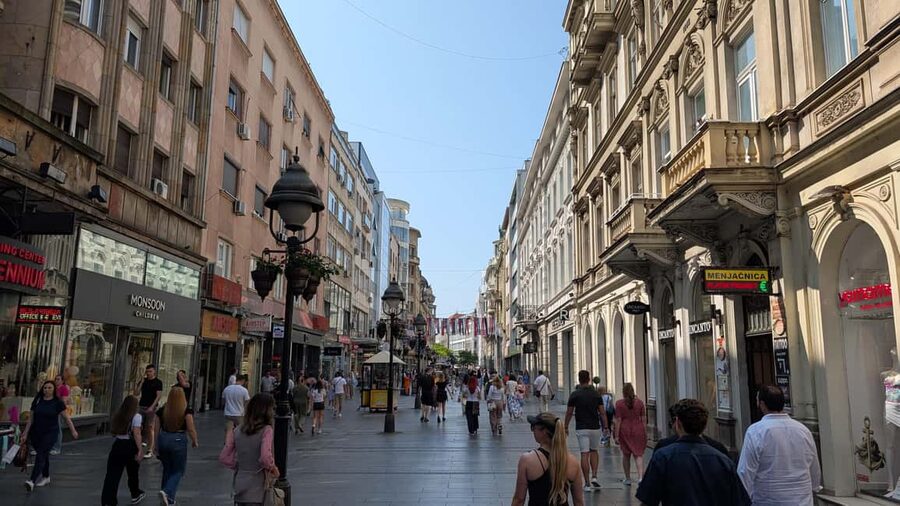
The walk continues along Kneza Mihaila, Belgrade’s central pedestrian street. Allow about 20 minutes here for guided sightseeing and walking. This is one of the best places to get a feel for the city’s social rhythm, since the route passes through a central public space rather than a quiet museum district.
Republic Square follows, with another 20 minutes. The square helps place modern Belgrade within the older city center. Your guide can explain how the city changed as Serbia developed its own institutions and urban identity.
I like this part of the route because it gives you practical orientation. After the tour, you will recognize the main central corridor and have an easier time finding your way to nearby restaurants, shops, cultural sites, and meeting points. The drawback is that these streets are active city spaces, not controlled museum rooms. Traffic noise and pedestrians may occasionally compete with the guide’s voice.
Skadarlija, Belgrade’s old bohemian quarter
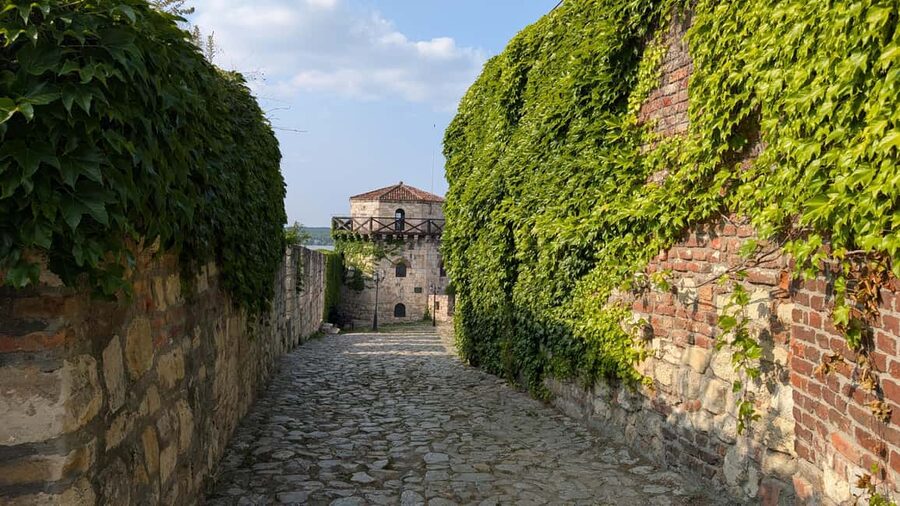
Skadarlija is one of the most atmospheric stops, with about 20 minutes for a photo stop, sightseeing, and explanation. Its street is closely linked with Belgrade’s artistic and restaurant culture, and it gives the tour a welcome change of mood after the formal squares.
This is where the city’s cultural side comes forward. Your guide may discuss Serbian customs, food, writers, music, and the way locals use old neighborhoods today. Several guides are praised for adding restaurant and museum suggestions, so pay attention and ask questions if you want ideas for the rest of your stay.
You should keep your expectations sensible. The stop is short, and the tour is not a full food walk or a long restaurant visit. You get the setting and the story, then continue. If Skadarlija interests you, return later at your own pace.
More Three-Hour Tours in the world:
- Berlin: 3-Hour World Heritage Cruise to Potsdam
★ 4.5 · 1,569 reviews - Edinburgh: 3-Hour Historical Walking Tour in Italian
★ 4.7 · 734 reviews - 3-Hour Porto Jewish Heritage Walking Tour with Local Guide
★ 4.5 · 396 reviews - 3-Hour Atlanta Beltline Food, Street Art and History Tour
★ 5.0 · 345 reviews
Student Park and the Church of Saint Michael
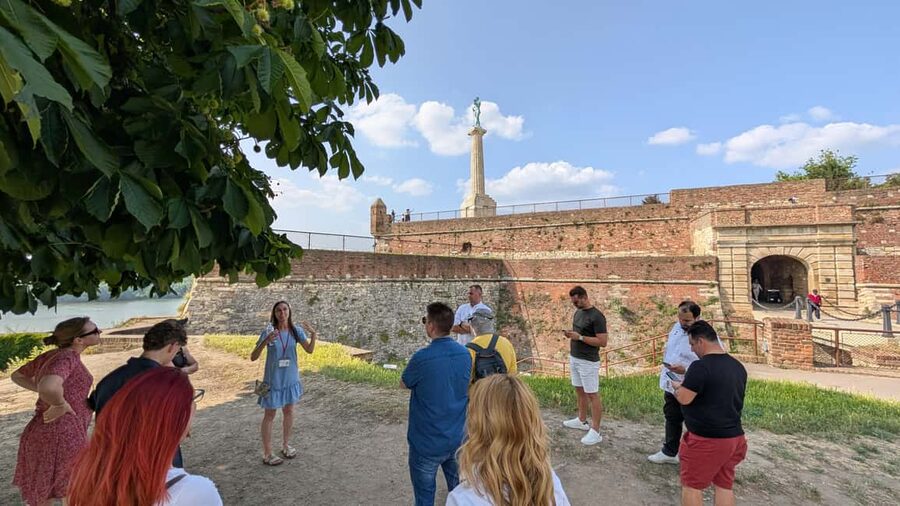
The route then moves through Student Park for about 10 minutes. This shorter stop adds another piece of everyday Belgrade. It is a useful pause between the old quarter and the religious and military landmarks ahead.
The tour next visits the Church of the Holy Archangel Michael, often called the Cathedral Church of Saint Michael, for about 15 minutes. This is one of the places where religion and Serbian national identity meet. The church helps explain the importance of Orthodox Christianity in Serbian culture and gives your guide a chance to discuss the relationship between faith, rulers, and public life.
The visit is brief, so you should not expect a lengthy religious tour. Still, the stop matters because Serbian history cannot be understood through battles and borders alone. Religious institutions played a major role in preserving identity through periods of foreign rule and political change.
Kalemegdan Park and the Belgrade Fortress
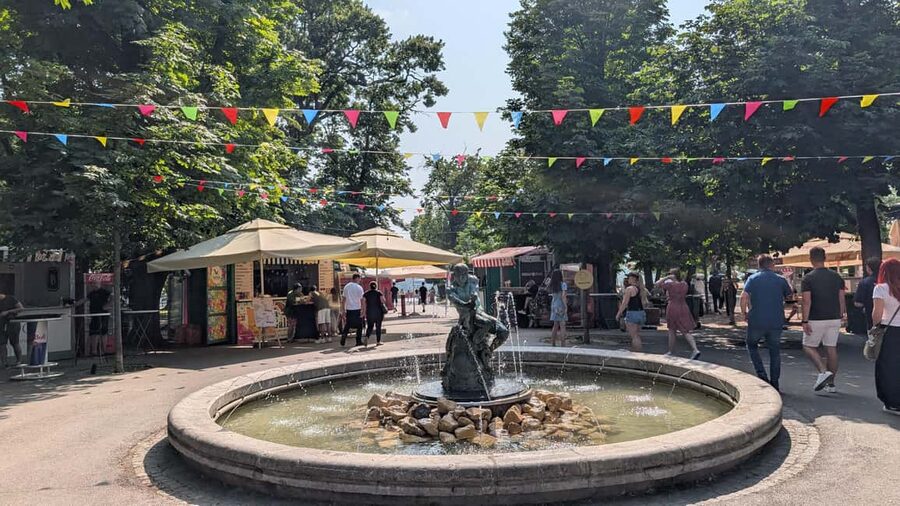
Kalemegdan Park brings you to the heart of the tour. You spend about 20 minutes visiting, walking, and passing through the park before reaching the Belgrade Fortress. The name Kalemegdan is tied to the fortress area, and the park now provides open space around one of the city’s most important historic sites.
At the fortress, expect another 20 minutes for a photo stop, guided sightseeing, walking, and scenic views. This is the strongest visual section of the route. From the elevated ground, you can look toward the meeting of the Sava and Danube rivers and understand why this location mattered to armies for centuries.
The fortress is not one single building with one neat story. It is a layered military site shaped by many rulers and conflicts. Your guide can help you read the walls and open spaces as evidence of Belgrade’s repeated changes in control.
The Military Museum is included among the highlights, although the timed route does not promise a separate, extended museum visit. You should treat it as part of the fortress area and ask your guide exactly how the stop will be handled on your departure. If you want to inspect museum displays in detail, plan a separate visit.
Weather matters here. The park and fortress involve open-air walking, and one guide, Marija, was praised for finding shaded places during a very hot day. Even so, bring water in warm weather and dress for the forecast. In colder or wet conditions, the open sections may feel less comfortable.
Ružica Church and the Monument of Gratitude to France
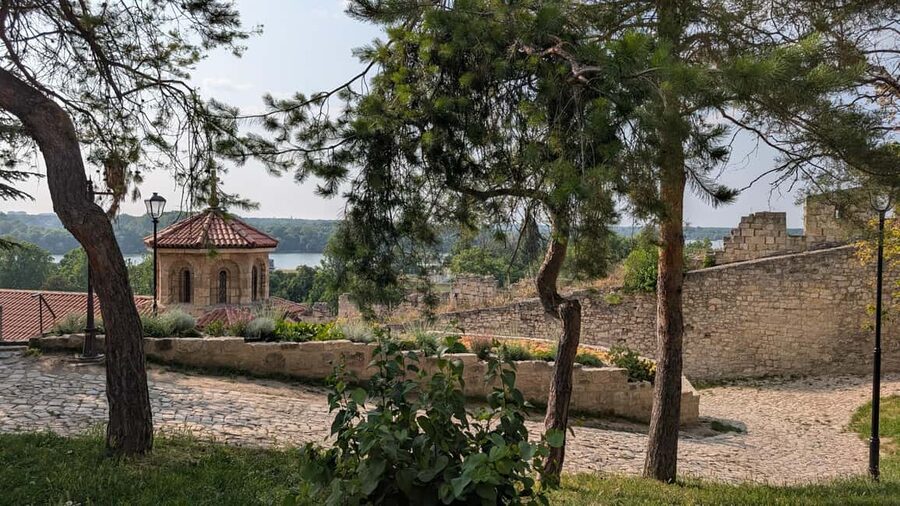
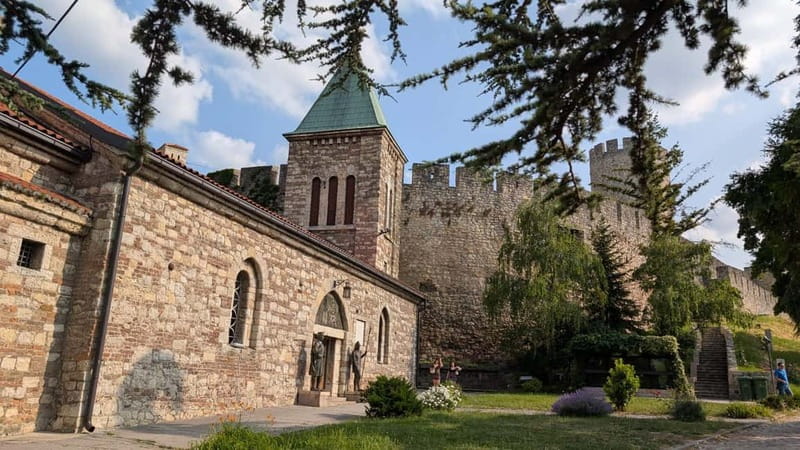
Ružica Church receives about 15 minutes for a visit, photographs, and guided sightseeing. It is described as a lovely church built in the 15th century, and its location near the fortress makes it a natural part of the old defensive district.
The church adds a human and spiritual note to the military setting. You move from walls, weapons, and river views into a much smaller place of worship. This contrast helps show how Belgrade’s past was shaped by ordinary religious life as well as by armies and rulers.
The next stop is the Monument of Gratitude to France, with about 15 minutes for sightseeing. The monument points to the international relationships that shaped Serbia, especially the ties formed through war and diplomatic history. It is a reminder that Serbian history is not only a story of conflict with neighboring powers. Alliances, support, and outside influence also mattered.
The tour finishes at Rajićeva Shopping Center. That is a practical endpoint in the center, close to the pedestrian district and other places you may want to explore. You are not left at an isolated fortress entrance or required to arrange transport back to town.
How the guides handle a complicated subject
The strongest part of this experience is the guide-led explanation. Serbian and Balkan history can become confusing fast because borders, names, religions, and political identities changed many times. A good guide has to simplify without flattening the subject.
Marija is repeatedly praised for explaining difficult history clearly, including the region’s current political situation. She is also described as open to discussion and careful about separating facts from personal views. Aleksandar receives similar praise for explaining Serbia and Yugoslavia in a clear, interesting way.
Tibi, also called Tibor, is praised for turning a long and complicated past into a manageable story while still leaving time for questions. Pedja is described as patient, friendly, and willing to help with practical advice after the walk. Jovana is noted for discussing Serbian traditions, habits, museums, and restaurants.
Guide assignments can change, so you should not book on the assumption that one named person will lead your departure. Still, the repeated strengths are clear: clear communication, local perspective, patience, humor, and a willingness to discuss sensitive topics without making the tour feel like a political speech.
The tone may vary by guide. Some bring more personal stories and jokes, while others take a more formal and factual approach. That is a benefit for most people, since the central subject remains the same but the presentation feels human rather than scripted.
What the three-hour timing really gives you
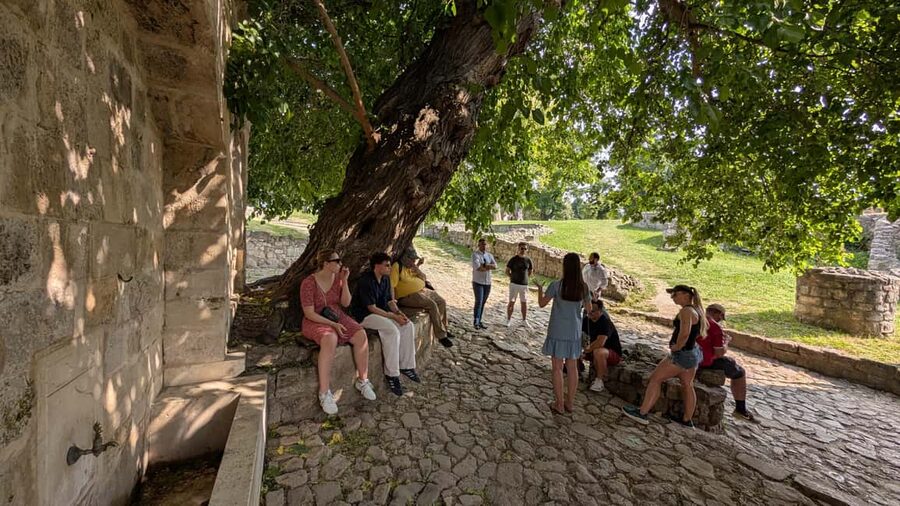
Three hours is enough for a strong first look, not a full study of Belgrade. You get a connected route through the main historic center, several major landmarks, church visits, fortress views, and an introduction to Serbia’s past and present.
The schedule includes many stops, but most last only 10 to 20 minutes. That means you will hear context at each place, take photographs, and move on. You will not have time to linger at every monument or read every museum display.
I would choose this tour early in a Belgrade visit. It helps you decide where you want to return, and it gives later sightseeing more meaning. You can then revisit Skadarlija, the fortress, or a church without trying to understand each place from scratch.
The tour works especially well for first-time visitors, history fans, and anyone who wants to ask direct questions about Serbia. Families can also manage it if children are comfortable walking. One guide was especially patient with a family traveling with a two-year-old, but the 4-kilometer distance still deserves consideration for young children.
Price, walking comfort, and booking value
At $35 per person, the tour offers good value if you want interpretation rather than just a route between sights. You are paying for three hours of English-language guiding, local context, and the chance to ask about subjects that can be difficult to research from short guidebook entries.
The value is strongest when you use the guide actively. Ask about the Ottoman period, Yugoslavia, the 1990s, religion, or places to eat afterward. Several guides have been praised for offering practical suggestions beyond the formal route, so your questions can make the experience more useful.
The tour is wheelchair accessible, but the description also makes clear that it is a walking tour of about 4 kilometers. You should confirm that the route suits your mobility needs before booking, especially because historic fortress areas may feel more demanding than the central streets.
Wear comfortable shoes. There is no need for special equipment, but this is not a short stroll between nearby buildings. Free cancellation up to 24 hours before departure and the option to reserve now and pay later make the booking fairly flexible.
Who should book this Belgrade walking tour?
I would choose this tour if you want the city’s major historic sights tied into one readable story. It is especially useful if you are unsure how Serbian history fits with the wider history of the Balkans.
You should also choose it if you value conversation. The guides are prepared to answer questions, explain current issues, and offer local advice. That makes the tour more useful than a simple landmark checklist.
I would look elsewhere if you want long interior visits, a food-focused experience, or plenty of free time at each stop. The route is broad rather than slow, and its purpose is to give you a strong framework for understanding Belgrade.
Final advice: book it for context, not just sightseeing
Book this tour if you want to see Belgrade and understand why its streets, churches, fortress, and public buildings matter. At $35, the combination of a central route, experienced English-speaking guides, and open discussion offers solid value.
Go early in your stay, wear comfortable shoes, and arrive ready to ask questions. The tour will not tell you every detail of Serbian history, but it can give you the structure you need to make the rest of Belgrade easier to read.
FAQ
How long is the Serbian history walking tour?
The tour lasts 3 hours.
How far do you walk?
The walking route covers around 4 kilometers.
Where does the tour start?
The meeting point is Terazije Square, next to the fountain.
Where does the tour finish?
The tour finishes at Rajićeva Shopping Center.
What language is the tour conducted in?
The live tour guide speaks English.
Is the walking tour wheelchair accessible?
Yes, the activity is listed as wheelchair accessible.
Can I cancel the tour for a refund?
Yes. You can cancel up to 24 hours in advance for a full refund.
Latest history tours reviewed in the world
- From Athens: Ancient Olympia Full-Day Private Tour★ 4.8 · 22 reviews
- From Athens: Explore Ancient Corinth & Charming Nafplion★ 4.6 · 102 reviews
- From Athens: Explore Ancient Greece 4-Day Tour★ 4.7 · 73 reviews
- From Albufeira: Wine Tasting & Historic Silves Tour★ 4.9 · 421 reviews
- From Albufeira: Historical Algarve Region Tour★ 4.7 · 585 reviews
- From Alexandria: Full-Day Guided Tour of Historical Sights★ 4.5 · 54 reviews
- Franklin: Ghost Tour in Historic Franklin★ 4.8 · 65 reviews
- Freiburg: Exciting City Tour with sightseeing and history★ 4.3 · 103 reviews
History Walking Tours, compared.
History and Hauntings of Salem Guided Walking Tour
Read our review →
Lisbon: History, Stories and Lifestyle Walking Tour
Read our review →
Boston: Freedom Trail History Small Group Walking Tour
Read our review →
Historic Charleston Guided Sightseeing Walking Tour
Read our review →
Barcelona: Tapas Walking Tour with Food, Wine, and History
Read our review →
Savannah History and Haunts Candlelit Ghost Walking Tour
Read our review →
A History of Terror – Belfast City Centre Walking Tour
Read our review →Browse the lists this tour appears in