
Review · UK
A History of Terror – Belfast City Centre Walking Tour
Belfast’s darkest modern history is written into ordinary streets, shopping areas, bars, and police buildings. This 2.5-hour walking tour takes you to those places and explains how the conflict known as The Troubles began, spread, and finally gave way to a difficult peace. I like the clear route through central Belfast, and I like that the story includes personal memories as well as politics.
The tour also makes good use of headsets, which matter when up to 25 people are gathered on a busy street. The main drawback is the subject itself: you will hear about bombings, deaths, and fear in places that now look normal. The walking is easy, but there is plenty of standing and listening, and poor weather can make the experience harder.
Key points to know before booking
- The route covers 1.5 miles through flat Belfast city centre, with no hills or steps.
- The story is presented as balanced and non-partisan, covering British and Irish perspectives and the political and religious conflict.
- Personal accounts add weight, with guides such as James, Anne, Mylie, Róisín, and Chris bringing memories of growing up during The Troubles.
- The Cathedral Quarter and city centre look modern today, making the contrast with the violence of the 1970s especially striking.
- Headsets are supplied, although one reported equipment failure shows why it is worth staying fairly close to the guide.
- The tour ends at the Beacon of Hope, about a five-minute walk from City Hall.
Why this Belfast Troubles tour matters
A city tour about The Troubles can easily become either a dry political lecture or a sensational walk through sites of violence. This experience aims for a steadier middle ground. You move through central Belfast while the guide explains the long relationship between Britain and Ireland, the division between communities, the outbreak of violence in the late 1960s, and the steps toward peace.
I value that approach. You are not simply shown a wall or a bomb site and then hurried on. The guide connects each location to the wider story. You learn how ordinary shopping streets were affected, how police control changed, and how the political problems still shape Northern Ireland.
The tone is serious, but not grim from start to finish. Guides including James, Anne, Mylie, Róisín, Chris, and Rorey have been praised for making the subject understandable and personal. Some guides have lived through the period themselves, while others bring strong historical preparation and a clear ability to explain both sides.
That personal element can be powerful. A discussion of checkpoints, bomb scares, or divided communities means more when it is linked to daily life. You begin to see that The Troubles were not only a sequence of political events. They affected where people went, how they travelled, what they feared, and how they viewed their neighbours.
More History Walking Tours in the UK
- Edinburgh: Old Town History and Tales Walking Tour
★ 4.8 · 2,361 reviews - Old Town Walking Tour History and Tales in Edinburgh
★ 5.0 · 2,168 reviews - Shadows of York: Ghost Walk and Horrible History.
★ 5.0 · 1,403 reviews
Starting at Belfast City Hall
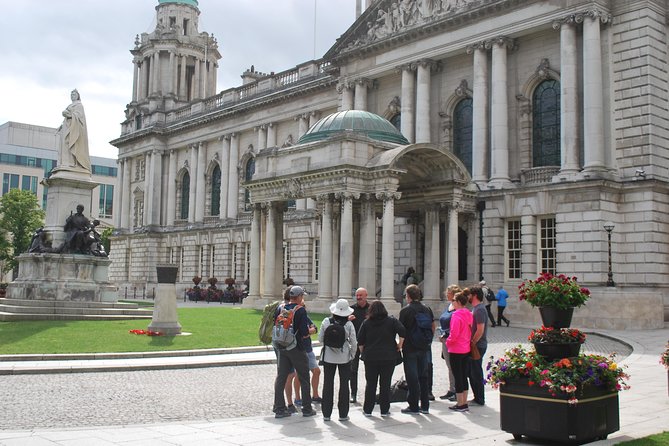
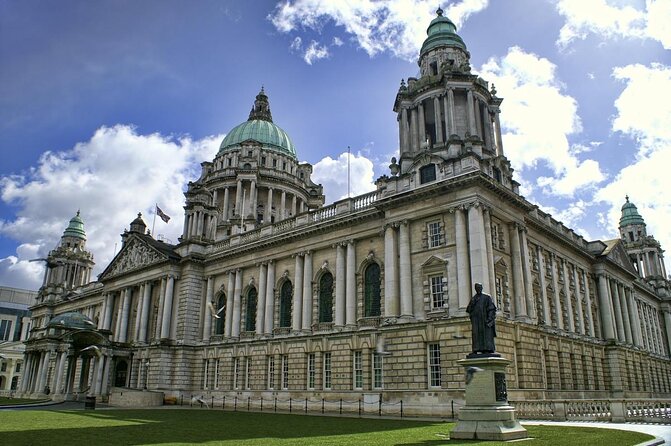
The tour begins at 10:30 a.m. in the grounds of Belfast City Hall. This is a useful place to start because it gives the guide room to set out the background before the group moves into the city streets.
Expect about 20 minutes here. The guide explains the centuries-old relationship between the British and Irish traditions, then shows how unresolved questions of identity, government, religion, and civil rights helped create the conditions for violence in the late 1960s.
This introduction is important for anyone who knows only the broad outline of Irish history. The tour is not limited to the years of the conflict. You first get the context needed to understand why events became so bitter and why political labels can mean different things to different communities.
The grounds are also a practical meeting place. You can arrive by public transport, and the city centre is flat. Wear comfortable shoes, but you do not need hiking footwear. The route is an urban walk, not a strenuous trek.
Donegall Place and the Ring of Steel
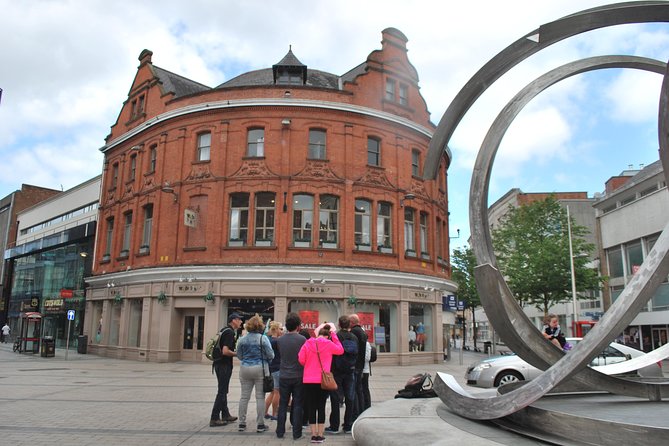
From City Hall, the route continues to Donegall Place, now one of Belfast’s main shopping streets. It is a familiar city-centre setting, which makes the story here particularly unsettling.
The guide discusses a 1971 bomb attack on a nightclub, the deaths and injuries connected with it, and the response that followed. You also learn about the introduction of the Ring of Steel, the security measures that changed movement through Belfast.
This stop helps you understand how violence altered the shape of daily life. A shopping street could become a controlled zone, with checks, barriers, and delays affecting anyone trying to enter the centre. The physical scene may appear ordinary now, but the guide gives it a very different meaning.
Plan on roughly 15 minutes here. There is more standing than walking at many stops, so rain gear and warm layers are sensible, especially from autumn through spring.
Castle Lane and the reality of daily fear
Castle Lane is another place where present-day Belfast hides the atmosphere of the conflict. The pedestrian precinct is now busy with shops and foot traffic. During The Troubles, it was tied to events that left a lasting mark on the city.
The guide explains what life was like at the height of the violence and focuses on an event that remains strongly remembered. The value of this stop is its attention to human experience. You are not only given dates and political terms. You hear how fear entered normal routines.
This is one of the places where the tour’s use of a local guide can make a difference. A good storyteller can explain why one incident still matters without turning suffering into entertainment. The best guides, including those who grew up during the period, bring a measured tone and allow the seriousness of the subject to speak for itself.
The stop lasts about 15 minutes. The route remains easy underfoot, though you should expect to pause in public spaces rather than sit for every explanation.
Same old streets, another chapter:
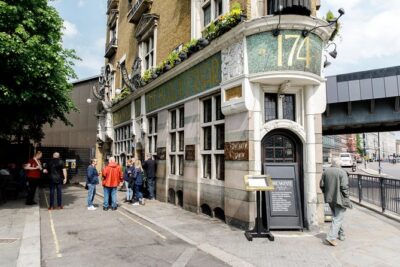
- London Small Group Tour of Historical Pubs
★ 5.0 · 10,422 reviews - Edinburgh: Edinburgh Castle Guided History Tour with Tickets
★ 4.8 · 9,933 reviews - Edinburgh: Whisky Tasting with History and Storytelling
★ 4.9 · 2,451 reviews - Soho Music & Historic Pubs Tour
★ 5.0 · 1,993 reviews
The Spirit of Belfast and the start of escalation
Near the waterfront, the Spirit of Belfast sculpture is known locally by the less formal nickname the Onion Rings. It represents resilience and renewal, but the tour uses the area to tell a much darker story.
Here, the guide discusses a series of events that began in a nearby bar in 1971. Those events helped push Northern Ireland into a rapidly worsening cycle of violence. The contrast is sharp: a piece of public art celebrating the city’s future stands close to a place tied to its painful past.
This is a strong example of the tour’s method. Belfast is not treated as a museum frozen in the 1970s. You see the city as it is now, then learn how quickly ordinary places became associated with danger.
Allow about 15 minutes. The guide will likely be speaking outdoors, so the supplied headset is useful. Stay alert to the route and keep close enough to hear clearly, especially if the group spreads out around the sculpture.
The Cathedral Quarter and the road toward peace
The Cathedral Quarter provides the tour’s biggest contrast between old Belfast and new Belfast. Its alleys, bars, nightlife, and street art now form one of the city’s cultural districts. During the tour, those same streets become the setting for stories about major events and the first steps toward peace.
You spend about 20 minutes here. The guide describes how the conflict affected the area, then explains the beginnings of the political process that eventually brought an end to much of the violence.
I especially like this part of the route because it avoids presenting peace as a simple finish line. The guide discusses a fragile peace, which is a more honest description. Belfast has changed greatly, but political disagreements and questions about identity have not vanished.
The Cathedral Quarter also gives you a chance to notice how public space can change meaning. A lane that now carries street art and evening crowds once belonged to a city shaped by security fears. The tour makes that change visible without pretending the past can be erased.
Ann Street, policing, and the border question
At Ann Street, the guide discusses policing during The Troubles and the changes that followed the peace agreement. The stop is beside Belfast’s largest police station, making it a useful place to consider how security worked during the conflict.
You learn about the role of policing, how it changed after the peace process, and the possible effects of Brexit on the border. That last subject brings the story into the present. Northern Ireland’s political questions are not only historical matters, and the border remains tied to identity, trade, and constitutional debate.
This section will suit you if you want more than a list of past incidents. It connects the street you are standing on with wider questions about government and community trust.
The stop lasts around 15 minutes. As with the other locations, the experience involves listening in an open city setting. The headsets are meant to help, but one reported technical problem shows that no audio system is perfect. If you have trouble hearing, move closer and tell the guide promptly.
Finishing beside the Beacon of Hope
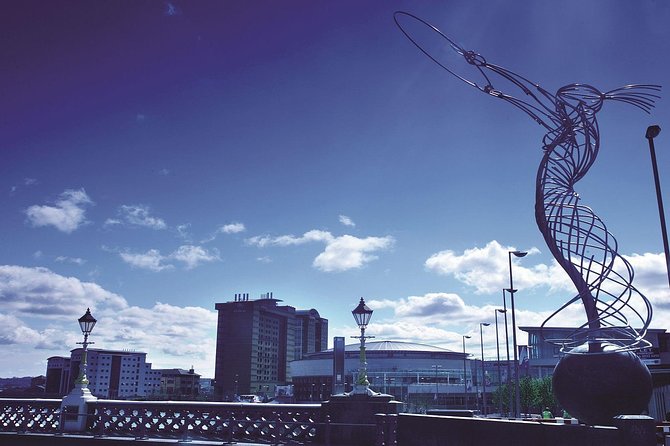
The route ends on Oxford Street beside the River Lagan and the Beacon of Hope. This public artwork represents resilience and regeneration, making it a fitting place to close the tour.
The final 20 minutes compare Belfast today with one of the darkest days in its past. The guide explains how the peace was achieved and considers what may come next. It is a hopeful ending, but not an overly neat one.
From the Beacon of Hope, you can walk back to City Hall in about five minutes. That makes the finish convenient if you need to collect a bag, meet someone, or continue exploring central Belfast.
The waterfront also gives the group room to reflect. After several stops connected with bombings, policing, and loss of life, the modern public art and open river setting offer a change of mood. You finish with a better sense of both what Belfast survived and what remains unsettled.
Guides, group size, and the feel of the walk
The maximum group size is 25. That is small enough for a guide to keep the group together, though you should not expect a private tour. The headsets are a real help when the group is spread around a pavement or public artwork.
The strongest part of the experience is the guiding. James is described as lively, friendly, and especially strong on The Troubles. Mylie has been praised for an engaging delivery and for bringing both historical and present-day Belfast into the same story. Anne and Róisín have drawn attention for personal accounts of growing up during the conflict.
You may also have a guide such as Chris or Rorey. The exact style will vary, but the tour works best when the guide combines facts with lived experience and keeps the discussion balanced. Guides have handled the subject in a neutral way, allowing you to understand competing views rather than directing you toward a political conclusion.
Do keep your expectations realistic. This is more standing and listening than continuous walking. One stop may have a dry seat if the weather is kind, but you should not count on seating throughout.
Price, timing, and who gets good value
At $36.06 per person, the tour is fairly priced for two and a half hours with a local guide and audio equipment. You are paying for interpretation rather than entry tickets, since every stop is outdoors and free to access.
The value is strongest if you are new to Belfast or want a clear first introduction to The Troubles. In one morning, you cover the political background, key incidents, public security, changing policing, the peace process, and current border concerns.
It may be less suitable if you want a fast sightseeing circuit or a tour focused on architecture. You will see important parts of the centre, but the main attraction is the story, not a long list of buildings.
The tour is recommended for ages 12 and up. The subject includes death and violence, so parents should decide if younger teenagers are ready for it. Most people can take part, and the route is flat, with about 1.5 miles of walking and no hills or steps.
The tour runs in all weather unless conditions force a cancellation. Bring a waterproof jacket for showers and warm clothing in winter. Comfortable shoes matter more than speed, since you will spend much of the time on your feet.
You can cancel for a full refund up to 24 hours before the start. Changes or cancellations inside that period are not refunded. If poor weather cancels the tour, you are offered another date or a full refund.
Should you book A History of Terror?
Book it if you want to understand Belfast through the places where its recent past unfolded. The route is easy, the price is reasonable, and the guides bring a mix of political context, local memory, and personal stories.
I would choose this early in a Belfast visit. It gives you a useful frame for the city, especially before visiting other historical sites. Just come prepared for a serious subject, outdoor standing, and weather that may not cooperate.
Skip it if you want a light city stroll or if discussion of bombings and loss will make your day uncomfortable. For anyone ready to listen carefully, this is one of the most useful ways to see Belfast beyond its pubs, shopping streets, and restored quarters.
FAQ
Where does the Belfast walking tour begin?
The tour begins in the grounds of Belfast City Hall at Donegall Square North, Belfast BT1 5GS.
What time does the tour start?
The start time is 10:30 a.m.
Where does the tour finish?
The tour ends at the Beacon of Hope on Oxford Street, Belfast BT1 3NB, beside the River Lagan.
How far does the tour walk?
The route covers about 1.5 miles.
Is the route difficult?
Belfast city centre is completely flat, with no hills or steps. Comfortable footwear is recommended because the tour includes standing and walking.
How long does the experience last?
The walking tour lasts approximately two hours and 30 minutes.
Is the tour suitable for children?
The minimum age is 12 years. The tour discusses violence, bombings, deaths, and The Troubles, so adults should consider the subject matter before bringing younger teenagers.
Are headsets provided?
Yes. Headsets are included so you can hear the local guide clearly.
What happens if the weather is poor?
The tour operates in normal poor weather, so a waterproof jacket and warm clothing are recommended. If the experience is canceled because of poor weather, you will be offered a different date or a full refund.
Latest history tours reviewed in the UK
- Falmouth: Vibrant Historical Walking Tour (award-winning)★ 4.9 · 75 reviews
- Edinburgh: Small-Group History of Whisky Tour with Tasting★ 4.8 · 138 reviews
- Edinburgh: Old Town History Walking Tour★ 4.9 · 528 reviews
- Edinburgh’s Dark History Walking Tour★ 4.9 · 55 reviews
- Edinburgh: Multi-Sensory Small-Group Historic Vaults Tour★ 4.6 · 596 reviews
- Edinburgh: Pubs and History Guided Walking Tour with Beer★ 4.8 · 254 reviews
- Edinburgh: History Lovers Old Town Walking Tour★ 4.9 · 56 reviews
- Edinburgh: Multi-Sensory Old Town Historical Walking Tour★ 4.6 · 290 reviews
UK History Tours, compared.
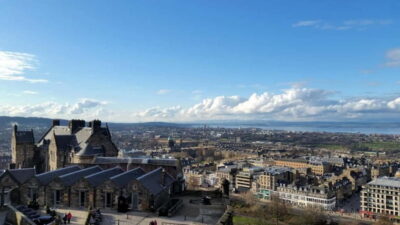
Edinburgh: Edinburgh Castle Guided History Tour with Tickets
Read our review →
Edinburgh: Whisky Tasting with History and Storytelling
Read our review →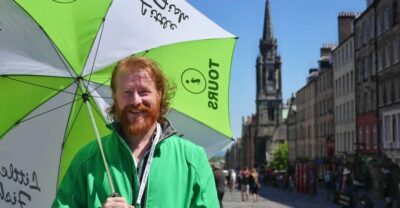
Edinburgh: Old Town History and Tales Walking Tour
Read our review →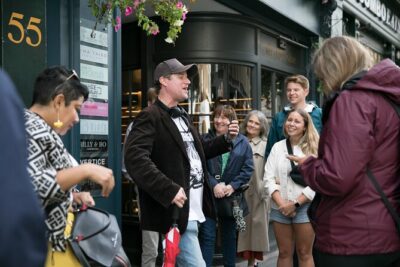
Edinburgh: Old Town and Underground Historical Tour
Read our review →
Shadows of York: Ghost Walk and Horrible History.
Read our review →
Multi-Sensory Small-Group Historic Vaults Tour in Edinburgh
Read our review →Browse the lists this tour appears in