
Review · ITALY
Amalfi Organic Lemon Tour & Tasting in the Historical Garden
The best part of this Amalfi experience is not the tasting table. It is the walk through a working terrace farm, where lemons grow on steep stone shelves above the town. You see chestnut-wood pergolas, old water channels, hand-built walls and the hard practical work that made farming here possible.
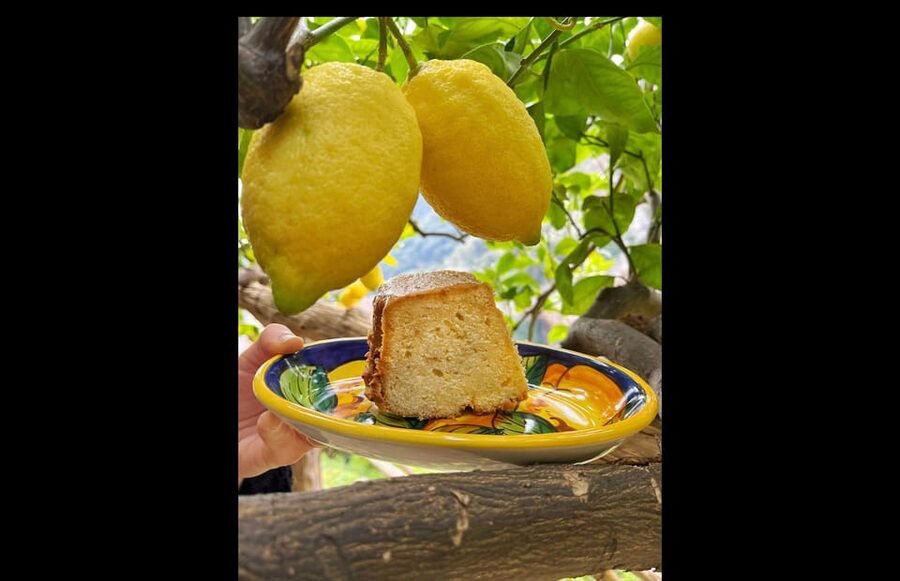
I like the small-group format and the family connection. Giovanna, a fourth-generation farmer, leads many tours and explains both the citrus varieties and the farm’s past in clear English. I also like the final tasting, especially the homemade lemon cake, fresh lemonade and organic limoncello served with a fine view over Amalfi and the sea.
The catch is simple: this is a stair-heavy outing. There are no concrete paths or flat platforms under the lemon trees, and the farm is not suited to people with mobility, heart or respiratory problems. Wear proper shoes, take your time and do not book this as an easy stroll.
Key points to know before you book
- Sfusato lemons and other citrus varieties: Learn why Amalfi’s famous local lemon differs from ordinary supermarket fruit.
- A fourth-generation family farm: Giovanna and her family explain farming methods, local customs and the work behind the terraces.
- A three-part tasting: Organic lemonade, lemon cake and limoncello are included, with other local products sometimes available to sample.
- Sea views from the groves: The tasting pause looks across Amalfi and the blue water below.
- Ancient terrace engineering: Stone walls, chestnut pergolas, cisterns and water channels show how farmers made steep ground productive.
- Serious stairs: The setting is beautiful because it remains natural, but that also makes it physically demanding.
Why an Amalfi lemon farm tells the real story of the coast

Amalfi is often reduced to postcard views, crowded lanes and bottles of limoncello in shop windows. This tour gives you the part of the story behind those bottles. The lemon groves are not decorative gardens laid out for visitors. They are a form of vertical farming, built on steep slopes and kept alive through years of careful work.
The terraces are held together by macerine, dry-stone walls that contain soil and rocks from one level to the next. Chestnut wood from local forests supports the pergolas over the trees. Ancient cisterns and channels bring water down from high springs. Every part of the system has a practical purpose.
I find this context useful because it changes the way you see Amalfi. The stairs that seem inconvenient in town are part of the same system that carried people, tools and baskets of lemons up and down the hills. Before modern transport, farmers moved produce on their backs, with mules and on foot. Women took part in this demanding work, too.
The farm’s approach is organic and strongly tied to older peasant customs. The central idea is balance: use what you have, waste little, and give every part of the farm a purpose. The tour presents this not as a museum display, but as a way of living that still shapes the family business.
More History Tours in Italy:
- Colosseum: Underground and Ancient Rome Tour
★ 4.7 · 12,691 reviews - Rome: Colosseum with Arena, Roman Forum and Palatine Guided Tour
★ 4.0 · 5,598 reviews - Venice: St. Mark’s Basilica Guided Tour & VR History Intro
★ 3.9 · 4,880 reviews
Entering the historical garden above Amalfi
The meeting point is at the gate of the Lemon Farm in central Amalfi. After booking, you receive the exact meeting details. If you are coming down from Pontone or Scala, contact the farm instead of walking directly to the listed meeting point, since the hosts may arrange to meet you along the route down to Amalfi.
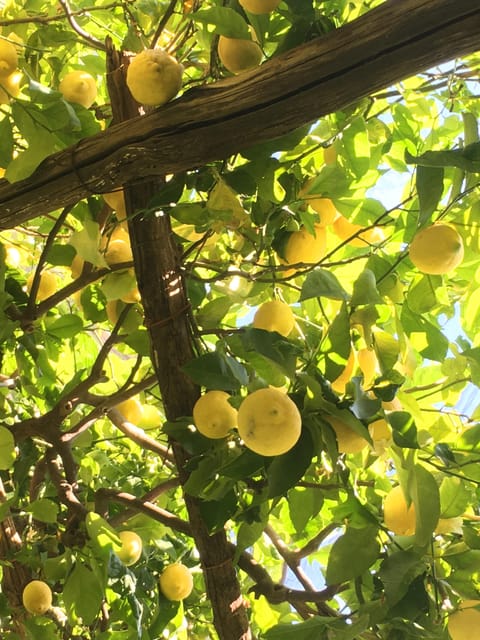
Once inside, the change is immediate. The town’s shops and traffic give way to lemon trees, steep paths and the scent of citrus. The farm has deliberately avoided concrete roads and platforms, so the setting feels like a real agricultural property rather than a polished attraction.
That choice has a clear benefit and a clear cost. You get a more genuine look at terrace farming, but the walking surface is uneven and the route includes steep inclines and many stairs. One family with teenagers described the approach as manageable but stair-filled. Another visitor specifically advised comfortable clothing and shoes.
The tour normally lasts about one and a half hours, though the full experience can run closer to two and a half hours depending on the starting time and pace. A small group makes it easier to stop, ask questions and hear the guide without the noise of a large crowd.
Walking among the lemon trees and old farm structures
The first part of the guided walk focuses on the grove itself. You learn how lemons are planted, supported and harvested on terraces that do not resemble level orchards. The branches are rough and twisted, and some have thorns, so picking requires care.
The guide explains several citrus types, including the famous Sfusato lemon associated with the Amalfi Coast. You learn why the fruit is important here and how organic growing differs from conventional methods. The information is practical rather than technical for its own sake, which makes it useful even if you do not normally seek out farming tours.
Look closely at the structures around you. The chestnut-wood pergolas are not just attractive. They support the growing system and help organize the plants on steep ground. The stone walls keep the terraces in place. Old water channels make springs available to the farm. Together, these features show a kind of local engineering built without heavy machinery or concrete.
The guide also uses historical documents to explain the value of the land and the need to preserve it. This adds depth to the walk. You are not only hearing how lemons grow today, but also seeing how generations of farmers adapted to difficult ground.
Giovanna is frequently the guide, and her family connection matters. As a fourth-generation farmer, she can explain the property as both a place of work and a family inheritance. Joanna is also used in some tour communications, so the name may appear in different forms when you arrange the visit.
The sea-view pause and three Amalfi flavors
The tasting comes after the walk, during a relaxing break with a view toward Amalfi and the sea. This is a good moment to slow down. The farm’s paths demand attention, while the tasting gives you a chance to sit, look out and talk with the other people in your small group.
Three core tastings are included:
- Organic lemonade
- Lemon cake
- Limoncello
The lemonade offers the clearest taste of the fruit itself. The cake shows how the lemon works in a sweet, homemade preparation. The limoncello is the most expected Amalfi product, but its quality depends heavily on the lemons and the preparation. Several visitors who normally do not care much for limoncello found this organic version especially good.
The cake is often a highlight, and the recipe comes from the family kitchen. The tasting may also include items such as candied lemon peel, honey, perfume or mandaretto, depending on what is being presented during the visit. The listed core tasting is lemonade, lemon cake and limoncello, so treat the extra samples as a possible bonus rather than a guaranteed part of the program.
You can also ask about buying local products at a special price. These discounts are not included in the tour price, and you should check current details with the farm before your visit. Purchasing something directly from the growers is a useful way to support the property, especially since maintaining terraces by hand takes considerable effort.
Same old streets, another chapter:
- Colosseum with Arena, Roman Forum and Palatine Hill Guided Tour
★ 4.5 · 3,526 reviews - Colosseum & Ancient Rome with Arena Floor Option I Max 6 People
★ 5.0 · 3,306 reviews - Rome: Colosseum, Ancient Rome Tour or AudioGuided Tour
★ 4.4 · 2,879 reviews - Colosseum Underground & Ancient Rome Guided Tour
★ 4.5 · 2,590 reviews
The seasonal truth about Amalfi lemons

There is one important timing note: Amalfi lemons are yellow only between February and July. If you visit outside that period, the trees may still be attractive and the tour still covers farming, citrus varieties and local history, but you should not expect every lemon to be bright yellow.
This seasonal detail is worth keeping in mind when choosing dates. Spring and early summer give you the best chance of seeing yellow fruit on the trees. The supplied tour information does not promise a particular harvest condition, so contact the farm if the appearance of ripe lemons is central to your plans.
The tasting remains the main food feature throughout the year, but produce and farm activity naturally change with the season. That is part of the value of visiting a working farm rather than a set-piece attraction.
What the $59 price gets you
At $59 per person, this is not the cheapest way to taste limoncello in Amalfi. You can buy a small drink or a bottle elsewhere for far less. The price makes more sense if you value the setting, the guide and the explanation of how the product begins in the soil.
You are paying for a one and a half hour guided visit, a very small shared group, access to a private historical garden and three included tastings. You also get the family’s account of organic farming, the history of the terraces and the chance to see the systems that support the lemon crop.
I consider that fair value for visitors who want an activity rather than a quick sample. It is less convincing for anyone who only wants a limoncello tasting or who dislikes stairs. The experience works best as a break from shopping and crowded town streets, not as a bargain food stop.
The tour also helps keep an old farm in use. The owners explain that visits provide important income for preserving the garden. That does not remove the need to judge the experience on its own merits, but it gives your spending a clear local purpose.
Who should book, and who should skip it

I would recommend this to you if you enjoy gardens, food traditions, family businesses and the working side of a famous destination. It is also a strong choice if you want a quieter activity in Amalfi that feels different from browsing shops or taking photos from the main streets.
Families with older children and teenagers can enjoy it, provided everyone is comfortable with steep paths and stairs. The tasting gives younger visitors something concrete to look forward to, while the farm setting offers a useful lesson in agriculture and local life.
The tour is not suitable for people with mobility impairments, heart problems or respiratory issues. Even a fit visitor should expect effort, particularly in warm weather. Wear sturdy shoes, bring water and allow enough time to walk at a relaxed pace.
This is also not the right pick if you want a formal cooking class, a full meal or hotel transportation included by default. Lunch and dinner are not part of the standard visit, though they may be available by advance arrangement. Accommodation pickup and drop-off also require advance reservation.
Timing your visit and preparing for the walk

The experience lasts between one and a half and two and a half hours, with starting times varying by availability. Leave room around it rather than scheduling a tight connection immediately afterward. Amalfi’s stairs and walking routes can take longer than they appear on a map.
The meeting point is in central Amalfi at the farm gate. Exact details arrive after confirmation. The tour is conducted in English with a live guide, and the clear explanations are suited to visitors who want to ask questions about citrus growing, family farming and local customs.
A small group of about eight people has been used, though group size can vary. That is small enough for a personal feel without turning the visit into a private tour. Guide Giovanna has also been praised for checking in before the visit and sending useful updates, so watch for messages after booking.
The cancellation policy allows a full refund when you cancel at least 24 hours in advance. You can also reserve now and pay later, which is useful if your Amalfi plans depend on weather or transport.
My call: book it for the farm, not just the limoncello

Book this tour if you want to understand why Amalfi’s lemons matter and how much labor supports the postcard views. The family guide, old terrace system, sea-view tasting and organic products make it a well-rounded short outing.
Skip it if stairs are a serious concern, if you need flat paths or if your only goal is to sample limoncello. For everyone else, this is one of the better ways to connect the famous Amalfi lemon with the land, people and farming traditions behind it.
FAQ
Where does the Amalfi lemon tour begin?
The tour begins at the gate of the Lemon Farm in central Amalfi. Exact meeting details are provided after booking.
How long does the tour last?
The guided visit lasts about one and a half hours. Depending on the schedule and pace, the full activity may take up to two and a half hours.
What food and drinks are included?
The standard tasting includes organic lemonade, lemon cake and limoncello.
Is the tour conducted in English?
Yes. The activity includes a live English-speaking guide.
How much does the experience cost?
The listed price is $59 per person.
Are lemons yellow all year?
No. The farm states that the lemons are yellow only between February and July.
Does the tour include hotel pickup?
Accommodation pickup and drop-off are not included by default. They may be available if you reserve them in advance.
Is the farm suitable for people with mobility problems?
No. The farm has steep inclines, stairs and uneven paths, and the experience is not suitable for people with mobility impairments, heart problems or respiratory issues.
Latest history tours reviewed in Italy
- Forte di Bard: history tour★ 4.5 · 31 reviews
- Florence Wine &Food: Taste Tuscan Flavors in Historic Cellar★ 4.6 · 31 reviews
- Florence Medici Bike Tour – Cycle Through History and Power★ 4.2 · 23 reviews
- Florence: Medici Family History Tour★ 4.3 · 93 reviews
- Florence: Fashion History Guided Walking Tour & Museum Visit★ 4.2 · 72 reviews
- Essential Florence Walking Tour to discover its history★ 5.0 · 21 reviews
- Discover Herculaneum: A guided tour of the ancient Roman city★ 4.9 · 34 reviews
- Day drinking in Rome – Scandalous Roman History★ 4.8 · 31 reviews
Italy History Tours, compared.

Colosseum: Underground and Ancient Rome Tour
Read our review →
Rome: Colosseum with Arena, Roman Forum and Palatine Guided Tour
Read our review →
Venice: St. Mark’s Basilica Guided Tour & VR History Intro
Read our review →
Colosseum & Ancient Rome with Arena Floor Option I Max 6 People
Read our review →
Rome: Colosseum, Ancient Rome Tour or AudioGuided Tour
Read our review →
Venice’s Best: Basilica, Doge’s Palace, Gondola & History Gallery
Read our review →
Taormina: Ancient Theater Skip-the-Line Ticket & Audio Guide
Read our review →
Discover the Ancient Ruins of Pompeii: Day Trip from Rome
Read our review →Browse the lists this tour appears in