
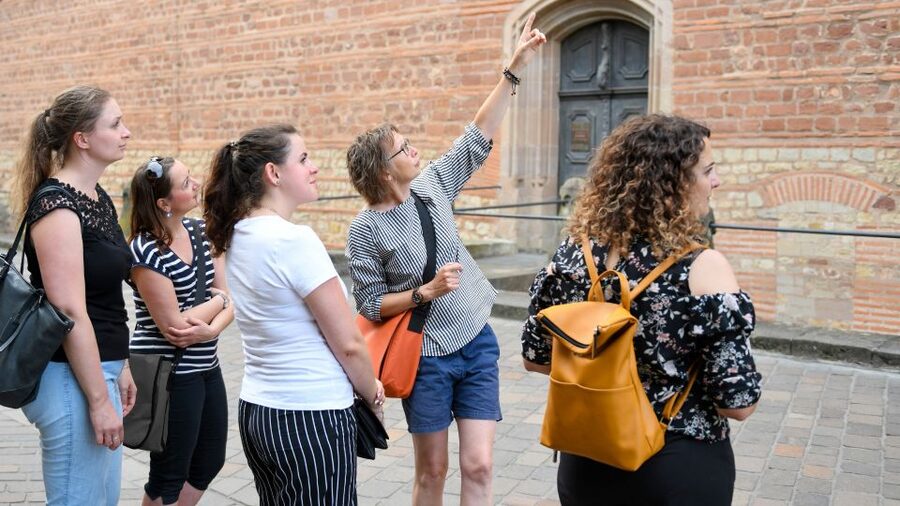
Review · GERMANY
Trier: Guided Old Town Highlights and History Walking Tour
Trier’s story is unusually easy to read on foot. In one short walk, you move from the massive Porta Nigra, built around 170 AD, to the cathedral, the Main Market, and the former home of Karl Marx. The city’s past is not locked away in a museum. It forms the streets you are walking through.
I like the tour’s short 90-minute format and its clear route through Roman, medieval, and modern Trier. I also like that guides such as Patrick and Herbert are described as both well informed and funny, with enough patience to answer questions. The main consideration is language: the live guide speaks German, so this works best if you understand German well enough to follow a spoken history lesson.
Key points at a glance
- Roman Trier begins at the Porta Nigra: Learn why this huge city gate mattered and what daily life was like under Roman rule.
- A compact route covers major sights: The walk includes the Porta Nigra, Trier Cathedral, Main Market, and Karl Marx’s former residence.
- The guide adds context, not just names: Expect stories about how Trier changed from antiquity through the Middle Ages to modern times.
- Patrick and Herbert are named guides: Their style is described as informative, humorous, personal, and good with questions.
- The price is easy to justify: At $16 per person, the tour gives you a useful first look at Trier for less than the cost of many longer guided outings.
- German is the only listed tour language: Check this carefully before booking if you need an English-language guide.
Starting beneath Trier’s Roman gate
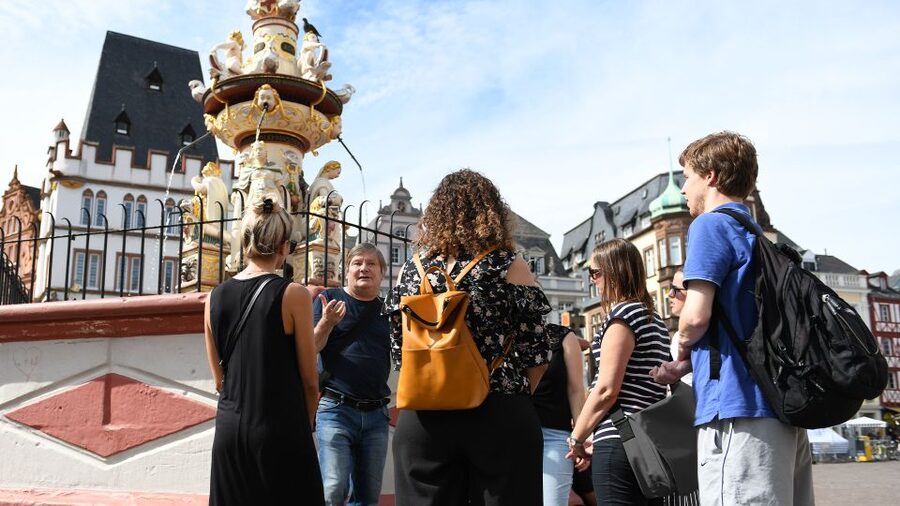
The meeting point is in front of the Mercure Hotel, opposite the Porta Nigra. That makes the beginning simple to find, especially if you are already near Trier’s central shopping streets or arriving at the city center for a day of sightseeing.
The Porta Nigra is the right place to begin. Built by the Romans as early as 170 AD, it gives you a physical sense of Trier’s age before the guide adds dates and names. You are not starting with a general introduction in an anonymous square. You are standing beside the city’s most recognizable Roman landmark.
The gate also gives the guide a natural way to explain Trier’s Roman beginnings. You learn about the city under Roman rule and get a picture of ordinary life, not only emperors and military power. That distinction matters. Dates tell you when something happened. Stories about how people lived help you understand why the city grew where it did and what the gate meant to the people passing through it.
The tour information describes a visit to the Porta Nigra, but it does not promise a separate ticketed interior tour. Plan on learning about and seeing the monument as part of the walking route rather than assuming that admission to every paid site is included. The listed inclusions are the walking tour and a live guide.
More History Walking Tours in Germany
- Leipzig: 1.5-Hour Historical Walking Tour in German
★ 4.7 · 2,217 reviews - Berlin: History of the Third Reich Guided Walking Tour
★ 4.7 · 791 reviews - Berlin Historical Highlights Walking Tour
★ 4.9 · 657 reviews
Following the Roman thread into the old town
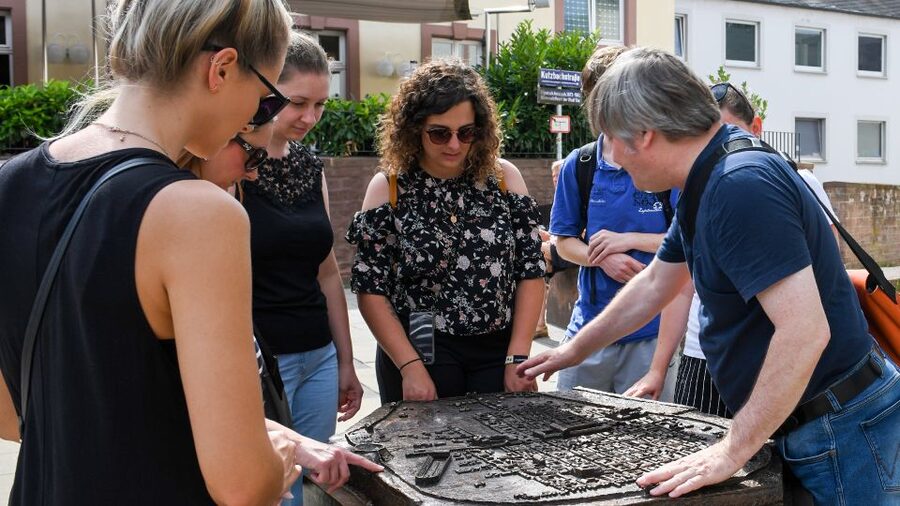
From the Porta Nigra, the walk traces Trier’s changing identity through its central streets. The route is designed to show how Roman foundations, medieval buildings, and later city life sit close together.
That layered history is the best reason to choose a guided walk instead of simply taking photographs from the outside. Trier can look like a collection of impressive buildings if you do not know how the pieces connect. A guide can point out the shift from Roman rule to the Middle Ages and then toward the modern city, giving you a basic timeline as you go.
The 90-minute length helps keep the pace focused. You get enough time for explanation and questions without committing half a day to a formal city program. I would place this tour near the beginning of a Trier visit. Afterward, you will know which sights deserve a slower return visit and which parts of the center you can understand on your own.
The tradeoff is that a short walk cannot provide a full study of every monument. You will hear the main story and see major points of interest, but you should not expect long interior visits, extended stops, or a detailed treatment of every period. Think of it as a strong orientation to central Trier.
Trier Cathedral and the city’s changing architecture
Trier Cathedral is one of the central highlights. The tour uses the cathedral to show how the city’s architecture developed after the Roman era and through the Middle Ages.
The cathedral is especially useful in a history walk because it shifts your attention from ancient Rome to the religious and civic power that shaped later Trier. The guide can place the building within the larger story of the city, helping you see that Trier is not only a Roman site. Its identity continued to change long after the empire faded.
You should expect exterior appreciation and historical explanation as part of the walk. The supplied details do not promise entry or a dedicated interior visit, so check the exact booking information if going inside the cathedral is important to you.
I like this part of the route because it breaks up the Roman focus. A city tour that spends all its energy on antiquity can make the later centuries feel like an afterthought. Here, the cathedral helps connect the old city to its medieval chapter and gives the route a broader reach.
The Main Market and Trier’s everyday center
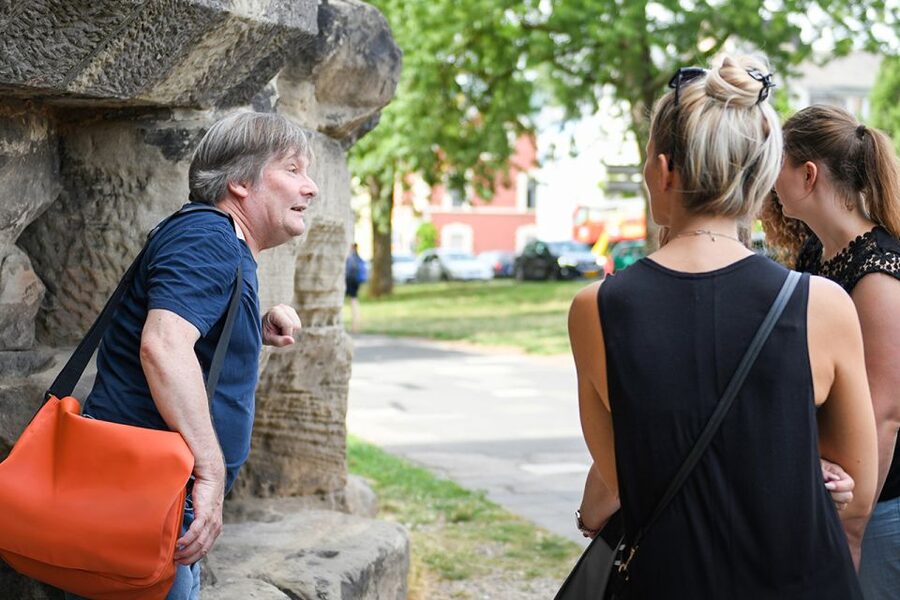
The Main Market adds a more public, everyday side of Trier. Its importance is not only architectural. A central market is where commerce, movement, and city life meet, making it a useful place to understand how Trier functions beyond its major monuments.
The guide’s job here is to help you read the square. You may see details that are easy to overlook when you are simply crossing it on the way to another sight. The tour description promises examples of architectural change from the Middle Ages to the present, and the Main Market is a natural setting for that kind of comparison.
This is also where the tour can feel more connected to present-day Trier. The Porta Nigra tells you about an ancient city gate. The Main Market shows how the city center remains part of daily urban life. That movement between past and present is one of the walk’s strongest features.
Because the full tour lasts only an hour and a half, the stop is likely meant for explanation rather than a long pause. If you want time for shopping, photography, or sitting with a coffee, save that for after the guide finishes.
More Old Town and Historic Centre Walks in Germany
- The Local Tour of Hamburg Historic Centre
★ 5.0 · 1,058 reviews - Cologne: Old Town Beer History Tour
★ 4.7 · 659 reviews - Berlin: Historic Center Walking Tour with a Real Berliner
★ 5.0 · 134 reviews - Sightseeing Tour – Free Tour – Historic Center-Hamburg On Foot
★ 5.0 · 112 reviews
Karl Marx’s former home and the modern chapter
The route also includes the residential house where Karl Marx lived. This gives the tour a sharp turn from ancient monuments and medieval architecture toward a figure associated with modern political thought.
Marx is one of the most influential philosophers connected with Trier, and the former residence adds a personal scale to his story. Instead of treating him as only a name in a textbook, the walk points to the place where he lived. That can make the modern part of Trier’s story easier to remember.
The house also shows why the tour is more than a Roman highlights walk. Trier’s appeal comes from the way different periods appear close together. You can begin with a Roman gate, move through medieval streets and religious architecture, and finish with a connection to a major modern thinker.
The information provided does not say that the tour enters the house or includes a museum visit. Expect to see the residence and hear about Marx as part of the outdoor walking route. If you want a detailed Marx-focused program, this tour may feel too broad. If you want one interesting modern stop within a wider city story, it fits well.
Guides who make the 90 minutes count
The strongest praise for this experience centers on the guides’ delivery. Patrick is described as entertaining while sharing a large amount of information. Herbert is praised for combining extensive knowledge with humor, personal touches, and an ability to keep children interested.
That tells you something useful about the style. This is not presented as a dry list of dates. You can expect the guide to explain the buildings, answer questions, and add anecdotes about people who shaped Trier. The phrase personal note matters here. Local history becomes easier to follow when the guide connects facts to stories and observations.
The reported experience with Patrick also points to good question handling. A guide who can answer questions clearly is valuable on a city walk because your interests may not match the planned route. You might care more about Roman daily life, the cathedral, Marx, or local food. The ability to adjust briefly makes a short tour more useful.
The language deserves careful attention. The live guide is listed as German, and German is the only language given for the activity. Do not book on the assumption that English commentary will be available. If you understand German comfortably, the tour’s humor and historical detail should be easier to enjoy. If you do not, ask the provider about language options before paying.
Why the $16 price can be good value
At $16 per person, this is an inexpensive way to get a guided introduction to Trier’s center. The value comes from the combination of location, route, and time. You are not paying for a long excursion with transport. You are paying for a local guide to help you make sense of several major sights in 90 minutes.
That price is particularly reasonable if you are in Trier for a short stop. A self-guided walk costs nothing, but it also leaves you to work out the historical links between the Porta Nigra, cathedral, Main Market, and Marx residence. The tour gives you a ready-made sequence and the chance to ask questions.
It is also a sensible choice for families, since children aged 0 to 5 can join free. The comments about children enjoying Herbert’s tour suggest that humor and storytelling can help younger listeners stay with the group, though the tour remains a history walk rather than a children’s activity program.
The value is lower if you need an English guide, want extensive interior access, or prefer a slow photography walk. Those needs are not promised here. At this price, keep your expectations focused on a guided outdoor overview.
How to use the tour during your Trier visit
I would book this walk early in your stay, ideally on your first day in the city. The route can give you a map in your head, and the guide’s advice about restaurants and bars may help with your plans afterward.
Be ready at the Mercure Hotel opposite the Porta Nigra, and allow the full 90 minutes. The meeting location is central, but you still want time to identify the correct spot without rushing. Comfortable walking shoes are a sensible choice for any city tour, though the supplied details do not specify the exact walking surface or accessibility arrangements.
Bring your questions. The guides are described as able to answer them, and a short tour becomes more useful when you ask about a monument or period that catches your attention. You can also ask for food and drink tips at the end. Those recommendations may be one of the most practical parts of the experience, since you finish close to the center rather than far outside town.
After the tour, consider returning to the sight that made the strongest impression. The walk is meant to introduce the city, not replace every museum or interior visit. Use it to decide where to spend your independent time.
Who should book this Trier walk
This tour suits you if you want a low-cost historical orientation with a clear route and a live German-speaking guide. It is a good match for first-time visitors, short-stay visitors, families with young children, and anyone who prefers stories and context to reading plaques alone.
It also works well for people who enjoy seeing how several periods share one city center. Roman Trier is the main opening theme, but the route continues through medieval architecture, the cathedral, the Main Market, and Karl Marx’s connection to the city.
You may want a different experience if you need English commentary, extensive time inside monuments, or a specialist focus on Roman archaeology or Karl Marx. The tour covers both subjects as part of a wider city story, so its strength is range rather than deep specialization.
The high overall rating and repeated praise for humor, clarity, personal detail, and question handling support the idea that the guide makes the difference here. Still, guide style can vary, and the named guides include Patrick and Herbert rather than a guarantee that one specific person will lead every departure.
Final call: a smart first look at Trier
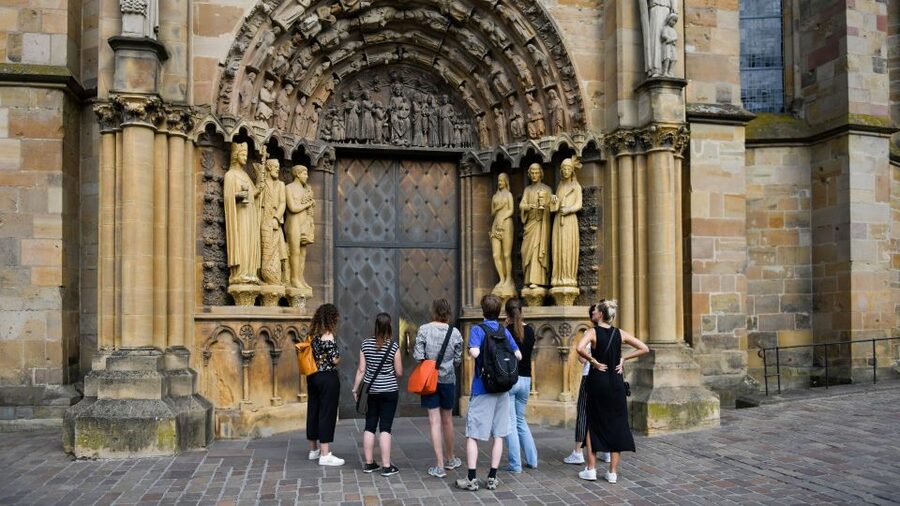
I would book this tour if you understand German and want to get oriented quickly. For $16, you see Trier’s essential central landmarks, hear how Roman, medieval, and modern chapters connect, and get a chance to ask a local guide what to do next.
The best reason to choose it is the combination of Porta Nigra, cathedral, Main Market, and Karl Marx’s former home in one manageable walk. The main reason to skip it is equally clear: German is the listed language, and the tour does not promise long interior visits.
Book it early in your Trier schedule, listen for the guide’s restaurant and bar suggestions, and leave time afterward to revisit the building or square that caught your interest.
FAQ
How much does the Trier walking tour cost?
The tour costs $16 per person.
How long does the tour last?
The walking tour lasts 1.5 hours.
Where does the tour meet?
Meet your guide in front of the Mercure Hotel, opposite the Porta Nigra.
What language is the tour offered in?
The live tour guide speaks German. German is the only listed tour language.
What sights are included on the route?
The route includes the Porta Nigra, Trier Cathedral, the Main Market, and the former residence of Karl Marx. It also covers Trier’s history from Roman times through the Middle Ages and into the modern period.
Are young children allowed to join?
Yes. Children aged 0 to 5 years can join free.
What is included in the price?
The price includes the walking tour and a live guide. The provided information does not list admission to separate paid attractions as an inclusion.
Latest history tours reviewed in Germany
- Freiburg: Exciting City Tour with sightseeing and history★ 4.3 · 103 reviews
- Frankfurt Self-Guided Historical Walking Tour★ 4.0 · 58 reviews
- Frankfurt: Old Town Historical Walking Tour with Geo Epoche★ 4.8 · 47 reviews
- Erfurt Tour – City tour with the historic tram★ 4.8 · 503 reviews
- Dresden: Guided Beer Tour of the Historic Old City★ 4.8 · 95 reviews
- Dessau: Guided Walking Tour through History★ 4.6 · 40 reviews
- Darmstadt: City Highlights and History Guided Walking Tour★ 4.0 · 23 reviews
- Cologne: Old Town Historical Walking Tour with GEO Epoche★ 4.7 · 31 reviews
Germany History Tours, compared.
Leipzig: City History Canal Sightseeing Tour on a Motorboat
Read our review →
Leipzig: 1.5-Hour Historical Walking Tour in German
Read our review →
Berlin: 3-Hour World Heritage Cruise to Potsdam
Read our review →
Berlin: History of the Third Reich Guided Walking Tour
Read our review →
Bamberg: Guided Beer History Tour with Optional Tasting
Read our review →Browse the lists this tour appears in