
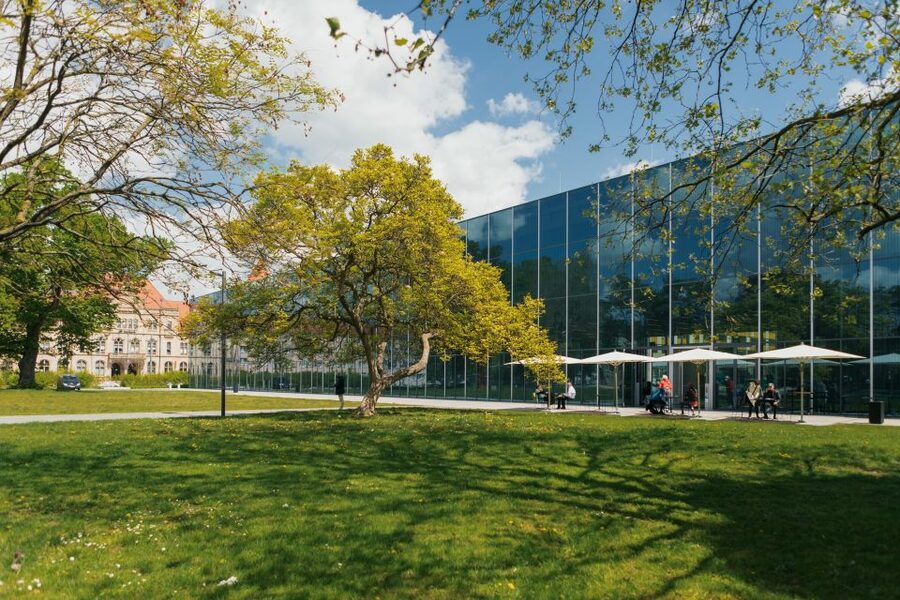
Review · GERMANY
Dessau: Guided Walking Tour through History
Dessau’s story is unusually crowded for a city of its size. In 90 minutes, this walking tour links Bauhaus and modern design with the Basic Law, princely culture, music, industry, and the people who shaped the city. It is less a march from monument to monument than a guided explanation of why Dessau matters.
I like the tour’s local anecdotes and its broad cast of characters, from Moses Mendelssohn and Kurt Weill to Walter Gropius and Wassily Kandinsky. I also like the price: $13 buys a useful first look at the city center, though the German-only format is a real limitation if you do not understand German.
Key points to know
- Eight centuries in 90 minutes: The route connects Dessau’s changing identity across many periods.
- Bauhaus is only one part: You also hear about the Basic Law, music, industry, court life, and local families.
- Small details matter: The guide uses anecdotes to bring city spaces and historical figures to life.
- German-speaking guide: The tour is conducted in German, with no other language listed.
- Good value for a short orientation: At $13, it is an inexpensive way to understand Dessau before exploring further.
- Rain or shine: Wear practical shoes and bring weather protection, since the walk goes ahead in all conditions.
Why Dessau makes a good history walk

Dessau is often reduced to one word: Bauhaus. That is understandable. The city played an important role in the school’s story, and names such as Walter Gropius and Wassily Kandinsky naturally draw attention.
This tour asks you to widen the frame. Dessau’s past reaches back eight hundred years, and its identity has shifted repeatedly. The route brings together princes, architects, musicians, industrialists, philosophers, and political figures. That mix gives you a better sense of the city than a tour devoted only to one famous movement.
I especially like the way the experience uses the city center as its classroom. You are not simply handed a list of dates. Urban spaces become clues. A street, building, square, or public view can point toward a different period, and the guide connects those pieces into a broader story.
The result should suit you if you prefer context over a long checklist of sights. You may not leave knowing every building in Dessau, but you should understand why the city has so many different historical voices.
More History Walking Tours in Germany
- Leipzig: 1.5-Hour Historical Walking Tour in German
★ 4.7 · 2,217 reviews - Berlin: History of the Third Reich Guided Walking Tour
★ 4.7 · 791 reviews - Trier: Guided Old Town Highlights and History Walking Tour
★ 4.7 · 687 reviews
From Prince Leopold to Friedrich Wilhelm Erdmannsdorff
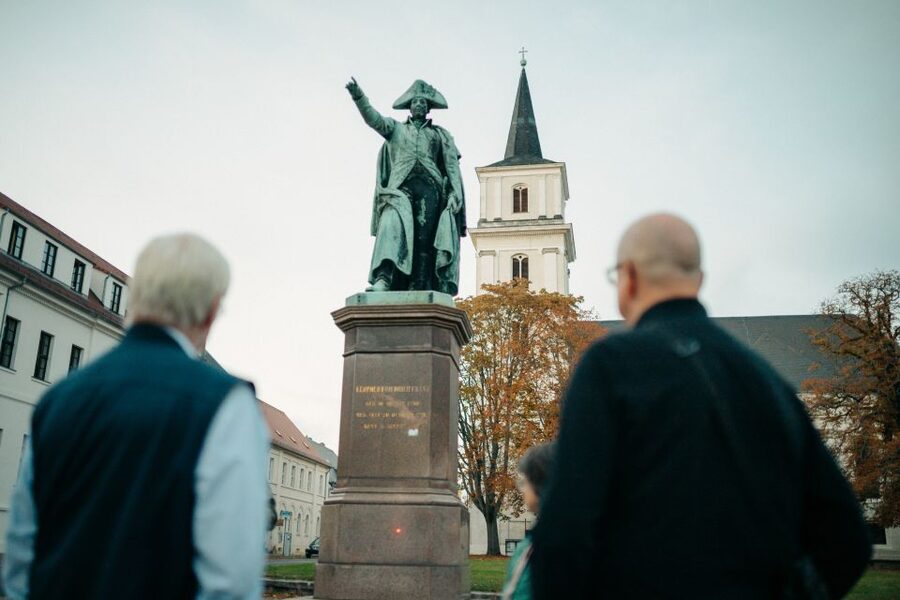
The tour reaches back to the age of Prince Leopold III. Friedrich Franz, a central figure in Dessau’s earlier history. His name can seem remote at first, but the guide uses people from the past to show how power, taste, and planning influenced the city.
You also encounter Friedrich Wilhelm Erdmannsdorff, a name tied to the cultural life of the principality. The point is not simply to memorize another historical figure. It is to see that Dessau was connected to ideas about art, architecture, and public life long before Bauhaus arrived.
That older layer matters because it prevents a common mistake: treating Dessau as if its story began in the twentieth century. The city’s modern reputation grew from earlier choices about culture and civic space.
I would pay close attention during this part if you enjoy European court history or architecture. The tour may help you notice traces of that earlier world that would be easy to pass without a guide.
Moses Mendelssohn and the city’s wider intellectual life
Moses Mendelssohn gives the route another point of focus. His inclusion shows that the tour is not limited to rulers and buildings. It also considers ideas, identity, and the people connected with Dessau who later became important far beyond the city.
This is one of the most useful features for a first-time visitor. A city’s history is more than its official monuments. It also includes writers, thinkers, artists, and families whose influence may be easier to recognize elsewhere than in the place where they began.
The tour asks why some of Dessau’s children became better known abroad than at home. That question gives the experience a personal edge. You are encouraged to think about how reputation travels, how cities remember their residents, and why a birthplace does not always receive the most attention.
You should not expect a long lecture on every person named in the tour description. The 90-minute length requires selection. Still, the range of names gives you several paths to follow if you want to read more or visit related places later.
The road to Bauhaus in Dessau
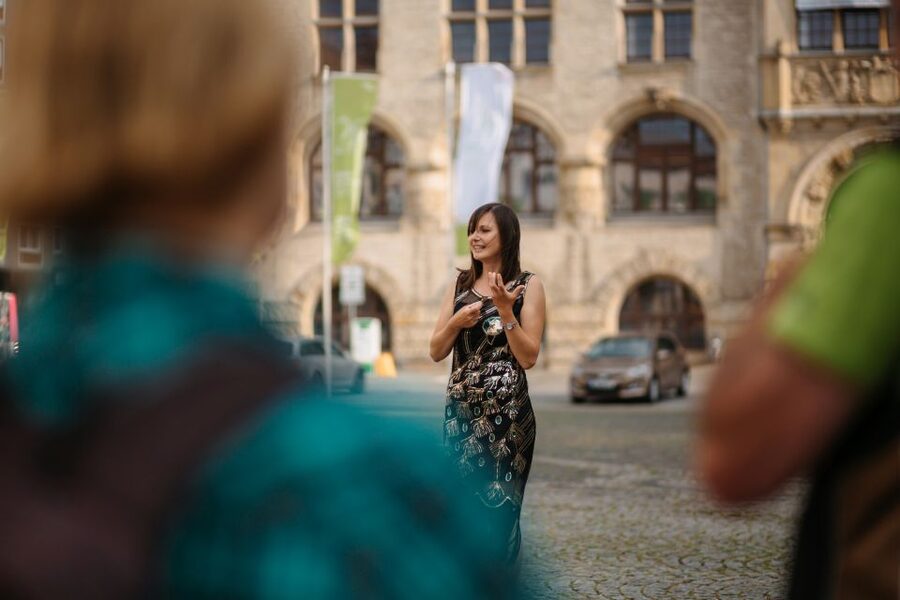
Bauhaus is likely the subject that brings many people to Dessau, and the tour explains how the school came to the city. That framing is important. You get more than a label and a famous name. You learn that Bauhaus belongs to a larger local story involving politics, culture, design, and the city’s attempt to define itself.
Walter Gropius and Wassily Kandinsky are among the figures connected with this section. Their presence gives the modern chapter plenty of weight, but the guide’s job is to place them in the city rather than treat them as isolated celebrities.
I would choose this tour before visiting Bauhaus-related sites if you want basic orientation. A guided introduction can help you understand why Dessau became part of the movement’s story and what to look for in the urban setting.
There is also a practical limit. The tour lasts only an hour and a half, so it is not a substitute for a dedicated Bauhaus visit. If modern architecture is your main reason for coming to Dessau, use this walk as a starting point, then allow separate time for the sites that interest you most.
Same old streets, another chapter:
- Leipzig: City History Canal Sightseeing Tour on a Motorboat
★ 4.7 · 7,671 reviews - Berlin: 3-Hour World Heritage Cruise to Potsdam
★ 4.5 · 1,569 reviews - Heidelberg: Night Watchman Historic Adventure Tour
★ 4.7 · 1,186 reviews - The Local Tour of Hamburg Historic Centre
★ 5.0 · 1,058 reviews
The Basic Law, Kurt Weill, and unexpected connections
One of the tour’s more unusual promises is an explanation of what Dessau has to do with the Basic Law. That subject broadens the walk beyond art and architecture. It connects the city with the political history of modern Germany and gives you another reason to listen closely when the route moves into the twentieth century.
Kurt Weill adds a musical thread. His name helps show that Dessau’s cultural history cannot be told through buildings alone. Music, performance, public life, and international influence all form part of the picture.
These subjects may seem far apart at first: constitutional history, modernist design, and music. That is precisely why a guide is useful. The value lies in making connections that are not obvious when you explore alone.
The tour also includes Max and Wilhelm Müller and Hugo Junkers. Their presence points toward the role of families, business, technology, and industry in Dessau’s development. You get a city shaped not only by court culture and artists, but also by practical work and ambitious enterprise.
Why the anecdotes are worth your time
The strongest feature is likely the storytelling. A city center can feel flat if you only receive dates and names. Anecdotes give those facts a human scale.
Two German reviews describe the tour as informative and say that the smaller stories were especially enjoyable. One person from Dessau even found new material in their own city. That is a useful sign for locals and repeat visitors, since the route is not aimed only at people seeing Dessau for the first time.
I would expect the guide to add short details around the main historical points rather than deliver a continuous academic talk. The supplied information does not name individual guides, so you should not book expecting a particular person. The important detail is that the guide is trained and leads the tour in German.
If you like asking questions, listen for places where several periods overlap. The city’s strongest stories seem to come from those contrasts: old and new, local and international, princely and industrial, artistic and political.
A practical 90-minute route through the city center
The advertised duration is 1.5 hours. That is long enough to give you a coherent introduction, but short enough to fit around other plans.
Expect a walking route through central Dessau-Roßlau rather than a day-long excursion. The exact sequence of stops is not specified, so you should think in terms of themes and urban spaces rather than a guaranteed list of addresses.
The route should work best as an early activity during your stay. Take it near the beginning of your visit, and later streets and names may make more sense. You can also use it after arriving as a quick way to get your bearings before choosing which museums or historic places deserve more time.
The guide brings different periods into one route, so the experience may move quickly between subjects. Keep your attention on the connections instead of trying to record every name. If you want a detailed record, make brief notes afterward while the sequence is still fresh.
The walk takes place rain or shine. That is not a minor detail in northern Germany. Bring a rain jacket when the forecast looks uncertain, and wear shoes suitable for steady walking on city streets. The tour is wheelchair accessible, but the provided information does not describe the exact surface conditions, slopes, or restroom arrangements, so you may want to confirm those points before booking if they matter to you.
Is $13 a fair price?
At $13 per person, this is a strong-value introduction to Dessau. You are paying for a live guide, a 90-minute route, and a focused explanation of a city with an unusually varied past.
The price is especially reasonable if you are already planning to walk through the center on your own. The tour adds interpretation without requiring a full-day commitment. It can also save you from spending your first hours wondering which buildings or public spaces deserve attention.
Value depends on language. The guide speaks German, and no English or other language option is provided. If you do not understand German, the low price will not make the experience useful enough. Check the language carefully before reserving.
The tour also includes skip-the-ticket-line access. Since the activity is a walking tour, this appears to concern the starting point and ticket procedure rather than entry to a long list of attractions. Show your voucher at the ticket counter before the tour begins, then join the group.
Who will get the most from this tour?
I would recommend it most to:
- People visiting Dessau for the first time
- Anyone curious about Bauhaus but open to a wider story
- German speakers who enjoy local anecdotes
- Visitors who want a short, affordable orientation
- Residents and repeat visitors looking for details they may have missed
- People interested in the links between architecture, music, politics, industry, and local history
It may be less suitable if you want an English-language tour, a private guide, or a detailed visit inside specific museums and buildings. It is also not the right choice if rain would spoil your day, since the walk continues in poor weather.
The current rating is 4.6 from 40 reviews, with especially strong praise for the informative content and small anecdotes. A perfect score is not necessary here. The comments suggest that the tour succeeds because it makes familiar streets more interesting, not because it tries to be a grand spectacle.
Booking, cancellation, and meeting details
You can reserve now and pay later, which helps if your schedule in Dessau is still changing. Free cancellation is available up to 24 hours in advance for a full refund.
Before the tour starts, show your voucher at the ticket counter. The meeting instructions do not provide a separate street address in the supplied details, so check the booking confirmation carefully for the precise starting point and meeting time.
The activity is conducted by the Stadtmarketinggesellschaft Dessau-Roßlau. That local connection fits the tour’s purpose: this is a city-focused walk designed to explain Dessau’s own story rather than offer a general regional excursion.
Should you book the Dessau history tour?
Book it if you want a short German-language introduction that puts Bauhaus into a larger setting. The $13 price is easy to justify, and the combination of anecdotes, famous names, political history, music, and city-center walking gives you more range than a narrow architecture tour.
Skip it if you need English, prefer self-guided sightseeing, or want extensive time inside individual attractions. For German speakers, especially those who enjoy small local stories, this looks like one of the better ways to make sense of Dessau in a single morning or afternoon.
FAQ
Where does the tour take place?
The tour takes place in Dessau-Roßlau, in northern Germany, with a route through the city center.
How long does the walking tour last?
The tour lasts 1.5 hours.
What language is the tour in?
The live guide conducts the tour in German.
How much does the tour cost?
The price is $13 per person.
What historical subjects does the tour cover?
It covers Dessau’s eight-hundred-year history, including Bauhaus, the Basic Law, princely history, music, industry, and notable local figures.
Which people are connected with the tour?
The historical figures named include Prince Leopold III. Friedrich Franz, Friedrich Wilhelm Erdmannsdorff, Moses Mendelssohn, Kurt Weill, Max and Wilhelm Müller, Hugo Junkers, Walter Gropius, and Wassily Kandinsky.
Is the tour wheelchair accessible?
Yes, the activity is listed as wheelchair accessible.
Does the tour run in bad weather?
Yes. The tour takes place rain or shine.
Can I cancel for a refund?
Yes. You can cancel up to 24 hours in advance for a full refund.
How do I check in for the tour?
Show your voucher at the ticket counter before the tour begins.
Latest history tours reviewed in Germany
- Freiburg: Exciting City Tour with sightseeing and history★ 4.3 · 103 reviews
- Frankfurt Self-Guided Historical Walking Tour★ 4.0 · 58 reviews
- Frankfurt: Old Town Historical Walking Tour with Geo Epoche★ 4.8 · 47 reviews
- Erfurt Tour – City tour with the historic tram★ 4.8 · 503 reviews
- Dresden: Guided Beer Tour of the Historic Old City★ 4.8 · 95 reviews
- Darmstadt: City Highlights and History Guided Walking Tour★ 4.0 · 23 reviews
- Cologne: Old Town Historical Walking Tour with GEO Epoche★ 4.7 · 31 reviews
- Bremen: Walking Tour of Historic Schnoor District★ 4.8 · 429 reviews
Germany History Tours, compared.
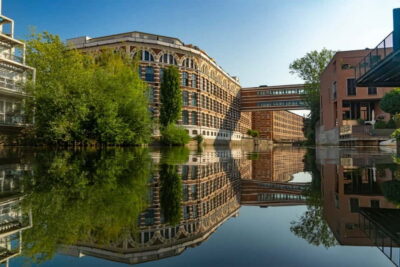
Leipzig: City History Canal Sightseeing Tour on a Motorboat
Read our review →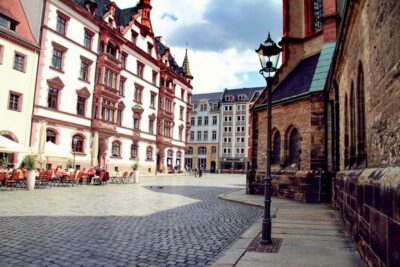
Leipzig: 1.5-Hour Historical Walking Tour in German
Read our review →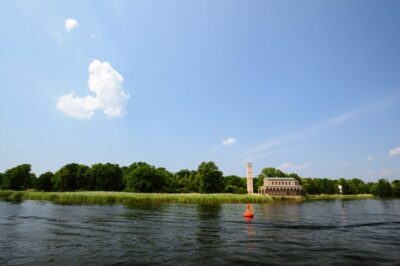
Berlin: 3-Hour World Heritage Cruise to Potsdam
Read our review →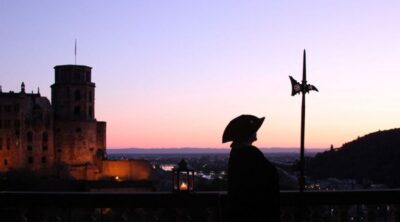
Berlin: History of the Third Reich Guided Walking Tour
Read our review →
Bamberg: Guided Beer History Tour with Optional Tasting
Read our review →Browse the lists this tour appears in