

Review · TIRANA
Tirana Walking Tour: History, Culture &Gems by a Passionate Guide
Tirana’s story comes in sharp contrasts: Ottoman mosques beside modern plazas, a former communist power district now packed with cafés, and religious buildings rebuilt after decades of state atheism. This walking tour with Albiona gives you that big picture while leading you through the center’s main sights and a few places you might skip on your own.
I like the small maximum group of 11, which leaves room for questions and conversation. I also like the practical starting point at Skanderbeg Square, plus the complimentary rakia tasting, a simple local touch that helps the tour feel more personal. The main consideration is pace: 21 stops in three to four hours means several visits are brief, and Bunk’Art 2 or the House of Leaves cannot be properly explored within the walking tour itself.
Key points to know before you book

- Albiona puts Albania’s past into plain language, linking ancient, Ottoman, communist, and modern Tirana.
- Skanderbeg Square is a useful starting point for getting your bearings on your first day.
- The route covers a lot of ground, from the New Bazaar and religious landmarks to Blloku and communist memorials.
- Small groups make the walk more flexible, with room for questions and personal travel advice.
- Rakia is included, while museum admission and personal expenses are not.
- The tour ends where it begins, at Skanderbeg Square, after roughly three to four hours on foot.
Why this Tirana walk works best early in your stay
I would place this tour near the start of a Tirana visit. The route gives you a map in your head, not just a list of monuments. You pass through the central square, the old market district, the former political center, and several religious sites, so later walks around town make more sense.
Albiona’s strongest role is connecting the pieces. The route is not only about dates and building styles. It also looks at the effect of the communist regime on ordinary families, the return of religious life, and the optimism of present-day Albania. Her English is described as excellent, and the tour allows time for questions rather than forcing you to listen to a nonstop speech.
The three to four hour length is substantial for a walking tour. You should wear comfortable shoes and expect much of the experience to happen outdoors. Some stops last only five minutes, so think of this as a guided city overview with short visits, not a museum tour at every address.
More Local Culture and Traditions Tours in the world:
- Amsterdam Food and Cultural Tour with Tastings
★ 5.0 · 4,315 reviews - Sevilla Food Tour: Tapas, Wine, History & Traditions
★ 5.0 · 3,468 reviews - Tromsø: Reindeer Camp and Sami Cultural Tour with Lunch
★ 4.7 · 3,326 reviews
Skanderbeg Square, the Clock Tower, and the old city center
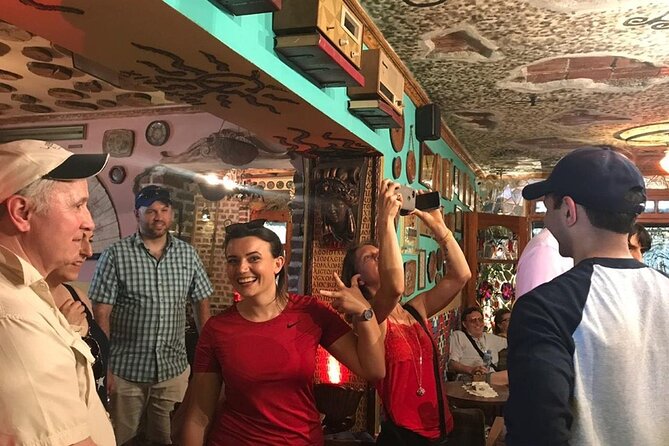
The walk begins at Skanderbeg Square, Tirana’s main public space and the natural place to start learning the city. The square is named for Albania’s national hero, Skanderbeg, and gives you an immediate sense of how central Tirana is arranged.
From here, the route moves to the Et’hem Bey Mosque. Its outside is relatively restrained, but the interior is known for delicate frescoes showing trees, waterfalls, and bridges. These natural scenes are unusual in Islamic religious art and make the mosque one of the most memorable early stops.
The visit is scheduled for about 10 minutes, so you should not expect a long architectural study. Still, this is an important pause because the mosque introduces Ottoman Tirana and the country’s complicated religious past.
Next comes the Clock Tower, a 35-meter landmark built in the 19th century. Its design combines Ottoman and Venetian influences. The stop lasts about five minutes, enough for an explanation and photographs rather than a tower visit.
Sulejman Bargjini Square adds another layer. It honors the founder of Tirana and is smaller than Skanderbeg Square, but it helps explain how the city developed around older local centers. I like this kind of stop because it gives the city a human scale after the broad central plaza.
New Bazaar and Bektashi Tirana
Pazari i Ri, or the New Bazaar, is one of the route’s most useful places for a first look at everyday Tirana. The renewed market area has produce, spices, local crafts, shops, and traditional Albanian foods. You get about 20 minutes here, enough to look around and notice the mix of old market habits and newer businesses.
This is also a good point to ask Albiona what foods to try during the rest of your stay. The tour information does not promise a full food tasting, so budget separately for anything you buy. The included rakia is the only stated drink or tasting.
The nearby Teqja Pazari introduces Bektashi culture. The teqe is linked to the Bektashi Order, a Sufi Muslim tradition known for mysticism and progressive values. Albania’s religious identity is not simple, and this stop helps you see that Islam in the country includes more than one tradition.
Kapllan Pasha’s Tomb is another short but worthwhile pause. This octagonal stone monument dates from the early 19th century and was declared a first-category cultural monument in 1948. Kapllan Pasha, a former ruler of Tirana, was later moved to Istanbul, but the tomb remains part of the city’s architectural record.
The Ethnographic Museum, also called the Toptani Sarajet Old Typical House, follows with a glimpse of traditional Albanian domestic life. The planned visit is only five minutes, so you should treat it as an introduction. If old houses and folk culture are a priority, you may want to return independently if the site is open and you have time.
Communist Tirana in bunkers, streets, and former power districts
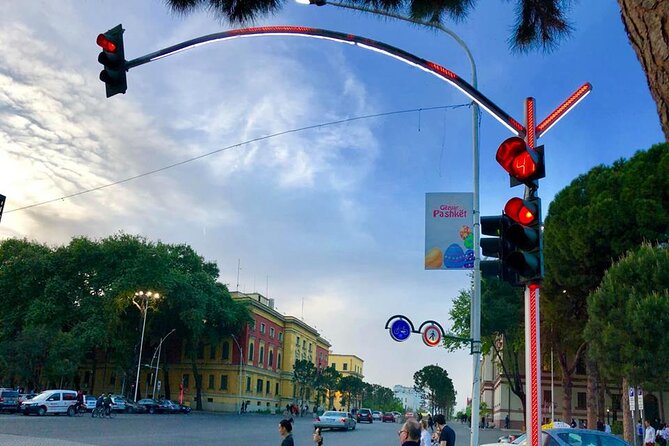
The communist period is where Albiona’s storytelling appears especially important. Tirana’s recent past is not always obvious from the streets, and several stops show how power shaped the city.
Bunk’Art 2 is located in a former communist-era bunker. The stop is listed at five minutes, and admission is not included. That timing suggests an exterior explanation or a very quick orientation, not enough for a full museum visit. If you want to see the exhibits inside, plan to return with a separate ticket and additional time.
Rruga Murat Toptani shifts the mood. This central street combines older architecture with modern city life and acts as a pleasant link between several major sights. Tirana Castle is nearby, where ancient remains meet newer shops and public spaces. The scheduled five-minute stop is brief, but the area is worth noting for a later independent stroll.
The route then reaches Saint Paul’s Cathedral. This Catholic cathedral offers a quiet contrast to the commercial center and adds another viewpoint on Albania’s religious traditions. The stop is short, but it works well in the larger story of a country where religious practice was once banned.
Komiteti Kafe Museum is one of the more distinctive stops. It combines a café setting with memories of socialist-era Albania and traditional hospitality. The 20-minute pause gives you more breathing room than most stops, and a café stop can be welcome after several hours of walking. Personal purchases are not included, so plan to pay for anything beyond the stated rakia tasting.
The Pyramid of Tirana is seen next. Its meaning has changed with the city. Built as a symbol connected to the communist era, it now represents Tirana’s ongoing shift into a modern capital. The listed five-minute stop is enough for context and photos, not an extended visit.
At Postbllok, or the Checkpoint Memorial, you encounter an outdoor reminder of communist repression near the entrance to Blloku. This is one of the tour’s strongest historical stops because the memorial connects a physical place with the restrictions that once shaped daily life.
The former Enver Hoxha villa deepens that point. Blloku was once closed to ordinary citizens and reserved for senior communist officials, including Albania’s long-time dictator. The stop is outside and brief, but it helps you understand the sharp divide between the ruling elite and the rest of the population.
More History Walking Tours in the world:
- History and Hauntings of Salem Guided Walking Tour
★ 5.0 · 14,564 reviews - Lisbon: History, Stories and Lifestyle Walking Tour
★ 4.8 · 10,902 reviews - Boston: Freedom Trail History Small Group Walking Tour
★ 5.0 · 6,450 reviews - Historic Charleston Guided Sightseeing Walking Tour
★ 5.0 · 6,216 reviews
Blloku and the city Albania has become
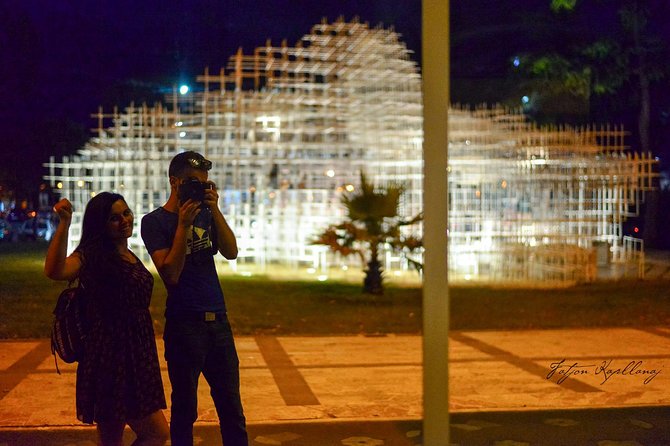
Blloku is now one of Tirana’s main social districts, with cafés, restaurants, and nightlife. Its present-day energy can make its former role easy to forget, which is why the nearby memorials matter. You see how quickly a restricted political zone became a popular part of city life.
Shallvaret adds another short look at an older neighborhood with roots in Tirana’s past. The tour does not promise a long stay here, but the stop helps connect the central districts rather than presenting the city as a string of isolated monuments.
The Resurrection of Christ Orthodox Cathedral is among the most meaningful religious stops. Built between 2001 and 2012 and consecrated in 2012, it represents the return of open religious practice after Albania’s communist government declared the country the world’s first atheist state in 1967.
During that period, religious practice was banned and many churches, mosques, and religious sites were destroyed or given new uses. The cathedral therefore means more than its architecture. It marks a public return of faith after decades of suppression.
House of Leaves and the final walk back
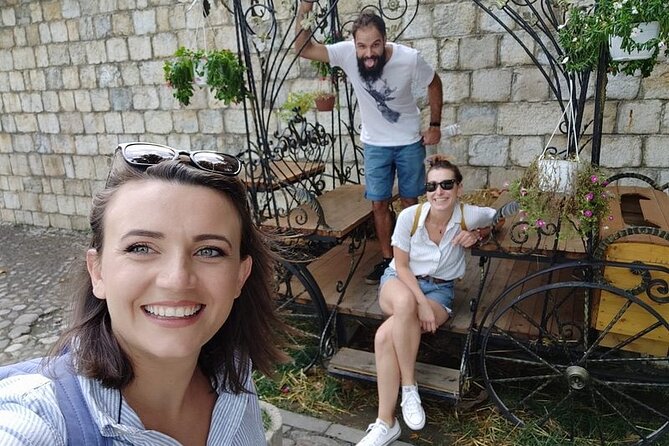
The House of Leaves, now the Museum of Secret Surveillance, focuses on Albania’s communist security apparatus. Admission is not included, and the planned 10-minute stop is too short for a full museum visit. You should see this as a signpost for a later visit if modern political history interests you.
The final stop is the Bank of Albania. Established in 1925 as the National Bank of Albania, it helps bring the tour back to the country’s financial and civic development. It is a quick exterior stop, but it rounds out the route with a look at a national institution rather than another monument.
The activity ends back at Skanderbeg Square. That is convenient if you want to continue shopping, find a café, or make your own way to another part of Tirana. It also makes the tour easy to fit into an arrival day, provided your transport into the center is reliable.
One useful detail comes from a booking experience in which a long traffic delay made the start difficult. Albiona adjusted the timing and kept the experience useful. That suggests some flexibility, though you should still contact the provider if you expect to be late rather than assume the group can wait.
Price, group size, and overall value
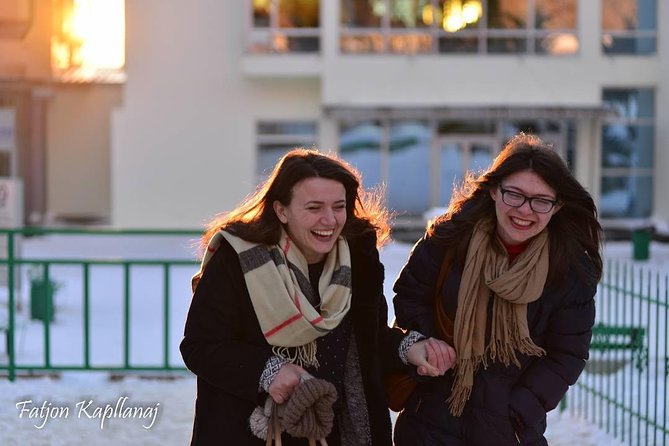
At $36.20 per person, the tour is fairly priced for a three to four hour small-group walk led in English. You are paying for a local guide who can connect the monuments and explain the country’s recent past, not for museum admissions or a series of included meals.
The value is strongest if you are new to Albania. Without context, Tirana’s mosques, memorials, cafés, markets, and rebuilt cathedrals can feel like unrelated sights. Albiona’s approach gives you a framework for understanding them.
The maximum group size is 11, which is small enough for personal questions but not necessarily an intimate private tour. Some people describe the experience as feeling like time with a local friend, while others book specifically for the history. The tour can serve both groups because the guide allows questions and adjusts the conversation.
The complimentary rakia adds a local detail without changing the price into a food tour. Personal expenses are separate, and museum entry at the House of Leaves is not included. Bunk’Art 2 also requires separate planning if you want to go inside.
Free cancellation is available up to 24 hours before the start time. Changes or cancellations made later are not refunded, and poor weather may lead to a new date or a full refund. Since the walk is outdoors, check the forecast and bring suitable shoes and clothing.
Who should book this Tirana walking tour?
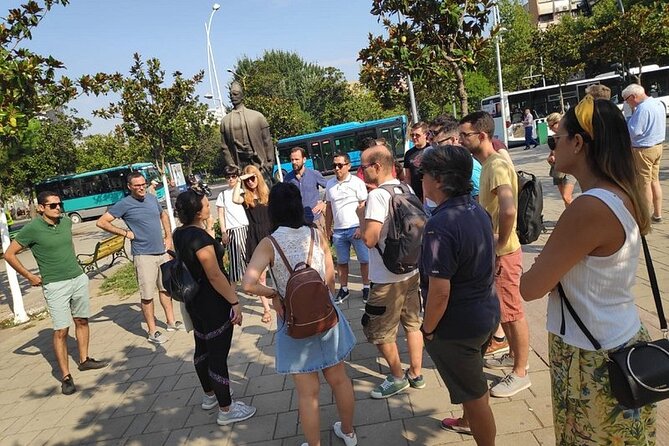
I would recommend it to first-time visitors, history fans, and anyone who wants a useful orientation before exploring Albania independently. It is also a good fit if you want to understand the communist period without spending your entire visit inside museums.
You will get the most from it if you enjoy asking questions. The route contains many short stops, so the guide’s explanations are the main event. If you prefer long museum visits, a slower architectural tour, or extensive food sampling, this may feel too fast.
The experience is suitable for most people, service animals are allowed, and it is near public transportation. Still, it is a walking tour of several hours, so anyone concerned about stamina should plan accordingly.
Should you book it?
Book this tour if you want Tirana explained by someone who cares about both its painful past and its current direction. Albiona’s personal connection to Albania, clear English, flexibility, and willingness to discuss difficult history are the strongest reasons to choose it.
Skip it if you only want entrance tickets and long visits inside museums. For everyone else, $36.20 buys a useful first look at the capital, a local perspective, a rakia tasting, and a route that covers far more than the central square alone.
FAQ
How long does the Tirana walking tour last?
The tour lasts approximately three to four hours.
Where does the tour begin?
It begins at Skanderbeg Square, Plaza Tirana, Sheshi Skender Beu, Tirana 1001, Albania.
Where does the tour end?
The activity ends back at the meeting point in Skanderbeg Square.
What language is the tour offered in?
The tour is offered in English.
How large is the group?
The tour has a maximum of 11 participants.
Is rakia included?
Yes. A complimentary shot of rakia, a traditional Albanian spirit, is included.
Are museum admission fees included?
No. Admission to the Museum of Secret Surveillance, also called the House of Leaves, is not included. Bunk’Art 2 admission is also not included in the tour price.
Is the tour suitable for first-time visitors to Tirana?
Yes. The route begins at the city’s main square and covers central landmarks, markets, religious sites, communist-era locations, Blloku, and the Bank of Albania.
Is the tour accessible by public transportation?
The meeting area is near public transportation.
What is the cancellation policy?
You can cancel up to 24 hours before the start time for a full refund. Cancellations or changes made less than 24 hours before the start time are not refunded or accepted. If poor weather causes the tour to be canceled, you can receive a different date or a full refund.
Latest history tours reviewed in the world
- From Athens: Ancient Olympia Full-Day Private Tour★ 4.8 · 22 reviews
- From Athens: Explore Ancient Corinth & Charming Nafplion★ 4.6 · 102 reviews
- From Athens: Explore Ancient Greece 4-Day Tour★ 4.7 · 73 reviews
- From Albufeira: Wine Tasting & Historic Silves Tour★ 4.9 · 421 reviews
- From Albufeira: Historical Algarve Region Tour★ 4.7 · 585 reviews
- From Alexandria: Full-Day Guided Tour of Historical Sights★ 4.5 · 54 reviews
- Franklin: Ghost Tour in Historic Franklin★ 4.8 · 65 reviews
- Freiburg: Exciting City Tour with sightseeing and history★ 4.3 · 103 reviews
Tirana History Tours, compared.
From Tirana: Durres History Trip with Beach or Promenade
Read our review →
Guided tour in Tirana – discoveries, history, culture (in FRENCH)
Read our review →
From Tirana: Durres city & Golem beach, Sun & History Day Trip
Read our review →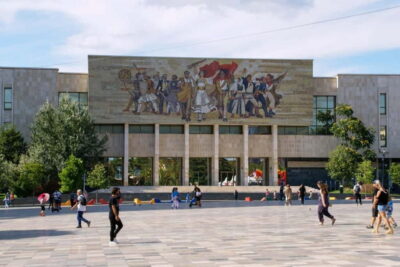
“Tirana to Albania: Tracing a Historical Path Tour”
Read our review →Browse the lists this tour appears in