
Review · SICILY
Palermo Historic Center Walking Tour by Palermo Wonders
Palermo’s historic center is best understood on foot, and this private tour puts a sharp local guide beside you as the city’s layers unfold. You move from the opera house and a noisy street market to Norman mosaics, Baroque churches, grand squares, and side streets that are easy to miss alone. Guides named Mauro, Mauricio, and Marco appear in the experience feedback, with Mauro praised most often for his stories and local feel.
I like the private format, since you can ask questions, slow down for a church interior, or shift the route when Palermo is crowded. I also like the mix of famous sights and less obvious corners, including market lanes, civic buildings, back streets, and food stops suggested by the guide. The main consideration is cost: at $157.28 per person, this is a serious expense, and admission fees are extra.
Key points to know
- A private English-language walk: Your group has the guide’s attention rather than sharing time with a large crowd.
- A flexible central route: The plan can include the Capo market, Norman Palace, Cathedral, Quattro Canti, Santa Caterina, and other sites of interest.
- Strong local storytelling: Mauro is especially praised for explaining Palermo through history, architecture, food, and everyday city life.
- Important admission costs: Tickets are bought on site. The Royal Palace can cost up to €20 per person, while Santa Caterina costs €2.
- A useful first-day introduction: The three-hour length fits well into a busy Palermo schedule and helps you get your bearings.
- A walking tour with some heat and crowds: Comfortable shoes, water, and a willingness to adjust the route will help.
From Teatro Massimo into Palermo’s old streets
The walk begins on Via Maqueda, at number 455, with the opera house as the starting point. This is a smart place to begin. Teatro Massimo gives you an immediate sense of Palermo’s grand scale, while Via Maqueda leads straight into the busy heart of the old city.
From here, you head toward a colorful street market, most likely the Mercato del Capo when the planned route is followed. The market is not just a place to pass through on the way to a church. It offers a chance to connect Palermo’s food culture with the city’s mixed past. Expect narrow lanes, strong smells, voices, and a less polished side of the center.
That contrast is one of the tour’s strengths. Palermo can shift from monumental stonework to everyday commerce within a few steps. A guide adds useful context here, especially when explaining local food customs and the relationship between the market and its neighborhood.
The route is not locked in stone. If your group has a particular interest, the guide can adjust the plan. Santa Caterina may replace the Church of the Immaculate Conception at the Capo, and previous tours have included places such as Palazzo Butera, Chiesa del Gesù, Chiesa della Martorana, and the City Archives. These alternatives are not guaranteed stops, but they show what the private format can make possible.
More History Walking Tours in Italy
- Venice: City Center Historical Guided Walking Tour
★ 4.2 · 1,873 reviews - Palermo: Street Food and History Walking Tour
★ 4.9 · 1,486 reviews - Verona: History and Hidden Gems Guided Walking Tour
★ 5.0 · 1,379 reviews
The Capo church and Palermo’s Baroque side
The Nobile e Monumentale Chiesa dell’Immacolata Concezione al Capo is planned as a 20-minute stop, with admission purchased separately. Its position beside the market makes it a fine example of Palermo’s habit of placing elaborate religious art right in the middle of ordinary city life.
The church is Baroque, and this is where the tour begins to move from street scenes into Palermo’s decorative interior spaces. You may instead visit Santa Caterina, depending on the day and your interests. That flexibility is useful because Palermo has no shortage of churches, and not every group wants to spend equal time in each one.
If you care about marble work, sculpture, painted decoration, or religious architecture, tell your guide early. The reviews repeatedly praise Mauro for making church interiors easier to read rather than simply pointing out that they are beautiful. That distinction matters. Palermo’s decoration can be overwhelming, and a clear explanation helps you notice materials, symbols, and changes in style.
The Norman Palace and Palatine Chapel
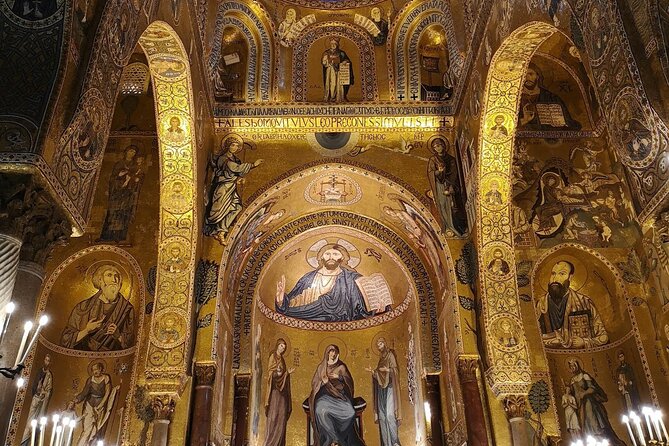
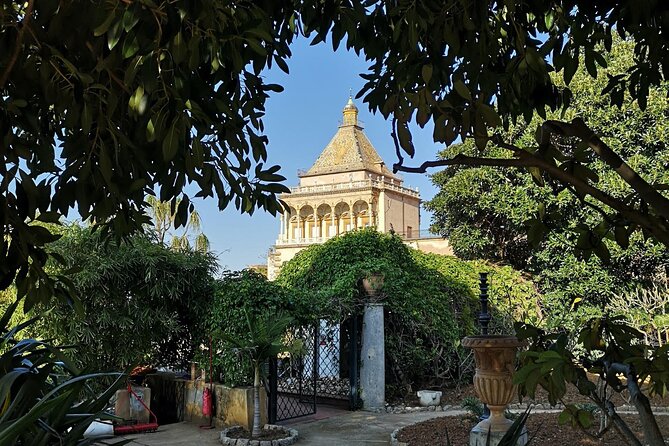
The Norman Palace, also called the Royal Palace, is the tour’s biggest historical stop. The guided visit is planned for about an hour and includes the Cappella Palatina, or Palatine Chapel. Both are part of Palermo’s UNESCO-listed Arab-Norman heritage.
The chapel is the major prize here. Its mosaics and architecture reflect the meeting of Norman, Byzantine, Arab, and Sicilian traditions. You do not need to know the details before arriving, but you will get more from the visit if you listen for how different cultural influences appear side by side.
The palace visit is optional, and the entrance ticket is not included. The listed price can reach €20 per person. That extra charge is important when comparing this tour with a basic city walk, because the palace admission may add a substantial amount to your total.
The itinerary lists a 20-minute stop for the Royal Palace and Palatine Chapel, followed by a one-hour guided visit to the Norman Palace and Cappella Palatina. In practice, treat these as parts of the same palace complex rather than separate attractions. Allow more time if you want to look carefully, and remember that entry arrangements can affect the pace of a three-hour walk.
A private guide is particularly useful here. In a large group, the chapel can become a quick stop filled with facts. With your own guide, you can ask why the building looks the way it does, how Sicily’s rulers used it, and which details deserve your attention.
Palermo Cathedral and the city’s layered past
The Cathedral of Palermo follows, with about 30 minutes set aside for the interior. Admission is listed as free, though some areas or special access can have different arrangements. The tour includes a guided visit rather than only an outside photo stop.
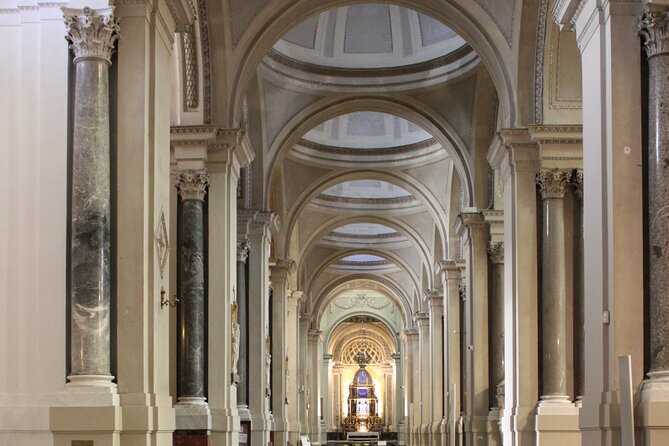
The Cathedral is an excellent place to see Palermo’s changing architectural character. Its appearance reflects additions and alterations made across different periods, so it does not fit neatly into one style. That makes a guide helpful. Without explanation, you may see a grand building. With explanation, you can follow the city’s changing rulers, religious priorities, and design tastes.
This is also where the guide’s storytelling style matters most. Mauro is praised for steady explanations, personal insights, and a talent for making historical material understandable to both adults and teenagers. A good guide does not just list dates. He helps you connect the building to the wider story of Sicily.
The Cathedral is one of the places where you should allow the group to pause. Three hours is enough for an introduction, but not enough for every chapel, detail, and nearby museum. If religious art or architecture is your main interest, ask how much time can be given to the interior before the tour begins.
More Old Town and Historic Centre Walks in Italy
- Rome in a Day Tour with Vatican, Colosseum and Historic Center
★ 4.5 · 1,042 reviews - Rome Food Tour in the Historic Centre with 8+ Food Tastings
★ 5.0 · 1,000 reviews - Naples: Historic Center and Sansevero Chapel Walking Tour
★ 4.8 · 208 reviews - Private Rome Food Tour in the Historic Centre with 8+Tastings
★ 5.0 · 135 reviews
Quattro Canti and the Fountain of Shame
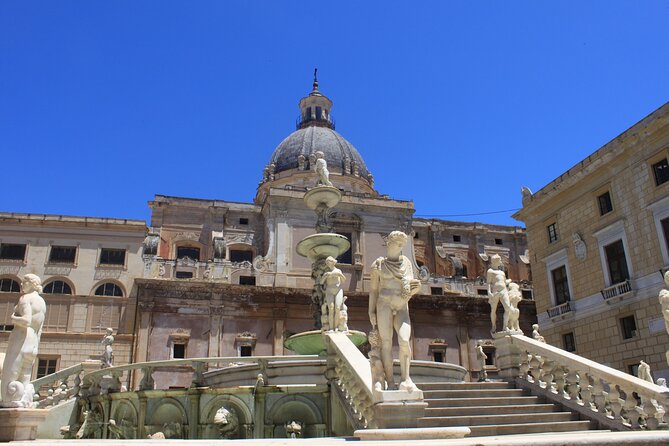
After the major religious buildings, the route moves through some of Palermo’s most recognizable public spaces. Quattro Canti, also called Piazza Villena, is one of the city’s best-known squares and the stated end point of the tour.
Its four matching corners create a theatrical urban crossroads. The square is designed to be seen from the center, from each approach, and from the surrounding streets. Your guide can explain the symbolism of the four historic districts and the way Palermo’s central roads meet here.
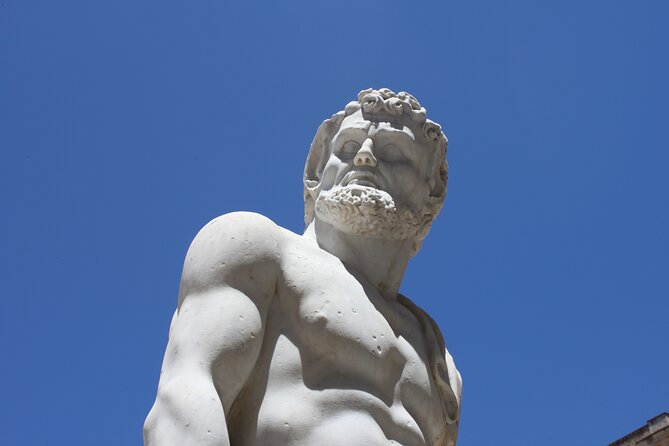
Nearby, the Fontana della Vergogna, or Fountain of Shame, provides another visual landmark. The name comes with its own story, involving politics, public reaction, and the fountain’s sculptures. This is an ideal spot for a short explanation because the fountain can otherwise become just another photo stop.
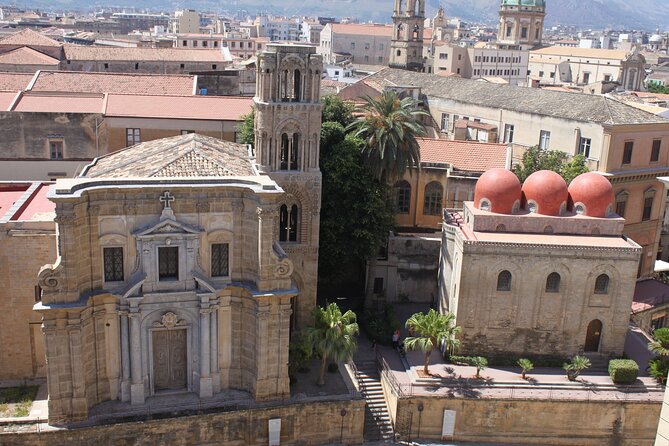
The route also includes the famous church with red domes, understood from the context to be San Cataldo, and another UNESCO-recognized symbol of the city, likely the Martorana. Exact stops can change because the itinerary is customizable, so confirm the day’s plan if these buildings are priorities for you.
That flexibility cuts both ways. You may see more of what interests you, but you should not assume every listed landmark receives a full interior visit. A private tour rewards clear communication. Tell the guide whether you prefer famous monuments, churches, food, street life, or lesser-known architecture.
Santa Caterina and the sweet finish
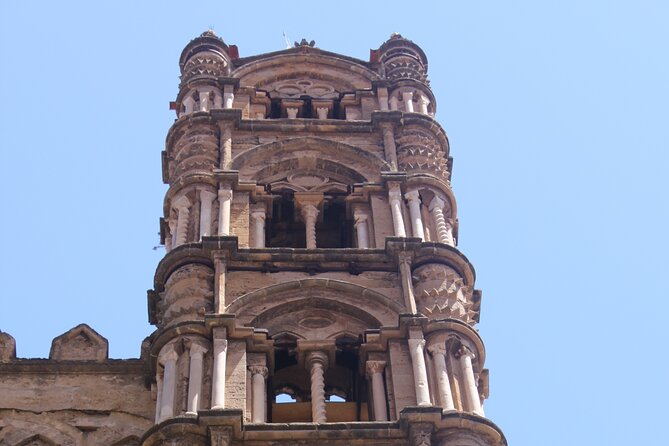
Chiesa e Monastero di Santa Caterina d’Alessandria is planned as a 30-minute stop and requires a separate ticket of about €2. It is described as a triumph of the Baroque, with a cloister inside.
This stop offers a change of mood after the grand scale of the palace and Cathedral. The monastery’s decorative work and cloister provide a closer look at religious life and Baroque taste. The visit can also end on a distinctly Sicilian note. One tour finished with fresh cannoli from the cloister area, and another included coffee at a friend’s shop. These details are not guaranteed parts of the booking, but they reflect the guide’s local connections and the relaxed nature of a private walk.
Santa Caterina is also listed as an optional visit, or it may be replaced by a similar church. If you want to enter, budget the small admission charge and tell the guide. If you have already seen several ornate churches, you might prefer to use the time for a quieter street or another building.
The final portion may include Palermo’s oldest street before reaching Quattro Canti. This gives the walk a useful sense of movement through time: market lanes, Norman power, cathedral space, Baroque interiors, and the street pattern of the old center.
What the private format really adds
The clearest advantage is control. You can ask a question the moment it occurs to you, stop to examine a detail, or request a change when a street is packed. One group faced a day with two cruise ships in port, and the guide suggested quieter places with the group’s permission. That is exactly the kind of adjustment a private tour can make.
The guide may also meet you at your hotel if arranged, although the official meeting point is Via Maqueda 455. One guide accommodated a group arriving at a different train station. Do not treat these examples as a guaranteed pickup service, but do mention your arrival point when booking.
The human element receives the strongest praise. Mauro is repeatedly described as warm, funny, patient, and able to tell stories without making the walk feel like a school lesson. Mauricio is also praised for bringing the market, churches, squares, and civic buildings to life. Marco is noted for flexibility and ease in moving between sites.
The names matter less than the principle: guide quality will shape this experience. Since the walk is private, you are paying for the person as much as the route. At the start, explain your interests and your walking pace. If your group includes a teenager, art lover, history fan, or someone who wants food advice, say so.
Price, pace, and practical value
The listed price is $157.28 per person. That is high for a three-hour walk, especially before adding entrance fees. The Royal Palace can cost up to €20 per person, and Santa Caterina costs about €2. Cathedral admission is listed as free.
The value improves for a group that wants personal attention and a tailored route. A private guide can cover the main sights efficiently, avoid some crowded paths, and help you decide what deserves more time. The cost is less attractive if you only want a quick orientation or plan to visit the monuments independently.
Group discounts are available, so check the total price for your party rather than judging only the per-person figure. Also compare the cost of a private tour with separate admission tickets and the time you would spend finding and interpreting the sights alone.
The three-hour length is well judged for a first look at Palermo. It is long enough to cover a broad central route without taking your entire day. It is not long enough for a slow visit to every interior listed, a full market meal, and extensive time at the palace. Think of it as a guided introduction, not a complete survey of Palermo.
Wear comfortable shoes. This is a walking tour, and the center includes busy streets, market lanes, and repeated stops on foot. Palermo can also be very hot. One group enjoyed the experience despite scorching conditions, but heat can make a fast route tiring. Morning or afternoon departures let you choose the time that fits your plans and, in warm weather, may help you avoid the harshest part of the day.
The tour is offered in English. Confirmation arrives at booking, and most people can participate. It is near public transportation, and the tour ends at Quattro Canti, which gives you a central place from which to continue exploring.
Free cancellation is available up to 24 hours before the start time. Changes or cancellations inside that window are not accepted for a refund. The experience requires good weather, and a weather cancellation brings the choice of another date or a full refund.
Who should book this Palermo walk?
I would choose this tour for a first day in Palermo, especially if you want the city explained rather than simply photographed. It suits couples, families, and small groups with different interests because the route can be adjusted.
It is also a good fit if you want the Royal Palace and Palatine Chapel explained in context, or if you are uneasy about navigating the old center on your own. The guide can connect the market, churches, squares, and street plan in a way that gives the city shape.
I would think twice if your budget is tight, you dislike paying extra for monument admission, or you prefer a large group with a lower price. I would also clarify the planned stops before booking if you have your heart set on one particular church or museum.
Should you book Palermo Wonders?
Book it if personal attention and local storytelling matter more to you than a low price. The strongest part of this experience is not merely the list of monuments. It is the chance to let a private guide reshape the walk around the day’s crowds, your interests, and your energy.
The best use of the tour is early in your Palermo stay. Let the guide introduce the old center, note the places you want to revisit, and then return on your own for a slower look. Budget for the palace ticket, wear good shoes, and be clear about which interiors you want to enter.
At $157.28 per person, this is not the bargain choice. For a group that values a flexible route, a private English-speaking guide, and a thoughtful introduction to Palermo’s complicated center, it can be a worthwhile splurge.
FAQ
How long is the Palermo Historic Center Walking Tour?
The tour lasts approximately three hours.
How much does the tour cost?
The listed price is $157.28 per person. Group discounts are available.
Is the tour private?
Yes. Only your group participates in the private activity.
Is the tour offered in English?
Yes. English is the listed tour language.
Where does the tour begin?
The stated meeting point is Via Maqueda, 455, 90133 Palermo PA, Italy, with the opera house used as the starting point.
Where does the tour end?
The stated end point is Quattro Canti, at Piazza Villena in Palermo.
Are entrance tickets included?
No. Entrance tickets are purchased on site. The Royal Palace ticket can cost up to €20 per person, and Santa Caterina costs about €2 per person. Cathedral admission is listed as free.
Can the itinerary be changed?
Yes. The private itinerary is described as fully customizable. The Church of the Immaculate Conception at the Capo may be replaced by Santa Caterina or a similar church, depending on the plan.
Can I cancel for a refund?
You can cancel up to 24 hours before the start time for a full refund. If poor weather causes the tour to be canceled, you will be offered another date or a full refund.
Latest history tours reviewed in Italy
- Forte di Bard: history tour★ 4.5 · 31 reviews
- Florence Wine &Food: Taste Tuscan Flavors in Historic Cellar★ 4.6 · 31 reviews
- Florence Medici Bike Tour – Cycle Through History and Power★ 4.2 · 23 reviews
- Florence: Medici Family History Tour★ 4.3 · 93 reviews
- Florence: Fashion History Guided Walking Tour & Museum Visit★ 4.2 · 72 reviews
- Essential Florence Walking Tour to discover its history★ 5.0 · 21 reviews
- Discover Herculaneum: A guided tour of the ancient Roman city★ 4.9 · 34 reviews
- Day drinking in Rome – Scandalous Roman History★ 4.8 · 31 reviews
Sicily History Tours, compared.
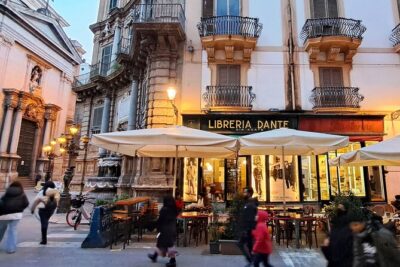
Palermo in 2 hours Main monuments and historic markets
Read our review →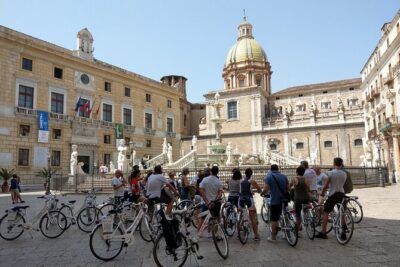
Bike tour of the historic center of Palermo with tasting
Read our review →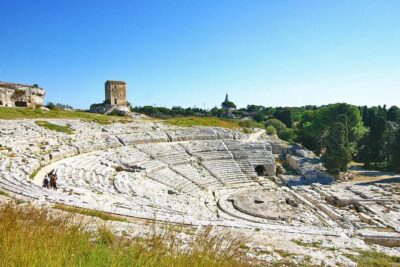
Ancient Syracuse: private guided tour of the Neapolis archaeological park
Read our review →Browse the lists this tour appears in