
Review · ROME
Rome Food Tour in the Historic Centre with 8+ Food Tastings
Rome’s best food lesson may come one bite at a time. This three-hour walk links Piazza Navona, the Jewish Ghetto, Campo de’ Fiori, and Largo di Torre Argentina with a generous lineup of Roman food, from crisp pizza and supplì to pasta, cannoli, and gelato.
I like the small maximum group of 12, which gives the guide room to answer questions and keep the group together in busy streets. I also like the balance between eating and sightseeing: you get real context for Roman dishes without spending half the day in a museum. The main drawback is simple: at $118.51, this is not a cheap lunch, and the amount of food can be too much if you prefer a light meal.
I love the way the tour uses Rome’s center as its dining room. I also like that guides such as Massimiliano, Rocio, Luda, Federico, and Eduardo have been praised for mixing food details with stories about the city. Plan for steady walking, arrive hungry, and do not schedule a large meal afterward.
Key things to know before you book
- The food is substantial: Expect two kinds of homemade pizza, supplì, cold cuts, cheeses, two Roman pastas, cannoli, artisanal gelato, and a secret dish.
- The route covers major sights: You walk through Piazza Navona, the Jewish Ghetto, Campo de’ Fiori, and Largo di Torre Argentina.
- The group stays small: The maximum is 12 people, a useful size for a walking food tour in central Rome.
- The guide matters: Massimiliano, Rocio, Luda, Federico, Eduardo, Manuel, Robbie, and other guides have led this experience.
- It is more than a meal: The guide explains Roman food traditions while pointing out fountains, palaces, temples, and ancient streets.
- Allow three hours: The tour begins at Sant’Agnese in Agone and ends at Largo di Torre Argentina, without hotel transportation.
Why this Rome food tour works
A food tour in Rome should do more than hand you a slice of pizza. The good ones explain why certain foods belong to the city, how Roman eating habits developed, and where food fits into daily life.
This experience makes a strong attempt at that balance. You move through the historic center with several stops for food, rather than sitting in one restaurant for three hours. That keeps the pace lively and gives you a useful introduction to several Roman specialties in one outing.
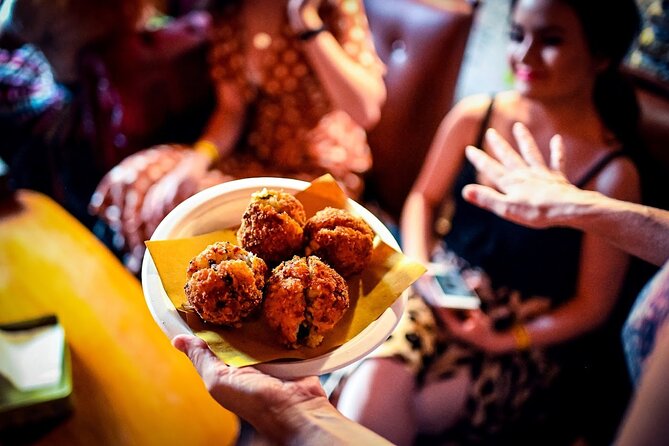
The food list is broad. You get two types of homemade pizza, the fried rice-and-tomato snack called supplì, Italian cold cuts and cheeses, two Roman pastas, cannoli, gelato, and an additional secret dish. It is a lot for three hours, so think of this as both lunch and a walking tour.
The group size also helps. A maximum of 12 people is small enough for conversation, but large enough to provide the social feel of a shared meal. Several guides have been singled out for humor, patience, and the ability to keep children involved. That matters because a food tour can become tiring if the guide simply talks while everyone waits for the next plate.
More Food and History Tours in Rome
- Private Rome Food Tour in the Historic Centre with 8+Tastings
★ 5.0 · 135 reviews - Rome: Ultimate Street Food Tour in the Old Town by Do Eat Better
★ 5.0 · 73 reviews - Rome: Trastevere street food and history tour – small group
★ 5.0 · 58 reviews
Starting at Piazza Navona
The meeting point is Sant’Agnese in Agone at Piazza Navona. This is a sensible place to begin because the square gives you an immediate lesson in Rome’s habit of building the present over the past.
Piazza Navona occupies the site of an ancient stadium. Today, it is framed by Baroque buildings, fountains, cafés, and street life. The tour uses this setting to connect Roman food with the city’s public spaces. You may discuss pizza bianca, supplì, gelato, espresso, or other everyday favorites while surrounded by one of Rome’s grandest urban scenes.
The first stop lasts about 20 minutes, though the full food schedule is subject to change. The guide may point out details that are easy to miss when you are focused only on the fountains and photographs.
The square can be crowded, especially during busy periods. Keep your meeting instructions handy and arrive early enough to locate Sant’Agnese in Agone without rushing. The official meeting point is precise, but Piazza Navona is large and full of activity.
The palace and Bernini’s Four Rivers Fountain
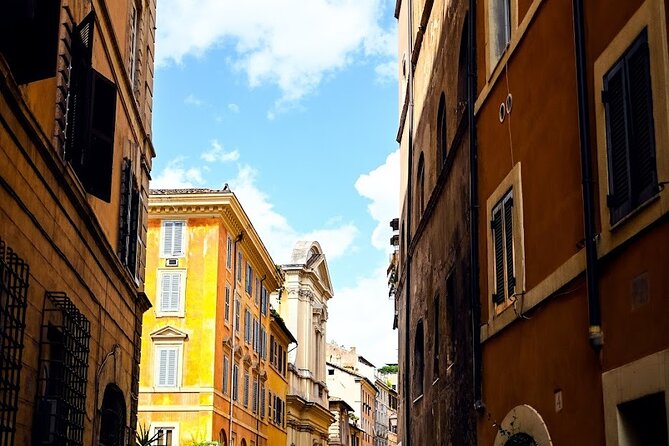
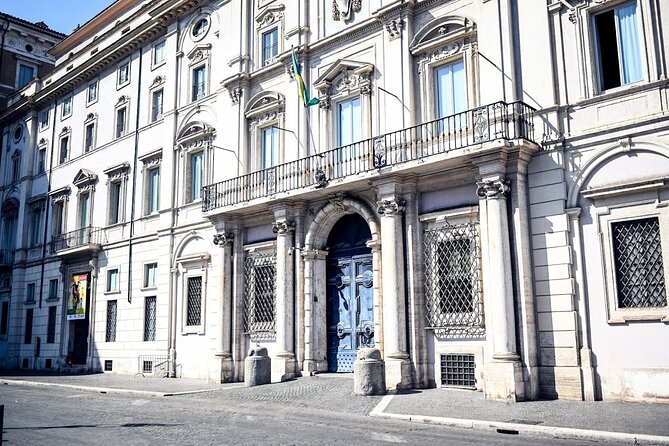
The route includes one of Rome’s important High Renaissance palaces, now used as the French embassy in Italy. Since the building functions as an embassy, you should expect to view it from outside rather than treat it as an ordinary museum stop.
The tour also takes in the classical 17th-century fountain dedicated to four rivers. An obelisk rises from the center, topped by a dove. This is the famous Four Rivers Fountain in Piazza Navona, and it gives the guide a natural chance to talk about Roman art, power, religion, and public display.
These sightseeing moments help break up the eating. You are not simply moving from one counter to another. You are also learning how the city’s squares were designed and how food fits into the same streets as palaces and monuments.
Roman pizza and supplì
Pizza is one of the first foods you will want to understand in Rome, because it does not always resemble the round, heavily topped pies served elsewhere. This tour includes two different types of homemade pizza, allowing you to compare textures and styles.
You also taste supplì, one of Rome’s classic street foods. It is a fried snack built around rice and filling, often eaten as a quick bite rather than a formal course. It is exactly the sort of food that can be overlooked if you only visit famous restaurants.
The important point is variety. Pizza offers bread, heat, and toppings. Supplì gives you something fried and portable. Together, they show how Roman food can be filling without being formal.
If you are eating lightly, take this early warning seriously: the tastings add up quickly. Several people have finished the tour very full, and the portion size is part of the value. Come hungry, but do not force yourself to eat every bite if you already feel satisfied.
More Old Town and Historic Centre Walks in Italy
- Rome in a Day Tour with Vatican, Colosseum and Historic Center
★ 4.5 · 1,042 reviews - Naples: Historic Center and Sansevero Chapel Walking Tour
★ 4.8 · 208 reviews - Palermo Historic Center Walking Tour by Palermo Wonders
★ 5.0 · 138 reviews - Bologna: Street Food Tour in the Historic Center
★ 4.8 · 125 reviews
The Jewish Ghetto and its food traditions
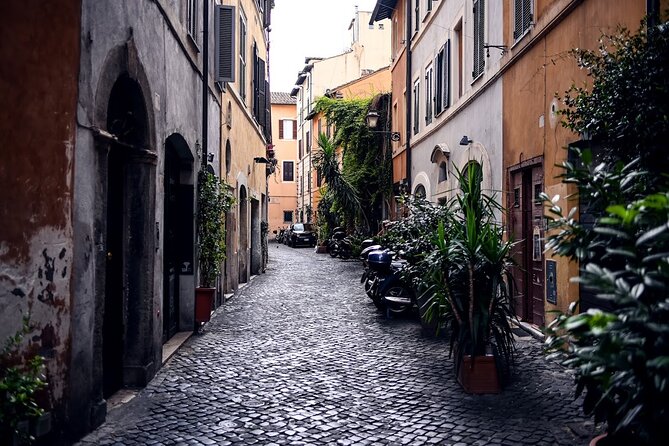
The route continues into Rome’s ancient Jewish Ghetto in the Rione Sant’Angelo. It was established in 1555 and remains one of the city’s most distinctive areas for history, culture, and food.
This is one of the strongest parts of the walk because the neighborhood gives food a clear cultural setting. Streets, buildings, and culinary traditions are connected here. Your guide can explain the local background while you continue sampling dishes.
The area is also a reminder that Rome’s food is not one single tradition. Roman cooking has been shaped by different communities, religious practices, economic conditions, and the practical needs of city life. The tour does not treat food as a list of famous names. It places dishes within neighborhoods.
Expect some walking on uneven city streets and through areas where pedestrian traffic can be thick. Children can participate, and guides have adapted drinks and explanations for younger members of the group. Still, this is not a seated tasting. You need to be comfortable walking between stops.
Pasta, cold cuts, and cheeses
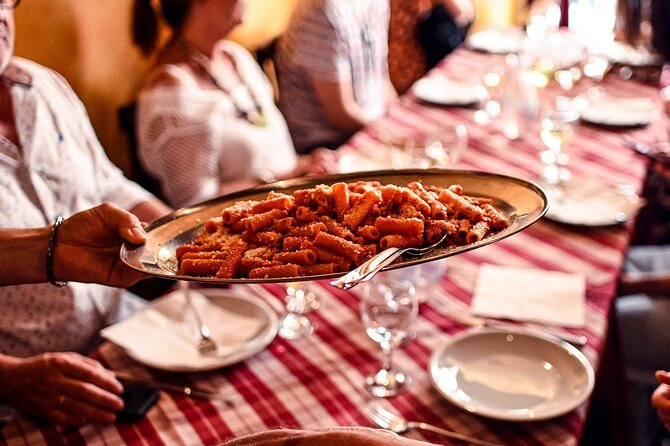
The middle portion of the tour brings in Italian cold cuts and cheeses, followed by two Roman pastas. This is where the food begins to feel like a full meal rather than a series of snacks.
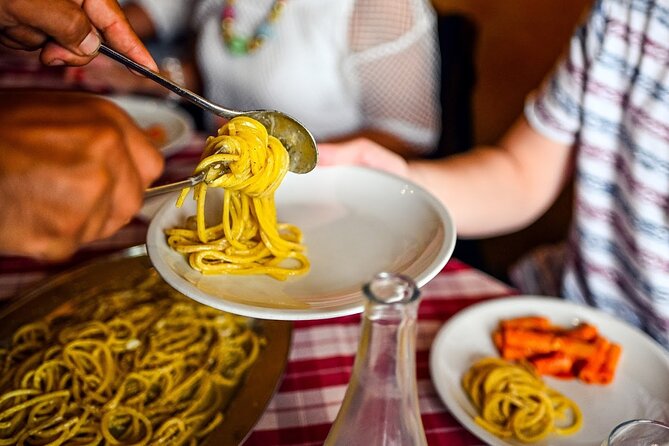
Two pasta tastings are especially useful because Roman pasta is often reduced to a few familiar names. Sampling more than one lets you compare sauces, textures, and the way each dish is served. The exact menu can change, so you should not expect a fixed restaurant-style course list on every date.
The cold cuts and cheeses add another layer. They slow the pace slightly and give you a chance to ask the guide about ingredients, local habits, and how Italians combine simple products at the table.
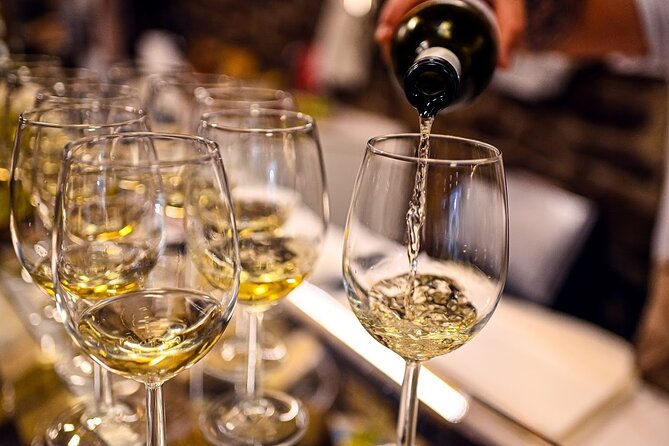
Some tour experiences have included wine, coffee, or other drinks. Alcohol is not guaranteed as a fixed inclusion, and the minimum drinking age is 18. If you do not drink alcohol, the tour has still been praised for offering enough food and conversation to make the experience worthwhile.
Campo de’ Fiori and Rome’s market square
Campo de’ Fiori is a rectangular square south of Piazza Navona. Its name means field of flowers, a reminder of the open land that once occupied this part of Rome.
Today, the square is a familiar stop for people exploring central Rome, but the tour gives it a food-focused purpose. The guide can help you see it as part of the city’s everyday eating culture rather than simply another photo stop.
The square can feel crowded and commercial, depending on the hour. Do not assume every food seller represents the best local cooking. One advantage of having a guide is that you can ask which products are worth your attention and which are mainly aimed at passing customers.
The route does not promise a dedicated market-shopping session. Instead, Campo de’ Fiori works as one piece of a larger walk that links food, public space, and Roman history.
The ancient walkway and Largo di Torre Argentina
Another point on the route is the remains of an ancient walkway, originally built in the second century B.C. to connect two Roman temples. Details like this are easy to pass without noticing, especially when you are moving through the center toward your next meal.
The tour ends at Largo di Torre Argentina, a square containing four Roman Republican temples and the remains of Pompey’s Theatre. It sits in the ancient Campus Martius and gives the walk a suitably old-fashioned finish.
Ending here is practical as well as scenic. You are in central Rome, close to public transportation, and can continue sightseeing after the tour. The experience does not return you to Piazza Navona, so check the ending point before making another appointment.
Cannoli, gelato, and the secret dish
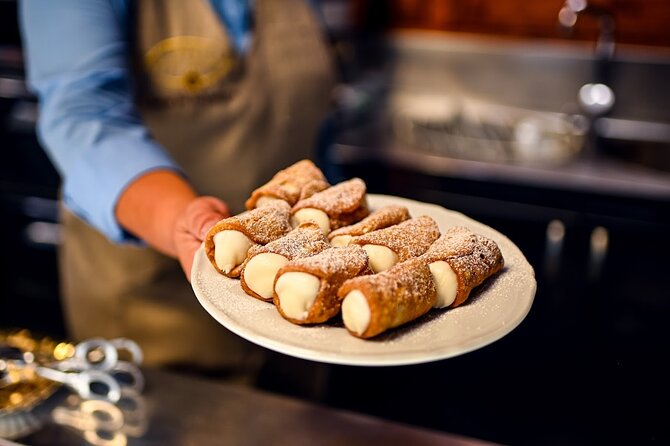
Dessert arrives with cannoli and artisanal gelato. Gelato is often the final taste on this route, and it makes sense. After several savory foods, a cold, sweet finish gives the group a clear stopping point.
Cannoli can be hit or miss depending on freshness and filling, but this tasting gives you a chance to try the Roman version without ordering a full dessert. One guide has also been credited with introducing a cannoli that changed one participant’s opinion of the dessert entirely.
The final secret dish is deliberately not listed. That adds a small element of surprise, but it also means anyone with dietary limits should ask about it before booking. The menu and itinerary can change because of weather, location availability, or other circumstances.
The guides make the difference
The strongest part of this experience is likely to be the person leading it. Massimiliano has been praised for clear English, Roman history, food explanations, humor, and helpful advice for the rest of your stay. Rocio has been described as funny and engaging, while Luda has been praised for being friendly and informative.
Federico has handled vegetarian substitutions, including vegetarian pasta and alternatives at other stops. Eduardo has been noted for tying local history closely to the food. Manuel and Robbie have also been praised for cultural stories, restaurant suggestions, and an easy manner.
Guide assignments can change, so you should not book on the assumption that one particular person will lead your departure. Still, the range of strong guide feedback suggests that the company has a useful training base and that the experience is not built around one personality alone.
Is $118.51 a fair price?
At $118.51 per person, the tour costs more than simply buying street food on your own. You could eat pizza, supplì, gelato, and pasta separately for less money if price were your only concern.
The value comes from the combination. You get at least eight food tastings, a three-hour guided walk, historical explanation, restaurant and food advice, and a small group. The food portions are substantial enough that the tour can replace lunch, and perhaps much of dinner as well.
I consider the price reasonable for a first full day in Rome, especially if you want help understanding what to eat and where the city’s neighborhoods fit together. It is less attractive if you already know Roman food well or prefer choosing every restaurant yourself.
Group discounts may be available, and free cancellation is allowed up to 24 hours before the start time. Changes or cancellations inside that window are not accepted for a refund.
Who should book this experience?
This tour suits first-time visitors who want an easy introduction to Roman food and central Rome. It also works well for families, since children have taken part and guides have adjusted drinks and explanations for younger people.
I would recommend it to anyone who enjoys walking, tasting several foods, and asking questions. It is also useful early in your stay, since the guide can point you toward places to eat later.
Vegetarians can participate, but you should make your needs clear before or at the start of the tour. One vegetarian experience included pasta and other alternatives, but the published menu is not vegetarian-specific.
You should think twice if you have severe food allergies, dislike group dining, or want a quiet restaurant meal. The menu may change, the group walks through busy streets, and the full tasting schedule is designed to fill you up.
Should you book the Rome Food Tour?
Yes, if you want a generous introduction to Roman food with history folded into the walk. The strongest reasons are the small group, broad tasting menu, central route, and guides who explain both the dishes and the city.
Book it early in your Rome stay if possible. You are likely to leave full, better oriented, and ready to make smarter choices at later meals. Skip it only if $118.51 feels too high for a guided lunch, or if you prefer exploring food stops entirely on your own.
FAQ
How long does the Rome food tour last?
The tour lasts approximately three hours.
Where does the tour begin?
It begins at Sant’Agnese in Agone, Piazza Navona 14, Rome.
Where does the tour end?
The tour ends at Largo di Torre Argentina in central Rome.
What food is included?
The included foods are two types of homemade pizza, supplì, Italian cold cuts and cheeses, two Roman pastas, cannoli, artisanal gelato, and a secret dish.
How many people can join the tour?
The maximum group size is 12 people.
Is the tour offered in English?
Yes. The tour is offered in English.
Is hotel pickup included?
No. Hotel pickup and drop-off are not included.
Can I cancel for a full refund?
Yes. You can cancel at least 24 hours before the experience start time for a full refund. Cancellations or changes made less than 24 hours before the start time are not accepted for a refund.
More Old Town and Historic Centre Walks in Rome
- Madrid Essential: Historic Center, Plaza Mayor & Royal Palace
★ 5.0 · 6,416 reviews - Lisbon: Live Fado Show with Port Wine in Historic Center
★ 4.7 · 4,166 reviews - Valencia Old Town Tour with Wine & Tapas in 11th Century Historic Monument
★ 5.0 · 3,234 reviews - Prague Old Town, Medieval Underground and Dungeon Historical Tour
★ 4.5 · 3,227 reviews
Latest history tours reviewed in Rome
- Day drinking in Rome – Scandalous Roman History★ 4.8 · 31 reviews
- Rome: Colosseum Arena and Ancient Rome Guided Tour★ 4.8 · 23 reviews
- Rome: Colosseum and Ancient Rome Access with Optional Arena★ 4.5 · 198 reviews
- Ancient Rome: Archeological area Largo Argentina★ 3.9 · 49 reviews
- Ancient Rome Half-Day Segway Tour★ 4.8 · 25 reviews
- Colosseum Forum Ancient Rome Small Group Tour for Kids Families★ 5.0 · 198 reviews
- VIP Colosseum Underground and Ancient Rome Small Group Tour★ 4.5 · 332 reviews
- Ancient Ostia Antica Semi-Private Day Trip from Rome by Train with Guide★ 4.5 · 579 reviews
Rome History Tours, compared.
Colosseum: Underground and Ancient Rome Tour
Read our review →
Rome: Colosseum with Arena, Roman Forum and Palatine Guided Tour
Read our review →
Colosseum & Ancient Rome with Arena Floor Option I Max 6 People
Read our review →
Rome: Colosseum, Ancient Rome Tour or AudioGuided Tour
Read our review →
Colosseum, Roman Forum & Palatine Hill Guided Tour
Read our review →
Pantheon Elite Guided Tour – Rome’s Iconic Ancient Temple
Read our review →
Rome in a Day Tour with Vatican, Colosseum and Historic Center
Read our review →
Colosseum Express Guided Tour and Ancient Rome Admission Included
Read our review →Browse the lists this tour appears in