
Review · SICILY
Ancient Syracuse: private guided tour of the Neapolis archaeological park
Syracuse’s Neapolis Archaeological Park is not a place to simply stroll around and admire old stones. Its Greek theater, echoing quarries, and Roman amphitheater make far more sense when a guide explains how each space worked. I especially like the private format, which gives you room to ask questions, and the way guides such as Eva and Martina bring small details into the story, from Roman spectacles to the acanthus leaves carved on ancient capitals.
I also like the choice of morning or afternoon departures, useful in a city where the midday sun can be punishing. The main caution is important: park admission is not included, and the Greek theater may be partly hidden by temporary wooden seating during the spring and summer performance season.
Key points to know before you book
- The Greek theater is the main attraction: It is one of Sicily’s most important ancient Greek theaters, but summer seating can cover much of it.
- The Ear of Dionysius is a memorable stop: This man-made cave is prized for its unusual acoustics and dramatic shape.
- You get a private guide: Your group receives the guide’s full attention instead of following a large crowd.
- The tour is made for questions: Guides including Eva and Martina are noted for clear explanations, patience, and engaging younger visitors.
- Bring good walking shoes: The park is a walking site, and comfortable footwear matters on uneven ground.
- Tickets cost extra: Buy or arrange admission with care, and check whether anyone in your party qualifies for a reduced or free ticket.
Why Neapolis makes a good first look at ancient Syracuse
Ancient Syracuse was one of the major Greek cities of the Mediterranean, and Neapolis gathers several of its most important surviving monuments in one area. You can see a theater cut into the hillside, quarries that later became places of confinement, and a Roman amphitheater built for public spectacles.
That mix is the real strength of the tour. You are not seeing one isolated ruin. You are moving through different chapters of Syracuse’s past, with Greek, Roman, and later uses of the same site layered together.
I would not choose this experience simply to tick off a few monuments. I would choose it if you want help understanding how the site fits together. Without context, the quarries can look like empty cuts in the rock, and the amphitheater can seem less impressive than better-preserved Roman arenas elsewhere in Italy.
The private setup changes the pace. You can stop when something catches your attention, ask about a carving, or spend extra time with a feature that interests your family. That flexibility is especially useful with children. One guide, Eva, is singled out for keeping a history-minded 10-year-old engaged, which suggests that the experience is not limited to adults already fluent in ancient history.
More Ancient History Tours in Italy
- Colosseum: Underground and Ancient Rome Tour
★ 4.7 · 12,691 reviews - Colosseum & Ancient Rome with Arena Floor Option I Max 6 People
★ 5.0 · 3,306 reviews - Rome: Colosseum, Ancient Rome Tour or AudioGuided Tour
★ 4.4 · 2,879 reviews
Starting at Largo Anfiteatro
The meeting point is Largo Anfiteatro, 2, near the archaeological park. The tour ends back at the same meeting point, so you do not need to arrange a separate pickup or find your way across Syracuse afterward.
This is a walking tour, not a vehicle-based sightseeing trip. Wear shoes you can comfortably use for roughly 90 minutes or longer if your visit includes more time in the park. Sun protection is sensible, too. One practical tip from the experience: if you go in summer, an umbrella can provide welcome shade, since much of the route is exposed.
The advertised duration is approximately 1 hour 30 minutes, while the park portion can be scheduled for up to about two hours. The exact pace depends on your guide, questions, and the way the visit is organized. Allow a little breathing room rather than planning a tight connection immediately afterward.
Morning and afternoon departures are offered. I would favor the cooler time of day when possible, particularly in summer. The afternoon option can work well if your morning is reserved for Ortigia or other parts of Syracuse, but confirm the timing carefully before you commit.
The Greek theater: the park’s central sight
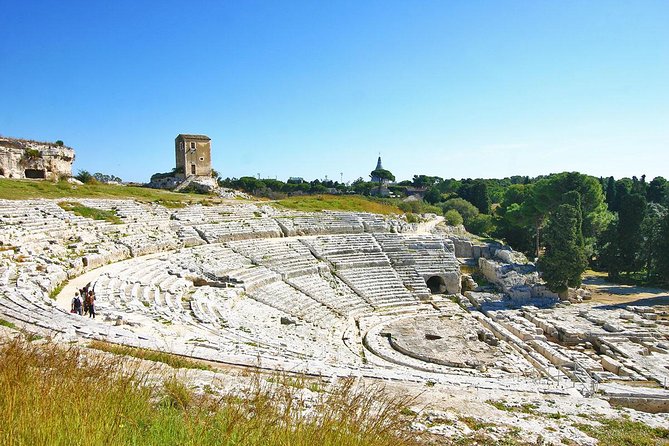
The Teatro Greco is the main reason many people come to Neapolis. Cut into the hillside, it is regarded as the most important ancient Greek theater in Sicily. Its scale helps explain the role of theater in Greek civic life. This was not a small entertainment venue for a select few. It was a public space built for large audiences and major performances.
A guide adds the details that a quiet look cannot provide. You can ask about the theater’s design, its place in Syracuse, and how performances fit into the city’s public life. The explanations also help you read the setting itself, including the relationship between the carved seating and the surrounding stone.
There is one major seasonal catch. During the performance season, usually in spring and summer, temporary wooden bleachers cover the theater and leave only part of it visible. The setup allows Greek plays to continue, which is an interesting modern use of an ancient venue, but it also changes what you see.
If an uncovered theater is your chief reason for booking, check the current conditions before paying. The promotional image may show the theater without seating, but your visit could look quite different. This is the clearest reason not to book blindly.
Even when partly covered, the theater remains worth seeing. You can still understand its position and broad form, and the guide can explain what is hidden. But you should set realistic expectations. If the uncovered stone seating is essential to you, plan for the season rather than assuming the photograph represents every departure.
The Ear of Dionysius and the ancient quarries
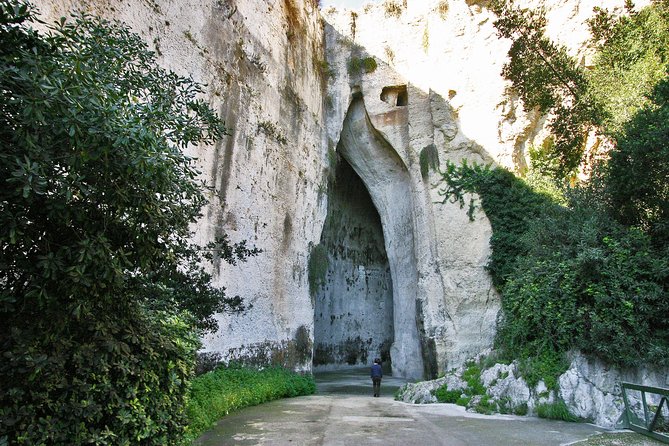
The Ear of Dionysius is probably the most theatrical stop on the walk. It is a large cave carved into the ancient stone quarries, and its shape gives it unusual acoustics. Sound carries in a striking way, making the space more than a geological curiosity.
This is where the guide’s storytelling can make a major difference. The site has a famous name and a dramatic atmosphere, but its meaning is easier to grasp when you hear how the quarries were used and why this particular cavern became Syracuse’s most legendary place.
Allow around 15 minutes for this stop in the stated schedule. That is enough to see the cave and listen to the explanation, though you may want to linger if the acoustics are active. The sound effect is best appreciated in person, and the cavern can become the most memorable part of the visit for people who enjoy unusual spaces rather than formal monuments.
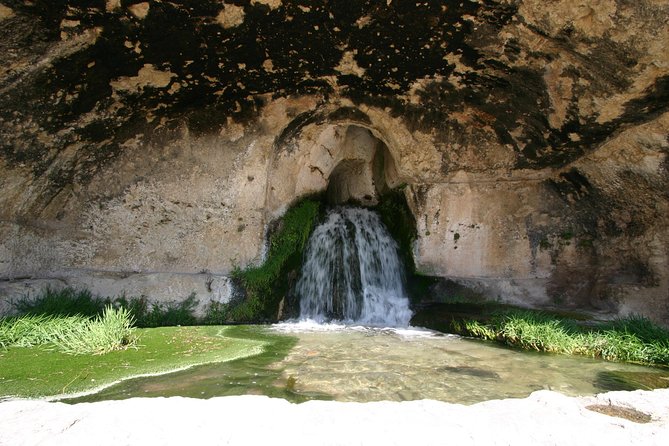
The wider Greek stone quarries are also part of the route. They help you see the practical side of the ancient city. Stone was cut from the ground, and the resulting spaces were later put to other uses. I like this part because it prevents the park from becoming a parade of grand buildings. You are also seeing the worksite that helped supply the city.
Wear shoes with a secure grip and take care on the walking route. The tour information specifically recommends comfortable footwear, and that advice is worth following in an archaeological park where surfaces are not designed like a modern city sidewalk.
More Private History Tours in Italy
- Ancient Ostia Antica Semi-Private Day Trip from Rome by Train with Guide
★ 4.5 · 579 reviews - Colosseum & Ancient Rome Semi-Private Tour
★ 5.0 · 208 reviews - Ancient Pompeii Private Tour: Skip the Line & Kid-Friendly Option
★ 5.0 · 167 reviews - Skip-the-Line Half-Day Private Tour Ancient Pompeii Highlights with Native Guide
★ 5.0 · 146 reviews
The Roman amphitheater and a later chapter
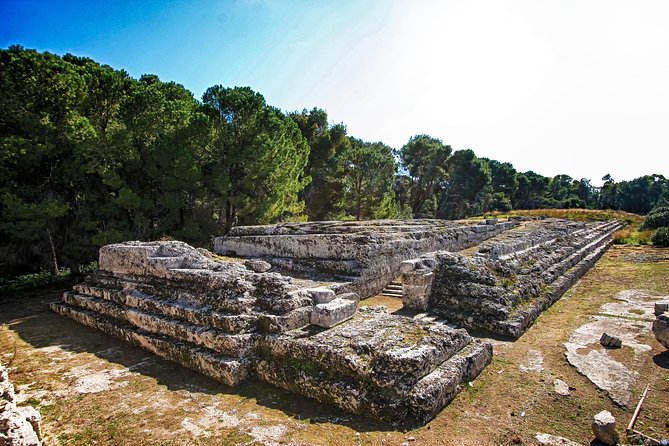
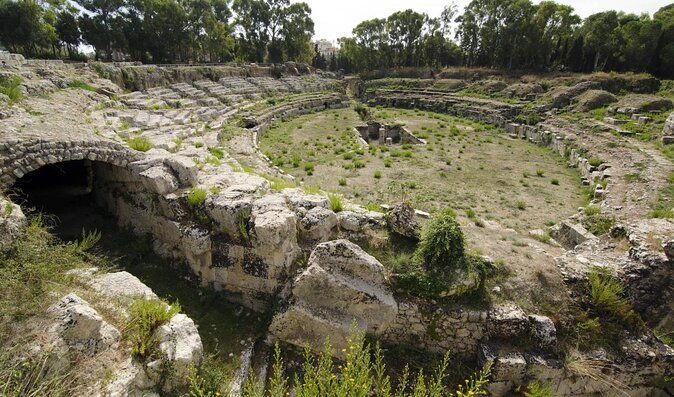
The Anfiteatro Romano di Siracusa shifts the story from Greek theater to Roman public spectacle. Your guide explains the role of gladiators and the way the amphitheater served Roman society.
It is scheduled as a short stop, about 15 minutes. That is enough for an introduction, but do not expect a long standalone visit with the same scale as the Colosseum in Rome. The value here comes from seeing how Syracuse continued to matter under Roman rule and how the park contains monuments from different periods.
The amphitheater also gives the tour a useful contrast. The Greek theater was designed around dramatic performance and civic culture, while the Roman arena was tied to spectacle and combat. Hearing those differences while standing at both sites helps you understand that ancient Syracuse was not frozen in one Greek period.
This stop is most useful when treated as part of the larger sequence. If you are hoping for one spectacular monument after another, the Roman amphitheater may feel more modest. If you want a clear outline of the city’s changing identity, it completes the picture nicely.
What a private guide adds
A private tour is more expensive than entering the park on your own, so the guide must earn the difference. Here, the strongest reason to pay is interpretation.
Guides such as Eva are praised for answering questions, noticing small details, and making the site feel connected. One particularly nice example is the way Eva pointed out a living acanthus plant, then linked its leaves to the acanthus carvings used on marble capitals and other decorations. That kind of observation can turn a walk past broken architecture into a lesson in how nature influenced ancient design.
Martina is also described as local, well educated, and easy to understand. The important point for you is not the label but the result: you can ask questions in English and receive explanations tailored to your group instead of a fixed speech delivered to a crowd.
The private format helps families and mixed-age groups. A child interested in history can ask more questions without holding up 30 other people. Adults can request more detail about archaeology, architecture, or local history. If your group has different interests, that flexibility is worth real money.
Some guides may also be able to offer broader Syracuse suggestions. One private visit was combined with a meal and a later tour of the archaeological museum, while another included Ortigia. Those additions are not part of this standard experience, so do not assume they are included. Still, they show the potential value of having a local guide who can help connect the park with the rest of your visit.
Is $108.24 per person a fair price?
At $108.24 per person, this is not a budget admission visit. The price pays for a private walking tour and a professional guide, while the entrance fee is separate unless you select a tour option that includes the ticket.
The value depends heavily on your group size. For one or two people, the per-person cost is a serious splurge. For a family or small group, the private arrangement can compare more favorably with several individual guided admissions, especially when you value a flexible pace and direct questions.
I would pay this price if ancient Syracuse is a priority and you want more than labels beside the ruins. I would skip it if you prefer to wander silently, already know the site well, or are trying to keep admission costs low.
Remember to factor in the ticket procedure. The park admission is clearly separate from the guiding fee, and some people may qualify for free or reduced entry by showing identification. Check this before arrival. A delay at the ticket office is avoidable when you understand what you need to buy and who qualifies for a discount.
The tour provider explains that ticket queues are usually shorter at recommended times, though a schedule change can put you into a busier period. Do not change the departure at the last minute without checking the effect on tickets and meeting arrangements.
Timing, heat, and the summer theater problem
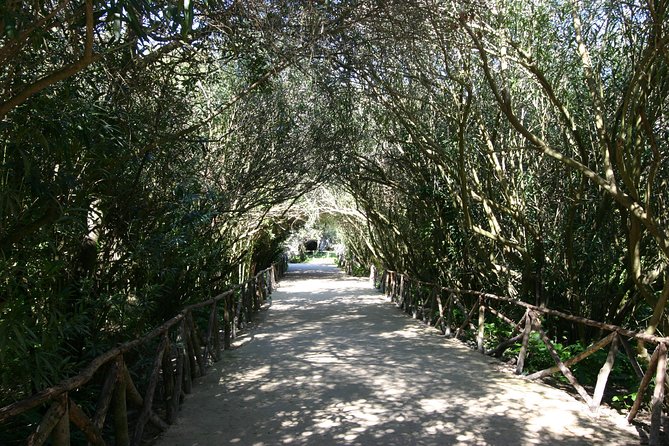
Syracuse can be very hot, and the park does not offer constant shade. You will enjoy the walk more with water, sun protection, and a morning or later departure when practical. A small umbrella is a useful bit of gear in summer, especially if you are sensitive to direct sun.
The Greek theater issue deserves a second warning because it can affect your decision. Summer performances are a genuine cultural activity, but the temporary wooden seating can block much of the ancient structure. If you want both experiences, you may appreciate seeing the theater prepared for modern Greek drama. If you want a clear view of the original seating, choose your season with care.
Weather also matters. The experience requires good weather and may be rescheduled or refunded if conditions make the tour impractical. Free cancellation is available up to 24 hours before the start time, while changes or cancellations inside that window are not accepted.
Who should book this Syracuse tour?
This tour suits you if:
- You want a private guide rather than a large group.
- You are visiting Syracuse for the first time.
- You enjoy asking questions as you walk.
- You are traveling with family members who have different levels of interest.
- You want the Greek theater, Ear of Dionysius, quarries, and Roman amphitheater explained as one connected story.
- You prefer English-language guiding.
It is less suitable if your only goal is to see the uncovered Greek theater. The seasonal seating can be a deal breaker, so check before booking.
It may also be unnecessary for independent history readers who are happy to study signs and explore at their own pace. The private guide is the central product here. If you do not plan to engage with the guide, the extra cost loses much of its purpose.
Should you book it?
I would book this tour if you want the Neapolis Park to make sense, not merely to look impressive in photographs. The private format, strong English guiding, and chance to ask questions give the ruins a human scale. Eva and Martina are both highlighted for clear explanations, patience, and an ability to connect with younger visitors.
Before booking, check two things: the seasonal condition of the Greek theater and the separate admission fee. If the theater is partly covered and you are visiting mainly for its original stone seating, reconsider your dates. If you accept that limitation and want a thoughtful introduction to Syracuse’s Greek and Roman past, this is a useful, well-focused way to spend part of your day.
FAQ
How long does the private Neapolis Park tour last?
The experience lasts approximately 1 hour 30 minutes. The park portion may be scheduled for up to about two hours, depending on the exact arrangement and pace.
What monuments are included?
The walk includes the Teatro Greco, Ear of Dionysius, ancient Greek stone quarries, and Anfiteatro Romano di Siracusa.
Is the park entrance ticket included?
No. Admission is not included unless you select a tour option that specifically includes the ticket.
Is the tour private?
Yes. Only your group participates in the private walking tour.
Is the tour offered in English?
Yes. The experience is offered in English.
Where does the tour start and finish?
It starts at Largo Anfiteatro, 2, 96100 Siracusa, and ends back at the meeting point.
Can I cancel for a full refund?
Yes, if you cancel at least 24 hours before the experience start time. Cancellations made less than 24 hours in advance are not refunded. If poor weather causes the provider to cancel, you are offered another date or a full refund.
More Archaeological Site Tours in Italy
- Discover the Ancient Ruins of Pompeii: Day Trip from Rome
★ 3.5 · 2,247 reviews - Ancient Rome: Archeological area Largo Argentina
★ 3.9 · 49 reviews - Ancient Ruins Tour – Guided Arizona Desert Tour by UTV
★ 5.0 · 684 reviews - Ancient Olympia: Archaeological Site and Museum Entry Ticket
★ 4.3 · 555 reviews
Latest history tours reviewed in Italy
- Forte di Bard: history tour★ 4.5 · 31 reviews
- Florence Wine &Food: Taste Tuscan Flavors in Historic Cellar★ 4.6 · 31 reviews
- Florence Medici Bike Tour – Cycle Through History and Power★ 4.2 · 23 reviews
- Florence: Medici Family History Tour★ 4.3 · 93 reviews
- Florence: Fashion History Guided Walking Tour & Museum Visit★ 4.2 · 72 reviews
- Essential Florence Walking Tour to discover its history★ 5.0 · 21 reviews
- Discover Herculaneum: A guided tour of the ancient Roman city★ 4.9 · 34 reviews
- Day drinking in Rome – Scandalous Roman History★ 4.8 · 31 reviews
Sicily History Tours, compared.

Palermo Historic Center Walking Tour by Palermo Wonders
Read our review →
Palermo in 2 hours Main monuments and historic markets
Read our review →
Bike tour of the historic center of Palermo with tasting
Read our review →Browse the lists this tour appears in