
Review · AUSTRALIA
Darwin: Small Group 2-Hour Heritage Walk
Darwin’s story is best understood on foot, where a quiet street can reveal the damage of war, cyclones, and rebuilding. This two-hour walk links old courthouses, theater buildings, government landmarks, public art, tropical plants, and local stories into a clear picture of how the city changed.
I like the small group limit of 10, which gives you room to ask questions, and I like the leisurely pace. Guide John is repeatedly singled out for his detailed storytelling, practical care in the heat, and strong grasp of Darwin’s past and present. The main drawback is that this is a proper walking tour with few places to sit, so it is not a good choice if you have low stamina or dislike hot-weather walking.
Key points at a glance
- See Darwin on foot: Reach historic corners and street details that a bus cannot.
- Hear the city’s turning points: The commentary covers the WWII bombings, Cyclone Tracy, rebuilding, and Darwin’s multicultural character today.
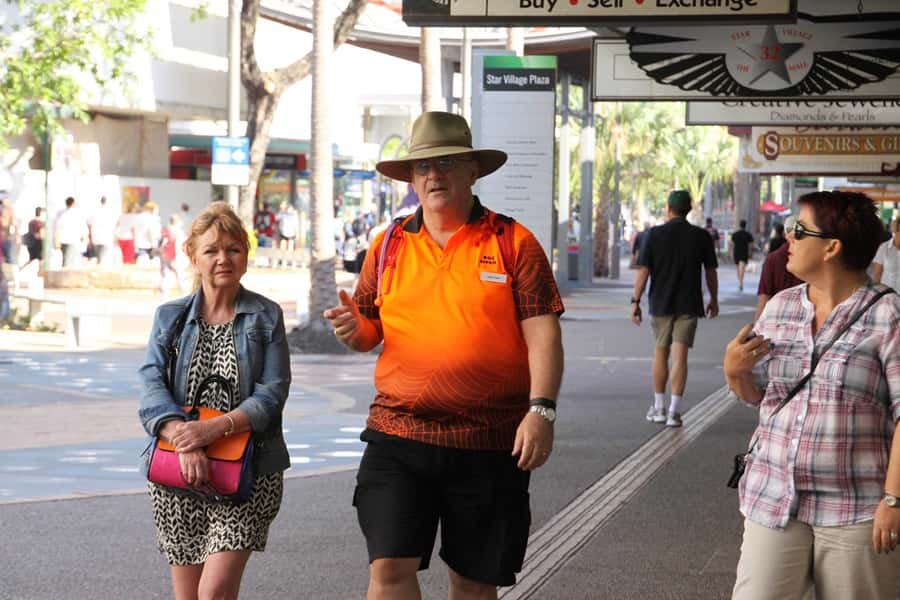
- Meet under the John McDouall Stuart statue: Look for the guide in a bright orange shirt at Raintree Park.
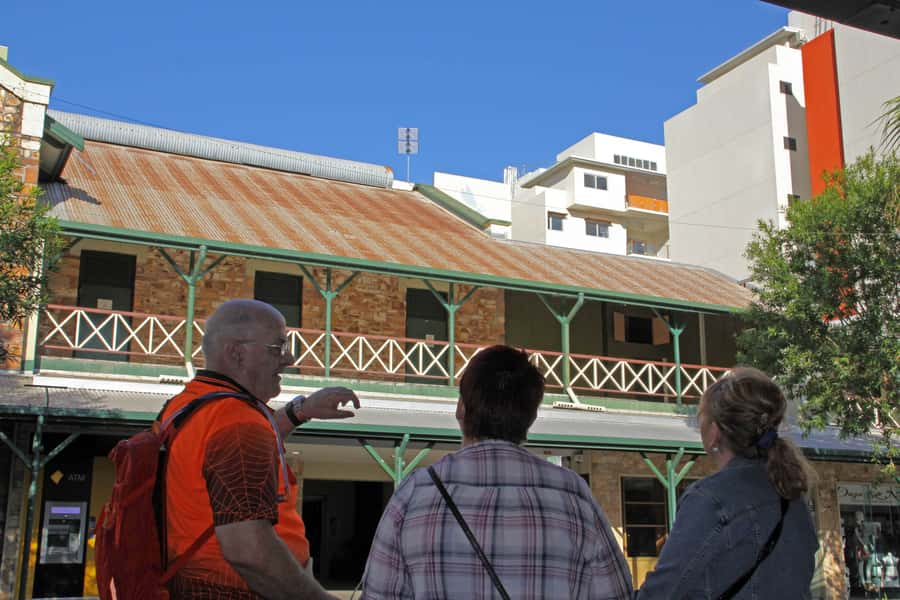
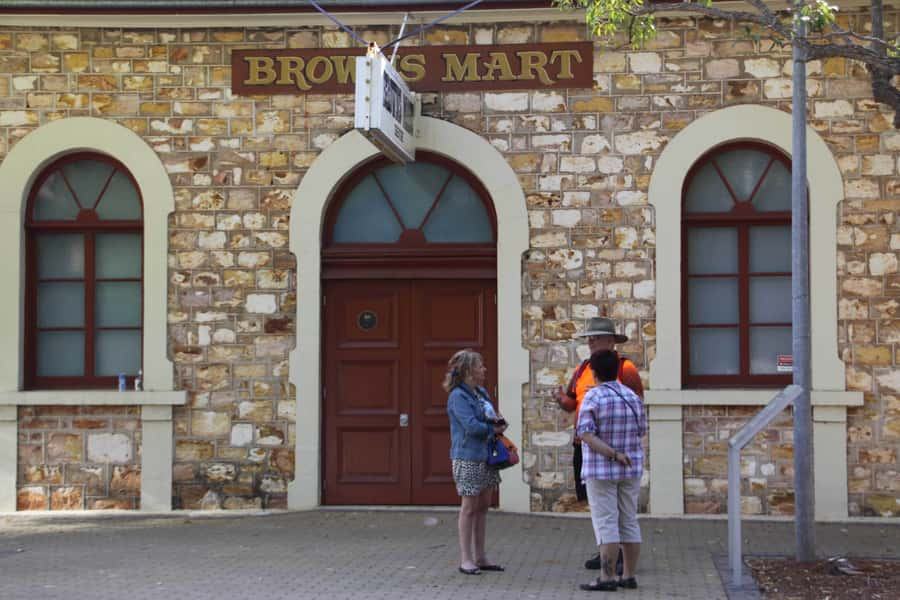
- Visit restored landmarks: The old courthouse, police station, Brown’s Mart theater, and Palmerston Town Hall ruins help make the past tangible.
- Keep the group personal: A maximum of 10 people makes questions and conversation easier.
- Plan for the tropics: Bring water, sunscreen, a hat, and comfortable walking shoes. Bare feet are not allowed.
Why a two-hour walk works well in Darwin
Darwin can seem modern at first glance, but its center carries several layers of history. This tour gives you a useful framework before you spend time on your own. Instead of looking at a building as just another government office or tropical facade, you learn how war, weather, rebuilding, and migration shaped the city.
The walk is also a good answer to a common problem in Darwin: the sights are spread through the central area, but their meaning is easy to miss if you simply stroll past. A local guide connects the places together. You get the broad story without committing to a full-day excursion.
The pace matters. This is not a forced march from one photo stop to the next. The tour is designed to move steadily for two hours, with time to look, listen, and ask questions. John’s style, based on the information available about his tours, is especially suited to people who want context rather than a rapid list of dates.
You should still take the duration seriously. Two hours in Darwin’s tropical climate can feel longer than two hours in a cool European city. There are not many spots to stop, sit, and rest. I would book it early in your stay, but only if you are comfortable walking continuously with limited breaks.
More History Walking Tours in Australia
- Ultimate Melbourne Walking Tour: History, Laneways & Culture
★ 5.0 · 1,451 reviews - Sydney: The Rocks 90-Minute History Walking Tour
★ 4.7 · 1,092 reviews - Discover Perth Walking Tour: History, Art, Local Insights + More!
★ 5.0 · 458 reviews
Starting under Darwin’s pioneer statue
The meeting point is under the John McDouall Stuart statue in Raintree Park. This gives the tour a clear starting landmark, and the bright orange shirt makes the guide easier to spot. You will need to arrive independently because hotel pickup and drop-off are not included.
From here, the walk follows the paths associated with Darwin’s early development. The starting point is more than a convenient meeting place. It helps frame the city as a place shaped by pioneers, government, trade, conflict, and repeated rebuilding.
A small group makes this opening more useful. With no more than 10 people, you can hear the spoken commentary without being swallowed by a large crowd. You can also ask about a building, a street name, or a detail that catches your eye.
If you are visiting Darwin for the first time, this is a practical way to get your bearings. You finish near Knuckey Street and the Esplanade, in Darwin City, rather than returning to the starting point. Plan your next stop accordingly.
WWII stories and the city’s hardest chapters
The WWII bombings are one of the main subjects of the walk. This is an important part of Darwin’s story, since the city’s history cannot be explained only through colonial buildings or tropical scenery. The commentary places the surviving structures within a city that faced direct wartime attack.
You will also hear about Cyclone Tracy, the disaster that changed Darwin and forced another major period of rebuilding. The tour’s value here is not simply in naming the cyclone. It shows how Darwin’s identity was shaped by destruction and recovery, and why older buildings and reconstructed sites need a little explanation.
I appreciate that these subjects are paired with the city’s present-day character. The walk does not treat Darwin as a museum frozen in the past. It connects the wartime and cyclone stories to a modern city with a multicultural population and a very different feel from its early years.
The tone should suit you if you like history told through local details and personal insight. John’s commentary is described as personable and full of lived experience, which can make difficult subjects easier to understand without turning the tour into a dry lecture.
Restored buildings that bring the past closer
Several of the most useful stops are buildings that help you see what Darwin looked like before repeated rebuilding. The old courthouse and police station are among the remaining structures you visit. Their importance lies in what they represent: the practical machinery of an early settlement, not just grand architecture.
Brown’s Mart theater adds another angle. It brings culture and public life into the story, showing that Darwin’s heritage is not limited to government buildings or military events. The building has been painstakingly reconstructed, so you are seeing a restored piece of the city rather than an untouched relic.
The Palmerston Town Hall ruins offer a different experience. Ruins make absence visible. Instead of a complete building, you see evidence of what once occupied the site and how Darwin’s earlier civic center has been preserved and interpreted.
The tour also takes in Government House, Parliament House, and the Supreme Court of the Northern Territory. These sites help you compare old and new Darwin. You move from reconstructed heritage buildings to the institutions of the modern territory, seeing how the city’s civic life developed around them.
Do not expect entry into every building. The experience is a street-level heritage walk, and the supplied details describe viewing these places from the route rather than touring their interiors. That is both a strength and a limitation. You cover more ground, but you should not book it expecting museum access or extended indoor visits.
Same old streets, another chapter:
- Puffing Billy Railway: Heritage Steam Train Journey
★ 4.6 · 1,195 reviews - Morning World Heritage Cruise on the Gordon River from Strahan
★ 5.0 · 1,193 reviews - Strahan: World Heritage Cruise on Gordon River with Lunch
★ 4.8 · 1,143 reviews - Experience History onboard The Mary Valley Rattler
★ 5.0 · 963 reviews
Public art, tropical plants, and small street details
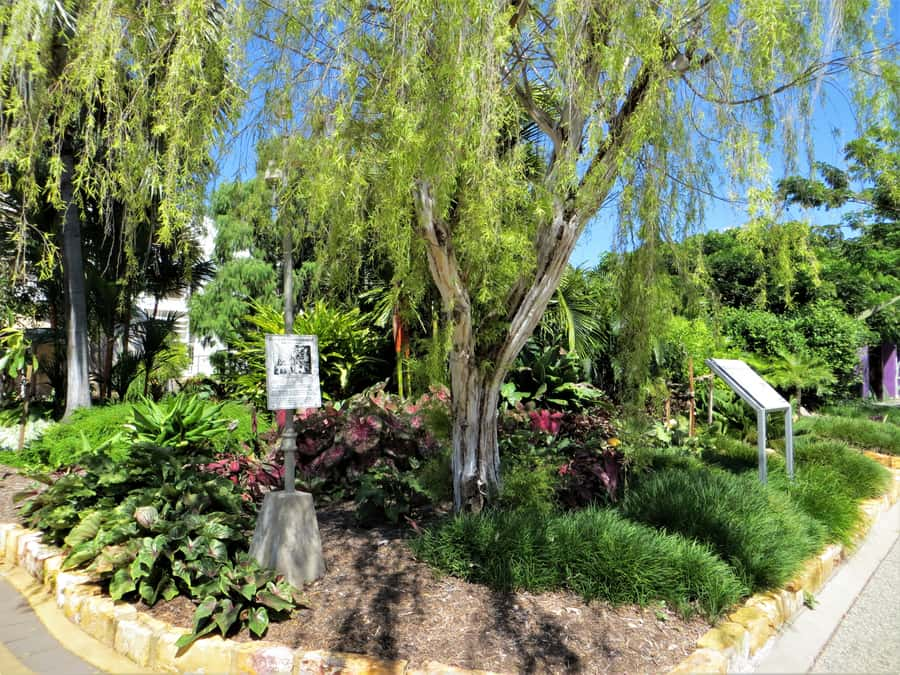
One reason to choose a walking tour over a bus tour is the chance to notice details at human scale. The route offers opportunities to photograph public artworks, architecture, historic buildings, tropical plants, and wildlife. A bus can show you a landmark, but it rarely gives you enough time to notice the smaller features around it.
The photography opportunities are a pleasant extra rather than the sole purpose of the tour. Bring a camera or phone, but keep it ready while listening. The point is to understand how the pieces fit together, not to rush from one picture to another.
The tropical setting also affects the experience. You will be outside for the full two hours, and the heat can become a bigger factor than the distance. Wear a sun hat, use sunscreen, and carry water. Hand sanitizer or tissues are also recommended, which is a small but sensible addition for a walking tour.
Wildlife is mentioned as something you may spot, but it is not presented as a guaranteed feature or a wildlife outing. Come for the history and city walk first. Treat any plants, birds, or other creatures you notice as part of the setting.
How the small group changes the experience
The group cap of 10 is one of the strongest practical features. A small group allows the guide to keep a natural pace and respond to questions without stopping a large crowd. It also makes it easier to hear commentary in city streets.
The experience can feel especially personal when numbers are low. One departure had only two paying guests, giving the pair a private-tour feel while still booking a small-group product. You cannot count on that, but the limited capacity gives you a better chance of direct conversation than a large coach tour.
John is the guide name most closely associated with this experience. The feedback about his work consistently points to clear explanations, enthusiasm, local insight, and a willingness to answer questions. He also pays attention to practical concerns such as hydration and sun protection, which matters in Darwin.
The tour requires at least two paying guests to operate. If you are booking alone, keep that minimum in mind. The activity is offered in English only, so you should be comfortable following spoken commentary for two hours.
Is $41 good value?
At $41 per person, the tour is reasonably priced for a two-hour guided experience, particularly if Darwin is new to you. You are paying for a local guide, spoken commentary, and a focused introduction to central Darwin rather than transport or meals.
The value is strongest if you would otherwise walk past the old courthouse, Brown’s Mart, the town hall ruins, or government buildings without knowing why they matter. A guide turns a self-guided wander into a connected story. That can save you time during a short Darwin visit.
The price is less attractive if you mainly want to cover a lot of distance or take a general sightseeing ride. This tour does not include food, drinks, hotel transfers, or a vehicle. You also receive no promise of indoor entry, so its worth depends on how much you value interpretation and local conversation.
For many first-time visitors, I would use it as an opening activity. After two hours, you can choose which places deserve a longer visit and which parts of the city you are happy to see from the street. That makes the tour more useful than a stand-alone history lesson.
Who should book this Darwin walk?
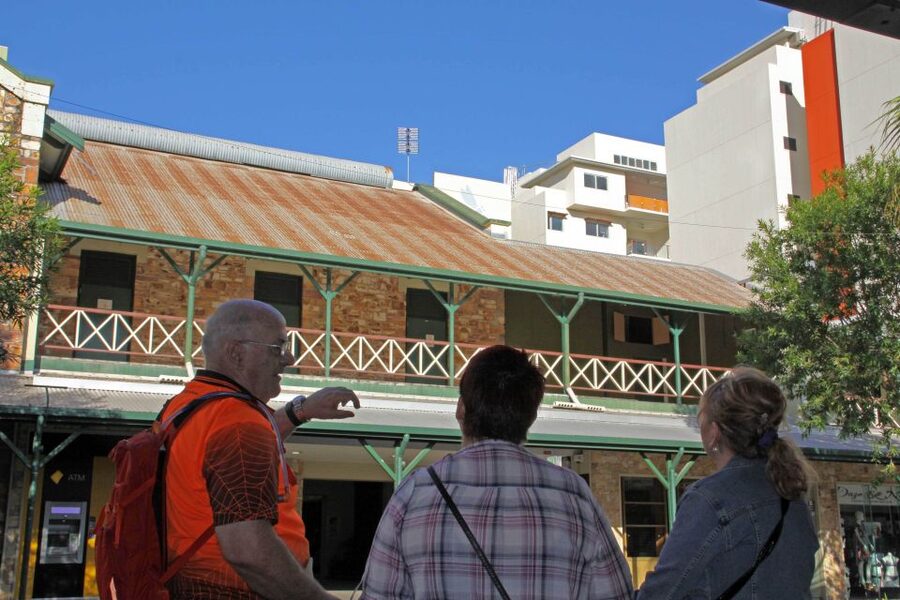
I would recommend it to first-time visitors, history fans, architecture enthusiasts, and anyone who prefers a local guide to a large sightseeing group. It also suits people with only a short time in Darwin, since the route gives you a compact introduction without taking up a full day.
It is a good fit if you like asking questions. John’s reported willingness to extend explanations makes the small group worthwhile, especially if you want to understand how the bombings, Cyclone Tracy, and later rebuilding changed the city.
You should think twice if you have low fitness, need regular seating, or find tropical heat difficult. The tour is not suitable for children under 10, and there are not many places to stop and rest. Smoking, pets other than assistance dogs, and bare feet are not allowed.
Wear comfortable walking shoes and light clothing suitable for the weather. Bring water, sunscreen, a hat, and a camera. There is no need to carry food unless you want something for after the tour, since food and drink are not included.
Final call: a smart first look at Darwin
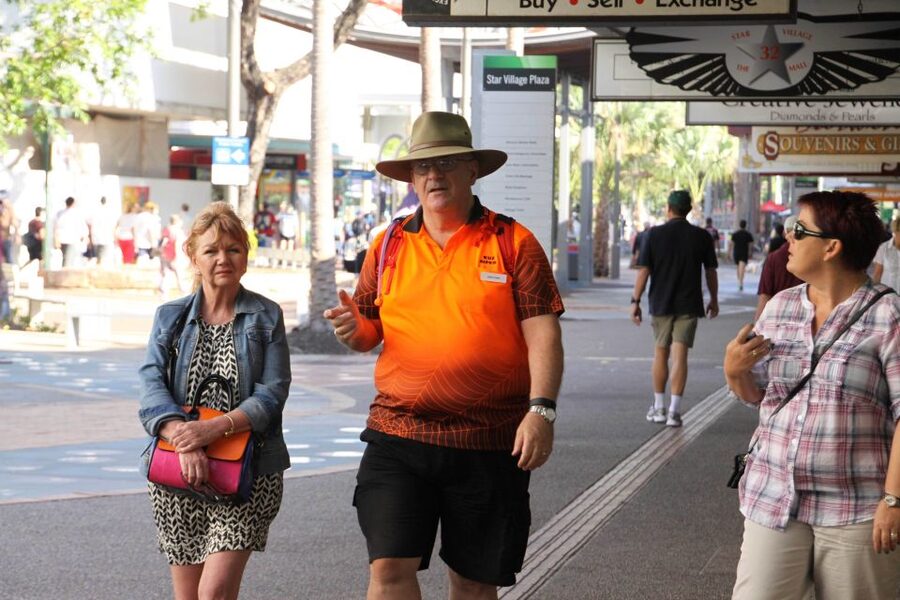
I would book this tour if you want Darwin’s story explained by a local rather than reduced to a few plaques and photo stops. The mix of WWII history, Cyclone Tracy, reconstructed buildings, government landmarks, public art, and tropical street life gives you a useful picture of the city in only two hours.
Book it with realistic expectations. This is an outdoor walking experience, not a museum tour, bus trip, or relaxed café outing. If you can manage the heat and steady pace, the small group and John’s personal style make $41 a fair price for a well-focused introduction to Darwin.
FAQ
How long is the Darwin heritage walk?
The guided walking tour lasts two hours.
What is the price?
The listed price is $41 per person.
Where does the tour start?
The meeting point is under the John McDouall Stuart statue in Raintree Park.
How will I identify the guide?
The guide will be wearing a bright orange shirt.
Where does the tour finish?
The walk finishes at Knuckey Street and the Esplanade in Darwin City, Northern Territory.
What language is the tour in?
The live commentary is provided in English only.
How large is the group?
The group is limited to 10 participants, and at least two paying guests are required for the tour to operate.
What historic places will I see?
The route includes the old courthouse and police station, Brown’s Mart theater, the Palmerston Town Hall ruins, Government House, Parliament House, and the Supreme Court of the Northern Territory.
Is hotel pickup included?
No. You must make your own way to the meeting point, and hotel drop-off is not included.
What should I bring?
Bring a sun hat, sunscreen, water, a camera, and hand sanitizer or tissues. Comfortable walking shoes are also sensible for the two-hour route.
More Two-Hour Tours in Australia
- 2-Hour Gettysburg Battlefield Guided History Bus Tour with a National Park Guide
★ 4.5 · 2,201 reviews - Kyoto Gion: 2-Hour Geisha Culture & History Walking Tour
★ 5.0 · 1,186 reviews - 2 Hour LoDo Historic Walking Tour in Denver
★ 5.0 · 1,106 reviews - 2-Hour Historical Walking Tour from Dublin
★ 5.0 · 875 reviews
More Small-Group History Tours in Australia
- London Small Group Tour of Historical Pubs
★ 5.0 · 10,422 reviews - Boston: Freedom Trail History Small Group Walking Tour
★ 5.0 · 6,450 reviews - Madrid Tapas & Taverns Small Group Food & History Tour
★ 5.0 · 2,664 reviews - Hidden Alleyways and Historic Sites Small-Group Walking Tour
★ 5.0 · 2,335 reviews
Latest history tours reviewed in Australia
- Discover Perth Walking Tour: History, Art, Sights + More!★ 4.9 · 183 reviews
- Albany: Historic Whaling Station Entry Ticket★ 4.8 · 24 reviews
- A Barossa Valley pickup: Wine and Heritage Tour, Local Guide★ 4.9 · 20 reviews
- From Perth: Wave Rock, York and Aboriginal Cultural Tour★ 4.6 · 498 reviews
- Tasman Island Cruises and Port Arthur Historic Site Day Tour from Hobart★ 5.0 · 477 reviews
- Derwent River Historic Harbour Cruise From Hobart★ 4.5 · 570 reviews
- Hobart: Historic Lunch Cruise★ 4.6 · 271 reviews
- Tasman Peninsula Tour, Cruise & Port Arthur Historic Site★ 4.9 · 339 reviews
Australia History Tours, compared.

Ultimate Melbourne Walking Tour: History, Laneways & Culture
Read our review →
Puffing Billy Railway: Heritage Steam Train Journey
Read our review →
Morning World Heritage Cruise on the Gordon River from Strahan
Read our review →
Sydney: The Rocks 90-Minute History Walking Tour
Read our review →
Experience History onboard The Mary Valley Rattler
Read our review →
Snorkel & Dive the Reef: Sustainable, Scientific & Cultural Tour
Read our review →
Derwent River Historic Harbour Cruise From Hobart
Read our review →
From Perth: Wave Rock, York and Aboriginal Cultural Tour
Read our review →Browse the lists this tour appears in