
Review · ITALY
Discover Matera, the ancient city – English tour
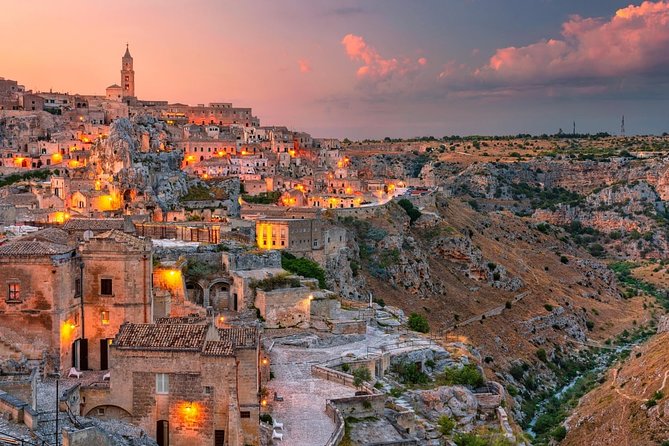
Matera’s magic is not just its stone houses and cave churches. It is the story of how people lived in those caves, were forced to leave them, and helped turn a place once called the Shame of Italy into a UNESCO World Heritage city. This walking tour follows that human story through Sasso Caveoso and part of Sasso Barisano.
I like two things here. First, the route helps you make sense of Matera’s confusing lanes and steep passages without reducing the city to a string of photo stops. Second, guides such as Gaetano and Renato bring in family memories, local customs, and practical advice about places to eat and explore afterward.
The main consideration is that this is not a standard church tour. If you want to step inside one famous cathedral after another, choose a different experience. This tour is about the city’s people, homes, architecture, water systems, and long change. Some visitors also find the guide’s detail a little repetitive, so you should expect plenty of explanation and questions rather than a fast-moving walk.
Key points to know before booking
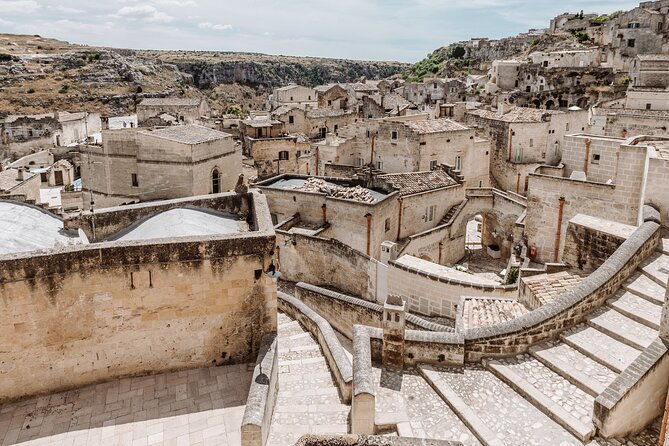
- The Sassi are explained through daily life: Learn how families lived in cave homes, gathered water, baked bread, and shared limited space.
- The route covers Sasso Caveoso and part of Sasso Barisano: You get a useful introduction to both major districts without trying to see every corner of Matera.
- Local guides give the tour its character: Renato, Gaetano, Sara, and Domenico are associated with the experience, with Renato and Gaetano receiving especially strong praise for their storytelling and English.
- The focus is broader than churches: The walk covers anthropology, architecture, social change, and the people who once lived in the Sassi.
- Small-group format keeps the pace personal: The maximum is 20 people, and the format allows time for questions and photographs.
- Plan on two to three hours and sensible shoes: The route uses alleys and uneven walking surfaces, so comfort matters more than fashion.
Why Matera makes more sense with a guide
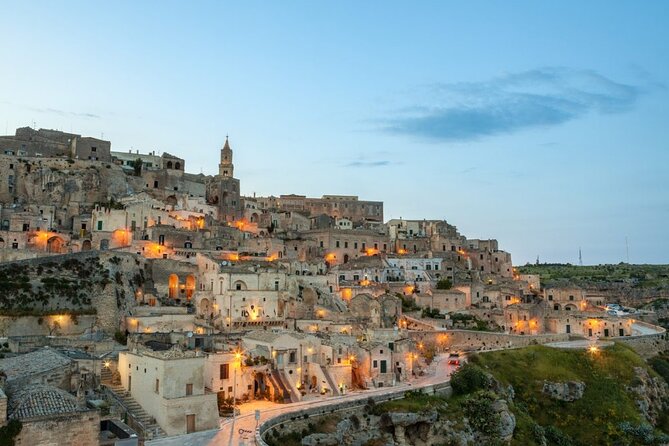
At first glance, Matera can seem easy to understand. You see a dramatic mass of pale stone, caves cut into the hills, and lanes that drop toward the valley. Then you start walking and realize that the Sassi are not a single monument. They are a maze of homes, stairways, cisterns, churches, courtyards, bakeries, and viewpoints.
That is where this tour earns its price. A guide gives you a sequence. Instead of seeing only picturesque stone walls, you learn what those spaces were for and how the city changed over time. You also hear why Matera remained outside the usual Italian sightseeing circuit for so long.
The city’s difficult modern story matters. Until the middle of the 20th century, many people lived in cramped cave homes with limited services. Families and animals could occupy the same general spaces, and water had to be collected and stored carefully. The forced relocation of residents changed the Sassi dramatically, but it also left much of the old city quiet and neglected.
Later, attitudes shifted. Artists, historians, filmmakers, and local residents helped bring attention to Matera’s unusual buildings and ancient settlement pattern. The city moved from national embarrassment to World Heritage recognition. A walking tour that explains that change gives you a better way to look at every doorway and empty cave afterward.
More Ancient History Tours in Italy
- Colosseum: Underground and Ancient Rome Tour
★ 4.7 · 12,691 reviews - Colosseum & Ancient Rome with Arena Floor Option I Max 6 People
★ 5.0 · 3,306 reviews - Rome: Colosseum, Ancient Rome Tour or AudioGuided Tour
★ 4.4 · 2,879 reviews
Walking through Sasso Caveoso
The tour develops through the most suggestive parts of Sasso Caveoso, one of Matera’s two historic Sassi districts. This is the part of the city where the rock-cut homes and steep valley views make the relationship between architecture and geology especially clear.
You should expect a route through narrow alleys, steps, and open viewpoints rather than a neat line from one grand building to another. The guide points out how homes were shaped into the rock and how the layout reflected family life, work, and basic survival.
The views are important, but the guide’s explanation keeps them from becoming empty scenery. You learn to look at the slope, the caves, and the position of the homes as parts of a working settlement. The valley is not just a backdrop for photographs. It helps explain why the city developed as it did.
This portion of the walk can also be the most atmospheric. The stone changes color with the light, and the lanes open and close unexpectedly. I would keep your camera ready, but I would also listen closely. The best details are often small: how water was stored, how a bakery served the neighborhood, or how a family adapted a cave for everyday use.
Seeing part of Sasso Barisano
The route also passes through part of Sasso Barisano, giving you a useful comparison with Caveoso. You will not cover every lane in both districts in two or three hours, and that is a good thing. Matera deserves time to absorb rather than a breathless checklist.
The guide helps you understand how the two areas fit together and how the city’s appearance can change from one passage to the next. You get a wider sense of Matera while still spending enough time on individual places and stories.
This is also where a guide can save you from wandering without context. You might otherwise pass a modest stone opening and assume it is just another abandoned room. With an explanation, it can become evidence of domestic life, local work, religious practice, or the city’s gradual recovery.
The route is intentionally not built around the most obvious tourist stops. That makes it a good first walk if you want to understand Matera before returning on your own. It also means the experience may feel less polished than a museum visit. You are following the city’s bends and stairways, not moving through a controlled exhibition.
Cave homes, water, bread, and family memory
One of the strongest features is the attention to ordinary life. The tour can include a cave house connected with Renato’s family, which gives the history a personal scale. You are not only hearing how people lived in the Sassi in general. You may also hear stories passed down through a family with roots in the area.
The water system is another useful subject. Matera’s public and private water collection methods show how carefully residents had to manage a basic resource. This sort of detail is easy to miss when you are focused on the city’s dramatic views, yet it tells you more about life in the Sassi than another scenic overlook would.
Traditional bakeries also enter the story. Bread was not simply something bought casually on the way home. Food production, shared ovens, and neighborhood routines helped shape the community. Details like these turn the Sassi from a film set into a place where people worked, raised children, stored supplies, and solved daily problems.
The tour may also touch on architecture and anthropology. Those subjects are not presented as dry academic categories. They help explain why homes were arranged as they were, why spaces were shared, and how the city’s social structure affected its buildings.
Same old streets, another chapter:
- Rome: Colosseum with Arena, Roman Forum and Palatine Guided Tour
★ 4.0 · 5,598 reviews - Venice: St. Mark’s Basilica Guided Tour & VR History Intro
★ 3.9 · 4,880 reviews - Colosseum with Arena, Roman Forum and Palatine Hill Guided Tour
★ 4.5 · 3,526 reviews - Colosseum Underground & Ancient Rome Guided Tour
★ 4.5 · 2,590 reviews
A city beyond the church checklist
Matera is famous for rupestrian churches and religious art, but this walk deliberately avoids making them the whole point. The description makes clear that it is not a classic tour built around entering churches and cathedrals.
That is a benefit if you want the story behind the buildings. You will spend more time considering the people who occupied the Sassi, their displacement, and the way the city has been reinterpreted. You will also see that Matera’s character is not contained in its religious monuments.
Still, you should be clear about the trade-off. If your priority is viewing a particular church interior, fresco cycle, or cathedral, this may leave you wanting more. You can pair this walk with a separate church visit later, but do not book this expecting a religious-art route.
I like the distinction because many city tours repeat the same famous sights. This one uses Matera itself as the subject. The alleys, caves, water tanks, homes, and views all work together to explain the place.
The guides: Gaetano, Renato, Sara, and Domenico
The guide can make a major difference on a history-heavy walking tour. Gaetano is repeatedly described as funny, clear in English, and able to answer questions in detail without losing the group. His style appears to combine facts with a steady stream of stories and local perspective.
Renato brings a particularly personal angle. His family connection to Matera adds detail that you cannot get from a quick description on a sign. He is also associated with taking the group to less obvious corners and sharing stories about earlier generations.
Sara and Domenico may lead some departures as well. The experience is presented as a team of guides who care about Matera and the Sassi, rather than as a tour dependent on only one person.
You should expect the guide to talk often. This is not a silent photo walk. One person found the information repetitive and would have preferred more time looking around, so I would keep that in mind if you prefer a loose, unstructured stroll. On the other hand, the extended explanations are exactly what makes the tour useful for anyone who wants to understand the city rather than simply photograph it.
Film locations and Matera’s new public image
Matera has become an attractive filming location, and the walk can include a well-known spot used for the James Bond film No Time to Die. The film connection adds a fun modern layer, especially when the guide explains how a production problem was handled.
That detail is not the main reason to book the tour, but it fits the broader theme. Matera has been seen in many different ways: as a living community, a place of poverty, a historic site, and a dramatic setting for film. The guide connects those changing images to the city’s current identity.
This is a useful reminder not to treat Matera as an untouched ancient town. It is an inhabited place that has been repaired, reinterpreted, photographed, and used by filmmakers. The tour helps you hold those different versions together.
What the two to three hours feel like
The stated duration is approximately two to three hours. That is long enough to build a coherent story but short enough to fit into a day of sightseeing.
The pace is described as manageable rather than strenuous, though the route still involves walking through alleys and likely uneven stone surfaces. Wear sensible shoes. That advice appears repeatedly for a good reason, especially if you are not used to old hill towns.
You will have time for photographs and questions. The guide can also suggest restaurants and places to visit after the walk, with recommendations ranging from casual to more formal dining. That practical help is valuable because Matera’s lanes can make it difficult to judge where you are and what is nearby.
The group limit is 20 people. That is not an intimate private tour, but it is small enough to keep the guide’s voice and make questions possible. If the group reaches the maximum, you should expect a busier experience than with six or eight people. The relaxed format still gives you more personal contact than a large coach outing.
The tour is offered in English and includes a mobile ticket. Most people can participate, and service animals are allowed. Public transportation is nearby. Because the route depends on outdoor walking and good weather, a poor-weather cancellation may lead to another date or a full refund.
Is $36.28 a fair price?
At $36.28 per person, I see this as a reasonable price for a two to three hour guided introduction to Matera, especially if you are visiting for the first time. You are paying for more than directions through the Sassi. You are paying for a clear explanation of how the city worked, why it suffered, and how it changed.
The value is strongest if you would otherwise walk around without understanding what you are seeing. A cave home, cistern, bakery, or family story can be easy to miss without someone to point it out. The guide also gives you a framework for exploring on your own afterward.
The value is weaker if you want a quick orientation with little commentary. This tour is talkative and historical. You should also remember that it does not promise a church-focused route, so anyone mainly interested in interiors may get more from another activity.
The high 4.9 rating from 1,771 reviews and the 98 percent recommendation rate suggest a reliable experience, but ratings cannot predict your personal guide or pace. I would book it for the content and the local perspective, not simply because the number is high.
Free cancellation is available up to 24 hours before the start time. Inside that window, the payment is not refunded, and changes are not accepted. If bad weather cancels the tour, you are offered another date or a full refund.
Who should book this Matera walk?
I would choose this tour if you want:
- A first introduction to the Sassi districts
- A clear explanation of Matera’s social and architectural change
- Personal stories connected with local families
- A guide who can answer questions in English
- Time for photographs without rushing from monument to monument
- Suggestions for restaurants and further places to see
It suits curious first-time visitors, history fans, photographers who want context, and anyone who finds old cities easier to enjoy after a guided orientation. It is also a good choice if the idea of wandering through the Sassi alone feels confusing.
I would hesitate if you want a short, quiet walk or a detailed tour of churches and cathedral interiors. I would also avoid sandals or thin-soled shoes. The route is not presented as highly strenuous, but Matera is still a stone city with slopes, steps, and uneven lanes.
Should you book it?
Yes, if you want to understand Matera as a lived-in city rather than a beautiful backdrop. The strongest reason to book is the focus on people: how families occupied the caves, managed water, worked, moved away, and eventually saw their home city gain new respect.
Gaetano and Renato appear to be especially strong choices when available, with humor, clear English, and personal stories adding warmth to the facts. Sara and Domenico are also part of the guiding team. Since the exact guide may vary, book for the style of the experience rather than one promised personality.
For about $36.28, this is a useful investment early in your stay. Take the walk, learn the logic of the Sassi, then return to your favorite corners on your own. Just remember what you are buying: not a church checklist, but a thoughtful walk through Matera’s homes, alleys, memories, and changing identity.
FAQ
How long is the Discover Matera tour?
The experience lasts approximately two to three hours.
What parts of Matera does the tour cover?
The route passes through Sasso Caveoso and part of Sasso Barisano, including atmospheric alleys, viewpoints, and less commonly visited areas.
Is the tour offered in English?
Yes. The tour is offered in English.
Who may guide the tour?
The guides associated with the experience are Renato, Sara, Domenico, and Gaetano. The specific guide can vary.
Does the tour focus on churches and cathedrals?
No. The tour is not a classic church-focused route. It emphasizes Matera’s people, cave homes, architecture, anthropology, water systems, local stories, and social change.
What is the cancellation policy?
You can cancel up to 24 hours before the start time for a full refund. Cancellations or changes made less than 24 hours before the start time are not accepted for a refund. If poor weather cancels the experience, you are offered another date or a full refund.
Latest history tours reviewed in Italy
- Forte di Bard: history tour★ 4.5 · 31 reviews
- Florence Wine &Food: Taste Tuscan Flavors in Historic Cellar★ 4.6 · 31 reviews
- Florence Medici Bike Tour – Cycle Through History and Power★ 4.2 · 23 reviews
- Florence: Medici Family History Tour★ 4.3 · 93 reviews
- Florence: Fashion History Guided Walking Tour & Museum Visit★ 4.2 · 72 reviews
- Essential Florence Walking Tour to discover its history★ 5.0 · 21 reviews
- Discover Herculaneum: A guided tour of the ancient Roman city★ 4.9 · 34 reviews
- Day drinking in Rome – Scandalous Roman History★ 4.8 · 31 reviews
Italy History Tours, compared.
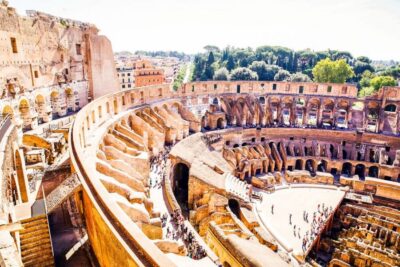
Colosseum: Underground and Ancient Rome Tour
Read our review →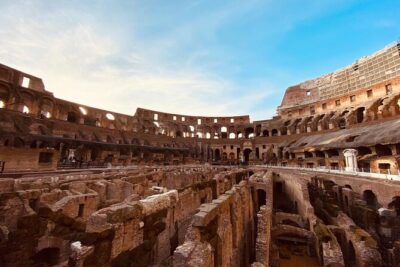
Rome: Colosseum with Arena, Roman Forum and Palatine Guided Tour
Read our review →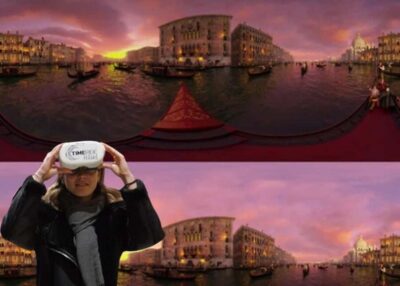
Venice: St. Mark’s Basilica Guided Tour & VR History Intro
Read our review →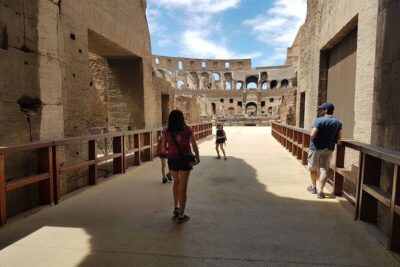
Colosseum & Ancient Rome with Arena Floor Option I Max 6 People
Read our review →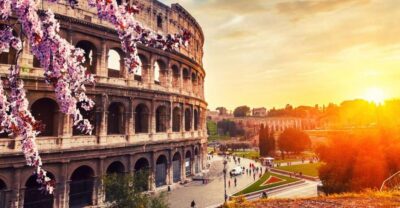
Rome: Colosseum, Ancient Rome Tour or AudioGuided Tour
Read our review →
Venice’s Best: Basilica, Doge’s Palace, Gondola & History Gallery
Read our review →
Taormina: Ancient Theater Skip-the-Line Ticket & Audio Guide
Read our review →
Discover the Ancient Ruins of Pompeii: Day Trip from Rome
Read our review →Browse the lists this tour appears in