
Review · FRANCE
Aix-en-Provence: Between History and City Charm
Aix-en-Provence reveals itself best on foot, one fountain, school, church, and shady square at a time. This 90-minute walk connects the city’s grand avenues with the smaller corners where its stories become more personal, from Paul Cézanne’s schooldays to the beloved King René and the jokes hidden in local architecture.
I like the human stories woven through the route, and I like that the guide uses images to show how Aix changed over time. Paula, in particular, brings warmth, humor, and flexibility to the walk, adapting her explanations to questions and children. The main drawback is the brisk schedule: with seven guided stops after the starting point, you will see the city’s highlights but will not enter any museums.
Key points at a glance
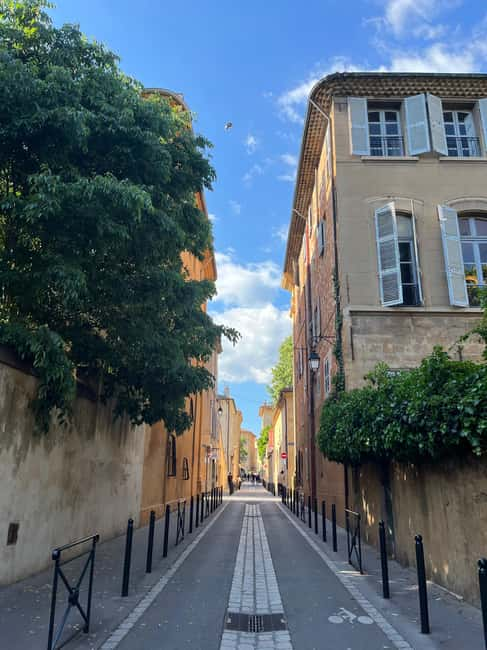
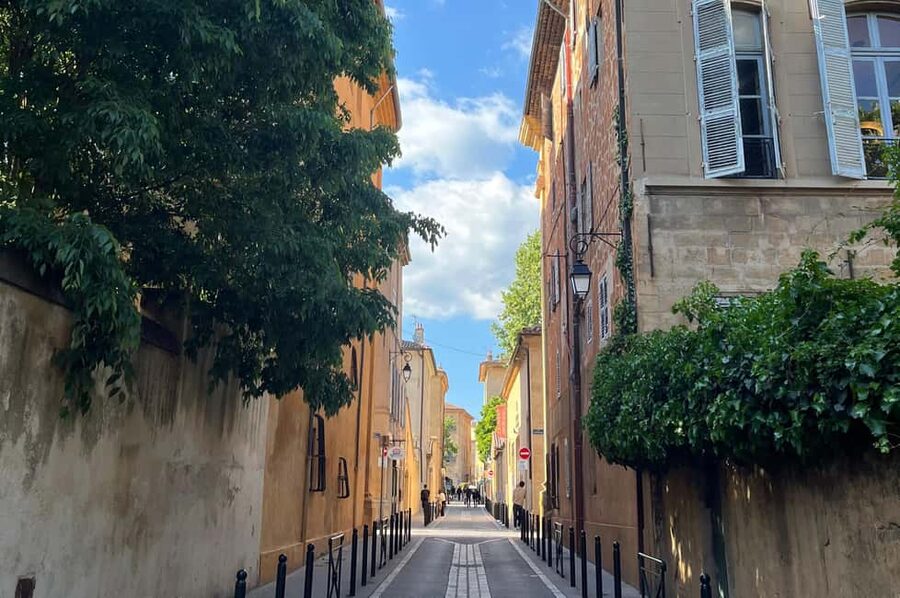
- A 90-minute route from La Rotonde to Saint Sauveur Cathedral: The walk crosses Aix’s best-known central streets and squares.
- Cézanne appears through local stories, not just name-dropping: You’ll hear about his time at Lycée Mignet and his connection to Provence.
- Paula’s adaptable guiding style: She can adjust the discussion to your questions and the interests of your family.
- No museum admissions are included: This is an outdoor city walk, with churches, streets, fountains, and architecture viewed from the route.
- Three languages are available: You can book the tour in English, Portuguese, or Spanish.
- Good value at $29: The price is reasonable for a live, city-center orientation, especially early in your stay.
Starting at La Rotonde, where Aix opens its story
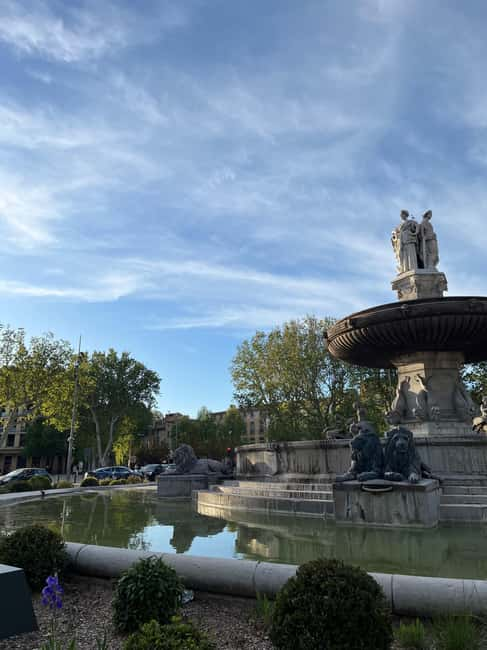
The meeting point is the fountain in the roundabout across from Five Guys Aix-en-Provence. Look for the guide holding a sign marked Happy Walking Tour. This is a practical starting place because La Rotonde is easy to find and gives you a clear sense of Aix as a city between old Provence and modern daily life.
The tour begins with a short account of Aix’s past before moving along the central streets. I like this approach. You get a basic timeline first, then each later stop adds a person, building, or local anecdote to that framework.
Do not expect a long lecture at the opening fountain. The point is to get oriented. You will soon leave the traffic circle for the more attractive pedestrian and shopping areas, where Aix feels much more intimate.
More History Tours in France:
- Paris: Louvre Museum Entry with History of Mona Lisa
★ 3.9 · 2,823 reviews - Paris: Dark History and Ghostly Guided Walking Tour
★ 4.7 · 1,000 reviews - Vieux Lyon Cultural & Historical Walking Guided Tour (English)
★ 5.0 · 942 reviews
Cours Mirabeau: the city’s grand front porch
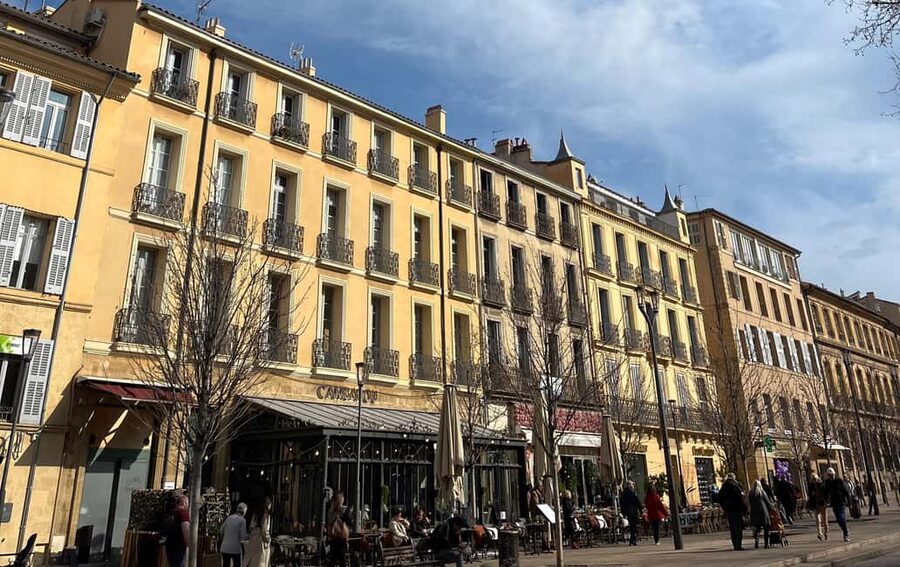
Cours Mirabeau receives about 25 minutes, the longest single stop on the route. This broad, tree-lined avenue is one of Aix’s defining spaces, lined with restaurants, boutiques, fountains, and grand façades.
A good guide can make this kind of street more than a pleasant place for photos. Here, you’ll learn how the avenue fits into Aix’s growth and civic life. The trees and cafés make it tempting to focus only on the scenery, but the guided explanation gives the street a sense of purpose.
This is also a useful place to ask questions. If you want restaurant ideas, help choosing a later walk, or suggestions for what to see after the tour, bring them up early. Paula has been especially helpful with practical recommendations for the rest of a stay in Aix.
The drawback is that Cours Mirabeau can feel more commercial than the old quarter. You will see shops and restaurants rather than a preserved medieval street at every turn. That contrast is part of modern Aix, but it may not be what you expect if you are seeking only old-world scenery.
Lycée Mignet and the early life of Paul Cézanne
One of the route’s brief photo stops focuses on Lycée Mignet and the artists associated with Provence. The school is tied to Paul Cézanne, and the stop gives the painter a local setting rather than treating him as a distant art-world figure.
This is one of the tour’s strongest ideas. Aix is often marketed through Cézanne, but a name on a sign tells you very little. A story about where he studied, how artists began their lives, and how the region shaped them gives you a more useful connection.
The stop is short, listed at about five minutes, so you should not expect a full art lecture. Instead, it works as a quick piece of context on the way to the larger historical stops. If Cézanne is your main reason for visiting Aix, you’ll want to add a museum or a separate Cézanne-focused activity later. Museum access is not part of this tour.
Saint Jean de Malte and Europe beyond Provence
The Saint Jean de Malte stop lasts about 20 minutes and includes time for photos and guided explanation. This church connects Aix to a wider European story, making it a useful counterpoint to the very local tales about schools, kings, and city architects.
The value here is the change of scale. You are not just hearing about one neighborhood or one famous resident. The church provides a doorway into the links between Aix and broader European events.
Look closely at the building details while the guide speaks. The route is designed for both explanation and viewing, and the provided images help show how the city and its buildings changed over time. You will get more from the stop if you listen for the details that connect the church to the people and institutions around it.
As with the other outdoor stops, the experience depends on the guide’s explanation. There is no museum-style interior visit included, so this is best for travelers who enjoy architecture and context rather than formal exhibitions.
Same old streets, another chapter:
- Bordeaux: Historic Center & Chartrons District Bike Tour
★ 4.8 · 709 reviews - Bordeaux: Top Landmarks & Historic Bike Tour
★ 4.9 · 346 reviews - Strasbourg: Guided Historical Neighborhoods Walking Tour
★ 4.9 · 275 reviews - Strasbourg on Foot: Historic Center and Petite France with a Local Guide
★ 4.7 · 223 reviews
Place des Prêcheurs and the story of King René
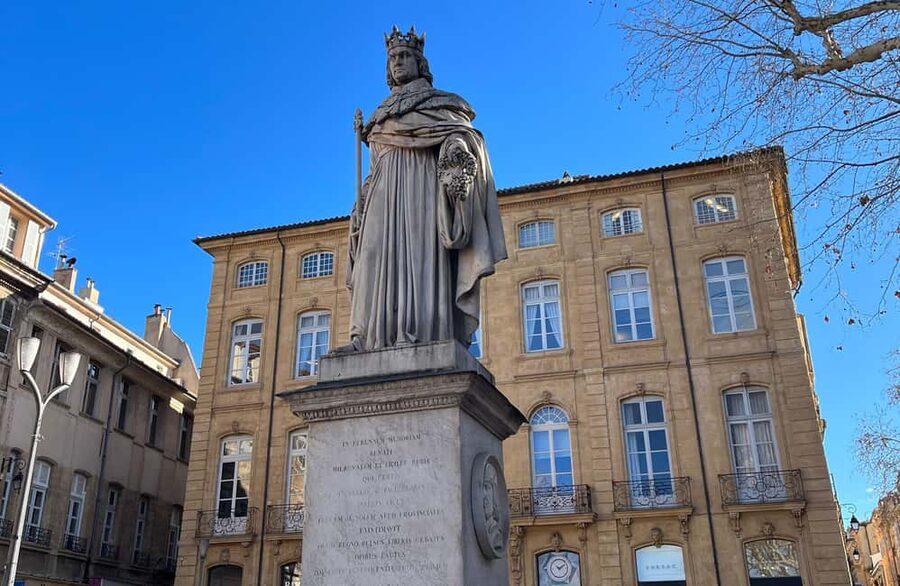
The stop at Place des Prêcheurs takes about 20 minutes and includes a photo break. Here, the focus turns to Fontaine du Roi René and the story of the king beloved by Aix.
Royal history can become a list of dates very quickly. The tour’s stated aim is more personal, using the memory of a popular ruler to show how Aix remembers its past. That human angle is one reason the walk has earned such a strong overall rating.
You may also hear local curiosities and jokes connected to the city’s architects. These details matter because they keep the walk from feeling like a succession of formal monuments. Aix is not presented as a silent museum. Its buildings have personalities, oddities, and traces of the people who designed or used them.
The square is a useful pause in the middle of the route. You can take photos, ask about the fountain, and let the guide fill in the setting without rushing immediately to the next street.
Place d’Albertas and Aix’s quieter elegance
Place d’Albertas receives about 10 minutes. Compared with Cours Mirabeau, this square feels more contained and restful, with elegant buildings gathered around a central fountain.
I like this kind of stop because it gives you a sense of Aix’s scale. The city has grand avenues, but it also has smaller spaces where the architecture does the talking. The square is a good place to notice façades, proportions, and the way a fountain anchors the space.
Ten minutes is enough for an introduction and photos, but not for a detailed architectural study. If you are especially interested in Aix’s buildings, take note of the square during the tour and return later at your own pace. The guide can point out what deserves a closer look, while you can decide which corners merit more time.
Passage Agard and the pleasure of getting slightly lost
Passage Agard is a pedestrian passage lined with shops and art galleries. It is not listed as a separate timed stop in the detailed sequence, but it forms part of the route’s promise to show you more than the major monuments.
Passages are often where a city becomes most enjoyable. You move from a broad avenue into a tighter, more local-feeling space, with small businesses and galleries giving the walk a change of rhythm.
This is also where the guide’s comments about architects’ curiosities and jokes can make the setting more memorable. Look up, look around corners, and do not focus only on the shop windows. Small urban details are easy to miss when you are walking alone.
Because the passage includes shops and galleries, the atmosphere can vary with the time of day. The tour does not promise time for browsing or shopping, so treat it as part of the guided route rather than a dedicated gallery visit.
Palais de Justice and the city’s public life
The Palais de Justice stop adds another layer to Aix: law, government, ruins, and the market square. The site’s story explains how a public place can carry several identities at once.
This is a valuable stop for understanding how Aix functions beyond its postcard views. The city’s past is not limited to kings and artists. Courts, markets, civic buildings, and ordinary public activity also shape its character.
Expect an explanation of the ruins and the square, plus time for a photo. The tour keeps moving, so you will not receive the kind of detailed archaeological treatment offered by a specialist site visit. Still, the stop helps connect the elegant center with the working city around it.
Hôtel de Ville and the approach to Saint Sauveur
The Hôtel de Ville stop lasts about 15 minutes. It gives you another look at civic Aix before the route finishes at Saint Sauveur Cathedral.
This part of the walk helps tie together the earlier themes. You have seen the city’s avenue, schools, churches, fountains, passages, and public squares. At the Hôtel de Ville, those separate pieces begin to feel like one central district rather than isolated sights.
You’ll want to keep an eye on the clock here. The tour is designed to end at the cathedral, and the final stop has its own explanation. If you need a long café break or shopping time, plan it after the tour rather than expecting the guide to pause for it.
Saint Sauveur Cathedral, a fitting final stop
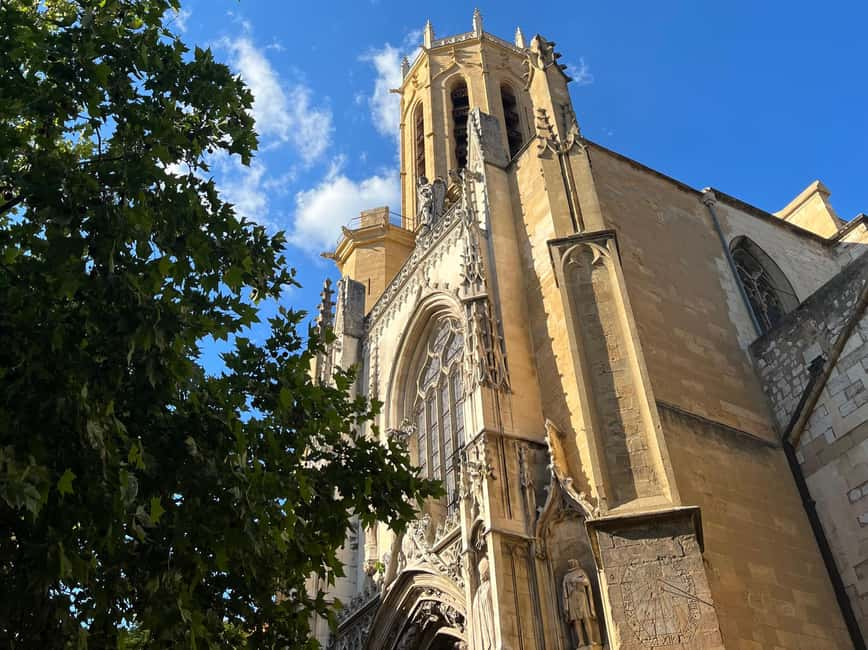
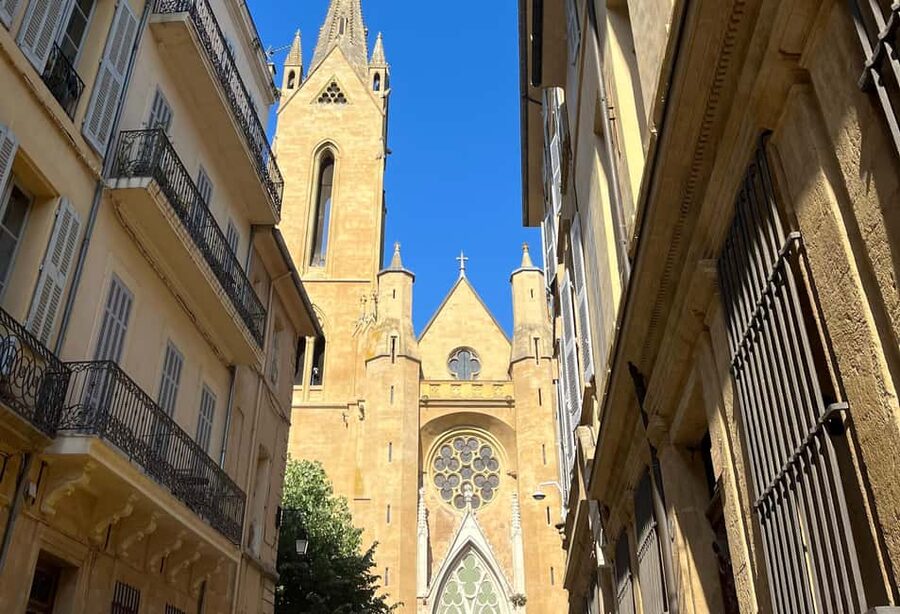
The tour ends at Saint Sauveur Cathedral, also called Paroisse Cathédrale Saint Sauveur. The cathedral is presented through its Gothic architecture, stained-glass windows, and detailed construction.
Ending here works well. After a route built around people and public spaces, you finish with one of Aix’s most imposing religious buildings. The cathedral gives the tour a strong visual finish and leaves you in a useful part of the old center for further exploring.
The stop is listed at about 15 minutes. That is enough to admire the main details and hear the guide’s account, but it is not a substitute for a slow, independent visit. If the cathedral is a priority for you, allow extra time afterward to look more carefully.
Since the tour ends here, you also finish with a good next step: stay nearby and continue on foot, or use the guide’s suggestions to plan the rest of your day. You are not returned to La Rotonde, so remember that when arranging a meeting, meal, or timed activity afterward.
What the guide adds to the experience
The guide is the heart of a walking tour, and Paula receives especially strong praise for her warmth, humor, curiosity, and care. She speaks English fluently and leads in Portuguese, English, or Spanish. Her approach is not limited to reciting facts. She uses human stories, answers questions, and adjusts the content to suit the people in front of her.
That flexibility can matter if you are traveling with children. Paula has adapted the discussion to keep younger family members interested, and she has allowed time for questions and photos. Another useful detail: when no other bookings were present, one person received what was effectively a private tour. You should not assume every departure will be private, but a small group can make the experience feel more personal.
Historical images are included to show changes over time. That is a smart feature, since Aix has layers that are not always obvious from the street. A before-and-after image can explain a building more clearly than a long description.
Is $29 a fair price for 90 minutes?
At $29 per person, this is a solid value if you want a guided orientation to central Aix. You are paying for a live guide, a carefully arranged route, language choice, historical images, and the chance to ask questions while you walk.
The value is strongest at the start of your stay. Take the tour early, then use the advice you receive to choose cafés, museums, churches, or other sights for the following days. The guide’s recommendations may save you time, especially if Aix is your first stop in Provence.
The price does not include museum entry, and the tour does not provide a long visit inside every church or landmark. If you prefer spending two hours in one cathedral or gallery, this is not the right format. If you want a clear introduction without committing to a half-day activity, the cost is sensible.
You should also account for the pace. The route covers several locations in 90 minutes, with guided periods of roughly 5 to 25 minutes. Wear comfortable shoes and be ready to walk, pause, listen, and move on.
Who will enjoy this Aix walking tour?
I would choose this tour for first-time visitors who want the city explained before exploring it alone. It suits couples, families, and anyone who prefers stories about real people to a long list of dates.
It is also a good match for visitors who speak English, Portuguese, or Spanish and want a live guide rather than an audio app. The route is wheelchair accessible, which makes it useful for many visitors, although the experience still involves moving between several central outdoor locations.
Art lovers will appreciate the Cézanne connection, but this is not a dedicated art tour. Architecture fans will like Place d’Albertas, Saint Jean de Malte, the passages, and Saint Sauveur Cathedral, but there is not enough time for a specialist-level study of every façade.
Families should benefit from the guide’s ability to adjust the tone and respond to questions. Independent explorers may prefer to use the tour as a quick introduction, then revisit the places that catch their attention.
Practical details before you book
The tour lasts 90 minutes and begins at the fountain in the La Rotonde roundabout, across from Five Guys Aix-en-Provence. Find the guide holding the Happy Walking Tour sign.
It ends at Saint Sauveur Cathedral, not back at the starting point. The activity is wheelchair accessible, and some content may be shown in its original language. You can cancel up to 24 hours ahead for a full refund, and reserve now while paying later, which helps if your schedule is still changing.
The tour is offered in Portuguese, English, and Spanish. Because the route is compact but active, give yourself a little time to locate the fountain before the start and avoid scheduling another fixed activity immediately afterward.
Should you book it?
Book this tour if you want a friendly, story-led introduction to Aix, especially near the beginning of your visit. The combination of Cours Mirabeau, Cézanne, Saint Jean de Malte, King René, Place d’Albertas, civic Aix, and Saint Sauveur gives you a useful map of the city in a short time.
Skip it if you want museum admission, a slow architectural seminar, or extensive free time at every stop. At $29, the tour works best as an orientation and story-filled walk, not as a complete sightseeing day. For most first-time visitors, that is exactly why it earns its place in an Aix itinerary.
FAQ
How long does the Aix-en-Provence walking tour last?
The tour lasts 90 minutes.
What languages are available?
You can take the tour in English, Portuguese, or Spanish.
Where does the tour begin?
It begins at the fountain in the La Rotonde roundabout, across from Five Guys Aix-en-Provence. The guide will hold a sign marked Happy Walking Tour.
Where does the tour finish?
The tour finishes at Saint Sauveur Cathedral, also called Paroisse Cathédrale Saint Sauveur.
Is the tour wheelchair accessible?
Yes, the activity is listed as wheelchair accessible.
Are museum tickets included?
No. Museum access is not included in the tour.
What does the tour cost?
The price is $29 per person.
Can I cancel for a full refund?
Yes. You can cancel up to 24 hours in advance for a full refund.
Latest history tours reviewed in France
- Explore the Marais: History, Art & Local Culture★ 4.6 · 105 reviews
- Discover Caen like never before: Guided tours between history & secrets!★ 4.9 · 67 reviews
- Culture History & Secrets: Lyon with a local artist -english★ 4.9 · 29 reviews
- Champagne Cellar Experience: Explore our historic cellars★ 4.7 · 46 reviews
- Bordeaux: Walking Tour of the City’s Best Bakeries★ 4.8 · 69 reviews
- Bordeaux: Top Landmarks & Historic Bike Tour★ 4.9 · 346 reviews
- A locals’s guide to Bordeaux’s historic market★ 4.8 · 23 reviews
- Avignon: Historic District Guided Food & Wine Walking Tour★ 4.8 · 84 reviews
France History Tours, compared.
Paris: Louvre Museum Entry with History of Mona Lisa
Read our review →
Paris: Dark History and Ghostly Guided Walking Tour
Read our review →
Vieux Lyon Cultural & Historical Walking Guided Tour (English)
Read our review →
Bordeaux: Historic Center & Chartrons District Bike Tour
Read our review →
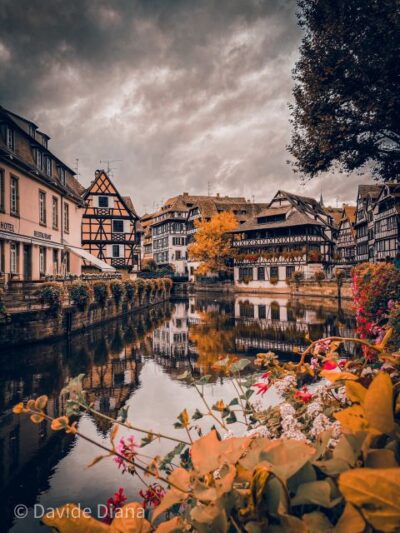
Strasbourg: Guided Historical Neighborhoods Walking Tour
Read our review →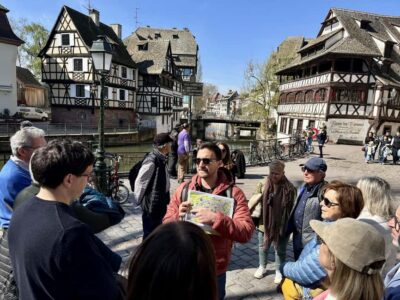
Strasbourg on Foot: Historic Center and Petite France with a Local Guide
Read our review →
Paris City of Fashion History Private Guided Walking Tour
Read our review →Browse the lists this tour appears in