
Review · FRANCE
Vieux Lyon Cultural & Historical Walking Guided Tour (English)
Lyon’s traboules, the covered passageways tucked behind ordinary doors, are the star of this walk. In two hours, you move from the medieval cathedral and silk trade to the Resistance, local food, grand civic buildings, and the reborn Hôtel Dieu. Guide Paul brings the route to life with clear stories, humor, and practical advice for the rest of your stay.
I like two things here: the tour gives you a fast, useful introduction to both old and modern Lyon, and it connects buildings to real city life, from silk workshops to bouchon restaurants and coffee spots. The $6.05 fee is excellent value, especially since the walk covers so much ground and includes access to the passageways.
The main caution is simple: this is a walking and listening tour, not a series of long indoor visits. The cathedral or museum access can change with opening hours, and a large group may make it hard to hear without audio equipment. Wear good shoes, stay close to the guide, and bring cash for a tip.
Key points to know before you go

- Secret traboules: You’ll enter several of Vieux Lyon’s covered passageways, including the route near the Tour Rose.
- Silk-making in context: The walk explains Lyon’s silk industry and may include live silkworms during the silk season.
- Paul’s local advice: Paul is often the guide, with useful suggestions for restaurants, coffee, museums, and further walks.
- A two-hour city primer: The route links medieval Lyon, the silk trade, World War II, modern shopping, and Hôtel Dieu.
- Very low listed price: The $6.05 charge covers fees, but the tour operates on the familiar free-tour model, so a cash tip is appropriate.
- Start and finish: Meet at 10:00 a.m. at Place Saint-Jean and finish at Place de l’Hôpital inside Hôtel Dieu.
Why Vieux Lyon is the right place to start

Place Saint-Jean puts you in the heart of Lyon’s oldest quarter. From here, you can see the cathedral, narrow streets, old façades, and the rise of Fourvière nearby. It is a good starting point because the tour can explain Lyon’s past without making you wait for a long transfer or taxi ride.
The route is not only about pretty stonework. Lyon grew as a trading city, then became a center of silk production, food, printing, banking, and political power. The best part of this walk is the way those subjects connect. A courtyard may point to silk workers, a passageway may recall wartime activity, and a restaurant recommendation may lead you toward the city’s famous food traditions.
You’ll meet at 10:00 a.m. at Place Saint-Jean, near the cathedral. The guide is not affiliated with a Viator sign, so look for the Free Tour Lyon sign rather than expecting a platform-branded marker. Paul is described as easy to spot because he is very tall, which helps in a busy square.
The tour has a stated maximum of 18 people. That is a workable size for city walking, though the guide may still be separated from the back of the group at crossings or inside courtyards. There are no audio devices, so stand near the front if hearing every word matters to you.
More History Walking Tours in France
- Paris: Dark History and Ghostly Guided Walking Tour
★ 4.7 · 1,000 reviews - Strasbourg: Guided Historical Neighborhoods Walking Tour
★ 4.9 · 275 reviews - Strasbourg on Foot: Historic Center and Petite France with a Local Guide
★ 4.7 · 223 reviews
Saint-Jean Cathedral and its astronomical clock
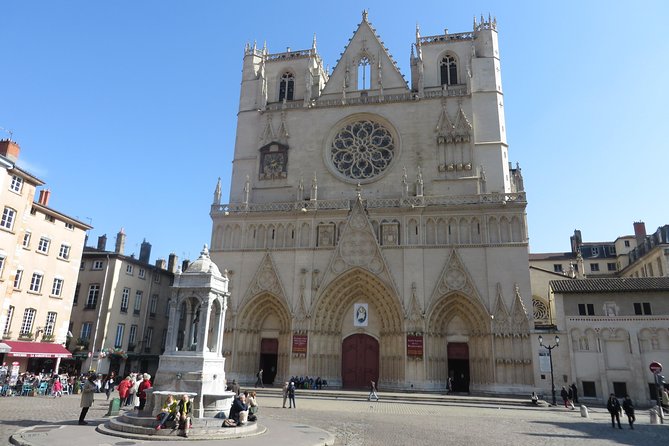
The first stop is Cathédrale Saint-Jean-Baptiste de Lyon, with about 15 minutes set aside for a quick look. The cathedral anchors the old quarter and gives the guide a natural place to explain Lyon’s religious and civic past.
The astronomical clock is the main detail to watch for. It is not just a clock on a wall. Its moving parts and displays reflect the technical skill and religious thinking of earlier centuries. You’ll get a short explanation rather than a long church tour, so this stop works best as an introduction to the area.
Check your expectations here. The route includes a visit to the cathedral, but opening hours can affect access. One scheduled walk took place on a Monday when the church was closed, so the group could not go inside. If the interior matters to you, treat this as a possible exterior and clock stop, then return on your own when the building is open.
The traboules, Lyon’s useful secret passages
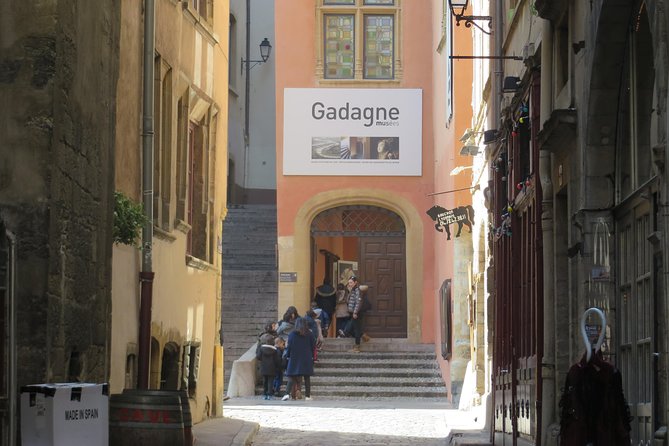
The walk then heads into several traboules du Vieux Lyon. These passageways run through buildings and courtyards, often linking one street to another. They were practical routes, not attractions designed for tourists, and that is what makes them so interesting.
The passageways helped people move through the steep old quarter while offering shelter from rain. They also connect to Lyon’s silk workers and, later, to Resistance activity during World War II. The guide uses these spaces to show how the same streets served ordinary work, wartime secrecy, and modern city life.
You’ll spend about 15 minutes visiting a few traboules, but the value comes from knowing what to look for. Pay attention to stairways, courtyards, covered galleries, and the way private apartment buildings open into public routes. Many entrances look like plain doors, so you would likely pass them without a guide.
The pace is relaxed rather than athletic. You do not need to cover a huge distance, but the route includes standing, walking on old paving, and moving through narrow spaces. Rain is manageable because the guide can pause under cover, but wet stones and slick passageways still call for sensible footwear.
Tour Rose and the old silk quarter
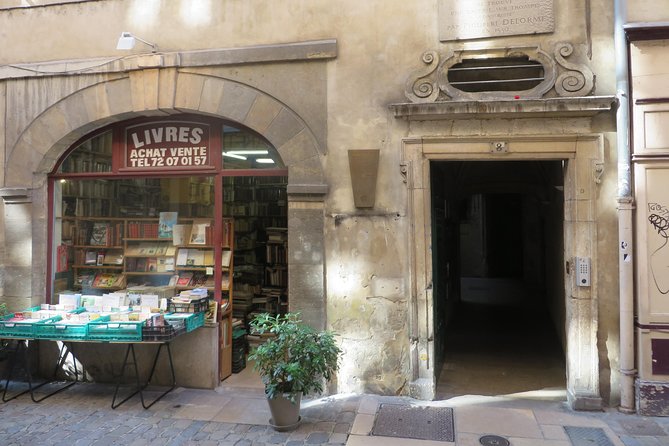
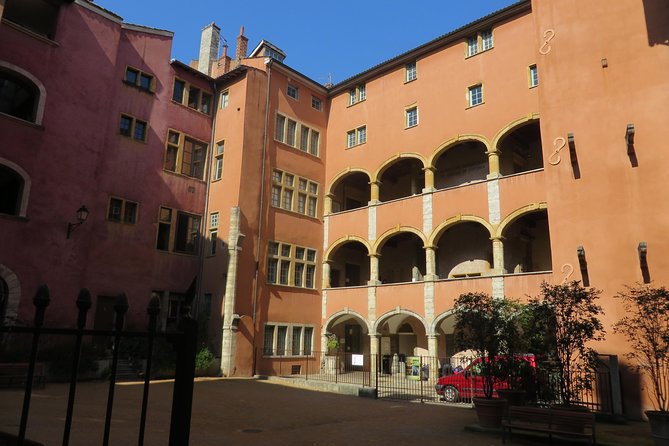
Maison du Crible, with its famous pink Tour Rose, is one of the most recognizable pieces of Vieux Lyon. The scheduled stop is brief, only around five minutes, but it gives you a strong visual marker for the quarter.
The tower is more than a photo stop. It helps explain the architecture of old Lyon, where tall buildings, internal courtyards, staircases, and passageways made it possible to fit homes and workshops into a tight urban area. You’ll hear the story while standing in the setting itself, which is more useful than seeing the tower on a postcard.
The silk story continues at Brochier Soieries Vieux Lyon. The shop may show live silkworms during the silk season, and you might see a model of a Jacquard loom. These details make the subject concrete. Instead of hearing only that Lyon was famous for silk, you get a sense of the insects, machinery, labor, and skill behind the trade.
This is another short stop, about five minutes. Do not expect a full workshop visit or extended shopping time. It is a compact introduction to a trade that shaped Lyon’s fortunes and helped form the old quarter you are walking through.
More Local Culture and Traditions Tours in France:
- Explore the Marais: History, Art & Local Culture
★ 4.6 · 105 reviews - Culture History & Secrets: Lyon with a local artist -english
★ 4.9 · 29 reviews - Arles: Private Guide Tour – Explore History & Culture
★ 4.3 · 22 reviews - Amsterdam Food and Cultural Tour with Tastings
★ 5.0 · 4,315 reviews
Courthouses, Klaus Barbie, and Lyon’s darker past
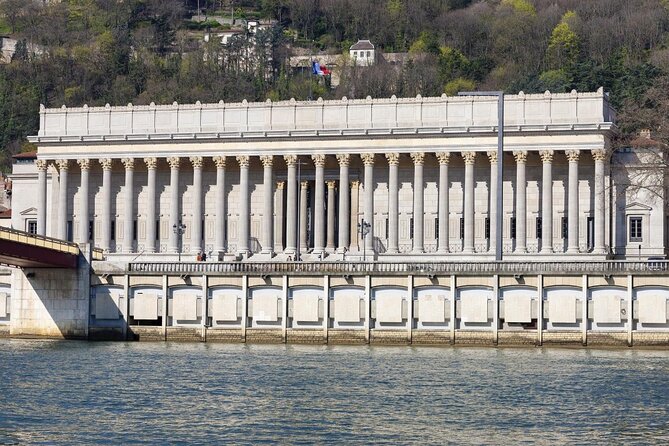
The route includes Lyon’s imposing courthouses, including the place connected with the trial of Klaus Barbie. This section shifts the tone from medieval streets and silk to the city’s role during World War II and the postwar pursuit of justice.
That change is useful. Lyon can seem like a city of elegant façades and fine food, but its 20th-century story is not decorative. The courthouse stop shows how Lyon’s public buildings carry difficult memories as well as civic ceremony.
The guide’s approach is important here. Paul is praised for explaining ancient and modern events in a way that stays accessible and often funny when the subject allows it, while giving serious events their due weight. You are not getting a courtroom tour, but you are getting a brief connection between the building, the trial, and Lyon’s wartime story.
Théâtre des Célestins and the city below street level
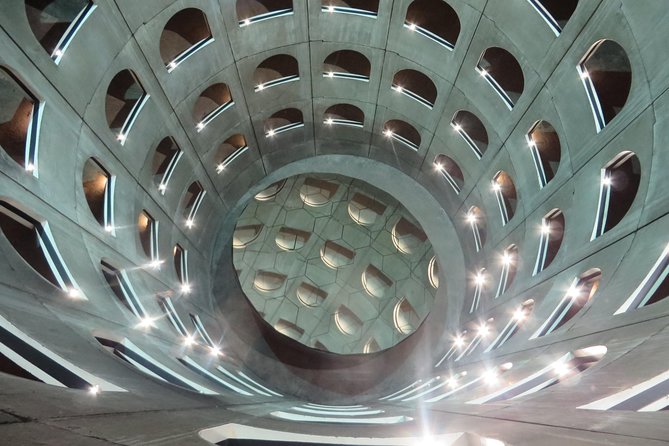
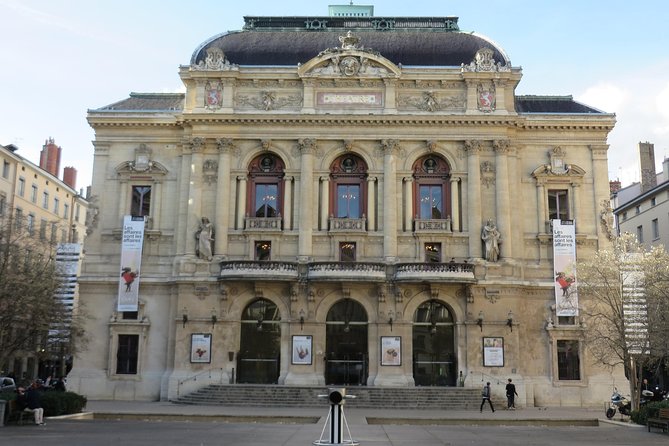
At Théâtre des Célestins, you’ll see the grand façade and may descend into the modern artwork beneath the square. The stop lasts around 10 minutes and adds a newer layer to the tour.
The theatre gives you a chance to look at Lyon as a living city rather than a preserved old town. Its setting links performance, public space, and contemporary design. If the underground artwork is accessible during your visit, it provides a striking contrast with the medieval streets earlier in the walk.
The wording here matters: you may descend into the artwork. That part is not guaranteed, so do not book the tour solely for an underground visit. The exterior and the explanation of the square remain part of the route.
After the theatre, the walk passes along Lyon’s main shopping street. This is a practical transition from historic Vieux Lyon toward the city center. You can see how the compact old quarter gives way to everyday shopping, cafés, and modern city traffic.
Hôtel Dieu, the grand finish
The tour ends at Grand Hôtel Dieu, now one of Lyon’s most appealing places to continue exploring. The old hospital has been transformed into a complex with shops, a luxury hotel, and a food court.
I like ending here because the building sums up the tour’s main idea: Lyon keeps old structures in use. Hôtel Dieu is not presented as a frozen monument. It is a major historic building adapted for eating, shopping, and staying in the city.
You’ll spend about 10 minutes here, with the tour ending inside the complex at Place de l’Hôpital. This is a useful finish for your day. You can stop for food, explore the building on your own, or continue toward other central sights without needing to retrace your steps to Saint-Jean.
The food court also fits the tour’s focus on Lyon’s gastronomy. You will not receive breakfast, a meal, or a formal tasting as part of the walk, but the guide’s restaurant and coffee suggestions can help you plan what comes next. Paul is especially praised for giving practical local tips, so keep your phone or a small notebook ready.
What the $6.05 price really means
At $6.05 per person, this is an unusually inexpensive way to get oriented. The charge includes fees and taxes, and the listed entry fees are included. In practice, though, this follows a free-tour model: some people may book directly through Free Tour Lyon without paying the platform’s nominal fee, and the guide’s income comes from tips.
That means you should carry cash and plan to tip if the walk serves you well. A low booking price does not mean the guide’s time has no value. The route, storytelling, and local advice are the product.
The value is strongest if you take the tour at the start of your Lyon visit. You can use the restaurant suggestions, museum ideas, coffee stops, and neighborhood advice during the rest of your stay. It also works well for a day trip from Geneva or another nearby city, since the walk gives you a clear plan for filling the hours afterward.
The tradeoff is that this is not a conventional paid tour with a fixed admission package and guaranteed indoor access at every stop. You are paying very little, but you need to accept changes caused by church schedules, group size, weather, and the guide’s ability to gather everyone in busy streets.
Who will enjoy this walk most
I would choose this tour if you want a broad first look at Lyon rather than a specialist visit focused on one museum or period. It suits first-time visitors, short-stay visitors, and anyone who wants help understanding why Vieux Lyon matters.
It is also a good fit if you enjoy stories about daily life. The walk covers silk, food, wartime history, architecture, shopping, and modern reuse of old buildings. That mix gives you a more rounded picture than a route devoted only to churches and façades.
Families and most active adults should manage the two-hour pace, since the walk is described as suitable for most people and service animals are allowed. Still, you should be comfortable standing and walking on older streets. Anyone with limited mobility should ask about the exact route before booking, since the supplied details do not describe step-free access through the traboules or the possible underground artwork.
You may want another option if you need guaranteed cathedral entry, a museum admission, or a quiet small-group setting with audio headsets. The museum stop is a look at the free courtyard of the Musée du Cinéma et de la Miniature, not a full museum visit. That distinction prevents disappointment.
Practical advice for a smoother morning
Meet a few minutes early at Place Saint-Jean and look for the Free Tour Lyon sign. Do not wait for a Viator-branded sign. If Paul is leading, his height should make him easier to locate.
Wear shoes with a firm sole. The route is not long, but old paving and passageways are part of the experience. Bring a light rain layer, since the walk continues in damp weather, although the guide can use sheltered spots for explanations.
Stand close enough to hear. Paul is often praised for speaking clearly and loudly, but a group can stretch out around corners and in narrow passages. There are no audio devices, so the front third of the group is the best place for detailed listening.
Keep cash for a tip and leave room in your schedule after the 12:00 p.m. finish. Hôtel Dieu is a good place for food and further exploration, and the guide’s suggestions are most useful when you have time to act on them.
Free cancellation is available up to 24 hours before the 10:00 a.m. start. A minimum group size applies, so if the tour does not run, you should be offered another date or experience, or a full refund.
Should you book the Vieux Lyon walk?
Yes, if you want an inexpensive and lively introduction to Lyon, especially at the start of your visit. The strongest reasons are the traboules, the silk connection, the mix of medieval and modern history, and Paul’s practical advice about food and further sightseeing.
Book with realistic expectations. This is a guided orientation, not a full museum tour. Cathedral access can depend on the day, the miniature museum stop is limited to its free courtyard, and a larger group may make hearing harder.
For $6.05, plus a sensible tip, the tour gives you a useful map of Lyon in both the literal and practical sense. I would book it for the stories and the route, then use the rest of the day to return to the places that catch your interest.
FAQ
Where does the tour start?
The tour starts at Place Saint-Jean, Pl. Saint-Jean, 69005 Lyon, France.
What time does the tour begin?
The start time is 10:00 a.m.
Where does the tour finish?
The tour finishes at Place de l’Hôpital, Pl. de l’Hôpital, 69002 Lyon, inside Hôtel Dieu.
How long is the walking tour?
The experience lasts approximately two hours.
Is the tour conducted in English?
Yes. The tour is offered in English.
Are admission fees included?
All fees and taxes are included, and the tour lists entry fees as included. The visit to the Musée du Cinéma et de la Miniature is limited to its free courtyard rather than the full museum.
Can I cancel for a full refund?
Yes. You can cancel at least 24 hours before the experience start time for a full refund. Cancellations or changes made less than 24 hours before the start are not accepted for a refund.
Latest history tours reviewed in France
- Explore the Marais: History, Art & Local Culture★ 4.6 · 105 reviews
- Discover Caen like never before: Guided tours between history & secrets!★ 4.9 · 67 reviews
- Culture History & Secrets: Lyon with a local artist -english★ 4.9 · 29 reviews
- Champagne Cellar Experience: Explore our historic cellars★ 4.7 · 46 reviews
- Bordeaux: Walking Tour of the City’s Best Bakeries★ 4.8 · 69 reviews
- Bordeaux: Top Landmarks & Historic Bike Tour★ 4.9 · 346 reviews
- A locals’s guide to Bordeaux’s historic market★ 4.8 · 23 reviews
- Avignon: Historic District Guided Food & Wine Walking Tour★ 4.8 · 84 reviews
France History Tours, compared.
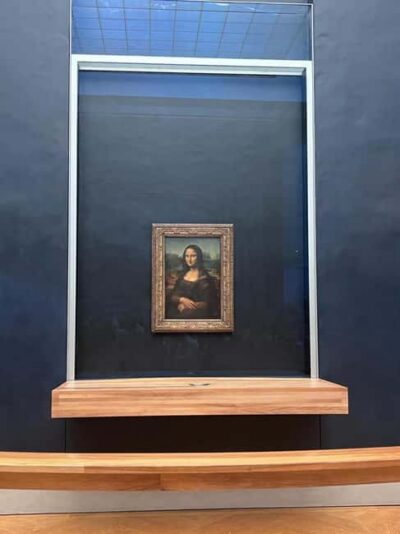
Paris: Louvre Museum Entry with History of Mona Lisa
Read our review →
Paris: Dark History and Ghostly Guided Walking Tour
Read our review →
Bordeaux: Historic Center & Chartrons District Bike Tour
Read our review →
Strasbourg: Guided Historical Neighborhoods Walking Tour
Read our review →
Strasbourg on Foot: Historic Center and Petite France with a Local Guide
Read our review →
Paris City of Fashion History Private Guided Walking Tour
Read our review →
History of Paris City Center w/ Notre Dame Semi-Private 12ppl Max
Read our review →Browse the lists this tour appears in