
Review · BUDAPEST
Budapest Grand Half-Day Jewish Heritage Tour
Budapest’s Jewish Quarter is far more than a cluster of handsome synagogues. It is a place of worship, loss, survival, food, family, and present-day community. This four-hour walk connects those pieces, beginning at Dohány Street Synagogue, the largest synagogue in Europe, and ending at the operating Orthodox synagogue on Kazinczy Street.
I like the way the tour pairs serious history with real streets and current Jewish life. I also like the guide-led access to the Jewish Museum, the memorial sites, and the synagogue interiors, especially when the guide is Benjamin, Petra, Orsi, or Borcsa. The main drawback is pace: four hours can feel short, and one past departure reportedly ended nearly an hour early, so confirm the full schedule on the day.
Key points at a glance
- Dohány Synagogue begins the story: See the grand sanctuary, Jewish Museum, Heroes’ Temple, Jewish Center, cemetery, and Tree of Life memorial.
- The former ghetto is still a living neighborhood: Walk past synagogues, kosher businesses, restaurants, monuments, Gozsdu Passage, and ordinary Budapest streets.
- Three major synagogues show different traditions: Dohány, Rumbach Street, and Kazinczy Street give you a useful view of Neolog, historic, and Orthodox Jewish life.
- The memorials are handled with care: Raoul Wallenberg Park, the Tree of Life, and the Carl Lutz Memorial connect Budapest’s wartime story to individual acts of rescue.
- The guides are the tour’s greatest strength: Benjamin receives especially strong praise for his humor, clarity, and open answers, while Petra, Orsi, Borcsa, and others bring personal energy to the walk.
- Plan for a walking tour, not a museum crawl: Wear comfortable shoes, bring identification, and leave large bags and luggage behind.
Why this tour gives Budapest’s Jewish Quarter useful context
A short visit to the Jewish Quarter can easily become a photo stop at Dohány Synagogue followed by a quick look at ruin bars. This tour asks you to slow down and connect the buildings with the people who used them, the community that was destroyed during the Holocaust, and the Jewish life that continues in Budapest today.
That wider view is the chief reason I find the tour worthwhile. You are not simply shown an impressive building. You hear how Jewish life developed in Budapest, how different congregations shaped the neighborhood, what happened during the ghetto period, and how memorials now mark both suffering and courage.
The English-speaking guide is central to the experience. Benjamin is named often for his clear delivery, humor, passion, and willingness to answer direct questions. Petra, Orsi, Borcsa, Abel, Barbara, Daniel, and Esther have also led this experience at different times. Guide assignments can change, but the strongest part of the tour is plainly the human explanation between the stops.
Expect a serious subject. The tone can also be warm and conversational, with room for questions about Jewish customs, Budapest, Hungary, and present-day community life. One useful feature is that the guide does not treat Jewish culture as something locked in the past.
More Jewish Heritage Tours in the world:
- Budapest Jewish Heritage Memorial Walking Tour & Synagogue Entry
★ 5.0 · 568 reviews - 3-Hour Porto Jewish Heritage Walking Tour with Local Guide
★ 4.5 · 396 reviews - Private Jewish Heritage Journey by Barcelona Dreaming
★ 4.8 · 383 reviews
Starting inside Dohány Street Synagogue
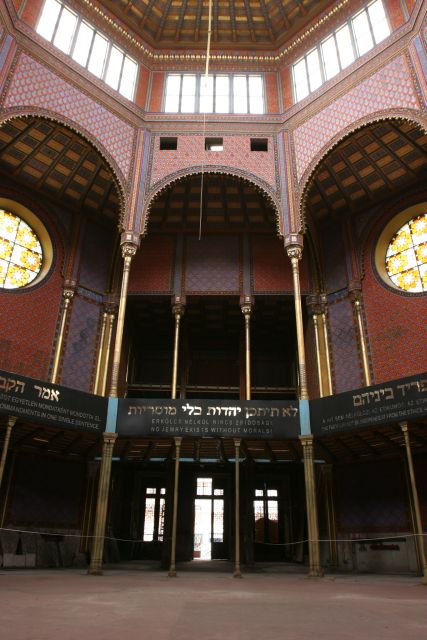
The tour meets at Dohány Street Synagogue, at Dohány u. 2, in central Budapest. This is the right starting point because the synagogue complex gives you several subjects in one place: worship, education, mourning, commemoration, and the history of Budapest’s Jewish community.
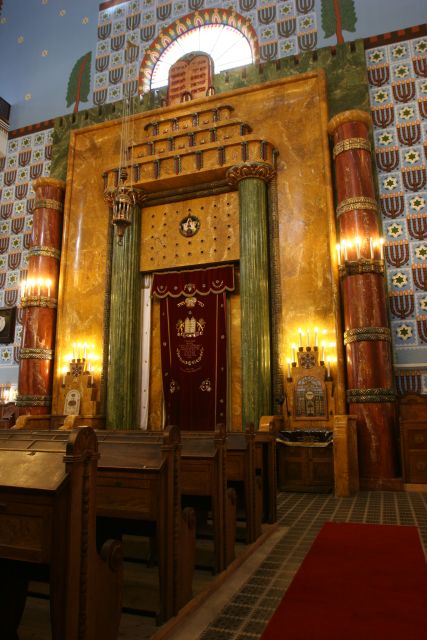
Inside the synagogue, your guide explains the building and its role before leading you through the adjacent Jewish Museum. You also see the Jewish Center, the Heroes’ Temple from the outside, and the cemetery area. The sanctuary is the visual centerpiece, but the smaller spaces and memorial areas help prevent the visit from becoming only an architectural tour.
The cemetery is especially important in understanding the wartime story. The site was once a garden, and it became a burial place during the Holocaust. That detail gives the setting a painful physical reality. You are looking at a place that records lives lost under extreme conditions, not simply a decorative corner beside a grand building.
Allow yourself time to listen here. One past schedule gave the opening explanation close to an hour, which some people found too long while others appreciated the detail. If you prefer a fast-moving tour, this first section may test your patience. If you want background before walking the neighborhood, it provides a strong foundation.
The Jewish Museum and the objects behind the story
The Jewish Museum adds artifacts and religious context to what you see in the synagogue. You get local guiding rather than simply walking through display rooms alone, so you can ask about Jewish practice, objects, festivals, and the community’s place in Hungarian life.
This is where the tour suits people who want more than Holocaust history. The visit also covers religion and everyday identity. You can ask questions about how Jewish traditions are observed and how the Budapest community has changed over time.
The amount of detail depends partly on the guide and the group’s questions. Several guides are praised for explaining clearly and responding patiently, while one past assessment found the delivery somewhat rigid. I would treat that as a reminder to ask questions if you want a more conversational visit.
Raoul Wallenberg Park and the Tree of Life
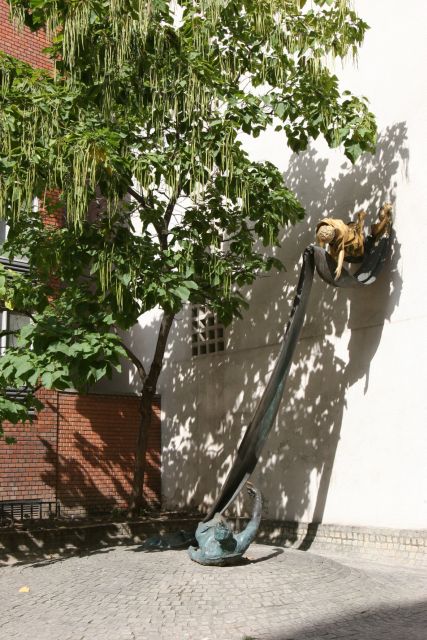
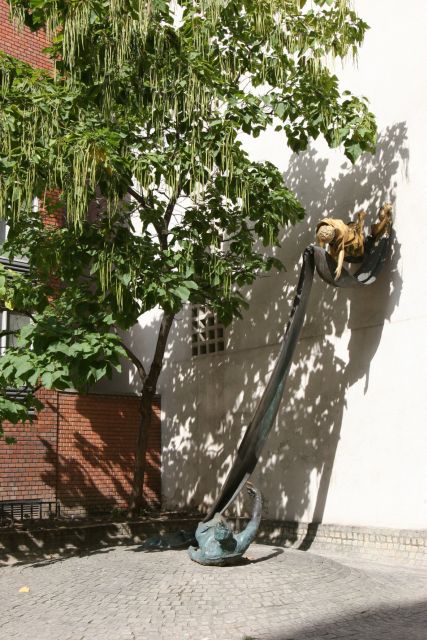
From the synagogue complex, the tour reaches Raoul Wallenberg Holocaust Memorial Park. Its Tree of Life is one of Budapest’s best-known Jewish memorials, with leaves representing victims of the Holocaust.
The setting gives your guide a chance to explain both mass persecution and individual rescue efforts. Raoul Wallenberg is part of that story, but he is not the only person remembered here. The tour later visits a memorial to Carl Lutz, the Swiss diplomat often called Hungary’s Schindler, who helped protect Jewish people during the war.
These memorials matter because they keep the history personal. The scale of the Holocaust can become hard to grasp when it is presented only through dates and numbers. A memorial tree, a cemetery, and the names of people who tried to help create a more direct connection.
This section is not light sightseeing. You should expect time for reflection, and you may find the guide’s tone more solemn here. That is appropriate, but it is worth knowing if you are planning a packed morning with children or if you prefer a tour focused mainly on architecture.
More Half-Day Tours in the world:
- Lima’s Vibrant Heritage: Exploring the City’s Landmarks Half-day
★ 4.5 · 581 reviews - From Ho Chi Minh: Cu Chi Tunnels Half-Day History Tour with Guide
★ 5.0 · 480 reviews - Naxos: Half-Day Guided History and Culture Sightseeing Tour
★ 4.7 · 435 reviews - Singapore: Historical Half-Day Bike Tour
★ 4.8 · 399 reviews
Rumbach Street and the Synagogue Triangle
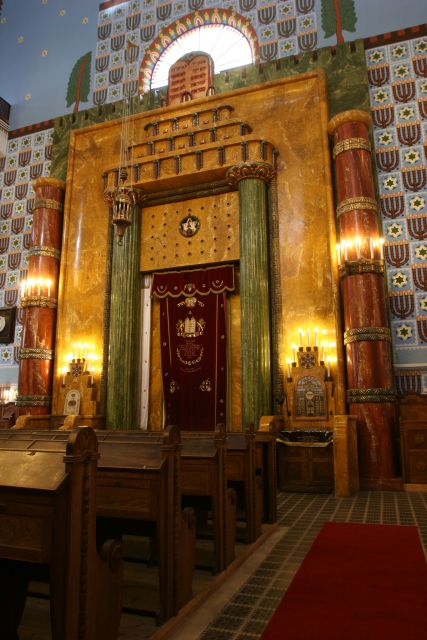
Rumbach Street Synagogue forms the second point in what the guide calls the Synagogue Triangle. The itinerary lists an outside visit, though access has occasionally been possible when circumstances allow. Do not book the tour expecting a guaranteed interior visit here.
Its place in the route helps you compare the three major synagogues in this part of Budapest. Dohány introduces the grand central complex, Rumbach adds another historic Jewish building, and Kazinczy provides the final interior visit.
The comparison is useful because Jewish Budapest was never one single religious or social group. Different congregations and traditions used different spaces. You do not need prior religious knowledge to follow the explanation, and the guide can place the buildings within the wider story of the city.
Walking through the former ghetto
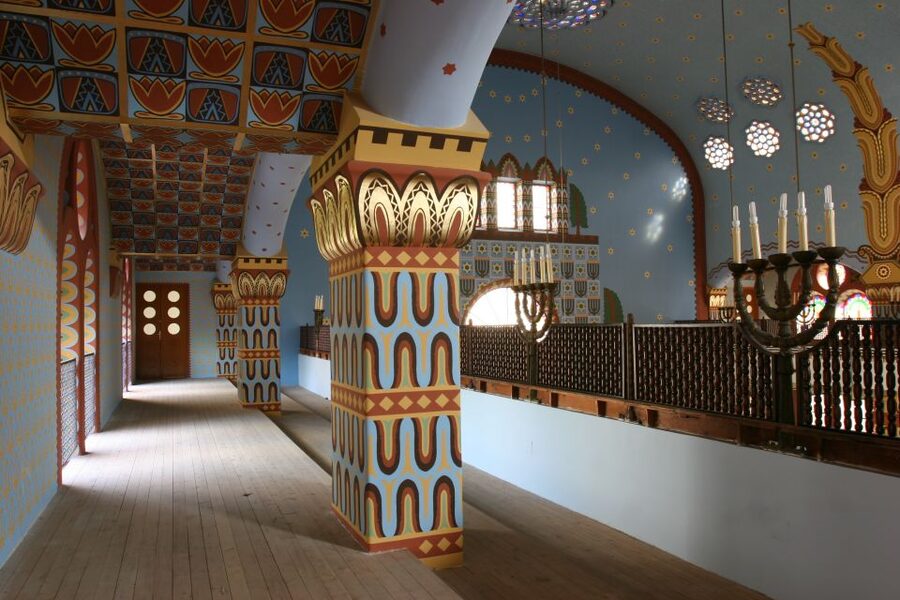
After the main synagogue complex, the route moves into the Jewish Quarter and along streets connected with the former ghetto. This is where the tour becomes less formal. You leave behind a single attraction and walk through an active part of Budapest.
Your guide points out synagogues, monuments, kosher restaurants, and kosher shops. You also pass the Carl Lutz Memorial and the Gozsdu Passage, a popular pedestrian area with shops, food, and nightlife. That contrast can feel abrupt, but it is part of the neighborhood’s character. A place marked by persecution is also an ordinary city district where people eat, work, shop, and meet friends.
The Gozsdu Passage is not the main reason to book the tour, but it helps you understand present-day Budapest. You get basic city information along the way, which is handy if this is your first morning in town. The route also gives you a better sense of where the Jewish Quarter sits within central Budapest.
The walking is not described as difficult, but the tour lasts four hours and includes several stops. Comfortable shoes are essential. The tour is not suitable for wheelchair users, and large bags or luggage are not allowed.
Kazinczy Street Synagogue and Orthodox Jewish life

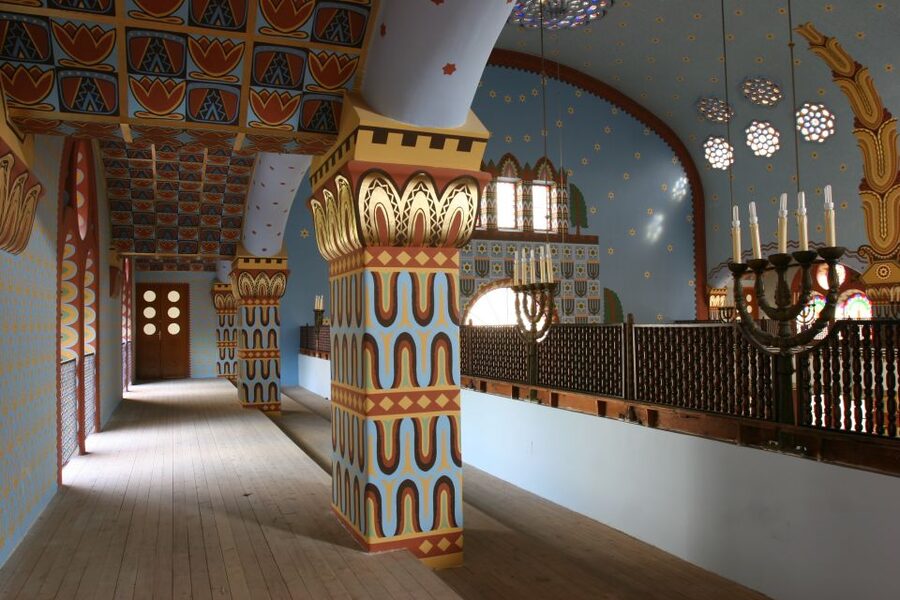
The final major stop is Kazinczy Street Synagogue, visited inside. It is one of the largest operating Orthodox synagogues in Europe and was built in the Art Nouveau style.
This is a strong finish because it shifts the focus from the past to an active religious community. You are not seeing only a preserved monument. You are seeing a synagogue that remains in use, and the guide can explain how Orthodox practice differs from the traditions represented elsewhere on the route.
The building’s Art Nouveau design also gives the tour an architectural change of mood. Dohány is grand and monumental, while Kazinczy offers a different atmosphere tied to Orthodox worship. Seeing both interiors makes the synagogue visits much more useful than seeing either one on its own.
The itinerary lists Kazinczy as an inside visit, but synagogue access can always depend on operating conditions, religious observance, and site rules. Dress and conduct should be respectful. Bring a passport or ID card, as identification is listed among the required items.
The coffee, cake, and lunch option
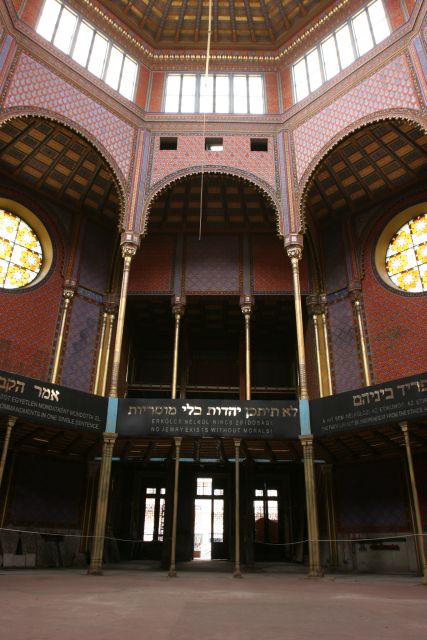
A cake and coffee stop at a kosher confectionery is included in the experience. This small pause is more valuable than it may sound. Four hours of concentrated history is a lot, and a seat, a drink, and something sweet give you time to process what you have heard.
The stop also keeps the tour connected to current Jewish life. You are not only viewing memorials and museum objects. You are visiting a place linked to the neighborhood’s food traditions and daily routines.
The activity also offers a 10 percent discount at Carmel Restaurant when you choose the lunch option. The information provided does not set out the lunch menu or say that a full meal is included, so treat the restaurant discount as an extra benefit rather than part of the $116 tour price.
One past visit included a complaint about unfriendly restaurant staff. That does not define the tour, but it is useful to keep expectations realistic: the guide controls the historical walk, while service at a separate restaurant may vary.
What $116 gets you

At $116 per person, this is not the cheapest way to spend four hours in Budapest. You are paying for a professional English-speaking guide, entrance fees to Dohány Street Synagogue, the Jewish Museum, Raoul Wallenberg Memorial Park, and Kazinczy Street Synagogue, plus the guided walk through the Jewish Quarter.
The value depends on how much explanation you want. If you are content to photograph the synagogues from outside and read a little on your own, the price may feel high. If you want the buildings, memorials, religious traditions, ghetto history, and present-day neighborhood connected by one guide, the cost is easier to justify.
I think the tour offers its best value early in your Budapest stay. It gives you practical orientation to the Jewish Quarter and nearby central streets, while also helping you understand what you are seeing later on your own. The walk is especially worthwhile for visitors with family connections to Hungarian or Jewish history, though you do not need Jewish ancestry or religious knowledge to benefit.
The four-hour length is also a mixed point. It is long enough to cover the main sites without using an entire day, but some people may want more time for questions. One past tour finished at 1:05 instead of the expected 2:00, so I would confirm the start and finish times when booking and speak up promptly if the route appears to be shortened.
Who will enjoy this most
I would recommend this tour to you if you want:
- A serious introduction to Jewish Budapest, including both history and current religious life
- Interior visits to Dohány and Kazinczy synagogues
- A guide who can explain religious customs and Hungarian history in English
- A walking route through the former ghetto rather than an isolated museum visit
- A structured first look at the Jewish Quarter
- Time for questions and personal discussion
It is also a good fit for families with older children and teenagers who can manage four hours of walking and a sober subject. One family with a teenager found the combination of history, culture, synagogue visits, and coffee enjoyable.
I would think twice if you have limited mobility, need a wheelchair-accessible route, dislike long explanations, or want a tour focused only on architecture. You should also avoid carrying suitcases or large bags to the meeting point.
Booking advice and final verdict
The tour has a 4.8 rating from 135 reviews, with especially strong praise for the guides’ clarity, warmth, humor, and command of Jewish and Budapest history. Benjamin receives the most repeated praise, but Petra, Orsi, Borcsa, Abel, Barbara, Daniel, and Esther are also named as strong guides. You cannot always choose who leads your group, so book for the route and subject, not only for one person.
Free cancellation is available up to 24 hours before the tour, and you can reserve now and pay later. Check the available starting time, arrive at Dohány Street Synagogue, and bring comfortable shoes and identification.
Book this tour if you want a thoughtful, guided introduction to Budapest’s Jewish community and are willing to give the subject four focused hours. Skip it if you want a quick photo stop or a casual neighborhood stroll. For most visitors interested in Budapest’s past and present, the combination of synagogue interiors, memorials, street life, and a strong English-speaking guide makes the price reasonable, provided the full four-hour program runs as scheduled.
FAQ
Where does the Budapest Jewish Heritage Tour begin?
The tour begins at Dohány Street Synagogue, Dohány u. 2, 1074 Budapest.
How long does the tour last?
The scheduled duration is four hours. Starting times vary, so you should check availability when booking.
What language is the tour conducted in?
The tour is conducted in English with a live guide.
Which synagogues can I visit inside?
The tour includes an interior visit to Dohány Street Synagogue and Kazinczy Street Synagogue. Rumbach Street Synagogue is listed as an outside visit.
Is the Jewish Museum included?
Yes. Entrance to the Jewish Museum and local guiding inside the museum are included.
Does the tour visit Holocaust memorials?
Yes. The route includes Raoul Wallenberg Holocaust Memorial Park, the Tree of Life, and the Carl Lutz Memorial.
Is food included?
Cake and coffee at a kosher confectionery are included. You can also receive a 10 percent discount at Carmel Restaurant when choosing the lunch option.
What should I bring?
Bring a passport or ID card and comfortable shoes. Pets, luggage, and large bags are not allowed.
Is the tour suitable for wheelchair users?
No. The tour is listed as unsuitable for wheelchair users.
Latest history tours reviewed in the world
- From Athens: Ancient Olympia Full-Day Private Tour★ 4.8 · 22 reviews
- From Athens: Explore Ancient Corinth & Charming Nafplion★ 4.6 · 102 reviews
- From Athens: Explore Ancient Greece 4-Day Tour★ 4.7 · 73 reviews
- From Albufeira: Wine Tasting & Historic Silves Tour★ 4.9 · 421 reviews
- From Albufeira: Historical Algarve Region Tour★ 4.7 · 585 reviews
- From Alexandria: Full-Day Guided Tour of Historical Sights★ 4.5 · 54 reviews
- Franklin: Ghost Tour in Historic Franklin★ 4.8 · 65 reviews
- Freiburg: Exciting City Tour with sightseeing and history★ 4.3 · 103 reviews
Budapest History Tours, compared.

Buda Castle District Dark History, Legends and Vampire Night Tour
Read our review →
BloodThirsty Hungary: Walking tour & Dark Historical Stories
Read our review →
Budapest Jewish Heritage Memorial Walking Tour & Synagogue Entry
Read our review →
Budapest Paddle Steamer Danube Cruise with Tokaj & Audio Guide
Read our review →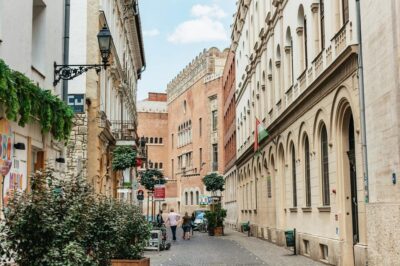
Budapest: Jewish History Guided Walking Tour with Historian
Read our review →
Budapest: Communist History Tour with House of Terror Option
Read our review →Browse the lists this tour appears in