
Review · KATHMANDU
Private Kathmandu Sightseeing Tour | UNESCO World Heritage sites
Kathmandu’s best-known temples and stupas are scattered across the valley, and this private tour links them by car instead of leaving you to sort out taxis, traffic, and entrance gates. You can choose a short visit to two sites, a fuller four-site day, or an ambitious seven-site run.
I like the private format, which lets you ask questions, slow down at a courtyard, or adjust the schedule. I also like the guides’ personal approach. Dipesh, Bidhya, Shankar, Prasant, Mukesh, and others are praised for explaining Hindu and Buddhist customs in clear, useful terms.
The main drawback is time on the road. Kathmandu traffic can be fierce, and the seven-site option is a long day with limited time at some places. Admission fees are also extra, so check the total cost before you book.
Key Points At A Glance
- Three sightseeing choices: Pick two, four, or seven UNESCO sites according to your available time and energy.
- Private hotel transfers: Pickup and drop-off in central Kathmandu save you the hassle of finding a meeting point.
- Strong cultural explanation: Guides cover Nepalese history, Hindu rituals, Buddhism, local life, and the meaning of what you are seeing.
- A flexible daily pace: You can request time to wander, take a lunch break, shop, or adjust the schedule.
- Air-conditioned transport: A private vehicle gives you a welcome break from Kathmandu’s traffic, dust, and crowded streets.
- Extra fees matter: Monument admission, food, drinks, and gratuities are not included in the $17 starting price.
Why This Tour Works For A First Day In Kathmandu
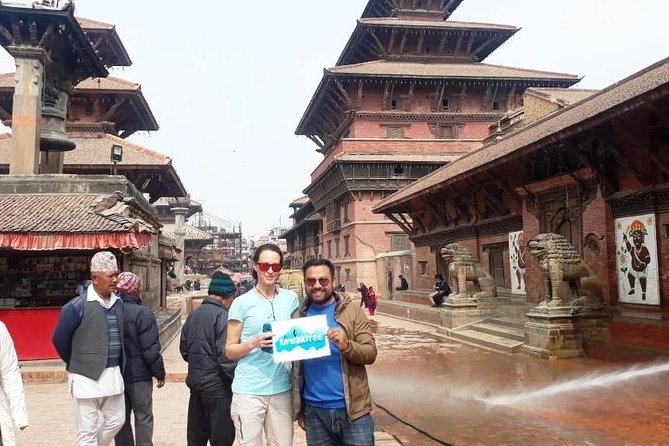
Kathmandu can feel confusing at first. The valley is a broad urban area, the monuments are spread between several old cities, and street traffic can turn a short drive into a slow one. This tour gives you a useful first look without making you arrange every transfer yourself.
You are collected from your hotel in central Kathmandu and travel in a private air-conditioned vehicle with an English-speaking guide. That matters here. The sites are not just pretty buildings. They are active Hindu and Buddhist places of worship, and a good explanation helps you understand the bells, prayer wheels, shrines, cremation rituals, courtyards, and offerings around you.
The private setup is especially useful for solo visitors, couples, families, and small groups with different interests. You can ask why a ritual is taking place, request more time at a museum, or move along when a site no longer holds your attention. Guides have also adjusted start times, shortened the day when requested, and added interests such as a monastery visit or shopping when time allowed.
Do not expect a quiet, perfectly timed circuit. Kathmandu traffic is part of the experience, and one four-site outing can involve a fair amount of driving. The tour works best when you see it as a guided introduction to the valley rather than a race to collect entrance stamps.
More UNESCO World Heritage Tours in the world:
- World Heritage Shirakawa-go and Experience Tours from Kanazawa
★ 5.0 · 4,049 reviews - From Tirana: Berat UNESCO Heritage & Belshi Lake Tour
★ 4.9 · 3,863 reviews - Bali: Tanah Lot UNESCO World Heritage Sites Full-Day Tour
★ 4.7 · 1,947 reviews
Choosing Two, Four, Or Seven UNESCO Sites
The two-site option is the sensible choice if you have only a few hours, are recovering from a flight, or prefer to look carefully rather than hurry. It also keeps admission costs lower. You still get a guide, private transport, and hotel transfers.
The four-site option is the most balanced choice for many people. It gives you a broad look at Kathmandu without making the entire day a checklist. One visitor found the pace comfortable and felt that the seven-site option would have been too much. I agree that four sites usually leave more room for questions, photographs, and time alone in the courtyards.
The seven-site option is for people with one full day and a strong appetite for monuments. It can bring together Swayambhunath, Boudhanath, Pashupatinath, Patan, Bhaktapur, Changu Narayan, and Kathmandu Durbar Square, depending on the selected arrangement. Because the published stop list contains repeated entries and several possible combinations, confirm the exact sites included before paying.
The seven-site day can be rewarding. One guide, Deepak, was praised for covering all seven sites while explaining Hinduism, Buddhism, and local customs. Still, expect a long day, plenty of road time, and shorter visits at some locations. If your priority is understanding each place rather than seeing as many as possible, choose four.
Swayambhunath, The Hilltop Monkey Temple
Swayambhunath is often called the Monkey Temple, and it gives you an early look at Kathmandu’s Buddhist character. The stupa sits close to the city and is reached by a setting known for monkeys, religious monuments, and broad views over Kathmandu.
The listed visit can be as short as 30 minutes, though some schedules allow about an hour. That difference matters. A quick stop lets you see the central stupa and take photographs. More time gives your guide room to explain the symbols, prayer practices, and relationship between Buddhism and the city.
The attraction is not only the view. Swayambhunath is a working religious site, so watch how people move around the stupa and prayer wheels. Your guide can help you understand what is happening rather than treating the place as a photo stop.
Boudhanath Stupa And Its Rooftop Views
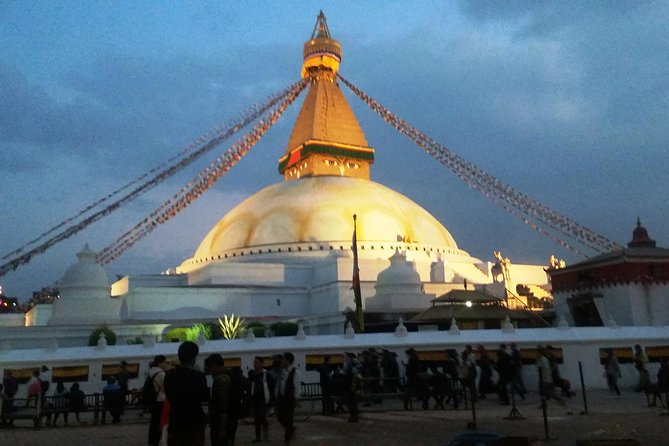
Boudhanath is one of the tour’s most memorable stops. Its large white dome and watchful Buddha eyes rise above a broad circular area lined with monasteries, shops, and cafes. The scale is striking, but the slow ritual movement around the stupa is what gives the place its power.
Plan on about an hour here. Walk around the stupa in the customary direction, then take time to look at the details. Your guide can explain the Buddhist symbols and the role of the site in Kathmandu’s religious life.
A practical bonus is the chance to pause for lunch. One successful arrangement ended at a rooftop cafe overlooking Boudhanath. Lunch is not included, but you can ask your guide for restaurant suggestions and use the break to rest before the next set of monuments.
Boudhanath is also a good place to return in the evening if your schedule allows. One visitor particularly liked the stupa at that time of day. The tour schedule may not guarantee an evening visit, so ask about the order of stops if this matters to you.
More Private History Tours in the world:
- Private Historical Walking Tour of York
★ 5.0 · 1,324 reviews - Private Guided Historic Electric Cart Tour of St. Augustine
★ 5.0 · 1,194 reviews - Istanbul: Acemoglu Historical Turkish Bath w/Private Options
★ 4.6 · 1,190 reviews - From Cairo: Private Full-Day Tour of Historical Alexandria
★ 4.1 · 1,155 reviews
Pashupatinath And The Limits Of Temple Access
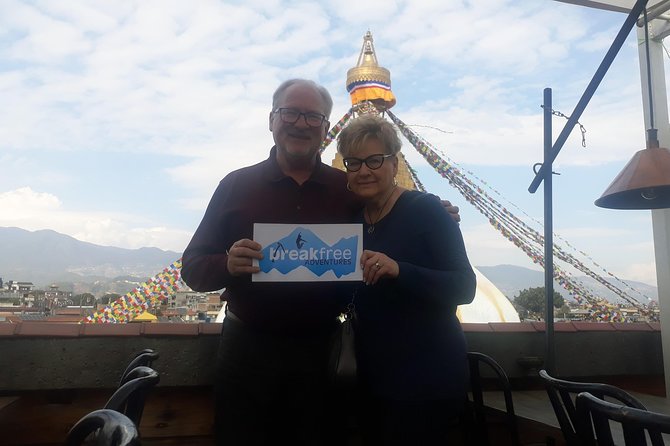
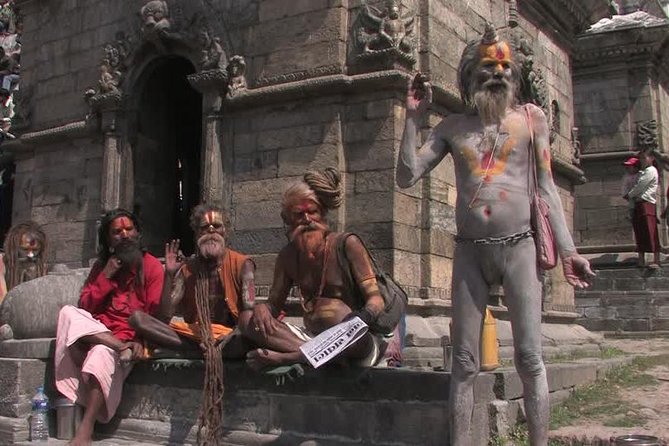
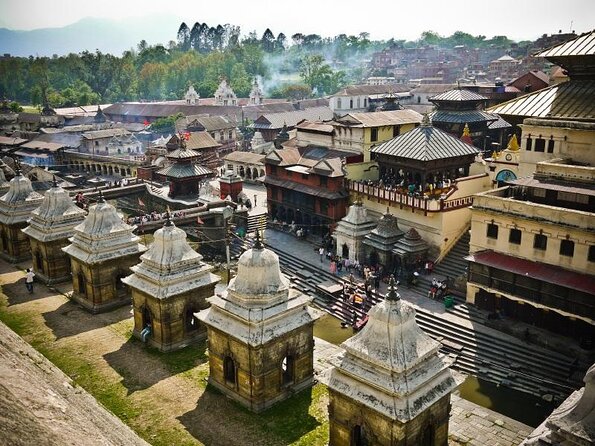
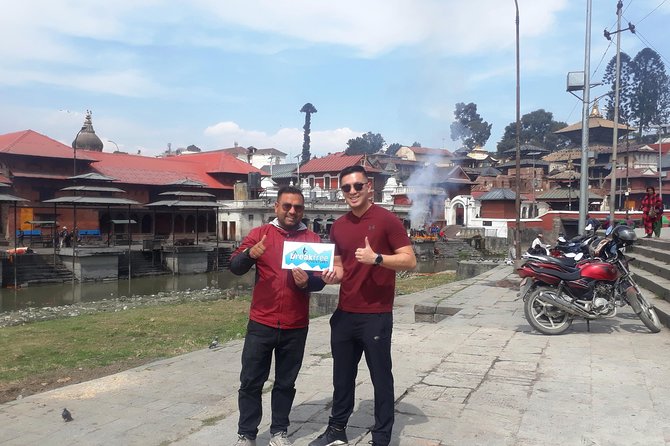
Pashupatinath is Nepal’s major Hindu temple complex and one of the most important religious places in the valley. The Bagmati River, shrines, temple buildings, and cremation areas make this a serious and sometimes emotionally difficult stop. Your guide can explain the rituals and customs with context, which is far more useful than simply walking around with a camera.
The visit is generally listed at about an hour, though the schedule includes Pashupatinath more than once. That suggests the final route may vary by package or may allow separate areas of the complex. Ask your operator to clarify how much time is planned here.
There is an important access rule. Only Nepali and Indian nationals of the Hindu faith may enter the inner premises of the main Hindu temples during the tour. Other visitors can still see parts of the complex and learn about the ceremonies, but you should not expect full interior access.
Respect matters here. Cremation ceremonies may be visible from public areas, and one visitor appreciated having time to observe one with guidance from the tour leader. This is not a staged show. Keep your distance, follow instructions, and let your guide explain what is appropriate.
Patan Durbar Square And The Patan Museum
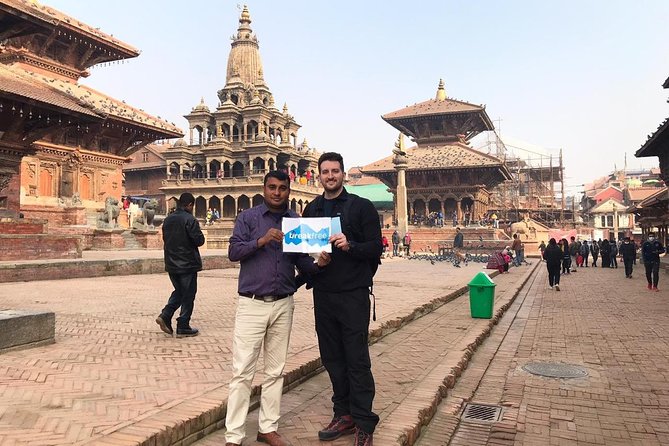
Patan, also known as Lalitpur, brings you into an old royal city filled with courtyards, temples, carved brickwork, and metal and wood details. Patan Durbar Square is allotted about an hour, enough for an introduction but not enough to inspect every corner.
I like Patan because it rewards slow looking. A guide can point out differences between Buddhist and Hindu imagery, explain the old palace spaces, and show how the square functions as more than a collection of monuments. The Patan Gate marks the entrance to the old city, adding a sense of how the historic center was organized.
The Patan Museum is listed for about 30 minutes. It occupies old palace courtyards and includes Sundari Chowk, a particularly attractive section of the complex. If you enjoy design, religious art, architecture, or museum displays, you may want more time here than the standard schedule provides.
This is one place where the private format helps. You can ask to spend longer in the museum instead of moving on immediately. The tradeoff is that extra time must come from another stop, especially on a seven-site schedule.
Bhaktapur Durbar Square And Changu Narayan
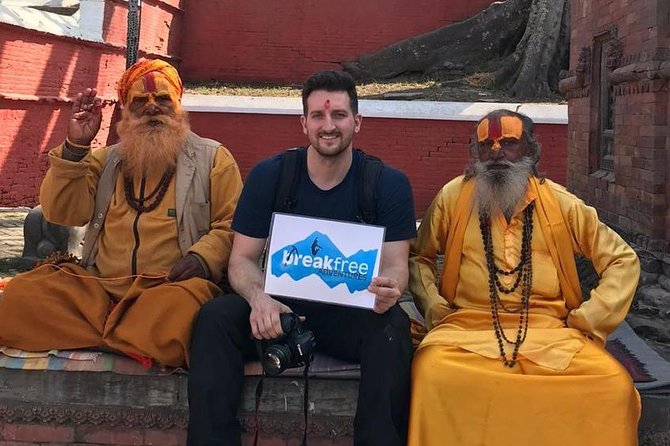
Bhaktapur is another old city in the Kathmandu Valley, and its Durbar Square is given about two hours. That longer allocation makes sense. There is more to wander through here, including courtyards, temples, lanes, and traditional urban spaces.
Bhaktapur is a strong choice if you want time away from the tightest city traffic and enjoy walking among old buildings. Your guide can give you the setting before you explore, then allow you to look around at your own pace. Be prepared for uneven walking and a busy sightseeing day, though the supplied information does not specify the exact walking conditions or accessibility arrangements.
Changu Narayan is listed for about 30 minutes. This UNESCO site adds a temple setting to the itinerary and helps show that the valley’s heritage is not limited to the central squares. The shorter stop means you will likely receive a focused introduction rather than a long independent visit.
The combination of Bhaktapur and Changu Narayan can take substantial time once driving is included. If you choose the seven-site option, these stops help explain why the day can feel full by late afternoon.
Kathmandu Durbar Square And The Central City
Kathmandu Durbar Square is the capital’s central historic square and another key stop on the route. The schedule lists about 30 minutes, which is enough for an overview but modest for a site with several temples, courtyards, and palace buildings.
This stop is useful near the beginning of your visit because it helps orient you to Kathmandu’s old center. The guide can explain the royal setting and point out the connections between Nepal’s political, religious, and artistic traditions.
The area also shows the tension between living city and historic monument. You are not visiting an isolated museum. Kathmandu continues around the square, with daily activity close at hand. That makes the stop feel more immediate, though it can also mean noise, crowds, and a less relaxed pace.
What The Guides Add To The Day
The guide is the main reason to choose this tour instead of arranging taxis and visiting the sites alone. Strong guides explain what you are looking at before you walk around, then give you enough space to explore.
Several guides are specifically praised for different strengths. Dipesh is described as friendly, adaptable, and clear when discussing history, Buddhism, and Hindu customs. Bidhya is noted for adjusting the route to personal interests. Shankar Bhattarai has answered questions about religion, Nepal’s flag, local society, and history while keeping a solo visitor comfortable.
Prasant helped one visitor understand the city layout and the sites before a rooftop lunch at Boudhanath. Mukesh is praised for explaining the history and culture of the monuments. Kabin is described as warm and thoughtful, with an ability to add philosophical context. You may not receive one of these exact guides, but these examples show the type of contribution to expect from the better-guided version of the tour.
The driver matters too. Kathmandu’s traffic can be difficult, and several guides and drivers have been praised for safe, calm transport in a clean vehicle. The car is not simply a way to get between monuments. It is your quiet space between stops.
Price, Entrance Fees, And Overall Value
The advertised price begins at $17 per person, which is attractive for a private vehicle, hotel transfers, a guide, taxes, and air conditioning. But that is not the full cost of a sightseeing day.
Monument fees are extra. The supplied figures list NPR 1,400 for two UNESCO sites, NPR 2,600 for four, and either NPR 5,800 or NPR 6,000 for seven, depending on the package information. Confirm the current amount at booking. SAARC nationalities may receive lower entrance fees, and payment is made in Nepali rupees at the sites.
You also pay separately for lunch, drinks, personal purchases, and tips. Guides who spend the day answering questions and adapting the schedule deserve a gratuity if their service is good.
Even after adding admission fees, this can be good value if you want a private ride and cultural explanation. It is less compelling if you enjoy arranging local transport, already understand the major sites, or want to spend a full day at only one or two monuments.
Who Should Book This Kathmandu Tour?
I would choose the four-site option for a first full day in Kathmandu, especially after a long flight. It gives you a useful overview without forcing you to sprint through every square.
The two-site option suits a short stay, a half-day schedule, or anyone who wants a gentler introduction. The seven-site option suits determined sightseers who want maximum coverage and accept that some stops will be brief.
This tour is also a good fit for solo visitors. You get a private setting, hotel pickup, and someone to help with local customs and directions. Families and small groups may appreciate the ability to set a pace that works for everyone.
I would be cautious if you dislike driving, have little tolerance for traffic, or want long, unhurried visits. In that case, select fewer sites and tell the guide what matters most before the vehicle leaves.
Practical Details Before You Book
Pickup and drop-off are complimentary for hotels in central Kathmandu. An extra charge may apply outside the city-center area, so provide your hotel details in advance.
Confirmation is issued when you book, and free cancellation is available up to 24 hours before the start time. Changes or cancellations inside that period are not accepted for a refund.
The tour is private, so only your own group participates. Most people can take part, but the supplied details do not promise full accessibility at every historic site. Ask directly if stairs, uneven ground, or walking distance are concerns.
English guiding is included. Guides speaking other languages may be available for an additional fee. Meals and drinks are not included, but you can request a lunch break and ask for restaurant suggestions.
Should You Book It?
Book this tour if you want to understand Kathmandu’s major Hindu and Buddhist sites without arranging the valley’s transport yourself. The best value comes from the four-site option, a private guide, and a willingness to let the day breathe.
Choose two sites if you want comfort and focus. Choose seven only if you genuinely want a full monument marathon. Before booking, confirm the exact sites, the current admission total, pickup area, and how much time you will have at each stop. Do that, and this is a practical first look at Kathmandu, with enough personal attention to make the old stones and rituals easier to understand.
FAQ
Is hotel pickup included?
Yes. Pickup and drop-off are included for hotels in central Kathmandu. Additional charges may apply for locations outside the city-center area.
How long does the tour last?
The experience lasts approximately four to ten hours, depending on the option you choose and the number of UNESCO sites included.
Can I choose how many sites to visit?
Yes. The tour offers choices covering two, four, or seven UNESCO sites. Confirm the exact site list for your selected option before booking.
Are entrance fees included?
No. Monument admission is extra. The listed figures are NPR 1,400 for two sites, NPR 2,600 for four, and approximately NPR 5,800 to NPR 6,000 for seven, with lower fees possible for SAARC nationalities.
Is lunch included?
No. Meals and drinks are not included. You can request a lunch break and ask your guide for restaurant recommendations.
Can every visitor enter the Hindu temple interiors?
No. Only Nepali and Indian nationals of the Hindu faith are permitted to enter the inner premises of Hindu temples during the tour. Other visitors can see permitted parts of the sites and receive explanations from the guide.
Latest history tours reviewed in the world
- From Athens: Ancient Olympia Full-Day Private Tour★ 4.8 · 22 reviews
- From Athens: Explore Ancient Corinth & Charming Nafplion★ 4.6 · 102 reviews
- From Athens: Explore Ancient Greece 4-Day Tour★ 4.7 · 73 reviews
- From Albufeira: Wine Tasting & Historic Silves Tour★ 4.9 · 421 reviews
- From Albufeira: Historical Algarve Region Tour★ 4.7 · 585 reviews
- From Alexandria: Full-Day Guided Tour of Historical Sights★ 4.5 · 54 reviews
- Franklin: Ghost Tour in Historic Franklin★ 4.8 · 65 reviews
- Freiburg: Exciting City Tour with sightseeing and history★ 4.3 · 103 reviews
Kathmandu History Tours, compared.
Nepal Discovery Tour: Heritage Sites & Scenic Hill Easy Hike
Read our review →
Kathmandu Private Sightseeing Tour | UNESCO World Heritage Sites
Read our review →Browse the lists this tour appears in