
Review · BRAZIL
Paraty: Historic Centre Walking Tour & Cachaça Tasting
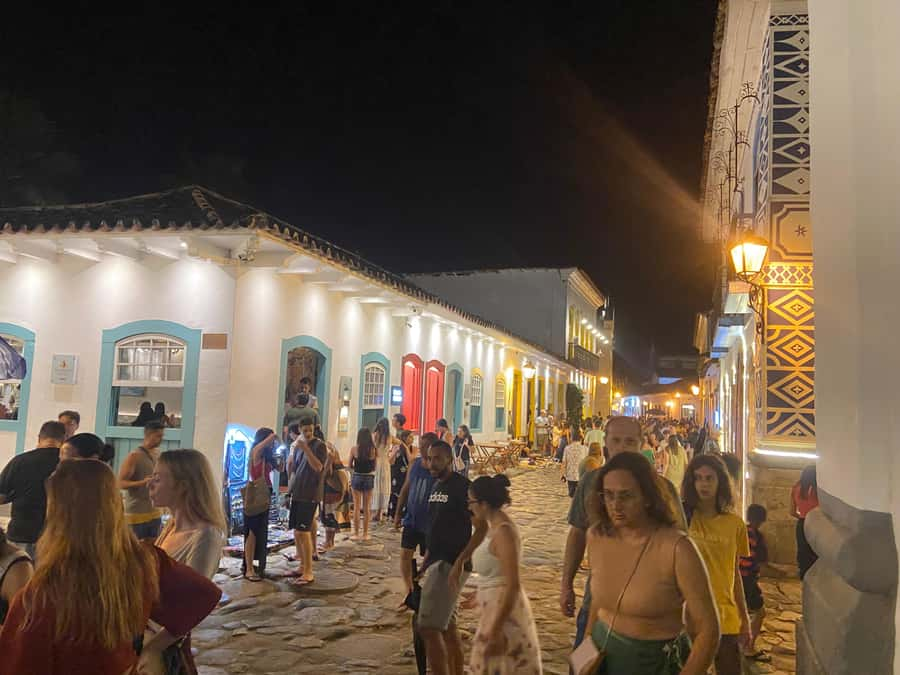
Paraty’s old town is more than a pretty collection of whitewashed buildings and uneven stones. Its streets tell the story of Brazil’s colonial trade, local Indigenous peoples, Freemasonry, and the products that once made this port town important. This 90-minute walking tour gives those details a clear order, then finishes with a taste of Gabriela, Paraty’s sweet, spiced cachaça.
I like two things here. First, the guide explains why the town was built as it was, not just what each building looks like. Second, the tour connects Paraty’s past to a local drink made with honey, clove, and cinnamon. The main drawback is the rough, slippery paving, and a later start may leave you seeing less of the architecture in fading light.
Key points
- Meet at Santa Rita’s Church: The tour begins in front of one of Paraty’s best-known historic landmarks.
- History with a local focus: Learn about Indigenous peoples, colonization, Freemasonry, and the gold, sugarcane, coffee, and pau-brasil cycles.
- Guides in three languages: Tours are offered in English, Portuguese, and Spanish. Thiago is one guide praised for his clear explanations and enthusiasm for Paraty.
- A local tasting to finish: Try Gabriela, a sweet cachaça made with honey, clove, and cinnamon and produced only in Paraty.
- Small-group or private options: The format can suit travelers who want questions answered without the feel of a large crowd.
- Wear shoes with grip: The historic-center stones can be slippery. Comfortable, anti-slip footwear is a practical choice.
Starting at Santa Rita’s Church
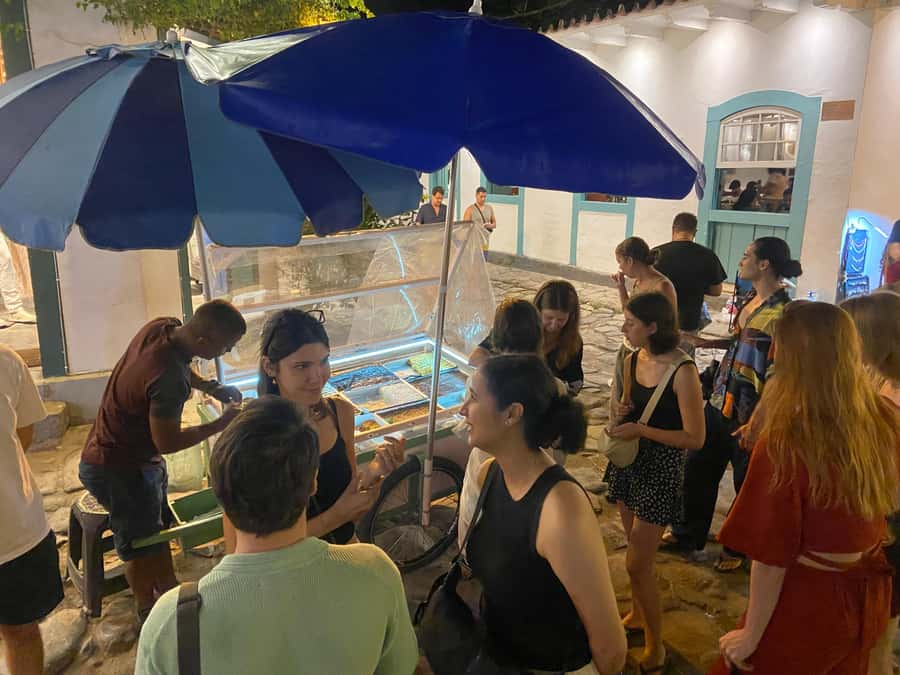
Your meeting point is in front of Santa Rita’s Church, at Largo de Santa Rita. This is a sensible place to begin because you are already at the edge of Paraty’s old center, with the town’s historic character close at hand.
The tour runs for 90 minutes. That is long enough to give you a useful framework for Paraty without taking up half your day. I see it as a good first activity after arriving. Once you understand the town’s past and the logic behind its streets, a later solo walk becomes more rewarding.
You should arrive wearing shoes that can handle uneven paving. The stones in the historic center can be quite slippery, especially if wet. Sandals with a smooth sole or flimsy flip-flops are not the best match for this walk.
The meeting point is central, but the tour does not include transportation. You make your own way to Largo de Santa Rita and return there at the end. Pets are welcome, which is useful if you are traveling with a dog, though the paving and walking pace are still worth considering.
More Old Town and Historic Centre Walks in the world:
- Madrid Essential: Historic Center, Plaza Mayor & Royal Palace
★ 5.0 · 6,416 reviews - Lisbon: Live Fado Show with Port Wine in Historic Center
★ 4.7 · 4,166 reviews - Valencia Old Town Tour with Wine & Tapas in 11th Century Historic Monument
★ 5.0 · 3,234 reviews
Reading Paraty through its old streets
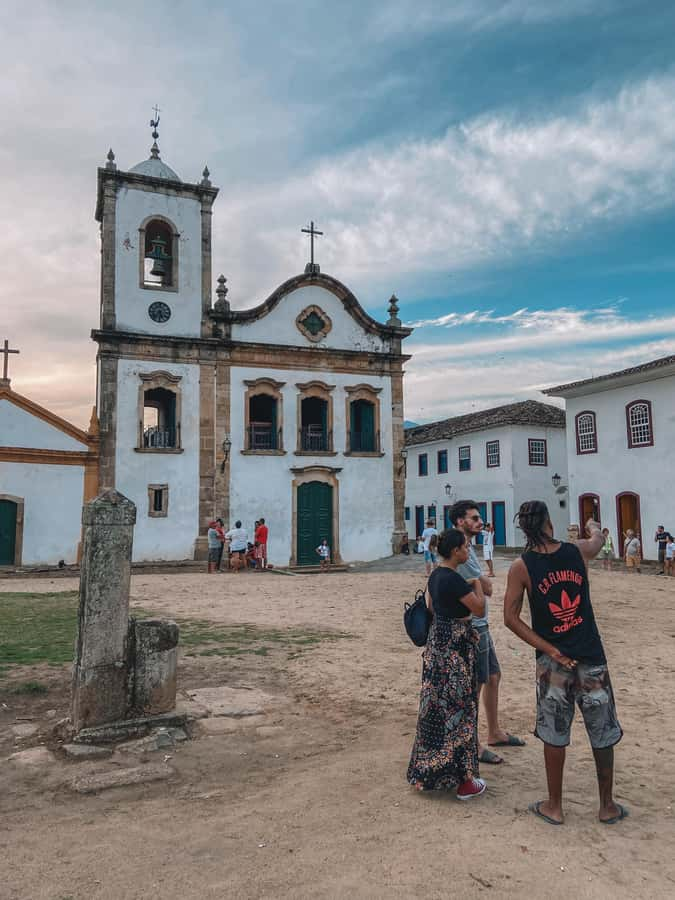
The central part of the experience is a guided walk through Paraty’s historic center. You will see the town while hearing how its buildings, streets, and trade routes fit together.
That context matters. Paraty can be enjoyed simply by strolling, taking photographs, and admiring the doors and facades. But without an explanation, much of the town’s meaning remains hidden behind attractive walls. The guide’s job is to link the architecture to the people, goods, and beliefs that shaped Paraty.
The town is recognized by UNESCO as a site of Cultural Heritage of Humanity. The tour also frames Paraty through its gastronomy and biodiversity, so the focus is not limited to colonial architecture. It presents the town as a place where culture, trade, food, and the natural world meet.
I especially like the promise to explain the logic behind the town’s construction. One participant described this as a fascinating part of the walk, and it is the kind of information that changes how you look at a street. Instead of seeing only old stones, you begin asking why the road runs that way, why buildings are arranged as they are, and how the town served its trade routes.
Indigenous peoples, colonization, and Paraty’s changing fortunes
The historical story begins before the colonial town took its familiar form. The guide discusses original peoples and the process of colonization, giving you a wider frame for Paraty’s development.
That is important because a colonial center should not be presented as if it appeared fully formed or without conflict. The tour includes both the Indigenous past and the colonial period, helping you place Paraty in a longer timeline.
You will also hear about the economic cycles that shaped the town. The subjects include gold, sugarcane, coffee, and pau brasil. Each product points to a different part of Brazil’s economic story, and together they explain why Paraty mattered as a port and commercial center.
The value here is not in memorizing a list of commodities. It is in seeing how the town changed as trade changed. A place connected to gold did not have the same role as one linked to sugar, coffee, or valuable timber. The guide brings those shifts into the walking route, so the old center becomes a record of changing fortunes rather than a frozen museum.
The Freemasonry details that give the tour its edge
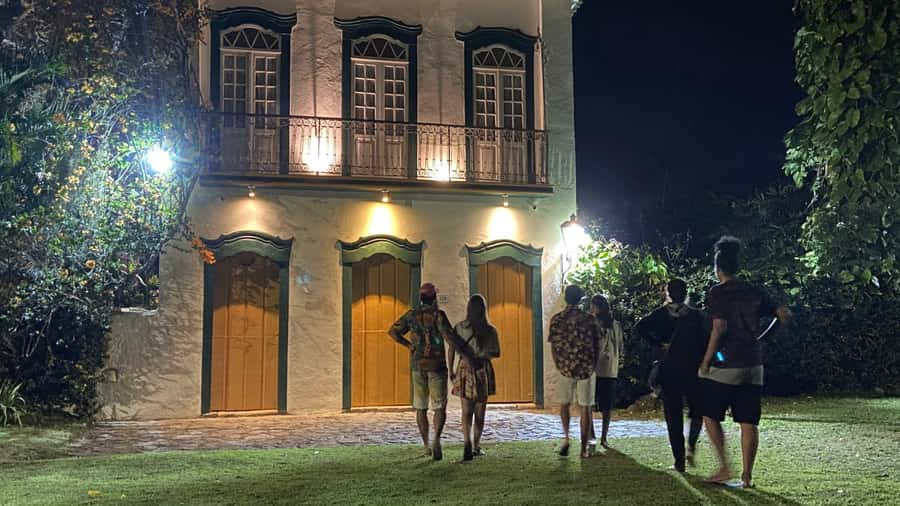
Freemasonry is one of the most frequently praised subjects in the experience. Several people singled it out as especially interesting, and that makes sense: it is a less obvious part of Paraty’s story than colonial trade or cachaça.
The guide explains the influence of Freemasonry on the town’s development. You can expect this section to focus on how Masonic ideas and symbols relate to the design or growth of Paraty, rather than treating the subject as a vague mystery.
I like this element because it gives the tour a sharper point of view. Many walking tours cover the same broad themes: dates, churches, merchants, and old houses. A discussion of Freemasonry adds a different layer and helps explain details you might otherwise pass without noticing.
Guide quality matters a great deal here. Thiago is specifically praised for making the history clear, answering questions, and showing real enthusiasm for Paraty. Another guide, Chaqqa, is described as giving extra time and useful suggestions for the rest of a stay. The provider does not guarantee a particular guide, but these comments suggest that the local approach is a major part of the experience.
More History Walking Tours in the world:
- History and Hauntings of Salem Guided Walking Tour
★ 5.0 · 14,564 reviews - Lisbon: History, Stories and Lifestyle Walking Tour
★ 4.8 · 10,902 reviews - Boston: Freedom Trail History Small Group Walking Tour
★ 5.0 · 6,450 reviews - Historic Charleston Guided Sightseeing Walking Tour
★ 5.0 · 6,216 reviews
Why an early start is the smart choice
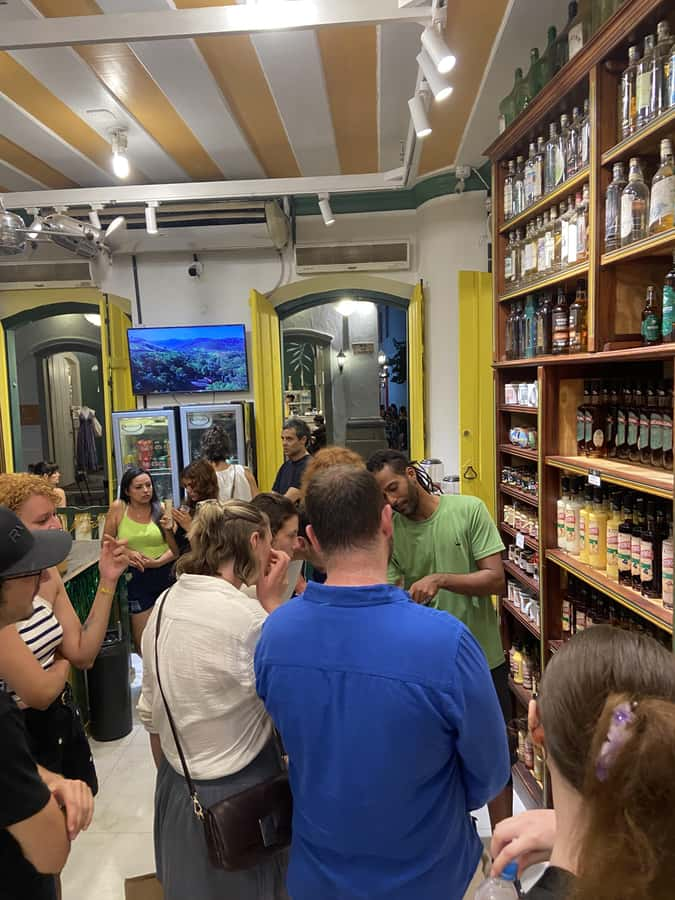
The tour is available at different starting times, depending on the schedule. I would choose an earlier slot if architecture and photography are high on your list.
The historic center is the heart of the walk, and one useful caution is that a later tour can run into fading light. In that case, you may still hear the history, but you could miss some of the visual detail that makes Paraty special. An early walk gives you more time to see the buildings properly and return later for your own photographs.
The 90-minute length also leaves room for the rest of your day. You can follow the tour with lunch, further exploring, or another activity without feeling locked into a full-day program. The tradeoff is that the walk cannot cover every corner or explain every building in depth. It is an orientation and interpretation tour, not a complete architectural survey.
Finishing with Gabriela cachaça
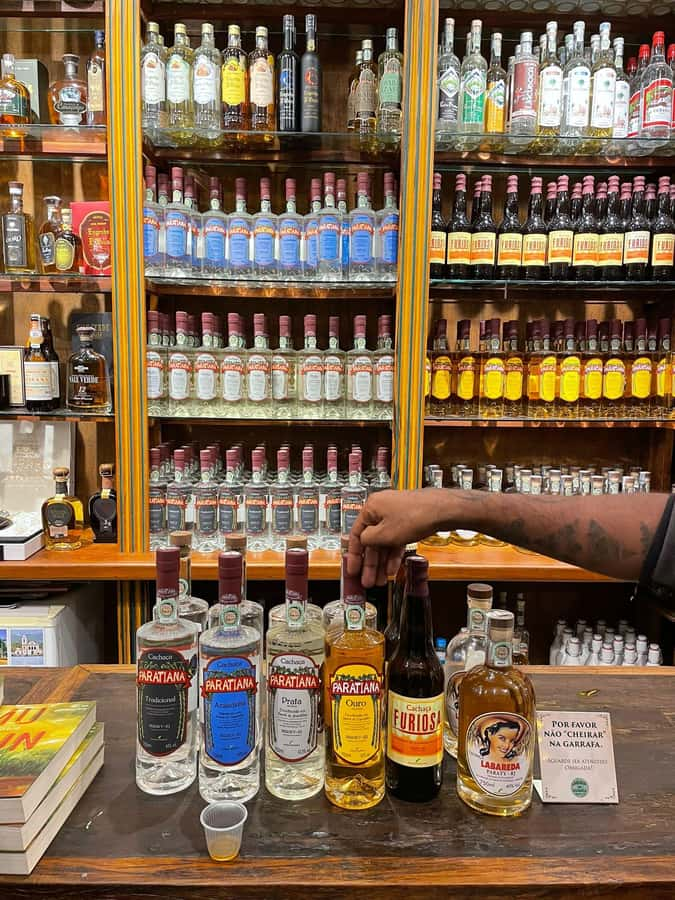
The final stop is a local bar, where you have a complimentary tasting of Cachaça Gabriela. The schedule describes this portion as a 20-minute tasting stop, while the included experience specifically identifies Gabriela cachaça.
Gabriela is made only in Paraty and is flavored with honey, clove, and cinnamon. Its name honors Jorge Amado’s literary work Gabriela, Cravo e Canela. The result is sweeter and more aromatic than a plain white cachaça, so it offers an easy introduction if you are new to Brazil’s best-known sugarcane spirit.
This tasting is not a full meal, and food and additional drinks are not included. Think of it as a small local finish to the history walk, not a substitute for lunch or an evening tasting session.
I like the connection between the drink and the town. You hear about Paraty’s sugarcane economy, then taste a product associated with the region. That makes the final stop more meaningful than a random bar break. It also gives you a local specialty to look for during the rest of your visit.
The tasting is included in the $19 price, which strengthens the value. You receive a guided look at the historic center, a local guide, and a distinctive regional sample without paying separately for the tasting.
Is $19 a fair price?

At $19 per person, this is a reasonably priced way to get your bearings in Paraty. The strongest value comes from the combination of a 90-minute guided walk and the included Gabriela tasting.
If you were planning to wander alone, you would still see the historic center for free. The question is what you gain by paying. Here, you gain a structured account of the town, explanations of its construction, and access to subjects such as Freemasonry and the economic cycles that shaped Paraty.
The price looks especially fair if you are visiting for a short time or want a clear introduction before exploring alone. It may feel slightly high if you already know Paraty’s history, prefer independent walks, or mainly want photographs. One person felt the cost was a little above what the tour delivered, though still considered it worthwhile overall.
Private and small-group formats are available. A smaller setting can be useful if you want to ask many questions or prefer a quieter pace. The exact group arrangement and starting time should be checked when booking.
Free cancellation up to 24 hours before the activity and reserve-now, pay-later terms add flexibility. Those policies are useful if your route through Brazil is still changing, but the main value remains the guide and the quality of the historical explanation.
Who will enjoy this walk most?
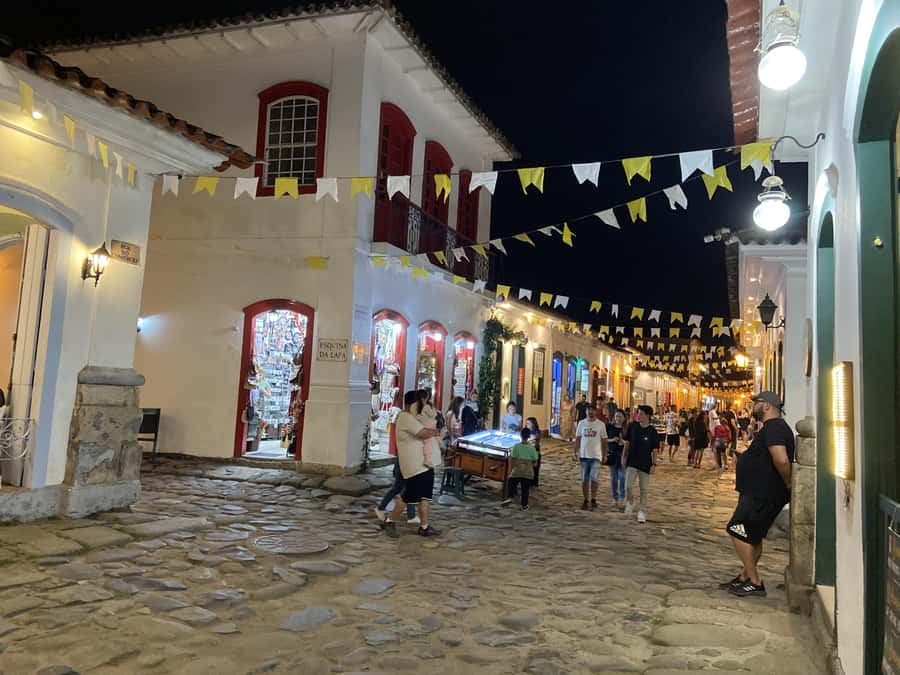
I would recommend it to first-time visitors who want more than a quick look at Paraty’s facades. It also suits history-minded people, architecture fans, and anyone curious about the way trade shaped Brazilian towns.
It is a good choice if you like asking questions. The guides are available in English, Portuguese, and Spanish, and the strongest comments focus on clear explanations, patience, and willingness to respond.
The tour is less suitable for anyone with limited mobility. The provider lists people with mobility impairments as unsuitable, and the uneven, slippery streets explain why. The activity is also not designed for hearing-impaired participants. Several upper-age limits are listed in the booking information, including restrictions for people over 70, 75, and 95, so older participants should check the current terms before reserving.
Families with a pet may appreciate that dogs are welcome. Still, you should judge your pet’s comfort on slippery stones and during a 90-minute walk.
Practical advice before you book
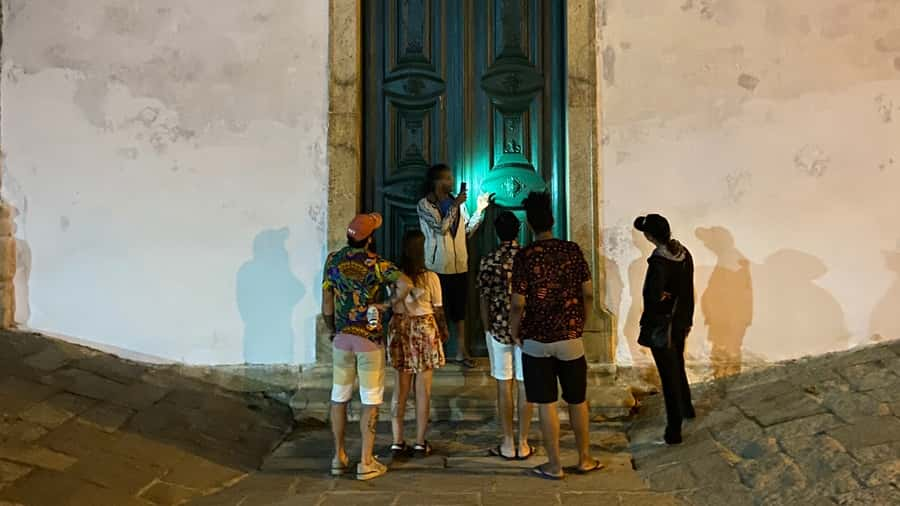
Choose shoes with a good grip. This is the most important preparation and the clearest practical warning.
Book an earlier departure if you want to see the architecture in good light. If your main goal is the historical explanation and the cachaça, a later time may still work, but it can reduce the visual side of the tour.
Do not expect food to be included. The Gabriela tasting is included, while meals and other drinks are extra. If you need lunch, plan it before or after the walk.
Keep some flexibility in your schedule after the tasting. The tour returns to Largo de Santa Rita, and one guide has been praised for spending longer than expected and offering useful suggestions for the rest of a Paraty stay. That is a pleasant possibility, but the advertised duration remains 90 minutes.
Should you book the Paraty historic-center walk?
Book it if you want Paraty’s old town to make sense, not simply look attractive. The tour’s best features are the local historical perspective, the unusual Freemasonry material, and the Gabriela tasting at the end.
I would especially choose it early in a Paraty visit, with an early start and proper shoes. Skip it if you have mobility concerns, dislike uneven streets, or plan to spend your time exploring entirely at your own pace.
For $19, this is a compact introduction with a genuinely local finish. It will not replace a full day of independent discovery, but it can give that discovery much more meaning.
FAQ
Where does the tour begin?
You meet in front of Santa Rita’s Church at Largo de Santa Rita.
How long does the activity last?
The guided walking tour lasts 90 minutes. The schedule also lists a 20-minute tasting stop at a local bar.
Which languages are available?
Tours are offered in English, Portuguese, and Spanish.
What does the tour cover?
The walk covers Paraty’s historic center, including colonization, original peoples, Freemasonry, and the gold, sugarcane, coffee, and pau-brasil cycles.
Is the cachaça tasting included?
Yes. A tasting of Cachaça Gabriela is included. Food and additional drinks are not included.
What should I wear?
Wear comfortable shoes with good grip, such as anti-slip footwear, because the historic-center streets can be slippery.
Are pets allowed?
Yes. Pets are welcome on the tour.
Latest history tours reviewed in the world
- From Athens: Ancient Olympia Full-Day Private Tour★ 4.8 · 22 reviews
- From Athens: Explore Ancient Corinth & Charming Nafplion★ 4.6 · 102 reviews
- From Athens: Explore Ancient Greece 4-Day Tour★ 4.7 · 73 reviews
- From Albufeira: Wine Tasting & Historic Silves Tour★ 4.9 · 421 reviews
- From Albufeira: Historical Algarve Region Tour★ 4.7 · 585 reviews
- From Alexandria: Full-Day Guided Tour of Historical Sights★ 4.5 · 54 reviews
- Franklin: Ghost Tour in Historic Franklin★ 4.8 · 65 reviews
- Freiburg: Exciting City Tour with sightseeing and history★ 4.3 · 103 reviews
Brazil History Tours, compared.


Rio de Janeiro: Historic Rio and Santa Teresa Half-Day Tour
Read our review →
Rio de Janeiro: Little Africa Heritage Walking Tour
Read our review →
Ancient Rio and Santa Teresa Tour with Hotel pick-up and drop-off
Read our review →
Florianópolis: Historical Center, Beach & Nature Tour
Read our review →
Florianopolis: Walking Tour – History, Art and Gastronomy
Read our review →Browse the lists this tour appears in