
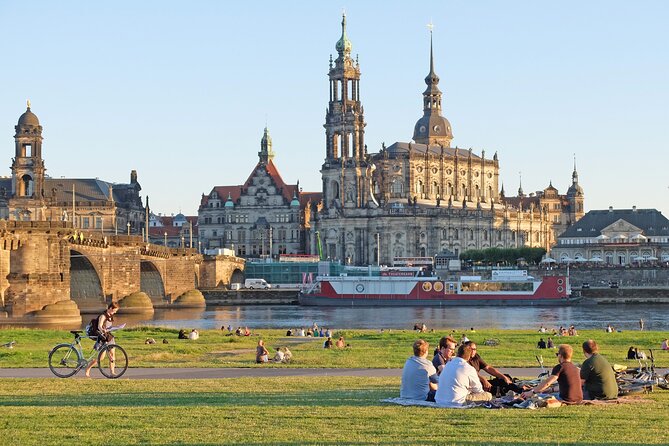
Review · GERMANY
Historic Dresden Small-Group Walking Tour in English
Dresden’s old center is compact, but its story is anything but simple. In two hours, this walking tour links royal ambition, wartime destruction, Communist-era change, and careful rebuilding as you move from the grand Theaterplatz to the Frauenkirche. The route gives you the city’s main sights without burying you in dates.
I especially like the small maximum of 15 people, which gives you a fair chance to hear the guide and ask questions. I also like the practical advice about which museums and church interiors deserve your time afterward. The main concern is sound: no headsets are provided, and a large group can make it hard to hear, especially in busy squares or on the river terrace.
Key points
- A compact route through Dresden’s historic center: See the Zwinger, Residenzschloss, Stallhof, Fürstenzug, Brühl’s Terrace, Neumarkt, and the Frauenkirche.
- Strong guide-led storytelling: Guides including Laura, Leo, Christina, Doris, Karen, and Helga bring different views of Dresden’s past and present.
- Mostly outdoor sightseeing: Museum interiors are not included, though your guide can explain what to see and which tickets may suit you.
- Useful for first-time visitors: The tour provides a clear map of the center and helps you choose what to explore later.
- Easy walking with some stairs: The pace is suitable for many older visitors, but you should expect an active two hours on city streets.
- Good value at $30.25: You pay for a licensed English-speaking guide, a small group, and focused local context rather than simply following a free map.
Theaterplatz puts Dresden’s grand story in one view
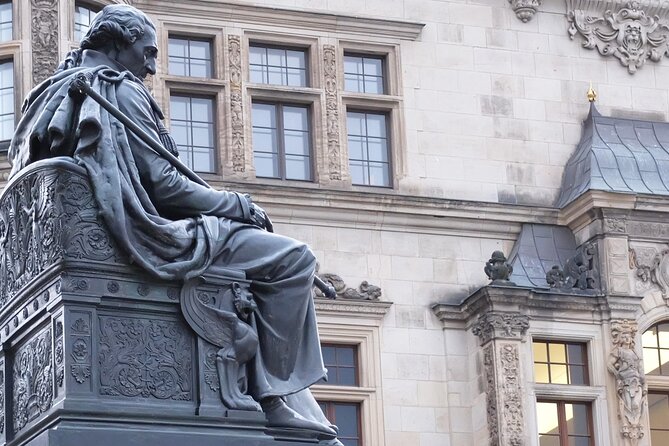
The tour begins at Schlossplatz, near the center of Dresden’s historic district. From there, you reach Theaterplatz, a broad square where the city’s cultural and royal ambitions gather in one frame.
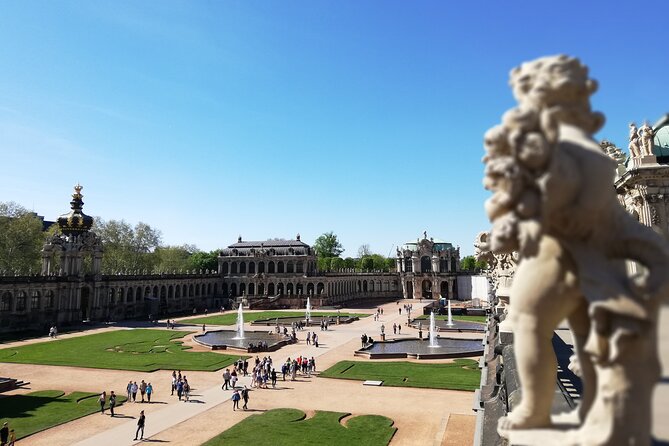
The Semper Opera House takes the main visual role. Nearby are the Zwinger, the former royal palace, and Dresden Cathedral. From this point, your guide can also point out the Old Masters Gallery, helping you connect the buildings around the square with the art collections inside them.
I like this opening because it gives you a quick mental map. Dresden can feel like a collection of impressive buildings at first. Theaterplatz explains how those buildings worked together as part of a royal and cultural center.
Allow about 15 minutes here. Admission is free because the stop is outdoors. You will not go into the opera house or gallery as part of the tour, so note down anything you want to revisit.
The guides tend to make this more than an architectural roll call. Laura, Leo, Christina, Doris, Karen, Helga, Robert, Marion, and others have been praised for clear English, good pacing, personal stories, and an ability to explain Dresden from several periods. The exact guide is not guaranteed, but the range of names gives you an idea of the local team.
More History Walking Tours in Germany
- Leipzig: 1.5-Hour Historical Walking Tour in German
★ 4.7 · 2,217 reviews - Berlin: History of the Third Reich Guided Walking Tour
★ 4.7 · 791 reviews - Trier: Guided Old Town Highlights and History Walking Tour
★ 4.7 · 687 reviews
The Zwinger shows Augustus the Strong’s taste for spectacle
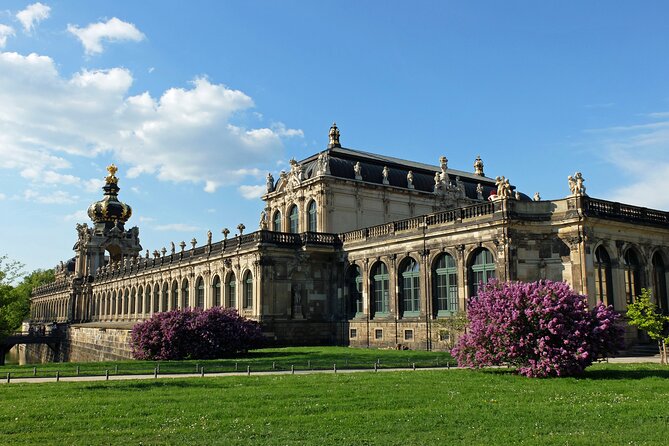
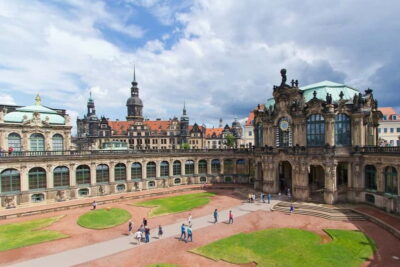
The Zwinger is one of Dresden’s most memorable buildings, and it deserves more than a quick photo stop. It was designed as an elaborate entrance to a grand palace that was never completed. That unfinished plan helps explain the Zwinger’s unusual character: it feels like a celebration built for ceremony, display, and pleasure rather than ordinary domestic life.
Your guide will connect the complex with Augustus the Strong, the Saxon ruler whose ambition and love of beauty shaped much of central Dresden. The stories here add a human scale to the ornate stonework. You learn not only what the Zwinger looks like, but why its courtyards and decorations were created.
If it is open and time allows, your guide may show you an open-air grotto that is easy to miss. That small possibility captures the benefit of walking with someone who knows the site beyond its most photographed angles.
The stop lasts about 15 minutes and remains outside. That is enough for orientation, but not enough to explore every gallery or courtyard at leisure. If you enjoy art, sculpture, or baroque architecture, plan to return on your own.
Residenzschloss and Stallhof reveal the royal court
The former Residenzschloss has been built, damaged, repaired, enlarged, and rebuilt more than once. Its mixed appearance reflects that history. It is not a single clean architectural statement, but a royal complex shaped by centuries of change and destruction.
You walk through one courtyard decorated with sgraffito, a Renaissance technique in which layered plaster is scratched to reveal contrasting colors below. This detail rewards a slow look. It is easy to pass through a courtyard while staring at the larger palace, but the wall decoration gives you a close-up example of the care invested in the residence.
The tour does not enter the palace museums. That is a limitation, but also a useful arrangement for a short walk. Your guide can explain the collections and help you decide what to see later, including which ticket may make sense for your interests. You avoid spending the group’s two hours indoors, yet you get advice before committing half a day to the palace.
Behind the residence, Stallhof offers a quieter change of mood. This enclosed Renaissance courtyard was used for jousting and royal festivities. Its arcades and sandstone columns create a more intimate setting than Theaterplatz or the Zwinger.
The stop is brief, around five minutes, so expect an introduction rather than a long lecture. Still, it is one of the route’s useful pauses. You can picture court ceremonies here without the traffic and crowds that often fill the larger squares.
The Fürstenzug mural rewards a close look
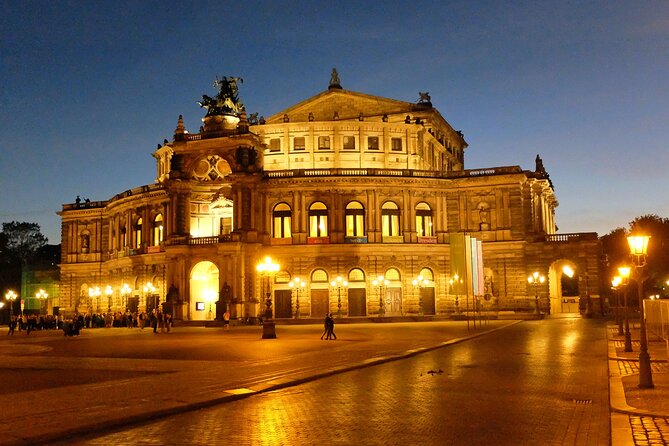
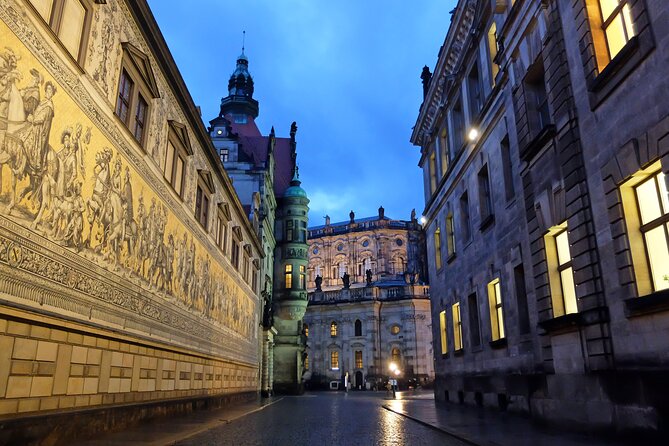
Another stop presents one of Dresden’s most distinctive outdoor artworks: the Fürstenzug, or Procession of Princes. The porcelain mural stretches about 100 meters and contains roughly 24,000 tiles, making it the longest outdoor porcelain artwork in the world.
Your guide will point out details and stories hidden within the procession. This is a good place to ask questions, since the work can look like a long decorative wall if you do not know what to watch for.
The mural also fits the larger theme of the tour. Dresden’s center is full of grand public symbols, but the most interesting details often sit at eye level. Take a little time to scan the figures, clothing, animals, and small scenes instead of treating the wall as a background for a quick photograph.
More Small-Group History Tours in Germany
- Small group Potsdam: A Journey Through History and Palaces
★ 4.7 · 317 reviews - Berlin Wall History Small Group Cycling Tour
★ 4.9 · 152 reviews - Small group Potsdam: A Journey Through History and Palaces
★ 4.5 · 151 reviews
Dresden Cathedral tells a story of faith and politics
Dresden Cathedral rises beside the royal and cultural buildings, but its story has a special tension. It was built secretly by a Catholic ruler in largely Protestant Saxony and served as the former court church.
Your guide sees it from outside and explains its unusual features, along with its connection to the Saxon royal family. The stop helps you understand that Dresden’s court was not neatly defined by one religious identity. Political power, personal belief, and public expectations did not always point in the same direction.
Because the tour does not include the interior, you will need to return later if you want a closer look. That is easy to combine with the palace museums and other central sights.
Brühl’s Terrace opens the view toward the Elbe

From the historic center, the route climbs toward Brühl’s Terrace, often called the Balcony of Europe. This promenade once belonged to the nobility. Today it gives you a broad view over the Elbe and a useful sense of what lies beyond the compact old town.
Most guides take the group up the stairs and point out the river, Dresden’s historic White Fleet steam boats, riverside buildings, church steeples, and distant wine slopes. The view provides a welcome change after several courtyards and façades.
You should expect stairs here. One person described the walking as manageable for seniors, with the stairs as the main point to note. The route is not presented as demanding, but comfortable shoes remain a sensible choice.
I find this stop especially useful for planning the rest of your stay. From above, you can see that Dresden is more than its restored center. The river, boats, churches, and wine-growing areas suggest several possible outings after you finish the walking tour.
The stop lasts about 10 minutes. That is enough for orientation and photographs, though the terrace can be exposed to cold or rain. One tour continued in pouring rain, and the guide kept the narration moving, but weather will still affect your comfort.
Neumarkt and the Frauenkirche explain Dresden’s rebirth
The route usually works toward Neumarkt, a square rebuilt in an effort to recover its 18th-century appearance. Colorful baroque façades frame the square, while restaurants offer German, Saxon, and international food.
Neumarkt is a practical place to end a city walk. You can sit down for a meal, continue to another sight, or enter the Frauenkirche on your own. The booking information also gives Schlossplatz as the meeting point and says the activity ends back at the meeting point, so check the exact end arrangement when you book. The route description generally places the final stop at Neumarkt.
The Frauenkirche is the emotional center of the tour. Its dome was rebuilt from the ruins left after World War II, and the church now represents Dresden’s return from devastation as well as a message of reconciliation.
Your guide explains the destruction, the decades-long wait, and the international effort behind the rebuilding. That context matters. Without it, the restored church can look simply beautiful. With it, the stonework becomes part of a much larger story about memory, politics, and the decision to reconstruct an old city rather than leave its ruins untouched.
Plan to return inside after the tour. You can sit quietly beneath the pale interior, then go down to the crypt for a small exhibition about the rebuilding. The walk itself only views the church from outside, so this follow-up visit is one of the clearest ways to extend the experience.
The guide makes the difference
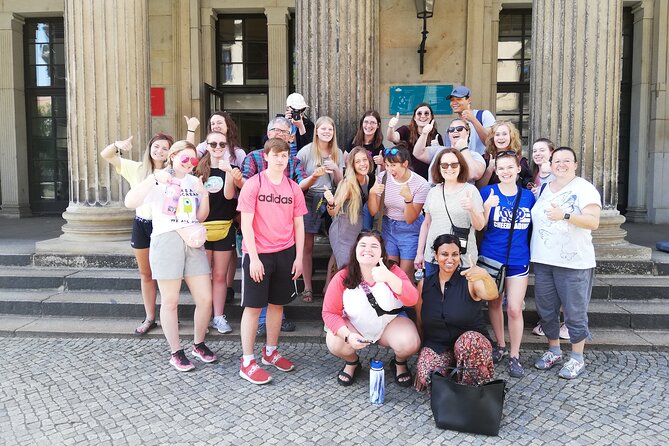
The strongest part of this experience is the human delivery. Guides such as Laura, Christina, Leo, Doris, Karen, Helga, and Robert have been praised for clear English, lively stories, good pacing, and patient answers.
Karen is noted for connecting Dresden’s long past with changes from before German reunification, after reunification, and in the present day. Helga can offer a personal perspective from Dresden before rebuilding. Christina has an art history background and pays attention to small details. Laura is often described as energetic, warm, and especially good at turning complicated events into a story you can remember.
Those differences matter because the route covers a lot in two hours. A dry list of dates would leave you with impressive buildings but little sense of how they fit together. The best guides make the history easier to follow without stripping away its difficult parts.
The style may not suit everyone. One assessment found the guide a little too familiar and chatty, with less emphasis on strict factual presentation. If you prefer a formal lecture, that is worth considering. If you like questions, personal context, and a conversational walk, it will probably work well.
Group size, sound, and walking pace

The stated maximum is 15 people. That is small enough to ask questions and stay connected with the guide, but it is not a private tour. In rare cases, the group may be larger because of travel disruptions and efforts to accommodate people on another date.
No headsets are provided. This is the clearest practical weakness. In a quiet courtyard, you should be fine. Near busy squares, on Brühl’s Terrace, or with a group spread out along a wall, hearing every word may be harder.
Stay close to the guide, especially when moving between stops. If you have hearing concerns, ask at the start where it is easiest to stand. The route is not described as strenuous, and one account found it suitable for older participants apart from some stairs, but you will be on your feet for about two hours.
The tour is offered in English and uses a mobile ticket. It begins near Schlossplatz, close to public transportation. Service animals are allowed, and most people can take part.
Is $30.25 a fair price?
At $30.25 per person, this is not the cheapest way to see Dresden’s center. Free walking tours may cost less at the point of booking, but this experience offers a professional guide, a stated small-group limit, and a focused route with time for questions.
I see the price as fair if you want context rather than just directions. You are paying for the guide’s preparation, local perspective, and ability to explain what happened to Dresden before deciding which museums or interiors deserve your own time.
The value is strongest on a first visit, when the city’s grand buildings can blur together. After two hours, you should know where the main sights are, what the Frauenkirche represents, why the Zwinger looks the way it does, and which palace collections may be worth a separate visit.
The value is weaker if you already know Dresden well or want extended interior visits. The tour is mostly outdoors, and museum admission is not included. Think of it as a strong orientation walk, not a substitute for the Royal Palace museums, the Old Masters Gallery, or a full church visit.
Who should book this Dresden walk?
I would choose this tour for a first visit, especially if you want the historic center explained in plain English. It suits couples, solo visitors, families with older children, and anyone who prefers a small group to a large city coach.
It is also a good choice if you want help deciding what to do next. The guide can explain the palace collections, point out the Old Masters Gallery, and finish near restaurants and the Frauenkirche.
I would think twice if you dislike outdoor touring in poor weather, need amplified sound, or want to spend most of your time inside museums. In those cases, the lack of headsets and the outdoor format may frustrate you.
Book it if you want Dresden’s major sights connected into one understandable story. Skip it if you only need a map and already plan your own detailed research. For most first-time visitors, the two-hour route and practical advice make this a useful start to Dresden.
FAQ
How long is the Historic Dresden Small-Group Walking Tour?
The tour lasts approximately two hours.
What language is the tour offered in?
The walking tour is offered in English.
Where does the tour begin?
The meeting point is Schlossplatz in Dresden’s Altstadt, at Schloßpl., 01067 Dresden, Germany.
What sights are included?
The route includes Theaterplatz, the Zwinger, the Residenzschloss courtyard, Stallhof, the Fürstenzug mural, Dresden Cathedral from outside, Brühl’s Terrace, Neumarkt, and the Frauenkirche from outside.
Are museum and church admission tickets included?
No. The tour includes the walking tour and professional guide, but museum and interior admission tickets are not included.
How large is the group?
The activity has a maximum of 15 travelers. On rare occasions, the group may be larger because of travel delays or cancellations.
Can I cancel for a full refund?
Yes. You can cancel at least 24 hours before the experience start time for a full refund. Cancellations or changes made less than 24 hours before the start time are not refunded or accepted.
Latest history tours reviewed in Germany
- Freiburg: Exciting City Tour with sightseeing and history★ 4.3 · 103 reviews
- Frankfurt Self-Guided Historical Walking Tour★ 4.0 · 58 reviews
- Frankfurt: Old Town Historical Walking Tour with Geo Epoche★ 4.8 · 47 reviews
- Erfurt Tour – City tour with the historic tram★ 4.8 · 503 reviews
- Dresden: Guided Beer Tour of the Historic Old City★ 4.8 · 95 reviews
- Dessau: Guided Walking Tour through History★ 4.6 · 40 reviews
- Darmstadt: City Highlights and History Guided Walking Tour★ 4.0 · 23 reviews
- Cologne: Old Town Historical Walking Tour with GEO Epoche★ 4.7 · 31 reviews
Germany History Tours, compared.
Leipzig: City History Canal Sightseeing Tour on a Motorboat
Read our review →
Leipzig: 1.5-Hour Historical Walking Tour in German
Read our review →
Berlin: 3-Hour World Heritage Cruise to Potsdam
Read our review →
Berlin: History of the Third Reich Guided Walking Tour
Read our review →
Bamberg: Guided Beer History Tour with Optional Tasting
Read our review →Browse the lists this tour appears in