
Review · ITALY
3 Hours Guided Tour of the Historical Cagliari
Cagliari tells its story in the streets. Roman remains, old churches, hilltop lanes, grand squares, and scars from the 1943 bombardments all appear during this three-hour walk through the city’s four historic districts. The best part is the contrast between Castello’s high views and the everyday streets below.
I like the use of historical photographs, which lets you compare old Cagliari with the city in front of you. I also like the local touch: Valentina has been praised for warm storytelling, useful restaurant advice, and a relaxed pace. The main drawback is physical rather than cultural: hills and stairs make this a poor fit for anyone with mobility limits.
Key points at a glance
- Four old districts in one walk: See Stampace, Castello, Villanova, and Marina rather than focusing on one small pocket of town.
- A local guide with personality: Valentina combines history, humor, local advice, and a friendly manner.
- Old photographs add context: You can see how streets and buildings looked before and after major changes.
- Castello provides the big views: The route pauses for photographs and scenery from the hill above Cagliari.
- A useful first-day orientation: The central start and finish make it easy to continue with dinner, shopping, or independent exploring.
- Plan for active walking: Three hours includes slopes, steps, and narrow streets, with no museum entry built in.
Why this Cagliari walk works so well

Cagliari can feel scattered when you first arrive. Its old quarters sit at different levels, and the most interesting streets are often reached on foot rather than by a simple straight route. This tour gives you a clear framework for understanding the city, then connects the districts in one continuous walk.
You begin in Piazza Giacomo Matteotti, in front of the bust of Giuseppe Verdi. That is a practical meeting point in the center, near Via Roma and Piazza Matteotti. The route eventually returns here, so you finish close to Sardinian restaurants, shops, and central transport connections.
The tour covers history from the Roman period to the present day. That wide time span matters because Cagliari is not just an old town preserved under glass. Its past appears in buildings, street plans, religious sites, viewpoints, and the damage left by the 1943 bombing raids.
Valentina is the guide most often associated with this experience. Her approach, based on the detailed feedback available, is warm and conversational. She explains architecture and local history clearly, answers questions, and adjusts the pace for a small group. Several people especially valued her suggestions for places to eat and things to do after the walk.
More Three-Hour Tours in Italy:
- Berlin: 3-Hour World Heritage Cruise to Potsdam
★ 4.5 · 1,569 reviews - Edinburgh: 3-Hour Historical Walking Tour in Italian
★ 4.7 · 734 reviews - 3-Hour Porto Jewish Heritage Walking Tour with Local Guide
★ 4.5 · 396 reviews
Starting in Stampace, where old Cagliari feels close
The first district is Stampace, covered in about 30 minutes. This is a useful beginning because the route quickly puts you among the older parts of the city instead of spending the opening section on broad modern streets.
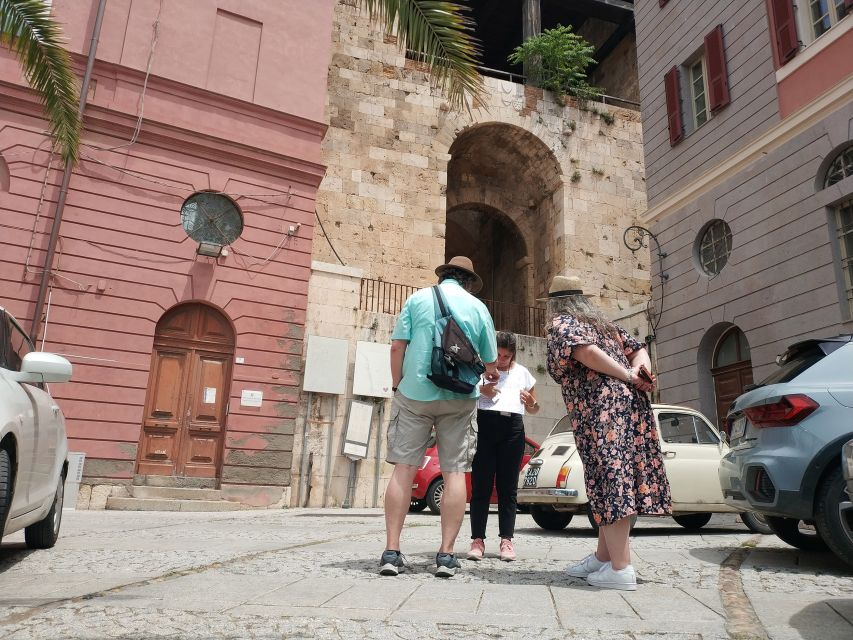
Expect a guided walk through streets where the city’s long story is visible in layers. The focus is not on museum interiors, since museum visits are not scheduled, but on the outdoor setting: monuments, churches, squares, and the shape of the neighborhood itself.
The historical photographs are especially helpful here. A guide can point to a building or street and explain what changed, but an old image gives you an instant visual comparison. You get a better sense of how war, rebuilding, and modern life have altered Cagliari.
Stampace also sets the tone for the tour. This is not a quick list of famous sights. You are encouraged to look at the city as a place where people live, work, worship, and pass through every day.
Climbing into Castello for 50 minutes of history
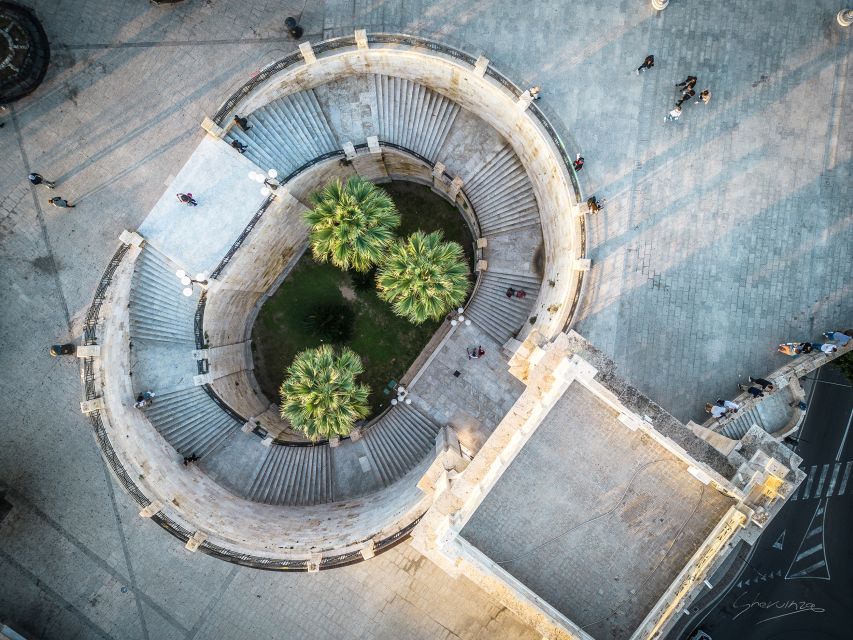
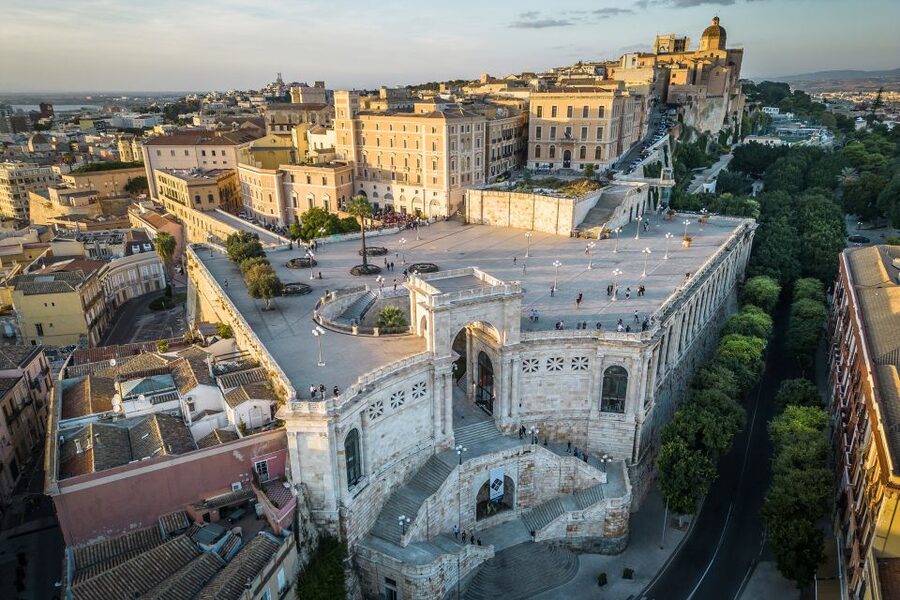
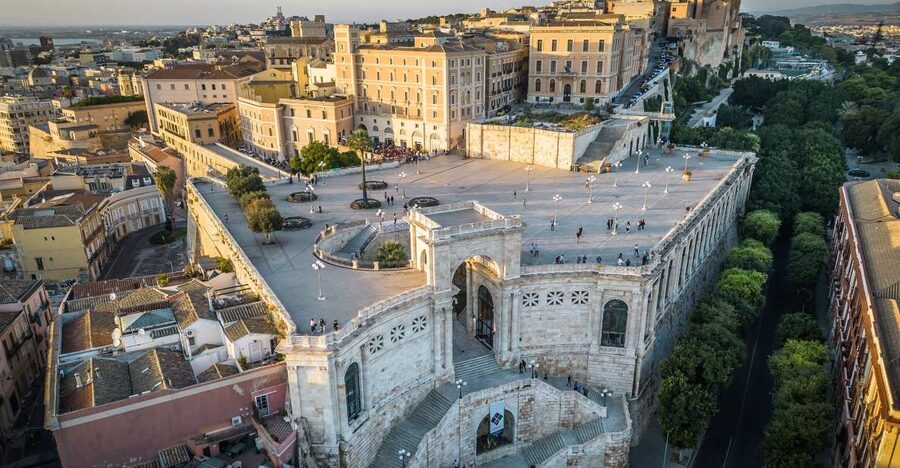
Castello receives the longest guided section, about 50 minutes, and for good reason. The district sits on a hill and brings together narrow lanes, old monuments, churches, squares, and some of Cagliari’s best viewpoints.
The climb is part of the experience, but it is also the main physical challenge. You should wear firm, comfortable shoes and carry water. In summer, bring a hat, since the hilltop streets and open viewpoints can expose you to strong sun.
Here, the guide can connect the city’s past with what you are seeing around you. Castello is not only about pretty stonework and elevated views. It helps explain how Cagliari developed as a fortified hill city and how its central districts relate to one another.
I would pay close attention to the wartime material. The 1943 bombardments caused severe damage, and the tour uses the city itself to show those consequences. This adds weight to the walk without turning it into a lecture. You see that Cagliari’s older appearance is not untouched, and that some parts were repaired, rebuilt, or reshaped after the war.
The strongest praise for this tour centers on the guide’s delivery. Valentina is described as clear, cheerful, and easy to listen to, with explanations of history and architecture that keep the walk moving. That matters in Castello, where a less engaging guide could turn a climb into a long series of dates and names.
The Castello viewpoint and a little free time
The route includes about 10 minutes for photographs and scenery, followed by roughly 20 minutes of free time in Castello. This pause is welcome. Three hours of continuous guiding can be tiring, especially on uneven streets, so a short break gives you time to take pictures and absorb the view.
The exact appearance of the sunset will depend on your chosen start time and the season. The activity includes sunset and scenic views as part of this section, but you should not assume every departure will meet sunset conditions. Ask about timing when you book if that is important to you.
The free time also gives you a chance to look around without trying to listen and photograph at once. Keep in mind that this is not a scheduled museum stop. If you want to enter a museum later, plan that separately and budget for an admission ticket.
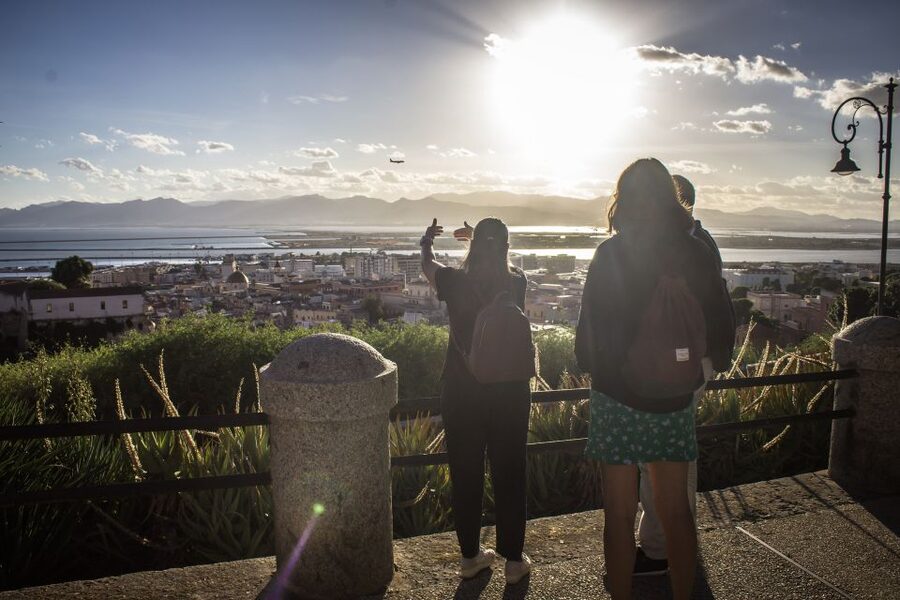
From Castello hill, you can enjoy broad views above the city. This is one of the tour’s strongest visual moments, and it helps you understand Cagliari’s layout better than a map alone. You can see how the old districts sit in relation to the central streets and lower neighborhoods.
More Guided Tours in Italy:
- Rome: Colosseum with Arena, Roman Forum and Palatine Guided Tour
★ 4.0 · 5,598 reviews - Venice: St. Mark’s Basilica Guided Tour & VR History Intro
★ 3.9 · 4,880 reviews - Colosseum with Arena, Roman Forum and Palatine Hill Guided Tour
★ 4.5 · 3,526 reviews - Colosseum Underground & Ancient Rome Guided Tour
★ 4.5 · 2,590 reviews
Villanova, with a slower look at another old quarter
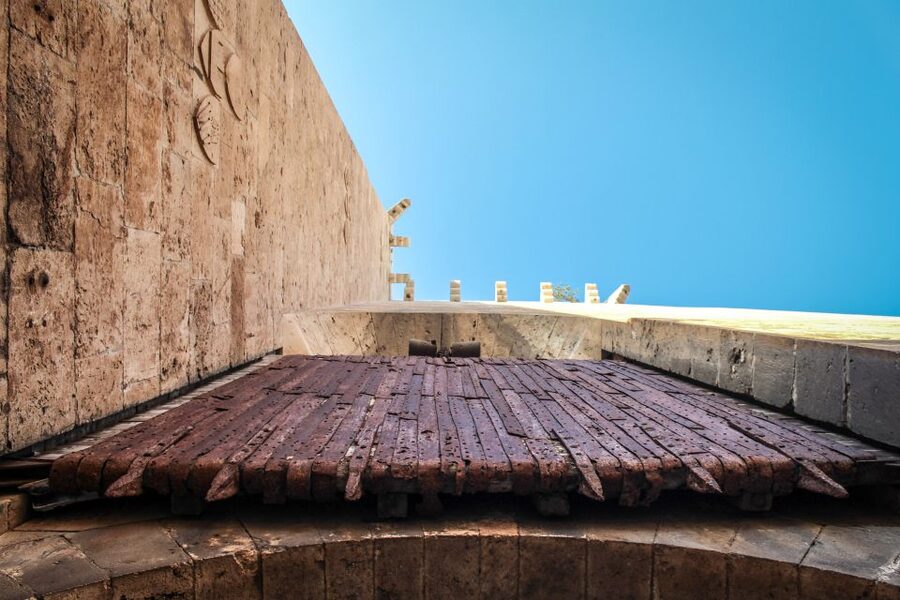
The tour then moves to Villanova for about 40 minutes. This longer section gives the district enough time to feel like more than a quick pass-through.
Villanova adds another side of historic Cagliari. The route continues to focus on outdoor details, local stories, churches, streets, and the way the district fits into the city’s wider development. The guide’s anecdotes are important here because not every meaningful detail is marked with a large sign.
This is also where the flexible pace can help. The guide has been praised for answering questions and adjusting the walk to the interests of the group. In a private group, you have more room to ask about daily life, local customs, restaurants, or places you want to return to later.
The activity allows a flexible starting time, subject to availability. That makes Villanova useful on a first day in Cagliari, since you can choose a morning or afternoon walk and then use the guide’s suggestions to plan the rest of your stay.
Marina brings the walk back toward daily life
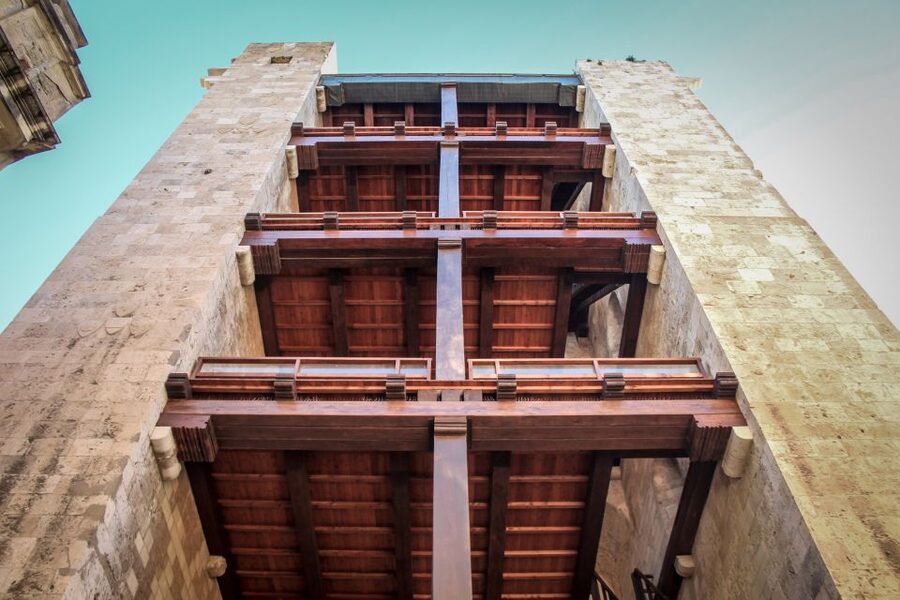
The final district is Marina, covered in about 30 minutes before the walk returns to Piazza Giacomo Matteotti. Its position near Via Roma makes it a fitting end to a route that began in the city center and climbed through the old quarters.
Marina is a good place to finish because the tour moves back toward restaurants, shops, and central streets. You are not left on a distant hill with the practical question of how to get back to your hotel.
This final section also helps balance the visit. Castello supplies the high views and formal historic setting, while Marina brings you closer to the active center of town. After three hours, you should have a clearer idea of where to eat, which streets deserve another walk, and how Cagliari’s districts connect.
Several detailed accounts of the experience point to the value of local recommendations. Valentina has suggested restaurants and other places that people later found useful. I would save your food questions for the end, when you can ask for advice suited to the part of town you plan to visit next.
How much value do you get for $71?
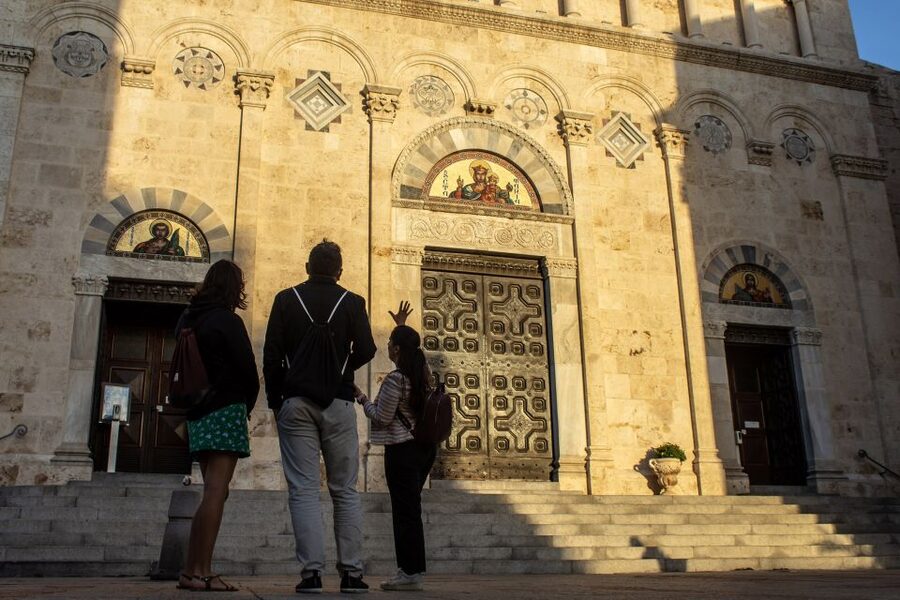
At $71 per person, this is not the cheapest way to look around Cagliari. You are paying for three hours of a guided walk, historical photographs, a flexible start time, and the option of a private group. Food, drinks, and museum tickets are extra.
The price makes more sense if you want orientation as well as sightseeing. Cagliari’s four old districts are easier to understand when someone connects them, rather than treating each as an isolated stop. A good guide can also save you time by explaining what deserves a second visit and where to eat afterward.
The value is strongest for a first visit, a short stay, or anyone who prefers local stories to a recorded audio guide. It is also useful if you are traveling in a small private group and want to ask your own questions.
The value is weaker if you only want a quick look at the main monuments, dislike walking uphill, or plan to spend your time inside museums. This tour does not include museum entry, food, or drinks, so add those costs if they are part of your plan.
The activity has a full refund cancellation policy when you cancel at least 24 hours ahead, and you can reserve now and pay later. That flexibility is helpful when your Cagliari plans are still changing.
Who should book this three-hour tour?
I would recommend it to first-time visitors who want to get their bearings quickly. It is also a good match for history fans, architecture enthusiasts, couples, solo visitors, and small groups who enjoy asking questions as they walk.
The language options are English, Italian, and German. A private group is available, which may suit families or friends who want a more personal pace.
The tour is not suitable for people with mobility impairments. You will walk through narrow streets and deal with hills and stairs. Anyone with knee, balance, or stamina concerns should consider that carefully before booking.
For summer departures, bring water, wear light practical clothing, and use a hat. The tour does not operate in heavy rain, so keep some flexibility in your schedule if the forecast looks poor.
My practical verdict on the experience

This is a strong introduction to Cagliari because it covers the city as a connected place rather than a pile of separate monuments. The four districts give you variety, Castello supplies the views, and the wartime history adds a serious layer beneath the attractive streets.
The guide is central to the experience. Valentina’s strongest qualities are her warmth, clear explanations, humor, local advice, and ability to keep a leisurely pace while covering a lot of ground. The positive feedback is unusually consistent on those points, but you should still remember that the quality of any walking tour depends heavily on the guide assigned on your date.
Book it near the start of your stay if you can. You will leave with a useful map in your head and practical ideas for restaurants and further sightseeing. Choose it later only if you are mainly looking for a pleasant walk and already know Cagliari well.
FAQ
Where does the Cagliari walking tour start?
It starts in Piazza Giacomo Matteotti, in the center of the square, in front of the bust of Giuseppe Verdi.
How long does the tour last?
The walking tour lasts three hours.
Which districts does the tour visit?
It visits Stampace, Castello, Villanova, and Marina.
What languages are available?
The live guide can conduct the tour in English, Italian, or German.
Does the tour include museum tickets?
No. Museum visits are not scheduled, and museum tickets are not included.
Is the tour suitable for people with mobility impairments?
No. The walk includes hills and stairs, so it is not suitable for people with mobility impairments.
What should I bring?
Bring water and comfortable shoes. In summer, a hat is recommended for sun protection.
Latest history tours reviewed in Italy
- Forte di Bard: history tour★ 4.5 · 31 reviews
- Florence Wine &Food: Taste Tuscan Flavors in Historic Cellar★ 4.6 · 31 reviews
- Florence: Medici Family History Tour★ 4.3 · 93 reviews
- Florence Medici Bike Tour – Cycle Through History and Power★ 4.2 · 23 reviews
- Florence: Fashion History Guided Walking Tour & Museum Visit★ 4.2 · 72 reviews
- Essential Florence Walking Tour to discover its history★ 5.0 · 21 reviews
- Discover Herculaneum: A guided tour of the ancient Roman city★ 4.9 · 34 reviews
- Day drinking in Rome – Scandalous Roman History★ 4.8 · 31 reviews
Italy History Tours, compared.
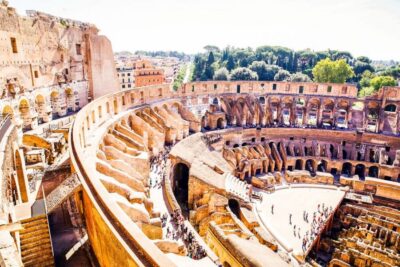
Colosseum: Underground and Ancient Rome Tour
Read our review →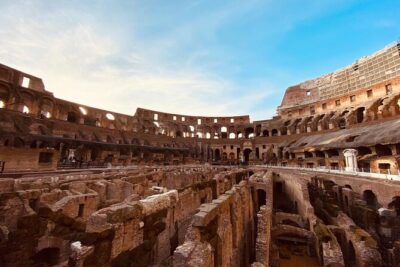
Rome: Colosseum with Arena, Roman Forum and Palatine Guided Tour
Read our review →
Venice: St. Mark’s Basilica Guided Tour & VR History Intro
Read our review →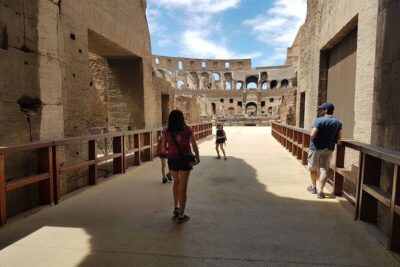
Colosseum & Ancient Rome with Arena Floor Option I Max 6 People
Read our review →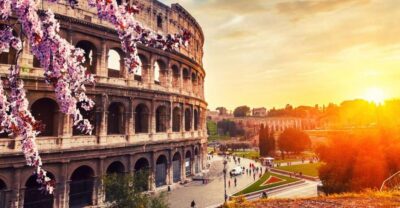
Rome: Colosseum, Ancient Rome Tour or AudioGuided Tour
Read our review →
Venice’s Best: Basilica, Doge’s Palace, Gondola & History Gallery
Read our review →
Taormina: Ancient Theater Skip-the-Line Ticket & Audio Guide
Read our review →
Discover the Ancient Ruins of Pompeii: Day Trip from Rome
Read our review →Browse the lists this tour appears in