

Review · RIO DE JANEIRO
Rio: Tijuca Forest Small Group Hike to Caves and Waterfalls
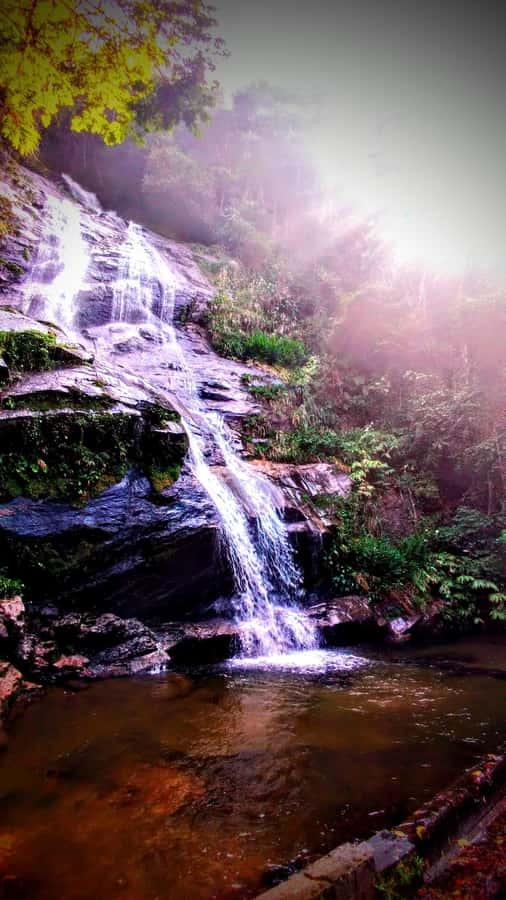
Tijuca Forest is Rio’s wild side, but this is not a gentle stroll through a city park. The route covers 6.2 kilometers with about 448 meters of climbing, leading from a grand waterfall to a chapel, old plantation remains, a gneiss cave, and a smaller cascade where you can rinse off beneath the falling water.
I like the way this tour joins nature and Brazilian history. You are not simply shown trees and waterfalls. Guides such as Vini, Tito, Riccardo, Luiza, and Renata explain coffee plantations, forest restoration, geology, Rio’s geography, and local wildlife. I also like the small groups and hotel pickup from much of Rio’s South Zone.
The catch is simple: the route can feel tougher than the word moderate suggests, especially on steep, rough sections. Wildlife sightings are never guaranteed, and some stops can become busy when other groups arrive.
Key points to know before you book
- A 6.2-kilometer rainforest circuit: Allow roughly 2.5 to 3 hours of actual walking within a six-hour outing.
- Taunay Waterfall begins the story: See the park’s largest waterfall before heading deeper into the forest.
- History beyond the scenery: Visit Mayrink Chapel, coffee-farm ruins, an old slave cemetery, and the former home of a park manager.
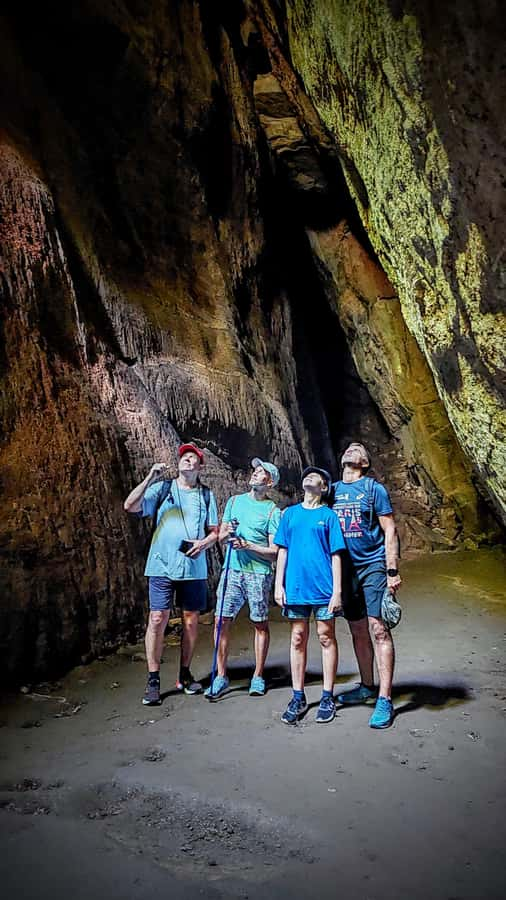
- The Bat Grotto is a real highlight: Morcego’s Grotto is described as Brazil’s largest gneiss cave.
- A waterfall shower near the end: Baronesa Cascade offers the best chance to cool your head and feet.
- Small-group guiding adds value: The guide supplies context on plants, animals, geology, Brazilian history, and Rio.
Why this Tijuca Forest hike feels different from a standard park visit
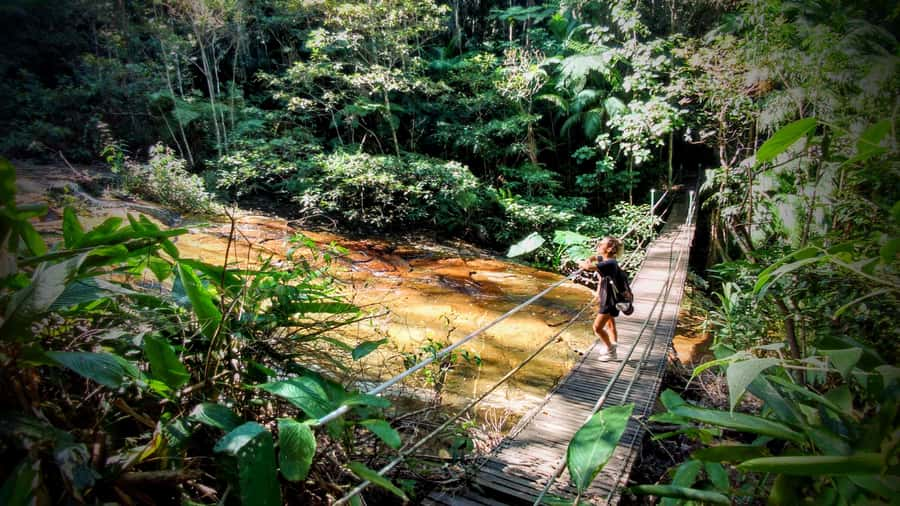
Tijuca National Park is unusual because the forest sits inside Rio, yet the route quickly leaves the city behind. The trees, damp trails, rock formations, and steep slopes create a proper rainforest outing, not just a scenic drive with a few photo stops.
The tour also gives you a useful sense of time. Tijuca was once used for coffee plantations, and many of the trails were laid out in the 19th century. The forest you see today is the result of replanting, making it one of the world’s largest replanted urban forests.
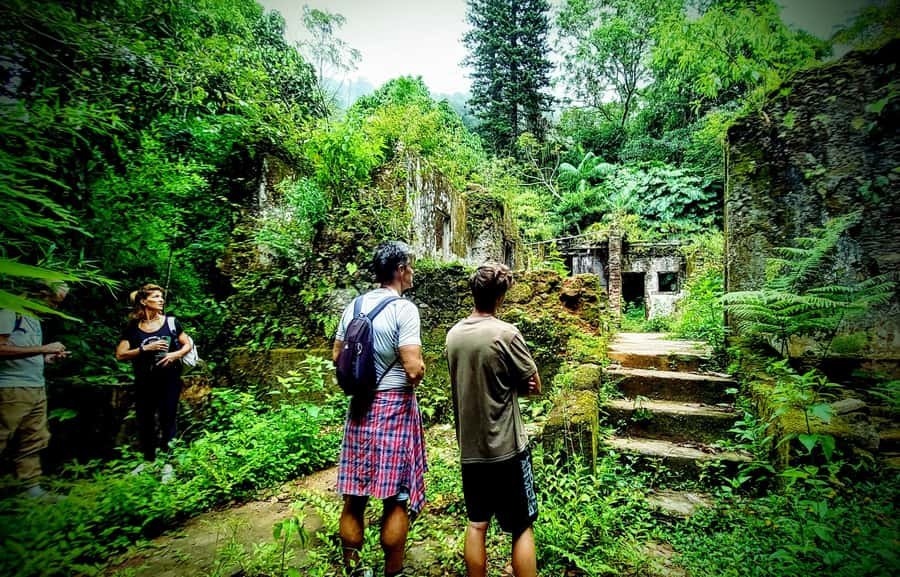
That background changes how you read the trail. An old wall or overgrown structure is not random jungle debris. It may point to plantation life, the work of enslaved people, or the people who later managed the park. The guides bring those links together in a way that makes the forest easier to understand.
The strongest part of the guiding is the range of subjects covered. Vini has been praised for connecting forest ecology with Brazilian political and social history. Luiza, who has a botany background, has explained the Tijuca ecosystem in detail. Riccardo and Tito are also noted for mixing information with humor and an easy pace.
More Small-Group History Tours in the world:
- London Small Group Tour of Historical Pubs
★ 5.0 · 10,422 reviews - Boston: Freedom Trail History Small Group Walking Tour
★ 5.0 · 6,450 reviews - Madrid Tapas & Taverns Small Group Food & History Tour
★ 5.0 · 2,664 reviews
The six-hour plan and hotel pickup
The full experience lasts about six hours, including transport from and back to selected hotels and hostels. Pickup is offered in Copacabana, Ipanema, Leblon, Leme, Flamengo, Santa Teresa, Gloria, Catete, Urca, and Praia de Botafogo.
That service is useful in Rio. You do not have to arrange your own ride into the park, and the driver handles the city traffic while the guide focuses on the outing. Pickup times can vary by address, so check that your hotel is covered. If it is not, a nearby meeting point is provided.
The vehicle has generally been described as comfortable, though one person found it cramped, especially for taller men. Another useful improvement would be clearer vehicle details before pickup, such as the model, license plate, or driver information. The short transfer softens this drawback, but you should still pack light.
Groups are small, and private options are available. A small group matters on a forest trail because you can hear the guide, ask questions, and keep a more natural pace. It also helps at the cave and waterfall, where a large crowd would make the stops less pleasant.
Taunay Waterfall and the first forest trails
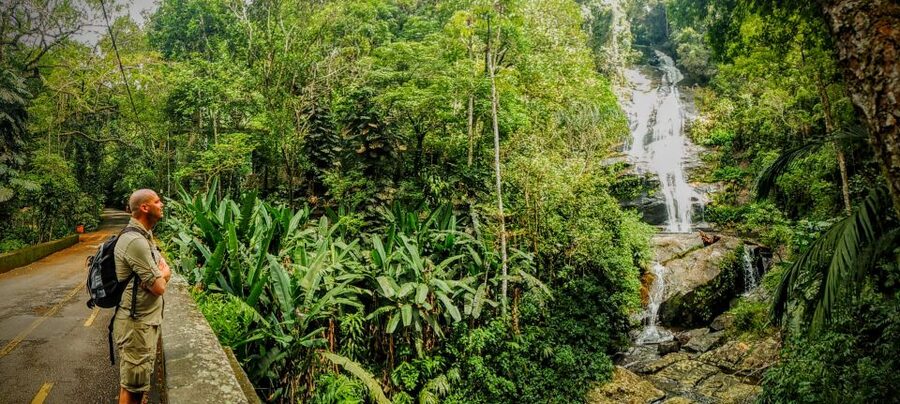
The first main stop is Cascatinha Taunay, the largest waterfall in the national park. You get a guided visit and time for photographs before the route moves into the forest.
This is a good opening stop because it gives you an immediate sense of the park’s scale. The waterfall is scenic, but the tour is not built around standing beside it for a long time. The real experience begins when you start walking along the older trails.
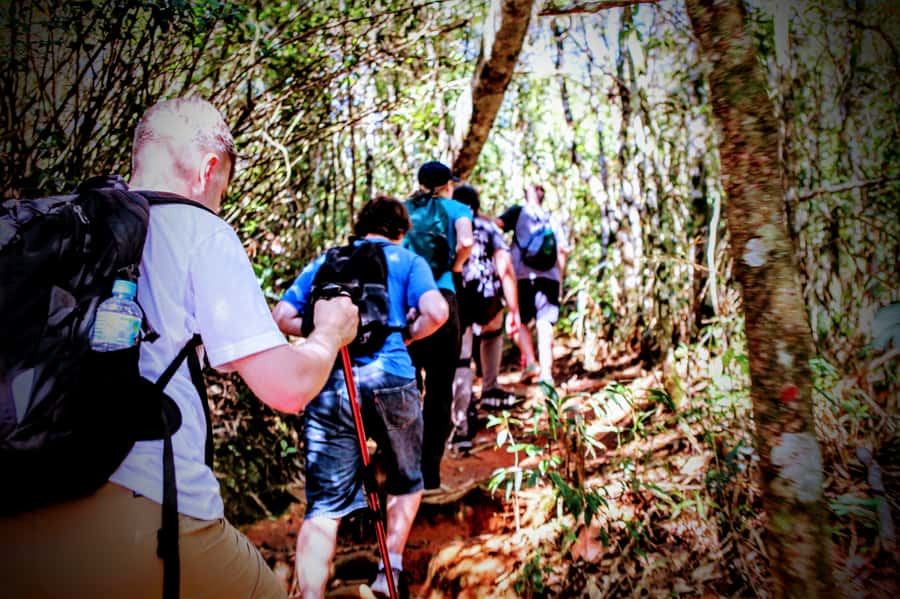
Expect the route to rise and fall over rough rainforest ground. Some parts are shaded, which helps in Rio’s heat, but shade does not remove the physical demand. Good sports shoes are important, and bare feet are not allowed.
The guide uses the walk to point out plants, geology, and signs of wildlife. You might see capuchin monkeys, coatis, or even a sloth, but you should not book this as a wildlife-viewing tour. Several outings have produced no animal sightings at all. The forest itself, including its plants and rock formations, is the main attraction.
Mayrink Chapel, ruins, and the old plantation story
Capela Mayrink dates from 1850 and makes a brief but worthwhile stop. It gives the forest a human scale, with a built landmark surrounded by thick greenery.
The chapel is more than a quick photograph. It helps explain how the area was used before it became the protected forest you see now. The guides also discuss the former coffee plantations and the 19th-century trails that still shape the route.
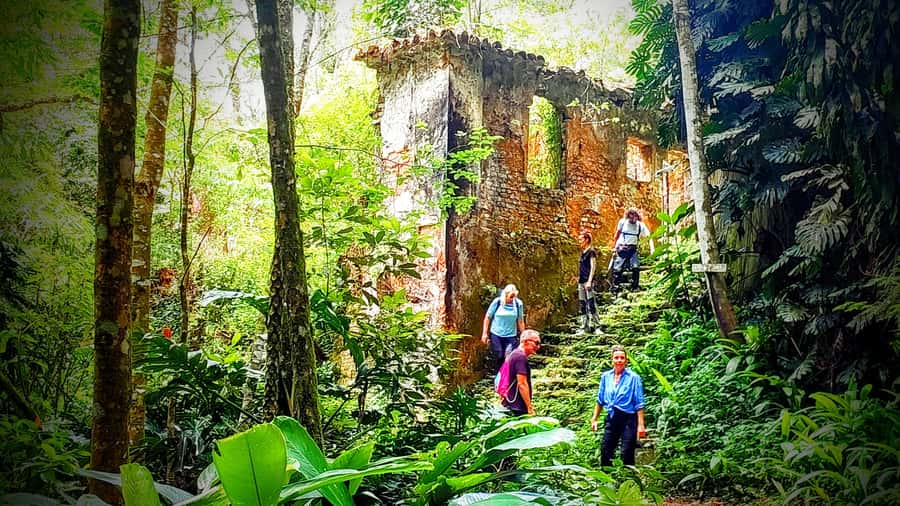
Further along, the circuit reaches the Eucalyptus Forest, which contains an old slave cemetery. This is an important part of the tour, and it deserves a respectful pause. The forest is beautiful, but the history beneath it is not decorative. The stop reminds you that plantation wealth depended on forced labor.
You also pass the remains of an old house and the former residence of Barão d’Escragnolle, once one of the park’s managers. The building is now associated with the Esquilos restaurant, but the route lets you see the connection between the forest and the people who shaped its later care.
I find these remains more rewarding than a long list of viewpoints. They help you understand why Tijuca is both a natural area and a historical site.
Same old streets, another chapter:
- New York City: American Museum of Natural History Ticket
★ 4.5 · 15,447 reviews - History and Hauntings of Salem Guided Walking Tour
★ 5.0 · 14,564 reviews - Colosseum: Underground and Ancient Rome Tour
★ 4.7 · 12,691 reviews - Lisbon: History, Stories and Lifestyle Walking Tour
★ 4.8 · 10,902 reviews
Cova da Onça and the suspension bridge
The Cova da Onça section brings a little more adventure to the walk. The suspension bridge is a short stop, but it breaks up the uphill walking and gives you a different view of the forest.
The itinerary includes several brief photo and sightseeing stops around this part of the route. They are useful for catching your breath, listening to the guide, and taking in the surroundings, though you should not expect every stop to be a major attraction.
Some outings have included a secret stop or an extra viewpoint, but the exact feel of those pauses can depend on the guide, weather, trail conditions, and group pace. That is normal for a forest circuit. The fixed highlights are the waterfall, chapel, cave, ruins, cascade, and viewpoints.
A steep uphill section appears on the route. One person found the hike easier than expected but was still ready to sleep during the ride back. Another nearly gave up on a steep section before finishing with help from the group and guide. That is the right way to read the fitness requirement: this is manageable for a reasonably fit person, but it is not flat or effortless.
Morcego’s Grotto and the rock beneath Rio
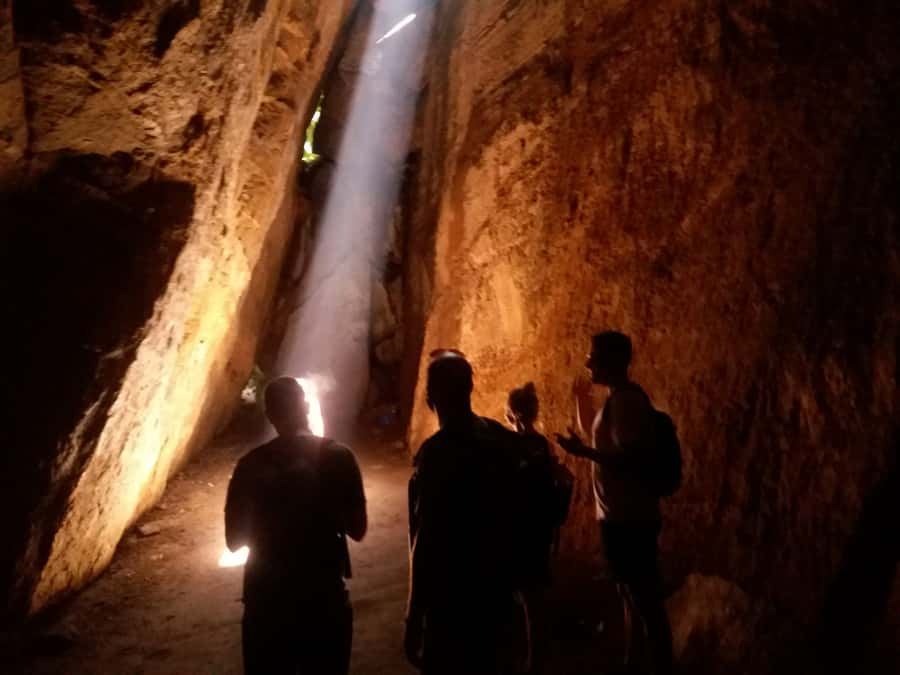
The Bat Grotto, also called Morcego’s Grotto, is one of the most unusual stops. It is described as the largest gneiss cave in Brazil, and the cave’s rock gives the forest a geological story as well as a biological one.
You walk to the grotto and spend time with the guide inside or around the entrance. The name may suggest a guaranteed bat encounter, but do not count on seeing bats. One outing found bats hibernating, and the guide did not disturb them. That is a good approach to wildlife.
The cave is not a polished attraction with lighting, paved paths, or a theatrical presentation. Its appeal comes from the raw rock, the sense of entering a hidden part of the forest, and the explanation of how the formation fits into the area’s geology.
Bring shoes with a secure grip. Rain can make rainforest rock and soil slick, and the route includes uphill and downhill sections. A daypack is better than a shoulder bag, and large luggage is not allowed.
Baronesa Cascade and the best cooling stop
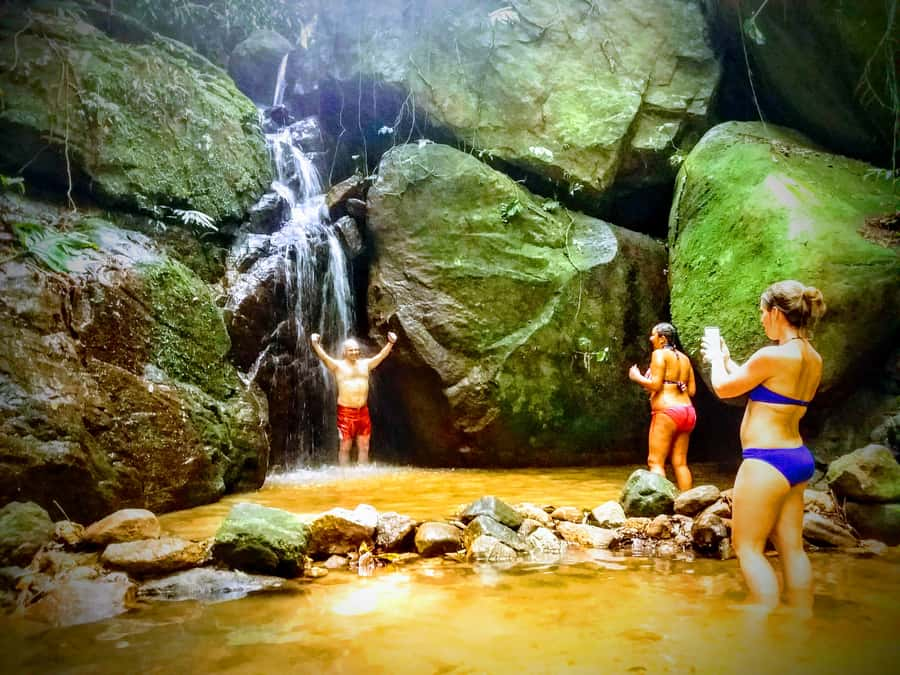
Baronesa Cascade arrives after much of the climbing and sightseeing. This is where you can cool off beneath a waterfall, making it one of the most memorable parts of the circuit.
Do not expect a large swimming hole or a long water activity. The attraction is a refreshing waterfall shower, particularly welcome after walking in humid conditions. Pack clothing that can get wet, or at least bring a dry layer for the ride back.
The cascade also gives the route a satisfying shape. You begin with the park’s largest waterfall, spend the middle section among ruins, bridges, and cave rock, then finish with a more personal encounter with the water.
After the cascade, the trail continues toward the starting point. You pass the old Barão d’Escragnolle residence, Wallace Fountain, and several viewpoints. The Wallace Fountain includes a sculpture representing goodness, charity, sobriety, and simplicity. It was given to Brazil by English philanthropist Richard Wallace and made in France in 1870.
Views, wildlife, and what you should realistically expect
The route includes Mirante da Palmira and other viewpoints, with scenic views along the way. These are pleasant additions, but this is not mainly a panoramic lookout tour. If your top goal is a sweeping view over Rio, a dedicated viewpoint excursion may suit you better.
The forest is the star. You get cool shade, dense plant life, rock, streams, and the feeling of being far from the city even though Rio is close. The guides are particularly useful here because many small details would otherwise pass unnoticed.
Wildlife is a bonus. Capuchin monkeys, coatis, and a sloth have appeared on some outings, but other walks have seen no animals. Mosquitoes have not always been a problem, yet insect repellent belongs in your daypack because conditions change.
Rain does not necessarily ruin the trip. One guide supplied ponchos during wet weather, and light rain can make the forest feel especially atmospheric. Still, wet conditions may make the trail harder, so wear shoes designed for walking rather than casual sneakers with smooth soles.
Is the $69 price good value?
At $69 per person, the tour is fairly priced if you want transport, a bilingual guide, insurance, and a carefully planned route through several parts of Tijuca. You are paying for more than a walk to one waterfall.
The value comes from the combination of access and interpretation. A self-guided visit could show you some of the scenery, but you might miss the plantation remains, the cemetery, the geological story of the cave, and the meaning of the old structures. You would also need to arrange transport and navigate the route yourself.
Food and drinks are not included. Bring enough water, snacks, and a packed meal if you need one. Sunscreen, insect repellent, sports clothing, and a daypack are also your responsibility.
The tour is especially good value for a first visit to Rio when you want half a day outdoors without sacrificing the city’s cultural context. It is less suitable if you want a quiet, solitary hike, guaranteed animals, or a purely strenuous mountain challenge.
Who should book this hike?
Book it if you enjoy moderate walking and want your guide to explain what you are seeing. It suits people who like history, plants, caves, waterfalls, and a bit of exercise in the same outing.
You should be comfortable walking for about three hours over rough ground with 448 meters of elevation gain. People with heart problems and wheelchair users should not choose this activity. If you are unsure about your fitness, ask the operator about current trail conditions before booking.
Families with older children may find it suitable, but the supplied information does not set a minimum age. The rough footing and steep sections matter more than the distance alone.
The bilingual guiding is a major strength. English and Portuguese are offered, and guides such as Vini, Tito, Riccardo, Luiza, Renata, Gustavo, and Fernando have led outings that combine forest science with Brazilian history and Rio geography.
Should you book it?
I would book this tour if you want Tijuca Forest with a story attached. The route gives you waterfalls, a cave, a suspension bridge, a chapel, plantation remains, and a waterfall shower, while the small group and hotel transport keep the day simple.
I would skip it if you dislike uneven trails, steep climbs, wet clothing, or uncertainty about wildlife. Also skip it if a guaranteed panoramic view or animal encounter matters more to you than the forest itself.
For most reasonably fit visitors, the $69 price buys a useful and varied introduction to one of Rio’s most unusual places. Bring water, snacks, proper shoes, and modest expectations about wildlife. The guide, not the animal checklist, is what makes this outing work.
FAQ
How long does the Tijuca Forest hike last?
The full activity lasts six hours, including transport. The hike itself takes about 2.5 to 3 hours and covers 6.2 kilometers.
How difficult is the hike?
It is rated moderate. The route includes rough rainforest terrain, uphill and downhill walking, and about 448 meters of elevation gain.
What waterfalls are included?
The route visits Cascatinha Taunay, the largest waterfall in the national park, and Baronesa Cascade, where you can cool off beneath the falling water.
Will I see animals?
Animal sightings are not guaranteed. Some outings have seen capuchin monkeys, coatis, or a sloth, while others have seen no animals.
Is hotel pickup available?
Pickup and drop-off are available from designated hotels and hostels in Rio’s South Zone, including areas such as Copacabana, Ipanema, Leblon, Leme, Flamengo, Santa Teresa, Gloria, Catete, Urca, and Praia de Botafogo. If your address is not covered, a nearby meeting point may be provided.
What should I bring?
Bring food, snacks, water, sunscreen, insect repellent, sports shoes, sportswear, and a daypack. Pack a dry layer if you plan to use the waterfall shower.
Is the tour offered in English?
Yes. The tour is offered with a live bilingual guide in English and Portuguese.
Can I cancel the booking?
You can cancel up to 24 hours in advance for a full refund. Reserve-now, pay-later booking is also available.
Latest history tours reviewed in the world
- From Athens: Ancient Olympia Full-Day Private Tour★ 4.8 · 22 reviews
- From Athens: Explore Ancient Corinth & Charming Nafplion★ 4.6 · 102 reviews
- From Athens: Explore Ancient Greece 4-Day Tour★ 4.7 · 73 reviews
- From Albufeira: Wine Tasting & Historic Silves Tour★ 4.9 · 421 reviews
- From Albufeira: Historical Algarve Region Tour★ 4.7 · 585 reviews
- From Alexandria: Full-Day Guided Tour of Historical Sights★ 4.5 · 54 reviews
- Franklin: Ghost Tour in Historic Franklin★ 4.8 · 65 reviews
- Freiburg: Exciting City Tour with sightseeing and history★ 4.3 · 103 reviews
Rio de Janeiro History Tours, compared.

Rio de Janeiro: Historic Rio and Santa Teresa Half-Day Tour
Read our review →
Rio de Janeiro: Little Africa Heritage Walking Tour
Read our review →
Ancient Rio and Santa Teresa Tour with Hotel pick-up and drop-off
Read our review →Browse the lists this tour appears in