
Review · UZBEKISTAN
Samarkand: Historical Monuments Guided Walking Tour
Samarkand’s great monuments are close enough to link on foot, but far too layered to understand by simply taking photos and moving on. This five-hour walking tour connects Gur-e-Amir, Registan Square, Bibi-Khanym Mosque, Shah-i-Zinda, and Siyob Bazaar in a sensible order, with an English-speaking guide filling in the people, legends, and faith behind the tiles.
I like the way the tour mixes headline sights with a real market stop. I also like that guides such as Gulsanam, Sarvinoz, Shahrizoda, and Sevinch are praised for adjusting the pace, answering questions about present-day Uzbekistan, and taking excellent photos. The main drawback is the walking: the monuments are spread across central Samarkand, and the separate entry fees add about $21.50 to the $20 tour price.
Key points at a glance
- Gur-e-Amir begins the story: See the Timurid ruler Amir Timur’s mausoleum before visiting the monuments shaped by his dynasty.
- Registan gets two full hours: This is the tour’s longest stop, giving you time to study all three madrasahs instead of rushing through the square.
- Four major entry tickets cost extra: The stated prices total 275,000 UZS, or about $21.50, in addition to the tour fee.
- Siyob Bazaar adds local life: Sample dried fruit, nuts, and Samarkand bread after the formal monuments.
- Shah-i-Zinda may be the visual finale: The narrow necropolis lanes and turquoise tilework are especially striking near sunset.
- The guide makes the difference: The strongest part of the experience is the storytelling, with several guides praised for warmth, patience, history, and photography.
Why this walking route works in Samarkand
Samarkand can feel like two cities at once. One is the monumental city of domes, courtyards, and tiled facades. The other is the lived-in city of markets, bread sellers, families, and everyday Uzbek life. This route gives you both in a single half-day.
The order is also practical. You begin at Gur-e-Amir, walk to Registan Square, continue to Bibi-Khanym Mosque, pause at Siyob Bazaar, and finish at Shah-i-Zinda. The stops are not just a collection of beautiful buildings. Together, they explain how Samarkand grew under the Timurids and how religion, trade, power, and craftsmanship shaped the city.
You meet at the entrance to the Gur-e-Amir complex. Hotel pickup and drop-off are not included, so you need to reach the meeting point on your own. The advertised price is $20 per person, which is good value for five hours with a professional guide, but you should budget separately for entrance tickets and any food or shopping.
More History Walking Tours in the world:
- History and Hauntings of Salem Guided Walking Tour
★ 5.0 · 14,564 reviews - Lisbon: History, Stories and Lifestyle Walking Tour
★ 4.8 · 10,902 reviews - Boston: Freedom Trail History Small Group Walking Tour
★ 5.0 · 6,450 reviews
Gur-e-Amir, where the Timurid story begins
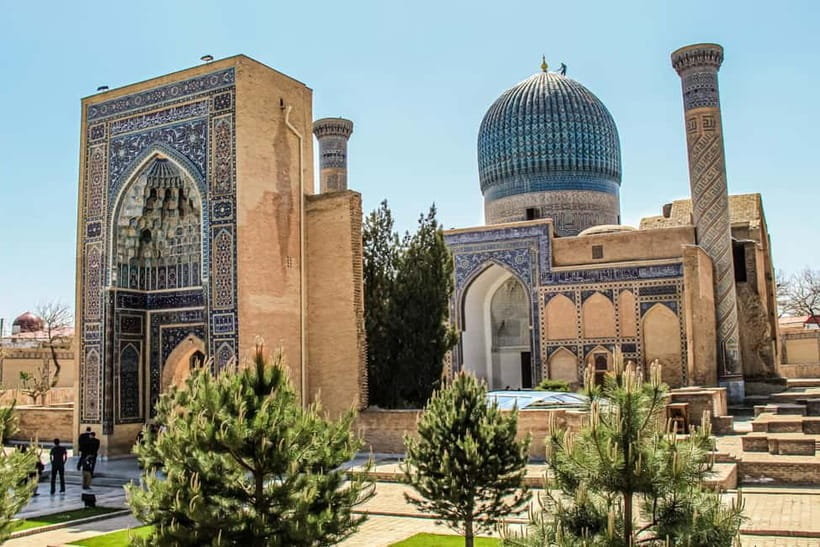
The first visit lasts about 100 minutes, giving you enough time to understand why this mausoleum matters before the tour moves to the larger monuments. Gur-e-Amir, also written as Gur-i Amir, is the resting place of Amir Timur, the ruler often known in the West as Tamerlane.
The blue-tiled dome is the first feature to catch your eye, but the interior deserves your attention too. Your guide can explain the symbolism, the building’s connection to the Timurid dynasty, and the way Amir Timur’s legacy shaped Samarkand. This context helps you read the later monuments as part of one ambitious building program rather than as isolated attractions.
This is a good opening stop because it puts a human figure at the center of the city’s story. You are not starting with architecture alone. You are starting with the ruler whose power and ambition helped make Samarkand a major Silk Road center.
Allow time for a slower look inside. Flash photography is not permitted in the monuments, and smoking is not allowed inside. Since this is a religious site, modest clothing is expected. A hat and sunscreen are useful outdoors, but remove the hat when local customs or the setting call for it.
Registan Square gives you the full Samarkand spectacle
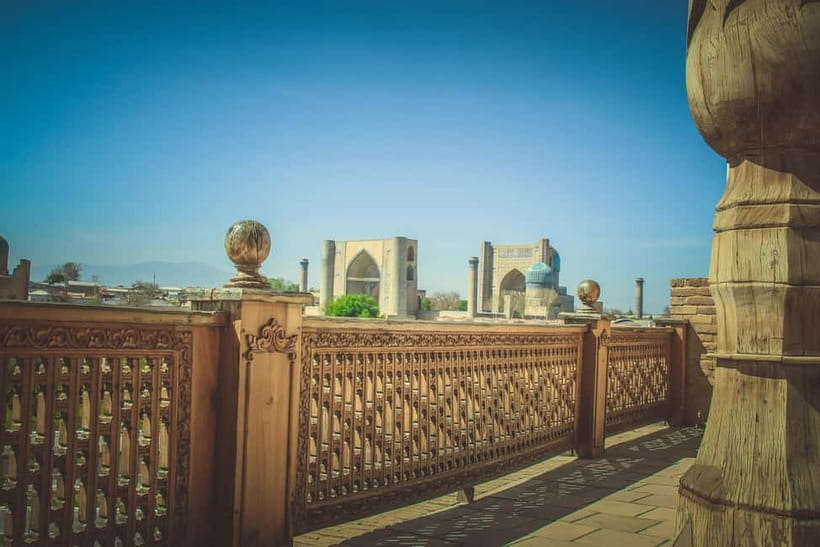
Registan receives about two hours, the longest stop on the route. That is a sensible choice. The square is not something you should skim in 20 minutes, especially if you want to compare its three madrasahs: Ulugh Beg, Sher-Dor, and Tillya-Kori.
The scale can be startling. Each facade has its own decoration, color, and visual rhythm. Your guide can point out the tile patterns, domes, arches, and restored surfaces, then explain how the square functioned as a center of study and public life. Without that help, it is easy to see only a grand photo backdrop.
I would use this stop for both guided explanation and quiet looking. Let the guide establish the main story, then take a few minutes to notice the details for yourself. The blue and turquoise tilework changes as the light moves, and the three buildings look different from each angle.
Registan is also the place where photography can take over. Guides including Gulsanam and Sarvinoz are often praised for helping with photos and finding good angles. That is useful here, but do not let the camera keep you from looking upward and across the whole square.
The two-hour allocation may feel long if you prefer a quick overview, but it is valuable for first-time visitors. Samarkand’s key monuments are large, and the guide’s explanations are most helpful when you have time to ask questions. Several guides are also happy to discuss modern life in Uzbekistan, not just dates and dynasties.
Bibi-Khanym Mosque shows Timur’s ambition
The visit to Bibi-Khanym Mosque lasts about 30 minutes. That is shorter than the Registan stop, but it works as a focused visit after the square.
The mosque is known for its impressive scale and its place in Amir Timur’s building program. The tour also covers the stories and legends linked to its construction. This is one of those places where the gap between historical fact and popular story becomes part of the experience, so listen for the difference between what is documented and what has been passed down.
Look at the structure from a little distance before moving closer. The size makes more sense when you see the full facade and surrounding space together. Then pay attention to the remaining decoration and the signs of restoration.
Because this is a mosque and an active religious setting, dress respectfully. Avoid very short or thin clothing, and follow any local instructions inside. Photography is allowed, but flash photography is not.
More Guided Tours in the world:
- Edinburgh: Edinburgh Castle Guided History Tour with Tickets
★ 4.8 · 9,933 reviews - Historic Charleston Guided Sightseeing Walking Tour
★ 5.0 · 6,216 reviews - Rome: Colosseum with Arena, Roman Forum and Palatine Guided Tour
★ 4.0 · 5,598 reviews - Venice: St. Mark’s Basilica Guided Tour & VR History Intro
★ 3.9 · 4,880 reviews
Siyob Bazaar changes the pace
After the formal monuments, the tour pauses for about 30 minutes at Siyob Bazaar, Samarkand’s largest and oldest market. This is one of the route’s best choices because it gives you a break from architecture and a chance to see how the city eats and shops.
You can browse dried fruits, nuts, local products, and Samarkand non, the round bread associated with the city. One visitor specifically noted a price of 8,000 soms for a loaf, though prices can change. You can use cash or a card at the destinations, but carrying some local currency is still sensible for small purchases.
Do not expect a long meal here. Lunch is not included, and the planned stop is a short break for photos and shopping. If you want a full market meal, you should arrange that separately or confirm with the guide how much time is available.
This is also a useful moment to ask your guide for advice about buying souvenirs. Sevinch has been praised for helping with local products and market purchases, while other guides have offered suggestions for food and places to visit later in the stay. The market stop feels more personal when you ask about the items rather than simply walking past the stalls.
Shah-i-Zinda is the atmospheric final stop
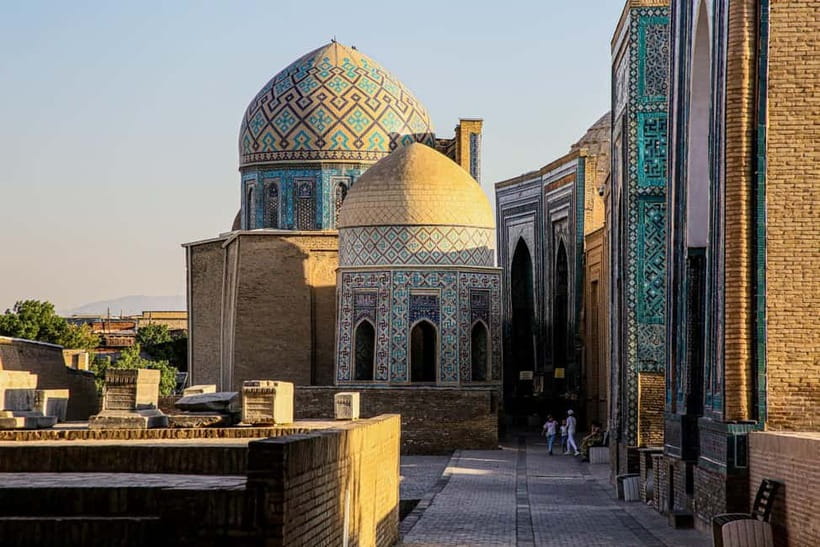
The tour finishes at Shah-i-Zinda, with about one hour for guided sightseeing and a possible sunset visit. This necropolis is made up of mausoleums from different periods, linked by narrow lanes and stairways.
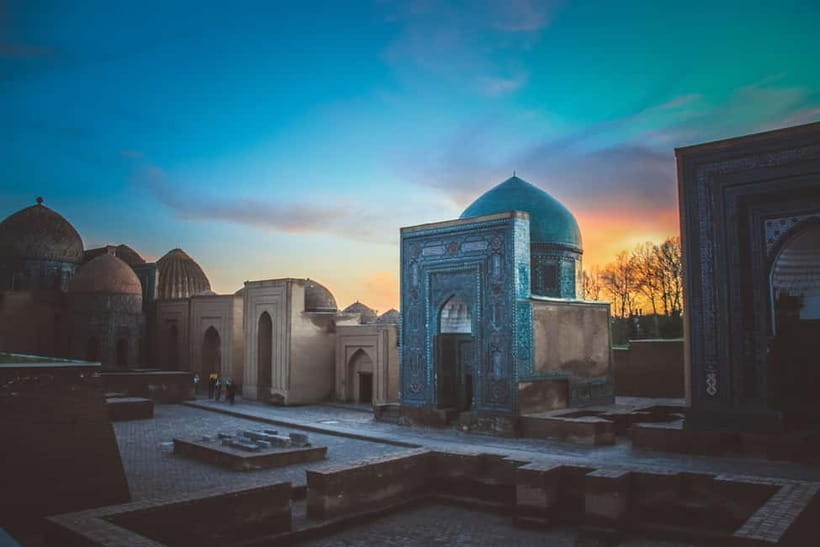
The visual appeal here comes from the close-up detail. Instead of one enormous open square, you move through a sequence of decorated facades, turquoise tiles, and intricate mosaics. The changing styles reveal how the site developed over time, and your guide can explain its spiritual importance.
The setting calls for quiet respect. Shah-i-Zinda is a sacred place, not just an outdoor gallery. Modest clothing is important, and you should follow instructions about where to walk and what can be photographed.
Finishing here can be especially effective. After the broad scale of Registan and Bibi-Khanym, the tighter lanes make you slow down and study the craftsmanship. If the timing lines up with sunset, the light can add another layer to the tiles, although the exact effect depends on the day and weather.
The guide is the heart of the experience
The monuments are the reason to come, but the guide determines how much you take away. The most consistently praised guides include Gulsanam, Sarvinoz, Shahrizoda, Sevinch, Sevara, Shah, and Zulfina. Names may depend on the date and availability, so you should not assume you will receive one particular person unless that is confirmed in advance.
The strongest guide qualities are clear English, historical storytelling, patience, and flexibility. Gulsanam is often noted for combining facts with humor and for helping with photographs. Sarvinoz is praised for answering questions about both the sights and daily life in Uzbekistan. Shahrizoda is described as especially strong on Central Asian history and as attentive to the group’s pace.
The tour can also feel almost private when numbers are low. Some departures have had only one person or a very small group, which allows more conversation and easier adjustments. Other departures can include a larger group, so the amount of personal attention may vary.
If you have limited time, tell the guide at the start. Guides have adjusted walking speed, repeated information, and adapted the program to different abilities. That does not remove the physical demands of the route, but it can make the day more comfortable.
Walking, weather, and practical comfort
Five hours on foot is the main thing to plan for. Comfortable shoes are essential, and the route includes extensive walking between monuments as well as time spent standing on hard surfaces. One account specifically noted that the attractions are spread across the city, though there are breaks along the way.
The weather matters. Samarkand can be sunny and hot, so bring a hat, sunscreen, and water. A cold or rainy day can also make the route tiring. The experience has still worked in poor weather, but you will enjoy it more with suitable clothing and a flexible attitude.
The information provided about accessibility is inconsistent. The activity details call the tour wheelchair accessible, while the restrictions say it is not suitable for wheelchair users or people with mobility impairments. Because this is a long walking route through historic religious sites, you should contact the provider before booking if accessibility is important.
Children under six are not recommended. Older children who can manage several hours of walking may enjoy the stories and market stop, but this is primarily a history and architecture tour rather than a child-focused activity.
What the $20 price really includes
At $20 per person, the tour fee is modest for five hours of guiding. You are paying for an English-speaking professional who links the monuments together, explains cultural details, answers questions, and may help with photographs and local suggestions.
The entrance fees are extra:
- Gur-e-Amir: 75,000 UZS, listed as about $6
- Registan Square: 100,000 UZS, listed as about $8.50
- Bibi-Khanym Mosque: 50,000 UZS, listed as about $3.50
- Shah-i-Zinda: 50,000 UZS, listed as about $3.50
Together, the stated entrance fees total 275,000 UZS, or approximately $21.50. That brings the basic cost to around $41.50 per person before food, shopping, and transport to the meeting point.
That is still fair if you want a guided introduction to all four major sites. A self-guided visit could cost less in guiding fees, but you would need to arrange the route, interpret the history, and manage the timing yourself. The value here is strongest for a first visit or for anyone with only one day in Samarkand.
Who should book this tour
I would choose this tour if you want the major sights in one organized half-day and prefer stories to silent sightseeing. It suits first-time visitors, history fans, architecture lovers, solo travelers who want company, and anyone arriving in Samarkand with limited time.
It is also a good fit if you like asking questions about present-day Uzbekistan. The guides are not limited to dates and rulers, and several have helped people understand local customs, food, shopping, and daily life.
I would think twice if you dislike long walks, want a slow visit at every monument, or need guaranteed wheelchair access. The route covers a lot, and the schedule is full even with planned breaks. You also need to pay for each major site separately.
Should you book it?
Book it if you want a strong first look at Samarkand without arranging four major monuments on your own. The route is well chosen, the $20 guiding fee is reasonable, and the combination of Gur-e-Amir, Registan, Bibi-Khanym, Shah-i-Zinda, and Siyob Bazaar gives you both monumental Samarkand and everyday market life.
Before booking, confirm the meeting time, ask about the group size, and clarify the accessibility issue. Wear proper walking shoes, dress modestly, bring sun protection, and set aside roughly $21.50 for entrance fees. If you do that, this is a practical and engaging way to get your bearings in one of Central Asia’s great historic cities.
FAQ
Where does the Samarkand walking tour start?
You meet your guide at the entrance to the Gur-e-Amir complex in Samarkand.
How long does the tour last?
The tour lasts five hours.
Which monuments are included?
The route includes Gur-e-Amir Mausoleum, Registan Square, Bibi-Khanym Mosque, and the Shah-i-Zinda necropolis. It also finishes at Siyob Bazaar.
Is the tour conducted in English?
Yes. The activity includes a live English-speaking guide.
Are entrance fees included in the $20 price?
No. Entrance fees are separate. The stated prices are 75,000 UZS for Gur-e-Amir, 100,000 UZS for Registan, 50,000 UZS for Bibi-Khanym Mosque, and 50,000 UZS for Shah-i-Zinda.
Is food included?
No. Meals and lunch are not included. The tour includes a break at Siyob Bazaar, where you can buy local foods and other products.
What should I bring?
Bring comfortable walking shoes, a hat, and sunscreen. Modest clothing is appropriate because the route includes religious sites.
Is the tour suitable for wheelchair users?
The activity information gives conflicting accessibility details. It is described as wheelchair accessible in one section but also listed as unsuitable for wheelchair users and people with mobility impairments. Contact the provider before booking to confirm whether the route fits your needs.
Latest history tours reviewed in the world
- From Athens: Ancient Olympia Full-Day Private Tour★ 4.8 · 22 reviews
- From Athens: Explore Ancient Corinth & Charming Nafplion★ 4.6 · 102 reviews
- From Athens: Explore Ancient Greece 4-Day Tour★ 4.7 · 73 reviews
- From Albufeira: Wine Tasting & Historic Silves Tour★ 4.9 · 421 reviews
- From Albufeira: Historical Algarve Region Tour★ 4.7 · 585 reviews
- From Alexandria: Full-Day Guided Tour of Historical Sights★ 4.5 · 54 reviews
- Franklin: Ghost Tour in Historic Franklin★ 4.8 · 65 reviews
- Freiburg: Exciting City Tour with sightseeing and history★ 4.3 · 103 reviews
Uzbekistan History Tours, compared.
Khiva: Historical City Highlights Guided Walking Tour
Read our review →
Browse the lists this tour appears in