
Review · RIO DE JANEIRO
Rio de Janeiro: Little Africa Heritage Walking Tour
Rio’s Little Africa tour puts Afro-Brazilian history at the center of your visit. Starting at the Rio Art Museum, you walk through places tied to slavery, samba, food, dance, and the lives of freed Black Brazilians. Pedra do Sal, often linked with the birth of samba, is the emotional high point.
I like the rooftop view over Mauá Square and Guanabara Bay, and I like that the tour connects major historical events with real streets, statues, murals, and gathering places. The main consideration is the heat: you’ll be outside for about two and a half hours, rain or shine, with no hotel pickup.
Key points
- A focused look at Afro-Brazilian Rio: The route deals directly with slavery, freedom, race, culture, and the continuing influence of African traditions.
- Pedra do Sal and the origins of samba: You stop at one of Rio’s most important Black cultural sites.
- A useful opening view: The rooftop at the Rio Art Museum gives you a clear sense of the port district before the walking begins.
- Personal, lively guiding: Guides including Luana, Nathalia, Larissa, Eddie, Ryane, Marina, and Raquel are praised for warmth, humor, and strong storytelling.
- A compact route: In 150 minutes, you see several major sites without giving up an entire day.
- Bring water and sun protection: The walk continues in poor weather, and shade may not always be available.
Why Little Africa belongs early in your Rio plans
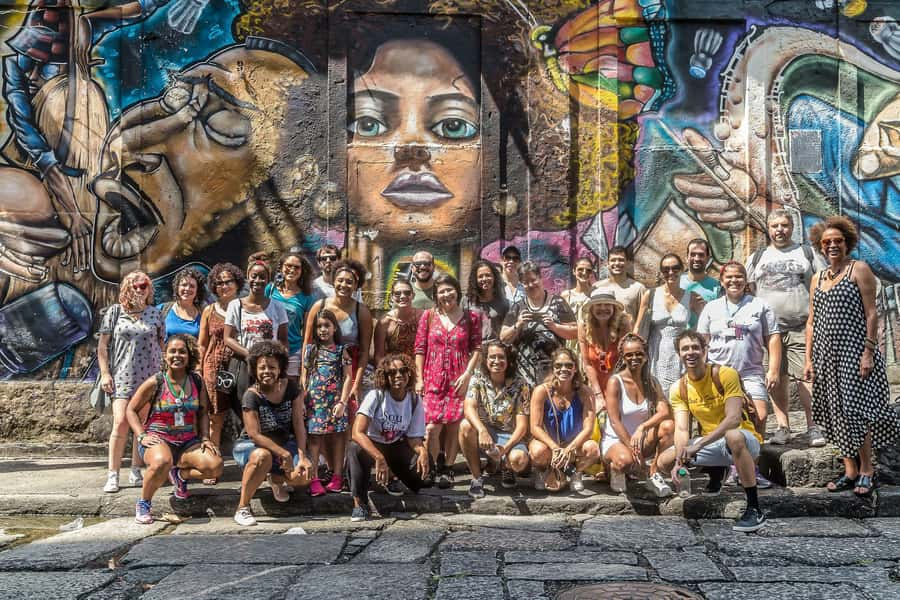
Many first visits to Rio focus on beaches, viewpoints, music, and famous landmarks. Those places matter, but they do not explain the city on their own. The port district gives you a different key to Rio, one tied to Brazil’s colonial period, the Atlantic slave trade, and the survival of African customs after slavery ended.
The tour begins with this wider setting. Your guide explains Brazil’s colonial past before taking you through Little Africa. That order is useful. Instead of seeing old streets and monuments as isolated sights, you learn how the port became a center for Black life after the slave trade was outlawed.
Freed people continued to work and live in the area, and neighborhoods around the port became known as Little Africa near the start of the 20th century. The tour also connects the past to the present, including questions about structural racism and racial identity in Brazil.
I recommend taking this walk near the start of your Rio stay if you can. Several people found that it helped them understand the rest of the city, and that makes sense. You begin noticing how food, music, dance, religion, and public art carry history forward.
More History Walking Tours in the world:
- History and Hauntings of Salem Guided Walking Tour
★ 5.0 · 14,564 reviews - Lisbon: History, Stories and Lifestyle Walking Tour
★ 4.8 · 10,902 reviews - Boston: Freedom Trail History Small Group Walking Tour
★ 5.0 · 6,450 reviews
Meeting at the Rio Art Museum
You meet your guide in front of the Museu de Arte do Rio, usually called MAR, beside Mauá Square. Arrive five minutes early. The guide can wait only 15 minutes after the scheduled start, so this is not the time to rely on a slow taxi or a last-minute hotel departure.
There is no hotel pickup or drop-off. You need to reach the museum on your own and return there at the end. That makes the tour simple for anyone already planning to visit the port area, but less convenient if you are staying far from central Rio.
The first section introduces Brazil during the colonial period. It is not filler. The story of Little Africa makes much more sense once you understand the scale of slavery in Brazil and the way abolition shaped, but did not solve, the lives of Black Brazilians.
The guide then takes you to a rooftop area for a short break of about 10 minutes. From here, you can look over Mauá Square and Guanabara Bay. This pause gives you a useful map in your head: the port, the hills, the museum, and the streets where the rest of the walk unfolds.
Morro da Conceição: the port district comes into focus
The walk continues toward Morro da Conceição, with about 20 minutes of guided walking. The hill is part of the old port area and helps show how Rio developed around its waterfront.
This section is less about checking off one grand monument and more about seeing how neighborhoods fit together. Your guide explains the local setting while you walk, so listen closely and ask questions. The best value here comes from the interpretation, not from a single photo stop.
The route can feel demanding in hot weather because you are walking on city streets rather than moving between air-conditioned attractions. Comfortable shoes are important. Wear light clothing, use sunscreen, and carry water.
The guides are one of the strongest parts of the experience. Luana, Nathalia, Larissa, Eddie, Ryane, Marina, Raquel, and others are praised for making difficult subjects clear without turning the walk into a dry lecture. Several guides also use humor, acting, personal stories, and questions to keep the group involved.
That style matters here. The subject includes slavery, racism, and cultural loss. A good guide needs to be direct but also sensitive. You are not simply looking at old buildings. You are discussing people and communities whose stories were often left out of standard city tours.
Largo de São Francisco da Prainha and Afro-Brazilian food
At Largo de São Francisco da Prainha, the tour turns toward food and daily culture. Your guide explains African influence on Brazilian gastronomy, giving you a practical way to connect history with something you can taste.
This is one of the most useful parts of the walk because food can make a large historical subject easier to understand. African traditions did not remain in museums. They shaped ingredients, cooking methods, dishes, and the food culture of Brazil.
The square also has places to eat and drink, and several guides offer suggestions for continuing your afternoon. Some people choose to stay for lunch after the walk. The tour itself does not include lunch, so budget separately if you want to eat in the area.
One guide helped members of the group find a restaurant serving bobó de camarão, a shrimp stew. Another visitor wished the tour included lunch at the square. That tells you two things: the area is a good place to continue the cultural experience, but you should not expect a meal to be part of the $40 price.
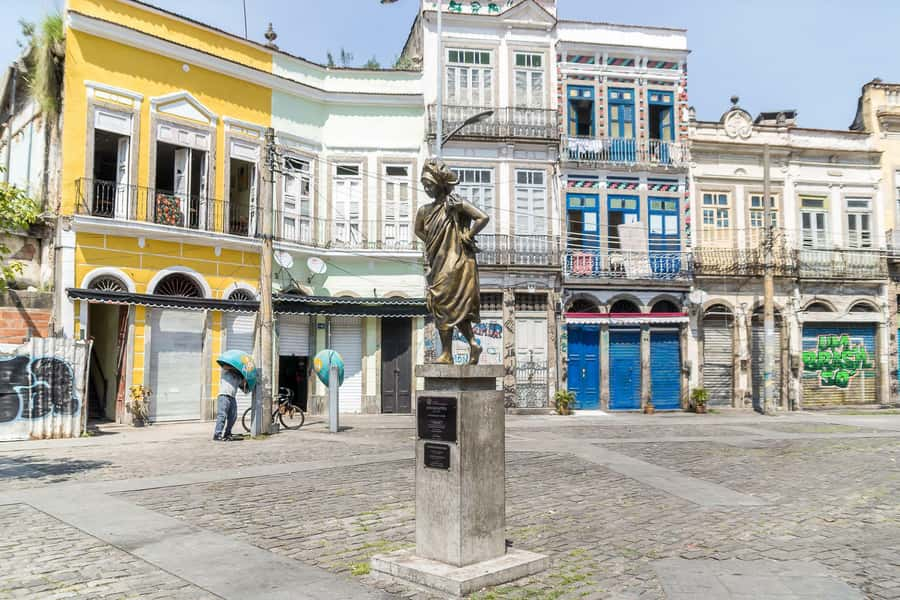
The square is also connected with Mercedes Baptista. You stop at her statue and learn about her role as a pioneer of Afro-Brazilian dance. Baptista was the first Black dancer at Rio’s Municipal Theater and an important figure in the development of Afro-inspired dance in Brazil.
This stop broadens the story beyond slavery and samba. It shows Black achievement, creativity, and public recognition, while also raising questions about who was allowed into major cultural institutions.
More History Tours in the world:
- New York City: American Museum of Natural History Ticket
★ 4.5 · 15,447 reviews - Colosseum: Underground and Ancient Rome Tour
★ 4.7 · 12,691 reviews - London Small Group Tour of Historical Pubs
★ 5.0 · 10,422 reviews - Prague: Oldtown, Medieval Underground & Dungeon History Tour
★ 4.3 · 10,277 reviews
Pedra do Sal and the birth of samba
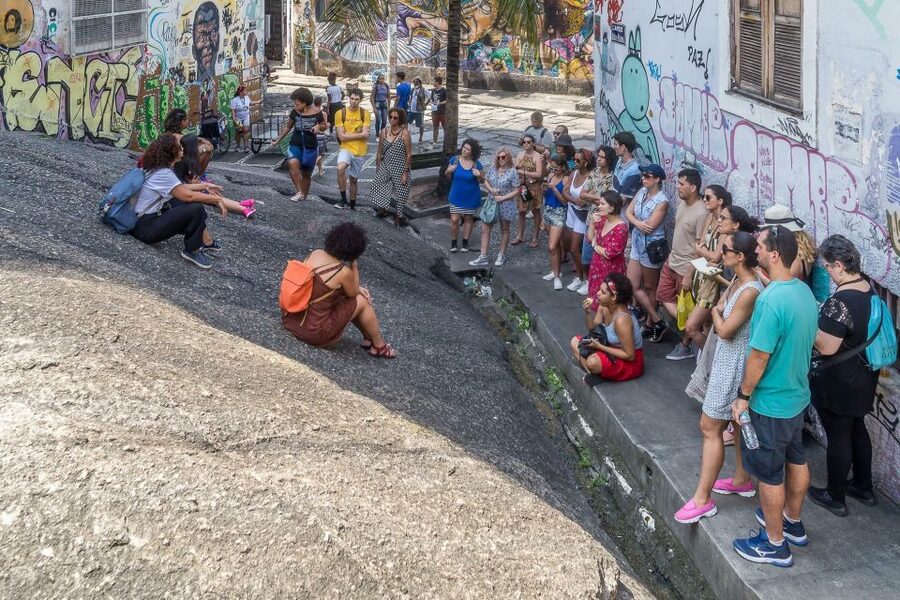
Pedra do Sal is the most memorable stop for many people on the route. You spend about 20 minutes here with your guide, learning why the site is closely associated with the birth of samba.
The rock and surrounding streets are tied to the oldest continuously inhabited Black neighborhood in Brazil. That phrase carries real weight. You are looking at a place where Black community life endured across generations, despite slavery, discrimination, poverty, and efforts to reshape the port district.
Samba is not treated as a decorative soundtrack here. Your guide explains it as part of a social and cultural story. Music gave people a way to gather, express identity, and maintain traditions in a city shaped by forced migration and inequality.
This is also a good place to think about the difference between seeing Rio and understanding it. You can hear samba in performances and nightlife across the city, but Pedra do Sal gives the music a physical and historical home.
The stop is not a full samba performance, and you should not book it expecting an evening show. Its value is in the explanation and the setting. The guide helps you connect the site with the wider African influence on Rio’s music and community life.
The Hanging Garden of Valongo
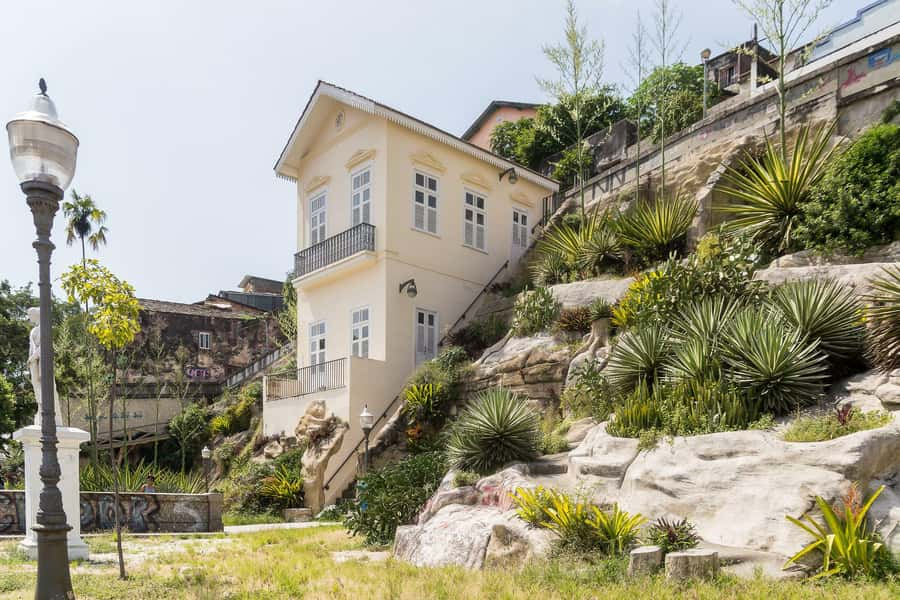
The Jardim Suspenso do Valongo, or Hanging Garden of Valongo, is another compact but important stop. You spend around 20 minutes here, continuing the story of the port and the people brought through it.
The garden is a place for reflection as much as sightseeing. The route does not treat the area as a simple photo opportunity. It brings the human cost of the slave trade into the open and explains how this part of Rio was shaped by that history.
This can be emotionally heavy. The tour deals with slavery plainly, and several guides connect the historical material to present-day racial dynamics. If you want only light sightseeing, this is not the right activity. If you believe a trip should include difficult truths as well as attractive views, the subject is essential.
I appreciate that the route does not stop with the suffering. It also shows survival, cultural creation, and the people who built communities in the face of brutal conditions. That balance gives the tour more purpose than a simple account of tragedy.
Cais do Valongo: ending at a place of memory
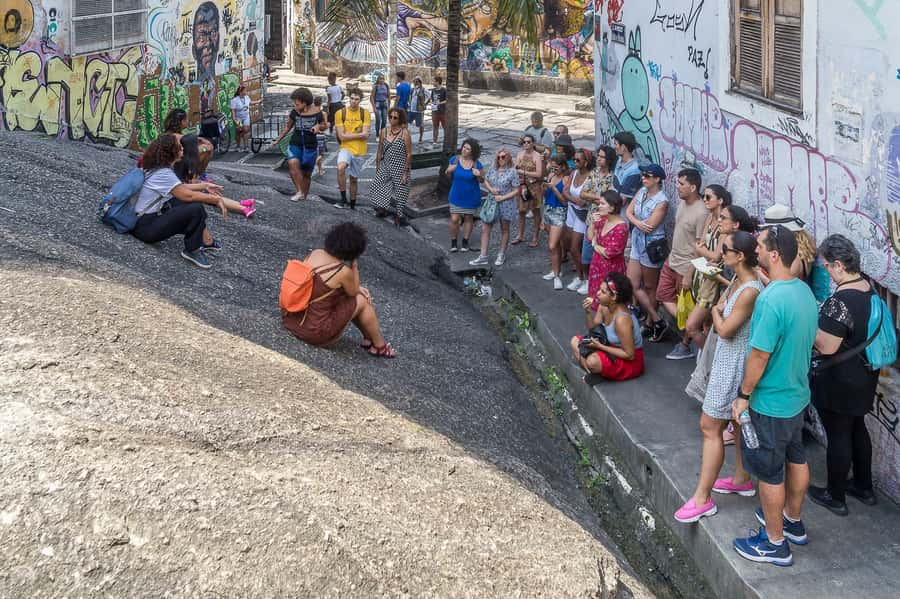
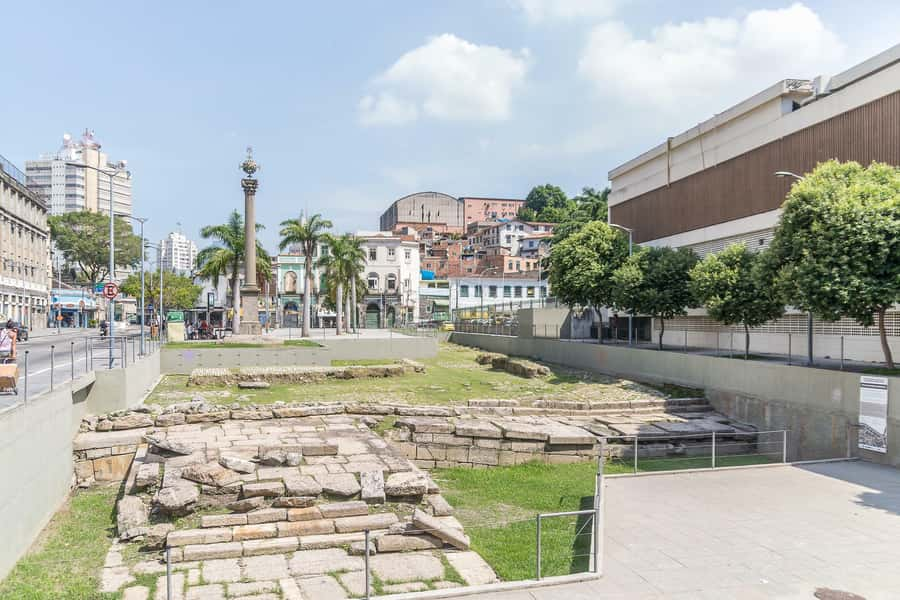
The final major stop is Cais do Valongo, the Valongo Wharf. You spend roughly 20 minutes here before returning to the Rio Art Museum.
The wharf is central to understanding Rio’s role in the Atlantic slave trade. Your guide explains why this waterfront matters and how its meaning was obscured for years. The tour’s earlier stops prepare you for this one, so the ending feels like a gathering of the main themes rather than a disconnected final landmark.
The walk back to the museum completes the loop. The route is compact, but it covers a wide subject: colonial Brazil, abolition, Black neighborhoods, food, dance, samba, public memory, and present-day race relations.
Because you return to the starting point, the tour works well as a morning or afternoon addition to plans in the port district. Allow extra time afterward if you want lunch, browse nearby attractions, or continue exploring on your own.
What the $40 price gets you
At $40 per person, this is not the cheapest way to walk around central Rio. You could visit parts of the port area independently for less. But the price buys something you cannot get from a map alone: a structured explanation of why these sites matter and how they connect.
The value depends heavily on your guide. The strongest names associated with this experience include Luana, Nathalia, Larissa, Eddie, Ryane, Marina, Raquel, and others. They are praised for clear English, personal warmth, strong subject knowledge, and the ability to answer sensitive questions.
Several guides also give food and activity suggestions for after the tour. That can add value, especially if you are new to Rio and want help deciding where to go next.
The tour lasts 150 minutes, or two and a half hours. That is long enough to tell a serious story but short enough to fit into a busy itinerary. You are paying for a focused introduction, not a full-day history program.
English is the available language for this activity. Portuguese is not offered in the stated format, so book only if English works comfortably for you. Children under five cannot join.
Heat, rain, and the practical side of the walk
This is an outdoor walking tour, and it runs rain or shine. Bring comfortable shoes, water, sunscreen, and comfortable clothes. A rain shower will not automatically cancel the walk, so check the forecast and carry suitable protection.
The heat is the biggest practical concern. You are outside for the full route, with walking sections of about 20 minutes at several stops. The pace is described as manageable, but hot weather can still make the 150 minutes feel longer.
The route includes stops and explanations, including the 10-minute pause at the museum rooftop. Still, you should not treat this as a relaxed café crawl. You need to be ready to walk and listen outdoors.
The tour is not suitable for children under five. For older children and teenagers, the subject matter may be valuable, but parents should consider how comfortable their children are with discussions of slavery and racism.
Free cancellation is available up to 24 hours before the start, and you can reserve now and pay later. Those options are useful if your Rio schedule is still changing.
Who should book this Little Africa tour?
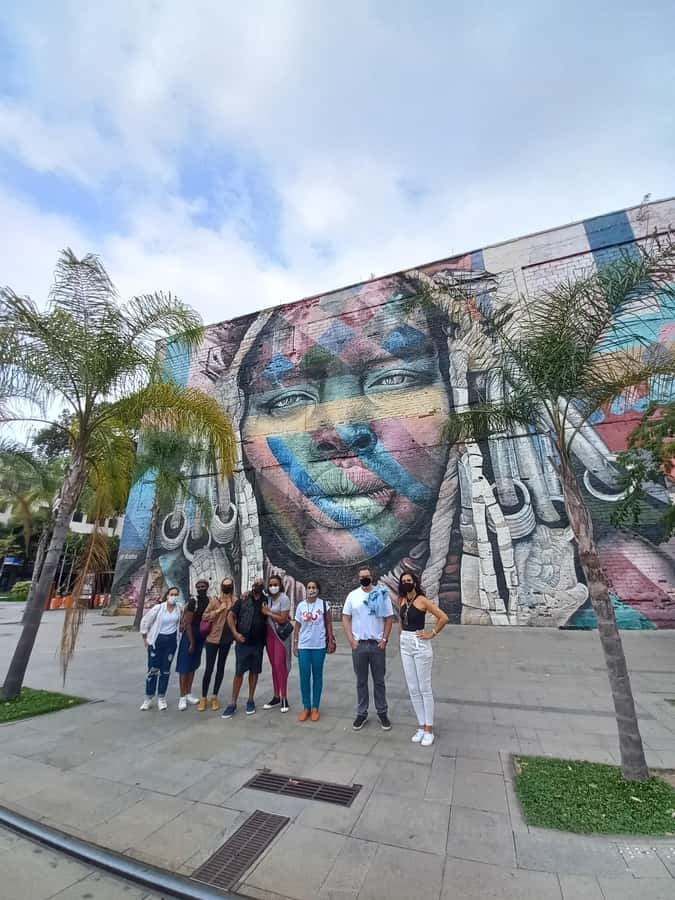
I recommend it most strongly if you want Rio beyond beaches and famous viewpoints. It is also a good choice if you are interested in African diaspora history, Brazilian food, samba, dance, public art, or the way historical memory shapes a modern city.
It suits solo visitors and small groups who prefer conversation over a large sightseeing bus. The guides are encouraged to answer questions, and the walk becomes more rewarding when you engage with the subject instead of simply following along.
It may not suit you if you dislike outdoor walking, need a fully shaded route, or want entertainment without serious historical discussion. The tour is warm and often lively, but it does not soften the painful parts of Brazil’s past.
Should you book it?
Yes, if you want a more honest understanding of Rio. The tour offers a strong combination of place, history, music, food, and personal storytelling for $40, and the 150-minute length fits easily into most itineraries.
Book it early in your stay if possible. You will leave with more context for Rio’s culture and may find the rest of your visit more meaningful. Just arrive on time, wear good shoes, carry water, and save room for lunch near Largo de São Francisco da Prainha afterward.
FAQ
Where does the Little Africa Heritage Walking Tour begin?
The tour begins in front of the Museu de Arte do Rio, also called the Rio Art Museum.
How long does the tour last?
The tour lasts 150 minutes, or two and a half hours.
What language is the tour offered in?
The tour is offered in English with a live English-speaking guide.
Is hotel pickup included?
No. Hotel pickup and drop-off are not included, so you need to reach the Rio Art Museum on your own.
How early should I arrive?
Arrive five minutes before the activity starts. The guide can wait up to 15 minutes for late arrivals.
Does the tour run in bad weather?
Yes. The tour takes place rain or shine.
What should I bring?
Bring comfortable shoes, sunscreen, water, and comfortable clothing.
Is the tour suitable for young children?
Children under five are not permitted on the tour.
Can I cancel for a full refund?
Yes. You can cancel up to 24 hours in advance for a full refund. You can also reserve now and pay later.
Latest history tours reviewed in the world
- From Athens: Explore Ancient Greece 4-Day Tour★ 4.7 · 73 reviews
- From Athens: Ancient Olympia Full-Day Private Tour★ 4.8 · 22 reviews
- From Athens: Explore Ancient Corinth & Charming Nafplion★ 4.6 · 102 reviews
- From Albufeira: Wine Tasting & Historic Silves Tour★ 4.9 · 421 reviews
- From Albufeira: Historical Algarve Region Tour★ 4.7 · 585 reviews
- From Alexandria: Full-Day Guided Tour of Historical Sights★ 4.5 · 54 reviews
- Franklin: Ghost Tour in Historic Franklin★ 4.8 · 65 reviews
- Freiburg: Exciting City Tour with sightseeing and history★ 4.3 · 103 reviews
Rio de Janeiro History Tours, compared.

Rio de Janeiro: Historic Rio and Santa Teresa Half-Day Tour
Read our review →
Ancient Rio and Santa Teresa Tour with Hotel pick-up and drop-off
Read our review →Browse the lists this tour appears in