
Review · ITALY
Asti Historic Town Walking Tour
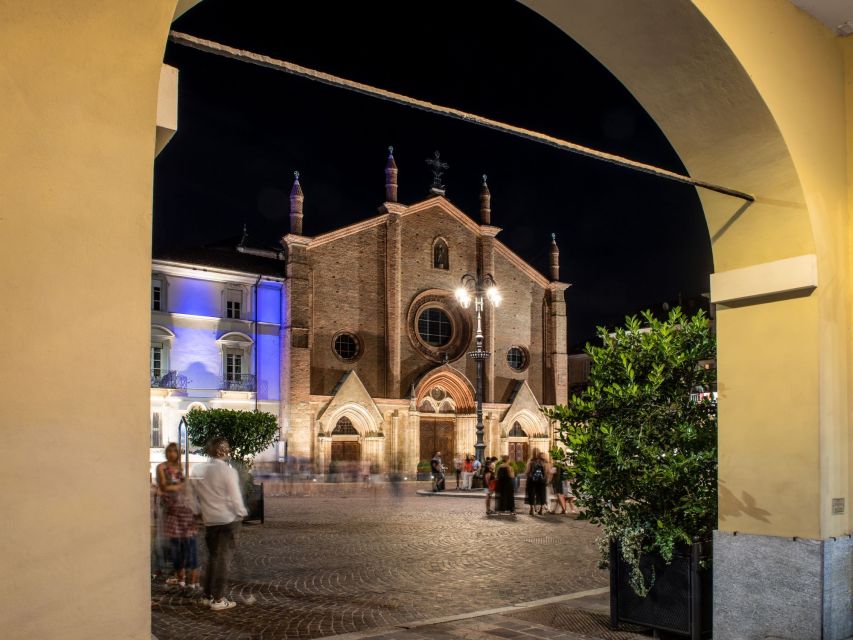
Asti’s historic center is a handsome mix of baroque palaces, church façades, porticos, and Liberty-style houses, all packed into a walkable town center. This tour helps you read that mix, while also pointing out the shops and food traditions that give Asti its everyday character.
I like the low $11 price and the fact that the guide speaks both Italian and English. I also like the focus on Asti as a living town, with its weekly markets, Palio tradition, and specialty food boutiques, rather than as a collection of old façades. The main caution is pace: a two-hour route covers a lot, and one participant found the actual walk closer to an hour and a half, with some sights treated only briefly.
Key points to know before booking

- Asti’s architectural layers come together in one compact walk, from baroque aristocratic palaces to 19th-century squares and Liberty shopfronts.
- The tour begins and ends at Piazza Vittorio Alfieri, making it simple to fit into a day in town.
- An Italian and English-speaking local guide leads the walk, with live commentary throughout.
- Asti’s Palio, weekly markets, and food shops add local flavor beyond the usual church-and-palace sightseeing.
- The $11 cost is excellent value if you want orientation and history without committing to a long or costly tour.
- Comfortable shoes matter, and you should expect a broad introduction rather than a close look at every sight.
Why Asti works so well on foot
Asti is presented here as the capital of the Monferrato hills, and its center rewards a slow walk. The appeal is not one single monument. It is the way different periods sit beside one another without making the streets feel disjointed.
You can expect the guide to point out churches, public squares, covered porticos, aristocratic residences, and elegant commercial streets. Baroque architecture supplies the grander note, while 19th-century town planning gives the squares a more open, formal feel. The Liberty houses and shop windows add a lighter, decorative touch.
That mixture makes this a useful first activity in Asti. You are not just collecting names and dates. You are learning how to look at the town. A palace may tell you about old local wealth, while a food shop or weekly market shows how the center still serves daily life.
The tour also gives Asti some welcome context beyond architecture. The town’s Palio returns every year, and cultural and food events add energy to the calendar. A walking tour cannot cover every part of that story, but it can help you understand why Asti remains more than a pretty stop between larger Piedmont destinations.
More History Walking Tours in Italy
- Venice: City Center Historical Guided Walking Tour
★ 4.2 · 1,873 reviews - Palermo: Street Food and History Walking Tour
★ 4.9 · 1,486 reviews - Verona: History and Hidden Gems Guided Walking Tour
★ 5.0 · 1,379 reviews
Starting at Piazza Vittorio Alfieri
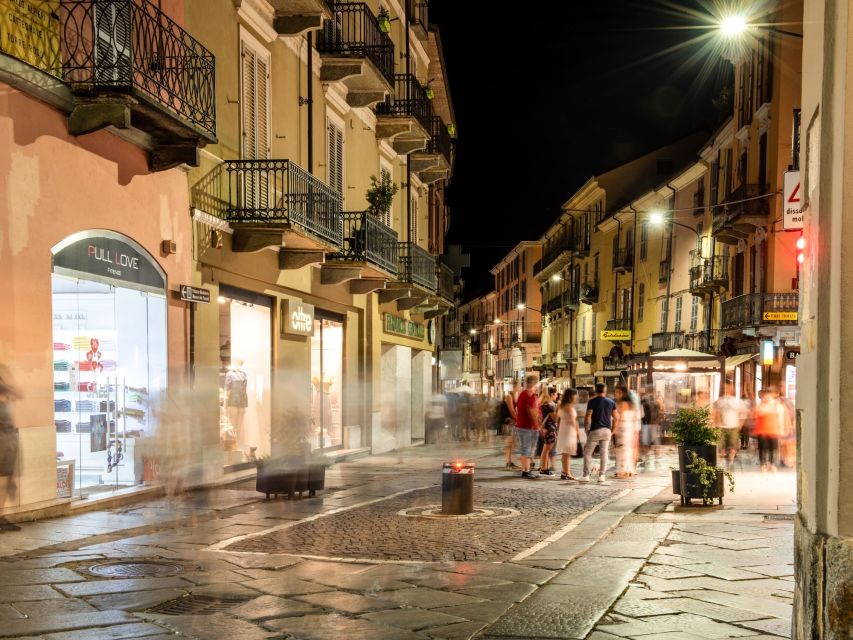
Your meeting point is Piazza Vittorio Alfieri, at number 34. The tour returns here at the end, so you do not need to arrange a separate pickup or find your way back from another part of town.
That start and finish point is practical. If you are arriving in Asti for a short visit, you can use the walk to get your bearings before exploring on your own. If you are already staying in town, the central meeting point should be easy to build into your day, though transportation to the meeting place is not included.
The square also sets up the tour’s broader theme: Asti is a town where civic spaces, historic buildings, shopping streets, and food businesses sit close together. The walk is designed as a guided circuit through the historic center rather than a journey to distant sights.
At $11 per person, the meeting arrangement is refreshingly simple. You pay for the local guide’s time and interpretation, not for transport or extras that you may not need.
Baroque palaces and old-town façades
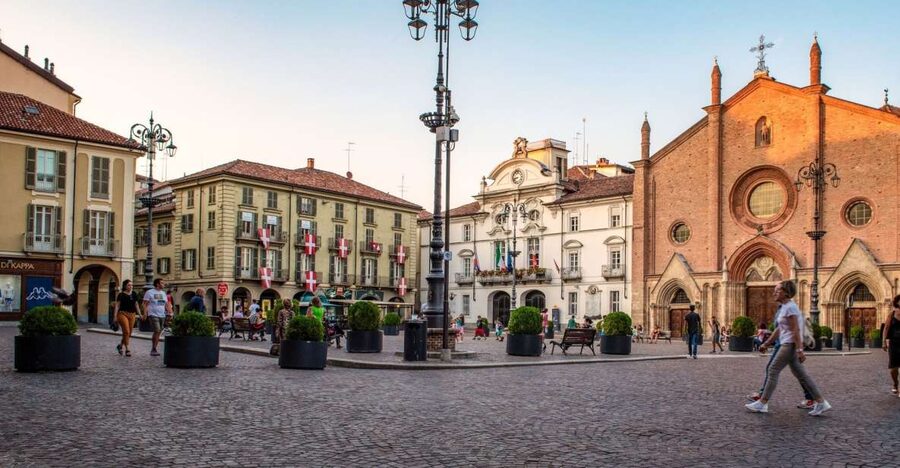
The strongest architectural part of the walk is the look at Asti’s baroque palaces. These buildings reflect the town’s aristocratic past, when prominent families used architecture to show status and taste.
You will not be rushing through a museum with a long list of objects. Instead, the guide can help you notice the details on the streets: the shape of a façade, the relationship between a palace and the square beside it, and the way decorative work changes from one building to the next.
That kind of explanation is useful because historic town centers can blur together when you explore alone. A guide gives the buildings a reason to matter. Without some context, a grand doorway is simply attractive. With context, it becomes part of Asti’s social and political story.
The limitation is coverage. Asti has many things to see, and the route is only two hours on paper. One participant found the walk lasted about an hour and a half and felt that the guide covered many subjects without seeing everything in detail. I would treat that as a fair warning. You will get a broad survey, not a specialist examination of each palace.
If you want to study architecture closely, use this tour as an introduction and leave time afterward to revisit the streets that interest you most.
Churches, squares, and porticos
Churches form another key part of the walk, along with Asti’s squares and porticos. The value here is the way the guide connects individual buildings to the shape of the town around them.
Squares are not just empty spaces between monuments. They help explain how Asti has been used over time. Porticos offer a practical layer, creating sheltered walking routes and giving the streets a distinct rhythm. Churches bring another set of visual clues, from their façades to their position within the urban fabric.
The tour description emphasizes a harmonious whole. That is a useful way to think about Asti. Baroque decoration, later 19th-century elegance, and commercial Liberty design are not presented as rival styles. They belong to different chapters of the town’s growth, yet they share the same streets.
A live guide is especially helpful here because architectural details can be easy to miss. The guide speaks Italian and English, so you can choose the language that lets you follow the history most comfortably. The strongest praise for the experience centers on the guide’s engaging approach and clear command of the subject. That matters on a walking tour, where a dry delivery can make even beautiful streets feel flat.
Same old streets, another chapter:
- Colosseum: Underground and Ancient Rome Tour
★ 4.7 · 12,691 reviews - Rome: Colosseum with Arena, Roman Forum and Palatine Guided Tour
★ 4.0 · 5,598 reviews - Venice: St. Mark’s Basilica Guided Tour & VR History Intro
★ 3.9 · 4,880 reviews - Colosseum with Arena, Roman Forum and Palatine Hill Guided Tour
★ 4.5 · 3,526 reviews
Liberty houses and shop windows
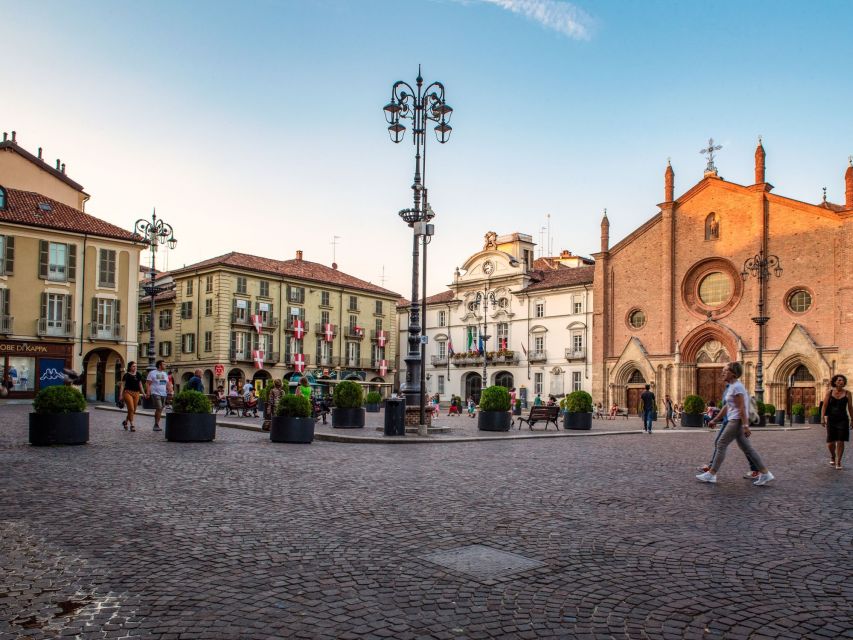
Asti’s Liberty houses and elegant storefronts give the walk a different mood from the grand palaces. Liberty is the Italian name commonly used for the Art Nouveau style, and here it appears in the decorative language of 19th-century and early modern commercial architecture.
You may find that these buildings catch your eye after the more imposing palaces have set the tone. Look for the way decoration moves into the details of shopfronts and façades. The tour encourages you to see the historic center as a place where people still shop, eat, and meet, not simply as a preserved old quarter.
This is one of the parts I find most appealing in the concept. The tour links architecture to ordinary life. You are not only looking at a grand past. You are also seeing the streets where local commerce continues.
The elegant store windows matter for another reason: they make the walk feel connected to Piedmont’s food culture. The town’s specialty boutiques are part of the route’s sensory appeal, with the scents of refined local products adding something that photographs cannot provide.
Do not expect a formal food tasting to be included. The experience includes a walking guide, not transportation or a separate tasting menu. Think of the food shops as places to notice, smell, and perhaps return to after the tour.
The food side of an Asti walk

Asti is presented as an enogastronomic town, meaning food and wine are part of its identity. This tour gives that side of the city a place alongside history and architecture.
The focus is not on a long meal or a series of samples. Instead, you pass specialty boutiques and commercial streets where local products are part of the town’s daily character. That makes the experience useful for planning the rest of your visit. You can note which shops interest you and come back after the guided walk.
The weekly markets add another layer. Markets are often where a town feels most connected to its region, and Asti’s market tradition helps explain why the center remains active beyond major historic sights. The tour does not include market purchases or transport, but its commentary can help you see the market as part of Asti’s identity rather than just a place to browse.
If food is your main reason for visiting Piedmont, you may want a more focused food experience than this one. If you want food culture woven into a general introduction to Asti, the balance works well.
The Palio and Asti’s living traditions
The Palio is one of the town’s most distinctive traditions, returning every year and keeping Asti’s historic identity in public view. Its presence helps explain why the old center is not merely decorative.
A guide can connect the town’s grand buildings with the civic traditions that still give Asti a strong sense of place. The Palio, weekly markets, cultural events, and food celebrations all point to the same idea: history here is not locked behind glass.
The information provided does not promise a Palio event during your visit, and you should not book this walk expecting to watch one. The value is the background. You learn why the tradition matters and how it fits into Asti’s wider story.
That context is particularly useful if you are visiting outside a major festival. You can still understand the importance of the Palio without needing the event itself to be taking place.
How much can two hours really cover?
Two hours is long enough for a solid first look at central Asti, but it is not long enough to explore every church, palace, square, and shop in detail. The route’s strength is range. You move through several aspects of the town in one outing.
The weakness is that range can come at the expense of depth. One participant described the guide as engaging and the subject as interesting, but felt that many things were mentioned without enough time to see them properly. That is a useful point for planning.
I would book this tour if you want:
- A clear introduction before independent sightseeing
- A short activity that fits around meals or other plans
- A guide who can explain the town in Italian or English
- A mix of architecture, local history, shopping streets, and food culture
- A low-cost way to get more from a brief Asti visit
I would think twice if you want:
- Detailed interior visits to many churches
- A dedicated food tasting
- A specialist architecture tour
- A slow route with plenty of time at each stop
- Guaranteed coverage of every major sight in the old center
The advertised duration is two hours, but allow some flexibility. Meeting, walking speed, questions, and the guide’s route can affect the exact length. Comfortable shoes are the only item specifically recommended, but they are important. This is a walking experience, and Asti’s streets are best enjoyed without footwear that distracts you.
Price, access, and practical value
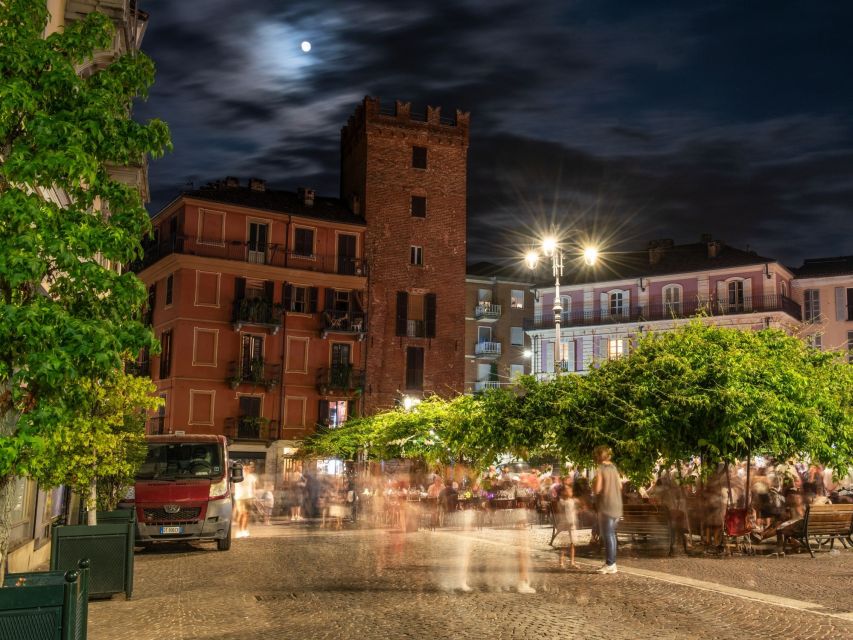
At $11 per person, this is an inexpensive way to add structure to your time in Asti. Even a short introduction can save you from wandering past important buildings without understanding them.
The value is strongest for first-time visitors and people making a short stop. You get a local guide, live commentary, and a route that brings together several parts of Asti’s identity. Since transportation is not included, the price stays focused on the walking experience itself.
The tour is wheelchair accessible, which makes it a more practical choice for many visitors. Still, the available information does not describe the exact street surfaces, restroom access, or the physical details of every stop. If those points matter for your plans, confirm them before booking.
Italian and English are the available tour languages. Free cancellation is allowed up to 24 hours before the activity for a full refund, and you can reserve now and pay later. Those terms are useful if your Piedmont schedule is still changing.
The tour has a 4.5 rating from 82 evaluations. The clearest praise concerns the guide’s engaging delivery and strong command of the material. The clearest caution concerns the pace and the possibility that the actual walk may run shorter than the advertised two hours.
Who should book the Asti walk?
I would recommend this experience to anyone visiting Asti for the first time, especially if you have only a morning or afternoon. It gives you a framework for the town without taking up a full day.
It also suits people who like architecture but do not want a lecture-heavy tour. The mix of palaces, churches, squares, porticos, Liberty houses, and shop windows gives you plenty to look at while the guide supplies the background.
Food-minded visitors should see it as a useful introduction, not a tasting tour. You will notice specialty boutiques and the food-centered character of the town, but purchases and tastings are not included.
Independent explorers can use the tour as a launch point. Afterward, you can return to the buildings that caught your attention, browse the shops at your own pace, or visit during a weekly market or cultural event if your dates line up.
Should you book it?
Book the Asti Historic Town Walking Tour if you want a short, inexpensive orientation with a local Italian and English-speaking guide. The mix of baroque architecture, Liberty details, squares, porticos, markets, Palio tradition, and specialty food shops gives you a well-rounded first look at the town.
Go in with the right expectation. This is a broad introduction, not a slow architectural study or a food tasting. If the route runs closer to an hour and a half, you may still get good value for $11, but plan extra time afterward for the sights you want to examine properly.
FAQ
Where does the Asti walking tour begin?
The tour begins at Piazza Vittorio Alfieri, 34, in Asti.
Where does the tour finish?
The walking tour returns to Piazza Vittorio Alfieri, 34.
How long does the tour last?
The stated duration is two hours. Allow some flexibility, since one participant found the actual walk lasted about an hour and a half.
What languages are available?
The live tour guide speaks Italian and English.
Is transportation included?
No. Transportation is not included, so you need to make your own way to Piazza Vittorio Alfieri.
Is the tour wheelchair accessible?
Yes, the activity is listed as wheelchair accessible. Comfortable shoes are recommended for all participants.
Latest history tours reviewed in Italy
- Forte di Bard: history tour★ 4.5 · 31 reviews
- Florence Wine &Food: Taste Tuscan Flavors in Historic Cellar★ 4.6 · 31 reviews
- Florence Medici Bike Tour – Cycle Through History and Power★ 4.2 · 23 reviews
- Florence: Medici Family History Tour★ 4.3 · 93 reviews
- Florence: Fashion History Guided Walking Tour & Museum Visit★ 4.2 · 72 reviews
- Essential Florence Walking Tour to discover its history★ 5.0 · 21 reviews
- Discover Herculaneum: A guided tour of the ancient Roman city★ 4.9 · 34 reviews
- Day drinking in Rome – Scandalous Roman History★ 4.8 · 31 reviews
Italy History Tours, compared.
Colosseum: Underground and Ancient Rome Tour
Read our review →
Rome: Colosseum with Arena, Roman Forum and Palatine Guided Tour
Read our review →
Venice: St. Mark’s Basilica Guided Tour & VR History Intro
Read our review →
Colosseum & Ancient Rome with Arena Floor Option I Max 6 People
Read our review →
Rome: Colosseum, Ancient Rome Tour or AudioGuided Tour
Read our review →
Venice’s Best: Basilica, Doge’s Palace, Gondola & History Gallery
Read our review →
Taormina: Ancient Theater Skip-the-Line Ticket & Audio Guide
Read our review →
Discover the Ancient Ruins of Pompeii: Day Trip from Rome
Read our review →Browse the lists this tour appears in