
Review · PALERMO
Palermo: Walking Tour of Historic Markets and Monuments
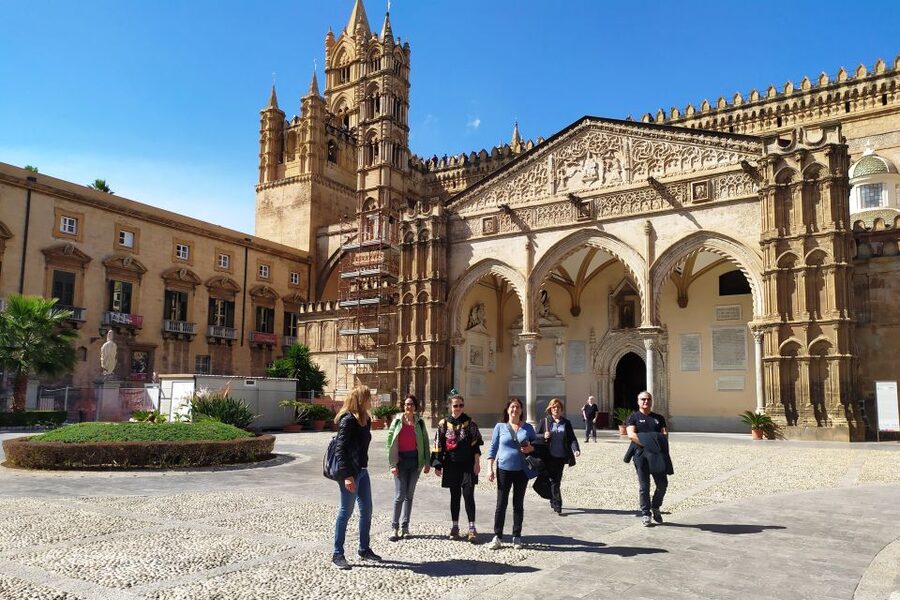
Palermo’s best introduction may be found in the space between its grand monuments and its noisy food stalls. This three-hour walk takes you from the Palermo Cathedral to Capo Market, with Teatro Massimo, Quattro Canti, and Fontana Pretoria along the way. The city’s architecture and daily life share the same streets here.
I like the clear route and the local storytelling. You get major sights without spending a full day on a formal sightseeing program, and guides such as Claudio and Fabrizio bring in tales of Santa Rosalia and the mysterious Beati Paoli sect. The main drawback is simple: the tour is Italian only, and food or monument entry costs are not included.
Key points at a glance
- Capo Market brings Palermo to life: Expect colorful stalls, strong aromas, local produce, Sicilian snacks, and the chance to try market food or pastries.
- The Cathedral shows many layers of Palermo: Its bell towers and changing architectural styles reveal how the building developed over time.
- Teatro Massimo comes with a ghost story: You’ll hear about the theater’s legends while admiring one of Palermo’s grandest landmarks.
- The walk links the city’s essential sights: Quattro Canti and Fontana Pretoria fit naturally between the Cathedral and Capo Market.
- Local history gives the route character: Stories of Santa Rosalia and the Beati Paoli add a human side to the monuments.
- Plan for a three-hour Italian tour: Wear comfortable shoes, dress modestly for the Cathedral, and budget separately for entry tickets and food.
Why this Palermo walk works so well
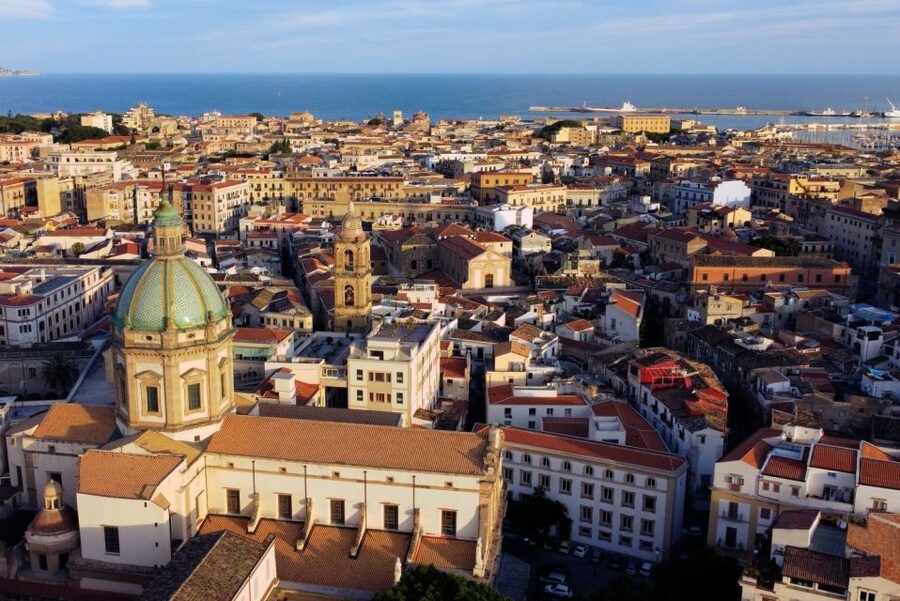
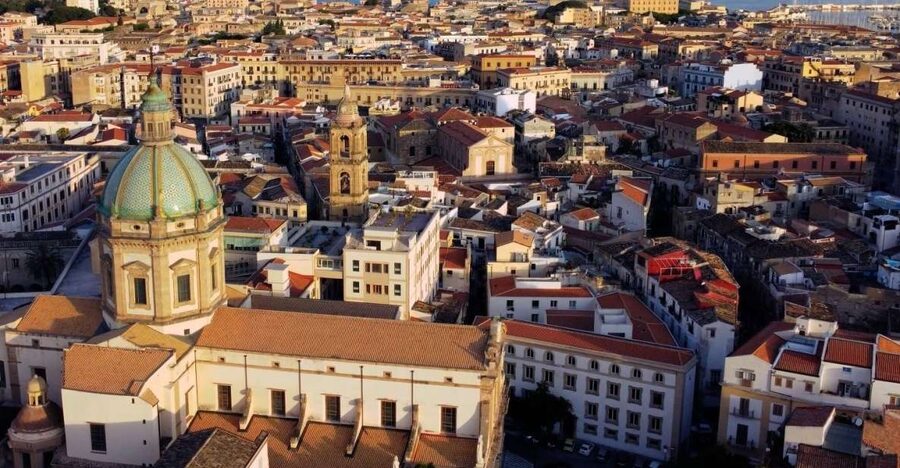
Palermo can feel scattered at first. Its grand churches, markets, public squares, and theaters do not all belong to one neat postcard view. This walking tour solves that problem by creating a useful thread through the historic center.
You begin at the Feltrinelli library, where the guide wears a red tag marked tour guide. From there, the route moves through some of the city’s most important landmarks before ending at the Capo street market. That order makes sense. You first get the broad civic and religious story, then finish with Palermo’s everyday flavors.
I like tours that leave you with a map in your head, not just a set of facts. This one gives you several fixed points: the Cathedral, Teatro Massimo, Quattro Canti, Fontana Pretoria, and Capo Market. Afterward, you should have a better sense of how to arrange the rest of your time in Palermo.
The tour lasts three hours and costs $35 per person. That is a fair price if you want a local guide to explain the city while you walk, especially on a first visit. You still need to pay for any entry tickets and anything you buy at the market, so treat the price as payment for the guided route, not an all-inclusive sightseeing package.
More History Walking Tours in Italy
- Venice: City Center Historical Guided Walking Tour
★ 4.2 · 1,873 reviews - Palermo: Street Food and History Walking Tour
★ 4.9 · 1,486 reviews - Verona: History and Hidden Gems Guided Walking Tour
★ 5.0 · 1,379 reviews
Palermo Cathedral and its changing face
The first major stop is Palermo Cathedral, a UNESCO-listed monument dating from the early 12th century. You enter the Cathedral as part of the route, though entry tickets are not included in the tour price.
This is not a building with one simple style. The Cathedral changed over the centuries, and the guide explains that architectural evolution as you look at its structure and iconic bell towers. That makes the visit more useful than a quick look at the facade. You begin to see Palermo as a city shaped by many periods and influences.
The Cathedral is also a practical reason to take this tour early in your stay. A guide can point out what to notice before you return on your own, and the surrounding streets become easier to understand once you know this major landmark.
Dress modestly for entry. This rule matters, and it is easy to forget when you are planning a warm-weather walk. Bring clothing that covers you appropriately for a religious site, even if the rest of your day will be spent outdoors.
The Cathedral stop also sets the tone for the tour. You are not only checking off a famous building. You are hearing how Palermo’s past remains visible in the places people still use today.
Teatro Massimo and Palermo’s theatrical legends
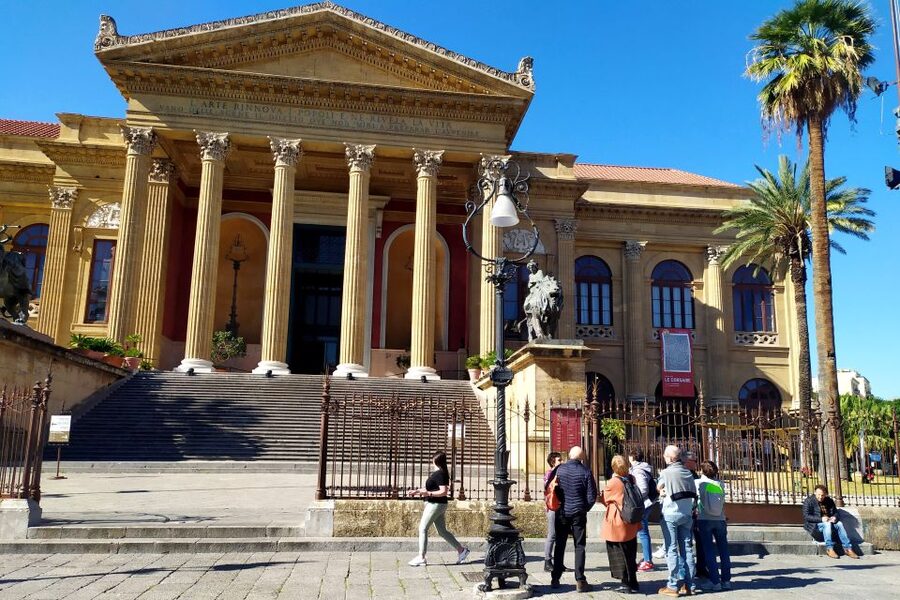
The route continues to Teatro Massimo, Italy’s largest theater and one of Palermo’s defining buildings. Even if you do not enter, the exterior gives the tour a strong change of mood after the Cathedral.
Teatro Massimo is grand, formal, and tied to the city’s public life. The guide adds a more curious layer by telling the ghostly legends linked with the theater. These stories may not replace a performance or a full interior visit, but they make the stop memorable.
I like this balance between fact and folklore. A purely architectural explanation can leave you admiring a building without understanding how local people imagine it. The legends give you something to listen for and remember, while the theater itself provides the visual anchor.
The tour does not promise an interior visit to Teatro Massimo, and entry tickets are not included. If seeing the inside is a priority, you should plan that separately. For this walk, the theater functions as an important landmark and a doorway into Palermo’s stories.
Guides Claudio and Fabrizio have both been praised for making the history clear, lively, and entertaining. Fabrizio, in particular, is known for covering not only monuments but also the streets and buildings you pass between the main stops. That matters in Palermo, where a small detail along the route may explain as much as a famous facade.
Quattro Canti and Fontana Pretoria
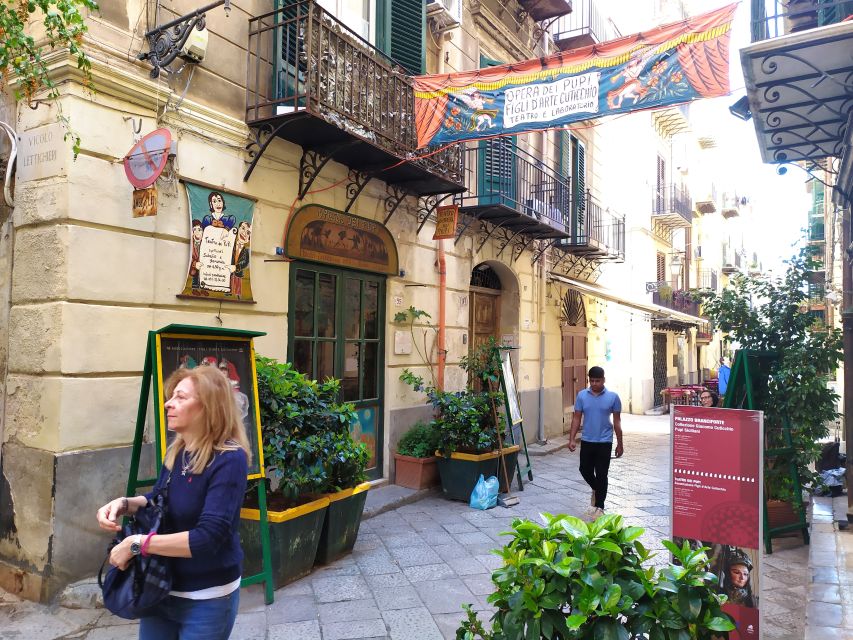
Next comes Quattro Canti, the Baroque plaza where four decorated corners create one of Palermo’s most recognizable urban spaces. This is the kind of place that can look impressive in a photograph but make more sense when someone explains how it fits into the city.
The square helps you understand Palermo’s historic center as an organized civic setting. Look up at the curved facades and decorative details rather than only taking a quick picture. The guide can give the place a sense of purpose and connect it to the streets leading away from it.
Fontana Pretoria, in the piazza of the same name, adds another large public work to the walk. The imposing fountain is an easy visual counterpoint to the Cathedral and theater. Together, these stops show how Palermo used churches, squares, fountains, and public buildings to display power and identity.
I appreciate that the tour does not rush from one famous site to the next without connecting them. The route lets you see how the monuments sit within the same old center. You are walking through a city, not moving between isolated attractions.
The exact amount of time spent at each point can vary with the guide and group. That is worth keeping in mind if you prefer a fixed schedule or want long interior visits. This is a walking introduction, with several outdoor stops, rather than a series of extended museum tours.
Same old streets, another chapter:
- Colosseum: Underground and Ancient Rome Tour
★ 4.7 · 12,691 reviews - Rome: Colosseum with Arena, Roman Forum and Palatine Guided Tour
★ 4.0 · 5,598 reviews - Venice: St. Mark’s Basilica Guided Tour & VR History Intro
★ 3.9 · 4,880 reviews - Colosseum with Arena, Roman Forum and Palatine Hill Guided Tour
★ 4.5 · 3,526 reviews
Santa Rosalia and the Beati Paoli
Palermo’s history is not only a list of dates and architectural styles. It also includes saints, secret societies, legends, and stories passed through generations.
The guide discusses Santa Rosalia, Palermo’s patron saint, often called La Santuzza. Her place in local identity gives the route a strong connection to the city’s religious life. Even if you know little about Palermo before arriving, this story helps explain why the saint matters so much here.
You also hear about the mysterious Beati Paoli sect. This tale adds a darker and more secretive note to the walk. It is the sort of local legend that makes ordinary streets feel less ordinary, especially when the guide links the story to the historic center around you.
I find these stories most useful when they are treated as part of local culture, not as proven fact. They help you understand the imagination of Palermo and the way the city remembers its past. The tour includes both known monuments and the stories people use to give those places meaning.
Claudio has been praised for his enthusiasm, humor, and professional approach. Fabrizio has been praised for his broad cultural background and detailed explanations of the city’s history, buildings, and streets. The guide on your date may be different, but these names give you an idea of the tone available from the tour team: informed, personal, and not limited to memorized facts.
Capo Market and Sicilian street food
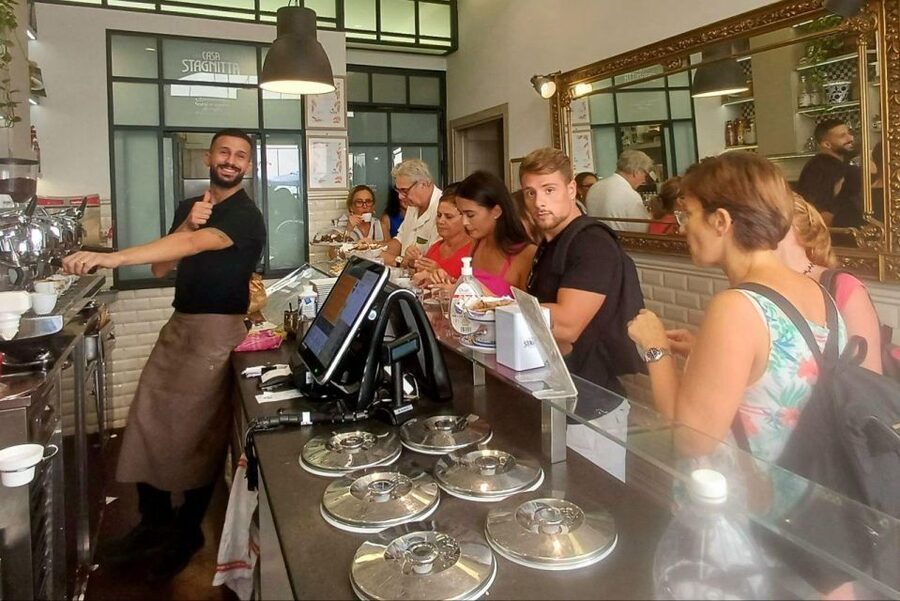
The final part of the walk takes you through Capo street market. This is where the tour shifts from Palermo’s grand public face to its daily rhythm.
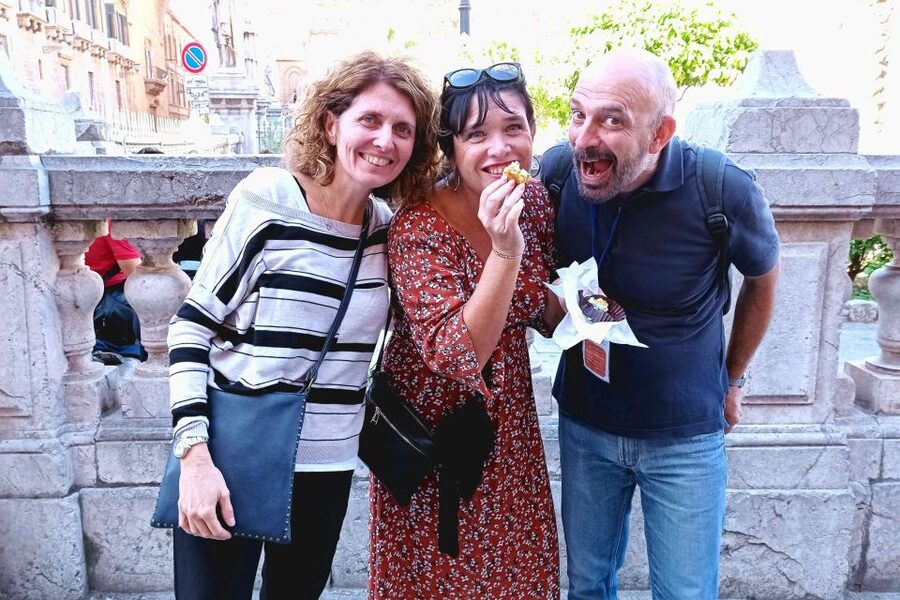
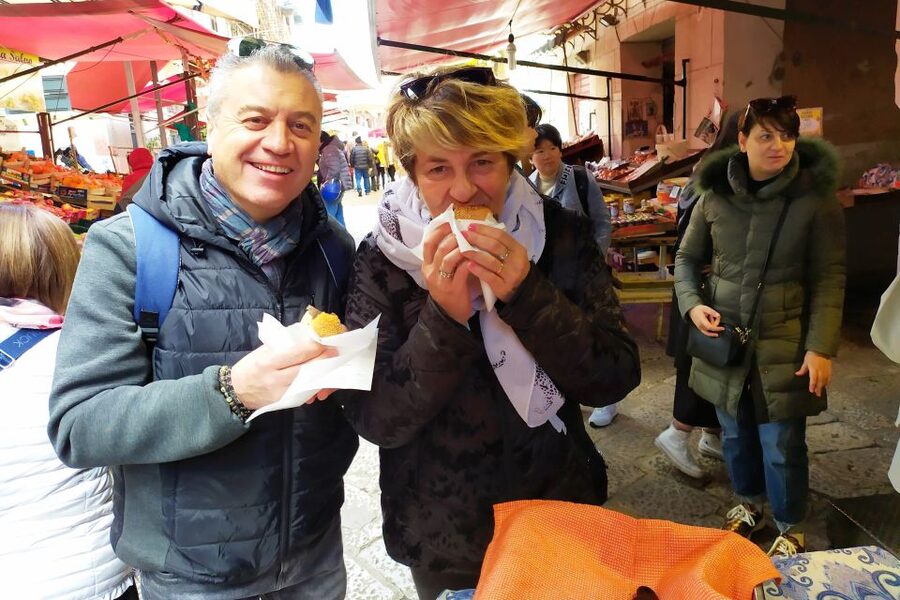
Expect the market to appeal to your senses. You will see colorful displays, hear vendors and shoppers, and encounter the smells of produce, cooked food, pastries, and other local wares. The market is not a polished food hall. Its appeal comes from the fact that it remains part of ordinary city life.
You have the opportunity to sample Sicilian street food fresh from the market. You might also try pastries, depending on what catches your eye. These purchases are not included, so bring some spending money if tasting food is one of your main reasons for booking.
I like ending here because the market gives context to the rest of the walk. After hearing about rulers, churches, theaters, and legends, you see what the city feels like in practical terms: people buying food, vendors working, and old streets being used for everyday business.
Do not expect a full food tour. The experience is primarily a history and sightseeing walk, with a market visit at the end. The food stop is a chance to taste Palermo, not a set meal with a long list of included samples.
If you have dietary restrictions, the supplied information does not specify special arrangements. Ask the guide or vendors directly before buying anything. The tour description promises an opportunity to try local food, but it does not guarantee particular dishes.
What the $35 price really covers
At $35, this tour offers reasonable value for a three-hour guided introduction to Palermo’s historic center. You are paying for a professional guide, a planned walking route, explanations at major sights, and local stories that would be hard to assemble on your own during a first visit.
The price does not cover entry tickets. It also does not cover food or pastries at Capo Market. If you want to keep costs down, you can enjoy the market without buying anything, but the experience is more satisfying if you set aside a little extra for a snack.
The strongest value comes from the guide’s interpretation. You can walk past Quattro Canti or Fontana Pretoria alone, but a guide helps you understand why these places matter. The same is true of the Cathedral, where the changing architecture deserves more than a quick photograph.
The tour is especially useful at the start of a Palermo visit. You can use the route to decide which places deserve a later, longer visit. It also gives you practical orientation for returning to the market, theater, or Cathedral on your own.
Who should book this three-hour walk
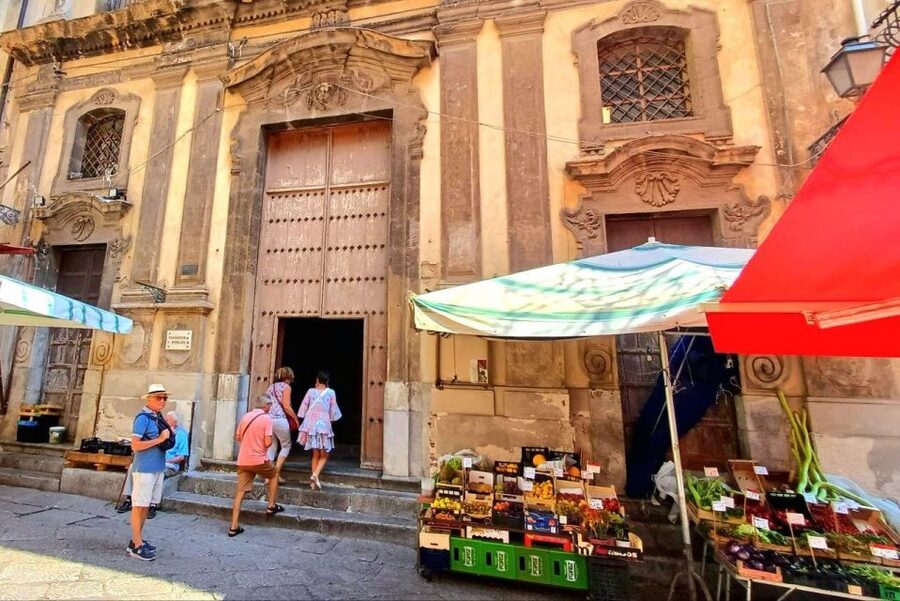
I would choose this tour if you want a compact overview of Palermo and are comfortable walking for three hours. It suits first-time visitors who want history, architecture, local legends, and food culture in one outing.
It is also a good fit if you prefer a guide who explains the streets between the major sights. The praise for Claudio and Fabrizio points to a tour style with plenty of background, humor, and cultural detail rather than a silent march from monument to monument.
You should think twice if you do not understand Italian. The tour is conducted in Italian only, and that is not a minor detail. You may still recognize the landmarks, but the stories and historical explanations are the main reason to book.
You should also reconsider it if you want extensive indoor sightseeing or a dedicated food tour. Entry tickets are not included, and the market tasting is optional rather than a full meal. This walk gives you a broad introduction, not an all-day museum program.
Wear comfortable shoes. The route covers historic streets and market areas, and three hours on foot can feel long in poor footwear. The tour does not list transportation, so plan to walk for the full experience.
Free cancellation is available up to 24 hours before the start time, and you can reserve now and pay later. Those terms are helpful if your Palermo plans are still shifting, but the key booking decision remains the language.
My call: a strong first look at Palermo
I would book this tour for an Italian-speaking visitor who wants to connect Palermo’s major monuments with its street life. The route is well chosen, the price is fair, and the mix of Cathedral, theater, squares, legends, and market food gives you a useful first picture of the city.
I would not book it as an English-language experience, since the guide speaks Italian only. I would also make modest clothing and comfortable shoes part of the plan, and keep extra money ready for market food and any entry costs.
For the best value, schedule it near the beginning of your stay. Let the Cathedral, Quattro Canti, Teatro Massimo, Fontana Pretoria, and Capo Market help you choose where to spend more time later. With a good guide such as Claudio or Fabrizio, three hours can give you both Palermo’s grand story and its appetite for a good snack.
FAQ
How long does the Palermo walking tour last?
The tour lasts three hours.
What language is the tour conducted in?
The tour is conducted in Italian only.
Where is the meeting point?
Meet in front of the Feltrinelli library. The guide wears a red tag marked tour guide.
Is entry to Palermo Cathedral included?
The tour includes entering Palermo Cathedral, but entry tickets are not included in the price.
What should I wear to enter the Cathedral?
You must wear modest clothing to enter the Cathedral.
Is food included in the tour price?
Food is not listed as included. You have the opportunity to buy Sicilian street food and pastries at Capo Market.
Can I cancel the booking for a full refund?
Yes. You can cancel up to 24 hours in advance for a full refund.
Latest history tours reviewed in Italy
- Forte di Bard: history tour★ 4.5 · 31 reviews
- Florence Wine &Food: Taste Tuscan Flavors in Historic Cellar★ 4.6 · 31 reviews
- Florence Medici Bike Tour – Cycle Through History and Power★ 4.2 · 23 reviews
- Florence: Medici Family History Tour★ 4.3 · 93 reviews
- Florence: Fashion History Guided Walking Tour & Museum Visit★ 4.2 · 72 reviews
- Essential Florence Walking Tour to discover its history★ 5.0 · 21 reviews
- Discover Herculaneum: A guided tour of the ancient Roman city★ 4.9 · 34 reviews
- Day drinking in Rome – Scandalous Roman History★ 4.8 · 31 reviews
Palermo History Tours, compared.
Palermo: Street Food and History Walking Tour
Read our review →
Palermo: UNESCO World Heritage Sites Guided Walking Tour
Read our review →Browse the lists this tour appears in