Review · HISTORY WALKING TOURS
Nairobi: Historic and Modern Highlights Walking Tour
Nairobi’s best introduction may be a walk through its busy central streets, where colonial buildings, modern offices, open-air markets, coffee shops, monuments, and government buildings sit close together. This three-hour tour links those pieces with clear explanations, local food, and a rooftop view from KICC.
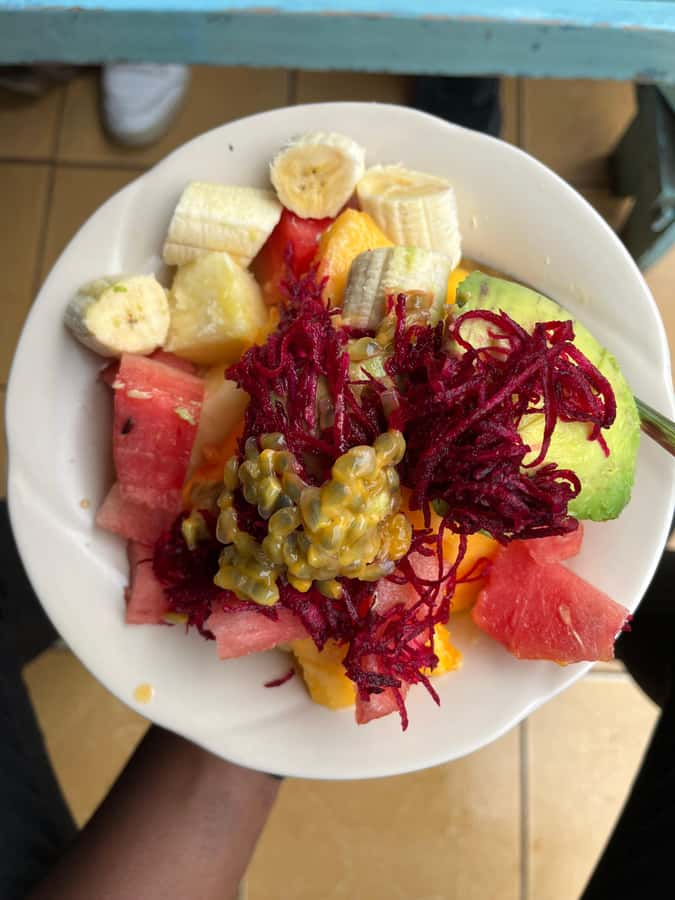
I like the fresh fruit salad at City Market and the practical help with souvenirs, prices, safety, and Swahili. I also like the human touch: guides such as Jackie, Simon, Jeff, Sharon, and Dennis are praised for answering questions, adjusting the pace, and helping with taxis when needed.
The main catch is that this is a city-center walk, not a safari or a quiet heritage outing. Expect traffic, crowds, uneven urban conditions, and plenty of walking. KICC entry is not included, and Sunday morning can feel unusually quiet because many shops are closed.
Key points to know before booking
- A three-hour introduction to central Nairobi: See landmarks ranging from Jeevanjee Gardens and Jamia Mosque to the Supreme Court, Parliament Buildings, and Holy Family Basilica.
- City Market brings the tour to life: Browse stalls, taste a paid-for fruit salad included by the operator, and learn about Kenyan food and daily trade.
- The guide is part safety net, part city interpreter: You get help with local customs, safe routes, prices, taxi arrangements, and basic Swahili.
- KICC provides the visual finale: The rooftop or helipad area offers a high view across Nairobi, though the admission charge is separate.
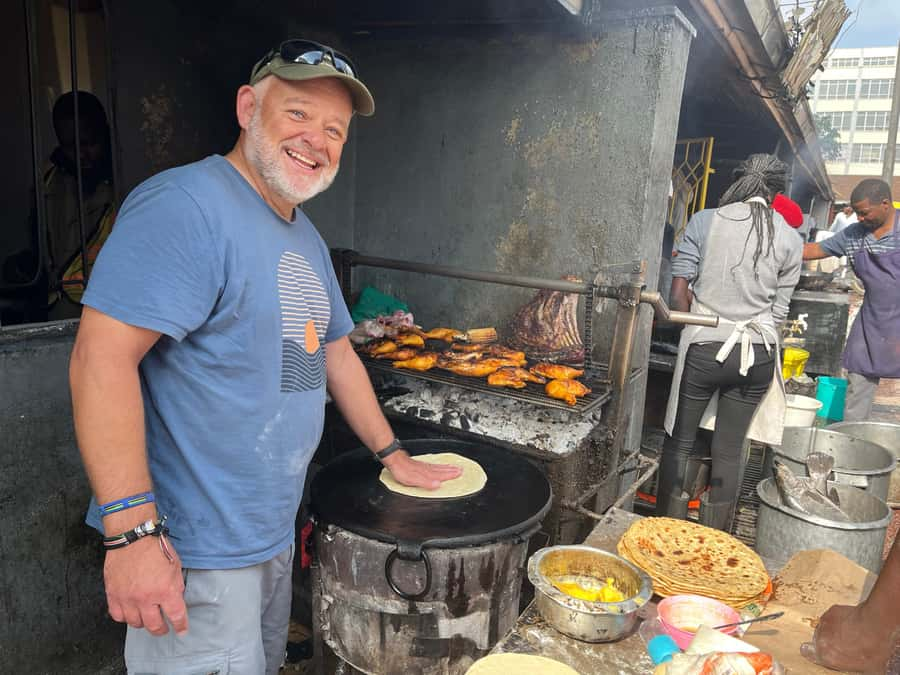
- Small cultural extras add value: Depending on the day, you may receive a shoe shine, a street-style photograph, and help finding fixed-price souvenir shops.
- This suits active first-time visitors: Comfortable shoes matter, and the tour is not suitable for wheelchair users or people with mobility impairments.
Why this walking tour works as a first look at Nairobi

Nairobi can feel hard to read at street level. One block brings a formal government building, the next a mosque, hotel, market, church, or street vendor. A first walk with a local guide gives you a framework for what you are seeing instead of leaving you to connect the dots alone.
The tour begins at CJs on Koinange Street if you choose your own way there. CJs is a known restaurant in the uptown area, and the staff can point you toward the guide. Look for a Happy Tribe cap or T-shirt. Hotel pickup and drop-off are available only with the selected option, so check your booking carefully.
If you arrange pickup, wait in your hotel lobby about 10 minutes before the agreed time. The operator sometimes asks the group to use a cab or taxi to reach the meeting point, or to return afterward, and may arrange and pay for it, including a tip. This can avoid delays when several people are staying in different parts of the city, but it also means your transport arrangement may not be a private door-to-door ride.
The tour starts with a short safety briefing on Koinange Street. That is useful rather than fussy. You learn how the walk will work, where to stay with the group, and how to move through central Nairobi with more confidence.
More History Walking Tours in the world:
- History and Hauntings of Salem Guided Walking Tour
★ 5.0 · 14,564 reviews - Lisbon: History, Stories and Lifestyle Walking Tour
★ 4.8 · 10,902 reviews - Boston: Freedom Trail History Small Group Walking Tour
★ 5.0 · 6,450 reviews
Jeevanjee Gardens and the city’s early story
Jeevanjee Gardens is an easy first stop because it provides a break from the hard surfaces and traffic of the center. Your guide gives a short tour and places the surrounding streets in context before you continue toward the market.
The stop is brief, so do not expect an extended park visit. Its value is as a starting point for understanding how Nairobi developed around public spaces, commerce, offices, and transport routes.
From there, the walk moves into the heart of the city. Your guide points out landmarks while explaining not just when they were built, but how they relate to present-day Nairobi. Several people who know the city well have found this useful, too, since a local guide can connect familiar buildings with stories they may have missed.
City Market is the tour’s tastiest stop
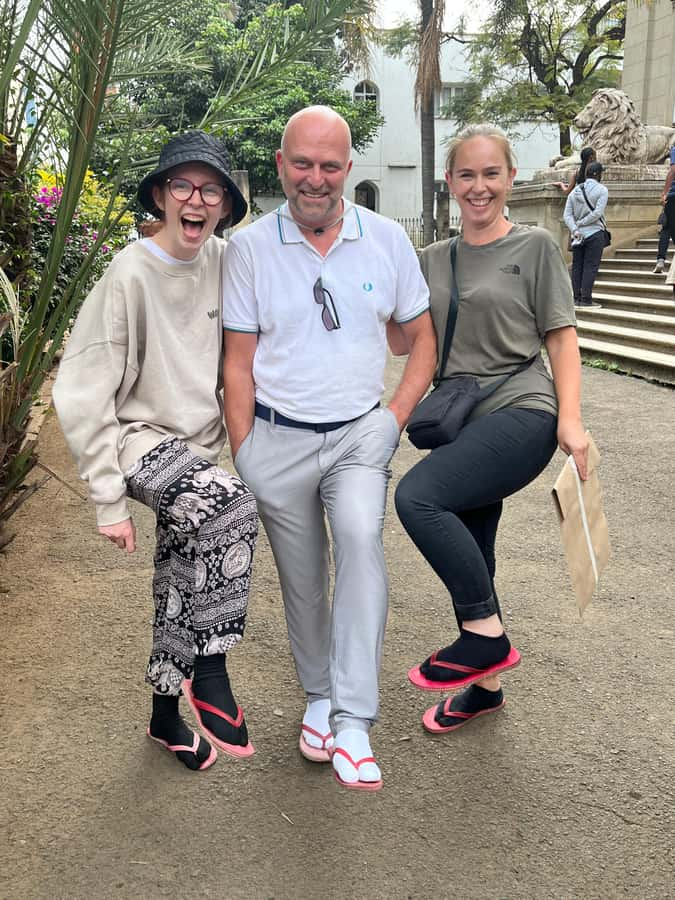
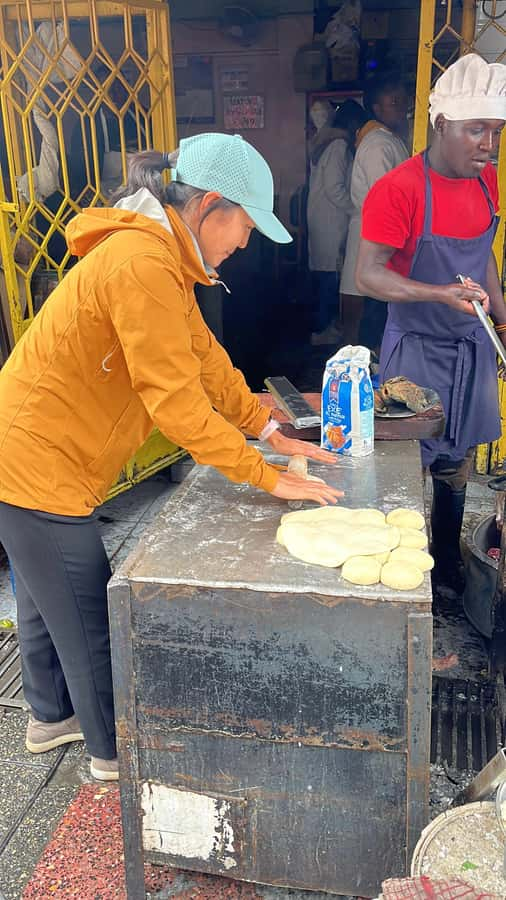
City Market is the most hands-on part of the walk. You get time to look around, see local produce and goods, and watch the daily business of buying and selling. The market is not a staged cultural display. It is part of the city’s working center, so the atmosphere can be crowded and active.
A fresh fruit salad is included. It is prepared during the market visit, and it gives you a safe, simple way to taste Kenyan produce while your guide explains local food habits. Bottled Dasani water is also included. Additional food and drinks are not covered.
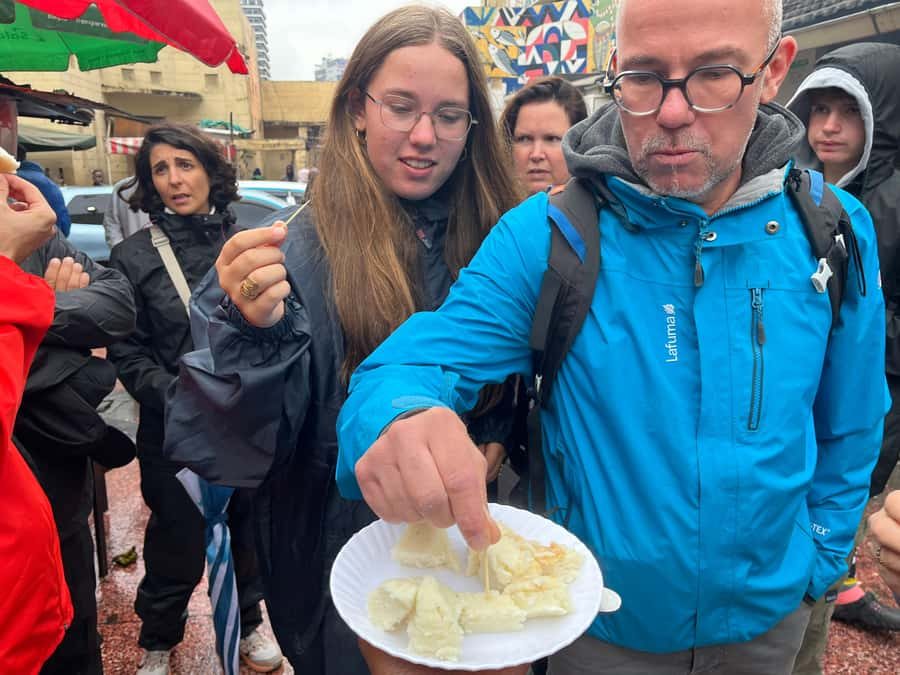
The itinerary also allows for a cooking or food-tasting segment, with the possibility of sampling nyama choma, Kenyan roasted goat meat. The exact food experience can vary, so consider the fruit salad the dependable inclusion and any extra food an optional purchase.
This is a good place to ask questions. You can learn how everyday transactions work, what prices mean locally, and how people buy goods and services. That practical conversation makes the market more useful than simply passing through with a camera.
Souvenirs without the usual market pressure
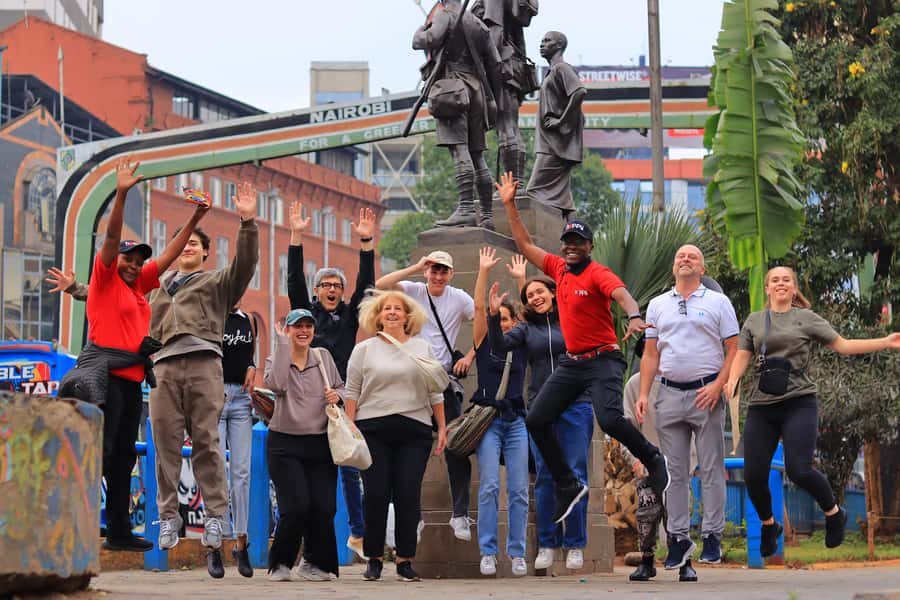
Nairobi markets can be fun, but bargaining is not everyone’s idea of a holiday. Your guide points out stores with fixed prices, where you can buy souvenirs without negotiating every item.
That does not guarantee the lowest price for every object, and you should still compare items before buying. The advantage is comfort and clarity. You can see the marked cost, ask questions, and avoid a long sales exchange if that is not your style.
The guide also explains where bargaining is expected and how to approach it. This is one of the tour’s most useful parts for first-time visitors because it gives you a better sense of local buying customs before you shop independently.
A shoe shine from a local vendor may also be arranged, and a street-style photograph from a Nairobi urban photographer is included as one of the tour’s small extras. These touches are not the reason to book the tour, but they make the walk feel more connected to ordinary city life.
More History Tours in the world:
- New York City: American Museum of Natural History Ticket
★ 4.5 · 15,447 reviews - Colosseum: Underground and Ancient Rome Tour
★ 4.7 · 12,691 reviews - London Small Group Tour of Historical Pubs
★ 5.0 · 10,422 reviews - Prague: Oldtown, Medieval Underground & Dungeon History Tour
★ 4.3 · 10,277 reviews
Jamia Mosque, McMillan Library, and the old center
After City Market, the route passes Jamia Mosque, one of the central landmarks you will see from the street. The visit is short, so treat it as an exterior sight and cultural point rather than a full mosque tour.
McMillan Memorial Library comes next, followed by views of Nation Centre. These stops help show the mixture of civic, religious, commercial, and media buildings that define central Nairobi. Your guide fills in the story as you walk, so the experience is more about connections between sites than long visits inside each one.
The route then follows Kenyatta Avenue, with a short break and more sightseeing. You will see the Sarova Stanley, one of Nairobi’s best-known historic hotels, before reaching the Dedan Kimathi statue.
The Kimathi statue carries political and national meaning. Your guide can explain its connection to Kenya’s independence struggle and the way historical figures are remembered in modern Nairobi. The stop is short, but it gives the walk a stronger link to the country’s twentieth-century past.
Coffee, city life, and a useful pause
The schedule includes a 20-minute break at Java House on Mama Ngina Street. You can buy coffee, take a breather, and continue talking with your guide. This pause matters because three hours of walking in central Nairobi can feel full, especially in warm weather or among a large group.
Several guides use the coffee stop to answer personal questions about Kenya, Nairobi, food, work, and daily life. That informal conversation is often where the tour becomes more than a string of monuments.
Do not read too much into the coffee stop. It is not a private tasting class, and additional drinks are not included. Think of it as a comfortable paid break with a familiar local café setting.
Supreme Court, Parliament, and the modern capital

The walk continues past the Supreme Court building and the Nairobi Governor’s Office. You then see Parliament Buildings, a reminder that Nairobi is not only Kenya’s commercial center but also its political capital.
The guides explain the city’s modern institutions alongside older landmarks. That balance is central to the experience. You are not being shown a frozen version of Nairobi. You are seeing a working capital where government offices, businesses, religious buildings, hotels, and markets share the same compact center.
Holy Family Basilica and its clock tower follow later in the route. The basilica provides another religious and architectural contrast, while the Galton-Fenzi Memorial adds a small historical marker near the end of the walk.
Some sights are pass-by stops lasting only a few minutes. That is both a strength and a limitation. You cover a lot of ground and get a broad orientation, but you will not spend long inside most buildings.
KICC gives you the big picture
The final major stop is the rooftop of the Kenyatta International Convention Centre. From up high, you can look across Nairobi and get a much clearer idea of how the central district fits together.
The views are the payoff for the ground-level walking. Your guide can point out different parts of the city and explain how Nairobi is arranged. On a clear day, this is a fine place to take photographs and think back over the buildings you have just passed.
KICC entry is not included, so allow for a separate admission cost. The activity information also describes views from the helipad area, while the route lists the KICC rooftop. Confirm the exact access point and current fee when you book.
The stop lasts about 30 minutes, making it the longest individual sightseeing break on the route. That gives you time to look around rather than rush in, snap one photo, and leave.
The listed drop-off points are KICC, CJs, and Nairobi. If you need to reach a hotel or another part of town, ask the guide about taxi arrangements before the walk ends.
The guides make a real difference
The strongest part of this experience is the guide-led format. Jackie, also referred to as Jacqueline in several bookings, is praised for patience, clear explanations, and allowing time for photos. Simon is noted for punctual pickup, strong background explanations, and helping people with transport. Jeff is valued for clear English, local insight, and a friendly approach.
Sharon, Dennis, and Leah also lead groups. Dennis is described as generous with his time and willing to suggest a restaurant or help with the trip home. Larger groups may have more than one guide, which helps keep the walk organized.
Guide quality can vary on any scheduled experience, but the repeated pattern here is encouraging: explanations of Nairobi’s past and present, attention to comfort, answers to questions, and practical safety advice. The guides also teach basic Swahili phrases that you can use during the walk.
Spanish, Swahili, and English are offered. If your English is limited, Google Translate may be used when needed.
Timing, pace, and Sunday advice
The advertised duration is three hours, though a large group or a delayed start can change the schedule. One group received an extra hour so everyone could experience the full route, while another reported a start that was an hour late. I would avoid scheduling a tight airport transfer or another fixed appointment immediately afterward.
The walking pace is generally manageable, with short breaks at the market, Java House, and KICC. Still, you should expect a substantial amount of standing and walking on city streets. Wear comfortable shoes and light, practical clothing.
Sunday needs a little planning. Sunday morning can feel dull because central Nairobi is quieter and many shops are closed. Sunday afternoon is more active, with young people out for TikTok and Instagram videos, cycling, skateboarding, photography, modeling, and music projects. Choose Sunday afternoon if you want more street activity, or Sunday morning if you prefer a calmer outing.
The tour is not suitable for wheelchair users or people with mobility impairments. Pets, smoking, drones, alcohol, drugs, military-style clothing, and nudity are not allowed. Smoking is also prohibited in the vehicle.
Is $23 good value?
At $23 per person, this is a strong-value orientation tour if you want history, local context, and help getting around the center. The price includes a guide, bottled water, fruit salad, and WiFi hotspot. It may also cover the shoe cleaning and street photograph described as part of the added value.
The real saving is not admission tickets. Most stops are viewed from the street, and KICC entry costs extra. The value comes from having someone explain the city, guide you through the market, point out practical shopping options, teach Swahili, and help you feel more at ease in areas you may not explore alone.
You should book it for access and context, not luxury. The tour uses public streets and local businesses, and the experience can be affected by weather, group size, traffic, or late pickups.
Who should book this Nairobi walk?
I would choose this tour during your first day or two in Nairobi, especially if you want to understand the city before exploring on your own. It suits solo visitors, couples, and small groups who prefer conversation and local orientation over a silent sightseeing circuit.
It is also useful if you are nervous about walking through the central business district. A guide can explain where to go, how to interact with vendors, what to expect at the market, and how to arrange a taxi afterward.
You may want something else if you prefer museums, long interior visits, private transport, or a slow architectural study. The tour covers many places quickly, and the city itself is the main setting.
Should you book it?
Book this walk if you want a friendly, practical introduction to Nairobi with a local guide, market food, Swahili phrases, shopping advice, and a high view from KICC. The strongest reasons are the guide support and the mix of historic and modern city life.
Skip it if you need wheelchair access, dislike urban walking, or have a strict schedule after the three-hour slot. For everyone else, $23 buys a useful first map of Nairobi, plus enough local insight to make the rest of your stay easier and more rewarding.
FAQ
How long does the Nairobi walking tour last?
The scheduled duration is three hours. Large groups or delayed starts can sometimes make the experience longer, so avoid booking another fixed activity immediately afterward.
What is included in the price?
The tour includes a guide, Dasani bottled water, a fruit salad snack, and a WiFi hotspot. Hotel pickup and drop-off are included only if you select that option. KICC entry, extra food, and additional drinks are not included.
Where does the tour meet?
The meeting point is CJs restaurant on Koinange Street in Nairobi. The guide wears a Happy Tribe branded cap or T-shirt, and CJs staff can help you find the meeting area.
Which landmarks will I see?
The route includes Jeevanjee Gardens, Nairobi City Market, Jamia Mosque, McMillan Memorial Library, Nation Centre, Kenyatta Avenue, Sarova Stanley, the Dedan Kimathi statue, Supreme Court, Parliament Buildings, Holy Family Basilica, the Galton-Fenzi Memorial, and KICC.
Is the tour available in languages other than English?
The listed tour languages are English, Swahili, and Spanish. Google Translate may be used if you do not speak fluent English.
Is the tour suitable for people with limited mobility?
No. The activity is not suitable for wheelchair users or people with mobility impairments. Comfortable clothing and shoes are recommended for the walking route.
Latest history tours reviewed in the world
- From Athens: Ancient Olympia Full-Day Private Tour★ 4.8 · 22 reviews
- From Athens: Explore Ancient Corinth & Charming Nafplion★ 4.6 · 102 reviews
- From Athens: Explore Ancient Greece 4-Day Tour★ 4.7 · 73 reviews
- From Albufeira: Wine Tasting & Historic Silves Tour★ 4.9 · 421 reviews
- From Albufeira: Historical Algarve Region Tour★ 4.7 · 585 reviews
- From Alexandria: Full-Day Guided Tour of Historical Sights★ 4.5 · 54 reviews
- Franklin: Ghost Tour in Historic Franklin★ 4.8 · 65 reviews
- Freiburg: Exciting City Tour with sightseeing and history★ 4.3 · 103 reviews
History Walking Tours, compared.
History and Hauntings of Salem Guided Walking Tour
Read our review →
Lisbon: History, Stories and Lifestyle Walking Tour
Read our review →
Boston: Freedom Trail History Small Group Walking Tour
Read our review →
Historic Charleston Guided Sightseeing Walking Tour
Read our review →
Barcelona: Tapas Walking Tour with Food, Wine, and History
Read our review →
Savannah History and Haunts Candlelit Ghost Walking Tour
Read our review →