
Review · NEW YORK CITY
#1 Rated NYC Chinatown Food and History Walking Tour with FNYT
New York’s Chinatown is best understood one bite at a time, and this three-hour tour makes that idea practical. You move from made-to-order dim sum to Malaysian roti, Peking duck, mochi doughnuts, and egg custard tarts, with stories about the neighborhood between meals.
I like the generous amount of food, which turns the $99 price into a real lunch rather than a string of tiny samples. I also like the mix of seated meals and short walks, especially the stop at Columbus Park, where daily Chinatown life is easy to see.
The main caution is dietary flexibility. Vegetarian and nut-free substitutions are available, but vegan, gluten-free, and other specific allergy requests cannot be accommodated, so check carefully before booking.
Key points to know before you book
- Five substantial food stops cover dim sum, Malaysian roti, mochi doughnuts, Peking duck, and egg custard tarts.
- Three seated tastings make this easier on your feet than many food walks.
- Chatham Square, Doyers Street, and Columbus Park add neighborhood history and everyday local life.
- Guides such as Bert, Farshad, and Chip are praised for humor, personal attention, and clear food explanations.
- The group can reach 18 people, small enough for a guided walk but not a private tour.
- Vegetarian and nut-free substitutions are possible, but several other dietary needs cannot be handled.
Why this Chinatown tour works so well
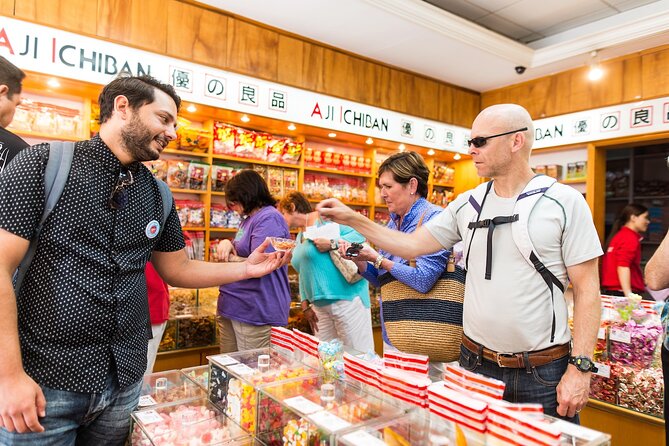
This is not simply a restaurant crawl. It uses food to explain how Manhattan’s Chinatown grew, changed, and developed separate regional pockets. You get a short history lesson at Chatham Square, a look at famous Doyers Street, and time in Columbus Park, then return to the table for another dish.
That balance matters. A food tour can become tiring if you are always standing in line or eating while walking. Here, several tastings are seated indoors, and tea is served at the restaurants. You still walk enough to notice the streets, signs, parks, and small shifts between parts of the neighborhood, but the pace leaves room to sit down and eat properly.
The tour costs $99 per person. That is not cheap for a three-hour walk, but the price includes all listed food tastings, coffee or tea at the restaurants, and a licensed New York City guide. Since the portions are intended to add up to lunch, the value is stronger than it would be for a tour offering only a few sample bites.
You should also count the cost of gratuity, which is not included. Alcohol is extra as well, and you must be at least 21 to purchase it. For many people, the useful comparison is not the price of the individual dishes. It is the cost of a guided lunch, neighborhood orientation, and several restaurant introductions in one booking.
More History Walking Tours in New York City
- Hamilton and Washington Revolutionary Walking Tour
★ 5.0 · 182 reviews - Tribeca Architecture And History Walking Tour
★ 5.0 · 141 reviews - Lower Manhattan Secrets And History Walking Tour
★ 5.0 · 96 reviews
Starting with made-to-order dim sum at Dim Sum Go Go
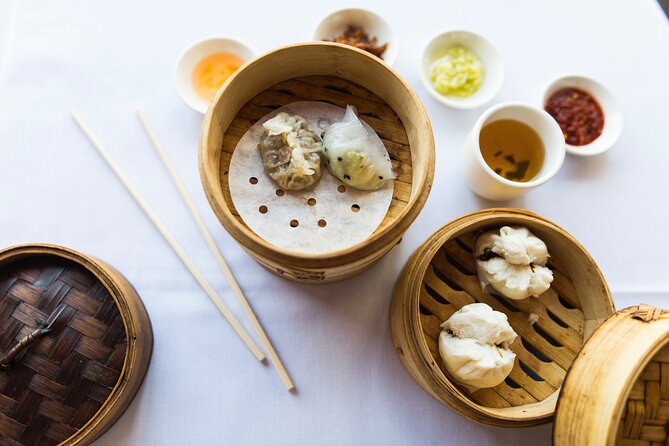
The tour begins at Dim Sum Go Go, at 5 East Broadway. You start indoors with a multi-course tasting of classic dim sum in a seated setting. The restaurant is described as Chinatown’s first made-to-order dim sum restaurant and has had a Michelin recommendation for the past decade.
That makes this a smart opening stop. Dim sum gives you several flavors and textures at once, and the seated format lets the guide explain what is arriving before you start eating. You are not left to guess which dumpling to try first or how each item fits into the larger food tradition.
This is also the point where you should arrive on time. One person who arrived late missed the first two tastings but was able to catch up at the third stop. The office may help late arrivals reconnect with the group, but missing the opening food is still a poor trade for a tour built around eating.
Tea is included at restaurant stops. That small detail helps clear the palate between dishes and means you do not need to budget for a drink with every course.
Chatham Square and the making of Chinatown
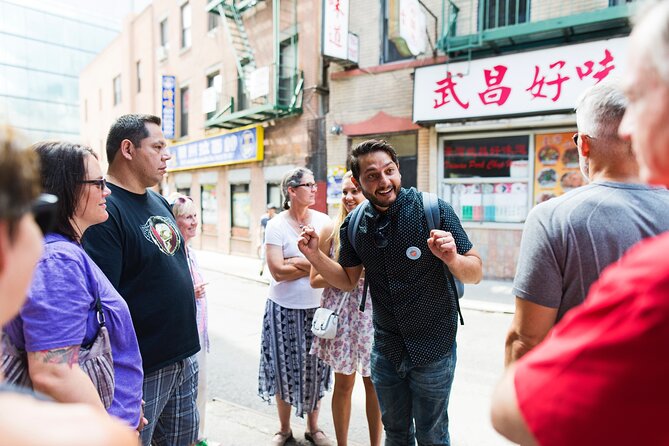
After eating, you hear about Manhattan’s Chinatown at Chatham Square. The guide explains how the area developed and introduces the different micro-neighborhoods connected to regional immigrant communities over roughly two centuries.
This part gives the food a useful frame. Chinatown is not one single dining style, and the tour makes that clear by moving beyond Chinese dishes later in the morning or afternoon. The Malaysian curry, Japanese-style mochi doughnut, and Chinese bakery dessert all show how the area continues to change while keeping older traditions in daily use.
The history stop lasts about ten minutes, so do not expect a full museum lecture. Its purpose is to help you notice the streets with better context. If you like short, focused explanations followed by more walking and eating, the format should suit you.
Guides named Bert, Farshad, and Chip have led this experience. Bert is especially noted for remembering names and where people came from, while Farshad is known for an improv background and a lively way of telling stories. Chip is also described as an engaging guide. The particular guide on your date is not guaranteed, but the experience clearly depends on a guide who can connect food, place, and people.
Doyers Street, one of Chinatown’s most storied lanes
The walk continues to Doyers Street, a narrow and famous lane associated with movies, historical tales, restaurants, and a cocktail lounge. It is one of the tour’s best chances to pause between meals and see how compact Chinatown can feel.
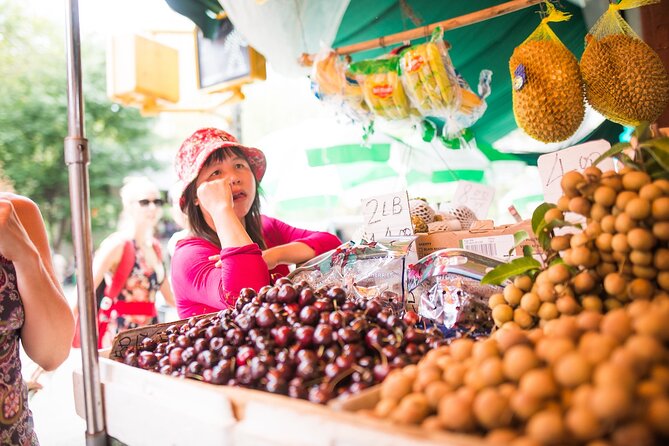
The guide uses the street as more than a photo stop. You learn why it matters, then get suggestions for places you may want to return to later. That advice can be especially useful because Chinatown has many doors and signs competing for your attention. A guided introduction helps you decide which corners deserve another visit.
There is not a tasting here, so this section gives your appetite a short break. It also keeps the tour from becoming a series of restaurant interiors. The experience is strongest when it alternates between food and place, and Doyers Street is one of the clearest examples of that rhythm.
More History Walking Tours in the USA
- History and Hauntings of Salem Guided Walking Tour
★ 5.0 · 14,564 reviews - Boston: Freedom Trail History Small Group Walking Tour
★ 5.0 · 6,450 reviews - Historic Charleston Guided Sightseeing Walking Tour
★ 5.0 · 6,216 reviews - Savannah History and Haunts Candlelit Ghost Walking Tour
★ 5.0 · 3,235 reviews
Malaysian roti and curry at Curry House
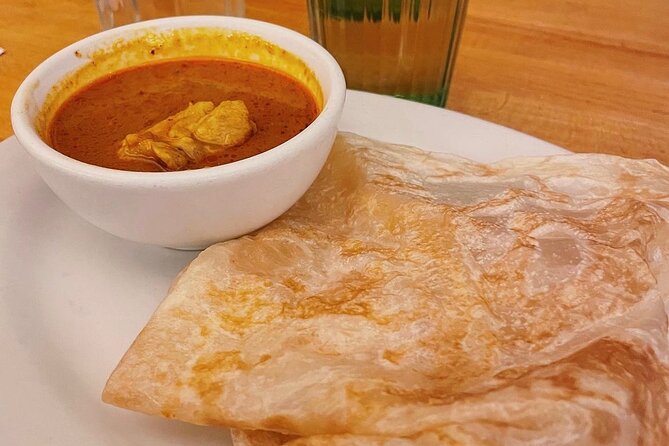
At Curry House, you sit down for Malaysian roti canai with curry. The bread is flaky, closer in texture to a buttery flat croissant than ordinary naan, and the curry is described as mild but full of flavor.
This is a useful change of pace after dim sum. You are not simply eating more versions of the same thing. The guide can explain the dish, the restaurant, and the way Chinatown’s food scene includes communities and cooking traditions beyond Chinese cuisine.
The portions matter here. A food tour can sound generous in writing but leave you hunting for lunch afterward. This tour is designed differently. The tastings at Curry House, Dim Sum Go Go, and Peking Duck House are seated courses rather than one-bite samples, so you should arrive hungry and avoid planning a large meal immediately afterward.
One person particularly enjoyed the chicken curry and crispy bread, while another preferred the dim sum. That is a good sign for mixed groups, since the tour offers several distinct styles instead of asking everyone to like one kind of dish.
A modern Chinatown stop at Alimama Tea
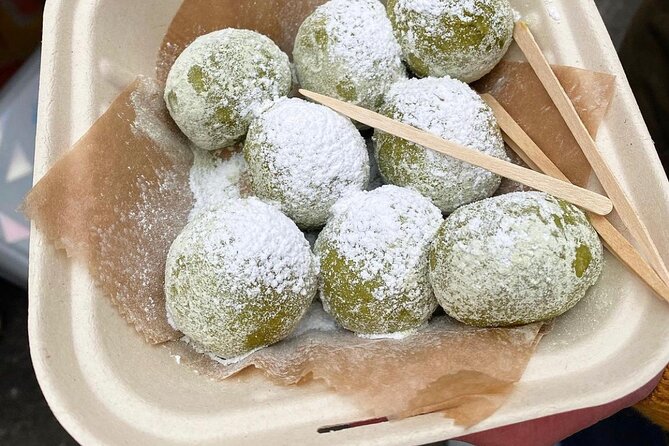
Alimama Tea brings a newer dessert trend into the route: mochi doughnuts made with Japanese mochi flour and matcha tea. The result is meant to have a different texture from a standard doughnut, with a chewy quality and a matcha flavor.
This stop helps explain why the tour is not frozen in an old picture of Chinatown. The neighborhood includes long-established restaurants, bakeries, newer food ideas, and influences from nearby Asian communities. That mix is part of what makes the route more interesting than a narrow tour of traditional Chinese dishes.
The visit is brief, about ten minutes, and likely works best as a quick taste rather than a long café break. If you dislike matcha or prefer classic pastries, this may not be your favorite stop. Still, the unusual texture gives the day some variety.
Columbus Park, Chinatown’s everyday gathering place
Columbus Park is the tour’s longest non-food stop, at about thirty minutes. It functions as Chinatown’s town square, where local residents gather to exercise, play traditional games, and perform Chinese music on instruments.
This is one of the most valuable parts of the route because it shows the neighborhood as a living community rather than a backdrop for restaurants. You get a chance to slow down, watch ordinary routines, and connect the earlier history talk with the present day.
The park also breaks up the meal schedule. By this point, you have already eaten several dishes, so a walk and a little time outdoors are welcome. The tour is still centered on food, but the park gives the experience some breathing room.
Weather can affect how comfortable this stop feels. The tour has more sitting than many food walks, which is helpful on a rainy day, but Columbus Park remains an outdoor portion. Wear shoes suited to city walking and be prepared for a mix of indoor meals and outdoor stops.
Peking duck carved at your table
Peking Duck House is the largest food highlight for many people. You sit down while trained chefs carve authentic Peking duck in front of you, then serve a house specialty dish as well.
The carving gives the meal a sense of occasion. Instead of receiving a finished plate with no explanation, you see part of the preparation and hear about the dish’s history and cooking methods. That makes the stop useful for food lovers who want to understand technique as well as taste.
It is also another reason to save your appetite. The combination of duck and an additional house dish adds serious weight to the meal. If you have already eaten a full breakfast, you may find the later tastings difficult, especially with the egg tart still ahead.
Tea is included at the restaurant stops, but alcoholic drinks are not. You can purchase non-alcoholic or alcoholic beverages at some establishments, with the age restriction applying to alcohol.
Finishing with egg custard tarts at Golden Manna Bakery
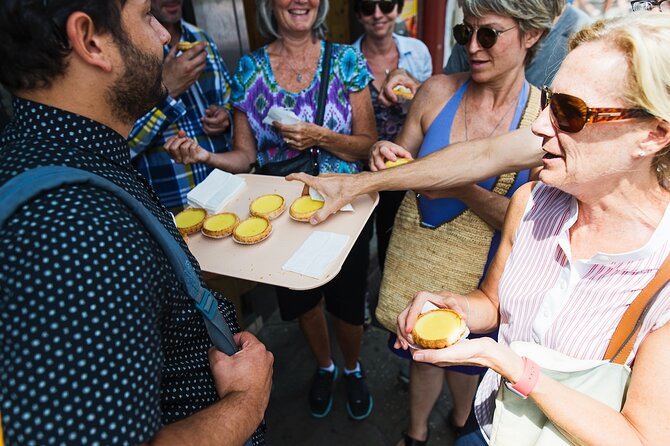
The final stop is Golden Manna Bakery at 16 Bowery. You finish with egg custard tarts, made with lightly sweet custard in a flaky, buttery pastry shell.
This is a well-chosen ending. The tart is lighter and sweeter than the duck and curry, but still substantial enough to feel like a proper last course. It also gives you a classic Chinese bakery item to remember and perhaps seek out again during your stay.
The tour ends outside the bakery, not back at the starting point. That matters for planning. The route begins at 5 East Broadway and finishes at 16 Bowery, so you should arrange your next activity from the end point rather than assuming you will return to the starting area.
The guides make the difference
The food is the foundation, but the guide shapes the day. The strongest guide feedback centers on humor, friendliness, clear explanations, and the ability to make each person feel included.
Bert is described as particularly good at connecting with the group. He explains not just what each dish is, but why it matters and what he enjoys about it. His ability to remember names and home cities adds a personal touch without changing the basic structure of the tour.
Farshad brings an improv background, which can make the history sections feel less formal. He is also described as caring about Chinatown and the people who live there. Chip has been praised as engaging and effective at guiding the group through the food stops.
You should not book this expecting a private guide or a quiet one-on-one meal. The maximum group size is 18, so the experience has a social side. That size is still manageable for questions, but it is larger than a private food walk.
Food restrictions, walking, and practical details
The tour lasts about three hours and is offered in English. A mobile ticket is provided, and the route is near public transportation. Service animals are allowed, and most people can take part.
Food restrictions need careful attention. Vegetarian and nut-free substitutions are available, but the operator cannot accommodate vegan, gluten-free, or other specific food allergies. Mention meat restrictions and nut allergies in your booking notes, and contact the office directly with questions before you commit.
The route includes walking between stops, standing during some explanations, and sitting for indoor tastings. The amount of food is generous, so plan this as your main meal rather than an appetizer before dinner.
You can cancel for a full refund up to 24 hours before the start time. Cancellations or changes within 24 hours are not refunded or accepted, and the tour requires a minimum number of participants. If that minimum is not met, you are offered another date or experience, or a full refund.
Is the $99 price worth it?
For a simple three-hour neighborhood walk, $99 would be high. For a guided lunch with several substantial tastings, restaurant seating, tea, history, and a group capped at 18, the price is easier to justify.
I see the value in the variety. You are not paying for five similar samples. The day moves through dim sum, Malaysian bread and curry, a modern mochi doughnut, Peking duck, and a bakery tart. You also get food explanations and neighborhood context that would be difficult to assemble on your own in one afternoon.
The price is less attractive if you have strict dietary needs, do not eat much, or mainly want a long historical walk. It is also worth remembering that gratuity and alcoholic drinks cost extra. For a food-loving first visit to Chinatown, though, the included lunch makes the math fairly solid.
Who should book this Chinatown food walk?
I would choose this tour for a first or second visit to New York, especially if you want a guided introduction before exploring Chinatown on your own. It suits couples, families, solo diners, and friends who enjoy trying several dishes without having to choose every restaurant themselves.
It is particularly good for people who want food and history in equal measure. The route does not give you a full academic account of Chinatown, but it adds enough context to make each stop feel connected to the neighborhood.
I would skip it if you need vegan, gluten-free, or highly specific allergy accommodations. I would also avoid booking it right after a large breakfast. Come hungry, wear comfortable shoes, and leave your evening meal flexible.
Should you book the FNYT Chinatown tour?
Yes, if you want a full lunch, several seated tastings, and a guide who can make the neighborhood’s food and past easier to understand. Dim sum, roti, Peking duck, mochi doughnuts, and egg tarts give you a broad and satisfying route, while Chatham Square, Doyers Street, and Columbus Park keep the experience grounded in place.
Book with care if your diet is limited, and remember that the tour ends at Golden Manna Bakery rather than where it began. For most food lovers who want an organized, filling, and social introduction to Manhattan’s Chinatown, the $99 cost is reasonable.
FAQ
How long does the Chinatown food tour last?
The tour lasts approximately three hours.
Where does the tour begin and end?
It begins at Dim Sum Go Go, 5 East Broadway, New York, New York 10038. It ends outside Golden Manna Bakery at 16 Bowery, New York, New York 10013.
Is food included in the ticket price?
Yes. All listed food tastings are included, and the amount is intended to be enough for lunch. Coffee or tea is also included at the restaurants.
Can the tour accommodate dietary restrictions?
Vegetarian and nut-free substitutions are available. Vegan, gluten-free, and other specific food allergy requests cannot be accommodated. You should list meat restrictions and nut allergies when booking and contact the office with other questions.
How large is the tour group?
The maximum group size is 18 people.
What is the cancellation policy?
You can cancel at least 24 hours before the start time for a full refund. Cancellations or changes made within 24 hours are not accepted and are not refunded.
More Food and History Tours in the USA
- New Orleans Food and History Walking Tour
★ 5.0 · 1,544 reviews - Boston Pizza Lovers Food and History Walking Food Tour
★ 4.5 · 1,082 reviews - Savannah: Historic District Foodie Walking Tour
★ 4.8 · 613 reviews - NYC: Brownstone Brooklyn History, Culture and Food Tour
★ 4.8 · 151 reviews
Latest history tours reviewed in the USA
- Franklin: Ghost Tour in Historic Franklin★ 4.8 · 65 reviews
- Fort Worth: Stockyards History Tour Pub Crawl★ 4.8 · 39 reviews
- Downtown Flagstaff Haunted History Walking Tour★ 4.7 · 46 reviews
- New York City: Flatiron Food, History, and Architecture Tour★ 4.8 · 43 reviews
- Fairbanks: Gold Dredge 8 Historic Train Tour★ 4.7 · 219 reviews
- Fairbanks: Private Mush on the Historic Yukon Quest Trail★ 5.0 · 30 reviews
- Charleston:Evening Haunted History Horse-Drawn Carriage Tour★ 4.7 · 38 reviews
- Philadelphia: Valley Forge National Historical Park Tour★ 4.9 · 39 reviews
New York City History Tours, compared.
New York City: American Museum of Natural History Ticket
Read our review →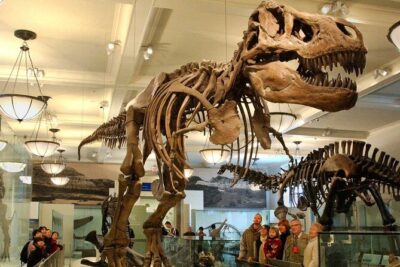
American Museum of Natural History Admission Ticket
Read our review →
Hamilton and Washington Revolutionary Walking Tour
Read our review →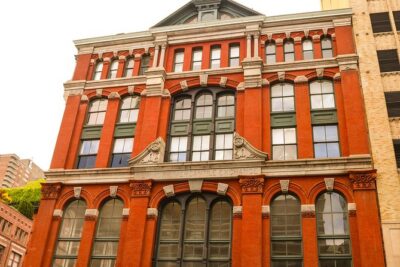
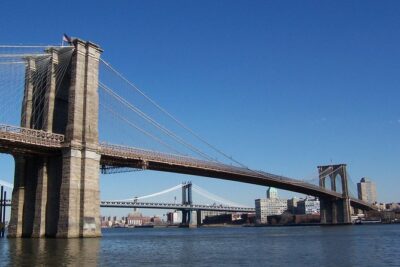
Lower Manhattan Secrets And History Walking Tour
Read our review →
NYC: Central Park Pedicab Tour and Natural History Access
Read our review →
New York City: Flatiron Food, History, and Architecture Tour
Read our review →
NYC: New York City History of Stand-Up Comedy Tour
Read our review →Browse the lists this tour appears in