
Review · VIENNA
Vienna: Time Travel and Magic Vienna History Tour
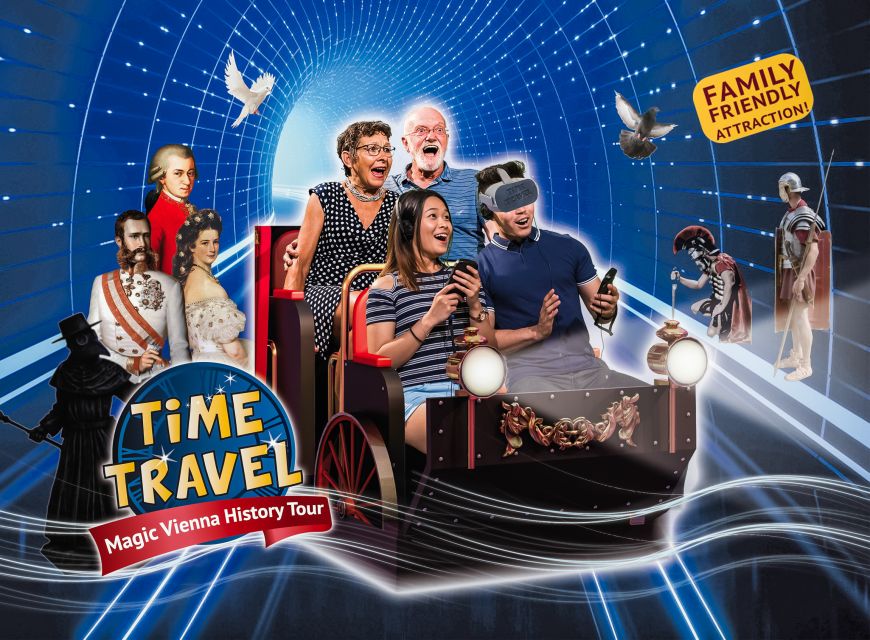
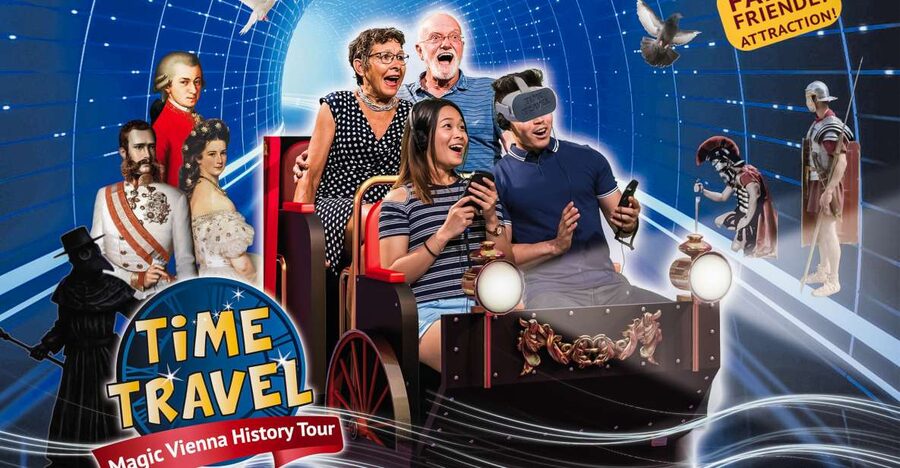
Vienna’s past comes at you here through 5D film, VR glasses, moving sets, sound, wind, and other special effects, rather than through glass cases and long labels. In one hour, you move from the Roman camp of Vindobona to postwar Austria, with imperial Vienna, wartime fear, and Viennese music along the way. I like the brisk pace and the range of experiences, especially the music sequence and final flight over the city.
I also like that the attraction gives children a reason to pay attention while adults pick up a useful outline of Vienna’s past. The main drawback is that the history is necessarily simplified, and the old cellar has about 50 steps with no elevator, so it is not suitable for wheelchair users or people with mobility limits.
Key points at a glance
- Roman Vindobona to modern Vienna: The hour covers roughly 2,000 years without asking you to sit through a long lecture.
- A 5D cinema in a historic cellar: Moving effects and sensory tricks put you inside ancient Vienna.
- Royal faces and animated history: The Habsburg court becomes easier to follow when historical figures speak directly to you.
- Viennese music through VR: Headsets turn the story of music into a visual ride through changing eras.
- A sobering wartime section: The Enemy Aircraft scene places you inside a World War II bomb shelter.
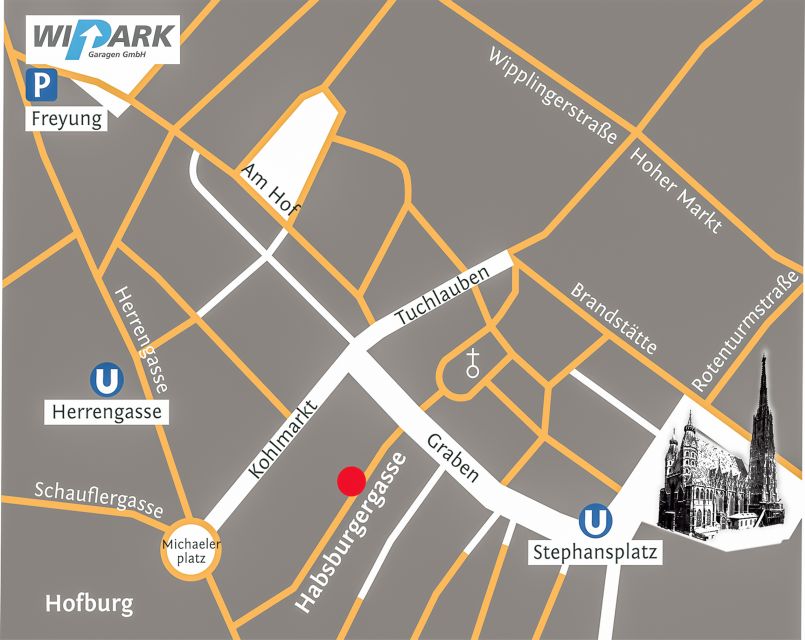
- A practical central location: Habsburgergasse 10A is close to the Hofburg, Graben, Kohlmarkt, and Stephansplatz.
Why this one-hour history show works
Time Travel Vienna is not a traditional guided walk. It is an indoor attraction built into the extensive cellars of St. Michael’s monastery, where you move from room to room as the story changes. Each space uses a different method: film, sound, figures, projected images, virtual reality, or physical effects.
That variety is the main reason the hour moves quickly. You are not standing in one room listening to a single speaker explain dates and dynasties. You are watching, hearing, and sometimes feeling each part of the story. The format is particularly useful on your first day in Vienna, when you want a basic framework before visiting palaces, churches, and museums.
The approach has limits. Two thousand years cannot be explained in detail in 60 minutes. The attraction gives you a broad route through the city’s past, not a university course or a close study of Austrian politics. I would use it to get your bearings, then visit places such as the Hofburg or Schönbrunn Palace for more depth.
The balance works best for families and mixed-age groups. Children get motion, characters, and visual effects. Adults get enough political and cultural context to make later sightseeing more meaningful. A history enthusiast may want more facts, but the attraction provides a lively starting point.
More History Tours in the world:
- New York City: American Museum of Natural History Ticket
★ 4.5 · 15,447 reviews - History and Hauntings of Salem Guided Walking Tour
★ 5.0 · 14,564 reviews - Colosseum: Underground and Ancient Rome Tour
★ 4.7 · 12,691 reviews
Entering the cellars beneath St. Michael’s
The meeting point is Habsburgergasse 10A in Vienna’s first district. It is about 200 meters from the Hofburg and roughly 100 meters from Graben, Kohlmarkt, and Stephansplatz, so it fits easily into a day spent walking through the historic center.
You can reach the area on the U1 to Stephansplatz or the U3 to Herrengasse. If you arrive by car, reduced-price parking is available at the Freyung garage. In practice, public transport or walking makes more sense for most people because the attraction is surrounded by central sights.
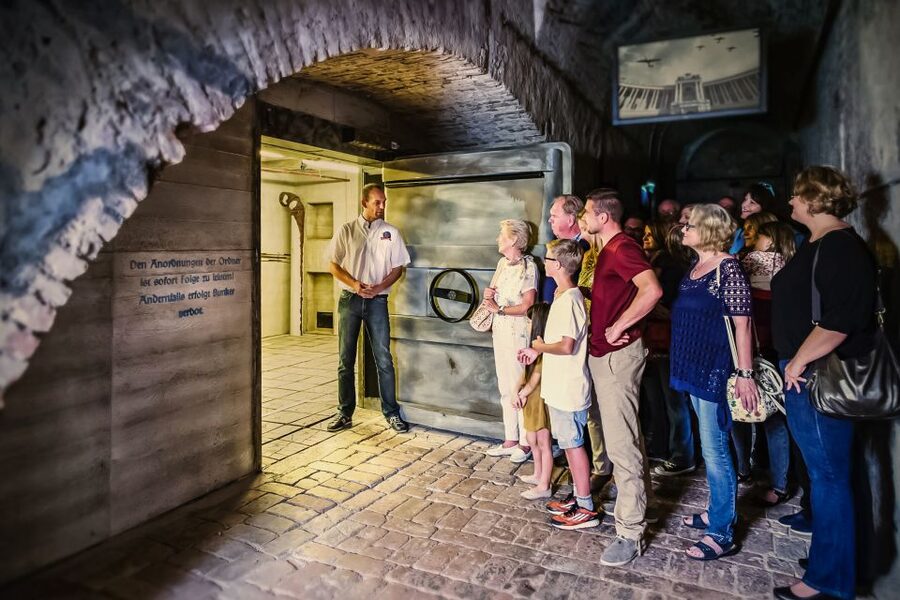
Once inside, expect a guided progression through several rooms rather than a free-flow museum visit. The historic cellar setting gives the experience some atmosphere before the technology begins. The old structure is also the source of the main practical concern: there is no elevator, and the route includes about 50 steps across two levels.
The route is not accessible to wheelchair users because of the protected historic building and legal building restrictions. People with mobility impairments should plan another activity. Sisi’s Amazing Journey, located across the street, is identified as an alternative attraction for wheelchair users.
Starting with Roman Vindobona
The story reaches back to the ancient Roman camp of Vindobona, the settlement that forms an early chapter in Vienna’s development. You do not get a long archaeological lecture. Instead, the attraction uses sets, projections, and narration to sketch how the city began and how it changed over time.
This opening matters because Vienna can otherwise feel like a city built entirely around imperial palaces and nineteenth-century boulevards. The Roman section reminds you that its story began long before the Habsburgs. It gives a useful base for understanding why Vienna became important in the first place.
The attraction moves quickly here. If you want exact dates, military details, or a careful account of Roman life, you will need a museum or book afterward. If you want a clear first look at the city’s earliest chapter, the presentation does its job without slowing the group down.
The portrait gallery and Vienna’s famous faces
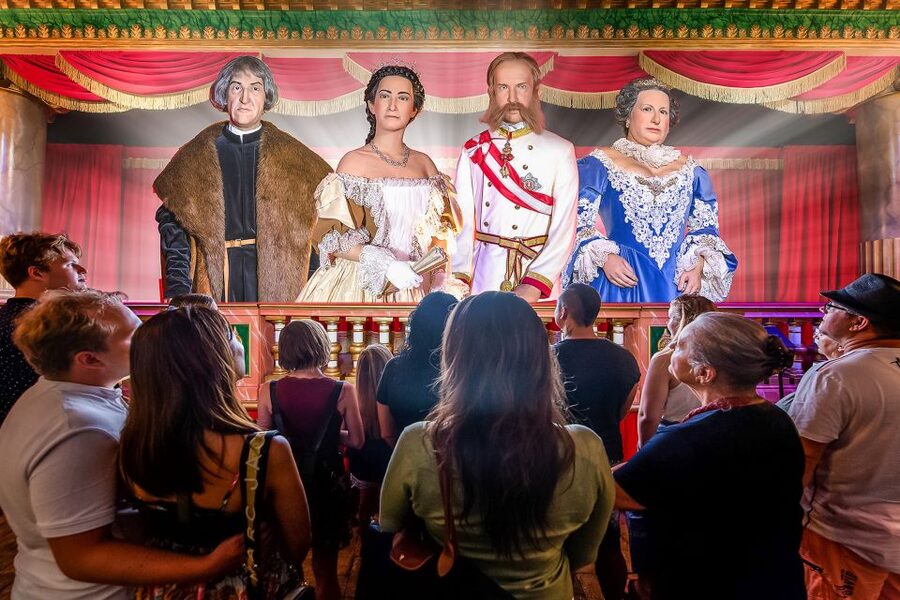
One section introduces important figures from Viennese history through a portrait gallery. These figures speak to you, making the material feel more personal than a row of painted portraits with small printed captions.
The royal family also gets its own treatment. You meet the imperial household and receive a quick sense of the personalities behind Vienna’s court culture. This is helpful before visiting the Hofburg, where names such as the Habsburgs, emperors, and court officials can begin to blur together.
The attraction’s strength here is speed and personality. A talking figure can give you the basic role of a person in seconds. The tradeoff is that complex people and events are reduced to short scenes. You are getting an introduction, not a full biography.
This part can be especially useful for children. The characters provide a human entry point into dynastic history, and the room-to-room format prevents the presentation from feeling like schoolwork. Adults should keep in mind that entertainment comes first, so treat the portraits as prompts for further sightseeing rather than final explanations.
Same old streets, another chapter:
- Lisbon: History, Stories and Lifestyle Walking Tour
★ 4.8 · 10,902 reviews - London Small Group Tour of Historical Pubs
★ 5.0 · 10,422 reviews - Prague: Oldtown, Medieval Underground & Dungeon History Tour
★ 4.3 · 10,277 reviews - Charleston’s Old South Carriage Historic Horse & Carriage Tour
★ 5.0 · 10,023 reviews
The 5D cinema and ancient Vienna
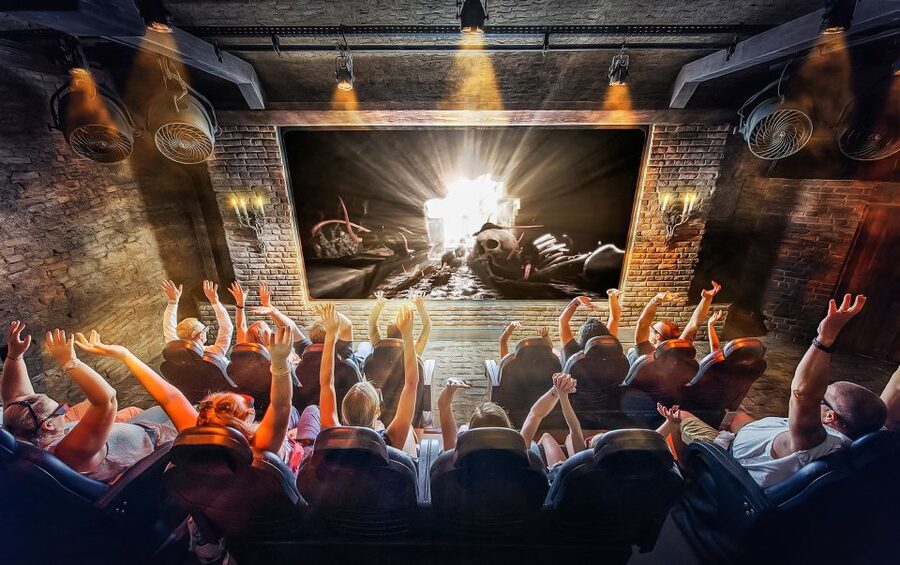
The 5D cinema is one of the central attractions. Special effects give the impression that you are moving through ancient Vienna rather than simply watching it on a screen. Depending on the sequence, you may experience motion, changing air, or other physical effects designed to match the film.
The film is short, which is both a strength and a weakness. It keeps the hour moving and avoids the fatigue that can come with a long simulator ride. At the same time, the ancient Vienna section can leave you wanting more because the format is so effective.
If you are sensitive to motion effects, sit or stand where you feel most comfortable and pay attention to the staff’s instructions. The attraction is built for a broad audience, but a sensory show is not the same as a quiet museum visit. Parents should expect excitement rather than stillness.
The sets are carefully arranged to make the transition between periods feel clear. You are not simply shown a timeline. The physical rooms help you feel that the city is changing around you.
Imperial Vienna and the Habsburg court
The imperial section shifts the focus from city origins to the court that shaped Vienna for centuries. You learn about the nobility of the Viennese court and meet members of the imperial family through the attraction’s staged presentation.
This is a useful bridge to the real Hofburg, only a short walk away. The Hofburg can seem enormous and formal when you first enter it. After this introduction, you have a basic idea of why the complex mattered and how royal life influenced the city.
The show does not try to reproduce every detail of court etiquette or Habsburg politics. Instead, it gives you a quick sense of hierarchy, personality, and ceremony. That simplicity is helpful for younger visitors, though anyone hoping for a serious treatment of the empire may find this section light.
I like the way the attraction turns a remote royal family into recognizable people. You can form your own impression of the personalities presented, even though the scenes remain carefully shaped for entertainment.
Viennese music through virtual reality
The music section uses VR glasses to take you through the course of Viennese music history. This is more than a standard audio track. The simulated setting gives you a visual route through a subject that can otherwise be difficult to explain in a short tour.
Vienna’s musical reputation is one of its biggest draws, but a list of composers does not tell you how the city’s musical life developed. The VR sequence gives that history motion and atmosphere. It helps connect music to place and time, even if it cannot cover every composer or style.
The headsets are a strong part of the experience for many visitors, but there is a practical point to remember: the tour keeps moving through different rooms, and VR is only one section of the hour. Do not expect a long, open-ended virtual world. Think of it as a focused scene within a larger show.
For a child, the headsets turn an abstract cultural subject into an event. For an adult, they provide a memorable outline that can make a later concert or music museum visit more rewarding.
Enemy Aircraft and the air raid shelter
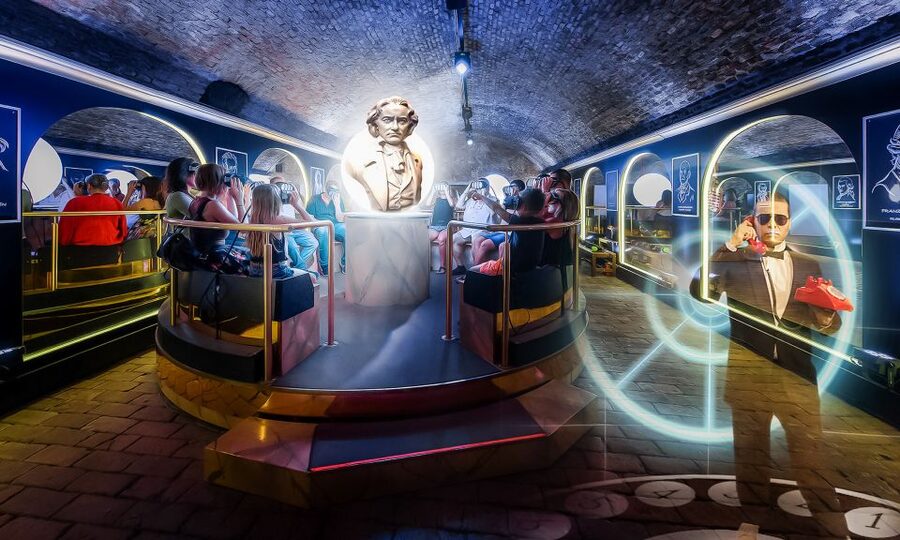
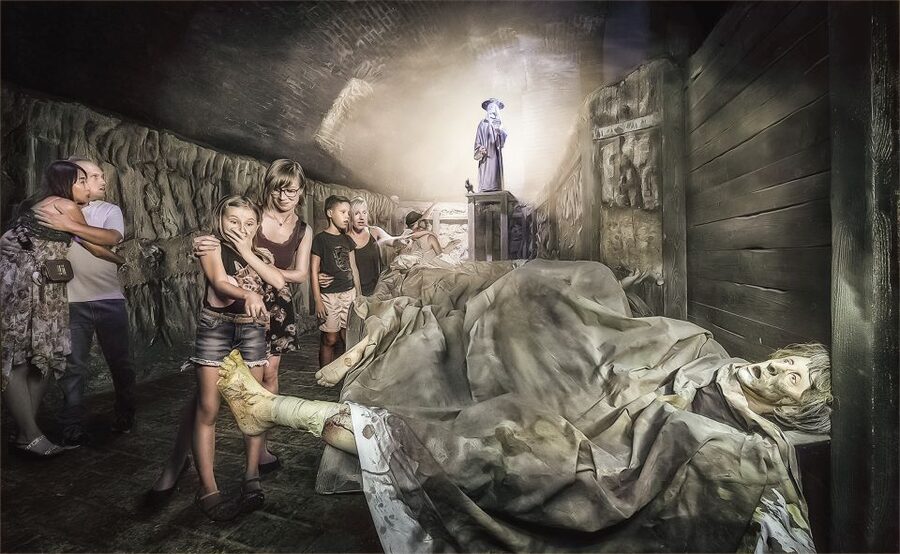
The tone changes sharply in the World War II section called Enemy Aircraft! Here, you are placed inside a bomb shelter while the sounds and effects suggest that an air raid is taking place around you.
This scene is more than a thrill ride. It shows how the war affected ordinary people in Vienna and breaks up the palace-centered image that many first-time visitors carry with them. The attraction wants you to feel the fear and confinement of the period, not just memorize another date.
The effects can feel intense, especially for young children or anyone uncomfortable with loud sound and simulated danger. Parents should decide if the scene suits their group. It is brief, but the shift from imperial ceremony to wartime danger is deliberate and memorable.
I appreciate that the attraction does not stop with Vienna’s grand buildings and famous composers. This section gives the city’s twentieth-century story emotional weight, even though the presentation remains a short introduction.
Austria is free and the postwar turning point
The next section focuses on the speech by Chancellor Leopold Figl in the battered remains of Vienna. You hear his words as the attraction presents the relief felt by Austria’s citizens after the war.
This is one of the more serious moments in the route. The ruined setting and the speech show a city trying to recover after destruction. It gives you a brief sense of how public emotion and national identity were shaped in the postwar period.
The effect depends on the contrast with the earlier scenes. After Roman soldiers, royal figures, music, and a bomb shelter, the presentation becomes quieter and more reflective. It reminds you that Vienna’s beauty was not untouched or inevitable. Much of the city’s modern story also involves damage, loss, and rebuilding.
Again, the treatment is compact. If you want the full political background of postwar Austria, look elsewhere. But for a one-hour attraction, the section provides an important final historical note before the mood lifts again.
Flying over Vienna by virtual carriage
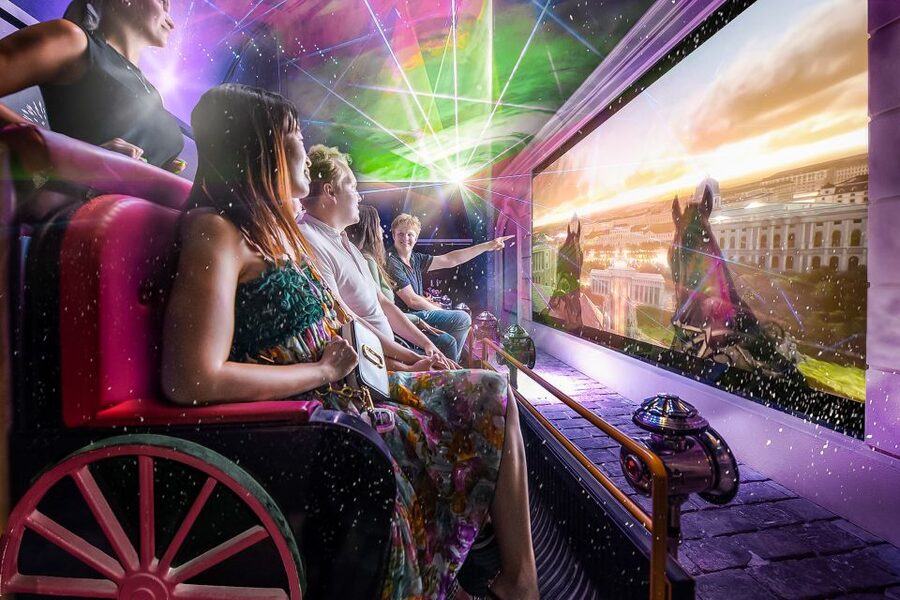
The final sequence offers a simulated flight over present-day Vienna in a horse-drawn carriage. It is a playful finish after the darker wartime scenes and a chance to see the city from an unusual viewpoint.
This is not a substitute for climbing a tower or taking a real carriage ride. Its value is different: you get a quick visual sweep of Vienna after spending the hour moving through its past. The ending links the historical scenes to the city you are about to explore outside.
Some of the effects may include sensations such as wind or snow, adding a physical touch to the finale. The attraction closes on a light note, which suits families and gives the whole route a clear beginning, middle, and end.
I would not book the experience only for the final flight. It works best as the closing piece of a larger sequence that has already taken you from Vindobona through empire, music, war, and recovery.
Price, timing, and how to fit it into your day
At about $27 per person, the attraction is reasonably priced for a one-hour indoor activity with several different forms of technology. You are paying for a packaged show rather than a long walking tour, so the value depends on whether you enjoy film, simulation, and staged presentation.
I consider it good value for a family, a rainy afternoon, or a first visit when you want a quick introduction to Vienna. It is less suitable if you prefer original objects, quiet galleries, or detailed historical discussion. You can learn a great deal in an hour, but you will not leave with a complete understanding of Austrian history.
The attraction is close enough to pair with central sights. You could visit the Hofburg before or after, walk through Graben and Kohlmarkt, or continue toward Stephansplatz. Several people find it useful as the first planned activity of a Vienna visit because it gives later sightseeing more context.
Reservations are strongly recommended. Last admission is at 7:00 p.m., and you should arrive in time for your booked start. The tour lasts about an hour, so it is easy to fit between major sights without giving up half a day.
A multilingual audio guide is included. The experience is designed for a broad international audience, and English speakers are well supported. No named guide is listed, so do not book it expecting a personal walking guide with a fixed personality or a custom route.
Who should book Time Travel Vienna
I would recommend it most strongly to:
- Families with children who need history presented through action and visual effects
- First-time visitors who want a fast introduction to Vienna
- Adults who enjoy VR, simulation, and themed attractions
- Anyone looking for an indoor activity near the Hofburg and Stephansplatz
- People who want historical context before visiting Vienna’s palaces and museums
I would be more cautious if you have limited mobility, dislike special effects, or want detailed academic history. The 50 steps are a real restriction, not a minor inconvenience. The cellar route is not accessible to wheelchair users, and pets are not allowed.
Video recording is also prohibited, so plan to experience the scenes rather than document them. The attraction is best enjoyed as a shared hour, with everyone moving through the rooms together.
Should you book it?
Book Time Travel Vienna if you want a lively, compact introduction to the city and you enjoy technology-based attractions. The 5D cinema, VR music sequence, bomb shelter, and virtual carriage flight give the hour enough variety to hold the attention of children and adults.
Skip it if you want original artifacts, a quiet museum, or a detailed account of every era. For most first-time visitors, though, $27 is a fair price for an entertaining orientation, especially when you pair it with the Hofburg or Sisi’s Amazing Journey across the street. Just check the stairs before booking, and make this an early Vienna activity if you want its historical outline to guide the rest of your sightseeing.
FAQ
How long does Time Travel Vienna last?
The experience lasts about one hour.
How much does the experience cost?
The listed price is $27 per person.
Where is Time Travel Vienna located?
The meeting point is Habsburgergasse 10A in Vienna’s historic center.
How close is it to major central sights?
It is about 200 meters from the Hofburg and about 100 meters from Graben, Kohlmarkt, and Stephansplatz.
How can I reach the attraction by underground?
You can use the U1 line to Stephansplatz or the U3 line to Herrengasse.
Is an audio guide included?
Yes. A multilingual audio guide is included with admission.
Is the attraction accessible to wheelchair users?
No. The route includes two levels and about 50 steps, with no elevator. It is not suitable for wheelchair users or people with mobility impairments.
What is the latest admission time?
Last admission is at 7:00 p.m. You should arrive on time.
Can I cancel my booking?
Yes. Cancellation is free up to 24 hours in advance for a full refund. You can also reserve now and pay later.
Latest history tours reviewed in the world
- From Athens: Ancient Olympia Full-Day Private Tour★ 4.8 · 22 reviews
- From Athens: Explore Ancient Corinth & Charming Nafplion★ 4.6 · 102 reviews
- From Athens: Explore Ancient Greece 4-Day Tour★ 4.7 · 73 reviews
- From Albufeira: Wine Tasting & Historic Silves Tour★ 4.9 · 421 reviews
- From Albufeira: Historical Algarve Region Tour★ 4.7 · 585 reviews
- From Alexandria: Full-Day Guided Tour of Historical Sights★ 4.5 · 54 reviews
- Franklin: Ghost Tour in Historic Franklin★ 4.8 · 65 reviews
- Freiburg: Exciting City Tour with sightseeing and history★ 4.3 · 103 reviews
Vienna History Tours, compared.
Vienna Historic Center Small Group Walking Tour
Read our review →
Skip-the-Line Schonbrunn Palace Guided Tour and Vienna Historical City Tour
Read our review →
Vienna Mozart Concert in Historical Costumes at the Musikverein
Read our review →
Browse the lists this tour appears in