
Review · DENVER
Denver: History and Architecture Walking Tours
Denver’s story is written in its buildings. On these 90-minute Historic Denver walks, you trace the city from a tent settlement to a railroad center, then through rougher years and into today’s polished downtown. The four routes each take a different angle, from Union Station’s grand entrance to the mansions of Capitol Hill and Quality Hill.
I especially like the choice of neighborhoods and the small groups of up to 10 people. You can focus on the kind of history that interests you, and a good guide can answer questions without trying to project over a large crowd. The main caution is that the walks are outdoors in rain or shine, and the information says both wheelchair accessible and not suitable for people with mobility impairments, so you should confirm the route before booking.
Key points at a glance
- Four distinct routes: Pick LoDo, Capitol Hill, Quality Hill, or Larimer Square instead of taking a one-size-fits-all city walk.
- Denver’s oldest surviving places: See the city’s oldest block at Larimer Square and learn how it was saved from decay.
- Architecture with human stories: The tours connect buildings to families, business figures, governors, and other people who shaped Denver.
- A compact $20 experience: Ninety minutes gives you a useful introduction without taking over your day.
- Small English-speaking groups: With no more than 10 participants, questions and conversation are easier.
- Weather matters: Bring water, sunscreen, comfortable shoes, and suitable clothing because every tour runs outdoors.
Four ways to read Denver’s past
The best feature here is choice. You are not simply led through a standard list of downtown sights. You select the district that matches your interests, then spend the walk looking closely at its buildings and people.
The routes cover different chapters of Denver. LoDo explains change on a citywide scale, from tents to railroad hub to skid row to an urban center. Capitol Hill and Quality Hill focus on wealth, status, and domestic life through their grand homes. Larimer Square follows a rescue story, showing how citizens protected an old block and helped create Denver’s first historic district.
That variety also makes the tours useful for repeat visitors. If you have already walked around Union Station, a mansion route gives you a different side of the city. If you care most about urban change, LoDo may offer the clearest big picture.
More History Walking Tours in the USA
- History and Hauntings of Salem Guided Walking Tour
★ 5.0 · 14,564 reviews - Boston: Freedom Trail History Small Group Walking Tour
★ 5.0 · 6,450 reviews - Historic Charleston Guided Sightseeing Walking Tour
★ 5.0 · 6,216 reviews
Starting at Union Station in Lower Downtown

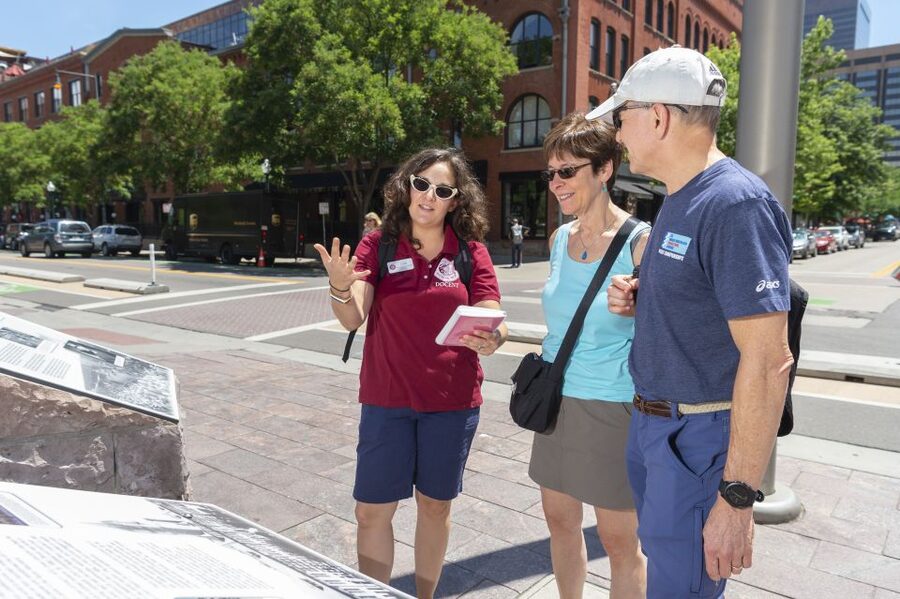
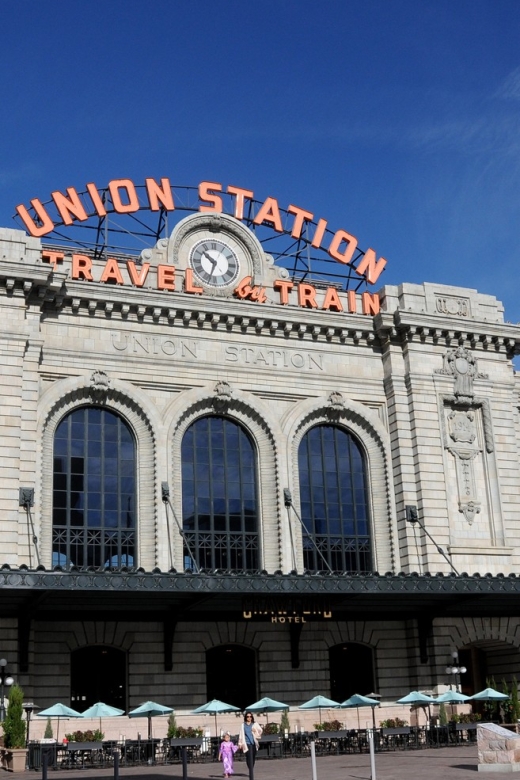
The LoDo route begins at the flagpole in front of Union Station. Look for a guide in a maroon polo shirt marked Historic Denver, and arrive about 10 minutes early so you are not trying to identify the group at the last second.
Union Station is a fitting starting point. From here, the walk follows Denver’s transformation through several distinct phases. You learn how a small collection of tents grew into a major railroad hub, how the area later fell into disrepair and became associated with skid row, and how it developed into a sought-after urban district.
That sequence gives the route more substance than a simple parade of old facades. A building can look handsome today while hiding a rougher past. LoDo’s value is in showing you how the same streets changed purpose and reputation over time.
The architecture is the visual anchor, but the social story is what gives it meaning. You are not just checking off old structures. You are considering who built them, who used them, and why the district survived periods when demolition might have seemed easier than preservation.
This is likely the strongest choice if you are staying downtown and want a quick introduction to Denver’s central core. It also works well early in your visit, since it helps you understand the area you may continue exploring on your own.
Capitol Hill and the lives behind the mansions
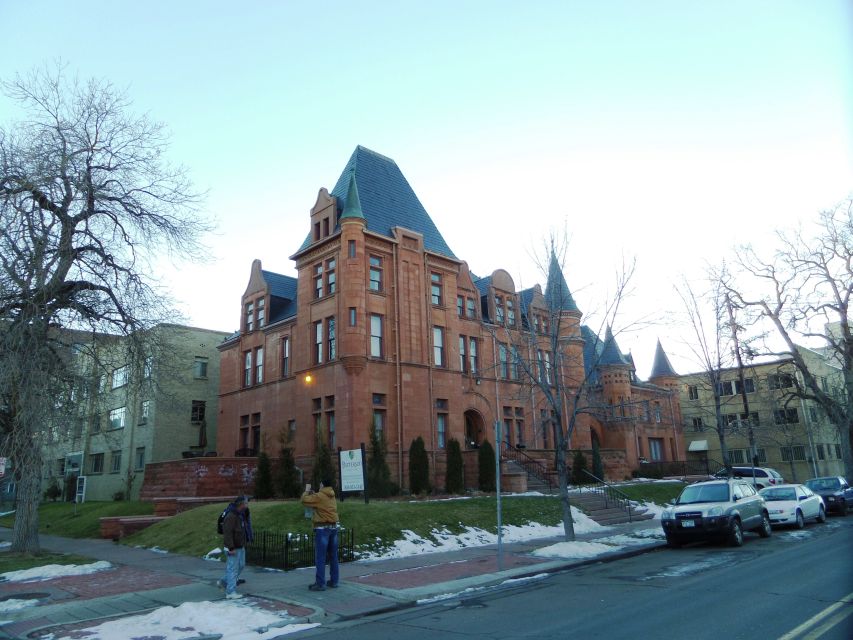
The Capitol Hill walk begins outside the Molly Brown House Museum. From there, you explore historic mansions and hear about the families who lived in them near the end of the 19th century.
This route is less about commercial change and more about the people who had the money and influence to build impressive homes. The houses provide the setting, but the stories of their residents help explain Denver society during the city’s early prosperous years.
I like this route for readers who want architecture with a personal angle. A facade alone tells you about materials, style, and ambition. A guide who adds details about the family inside can make the house feel connected to ordinary choices, family fortunes, and the social world of its time.
The Molly Brown House Museum gives the meeting point an obvious historical reference, but the walk itself focuses on the wider neighborhood and its mansions. Do not expect an indoor museum visit to be part of the 90 minutes. The experience is a guided outdoor walk through the district.
Capitol Hill is a good fit if you enjoy old homes more than railroad or commercial history. It may also suit you if you want a calmer change of pace from downtown streets, though you should still expect a walking tour rather than a seated talk.
Quality Hill’s Governor’s Mansion and grand addresses

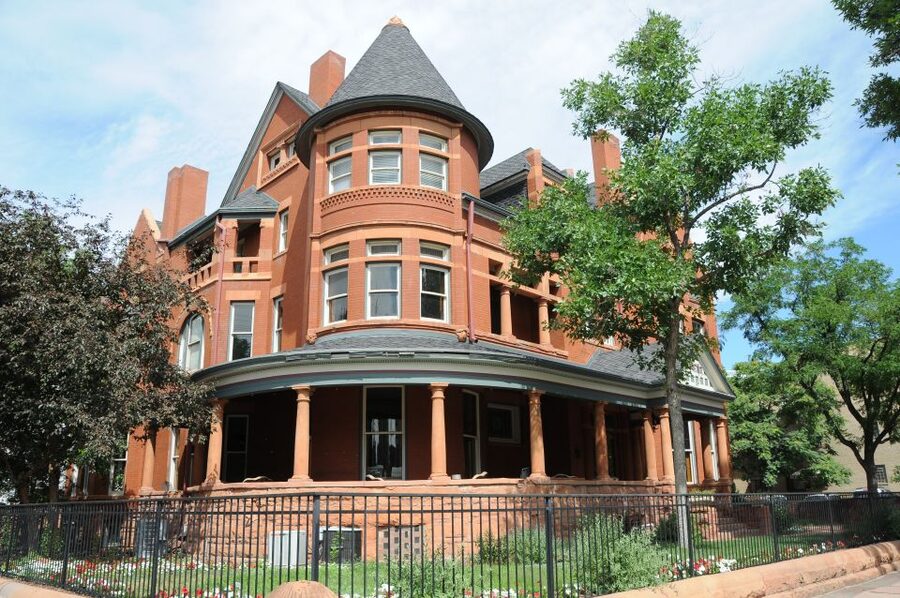
The Mansion of Quality Hill route centers on some of Denver’s most important residences, including the Governor’s Mansion, Malo Mansion, and Zang Mansion. The focus is not only on architectural appearance but also on the individuals behind these houses and the mark they left on Denver.
This route asks you to read a home as a statement. Size, location, and design can reveal how a family wanted to be seen. The guide’s job is to connect those outward signs with the people who commissioned, occupied, or influenced the buildings.
For you, that means the route rewards close attention. Look at the details your guide points out, but also listen for the story behind each address. The appeal is not simply that the homes are impressive. It is that they represent ambitions and legacies from the city’s formative years.
Quality Hill may be the best pick for architecture fans who want a concentrated walk through notable residences. It also offers a useful counterpoint to LoDo. Instead of following a district shaped by railroads, warehouses, and later redevelopment, you are looking at the homes of people with the means to shape Denver’s public and private life.
The route’s title may suggest a tour of mansion interiors, but the provided details describe an outdoor exploration of the neighborhood. Plan on viewing the buildings from the street and hearing their stories from your guide.
More Architecture and Landmark Tours in the USA:
- Chicago in a Day: Food, History & Architecture Walking Tour
★ 5.0 · 1,153 reviews - Historic Charleston Walking Tour: Rainbow Row, Churches, and More
★ 5.0 · 691 reviews - Charleston: History and Architecture Guided Walking Tour
★ 4.8 · 349 reviews - Tribeca Architecture And History Walking Tour
★ 5.0 · 141 reviews
Larimer Square and Denver’s oldest block
Larimer Square focuses on Denver’s oldest block and the campaign to save it from ruin and dilapidation. The important story here is preservation. Local citizens helped protect the block and turned it into Denver’s first historic district.
That makes this route especially useful if you want to understand why old buildings remain in a modern city. Preservation rarely happens by accident. This walk puts attention on the people who recognized the value of the block and worked to keep it from disappearing.
The route is also a neat reminder that historic districts are made, not simply discovered. A street can lose its usefulness, suffer neglect, and still gain a new future if enough people care about it. Your guide can help you see the old block as a place shaped by decisions, not just age.
Choose Larimer Square if you are interested in preservation, downtown change, and the survival of older architecture. Since it covers one historic block and its rescue, it may feel more focused than the broader LoDo walk. That narrow subject is a strength if you prefer one clear story, but it may feel less varied if you want a long list of different neighborhoods.
What a strong guide adds to the buildings
The quality of this experience depends heavily on the guide. The most useful approach is not a stream of dates. It is a mix of architecture, period context, photographs or other visual aids, and room for questions.
Lois has been praised for adding details about both the buildings and the period in which they were built. That combination matters. You learn not only what you are looking at, but also what was happening around it.
Another guide, Jessie, received a poor rating for relying too much on a notebook. That is a fair warning about expectations. A walking tour can lose its energy when the guide simply reads information rather than responding to the group and the streets around it.
The strongest sessions seem to make the material engaging and relatable. One high rating specifically credited clear explanations, pictures, and answers to questions for making early Denver easier to understand. Another highlighted a guide who made the subject both informative and conversational.
You should feel free to ask questions during the walk. The small-group format helps here, and the 90-minute length gives the guide enough time to explain a building without turning the experience into an all-day lecture.
The overall rating is 4.5 from 34 ratings, which suggests a generally strong experience with some variation from one guide to another. I would choose the route first, then treat the guide as an important part of the day’s luck.
Is $20 a fair price for 90 minutes?
At $20 per person, this is a reasonable price for a focused introduction to Denver’s architecture and local history. You are paying for a live guide, a planned route, and the context that is easy to miss when you walk alone.
The value is highest if you like stopping to look closely and asking why a building matters. A free self-guided stroll can show you the same streets, but it will not necessarily explain how LoDo changed from railroad center to skid row and then to a fashionable district. It also may not connect a mansion to the family who lived there or explain how Larimer Square was saved.
The cost is less attractive if you prefer to move quickly, take photographs without stopping, or already know the history of these neighborhoods. Ninety minutes is not long enough to cover all of Denver, and food and drinks are not included.
Still, the short duration is useful. You can fit one route between other plans, use it as an introduction on your first day, or schedule it near the end of a visit to give shape to places you have already seen.
Group size, weather, and what to bring
The group is limited to 10 participants. That is small enough for a more personal feel, and it should make it easier to hear the guide and ask questions. It also means the experience is more structured than wandering alone, but not as crowded as a large city tour.
Every tour operates in rain or shine. Denver’s weather can affect your comfort, so wear comfortable shoes, bring water and sunscreen, and dress for the forecast. The routes are outdoor walks, not indoor presentations.
The information describes the activity as wheelchair accessible but also says it is not suitable for people with mobility impairments. Since those statements do not fully match, contact Historic Denver before booking if you have specific access needs. Do not assume every route has the same surface, slope, or ease of movement.
Meet at the flagpole in front of Union Station, even for a route that later focuses on another district only if that is the meeting point shown for your booking. Guides wear maroon Historic Denver polo shirts, which makes them easier to identify. Arriving 10 minutes early gives you time to find the flagpole and settle in.
Which route should you choose?

Pick LoDo if you want the broadest story of urban change and a convenient start at Union Station. It links Denver’s early settlement, railroad growth, decline, and renewal.
Pick Capitol Hill if you are drawn to historic homes and the families who lived in them. Starting by the Molly Brown House Museum gives the route a strong architectural and social frame.
Pick Quality Hill if grand residences are your priority. The Governor’s Mansion, Malo Mansion, and Zang Mansion give the walk a clear focus on status, ambition, and legacy.
Pick Larimer Square if preservation interests you most. Its central story is how local citizens saved Denver’s oldest block and helped establish the city’s first historic district.
You can also choose based on your schedule and energy. All four options last 90 minutes, so the subject matter is the main difference.
Should you book this Historic Denver walk?
I would book this tour if you want a short, affordable introduction to Denver that explains what you are seeing instead of simply pointing it out. The strongest reasons are the four route choices, the small groups, and the attention to both architecture and the people behind it.
Choose carefully, though. The tour is outdoors in all weather, the guide’s delivery may vary, and the mobility information needs clarification for anyone who requires an especially easy route.
For most history and architecture fans, $20 is a sensible spend, particularly on a first visit. Larimer Square and LoDo offer the clearest urban stories, while Capitol Hill and Quality Hill are better for grand homes and the lives connected to them.
FAQ
How long does the Denver walking tour last?
Each tour lasts 90 minutes.
How much does the tour cost?
The price is $20 per person.
Which walking tours can I choose from?
You can choose the Lower Downtown Walking Tour in LoDo, the Capitol Hill Walking Tour, the Mansion of Quality Hill Tour, or the Larimer Square Tour.
Where does the tour meet?
The guide meets you at the flagpole in front of Union Station.
How can I identify the guide?
Guides wear maroon polo shirts with Historic Denver printed on them.
What language is the tour conducted in?
The tour is conducted in English with a live English-speaking guide.
How large is the group?
The group is limited to 10 participants.
Does the tour operate in bad weather?
Yes. All tours operate in rain or shine.
What should I bring?
Bring comfortable shoes, sunscreen, water, and clothing suitable for the weather.
Is the tour wheelchair accessible?
The activity information describes it as wheelchair accessible but also says it is not suitable for people with mobility impairments. If you need an accessible route, confirm the details with Historic Denver before booking.
Latest history tours reviewed in the USA
- Franklin: Ghost Tour in Historic Franklin★ 4.8 · 65 reviews
- Fort Worth: Stockyards History Tour Pub Crawl★ 4.8 · 39 reviews
- Downtown Flagstaff Haunted History Walking Tour★ 4.7 · 46 reviews
- New York City: Flatiron Food, History, and Architecture Tour★ 4.8 · 43 reviews
- Fairbanks: Gold Dredge 8 Historic Train Tour★ 4.7 · 219 reviews
- Fairbanks: Private Mush on the Historic Yukon Quest Trail★ 5.0 · 30 reviews
- Charleston:Evening Haunted History Horse-Drawn Carriage Tour★ 4.7 · 38 reviews
- Philadelphia: Valley Forge National Historical Park Tour★ 4.9 · 39 reviews
Denver History Tours, compared.


Footsteps Through Denver: Women, History & Hidden Gems
Read our review →
Downtown Denver History & Highlights – Small Group Walking Tour
Read our review →

Denver: City Highlights and History Walking Tour
Read our review →Browse the lists this tour appears in