
Review · IRELAND
Cork: Guided Historical Walking Tour
Cork’s most surprising feature is under your feet: parts of the city centre were built over old river channels. This 75-minute walking tour connects those buried waterways with Cork’s maritime trade, monuments, churches, bridges, and market streets, giving you a useful first look at the city.
I like the local storytelling, especially the personal stories associated with guides such as Noel, Mary, Gerard, Jarrod, Catherine, and Aiden. I also like the route’s range, from the Huguenot cemetery and Shandon views to Elizabeth Fort and the former boathouse entrances on South Mall. The main drawback is simple: Cork’s weather can turn quickly, and the tour runs rain or shine.
Key points
- Buried waterways: Follow the path of the river beneath Cork’s curved main street and learn why the city has its unusual layout.
- Maritime Cork: See how trade, river crossings, and former boat entrances shaped the city centre.
- Local guides: Guides including Noel, Mary, Gerard, Jarrod, Catherine, and Aiden are praised for clear explanations, humor, and personal Cork stories.
- Major sights in a short walk: The route includes Shandon, Grand Parade, St Fin Barre’s Cathedral, Elizabeth Fort, South Gate Bridge, and the English Market.
- Useful first-day tour: You finish at the English Market, making it easy to continue exploring or stop for food.
- Practical format: The tour costs $26 per person, lasts 75 minutes, is in English, and is wheelchair accessible.
Why Cork’s buried rivers make this tour worthwhile
Cork is easier to understand once you realize that water shaped nearly every part of its centre. The city grew around waterways and islands, and some streets now follow or cover old channels.
This tour makes that history visible in a practical way. Instead of hearing a list of dates, you follow the curved main street and learn that the river still runs beneath its route. It is a small detail, but it changes how you read Cork’s streets. A lane that seems oddly bent suddenly makes sense.
The tour also explains Cork’s place in transatlantic and European trade. That gives the city a wider setting than its attractive streets and colourful buildings. You are looking at a port city whose fortunes were tied to commerce, ships, migration, and movement across the sea.
I think this is the tour’s strongest quality. It links the physical city to the people who used it. Bridges, quays, streets, and markets are not just photo stops. They show how Cork worked.
More History Walking Tours in Ireland
- 2-Hour Historical Walking Tour from Dublin
★ 5.0 · 875 reviews - Historical 2-Hour Guided Walking Tour of Dublin
★ 4.7 · 865 reviews - Dublin’s Haunted History Walking Tour
★ 4.3 · 345 reviews
Starting at the Tourist Information Centre
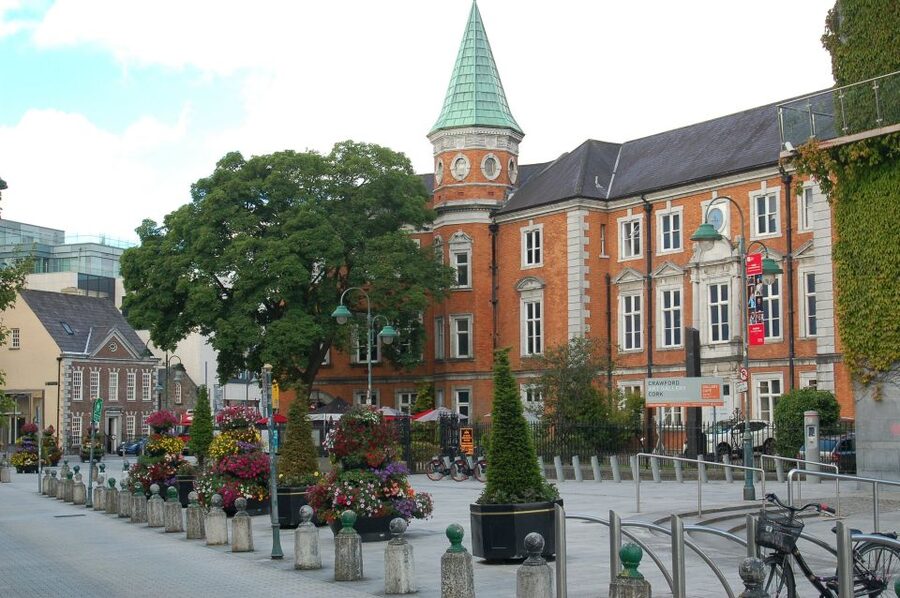
You meet at the Cork Tourist Information Centre and should arrive 10 minutes before the start. The activity ends back at the same meeting point, so you do not need to arrange transport back to your accommodation or find a distant pickup point.
That central start is useful if you are new to Cork. You can begin the tour soon after arriving in the city centre, then use the route to plan the rest of your day. Several stops are worth revisiting at a slower pace, including Shandon, Elizabeth Fort, and the English Market.
The tour is conducted in English with a live guide. The group size can vary. One reported group had about 20 people, with the guide using a headset microphone to cut through city noise. That matters on a walking tour, since traffic and conversation can easily swallow a quiet voice.
The curved main street and Cork’s trading past
The first part of the walk introduces Cork as a trading city. You learn how the city connected with European and transatlantic commerce, then follow the shape of the street as it traces the route of the water below.
This is a good opening because it gives you a map in your head. Cork’s centre can feel confusing at first, with bridges, narrow lanes, several waterways, and streets that bend instead of running in a neat grid. The guide’s explanation helps you see the city as a place formed by water.
Look for the small clues of its past as you walk. Cork’s maritime story is not confined to a museum. It survives in the street plan, old commercial districts, quays, and building entrances.
The guide also points out architecture linked to this trade. You will not simply pass old façades without explanation. The aim is to show how Cork’s buildings reflect the city’s work as a port and commercial centre.
Cork Opera House and the view toward Shandon
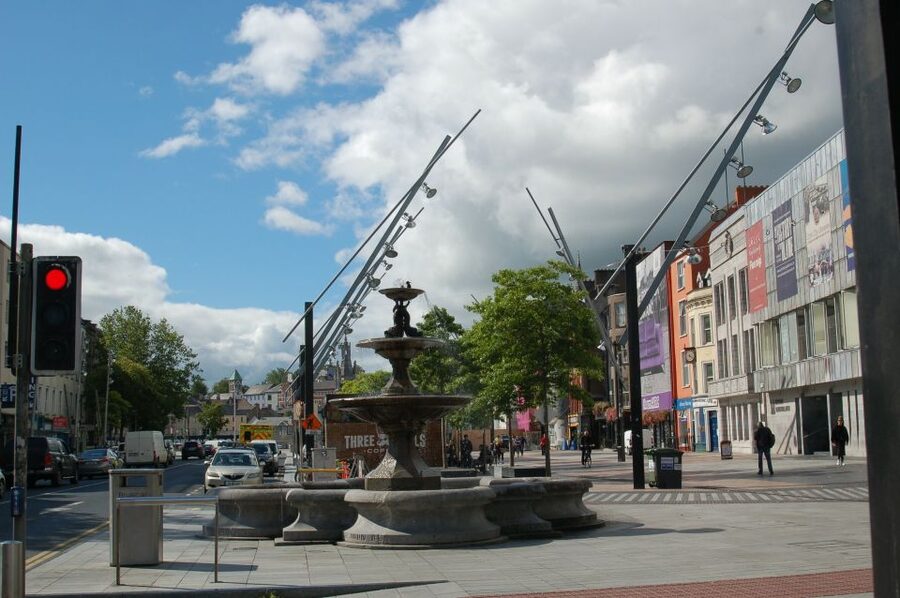
The route includes Cork Opera House, an important city-centre landmark. From across the river, you can see the shape of Shandon church and its distinctive red and white brick bell tower with clockfaces.
Shandon is one of Cork’s most recognizable sights. The tower gives the city a strong visual marker, and the guide uses it to connect architecture with local identity. You may also learn about the bells and tower as part of the city’s living culture, rather than seeing the church as just another historic building.
One useful tip comes from the tour route itself: Shandon Bells and St Anne’s Church can be visited separately, with bell ringing and a climb to the top available for an additional €6 per person. That cost is not included in this walking tour, so treat it as a possible follow-up rather than part of the package.
If you want to climb the tower, ask the guide about timing before the walk ends. The 75-minute route gives you an overview, not time for a full visit at every stop.
Same old streets, another chapter:
- Dublin Historical Centre Food Tour with 8 Food Tastings & Drinks
★ 5.0 · 1,718 reviews - Celtic Boyne Valley & Ancient Sites Day Tour From Dublin
★ 4.5 · 865 reviews - Dublin: Jeanie Johnston Tall Ship Irish Famine History Tour
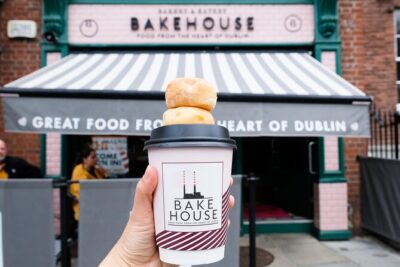
★ 4.8 · 431 reviews - Deliciously Dublin: The Artisan Donut Walking & History Tour
★ 5.0 · 329 reviews
Careys Lane and the Huguenot cemetery
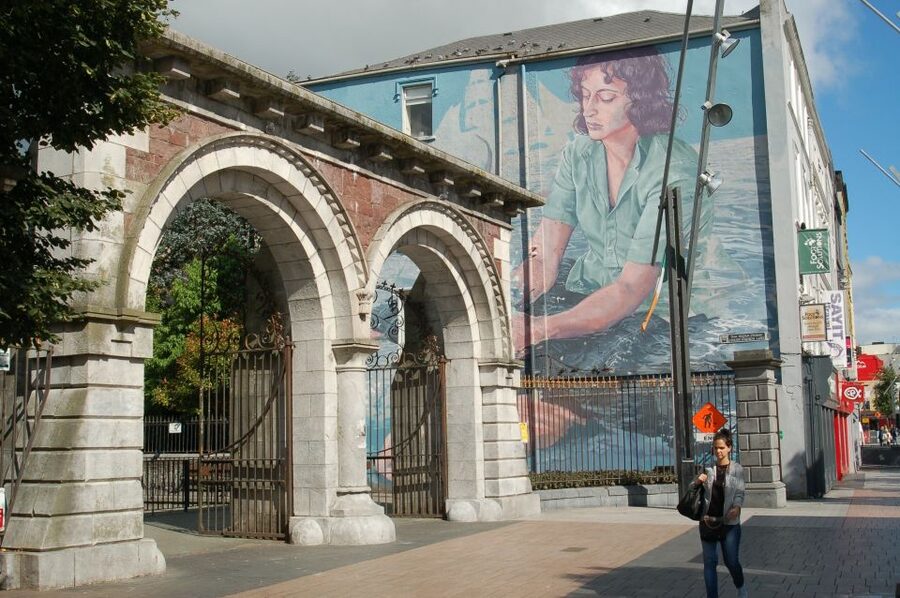
The walk continues along Careys Lane to the Huguenot cemetery. This is the kind of stop that can be easy to miss if you explore Cork alone.
The cemetery adds a human side to the city’s past. The tour connects Cork with refugees and communities who became part of its story, showing that the city was shaped by movement and arrival as well as by trade. It is a quieter stop than the main streets, and that change of pace helps the walk avoid becoming a simple march between large landmarks.
I like this part because it reflects the range of the tour. You get public monuments and grand civic spaces, but also smaller places that reveal how different communities lived in Cork.
The route is still a city walk, so you should expect regular pavement, street crossings, and the normal noise of a working centre. Comfortable shoes and weather-ready clothing will make the experience easier.
Coal Quay, Cornmarket Street, and Grand Parade
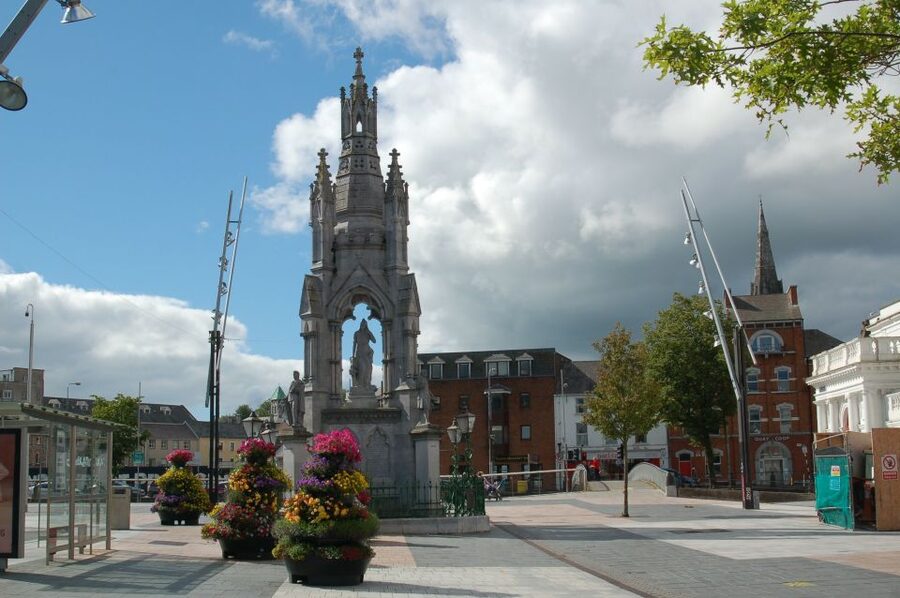
From Careys Lane, the tour moves toward Coal Quay and Cornmarket Street. These names point to Cork’s commercial past, and the guide explains how trade shaped the city’s streets and districts.
The walk then reaches Grand Parade, described as Cork’s widest street. Here you see Bishop Lucy Park, the Berwick fountain, and the National Monument. These stops give you a better sense of Cork’s civic centre, where public memory, everyday movement, and city life meet.
Grand Parade is also a good place to pause and orient yourself. The route has already shown you old waterways, religious sites, trade areas, and narrow lanes. The broad street gives you a clearer view of how those pieces fit together.
The guide’s role is important here. A sign or monument can tell you a name, but a local guide can explain why the place matters and how it fits into Cork’s story. The most effective guides on this tour are described as funny, clear, and good at mixing personal stories with facts.
Nano Nagle and the footbridge named for her
One of the more personal moments comes at the footbridge named for Nano Nagle. The guide explains her humanitarian work and her efforts to bring education to people from the poorest classes.
This stop moves the tour away from trade and architecture and toward social history. It shows how one person’s work affected education and daily life in Cork. The bridge also makes the story easy to remember because you are standing in a place directly linked to her name.
I appreciate stops like this because they prevent a city tour from becoming only a catalogue of buildings. Cork’s character comes from its people, its institutions, and the causes that shaped local life.
The footbridge may also be a useful point for questions. Guides such as Mary and Noel are praised for welcoming discussion, so do not hesitate to ask for clarification if a story catches your interest.
St Fin Barre’s Cathedral, South Gate Bridge, and Elizabeth Fort
The tour continues to St Fin Barre’s Cathedral, South Gate Bridge, and Elizabeth Fort. Together, these sights show three different sides of Cork: religious architecture, river crossings, and defensive history.
St Fin Barre’s Cathedral provides one of the route’s most striking architectural stops. The tour focuses on the building as part of Cork’s development, rather than promising an extended interior visit. If you want detailed time inside the cathedral, plan to return after the walk.
South Gate Bridge brings you back to Cork’s waterways. It is another reminder that bridges are central to the city’s identity. The river is not background scenery here. It explains the way streets connect and why Cork grew where it did.
Elizabeth Fort offers a different view of the city’s past. The fort is tied to defense and the control of Cork, while the surrounding streets show how the city expanded beyond its earlier river islands and crossings. The visit is part of the walking route, so expect an introduction rather than a long, self-guided exploration.
This section may appeal most to first-time visitors who want a broad framework. You see enough to decide which places deserve a second visit, without spending half a day inside one attraction.
South Mall’s former boathouse entrances
South Mall is one of the tour’s most unusual stops. The area is now a major business quarter, but the guide points out remnants of former boathouse entrances.
These entrances are easy to overlook. Modern offices and busy streets can hide the fact that water once came right up to buildings in ways that supported business and transport. Seeing those old openings makes the buried-river story feel real.
This is exactly the sort of detail that adds value to a guided walk. You could pass the entrances without noticing them, then wonder later why Cork’s buildings have certain shapes. The guide gives you a way to read the street rather than simply photograph it.
The stop also shows how much the city has changed. Cork’s commercial centre still occupies old water-based routes, but the working waterfront has been altered and covered over. The past survives in fragments.
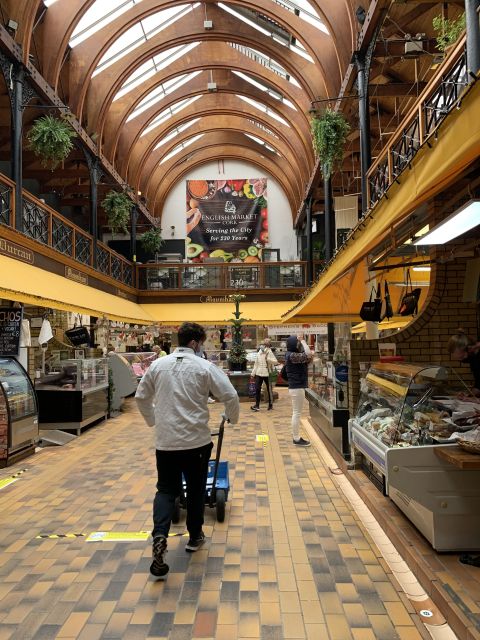
Finishing at the English Market
The tour finishes on Princes Street at the main entrance to Cork’s English Market. This is a practical ending, especially if you are hungry or planning to explore the city centre afterward.
The market is not included as a food tour, and food and drinks are not part of the $26 price. Still, ending here gives you an easy next stop. You can continue with your own visit, browse the stalls, or use the location as a landmark for finding your way around Cork.
I also like the timing. Seventy-five minutes is long enough to cover a useful stretch of the city, but short enough to fit before lunch, an afternoon booking, or another attraction. You should not expect a leisurely stop at every monument. The value comes from getting a clear overview and a list of places to revisit.
What the guide adds
The guide can make or break a city walk, and this experience appears to place real weight on local delivery. Guides named in the feedback include Noel, Mary O’Sullivan, Gerard or Ger, Jarrod or Jared, Catherine, and Aiden.
The strongest pattern is not a single scripted fact. It is the combination of clear information, humor, personal Cork stories, and a willingness to answer questions. Noel is often singled out for storytelling and personal experience. Mary is praised for local insight and for projecting her voice clearly. Gerard, Jarrod, Catherine, and Aiden are also described as engaging and lively.
Names and assignments can change, so you should not book expecting one particular guide. But you can reasonably expect a local English-speaking guide who explains Cork through stories as well as dates.
Price, pace, and who should book
At $26 per person, the tour offers solid value if you want orientation and context rather than entry to indoor attractions. You are paying for a guided route through several important parts of Cork, along with explanations you would probably miss on your own.
The price does not include food, drinks, hotel pickup, or visits to paid attractions such as the Shandon tower. That is not a problem if you see the tour as an introduction. It could feel less worthwhile if you prefer to spend 75 minutes inside one museum or landmark.
I would choose this for a first morning or afternoon in Cork. It suits solo visitors, couples, families, and anyone who wants to understand the city before exploring independently. It also works well for a short visit, since the walk covers many central sights without requiring a full day.
The tour is wheelchair accessible, but the supplied information does not describe every surface or slope along the route. If you have specific mobility needs, confirm the practical details before booking.
Bring clothing suited to the weather. The walk operates rain or shine, and Cork weather can change quickly. The tour is in English, so it suits you best if you are comfortable following spoken explanations while walking through a busy city centre.
Should you book the Cork historical walking tour?
Book it if you want Cork to make sense quickly. The buried waterways, South Mall boathouse entrances, maritime trade, Huguenot cemetery, Nano Nagle, and English Market create a broad picture of the city in just 75 minutes.
I would especially recommend it at the start of your stay. Use the walk to mark places for later, then return to Shandon, St Fin Barre’s Cathedral, Elizabeth Fort, or the English Market with more time.
Skip it if you dislike walking in uncertain weather or want long visits inside individual attractions. For most first-time visitors, though, $26 is a fair price for a local introduction with plenty of useful detail and a route that goes beyond the obvious postcard sights.
Booking terms should be checked carefully before payment because the supplied information mentions both free cancellation up to 24 hours in advance and a non-refundable condition. The booking page should have the final rule for your selected departure.
FAQ
How long does the Cork historical walking tour last?
The tour lasts 75 minutes. Starting times depend on availability.
Where does the tour begin?
You meet at the Cork Tourist Information Centre. Arrive 10 minutes before the activity starts.
Where does the tour end?
The walk ends back at the meeting point.
What language is the tour conducted in?
The live guided tour is conducted in English.
Is the tour wheelchair accessible?
Yes, the activity is listed as wheelchair accessible.
What sights are included on the route?
The route includes Cork Opera House, views toward Shandon church, Careys Lane, the Huguenot cemetery, Coal Quay, Cornmarket Street, Grand Parade, Bishop Lucy Park, the Berwick fountain, the National Monument, Nano Nagle’s footbridge, St Fin Barre’s Cathedral, South Gate Bridge, Elizabeth Fort, South Mall, and the English Market entrance.
Does the tour include food or drinks?
No. Food and drinks are not included.
Is hotel pickup included?
No. You must make your own way to the Cork Tourist Information Centre.
Does the tour run in bad weather?
Yes. The tour takes place rain or shine, so bring weather-appropriate clothing.
Can I visit Shandon Bells during the tour?
The walk includes a view of Shandon church and information about the area. A separate visit to Shandon Bells and St Anne’s Church, including the bell ropes and tower climb, costs €6 per person and is not included in this tour.
Latest history tours reviewed in Ireland
- Dublin: Macabre History Walking Tour★ 4.9 · 95 reviews
- Dublin: Jeanie Johnston Tall Ship Irish Famine History Tour★ 4.8 · 431 reviews
- Dublin: LGBT Pride Walking Tour with Queer History★ 5.0 · 24 reviews
- Wicklow Historic Gaol: 1-Hour Tour★ 4.4 · 56 reviews
- Cobh: 3-Hour Cultural Tour Plus★ 4.9 · 31 reviews
- Cobh: Guided Historic Walking Tour★ 4.6 · 32 reviews
- Semi-Private (8people max) 2.5 Hr Dublin Walking Tour★ 5.0 · 69 reviews
- Dublin Private Highlights & History of 1916 Easter Rising Tour★ 5.0 · 154 reviews
Ireland History Tours, compared.

Dublin Historical Centre Food Tour with 8 Food Tastings & Drinks
Read our review →
Celtic Boyne Valley & Ancient Sites Day Tour From Dublin
Read our review →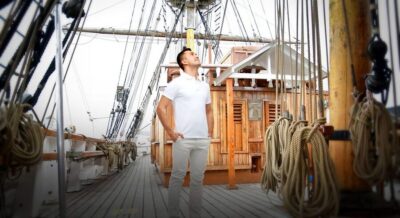
Dublin: Jeanie Johnston Tall Ship Irish Famine History Tour
Read our review →
Deliciously Dublin: The Artisan Donut Walking & History Tour
Read our review →
Dublin Private Highlights & History of 1916 Easter Rising Tour
Read our review →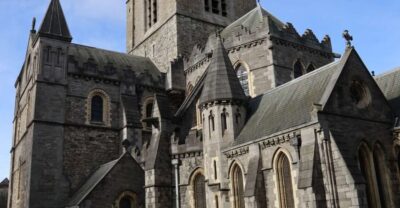
Browse the lists this tour appears in