
Review · DUBLIN
Dublin: Jeanie Johnston Tall Ship Irish Famine History Tour
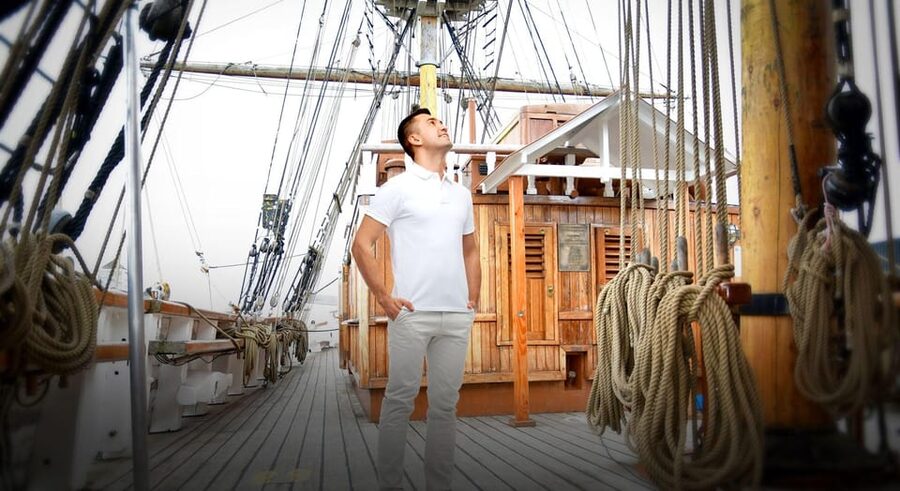
The most affecting part of the Jeanie Johnston is below deck, where the ship’s tight quarters make Ireland’s famine-era emigration more than a date in a textbook. You hear about passengers who paid for their crossings, what they ate, how they passed the time, and what they faced at the far end of the Atlantic. I like the real personal stories and the way the ship gives you a physical sense of the journey. I also like the views from the upper deck, with Dublin’s Docklands, masts, gulls, and salt air all around you.
The main drawback is practical: this is a historic ship with stairs and confined spaces, so it is not suitable for wheelchair users or people with limited mobility. At about 50 minutes and $16 per person, it is a focused visit rather than a full museum afternoon, but that short length works well if you are fitting several Docklands sights into one day.
Key points before you book
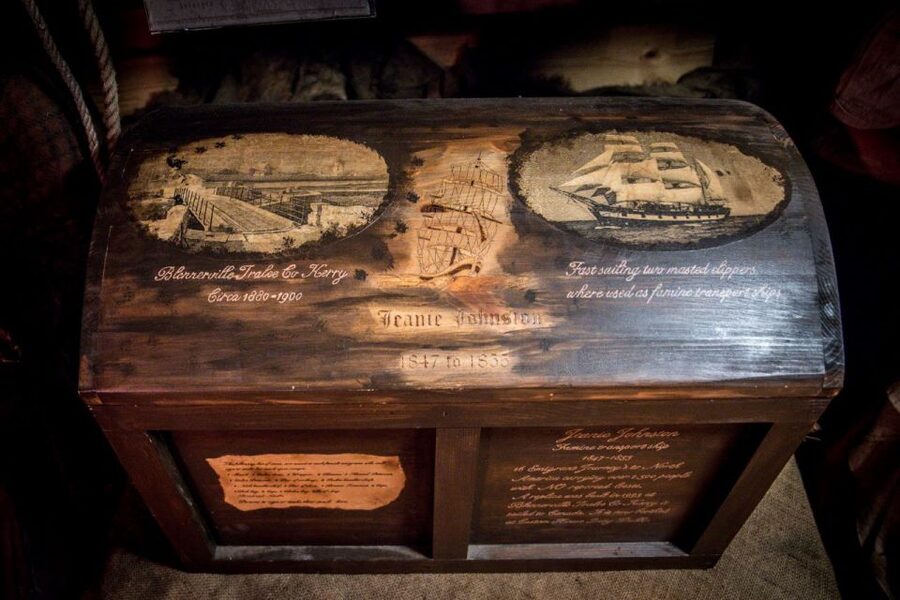
- Up to 250 people once shared the lower deck, giving the famine voyage a powerful physical context.
- The tour moves from the open upper deck to cramped quarters below, so you get both the ship experience and the human story.
- Guides such as Steve, Claire, Eoin, Katrina, and Catriona are praised for clear storytelling, humor, and handling questions from children and adults.
- The Jeanie Johnston made 16 voyages to America without a recorded death, an extraordinary detail that adds contrast to the wider danger of famine-ship travel.
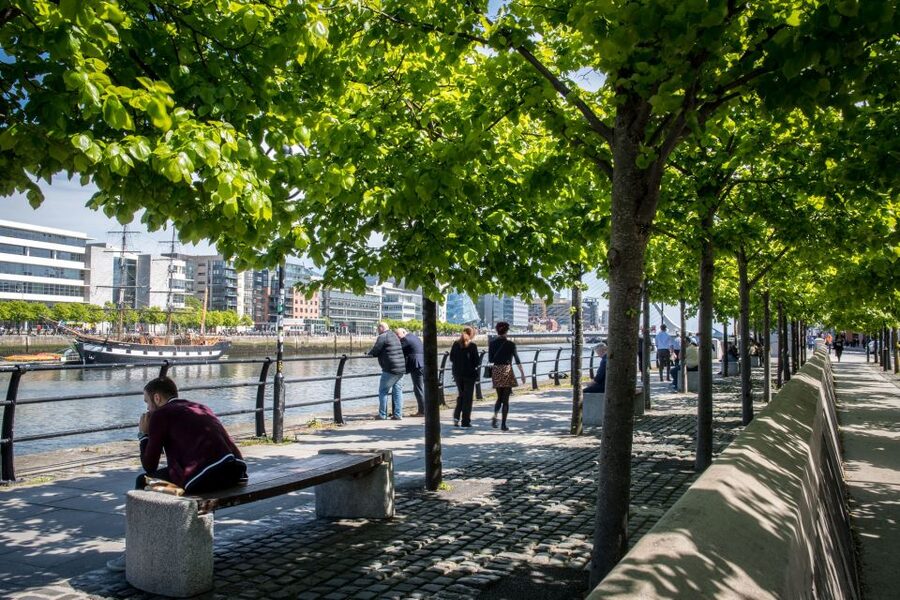
- The visit lasts about 50 minutes, making it easy to pair with a walk along Custom House Quay and Dublin’s Docklands.
- Comfortable shoes matter, and the ship is not suitable for wheelchair users or people with mobility impairments.
Why the Jeanie Johnston tells the famine story well
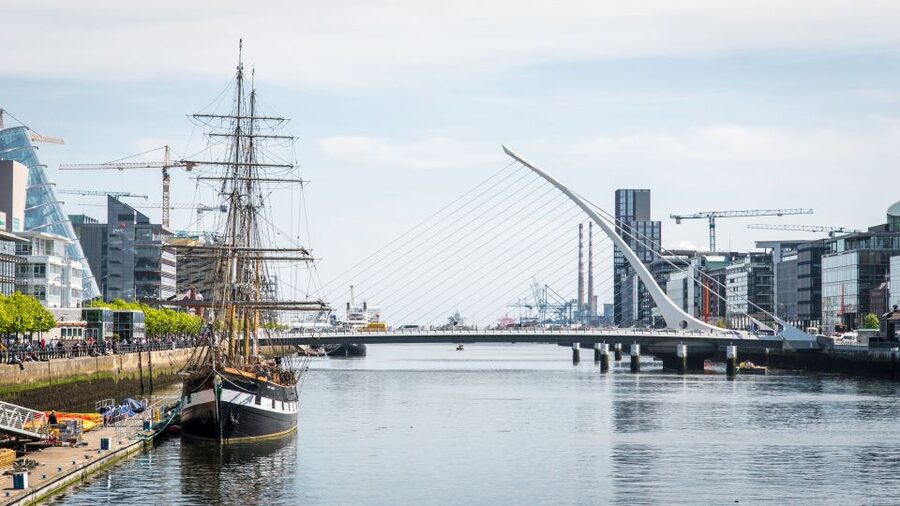
Ireland’s Great Famine forced about one million people to leave the country. The Jeanie Johnston carried 2,500 of them across the Atlantic, turning a ship into a temporary home for people who had very few choices left.
That number becomes easier to grasp once you see the spaces involved. The lower deck was not a symbolic exhibit built to suggest hardship. It is a tight shipboard setting where you can picture families living close together for weeks, with little privacy and limited fresh air.
I find this physical scale more useful than a long row of dates. The tour connects the famine to individual decisions: how someone paid for passage, what food was available, why a family risked the crossing, and what might await them after arrival.
The tone is serious, but it is not presented as a gloomy lecture. The guides bring humor and warmth when appropriate, then let the harsher details speak for themselves. That balance helps keep the tour engaging for adults and older children without making light of the subject.
More History Tours in Dublin:
- Dublin Historical Centre Food Tour with 8 Food Tastings & Drinks
★ 5.0 · 1,718 reviews - 2-Hour Historical Walking Tour from Dublin
★ 5.0 · 875 reviews - Celtic Boyne Valley & Ancient Sites Day Tour From Dublin
★ 4.5 · 865 reviews
Starting at City Moorings on Custom House Quay
You meet at the Jeanie Johnston Tallship at City Moorings, Custom House Quay, Dublin 1. The ship sits in the North Dock area, so the setting immediately adds context. This was a working part of Dublin tied to shipping, trade, and the movement of people and goods.
The activity begins and ends at the ship. There is no hotel pickup or drop-off, so you need to make your own way to the meeting point. That is easy to fit into a day around the Docklands, but allow enough time to reach the quay without rushing.
The tour is conducted in English with a live guide. The guides use questions and conversation to draw people in, rather than simply reciting facts. Katrina, for example, asked visitors where they came from and used that simple introduction to get the group talking. That approach can make the history feel personal from the start.
Bring comfortable shoes. You are visiting a ship, not walking through a level gallery, and the tour is not recommended for anyone with limited mobility. The activity information specifically excludes wheelchair users and people with mobility impairments.
Above deck, masts, timber, and Dublin Docklands
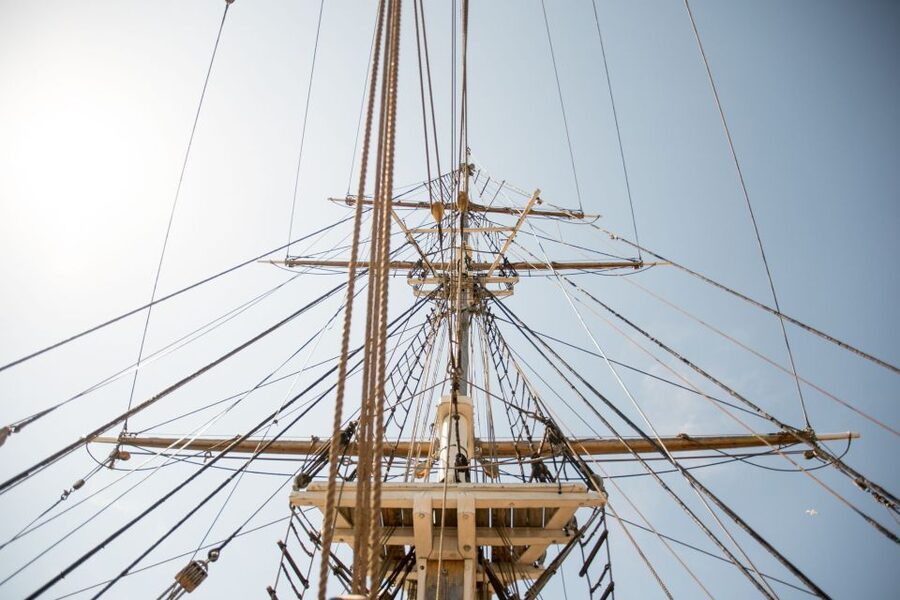
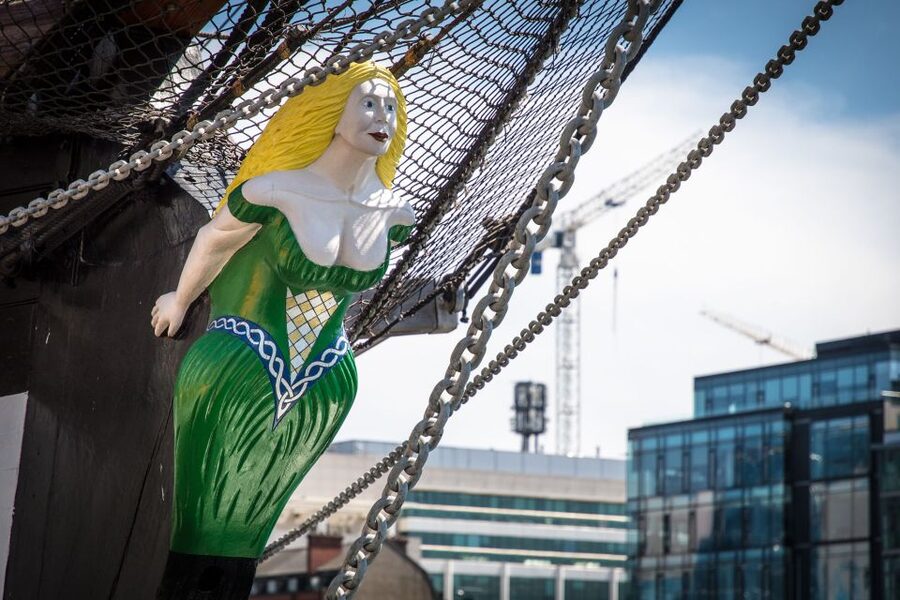
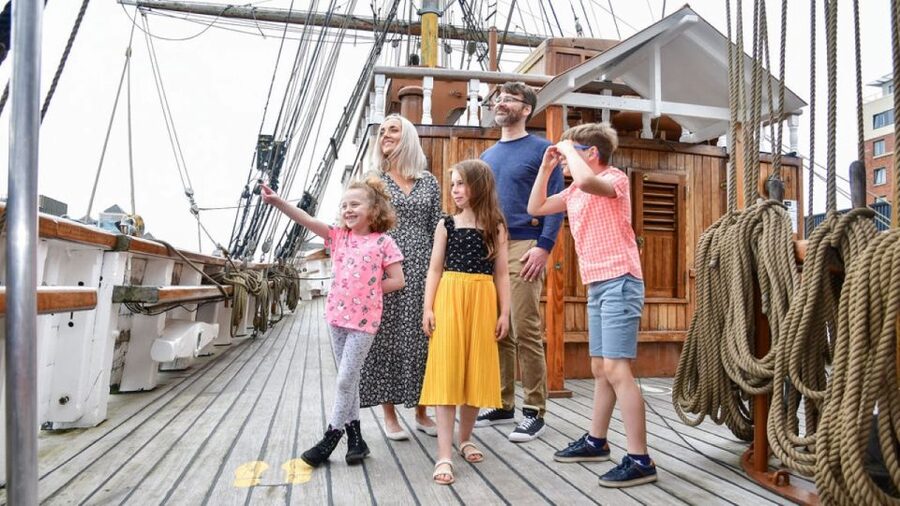
The first part takes place on the upper deck. You can look at the tall masts, see the ship’s construction, and get photographs from one of Dublin’s most photographed attractions.
This section is not only a photo stop. You learn about the original Jeanie Johnston, the sailing trade in the 19th century, and the ship’s change from carrying timber to carrying people. That shift says a great deal about the pressure created by mass emigration. A vessel built for trade became part of a desperate human movement across the Atlantic.
I like starting outdoors because it lets you get your bearings before the more confined section below. You hear gulls, feel the wind, and look across the Docklands from the water. On a bright day, the ship makes an attractive subject. On a gray Dublin day, the weather helps you imagine the exposed nature of life at sea, though the upper deck can feel less comfortable in wind or rain.
The guide also explains the replica ship and how it relates to the original. This matters because you are not simply looking at an old object frozen in time. You are using a carefully presented ship setting to understand the people, technology, and choices tied to the original vessel.
Below deck, where the story becomes personal
The lower deck is the heart of the visit. Here, the guide explains that as many as 250 passengers could spend most of a voyage in cramped quarters, coming above deck for only about half an hour of fresh air each day.
That detail changes how you see the voyage. Crossing the Atlantic stops sounding like a difficult trip and starts to feel like a long period of confinement, uncertainty, and physical strain. The tour asks you to picture ordinary routines in an extraordinary situation: eating, sleeping, waiting, talking, and trying to keep children occupied.
You meet representations of passengers and crew and hear their individual stories. The mannequins may unsettle younger children at first. One guide helped a 10-year-old visitor get past that concern and become interested in the ship’s story. If you are visiting with children, it is worth preparing them for the figures below deck.
The guide covers practical details that bring the voyage into focus:
- How passengers paid for their passage
- What they ate during the crossing
- How they passed the time
- How disease and starvation threatened people on board
- What dangers they faced at sea
- What might happen once they reached their destination
I especially value the attention to payment and food. Those details show that emigration was not a simple decision to leave. Families had to find a way to pay for passage, then endure a voyage in conditions that could be filthy, crowded, and dangerous.
The lower deck can feel emotional. It should. The point is not to create a theatrical scare, but to help you understand the human cost of famine and forced movement. Several guides are particularly good at keeping the material clear and grounded. Steve has been praised for making the subject relatable to children from about seven through the teenage years. Claire and Eoin are also noted for mixing serious information with a little humor and answering questions carefully.
Same old streets, another chapter:
- Historical 2-Hour Guided Walking Tour of Dublin
★ 4.7 · 865 reviews - Dublin’s Haunted History Walking Tour
★ 4.3 · 345 reviews - Deliciously Dublin: The Artisan Donut Walking & History Tour
★ 5.0 · 329 reviews - Dublin Private Highlights & History of 1916 Easter Rising Tour
★ 5.0 · 154 reviews
The Jeanie Johnston’s remarkable safety record
One unusual detail gives this ship a different place in the broader story of famine migration. The Jeanie Johnston completed 16 voyages to America without a recorded death on board.
That does not make the crossings comfortable or safe in any broad sense. The tour still explains disease, starvation, disaster, and the dangers faced by famine emigrants. But the ship’s record helps you understand that one vessel could offer better odds than others, even while the overall journey remained harsh.
It also makes the crew’s role more important. The tour does not focus only on passengers. You hear about the people responsible for keeping the ship moving and caring for those in the confined lower deck. That wider view prevents the experience from becoming a simple story of helpless passengers and distant events.
The result is a more complete picture of a voyage. You see the ship, learn about its work, hear about its people, and understand why arrival in America was not the end of the ordeal. It was the start of another uncertain chapter.
A short tour with unusually strong storytelling
Fifty minutes is enough time to cover both decks without turning the visit into a long historical lecture. I think that is one of the tour’s strengths. You receive a clear story, see the key spaces, and still have time to continue around Dublin.
The quality of the guide matters greatly here. The ship itself is interesting, but a self-guided walk around the deck would not explain the passengers’ lives with the same force. The best guides ask questions, respond to children, and adjust the pace when someone wants more detail.
The guide team has included Steve, Claire, Eoin, Katrina, Catriona, Josh, Owen, Rolland, Ronan, Gearoid, and Klee. Names and spellings can vary, and you will not choose a particular guide when booking. Still, the repeated strength of the guiding suggests that the experience depends on a well-established approach rather than one individual personality.
Josh has been singled out for storytelling. Steve is often described as clear, friendly, and entertaining. Claire brings humor and detail, while Eoin combines seriousness with warmth. Catriona has done especially well with children’s questions. These are useful signs if you worry that a history tour might lose younger members of your group.
Is $16 good value in Dublin?
At $16 per person, the Jeanie Johnston is a reasonable buy for a guided attraction in central Dublin. The price includes entrance and the guided tour, with no extra charge listed for the upper or lower deck portions.
The value comes from the combination of a physical ship visit and a structured history lesson. You are not paying only to take a photograph beside a tall ship. You are getting access to the spaces, a live English-language guide, and the stories that explain why the ship matters.
The 50-minute length also helps the price. You can pair it with a walk along the quays, other Docklands sights, or a wider day in Dublin without giving up half a day. If your main interest is maritime design, you may wish the visit were longer. If your goal is a strong introduction to famine emigration, the compact format works well.
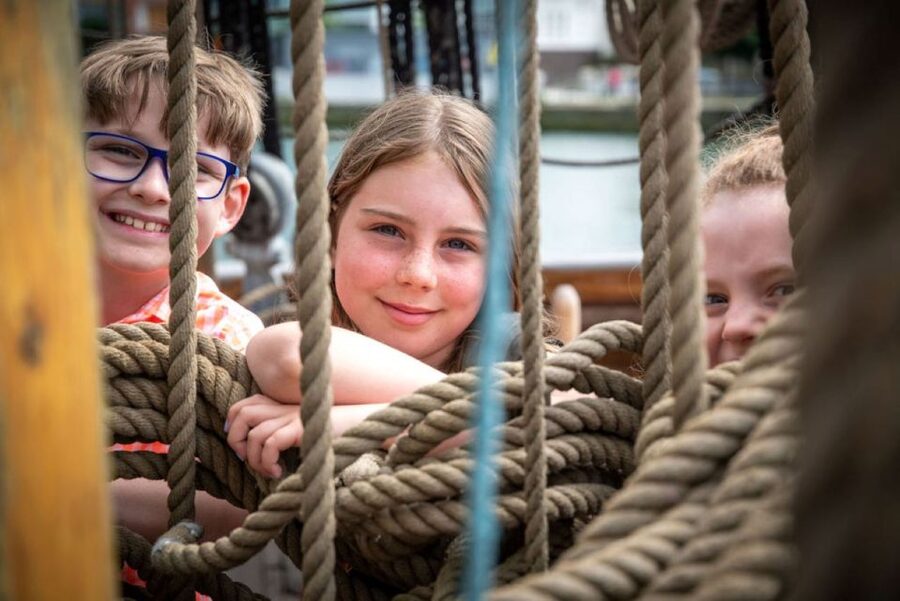
For families, the value is even clearer if the guide keeps children involved. The experience has held the attention of children as young as eight and teenagers, though the mannequins and famine subject may not suit every child.
Who will enjoy this ship tour most?
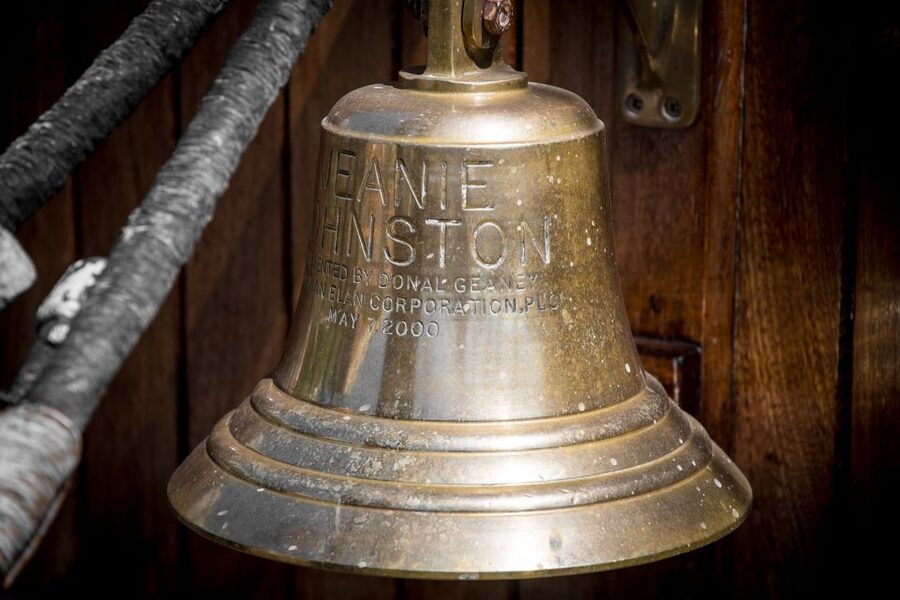
I would book this for anyone who wants Irish history tied to real places and human choices. It is particularly useful if you have already seen Dublin’s main city-center sights and want a different angle on the city.
The tour suits:
- Adults interested in Irish famine history and emigration
- Families with school-age children or teenagers who respond to stories
- Visitors who enjoy ships, dockyards, and maritime history
- People tracing Irish family roots, especially if emigration is part of their family story
- Anyone wanting a short, guided activity near Dublin’s Docklands
I would think twice if you dislike confined spaces or have difficulty with stairs and uneven movement. The ship is not suitable for wheelchair users or people with mobility impairments. You should also expect a serious subject. The guides use humor to keep the tour human, but this is still a visit about hunger, disease, displacement, and loss.
Practical timing and cancellation advice
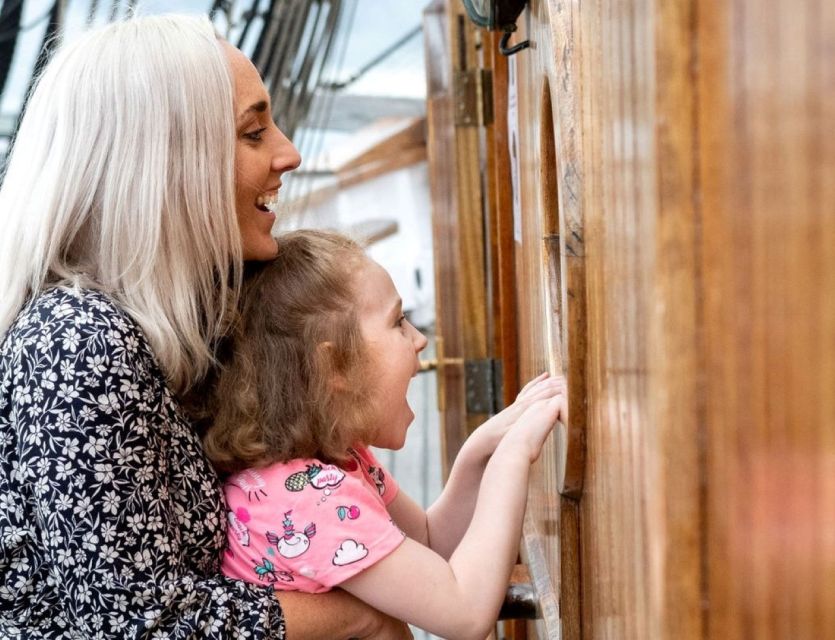
The tour runs for about 50 minutes, with starting times based on availability. Check the schedule before planning your Docklands walk, since the exact departure time is not fixed in the information provided.
You can cancel up to 24 hours in advance for a full refund. A reserve-now-and-pay-later option is also available, which helps if your Dublin schedule is still shifting.
Wear comfortable shoes and plan to return to the same meeting point at the end. Since hotel transport is not included, treat the Jeanie Johnston as a self-arrival attraction rather than a packaged city transfer.
Should you book the Jeanie Johnston?
Yes, if you want an affordable, well-paced history experience that gives the Irish famine a human scale. The strongest part is the move from the open deck into the cramped lower quarters, supported by clear stories about real passengers and crew.
I would not book it solely for a tall-ship photograph. The picture is a bonus. The reason to go is the chance to understand why one million people left Ireland, what 2,500 passengers faced on this ship, and how much courage and risk were tied to a single Atlantic crossing.
Book it if you can manage the ship’s stairs and confined spaces, and allow yourself a quiet moment afterward. The story follows you off the boat.
FAQ
How long does the Jeanie Johnston tour last?
The guided tour lasts about 50 minutes. Starting times vary, so check availability when booking.
Where does the tour start and finish?
It starts at the Jeanie Johnston Tallship at City Moorings, Custom House Quay, Dublin 1, and finishes back at the same meeting point.
What language is the tour in?
The live guided tour is conducted in English.
What does the ticket include?
The ticket includes entrance and access to the guided tour of the Jeanie Johnston tall ship. Hotel pickup and drop-off are not included.
Is the tour suitable for wheelchair users?
No. The experience is not suitable for wheelchair users or people with mobility impairments. It is also not recommended for people with limited mobility.
Can I cancel the booking?
Yes. You can cancel up to 24 hours in advance for a full refund. A reserve-now-and-pay-later option is also available.
Latest history tours reviewed in Dublin
- Dublin: Macabre History Walking Tour★ 4.9 · 95 reviews
- Dublin: LGBT Pride Walking Tour with Queer History★ 5.0 · 24 reviews
- Wicklow Historic Gaol: 1-Hour Tour★ 4.4 · 56 reviews
- The History of Dublin With Locals: 1916 Easter Rising PRIVATE Tour★ 5.0 · 73 reviews
- Dublin Historical Centre Private Food Tour with 8 Food Tastings★ 5.0 · 152 reviews
- Semi-Private (8people max) 2.5 Hr Dublin Walking Tour★ 5.0 · 69 reviews
- Dublin Private Highlights & History of 1916 Easter Rising Tour★ 5.0 · 154 reviews
- Dublin’s Haunted History Walking Tour★ 4.3 · 345 reviews
Dublin History Tours, compared.
Dublin Historical Centre Food Tour with 8 Food Tastings & Drinks
Read our review →
Celtic Boyne Valley & Ancient Sites Day Tour From Dublin
Read our review →
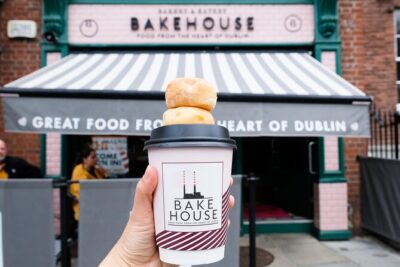
Deliciously Dublin: The Artisan Donut Walking & History Tour
Read our review →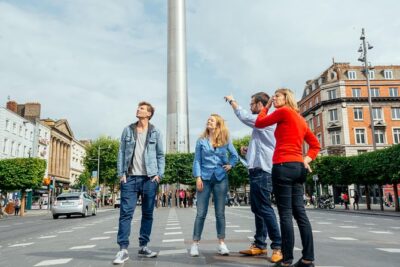
Dublin Private Highlights & History of 1916 Easter Rising Tour
Read our review →
Semi-Private (8people max) 2.5 Hr Dublin Walking Tour
Read our review →Browse the lists this tour appears in