
Review · BEIJING
Beijing Culture: Tea Ceremony, Heritage Instrument & Calligraphy
The most memorable part of this Beijing experience is that you do not just watch Chinese traditions from a distance. You brew tea, guide a brush across paper, and place your fingers on the strings of the Guqin, one of China’s oldest classical instruments. The small group, capped at eight, keeps the setting calm and personal.
I like the hands-on format and the chance to learn from national-level cultural artists rather than a performer following a standard stage routine. I also like the peaceful venue, the traditional clothing for photos, and the fact that you take your calligraphy home. The main drawback is the price: at $78.60 per person, this is not a casual budget stop.
Key details at a glance
- Play a full Guqin melody: A heritage artist first performs, then guides your fingers through a simple piece.
- Learn Chinese calligraphy: You write real characters, explore their ancient roots, and create a paper souvenir.
- Take part in a tea ceremony: A certified tea master leads the brewing and tasting, with tea snacks included.
- Enjoy a private setting: The air-conditioned venue is closed to the public and limited to eight participants.
- Wear traditional clothing: Rental attire is included for ritual activities and photographs.
- Meet at 813 Creative Park: Transportation is not included, and the activity ends where it begins.
Why this small Beijing workshop feels different
Beijing offers plenty of large cultural shows, palace visits, and museum displays. Those are useful for seeing the broad picture, but they often leave you standing behind a rope or watching from a seat.
This workshop takes a different route. Its three activities, tea, calligraphy, and Guqin music, all ask you to slow down and pay attention. Each one also gives you something physical to do. You hold the cup, brush, or instrument rather than simply taking a photograph of it.
The setting helps. The venue is a quiet, air-conditioned cultural space inside 813 Creative Park. It is described as a private heritage venue, closed to the public, with rooms arranged around the work of master artists. You are not being moved through a crowded attraction with a microphone in your ear.
The guide speaks English and has an M.A. in History and Sociology, with training in Chinese philosophy and history. That matters because the purpose is not only to show you the correct movements. You are also given some sense of why the movements matter.
The group limit of eight is one of the strongest practical features. A calligraphy lesson becomes frustrating if one instructor must watch twenty people at once. Here, the teacher can give each person some attention, especially when you are learning how to hold the brush or place your fingers on the Guqin strings.
More Local Culture and Traditions Tours in the world:
- Amsterdam Food and Cultural Tour with Tastings
★ 5.0 · 4,315 reviews - Sevilla Food Tour: Tapas, Wine, History & Traditions
★ 5.0 · 3,468 reviews - Tromsø: Reindeer Camp and Sami Cultural Tour with Lunch
★ 4.7 · 3,326 reviews
Tea first: a quiet lesson in Chinese ritual
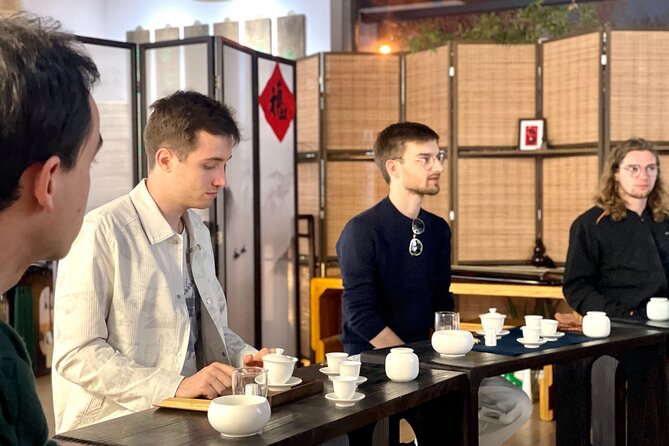
The tea ceremony is more than a drink at the beginning of the session. A certified tea master guides the brewing and tasting, explaining the careful rhythm of the ritual and the ideas behind it.
You can expect to handle the tea-making process rather than simply receive a prepared cup. The experience includes tea tasting and tea snacks, but it does not include a full meal. If you arrive hungry, eat before coming or plan another meal afterward.
This part may be the easiest for first-time visitors. You do not need prior knowledge of Chinese tea, and the pace gives you time to settle in. The quiet room, warm tea, and live music later in the program create a useful break from Beijing’s traffic, noise, and long sightseeing days.
The value here is not the quantity of tea. It is the attention given to a small everyday act. You learn how the preparation, serving, and tasting fit together, then begin to see tea as a form of hospitality and concentration.
I would especially recommend this portion to anyone who prefers a calm cultural activity. It is also a good fit if you have spent the morning at major sights and want something slower in the afternoon.
The Guqin session puts an ancient instrument in your hands
The Guqin is the most unusual part of the experience for many people. It is a classical Chinese zither with a long cultural tradition, and its soft, spare sound is very different from the louder instruments used in many stage performances.
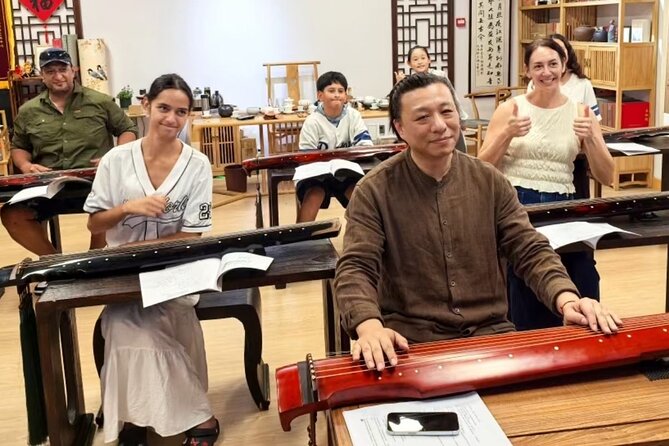
A national-level heritage artist gives a live performance before the hands-on lesson. That opening demonstration is important. It lets you hear what the instrument can do before you try to make a sound yourself.
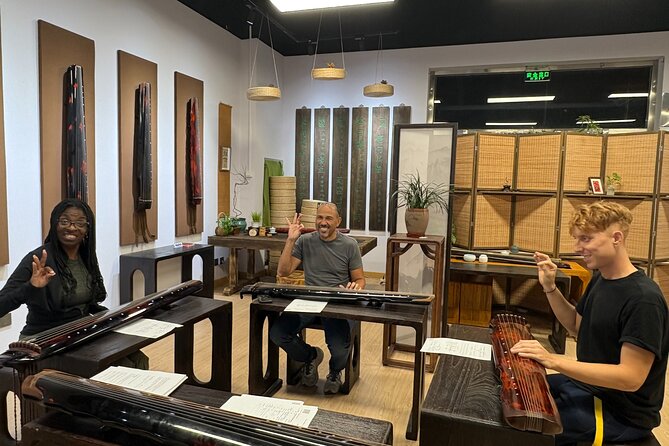
Then the teacher helps you play a full melody. Do not expect to become a skilled musician in one sitting. The point is to feel how the instrument responds and to understand the patience needed to play it. The lesson is designed for beginners, and no previous musical training is given as a requirement.
I like that the Guqin is treated as a living art, not a museum object. You can see the technique up close, ask questions through the English-speaking guide, and feel the strings under your fingers. The experience becomes more memorable because you are not only hearing the music.
This portion may not suit every personality. If you want a polished concert with uninterrupted music, the teaching session will naturally break that flow. If you enjoy trying something new, even when your first notes are imperfect, it is likely to be the highlight.
Calligraphy gives you a souvenir with personal meaning
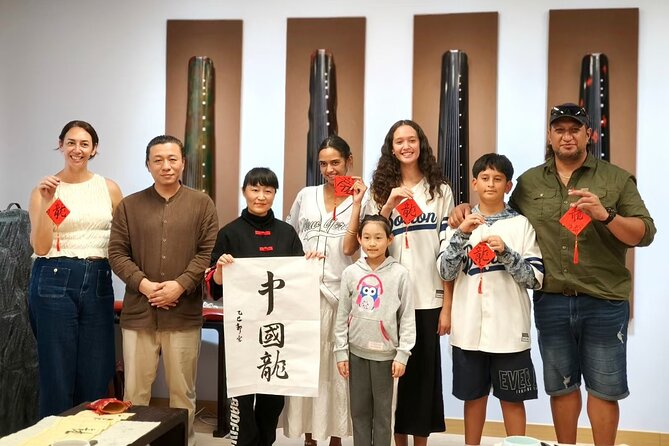
The calligraphy workshop brings the experience back to paper, brush, and ink. An expert helps you write Chinese characters and explains their older forms and roots.
One especially useful detail is that you can write your Chinese name. The paper can be taken home, giving you a souvenir with more meaning than a shop-bought trinket. You might frame it, as some participants have done, or keep it with your travel documents and photographs.
Chinese calligraphy looks simple until you hold the brush. The angle, pressure, and order of the strokes all affect the result. The instructor’s guidance matters because a beginner can easily treat the brush like a pen and miss the point of the exercise.
The lesson is not about producing gallery-quality work. It is about learning that written Chinese carries form and movement as well as meaning. Even one carefully written character can show why the art takes years to master.
Parents and older children may enjoy this activity, though the supplied information does not set a minimum age. If you are bringing a young child, confirm the age policy before booking. The maximum group size should make it easier to receive help, but children still need to be comfortable with a quiet, focused activity.
More History Tours in the world:
- New York City: American Museum of Natural History Ticket
★ 4.5 · 15,447 reviews - History and Hauntings of Salem Guided Walking Tour
★ 5.0 · 14,564 reviews - Colosseum: Underground and Ancient Rome Tour
★ 4.7 · 12,691 reviews - Lisbon: History, Stories and Lifestyle Walking Tour
★ 4.8 · 10,902 reviews
Traditional clothing adds ceremony without making the activity feel staged
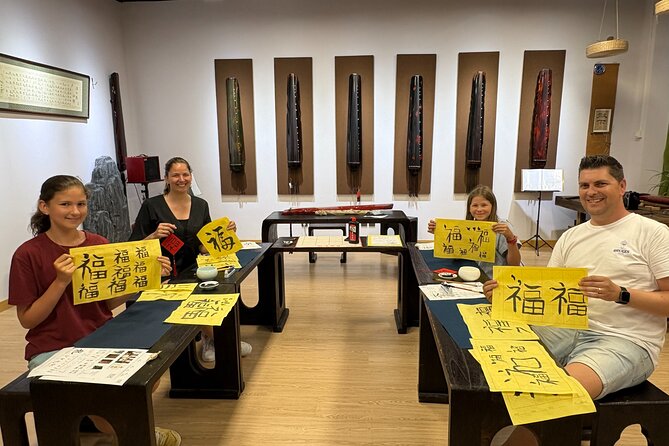
Rental traditional attire is included for the ritual activities and photographs. This is a small feature, but it can change how the session feels. Clothing helps mark the occasion and gives you a visual record of the tea, Guqin, and calligraphy work.
The outfit is not a substitute for cultural understanding. Here, it works best as an addition to the teaching rather than the main attraction. You are still spending most of the time learning and practicing.
The photographs may be useful if you want a personal record of the experience. Just remember that the activity is held in a heritage venue, not described as a professional photo studio. The focus remains on the traditions.
The 2.5-hour schedule is compact but full
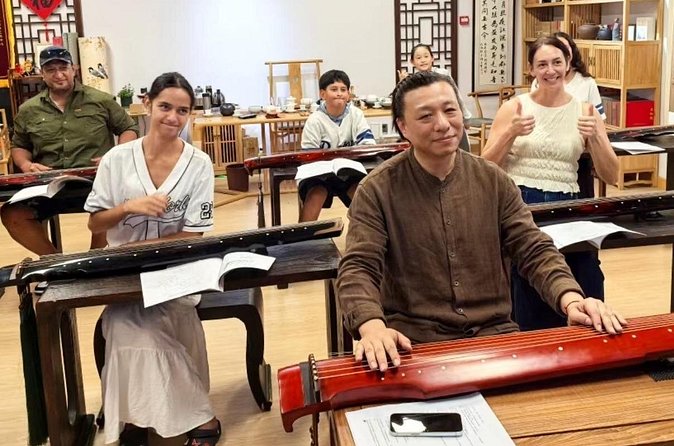
Two and a half hours is a sensible length for this mix of activities. It gives you enough time to try all three without taking over an entire day in Beijing.
The likely rhythm begins with the tea ceremony, followed by the Guqin performance and lesson, then calligraphy and photographs, though the exact order can vary. The supplied information does not provide a minute-by-minute schedule, so do not book a tight connection immediately afterward.
Each section asks for a different kind of attention:
- Tea asks you to slow down and observe.
- Guqin music asks you to listen, then coordinate your hands.
- Calligraphy asks you to control the brush and notice the structure of each character.
That variety keeps the session from feeling repetitive. It also means the experience is more than a lecture, but less physically demanding than a full-day tour.
The air conditioning is welcome in Beijing’s hot months. The activity is also described as requiring good weather under its operating policy, so keep the cancellation terms in mind even though the venue itself is indoors.
What the $78.60 price really covers
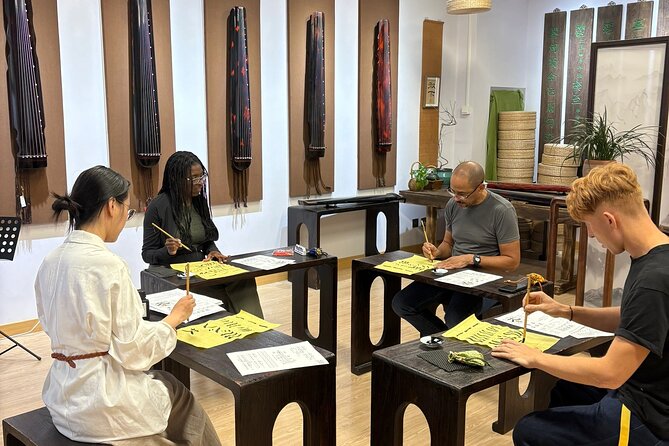
At $78.60 per person, this is a premium two-and-a-half-hour activity. You are paying more than the cost of a basic tea tasting or a short calligraphy class.
The price makes more sense when you add up what is included: a certified tea master, a national-level Guqin performance and lesson, an expert calligraphy workshop, traditional clothing rental, tea snacks, and an English-speaking guide trained in history and sociology. The group limit of eight also has real value. Personal instruction is difficult to provide in a large class.
The price does not include transportation, a full meal, or personal expenses. You need to make your own way to 813 Creative Park, listed at VGP3+CCX in Chaoyang, and return from the same point after the session.
I would compare it with the cost of separate cultural activities. If you want only a cup of tea and a quick photo, this is too much. If you want a compact cultural lesson with three distinct activities and specialist instruction, the fee is easier to justify.
The activity is booked, on average, 51 days ahead. That suggests you should reserve early if your Beijing dates are fixed, especially because the small group can fill before larger city tours do.
Getting there and planning your visit
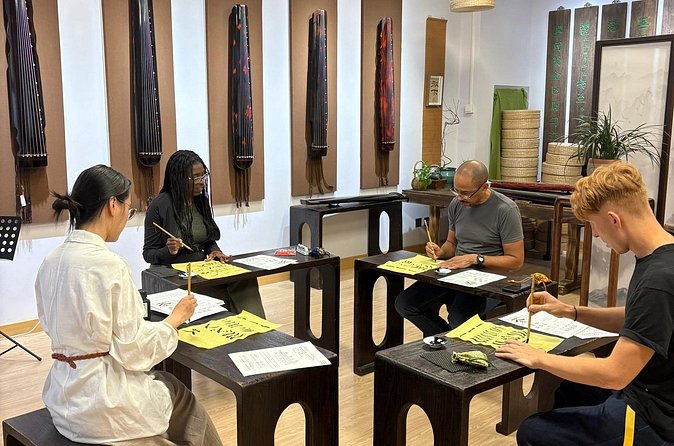
The meeting point is 813 Creative Park in Chaoyang. Public transportation is nearby, but transportation to and from the venue is not provided.
Give yourself extra time to locate the meeting point. Creative parks can include several buildings, entrances, and signs, and the listing provides a plus code rather than a familiar landmark. Keep the mobile ticket available on your phone and confirm the booking once the provider sends confirmation, which may arrive within 48 hours and is subject to availability.
Plan this as a stand-alone activity rather than squeezing it between two distant attractions. The experience ends back at the meeting point, so you can continue exploring Chaoyang afterward or arrange a meal nearby, but the tour itself does not provide one.
Service animals are allowed, and most people can take part. No special fitness level is stated. The main challenge is patience: you will be sitting, listening, handling delicate materials, and following instructions.
Who will get the most from this experience
I would choose this for you if you want cultural contact instead of another sightseeing checklist. It suits first-time visitors who know little about Chinese traditions because the activities are explained in English and do not require previous experience.
It is also a strong choice for repeat visitors and people living in China. The session goes beyond the usual palace and temple route, and the direct work with artists gives you a different view of Chinese heritage.
Couples, solo visitors, and small family groups should fit comfortably within the eight-person limit. The quiet pace may appeal to anyone who finds large shows tiring.
You may want to skip it if you prefer free time, nightlife, or a busy food-focused tour. You should also think twice if $78.60 feels high for a short activity or if you want a formal concert rather than a lesson.
The experience is recommended for anyone who wants to write something personal, hear a traditional instrument at close range, and leave with a practical memory of Chinese culture.
Cancellation and booking points to know
You can cancel up to 24 hours before the local start time for a full refund. Changes made within 24 hours are not accepted, and a late cancellation is not refunded.
The activity can be canceled if the minimum number of participants is not reached or if poor weather affects operation. In either case, you are offered another date or experience, or a full refund.
Confirmation is sent within 48 hours, subject to availability. Since the group is limited to eight and bookings are often made well ahead, I would reserve after your Beijing schedule is firm.
Should you book this Beijing culture experience?
Book it if you want to participate rather than simply watch. The Guqin lesson is the rare feature here, while the tea ceremony and calligraphy give the session a balanced shape. The small group, English guidance, traditional clothing, and take-home calligraphy add practical value.
Skip it if you are looking for the cheapest cultural activity or a major historical sight. This is a focused workshop, not a replacement for the Forbidden City, a museum, or a full meal.
For the right visitor, it offers a peaceful two-and-a-half-hour pause with real instruction and a personal souvenir. I would place it high on a Beijing itinerary for anyone who values quiet settings, careful teaching, and the chance to put Chinese heritage directly in their hands.
FAQ
Where does the experience begin?
It begins at 813 Creative Park, VGP3+CCX, in Chaoyang, Beijing.
Where does the experience end?
The activity ends back at the meeting point.
How long does the activity last?
The experience lasts approximately 2 hours and 30 minutes.
How many people can join the group?
The maximum group size is eight participants.
Is transportation included?
No. You must arrange your own transportation to and from the venue. The meeting point is near public transportation.
What is included in the price?
The price includes a traditional tea ceremony and tasting with a certified tea master, a live Guqin performance, a hands-on Guqin lesson, a Chinese calligraphy workshop, traditional outfit rental, tea snacks, and a bilingual guide with an M.A. in History and Sociology.
Can I cancel for a full refund?
Yes. You can cancel at least 24 hours before the local start time for a full refund. Cancellations or changes made less than 24 hours in advance are not accepted for a refund.
Latest history tours reviewed in the world
- From Athens: Explore Ancient Greece 4-Day Tour★ 4.7 · 73 reviews
- From Athens: Ancient Olympia Full-Day Private Tour★ 4.8 · 22 reviews
- From Athens: Explore Ancient Corinth & Charming Nafplion★ 4.6 · 102 reviews
- From Albufeira: Wine Tasting & Historic Silves Tour★ 4.9 · 421 reviews
- From Albufeira: Historical Algarve Region Tour★ 4.7 · 585 reviews
- From Alexandria: Full-Day Guided Tour of Historical Sights★ 4.5 · 54 reviews
- Franklin: Ghost Tour in Historic Franklin★ 4.8 · 65 reviews
- Freiburg: Exciting City Tour with sightseeing and history★ 4.3 · 103 reviews
Beijing History Tours, compared.

Beijing: Badaling Ancient Great Wall of China Day Trips
Read our review →
Beijing Historical Tour II including Summer Palace, Lama Temple & Panda Garden
Read our review →
Beijing Historical Tour I – Forbidden City, Tiananmen Square & Temple of Heaven
Read our review →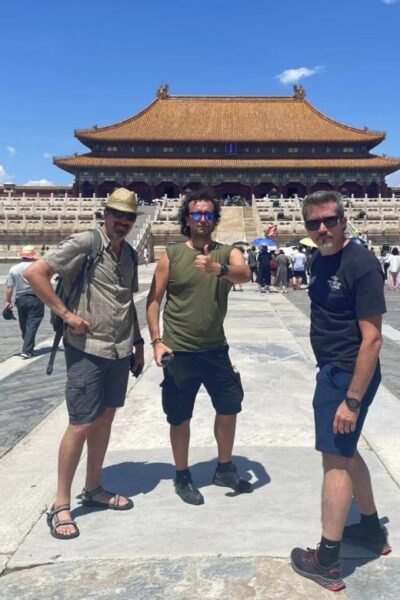
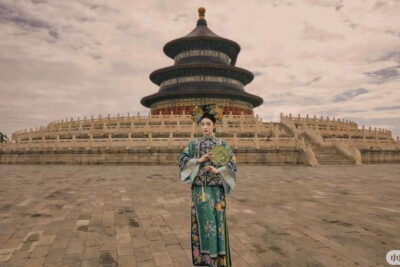
Beijing: Must-Try Chinese Ancient Costume Rental& Photoshoot
Read our review →Browse the lists this tour appears in