Review · ATHENS
Ancient Athens tour: Acropolis, Parthenon and Acropolis Museum
The best part of this Athens tour is the link between the Acropolis monuments and the objects now displayed in the Acropolis Museum. You see the Parthenon, Caryatids, theaters, and gateways in place, then examine the sculpture and decoration indoors with a guide who can explain what the weather and centuries have taken away.
I like the early 9:00 a.m. start, which gives you a better shot at cooler air and thinner crowds. I also like the licensed guides, including archaeologists such as John and Efie, who bring mythology, construction, and daily Athenian life into the story. The main drawback is the pace: four hours covers a great deal, so you have less free time to wander the Acropolis alone.
Key points to know before you book
- The museum completes the Acropolis visit: Plan to see the ancient site and its surviving sculpture as one connected experience.
- A 9:00 a.m. start matters: Athens can be hot, and the Acropolis grows busier later in the day.
- Expect slippery, uneven stone: You need moderate physical fitness and steady shoes for the climb.
- The guide is the main value: Without context, the monuments can look like beautiful ruins; the explanations connect them to Greek myth and history.
- Check your ticket option carefully: The advertised price is $72.59 per person, but entrance fees may be separate.
- Groups can reach 20 people: Radio or earpiece systems help, though you may still need to stay close to hear every explanation.
Starting near the Acropolis at 9:00 a.m.
You meet at Porinou 5 in Athens at 9:00 a.m. The location is near public transportation and close to the Acropolis, so you avoid spending the first part of the morning crossing the city.
This is a walking tour, not a ride-through sightseeing trip. You move from the meeting point up toward the Acropolis, pause at major monuments, and then visit the museum before returning to the meeting point. The full experience lasts about four hours.
The early start is one of the smartest features. Athens heat can be tiring, especially on exposed stone, and the Acropolis becomes harder to navigate as more tour groups arrive. Some guides also use earpieces or radio devices, which help you hear in crowded areas. Bring sunscreen and wear shoes with a firm grip. The stone can be smooth and slippery in places.
Bottled drinking water is provided, but I would still treat hydration as your responsibility. Take regular drinks, use shade when offered, and avoid assuming that a short walk will feel easy under the Greek sun.
More Ancient History Tours in Athens
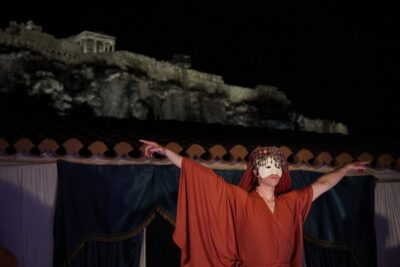
- Athens: Ancient Greek Theater Performance
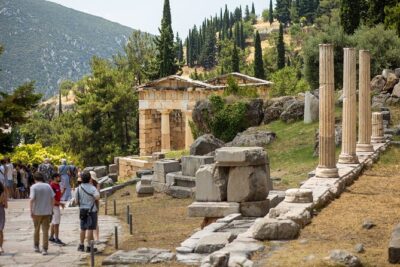
★ 4.7 · 2,481 reviews - Historical Delphi One Day Tour with Arachova Stop & Expert Guide
★ 4.5 · 1,247 reviews - From Athens: Ancient Corinth Day Trip with Canal & VR Guide
★ 4.6 · 1,073 reviews
Walking up the Acropolis
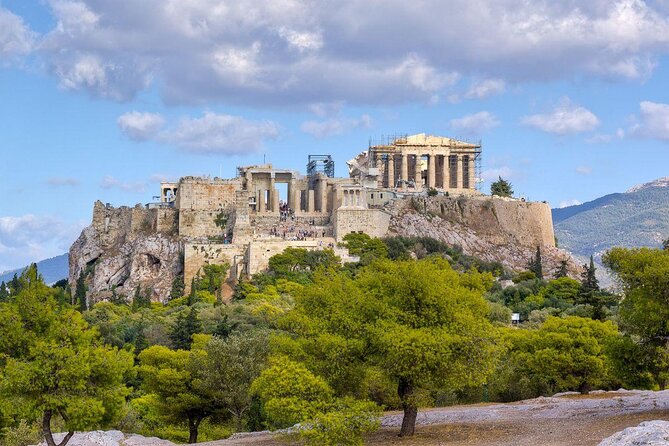
The Acropolis is the central experience, and you spend roughly two hours exploring it. That sounds generous, but the site is packed with major monuments, viewpoints, stories, and photo stops. Your guide needs to keep the group moving while finding places where everyone can gather without blocking other visitors.
The climb is manageable for anyone with moderate physical fitness, but it is not a flat museum visit. Uneven paving, polished rock, steps, crowds, and heat all add effort. If you have trouble walking for long periods or on irregular surfaces, this is the part to consider most carefully.
A strong guide makes a real difference here. Alexia Kolia, Lydia, Selena, Afrofithi, Zeta, Demos, George, Simon, Bernardos, and others have been praised for clear explanations, humor, steady pacing, and attention to shade and water breaks. The individual guide can vary, but the tour’s format gives you a person who can read the group and choose sensible stopping points.
You are not simply pointed toward ruins and left to guess what happened. The guide explains the mythology behind the buildings and their decoration, the people who built them, and the historical events tied to the site. That turns a collection of columns into a place shaped by religion, politics, art, and civic life.
The Parthenon and the power of scale
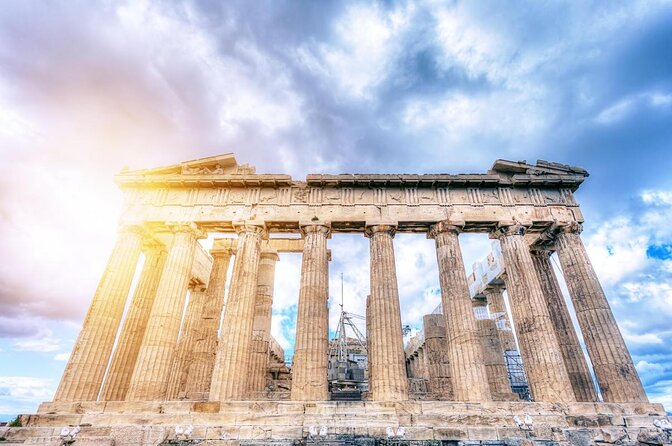
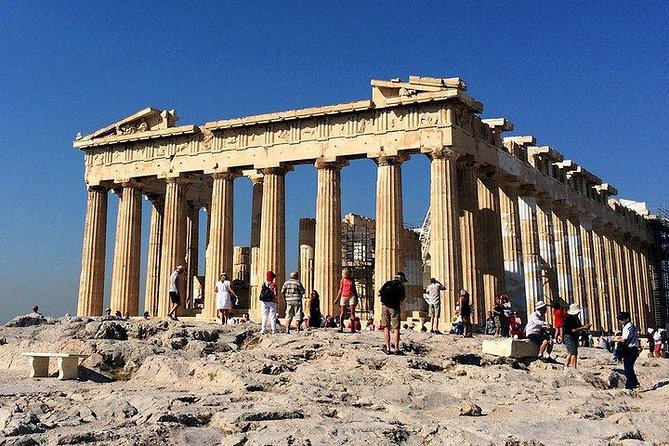
The Parthenon receives a short scheduled stop, but it is the monument most people have come to see. It sits at the top of the Acropolis as the temple dedicated to Athena, the goddess associated with the city.
Your guide can help you read the building beyond its famous outline. You may hear about the sculptures, the temple’s purpose, and the way the surviving structure relates to objects in the museum later in the morning. Those links matter because the Parthenon is admired from the outside, while much of its artistic meaning is easier to understand indoors.
You should expect crowds around the best viewing areas. The guide’s job is partly historical interpreter and partly traffic manager. Several guides are praised for finding good photo positions and gathering the group in close enough to hear without making you feel rushed.
The short stop also explains one possible frustration. If you want quiet time to study every angle of the Parthenon or take a long series of photographs, you may wish for more free time. This tour gives priority to explanation and coverage rather than extended independent wandering.
Theater of Dionysus and ancient performance
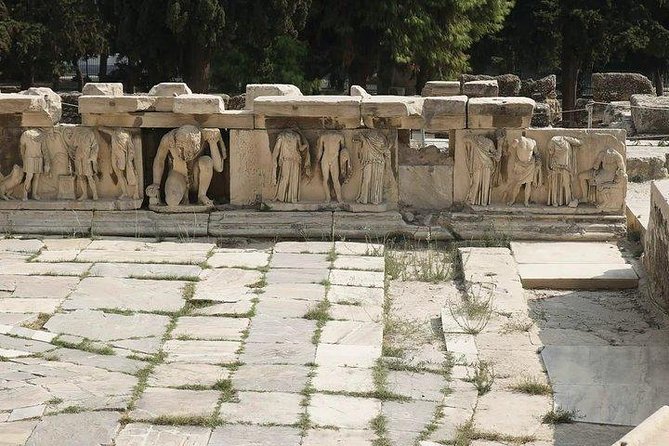
The Theatre of Dionysus is one of the world’s important ancient theaters. The tour allows about ten minutes here, enough for an introduction and a look at the setting, though not enough for a long independent visit.
This stop adds welcome balance to the temples. The Acropolis was not only a religious center. Performance, public life, storytelling, and civic identity were also part of ancient Athens, and the theater helps you picture that wider culture.
Because the stop is brief, listen closely while the guide explains what you are seeing. The stone seating and open-air setting are easier to appreciate when you understand the theater’s role. If this subject interests you most, note that the tour’s four-hour format leaves limited time for lingering at each monument.
More Ancient History Tours in Greece
- Acropolis, Parthenon & Athens Old City Heritage Walking Tour
★ 4.5 · 876 reviews - Private Biblical Tour Ancient Corinth & Isthmus Canal from Athens
★ 5.0 · 762 reviews - Athens: Ancient Corinth & Nafplio Full Day Trip with Swim
★ 4.8 · 531 reviews - Athens: Ancient Agora E-Ticket and Audio Tour
★ 3.9 · 413 reviews
Herod Atticus Odeon and the Propylaea
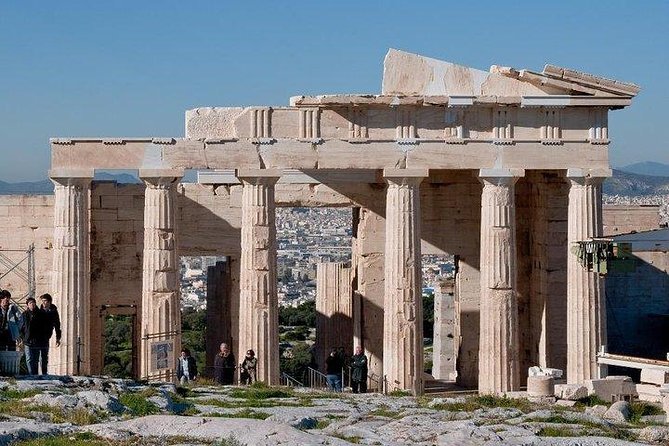
The Herod Atticus Odeon is a Greek and Roman-era structure that still operates. Its position below the Acropolis adds another layer to the site, showing how later periods used and reshaped this sacred hill.
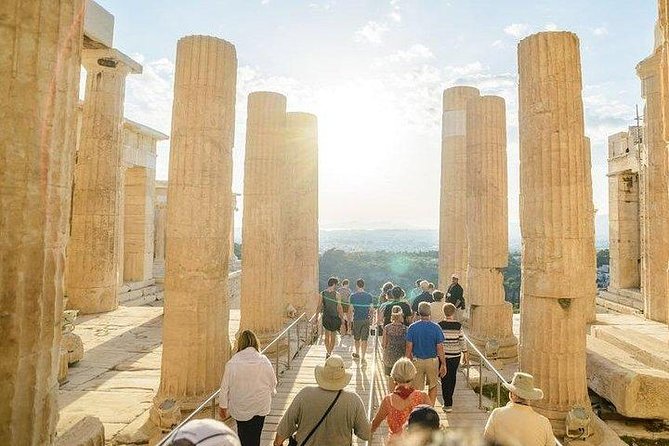
You then reach the Propylaea, the monumental gateway to the Acropolis. Think of it as the formal threshold between the city below and the temples above. The approach helps you understand the dramatic design of the hill, though the crowds and uneven surfaces can make the entrance feel more like a moving queue than a quiet ceremonial passage.
The guide can point out how the buildings relate to one another, rather than treating each stop as a separate photo opportunity. That spatial explanation is one reason a licensed guide earns its place here. You gain a clearer sense of how the Acropolis was arranged and approached.
The Erechtheion and the Caryatids
The Erechtheion is best known for its Caryatids, the sculpted female figures used as architectural supports. This is one of the most visually memorable stops because the figures combine structural purpose with fine sculpture.
The originals are protected in the Acropolis Museum, while the hill gives you the setting and the famous porch. That makes the later museum visit especially useful. When you see the preserved pieces indoors, you can connect the delicate details to the building you have just visited.
The Erechtheion is also a good example of why a guide helps. Ancient buildings often carry several layers of religious meaning, and the guide can explain the myths and sacred associations tied to the site. Without that context, you might notice the Caryatids but miss why this temple is different from the Parthenon.
Inside the Acropolis Museum
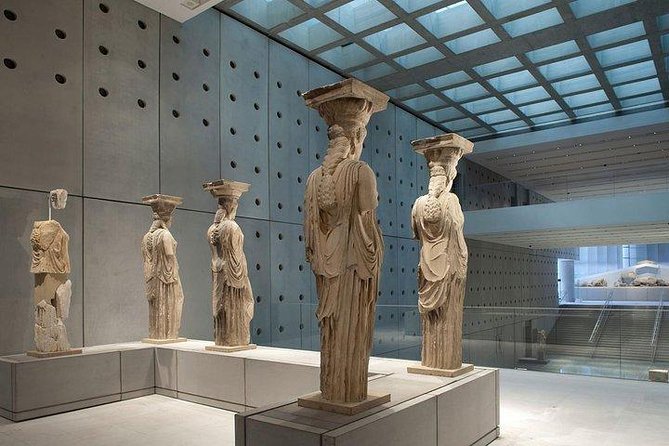
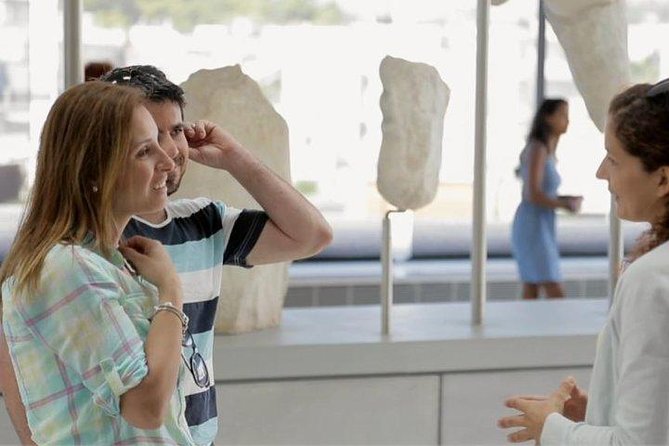
The museum visit lasts about an hour and is included only if you select the appropriate ticket option. This is not an optional extra in terms of historical value. For many people, it is what makes the morning feel complete.
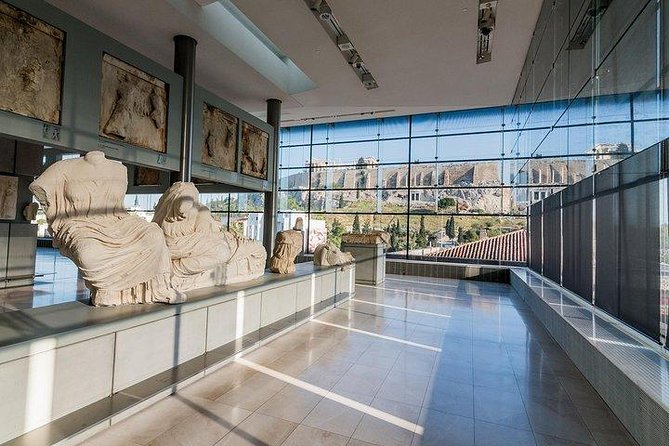
The Acropolis Museum focuses on objects found on the Acropolis and its surrounding slopes. Its collection covers the Greek Bronze Age through Roman and Byzantine periods. The building also sits over remains from Roman and early Byzantine Athens, so the museum itself connects archaeology with the later city.
Your guide leads you through the main displays and points out details you could easily pass by alone. The museum’s sculpture and architectural decoration help you understand the colors, figures, and design elements associated with the monuments above. After the guided hour, you can stay on your own to continue looking, according to the tour arrangements described by the provider.
This guided portion is particularly useful after the climb. You have just seen the Parthenon, Propylaea, and Erechtheion, so the objects are not abstract museum pieces. You can place them mentally back into the buildings and spaces where they belonged.
The museum is also a relief from the heat and uneven stone. It gives you a cooler, more controlled setting in which to absorb the information. Still, one hour goes quickly. If you like archaeology, check whether you can remain after the guided portion and give yourself more time.
What the $72.59 price really covers
The listed price is $72.59 per person. It includes a licensed English-speaking guide and the guided experience, but entrance fees may be separate unless you choose the option with tickets.
The stated entrance prices are €30 for the Acropolis and €20 for the Acropolis Museum. That can add €50 per person, which changes the total cost substantially. Read the booking choice closely before paying. If you arrive without tickets, the instructions say you may buy them in cash from the guide at the meeting point, unless you already purchased them.
At the full combined price, you are paying for more than entry. You receive a four-hour route, site interpretation, crowd management, museum guidance, and the convenience of seeing Athens’ headline archaeological sites in one morning. I consider that reasonable for visitors who want structure and historical explanation.
It is less attractive for someone who already knows the Acropolis well or prefers to move independently. You can save the guide fee by arranging admission on your own, but you will also need to handle the sites, timing, and interpretation yourself.
The tour receives a 4.9 rating from 256 reviews and is recommended by 98 percent of participants. Those figures suggest strong consistency, but they do not remove the practical tradeoff: a group tour gives you expert guidance and a planned route, while an independent visit gives you more control over time.
Group size, guides, and the human factor
The maximum group size is 20 people. That is small enough for a personal feel when the guide is good, but it is not a private tour. You should expect to stay near the group, especially in crowded parts of the Acropolis.
The guides are the most praised part of the experience. Giannas is noted for making the climb easier to manage while covering the surrounding sights. Selena is praised for making a group of about 15 feel attentive and personal. John, identified as an archaeologist, is described as a strong teacher, while Efie brings archaeological training and practical advice about other Greek sites.
Other guides, including Lydia, Alexia, Aphrodite, Bernardos, Michael G, Demos, Zeta, George, and Simon, are praised for humor, patience, clear English, storytelling, and an ability to keep the group comfortable. That range of comments suggests that the company’s strength is not one celebrity guide but a broad team of capable professionals.
One practical note: a participant found it difficult to hear in some areas and suggested bringing personal wired headphones. The tour may provide audio equipment, and several people found the earpieces helpful, but crowded stone sites are noisy. Stay close and speak up if you cannot hear.
Who will get the most from this tour
I would choose this experience if you are visiting Athens for the first time and want the major ancient sites explained in one organized morning. It suits couples, families with older children, cruise passengers with limited time, and anyone who prefers a guide to an audio app.
It is also a good match if Greek mythology interests you. The guides do more than list construction dates. They connect the temples and sculpture to gods, legends, Athenian life, and political history.
The tour is less suitable if you want a slow photographic session, have difficulty walking on slippery stone, or dislike fixed group schedules. You can tailor some stops through the guide’s pacing, but you cannot turn a four-hour group tour into an unhurried full-day visit.
Book the early start if you have a choice. The cooler conditions and smaller early crowds make a real difference. Bring water, sunscreen, a hat if you use one, and sturdy shoes. For anyone under 25 hoping to receive a reduced price, carry a physical passport or identification card to prove eligibility.
Should you book it?
Book this tour if you want the Acropolis and museum to make sense as one connected story. The licensed guide, early timing, small maximum group, water provision, and museum visit give the experience real practical value.
I would especially choose the ticket-inclusive option if the final price is clear and fits your budget. The museum is too important to treat as an afterthought, and adding it helps you understand the sculpture and decoration seen on the hill.
Skip it if you want maximum independence or already have strong archaeological knowledge. Otherwise, this is a well-planned introduction to Athens’ essential ancient sites, with enough guidance to turn a hot, crowded climb into a far more meaningful morning.
FAQ
How long does the Ancient Athens tour last?
The experience lasts approximately four hours, including about two hours at the Acropolis and about one hour at the Acropolis Museum.
What time does the tour start?
The tour starts at 9:00 a.m.
Where does the tour meet?
The meeting point is Porinou 5, Athina 117 42, Greece, near public transportation and the Acropolis.
Where does the tour end?
The activity ends back at the meeting point.
Are Acropolis and museum tickets included?
Tickets are excluded unless you book the option that includes entrance tickets. The stated entrance fee is €30 for the Acropolis and €20 for the Acropolis Museum.
Can I buy tickets at the meeting point?
If you do not have tickets and did not select the ticket-inclusive option, the instructions state that you can buy them in cash from the guide at the meeting point.
Is the tour offered in English?
Yes. The activity is offered in English.
How large can the group be?
The maximum group size is 20 people.
Is the tour physically demanding?
You should have a moderate level of physical fitness. The route includes walking over uneven and potentially slippery stone at the Acropolis, and bottled water is provided.
More Museum and Gallery History Tours in Athens
- New York City: American Museum of Natural History Ticket
★ 4.5 · 15,447 reviews - Paris: Louvre Museum Entry with History of Mona Lisa
★ 3.9 · 2,823 reviews - Venice’s Best: Basilica, Doge’s Palace, Gondola & History Gallery
★ 4.5 · 2,478 reviews - American Museum of Natural History Admission Ticket
★ 4.0 · 1,931 reviews
More Museum and Gallery History Tours in Greece
- Acropolis of Athens, Ancient Agora and the Agora Museum Tour
★ 5.0 · 86 reviews - Athens: Kotsanas Ancient Greek Technology Museum Guided Tour
★ 5.0 · 29 reviews - Ancient Olympia: Archaeological Site and Museum Entry Ticket
★ 4.3 · 555 reviews - Heraklion Highlights: Knossos, Museum & Historic City Drive
★ 5.0 · 64 reviews
Latest history tours reviewed in Athens
- From Athens: Ancient Olympia Full-Day Private Tour★ 4.8 · 22 reviews
- From Athens: Explore Ancient Corinth & Charming Nafplion★ 4.6 · 102 reviews
- From Athens: Explore Ancient Greece 4-Day Tour★ 4.7 · 73 reviews
- Athens: Women in Ancient Greece★ 5.0 · 98 reviews
- Athens: The History of Greek Mythology Private Tour★ 4.7 · 53 reviews
- Athens: Ancient Corinth & Nafplion Guided Premium Tour★ 4.7 · 237 reviews
- Athens: Roman Agora & Ancient Agora E-ticket & 2 Audio Tours★ 4.1 · 107 reviews
- Athens: Kotsanas Ancient Greek Technology Museum Guided Tour★ 5.0 · 29 reviews
Athens History Tours, compared.
Historical Delphi One Day Tour with Arachova Stop & Expert Guide
Read our review →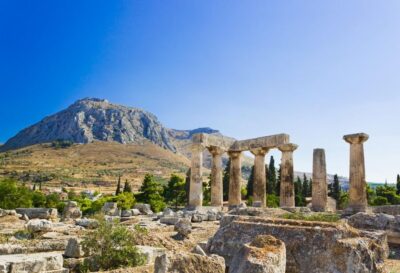
From Athens: Ancient Corinth Day Trip with Canal & VR Guide
Read our review →
Historic Athens: Small Group Electric Bike Tour
Read our review →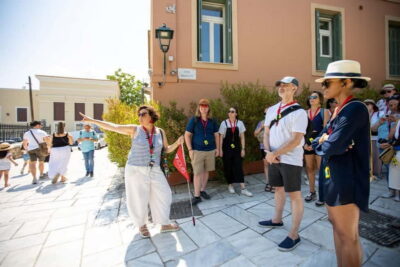
Acropolis, Parthenon & Athens Old City Heritage Walking Tour
Read our review →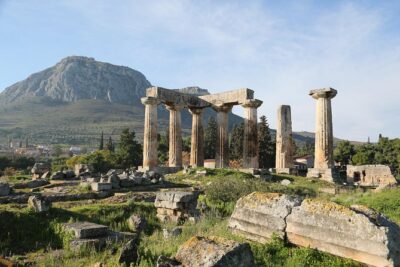
Private Biblical Tour Ancient Corinth & Isthmus Canal from Athens
Read our review →
Athens: Ancient Corinth & Nafplio Full Day Trip with Swim
Read our review →