
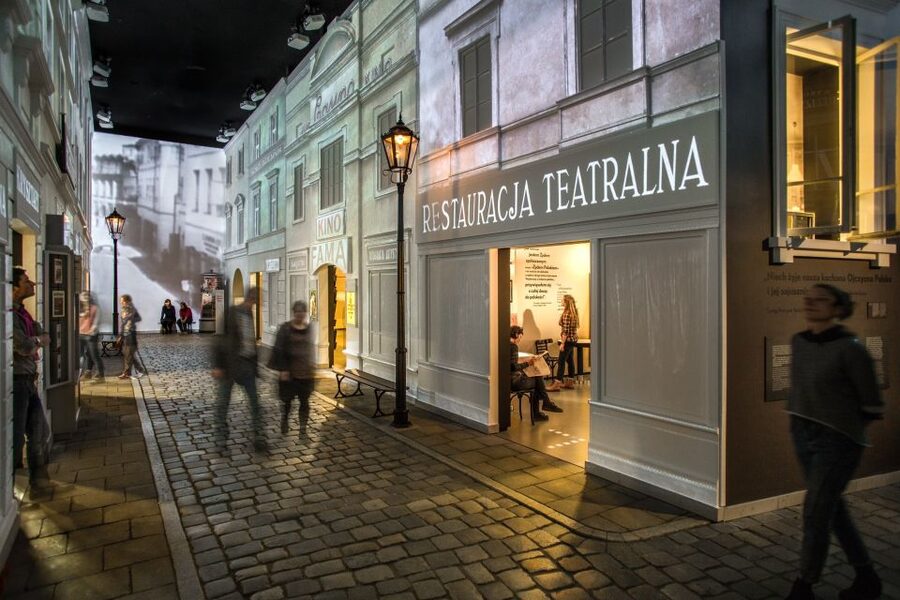
Review · WARSAW
Warsaw: POLIN Museum of the History of Polish Jews Ticket
The most important thing about POLIN is its wide view: this is not simply a Holocaust museum. You move through 1,000 years of Jewish life in Poland, from early settlement and community building to religious practice, work, politics, war, destruction, and cultural renewal. Artifacts, paintings, sound, film, and hands-on displays make the story easier to follow than a long row of glass cases.
I especially like the excellent audio guide, which helps you keep your place and supplies context without requiring a scheduled tour. I also like the effort to show Jewish people as active participants in Polish society, not only as victims of persecution. The main drawback is time: two hours gives you an outline, but three to five hours is more realistic if you read carefully.
Key points to know before you go
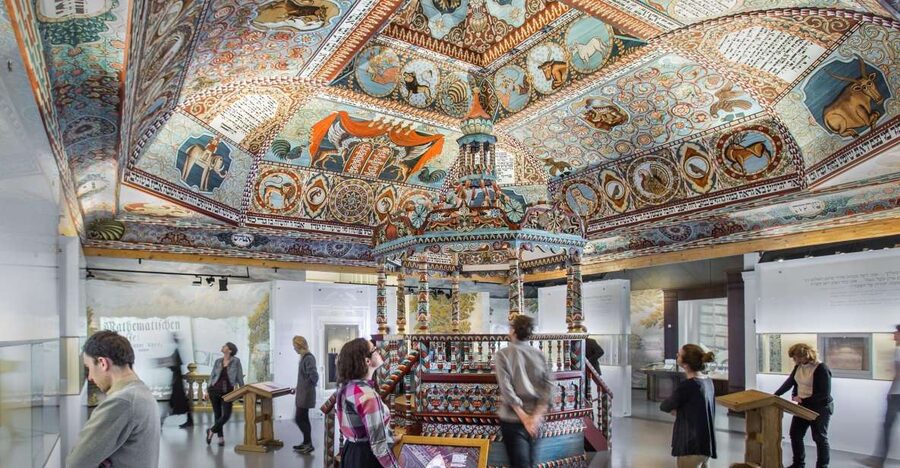
- A full story, not only a Holocaust exhibit: The galleries begin with the first Jewish communities in Poland and continue into the postwar period.
- Eight large historical sections: Plan your visit as a chronological journey, with plenty of room to pause at multimedia stations and personal stories.
- The audio guide is a major help: It provides clear explanations and, according to the museum information, is available in Polish and English.
- Allow more time than you expect: A quick visit takes about two hours, while careful visits commonly run three to five hours or longer.
- You can take a same-day break: Leave for lunch and return later, as long as you come back on the same ticket day.
- The $12 ticket is strong value: Permanent exhibition access, any available temporary exhibition, and the audio guide are included.
Why POLIN matters in Warsaw
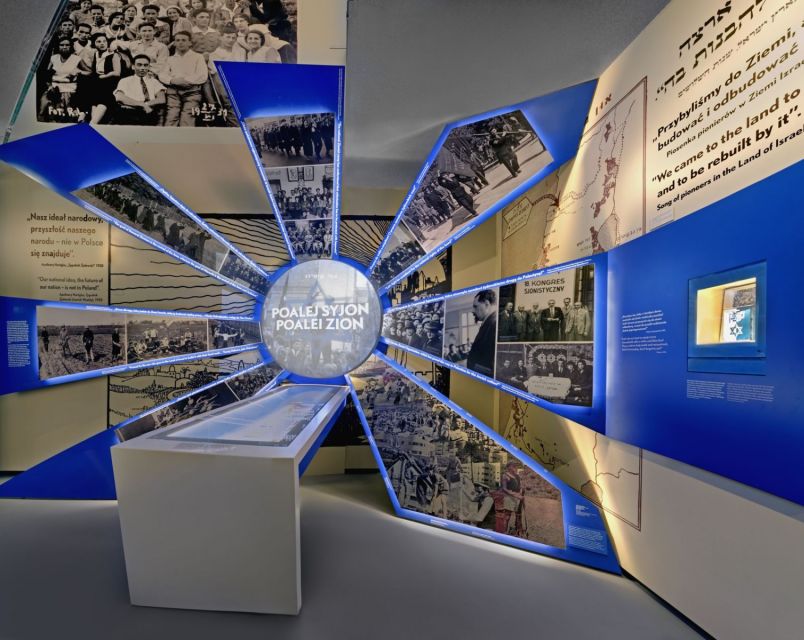
POLIN gives you an essential piece of Warsaw that is easy to miss if you only visit the Old Town, rebuilt royal sites, and modern city center. The museum presents Jewish life as part of Poland’s long story, not as a separate footnote.
That distinction matters. If you arrive expecting only galleries about Nazi persecution, the early sections may surprise you. They take you through settlement, community organization, religious life, trade, education, political change, and daily routines. By the time you reach the Second World War, you have a better sense of what was destroyed.
I appreciate this order. The Holocaust is presented as a terrible rupture in a long and varied history, rather than as the sole definition of Polish Jewish experience. The museum does not avoid painful material, but it gives that material context.
The visit can still be emotionally heavy. Personal accounts, photographs, and wartime evidence require attention and quiet. You should not schedule POLIN as a quick stop between several cheerful attractions. Give yourself room to pause.
More Museum and Gallery History Tours in the world:
- New York City: American Museum of Natural History Ticket
★ 4.5 · 15,447 reviews - Paris: Louvre Museum Entry with History of Mona Lisa
★ 3.9 · 2,823 reviews - Venice’s Best: Basilica, Doge’s Palace, Gondola & History Gallery
★ 4.5 · 2,478 reviews
Entering the eight-gallery historical journey
The permanent exhibition is organized as a chronological route through Polish Jewish history. The exact pace is yours. You can follow the audio guide, read the wall texts, stop at interactive displays, or move more quickly through sections that are less important to you.
The opening galleries explain how Jewish communities formed in Poland and how they fit into the country’s changing political and social structures. You learn about community autonomy, religious practice, work, and relations with the surrounding population. This material is valuable because it explains not just where people lived, but how communities functioned.
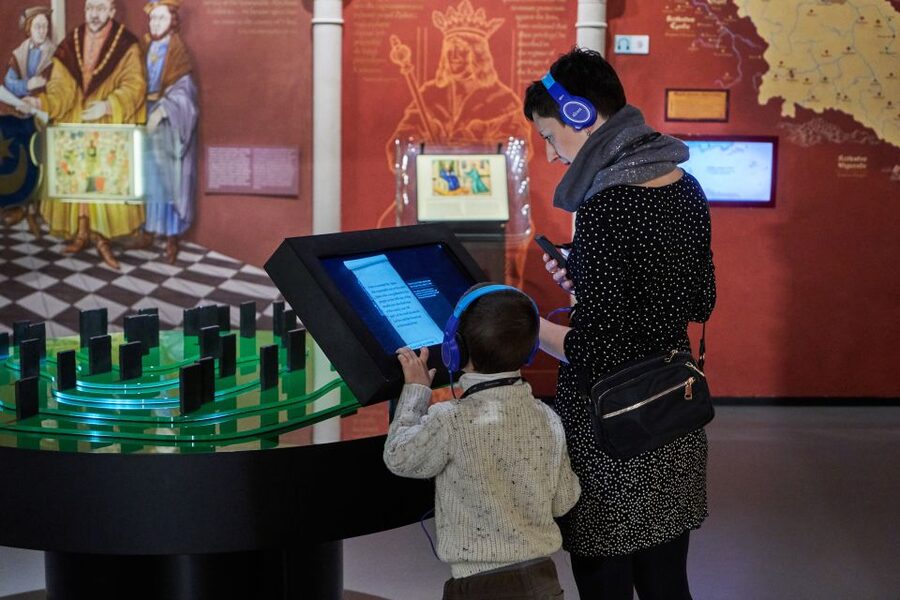
The displays use artifacts and paintings alongside reconstructions and digital features. This gives the early period more shape than dates and names alone. Some of the material is dense, so I would resist trying to read every panel immediately. Listen to the audio guide first, then return to the parts that catch your interest.
As the route moves toward the early modern and industrial periods, the story becomes more layered. Jewish communities faced changing laws, new economic patterns, urban growth, and debates about modernization. You see how Jewish identity was negotiated in a society that was itself changing.
This is one area where visitors often need to manage their energy. The early history contains a great deal of information, and it can leave you tired before you reach the nineteenth and twentieth centuries. If your main interest is modern Poland or the Holocaust, use the audio guide for a clear overview of the first sections rather than attempting every label.
The reconstructed synagogue and everyday life
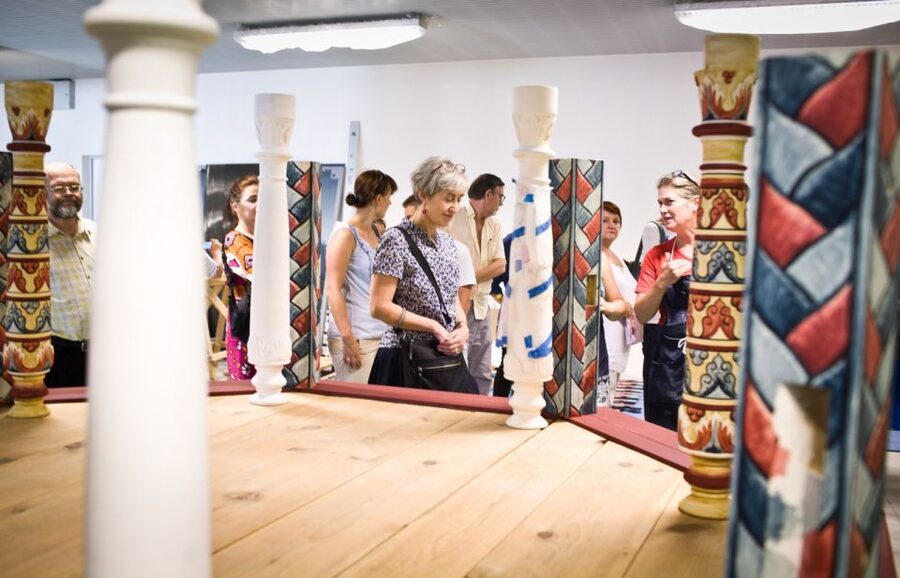
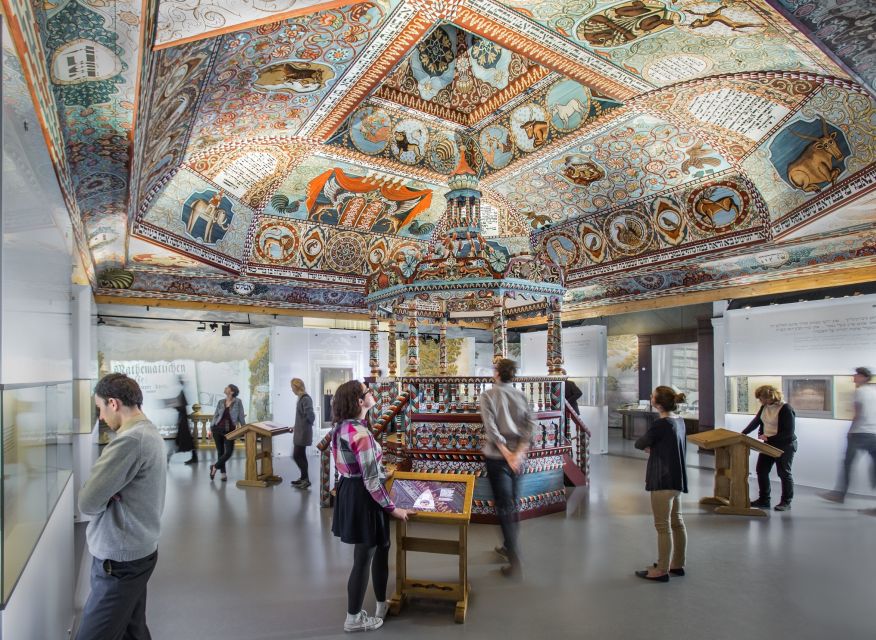
One of the most memorable visual features is the reconstructed synagogue ceiling. It helps turn an abstract discussion of religious life into something you can picture. Rather than treating Jewish culture as a list of customs, the museum shows the settings and objects that shaped communal life.
The exhibition also pays attention to ordinary experience. You encounter material about family, work, education, religion, urban life, and community decisions. These details are important because large historical events can otherwise make people seem distant. Here, individual Jewish figures and personal stories help connect national history with real lives.
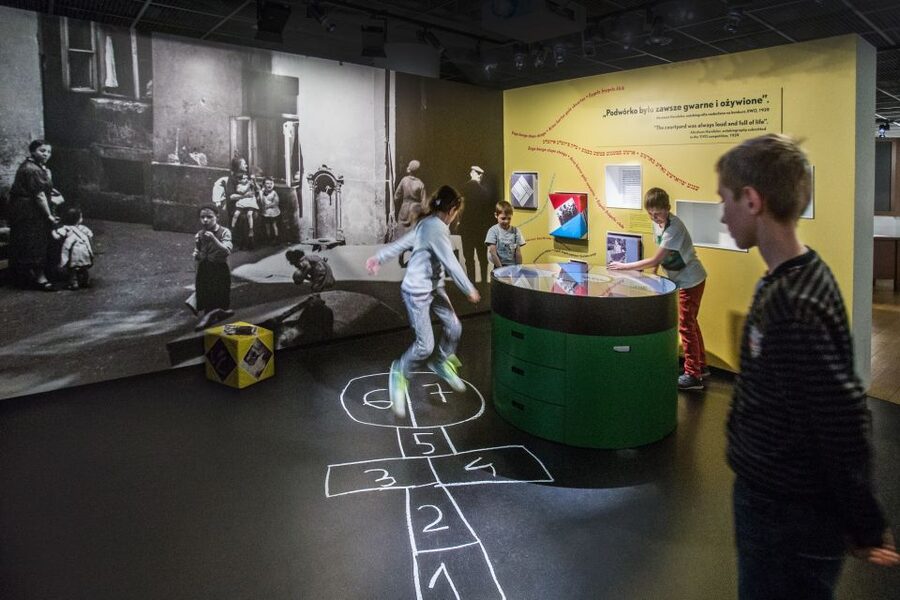
The interactive design works best when you give it time. Buttons, audio points, films, and other installations invite you to make choices and explore at your own speed. Families and younger visitors may find this more engaging than a museum built only around written labels, though children still need supervision.
The result is not light entertainment. Interactive does not mean easy or shallow. Some displays ask you to think about competing political views, social pressure, and difficult choices. I found this approach more useful than a simple sequence of dates because it shows history as something people lived through, not just something that happened to them.
The Holocaust galleries and the destruction of a community
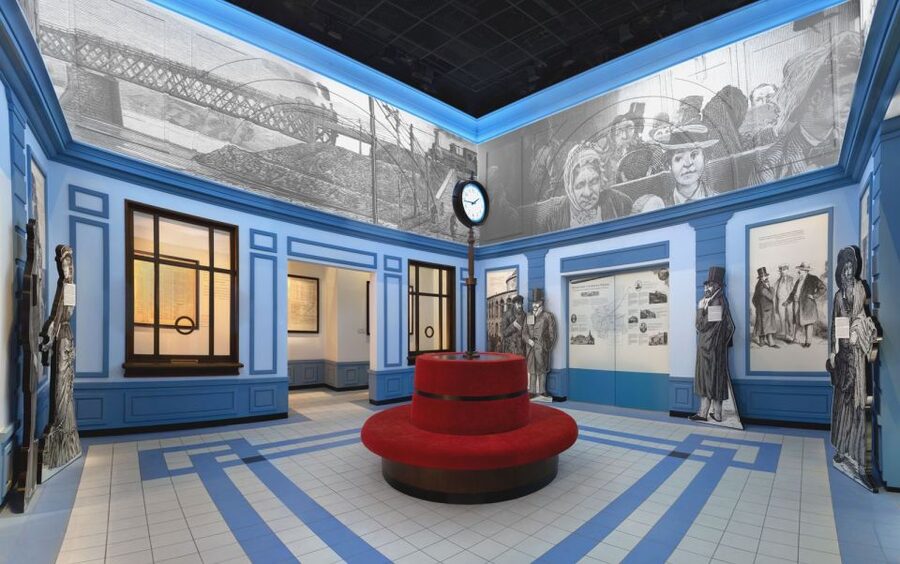
The Holocaust section is one of the most demanding parts of the visit. It explains how Nazi persecution destroyed Jewish communities in Poland, while also showing the political and social conditions that shaped the catastrophe.
You should expect photographs, documents, testimony, and accounts of persecution. The presentation is serious and direct. It does not need theatrical effects to make its point, and that restraint may help you focus on the evidence.
The museum places the Holocaust within the larger story of Polish Jewish life. That is one of its great strengths. You have already seen communities developing over centuries, so the destruction feels connected to something specific and human rather than presented as a detached chapter of wartime history.
The emotional effect varies from person to person. You may find the section moving, exhausting, or both. Seating is available along the route, and a break is sensible. If you are also visiting Auschwitz-Birkenau, POLIN can supply useful historical context, especially about the life that existed before the camps and the ways Jewish communities contributed to Polish society.
One limitation is that the museum contains so much material that you may reach the Holocaust and later sections with less energy than you hoped. I recommend pacing yourself early. Do not spend half an hour on every opening display unless you have a full afternoon.
More Entry Tickets in the world:
- Edinburgh: Edinburgh Castle Guided History Tour with Tickets
★ 4.8 · 9,933 reviews - Taormina: Ancient Theater Skip-the-Line Ticket & Audio Guide
★ 4.5 · 2,412 reviews - Historic Milan Tour with Skip-the-Line Last Supper Ticket
★ 4.5 · 1,976 reviews - American Museum of Natural History Admission Ticket
★ 4.0 · 1,931 reviews
Postwar life, memory, and cultural renewal
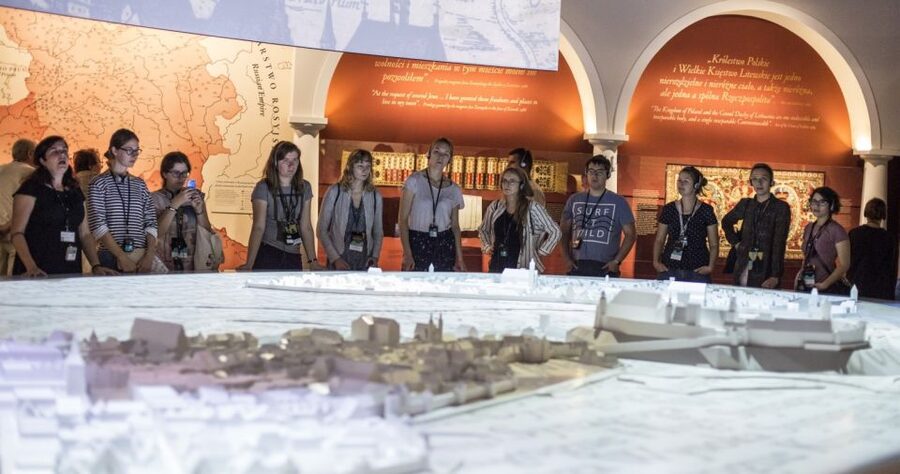
The final parts look at what happened after the Second World War and how Jewish culture has been remembered and revived. This section prevents the story from ending in 1945, which is important for understanding Poland today.
The postwar period is not simple. The museum shows the impact of the Holocaust on Jewish religious, social, and political life, as well as the continuing questions of identity, memory, and belonging. You get a sense of both loss and the effort to preserve or rebuild culture.
This is also where the museum connects most clearly with present-day Warsaw. The building is near the former Jewish district and the Warsaw Ghetto Uprising Monument. Visiting the museum before the monument can make the outdoor memorial more meaningful because you have encountered the people and communities behind the symbolism.
The postwar galleries may feel shorter than the long early sections, depending on how closely you read. If modern Jewish life is your priority, save enough time for these rooms. The temptation is to spend every minute on the medieval and wartime material, but the later story deserves attention.
Using the audio guide without missing the displays
The audio guide is included and is one of the best reasons to book this ticket rather than relying only on wall panels. It provides a clear route through the historical periods and helps explain why each section matters.
A useful feature is location-based guidance. The museum information system can recognize where you are and provide the relevant narration, so you are not constantly searching for track numbers. This makes the visit easier to manage, especially in a large exhibition.
Still, the guide is not perfect for every visitor. Some audio sections run while you are also trying to read long texts, watch films, and examine objects. I suggest using it as a framework rather than trying to absorb every word. Listen in the main sections, pause it when you want to read, and skip repeated information if you are running short on time.
English and Polish are listed as the main languages. The audio presentation is clear enough for visitors who want an organized introduction without joining a guided tour. There is no live guide included, so anyone wanting discussion, questions, or a group walk-through should check for a separate guided option.
Bring headphones if the ticket instructions allow them, or use the museum’s supplied equipment as directed. The information provided does not specify a separate headphone requirement, so follow the staff instructions on arrival.
How long to spend inside
The museum says the core exhibition takes about two hours. That is a useful minimum, not a proper full visit.
For a fast but worthwhile visit, give yourself two and a half to three hours. You can follow the audio guide, see the main displays, and avoid reading every panel.
For a more careful visit, plan four to five hours. This gives you time for interactive stations, films, objects, seating breaks, and the temporary exhibition if one is available. Some people could spend most of a day here, especially if they have a personal or academic interest in Polish Jewish history.
Comfortable shoes matter. The route is extensive, and some lower sections have low ceilings. Groups of schoolchildren can also make parts of the museum noisy, so a quieter weekday or less busy period may suit you if you need to concentrate.
The ticket is valid for one day, and you can leave for lunch and return the same day. Admission closes two hours before the museum’s closing time, so do not arrive late and expect a full visit.
Price, access, and practical details
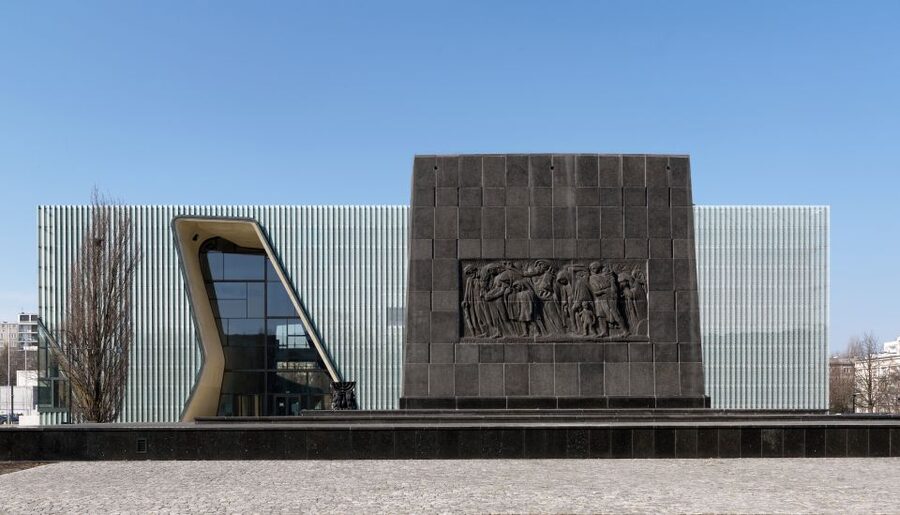
At about $12 per person, the ticket offers good value for a major museum visit. You receive access to the permanent exhibition, any available temporary exhibition, and the audio guide. Since the museum can occupy half a day, the cost compares well with many shorter paid attractions.
Show your voucher at POLIN Museum of the History of Polish Jews. Every visitor must pass electronic security screening before entering the core exhibition, so allow a little extra time at the entrance.
Oversize luggage is not allowed. A small bag is the safer choice, particularly because you will want both hands free for the interactive displays and audio equipment.
The museum is wheelchair accessible. Children aged seven and younger may enter free, while children aged twelve and younger must remain supervised by an adult. The museum is closed on Tuesdays, so check the opening schedule before you build your day around the visit.
If you need a break, the museum restaurant is available for lunch. The service is informal and cafeteria-style, which suits a long museum visit. A meal break can help you return with enough attention for the later galleries.
The ticket offers free cancellation up to 24 hours before the visit and a reserve-now, pay-later option. Those terms are useful if your Warsaw plans may change, but check the final booking conditions before payment.
Who will appreciate this museum most
POLIN is a strong choice for anyone interested in Polish history, Jewish culture, World War II, religion, migration, or the way museums explain difficult subjects. You do not need previous knowledge. The audio guide gives you a clear route, while the displays offer more detail if you want it.
It also suits families with older children and teenagers who learn better through sound, images, reconstructions, and hands-on features. Younger children may enjoy the design but could struggle with the volume of serious historical material.
I would not choose it for a rushed morning when you have only an hour. You would see the building and a few highlights, but you would miss the balance between Jewish life before the Holocaust, wartime destruction, and postwar renewal.
If you prefer a live guide who can answer questions, this ticket may feel limited. The included audio guide is strong, but it cannot adapt to your interests in the way a personal guide can.
Should you book the POLIN Museum ticket?
Yes, if you can give POLIN at least two hours, and ideally three to five. The museum offers an unusually broad account of Jewish life in Poland, with well-designed displays, clear audio support, and enough depth to reward a second visit.
Book it if you want context for Warsaw’s Jewish quarter, the Ghetto Uprising Monument, or a visit to Auschwitz-Birkenau. Skip it only if your schedule is too tight for a serious museum visit or if you want a short, guided tour rather than a self-paced historical journey.
The best plan is simple: arrive with comfortable shoes, use the audio guide selectively, take a lunch break if needed, and protect enough time for the final galleries. At $12, this is one of Warsaw’s strongest cultural values.
FAQ
How long does the POLIN Museum visit take?
The core exhibition is estimated to take two hours. Allow two and a half to three hours for a quicker full visit, or four to five hours if you want to read more and use the interactive displays carefully.
What does the ticket include?
The ticket includes entry to the permanent exhibition, access to a temporary exhibition if one is available, and an audio guide.
Is a guided tour included?
No. The ticket includes an audio guide, but not a live guided tour.
What languages are available?
The listed languages are Polish and English. The host or greeter information also lists Polish and English.
Can I leave and return on the same day?
Yes. You may leave for lunch and return later, provided you return on the same ticket day.
Is the museum open every day?
No. The museum is closed on Tuesdays.
Can children enter for free?
Children aged seven or younger may enter free of charge. Children aged twelve or younger must be supervised by an adult.
Is the museum wheelchair accessible?
Yes, the experience is listed as wheelchair accessible.
Can I bring oversize luggage?
No. Oversize luggage is not allowed.
Latest history tours reviewed in the world
- From Athens: Explore Ancient Greece 4-Day Tour★ 4.7 · 73 reviews
- From Athens: Ancient Olympia Full-Day Private Tour★ 4.8 · 22 reviews
- From Athens: Explore Ancient Corinth & Charming Nafplion★ 4.6 · 102 reviews
- From Albufeira: Wine Tasting & Historic Silves Tour★ 4.9 · 421 reviews
- From Albufeira: Historical Algarve Region Tour★ 4.7 · 585 reviews
- From Alexandria: Full-Day Guided Tour of Historical Sights★ 4.5 · 54 reviews
- Franklin: Ghost Tour in Historic Franklin★ 4.8 · 65 reviews
- Freiburg: Exciting City Tour with sightseeing and history★ 4.3 · 103 reviews
Warsaw History Tours, compared.
Warsaw: Chopin Concert at Historical Venue in Old Town
Read our review →
Small-Group Historical Guided Tour of Warsaw with pick up/drop off. Public Tour.
Read our review →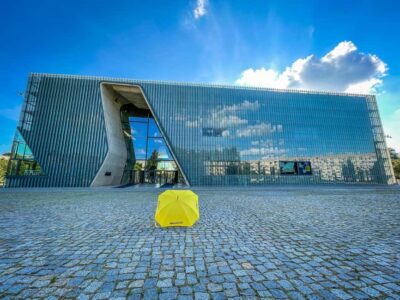
Warsaw: Jewish History Guided Walking Tour in English
Read our review →Browse the lists this tour appears in