
Review · ZANZIBAR
Stone Town Historical Walking Tour
Stone Town’s story is written in its narrow lanes, carved doors, old forts, markets, and places of worship. This private walk gives you a useful first look at Mj Mpongwe, the old quarter of Zanzibar City, while explaining the influence of local communities, Persia, Portugal, and the Omani Sultanate.
I like the private format, which lets you ask questions and adjust the pace. I also like the focus on the slave trade, since it gives the old buildings a harder, more honest context. The main caution is meeting at the House of Wonders, where construction has caused confusion for some guests. Confirm the exact meeting point before you set out.
What makes this Stone Town walk worth your time
- The tour links famous sights with difficult history, including the East African slave trade and former slave-market sites.
- You visit the House of Wonders, Old Fort, Darajani Market, and major churches in one compact route.
- The private setting makes the walk flexible, with time for photos, shopping, questions, and family-friendly pacing.
- Guides including Alfa, Khalfan, Rabik, and Sultan have been praised for clear explanations, patience, and practical help.
- The three-hour length works well on your first day, especially if you want context before exploring Stone Town alone.
- The $20 price is strong value, though the former slave-market entrance fee and personal purchases cost extra.
Starting at the House of Wonders
The tour begins at the House of Wonders on Sokoku Street and returns to the same meeting point. That makes the arrangement simple in theory, since you are not left at an unfamiliar part of town or expected to find a ride at the end.
In practice, take the meeting point seriously. The area has had construction activity, and one party lost time trying to find the right spot. Use the booking details and confirm where your guide will wait. Do not assume that a map pin inside a construction area tells you to enter the site.
The House of Wonders is a fitting place to begin. It is one of Stone Town’s best-known landmarks, but its condition has been a concern. Parts of the building have deteriorated, so you should not expect a polished museum visit or a fully open interior. Its value here is as a marker of Zanzibar’s changing political and architectural story.
Your guide uses the surrounding streets to explain how Stone Town developed. The emphasis is not only on grand rulers and colonial buildings. You also hear about local people, Persian links, Portuguese influence, and the Omani Sultanate. That wider view helps you see Stone Town as a meeting place shaped by trade, faith, migration, and power.
More History Walking Tours in the world:
- History and Hauntings of Salem Guided Walking Tour
★ 5.0 · 14,564 reviews - Lisbon: History, Stories and Lifestyle Walking Tour
★ 4.8 · 10,902 reviews - Boston: Freedom Trail History Small Group Walking Tour
★ 5.0 · 6,450 reviews
Stone Town’s lanes, doors, and old buildings

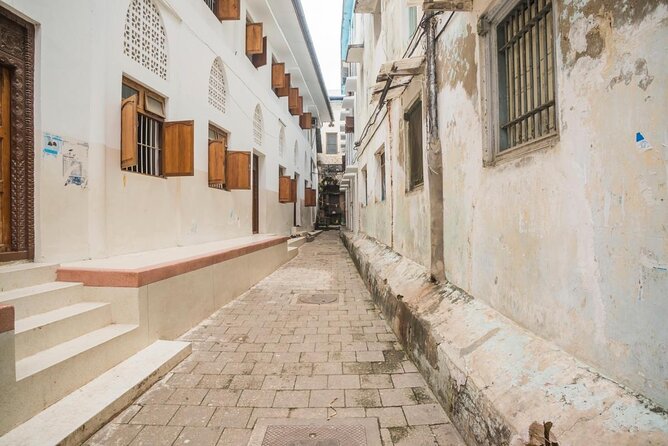
A walking tour is the right way to see this part of Zanzibar. The old quarter is compact but easy to lose your bearings in, with lanes that turn suddenly and buildings packed closely together. A guide can point out details you might otherwise pass without noticing.
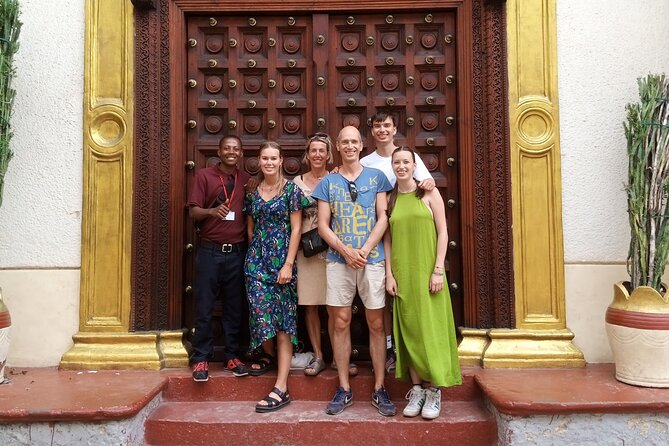
One small pleasure is the carved wooden doors. They are among Stone Town’s most memorable details, with designs that reflect the wealth and background of the people who commissioned them. The walk gives you time to stop for photographs instead of rushing from one named sight to the next.
The private format matters here. You can ask why a doorway looks different from another, pause for a picture, or spend longer in a market. Guides such as Sultan and Alfa have been praised for making the route personal rather than delivering a fixed speech at every corner.
That flexibility also helps families. A guide named Rabik kept children aged seven and twelve involved for more than three hours by adjusting the pace and explaining the sites in an accessible way. The walk is still a city tour, not a children’s activity, but the private arrangement gives your guide room to keep younger walkers interested.
Old Fort and the changing face of Zanzibar
The Old Fort is one of the key stops. Its walls connect Stone Town to the period of Portuguese and Omani power, and the site gives you a physical sense of defense, trade, and political change.
Your guide provides the context, which is important because a fort can otherwise become a quick photo stop. Ask questions about who controlled Zanzibar at different points and how the island’s position in the Indian Ocean shaped its fortunes.
The tour does not list a separate admission charge for the Old Fort, and the itinerary describes the general walking route as having free admission. Still, the tour price does not include all fees and taxes, so ask your guide what is covered before paying for anything at a particular site.
The Old Fort also helps break up the walk. After narrow lanes and tightly packed buildings, its open walls and courtyard give you a little breathing room. You can take photographs, listen to the explanation, and continue toward the waterfront and market areas.
The slave trade sites and Anglican Church

The most serious part of the route is the former slave-market area. Zanzibar played a major role in the East African slave trade, and this tour directly addresses that subject instead of treating Stone Town as a collection of pretty buildings.
The former slave-market site has a separate entrance fee of $5 per person. That fee is not included, and all other entrance costs, personal spending, souvenirs, transport, and guide tips are also your responsibility.
I recommend deciding in advance that you will pay for this part if you want the fullest historical picture. The site can be difficult, but skipping it leaves out one of the central facts of Stone Town’s past. A guide can help connect the physical location to the wider trade in East Africa and to the forces that shaped Zanzibar.
The Anglican Church is another important stop because it occupies the former slave-market area. The setting brings together religious change, abolition, and the old town’s layered identity. Expect a place that asks for quiet attention rather than a quick photograph.
The subject may feel heavy, especially early in your holiday. That is not a flaw in the tour. It is a reason to choose the timing that suits you. For many people, this historical explanation makes the rest of Stone Town easier to understand.
More History Tours in the world:
- New York City: American Museum of Natural History Ticket
★ 4.5 · 15,447 reviews - Colosseum: Underground and Ancient Rome Tour
★ 4.7 · 12,691 reviews - London Small Group Tour of Historical Pubs
★ 5.0 · 10,422 reviews - Prague: Oldtown, Medieval Underground & Dungeon History Tour
★ 4.3 · 10,277 reviews
Catholic Church and the city’s many faiths
The Catholic Church adds another piece to the story. Along with the Anglican Church and Islamic influences visible across the old quarter, it shows how several religious traditions have shared space in Stone Town.
The itinerary includes the Catholic Church as one of the main landmarks. Your guide explains what you are seeing and answers questions, rather than leaving you to guess why the building matters.
This is one of the tour’s strengths: the walk does not present Zanzibar as a single, simple culture. It introduces several strands of influence and lets you see how architecture and worship reflect them. You get a better sense of the city by comparing the different sites instead of visiting one isolated monument.
Dress respectfully for religious buildings and follow any instructions given at the entrance. The provided details do not specify a dress code, so your guide is the best source for current expectations at each place.
Darajani Market and everyday Stone Town
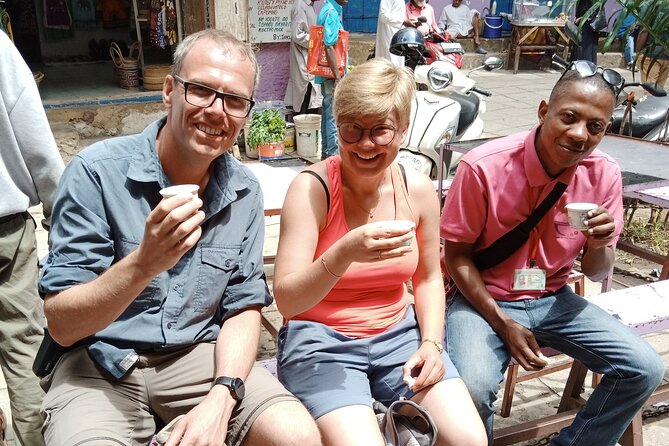
Darajani Market is where the tour moves from monuments to daily commerce. You can see the practical side of Stone Town, with food, fish, produce, and local trade replacing the formal stories of forts and churches.
The market can be crowded and sensory, so stay close to your guide and watch your belongings. The reward is a more grounded view of the city. One walk included time at the fish market and a chance to try jackfruit, details that show how the route can become more than a sequence of photo stops.
Your guide can also advise you about souvenirs. That is useful in a market, where prices and quality vary and you may want help deciding what deserves your money. The advice is not a substitute for your own judgment, but it can make shopping less awkward.
The market is also a good place to ask about food and local products. Do not expect a formal tasting program, since food is not included as a tour feature. Instead, think of it as an opportunity to observe and perhaps make a small purchase on your own.
Jaws Corner, Forodhani Garden, and Freddie Mercury

Jaws Corner is a well-known meeting point in Stone Town and gives the route another look at local social life. It is less about a single grand monument and more about how people use the city’s public spaces.
Forodhani Garden is also included in the route. Its location near the waterfront makes it a natural pause between the old lanes and the open edge of Stone Town. The itinerary calls it Foodchain Garden in one place and Forodhani Garden elsewhere, so confirm the exact stop with your guide if this matters to you.
The Freddie Mercury stop adds popular music to the tour’s historical mix. You see the house associated with Freddie Mercury, the lead singer of Queen, who lived in Zanzibar. This is not presented as a concert or a museum visit included in the $20 price. It is a brief cultural landmark within the walking route.
A separate Freddie Mercury Museum is also named among the highlights, but the supplied tour details do not state that museum admission is included. Ask before entering if you want to visit inside. The house stop itself is best for fans and for anyone interested in the way Stone Town’s history reaches into modern popular culture.
How the three-hour private format works
The advertised duration is two to three hours, with the typical route taking about three hours. The itinerary returns you to the House of Wonders, so plan on a continuous walking circuit rather than transport between sites.
No transport is included or needed for the stated route. You walk from stop to stop through the old town. Wear comfortable shoes, carry water, and leave room in your schedule for pauses. These are practical suggestions for any walking tour, but they matter here because the experience depends on moving through narrow streets and markets at a steady pace.
The tour is private, so only your group participates. That is especially useful if your group has mixed interests. One person can ask about architecture while another wants market time, and your guide can usually adjust the balance.
Guides named in the feedback include Alfa or Alpha, Alfan, Khalfan, Rabik, and Sultan. The strongest pattern is clear explanation, patience, and a willingness to answer questions. Some guides also helped with meeting a hotel ride at the end or offered advice about other excursions. Those extras are helpful, but they should not be treated as guaranteed parts of every booking.
The published rating is 4.9 from 143 reviews, with 97 percent recommending the experience. That is a strong record, but the meeting-point complaint matters. Confirm the start details early, especially if you are arriving by taxi or have a tight schedule.
Is $20 a fair price?
At $20 per person, the tour offers good value if you want a guide to connect the landmarks and explain the city’s past. You are paying for a certified professional guide and a private walk, not transport, meals, or a package of entrance tickets.
The value is highest for a first visit. You see the major names in one morning or afternoon, then you can return to the places that interest you. The guide’s local explanations also help you avoid spending your whole first day wandering without context.
Budget separately for the former slave-market entrance fee of $5 per person, souvenirs, personal purchases, and any other admissions. Tips are not included. The tour itself is affordable, but the final cost will be higher if you add museum visits or shopping.
A free cancellation policy gives you some protection. You can cancel at least 24 hours before the start time for a full refund. Changes or cancellations inside 24 hours are not refunded, and poor weather may lead to a new date or a full refund. The experience requires good weather, so keep that rule in mind when planning a tight itinerary.
Who should book this Stone Town walk?
I would choose this tour for a first day in Zanzibar, a short stay, or a port stop when you want a clear introduction to Stone Town without arranging several separate visits.
It suits solo visitors because you have a guide to help with orientation and questions. It also suits families, provided everyone can manage a few hours on foot. The private setup is a real advantage for children, older relatives, or anyone who wants to stop often.
History-minded visitors will get the most from the former slave-market site, churches, Old Fort, and the explanation of Persian, Portuguese, local, and Omani influences. Music fans will enjoy the Freddie Mercury stop, while shoppers and food-focused visitors will appreciate Darajani Market.
I would be more cautious if you want a polished museum tour with guaranteed indoor access. The House of Wonders may be affected by construction or poor condition, and the tour is primarily an outdoor walking experience. I would also choose another activity if you dislike difficult historical subjects or do not want to pay extra entrance fees.
Should you book it?
Book it if you want a private, affordable orientation to Stone Town with a guide who can explain both its beautiful details and its painful past. Alfa Tours & Safaris offers a practical route that includes the city’s most useful landmarks, with enough flexibility for questions, photos, families, and market stops.
Before booking, confirm the meeting point at the House of Wonders and set aside the $5 former slave-market admission fee. With those details clear, this is a sensible first-day tour that gives you the background to explore Stone Town on your own.
FAQ
Where does the Stone Town Historical Walking Tour start?
The tour starts at the House of Wonders, at R5QQ+JR, Sokoku Street, Zanzibar, Tanzania.
Where does the tour end?
The walk ends back at the House of Wonders meeting point.
How long does the walking tour last?
The tour lasts about two to three hours. The typical itinerary is described as taking three hours.
Is the tour private?
Yes. Only your group participates in the activity.
What is included in the price?
A professional, certified tour guide is included.
Is the former slave-market entrance fee included?
No. Admission to the former slave-market site costs $5 per person and is paid separately.
Can I cancel for a full refund?
Yes, if you cancel at least 24 hours before the experience start time. Cancellations or changes made less than 24 hours in advance are not refunded, and poor weather may result in a different date or a full refund.
Latest history tours reviewed in the world
- From Athens: Ancient Olympia Full-Day Private Tour★ 4.8 · 22 reviews
- From Athens: Explore Ancient Corinth & Charming Nafplion★ 4.6 · 102 reviews
- From Athens: Explore Ancient Greece 4-Day Tour★ 4.7 · 73 reviews
- From Albufeira: Wine Tasting & Historic Silves Tour★ 4.9 · 421 reviews
- From Albufeira: Historical Algarve Region Tour★ 4.7 · 585 reviews
- From Alexandria: Full-Day Guided Tour of Historical Sights★ 4.5 · 54 reviews
- Freiburg: Exciting City Tour with sightseeing and history★ 4.3 · 103 reviews
- From Abu Dhabi: Grand Mosque, Royal Palace& Heritage Village★ 4.6 · 197 reviews
Zanzibar History Tours, compared.

Zanzibar Stone Town Tour: Explore Rich History and Hidden Wonders
Read our review →Browse the lists this tour appears in