
Review · ZANZIBAR
Stone Town Historical Walking Tour
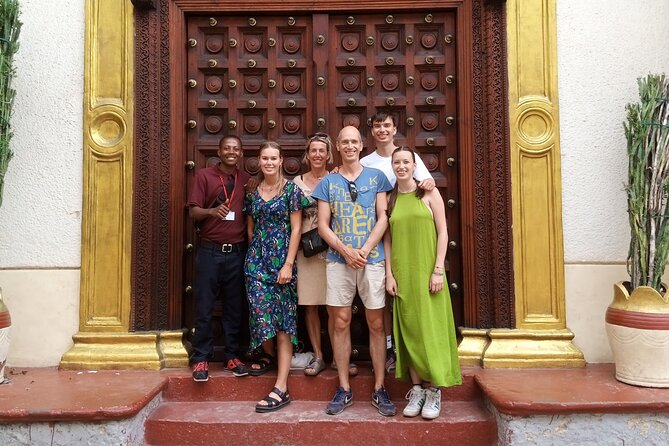
Stone Town is best understood on foot, where carved doors, sea air, minaret calls, market smells, and layers of African, Arab, Indian, Persian, and European influence all meet in a few compact streets. This private tour brings those layers together in about 2 to 3 hours, with a guide who can adjust the pace to your interests.
I like the focus on both grand landmarks and everyday places, especially Darajani Bazaar and Forodhani Gardens. I also like that guide Ahmed has been praised for explaining not only Zanzibar’s past, but also current struggles on the island. The main drawback is that several admissions cost extra, and a short visit cannot cover every corner of Stone Town.
Key points at a glance
- A private walking tour for your group: You do not share the experience with other groups.
- Seven central stops: See the Old Fort, Forodhani Gardens, Darajani Bazaar, Palace Museum, Christ Church Cathedral, and Freddie Mercury Museum.
- History beside daily life: The route pairs major landmarks with a working market and a popular evening food square.
- A guide-led look at Zanzibar’s difficult past: The former slave-market site and cathedral bring important, serious context.
- A useful $25 starting price: The fee includes a professional guide, but some entrance costs, food, transport, and tips are extra.
- Easy Stone Town logistics: The tour starts and ends near Forodhani Gardens, with hotel pickup available from Stone Town hotels if arranged ahead.
Why Stone Town works best on foot

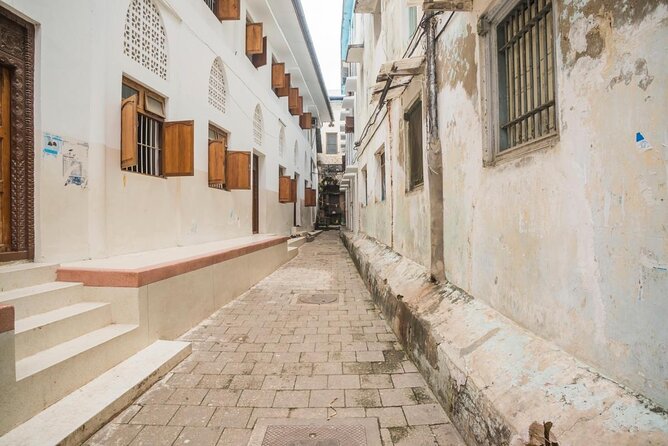
Stone Town is the old center of Zanzibar City, and its character comes from close contact with the streets. You pass weathered colonial buildings, carved doors, small lanes, mosques, shops, and sea-facing public spaces rather than viewing the town from behind a vehicle window.
The setting reflects more than a thousand years of trade involving spices, silk, and enslaved people. African, Arab, Indian, Persian, and European influences meet here in food, religion, architecture, and language. That mixture is the main reason to take a guided walk instead of simply wandering with a map.
I like the way this route moves between famous sights and places still tied to ordinary life. You get the grand story at the Old Fort and Palace Museum, then see trade and food at Darajani Bazaar and Forodhani Gardens.
The tour also presents religious coexistence as part of Stone Town’s identity. Islam, Christianity, and Hinduism have all shaped the city. You may notice mosques, churches, and Hindu traditions within a relatively small area, a reminder that Zanzibar has long been a meeting point for different communities.
More History Walking Tours in the world:
- History and Hauntings of Salem Guided Walking Tour
★ 5.0 · 14,564 reviews - Lisbon: History, Stories and Lifestyle Walking Tour
★ 4.8 · 10,902 reviews - Boston: Freedom Trail History Small Group Walking Tour
★ 5.0 · 6,450 reviews
Starting at Forodhani Gardens
The meeting point is Forodhani Gardens, and the tour ends there as well. This makes the location easy to find and useful for planning the rest of your day in Stone Town.
Forodhani Gardens are especially lively after sunset, when the square becomes a well-known food market. Grilled seafood, samoosas, cassava, potatoes, and other Kiswahili and Zanzibari foods appear at the stalls. If your walking tour takes place earlier, you may not see the full evening scene, but you can return later for food.
That timing matters. The listed stop lasts about 30 minutes, but the gardens have two different personalities. In daylight, they provide a seaside public space and a place to discuss local food. At night, they become a social meeting point for locals and visitors.
I would not treat the garden stop as a full food tour. Food and drink are not included, and the tour does not promise tastings. Instead, use the visit to learn what to order later, then come back when the stalls are active if you want to sample the local cooking.
Stone Town’s streets, doors, and trading past
The first portion of the walk introduces the old city itself. This is where the guide can explain how Stone Town grew as a trading center and why its buildings show so many outside influences.
Look for the carved doors and older facades. Their decoration reflects the wealth and contacts built through trade, while the narrow streets show how the old town developed before modern traffic. The smell of the sea, perfumes, food, and spices adds as much to the experience as the buildings do.
A good guide helps you connect these details instead of treating them as unrelated photo stops. In the available feedback, Ahmed was praised for adapting the pace to the group’s interests and for discussing both the island’s past and present concerns. That is useful here, because Stone Town can otherwise become a blur of old doors and stone walls.
You should expect walking on uneven urban surfaces and moving through busy streets. The tour is not a long hike, but comfortable shoes will make the experience better. Most people can participate, and the activity is private, so your group can ask questions without holding up a larger party.
The Old Fort and Portuguese-era Zanzibar

The Old Fort, also called Ngome Kongwe, receives about 40 minutes, the longest stop on the route. It is considered the oldest building in Stone Town, with origins connected to the late sixteenth century.
The fort helps explain the struggle for control of Zanzibar. Portuguese power shaped the island before the Yaarub pushed the Portuguese out after taking Mombasa. Omani rule followed in 1698, and the fort reflects those shifts in control.
This is one of the most useful stops for getting the political framework of Stone Town. The town’s buildings can look decorative and peaceful, but the island’s position made it valuable to outside powers. A guide can give the fort a clearer place in that story.
Admission is listed as free for this stop. The fort is also a good point to ask questions about how Zanzibar’s coastal trade connected East Africa with Arabia, India, and Europe. Keep in mind that the tour gives you an overview, not a long archaeological visit.
More History Tours in the world:
- New York City: American Museum of Natural History Ticket
★ 4.5 · 15,447 reviews - Colosseum: Underground and Ancient Rome Tour
★ 4.7 · 12,691 reviews - London Small Group Tour of Historical Pubs
★ 5.0 · 10,422 reviews - Prague: Oldtown, Medieval Underground & Dungeon History Tour
★ 4.3 · 10,277 reviews
Darajani Bazaar, where the city does its daily work
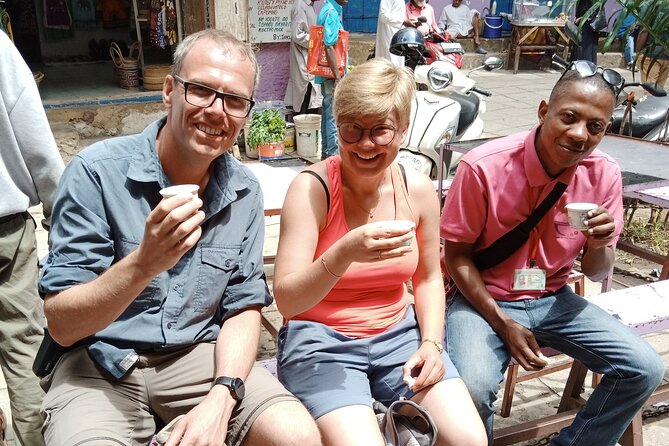
Darajani Bazaar is the most direct look at present-day Stone Town on this route. You can expect displays of produce, spices, seafood, clothing, and crafts, along with vendors serving local customers.
This is not a polished market built only for sightseeing. Its value comes from the chance to see Zanzibar’s food and trade culture in use. You may notice the colors and smells first, but the guide can help explain what you are seeing and how the market fits into local life.
The scheduled visit is about 18 minutes, so it is brief. That is enough for an introduction, but not enough for a relaxed market shopping session or an extended food stop. If you want to buy spices, clothing, or crafts, ask how much time is available before making purchases.
You may also find traditional foods to sample, but food is not included in the tour. Carrying purchases through the rest of the walk may be inconvenient, so I would save serious shopping for the end of your Stone Town time.
The Palace Museum and the Sultan’s world

The Palace Museum, also called the People’s Palace Museum, takes you into Zanzibar’s royal past. It was once a residence of the Sultan, and its exhibits relate to the island’s rulers, culture, and court life.
This stop gives context to the grander side of Stone Town. After seeing a working market, you move into a setting tied to political power and royal ceremony. Artifacts and displays help show how Zanzibar’s leaders lived and how the island’s connections reached far beyond East Africa.
The planned visit lasts about 18 minutes, so expect a concise introduction rather than a slow museum afternoon. If the museum offers interactive elements such as traditional music or craft demonstrations during your visit, they may add a more personal touch, but these are not guaranteed.
The Palace Museum is a worthwhile stop for anyone interested in Zanzibar’s political history. If museums are your main reason for coming to Stone Town, you may want extra time before or after the tour to explore at a slower pace.
Christ Church Cathedral and the slave-market site
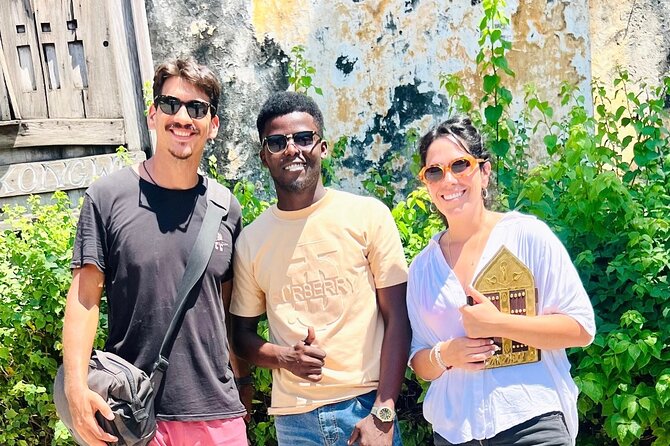
Christ Church Cathedral carries the most serious subject on the route. The church was built on the site of the former slave market, and the guide explains that connection during the visit.
Zanzibar’s role in the slave trade cannot be treated as a footnote. The site links Stone Town’s prosperity and international trade to human suffering. A stop here can be difficult, but it is essential for understanding the city honestly.
The scheduled time is about 18 minutes, and admission is not included. The supplied information lists a $5 entrance fee per person for the experience, while this and the Freddie Mercury Museum are specifically marked as not included, so you should confirm the exact charges when booking.
The cathedral visit is not just about architecture. It asks you to consider how places of worship, commerce, colonial power, and memory overlap in one small area. I appreciate that the tour includes this subject rather than presenting Stone Town as a collection of pretty buildings and food stalls.
Freddie Mercury’s Zanzibar connection
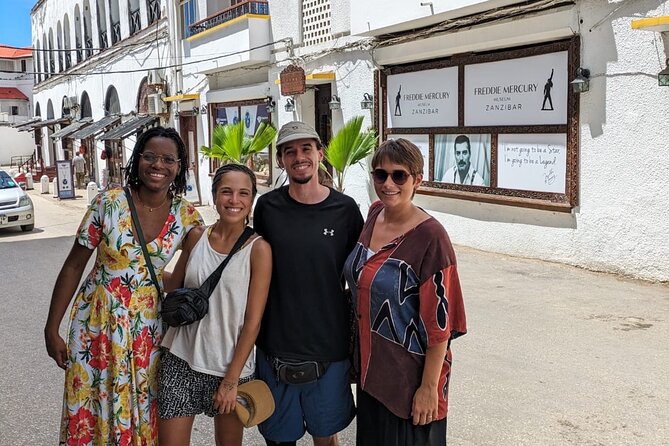
The Freddie Mercury Museum adds a modern and more personal strand to the route. Freddie Mercury was born in Zanzibar, and the museum follows his life, career with Queen, and connection to the island.
You can expect memorabilia, personal belongings, and displays about his path from Zanzibar to international fame. The museum offers a sharp change of mood after the cathedral and slave-market site, moving from difficult public history to one person’s global cultural impact.
The visit lasts about 18 minutes, and admission is not included. This is a compact stop, so do not expect a full music museum visit with extensive time for every display. It works best as part of a wider Stone Town walk rather than the sole reason to book the tour.
For music fans, the stop may be a highlight. For others, it is still a useful reminder that Zanzibar’s story includes modern culture as well as trade, sultans, religion, and colonial rule.
What the $25 price really covers
At $25 per person, the tour is reasonably priced for a private experience lasting around 2 to 3 hours. The fee includes a professional guide and the walking tour itself. It does not include food, drinks, tips, transfers from other parts of Zanzibar, or personal purchases.
Hotel pickup is available from Stone Town hotels if you request it and send a message in advance. If you are staying elsewhere on the island, you need to reach Stone Town on your own. The tour begins at Forodhani Gardens and returns there.
The extra costs are modest but worth planning for. A $5 entrance fee per person is listed, and at least two stops, Christ Church Cathedral and the Freddie Mercury Museum, are marked as having admission not included. Food at Forodhani Gardens and Darajani Bazaar is also separate.
The private format is the main value. Your group can ask about architecture, food, religion, or Zanzibar’s current challenges without following a large crowd. That matters even more in a compact city where a few good explanations can change how you see every street afterward.
Who will get the most from this walk
I would recommend this tour to a first-time visitor who wants a clear introduction to Stone Town without spending a full day on foot. It suits couples, families, and small groups who prefer a private guide and a flexible conversation.
It is also a good fit if you want more than monuments. Darajani Bazaar and Forodhani Gardens bring food and daily commerce into the route, while the cathedral and Palace Museum add serious historical context.
You may want a different plan if you dislike walking, want long museum visits, or expect every admission and meal to be included. The tour covers many sites quickly, and some stops last only 18 minutes.
The strongest guide match appears to be Ahmed, whose approach includes adjusting the pace and discussing present-day issues as well as the past. Guide availability should be confirmed, since the tour information does not guarantee that he will lead every departure.
Practical details before you book
The booking confirmation is issued at the time of booking, and the experience is available with a mobile ticket. The tour is near public transportation, but transport from other parts of the island is not included.
Most people can participate, and only your group joins the private activity. For a smoother visit, send a message in advance if you want pickup from a Stone Town hotel or have particular interests you want the guide to cover.
Free cancellation is available if you cancel at least 24 hours before the local start time. Cancellations or changes made within 24 hours are not refunded or accepted.
Should you book the Stone Town Historical Walking Tour?
Book it if you want a compact, private introduction that connects Stone Town’s architecture with its trade, royal, religious, and cultural past. The route is especially useful because it includes the Old Fort, market, palace, cathedral, and Freddie Mercury Museum in one walk.
I would choose it early in a Zanzibar stay, then return to Forodhani Gardens at night for food and spend extra time at any museum that catches your interest. The $25 price offers good value, as long as you budget for admission, meals, transport from outside Stone Town, and a tip.
Skip it if you want a slow, specialist museum tour or a dedicated food experience. For most first visits, though, this is a practical way to get your bearings and understand why Stone Town feels like several histories occupying the same streets.
FAQ
How long does the Stone Town Historical Walking Tour last?
The tour lasts approximately 2 to 3 hours.
How much does the tour cost?
The listed price is $25 per person.
Is this a private tour?
Yes. Only your group participates in the activity.
Where does the tour start and finish?
It starts at Forodhani Gardens in Zanzibar and ends back at the same meeting point.
Is hotel pickup available?
Pickup is available from Stone Town hotels if you request it and send a message in advance.
Is transport from other parts of Zanzibar included?
No. Transfers from other parts of the island are not included, and the tour starts in Stone Town.
Are entrance fees included?
No. A $5 entrance fee per person is listed, and admission for Christ Church Cathedral and the Freddie Mercury Museum is not included.
Are food and drinks included?
No. Food and drinks are not included. Forodhani Gardens and Darajani Bazaar are places where you may find local food to purchase separately.
Can I cancel for a full refund?
Yes, if you cancel at least 24 hours before the experience start time. Cancellations or changes made less than 24 hours before the start time are not refunded or accepted.
Latest history tours reviewed in the world
- From Athens: Ancient Olympia Full-Day Private Tour★ 4.8 · 22 reviews
- From Athens: Explore Ancient Corinth & Charming Nafplion★ 4.6 · 102 reviews
- From Athens: Explore Ancient Greece 4-Day Tour★ 4.7 · 73 reviews
- From Albufeira: Wine Tasting & Historic Silves Tour★ 4.9 · 421 reviews
- From Albufeira: Historical Algarve Region Tour★ 4.7 · 585 reviews
- From Alexandria: Full-Day Guided Tour of Historical Sights★ 4.5 · 54 reviews
- Franklin: Ghost Tour in Historic Franklin★ 4.8 · 65 reviews
- Freiburg: Exciting City Tour with sightseeing and history★ 4.3 · 103 reviews
Zanzibar History Tours, compared.

Zanzibar Stone Town Tour: Explore Rich History and Hidden Wonders
Read our review →Browse the lists this tour appears in