
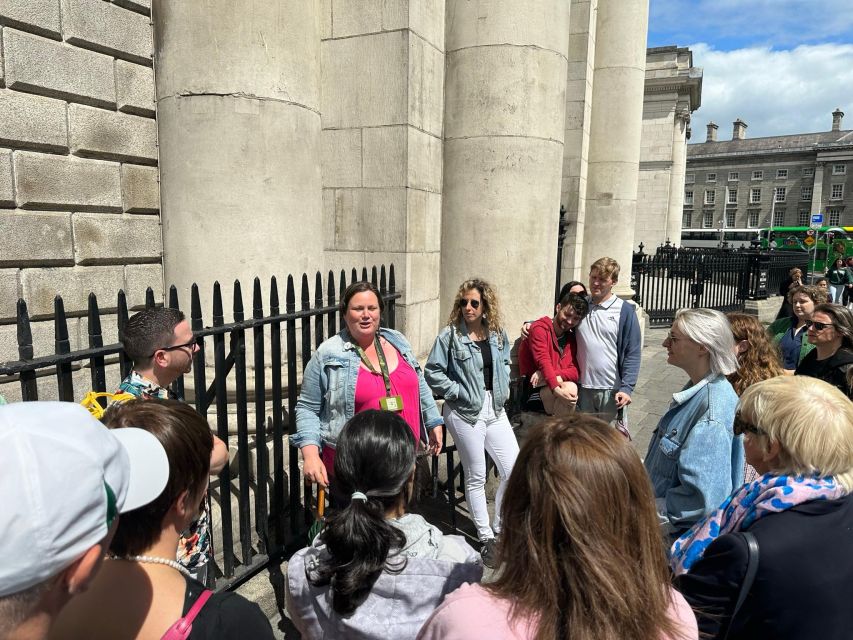
Review · DUBLIN
Dublin: LGBT Pride Walking Tour with Queer History
Dublin’s queer story is written into ordinary city streets. This two-hour walk connects places such as Liberty Hall, Trinity College, and the General Post Office with the people and campaigns that helped change Ireland from a country marked by exclusion to one that recognizes marriage equality. It is part history lesson, part city walk, and part reminder that social change rarely arrives without a fight.
I like two things right away. First, the route gives you a different way to read familiar Dublin landmarks. Second, guide Helena brings warmth, humor, and personal stories to serious material. The main consideration is that this is a focused history tour, not a general sightseeing walk, so you should choose it because LGBTQ+ history and civil rights matter to you.
Key points
- Liberty Hall begins the story of Dublin Pride, linking the city to early protest and organizing.
- The General Post Office adds revolutionary context, with attention to queer figures such as Panti Bliss.
- Trinity College introduces the Sexual Liberation Movement and changing attitudes toward identity and rights.
- Dr Lydia Foy’s story explains the fight for legal gender recognition and the Gender Recognition Act.
- Diceman’s Corner, the Hirschfield Centre, and The George bring the story into Dublin’s social and community life.
- Helena’s style is warm and lively, with humor, personal anecdotes, and plenty of time for questions.
Reading Dublin through its queer past
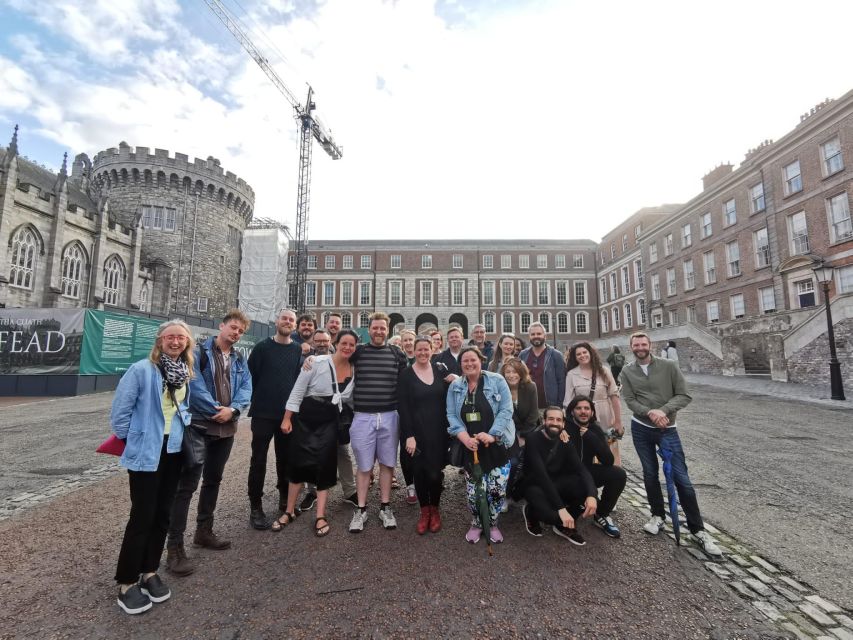
This tour works because it does not treat queer history as a separate subject tucked away in a museum. You walk through central Dublin and see how political protests, student movements, nightlife, legal battles, and personal courage fit into the city you are already exploring.
The story moves from repression and abuse toward recognition and equal rights, but it does not pretend that progress was simple. You hear about people who pushed for visibility, demanded legal change, created safe social spaces, and challenged official ideas about gender and sexuality.
That balance matters. The tour includes uplifting moments, but it also addresses the barriers faced by LGBTQ+ people in Ireland. I would expect the mood to shift between serious, moving, funny, and hopeful. Helena’s energy helps keep the two hours engaging without making the harder parts feel lightweight.
More History Walking Tours in Ireland
- 2-Hour Historical Walking Tour from Dublin
★ 5.0 · 875 reviews - Historical 2-Hour Guided Walking Tour of Dublin
★ 4.7 · 865 reviews - Dublin’s Haunted History Walking Tour
★ 4.3 · 345 reviews
Meeting Helena outside the Old Storehouse
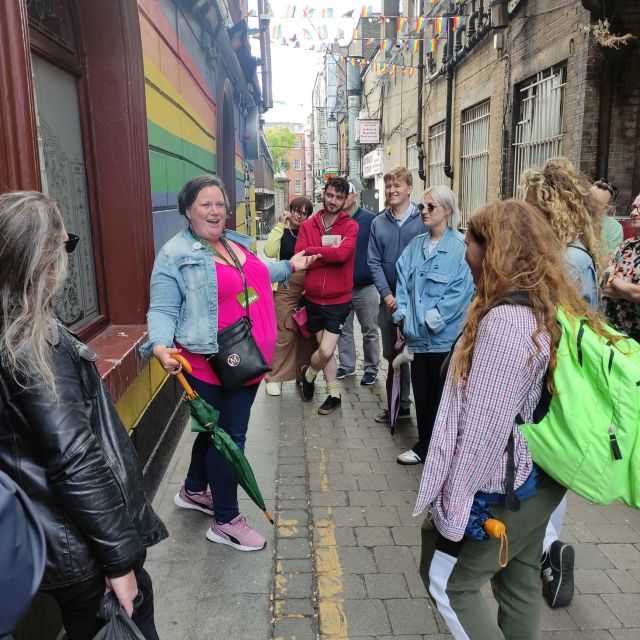
You meet directly outside the Old Storehouse Bar & Restaurant. Look for a guide carrying a green umbrella, a useful detail in a busy part of Dublin and especially welcome in changeable Irish weather.
The tour is in English and lasts two hours. That is long enough to build a connected story without taking over your day. Since the route returns to the same meeting point, you can plan lunch, another city visit, or an evening activity without needing to arrange transport back from a distant neighborhood.
The tour is listed as wheelchair accessible. It is still sensible to wear comfortable shoes, since the experience is entirely on foot and includes several stops along central Dublin streets. Starting times vary, so check availability before you plan the rest of your day.
Helena is particularly well suited to a subject that needs both care and personality. She explains the material clearly, welcomes questions, and adds personal anecdotes. The result should feel more like an informed conversation while walking than a memorized speech delivered at fixed stops.
Liberty Hall and the first Pride protest
Liberty Hall gives the tour an early political anchor. Here, you learn about the first pride protest and the people who helped bring LGBTQ+ visibility into public life.
This stop matters because it shows that Pride did not begin simply as a party or parade. It grew from protest, organizing, and the demand to be seen and treated fairly. The location also helps you connect a national movement with a real Dublin meeting place, rather than thinking of equality as something that appeared suddenly through a law passed years later.
You should listen for the link between public demonstrations and later legal change. A street protest may seem small beside a national reform, but the tour makes clear how repeated acts of visibility can change public conversation.
The General Post Office and revolutionary queer figures
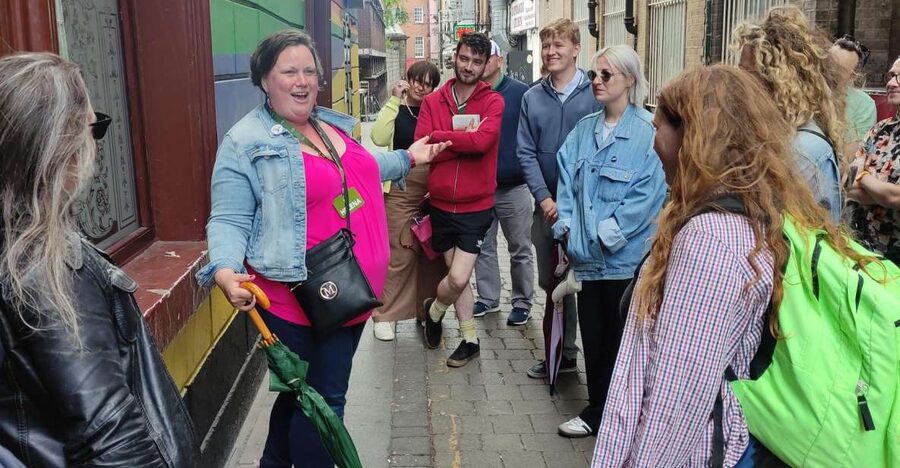
The General Post Office is one of Dublin’s best-known landmarks, usually associated with Ireland’s revolutionary past. Here, the tour adds another layer by discussing queer figures connected with the country’s wider story, including Panti Bliss.
That broader framing is one of the walk’s strengths. You are not asked to forget the usual account of Irish history. Instead, you see how people whose sexuality or gender identity has often been left out can be part of the same national story.
Panti Bliss also brings the tour into more recent public life. Her name is tied to outspoken advocacy and the visibility of queer voices in Ireland. The stop helps show that modern equality campaigns have needed public speakers, performers, organizers, and people willing to challenge comfortable assumptions.
The GPO can be crowded and active, so this is likely a place where you listen from the edge of the main flow rather than linger in silence. That is not a flaw, but you should expect a street-based lesson, not a quiet indoor presentation.
More History Walking Tours in Dublin:
- Deliciously Dublin: The Artisan Donut Walking & History Tour
★ 5.0 · 329 reviews - Dublin: Macabre History Walking Tour
★ 4.9 · 95 reviews - Semi-Private (8people max) 2.5 Hr Dublin Walking Tour
★ 5.0 · 69 reviews - History and Hauntings of Salem Guided Walking Tour
★ 5.0 · 14,564 reviews
Trinity College and the Sexual Liberation Movement
At Trinity College, the focus turns toward the Sexual Liberation Movement. This part of the walk helps explain how attitudes began to shift through education, student activism, and wider social discussion.
Trinity is an effective setting for this subject because it connects ideas with a place known for learning and debate. You can consider how movements for sexual freedom challenged older rules about private life, morality, and respectability.
The tour does not simply present progress as a straight line. The movement toward greater freedom involved disagreement, resistance, and changing ideas about who had the right to speak openly. Helena’s conversational approach is useful here because you can ask questions and connect the historical material to the present day.
I would pay attention to how the tour links the Sexual Liberation Movement with later campaigns for recognition. These are not identical causes, but they form part of a longer effort to give LGBTQ+ people control over their own lives and public identity.
Dr Lydia Foy and legal gender recognition
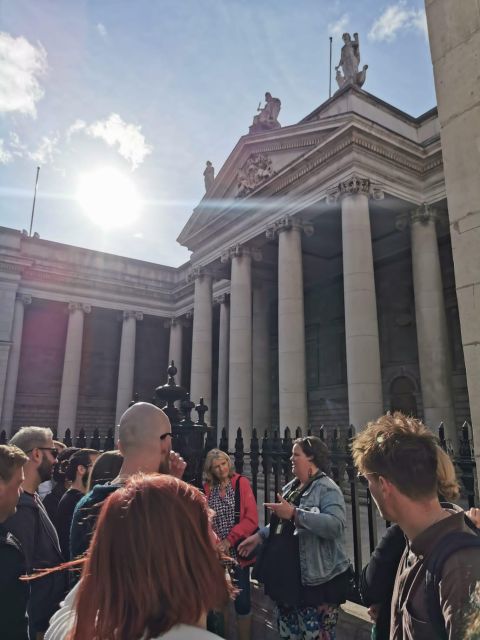
Dr Lydia Foy’s story is one of the most important parts of the tour for anyone interested in law, identity, or civil rights. You learn about her campaign and the Gender Recognition Act, placing the fight for legal recognition within a personal story.
This section gives the walk a useful focus. It is easy to talk about equality in broad terms, but legal recognition affects everyday documents, official identity, and how a person is treated by the state. Dr Foy’s experience shows the patience and persistence such change can require.
The tour also helps you see that marriage equality was not the only major step in Ireland’s LGBTQ+ story. Different groups faced different barriers, and legal progress did not happen all at once.
Expect this part to be more serious than the nightlife stops later in the route. It may be especially valuable if you want to understand the difference between social acceptance and formal legal rights. A community can become more visible while still facing major problems in law and public life.
The Hirschfield Centre and community spaces
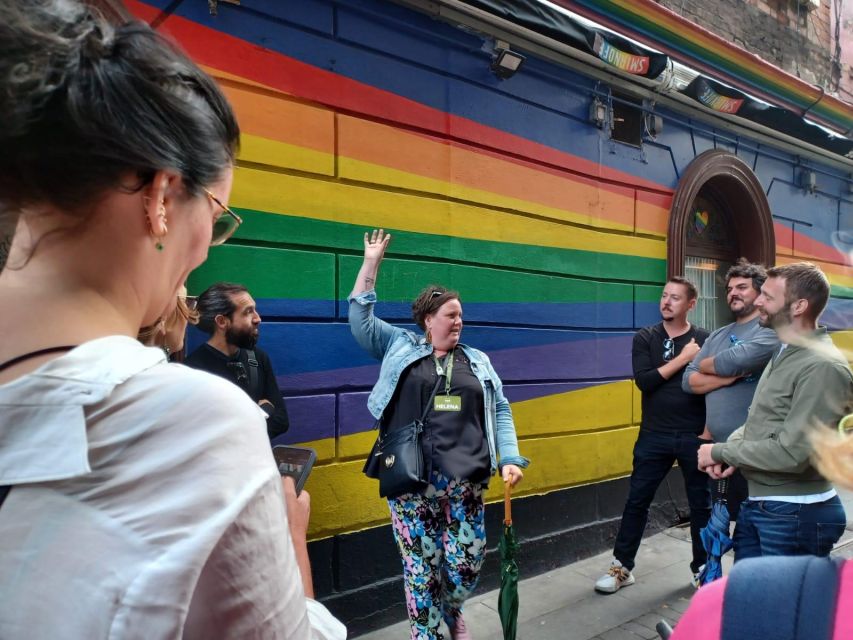
The Hirschfield Centre brings attention to the places created by and for the LGBTQ+ community. A community center can seem less famous than a landmark such as Trinity College, but it may tell you more about daily life and support networks.
This stop helps move the story away from famous individuals alone. Movements need meeting rooms, advice, friendship, events, and places where people can gather without having to explain themselves. The center represents that practical side of change.
You may find this part especially useful because it gives context to the political stories. Protests and campaigns matter, but so do the spaces where people build trust and keep going. The tour’s route includes both types of place, which gives the history a human scale.
Details about the center are best understood as part of the wider story rather than as a stand-alone attraction. You are not visiting a large museum with displays and exhibits. You are walking through Dublin while Helena explains why particular locations mattered.
Diceman’s Corner and The George
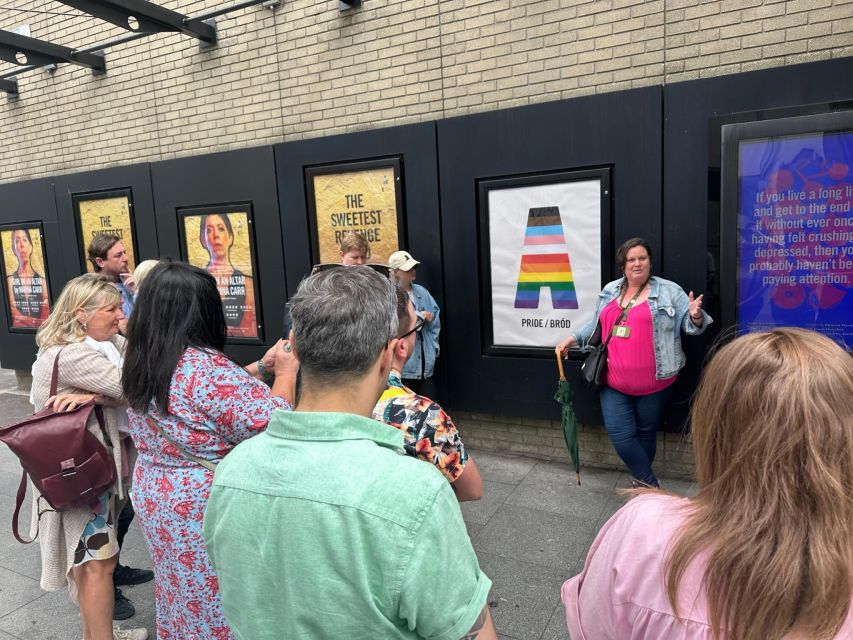
Diceman’s Corner adds another social and cultural stop. Along with The George, it shows how nightlife and meeting places helped create visibility and community.
The George is described as Ireland’s most iconic LGBTQ venue. Seeing it in the context of the tour gives the building more meaning than simply noting it as a nightlife address. It becomes part of the story of where people gathered, found connection, and made queer life visible in public.
These stops should bring a lighter change of pace after the legal and political sections. They also remind you that equality is not only about court cases or legislation. It is about being able to socialize, celebrate, and build relationships openly.
Do not expect an extended evening at The George as part of the activity. The venue is a stop on a walking tour, not a club visit or pub crawl. If the location interests you, you can treat the tour as a useful introduction and decide later if you want to return on your own.
What the guide’s style adds
The strongest part of this experience is likely to be Helena herself. She is described as welcoming, witty, energetic, and deeply engaged with the subject. Those qualities matter because the tour covers painful discrimination as well as political victories.
Her personal anecdotes add a human touch, while her willingness to answer questions keeps the walk from feeling rigid. One particularly useful detail is that she chats with the group between stops, so the time spent moving through Dublin is part of the experience rather than dead space.
The tone also seems suitable for different ages. It has been enjoyed by a parent and teenage son, which suggests that the material can be presented in a way that is accessible without being shallow. Still, the subject includes abuse, exclusion, and difficult legal struggles, so parents should decide if that focus suits their teenager.
I would choose this tour if you value a guide who can be warm and funny while treating the history seriously. A guide who only lists dates and names would make this route much less effective.
Is $27 a fair price?
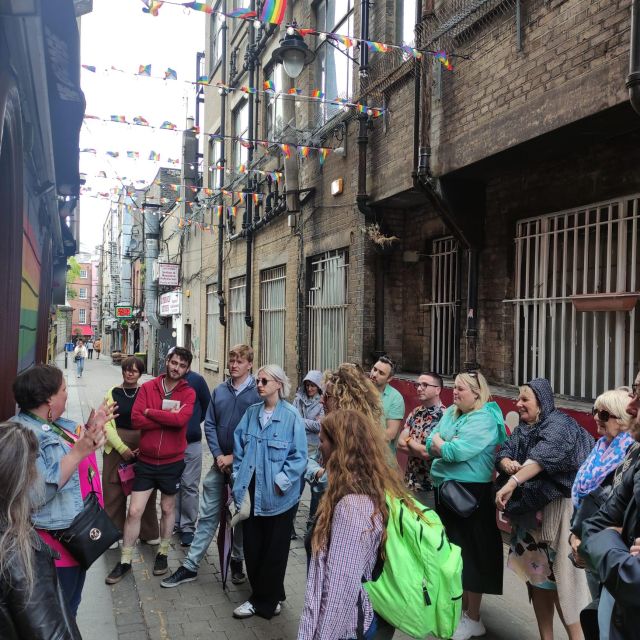
At $27 per person, the cost is reasonable for a two-hour guided walk in central Dublin, especially if you want a subject that ordinary city sightseeing tours rarely cover. You are paying for a specialist route, a live English-speaking guide, and the work of connecting scattered places into one clear story.
The value depends on your interests. If you want only grand architecture, pub culture, or general Irish history, a standard city tour may suit you better. If you want to understand LGBTQ+ activism, legal change, and community life, this fills a gap that many mainstream tours leave open.
There are no listed admissions, meals, or transport included. That keeps the price straightforward, but it also means you should think of the activity as a guided walk rather than a package with added attractions.
The booking terms are flexible. You can reserve now and pay later, and cancellation is free up to 24 hours before the start for a full refund. That is useful if your Dublin schedule depends on weather or changing plans.
Who should book this Dublin walk?
I would recommend it to anyone who wants a fuller picture of Ireland’s social history, not just its famous buildings. It suits LGBTQ+ visitors, allies, students of civil rights, and curious people who want to understand how public attitudes and law changed.
It is also a good choice for repeat visitors. You may have already seen the GPO, Trinity College, and central Dublin streets, but this route gives those places a new meaning.
Families with older children or teenagers may find it worthwhile, especially if they are interested in identity, equality, or modern Irish history. The guide’s humor and personal approach can make difficult subjects easier to discuss, but this is not a light entertainment tour.
You should probably skip it if you want a fast list of Dublin highlights or a tour centered on castles, churches, and architecture. The city is the setting, but queer history is the main event.
Practical advice before you go
Wear comfortable shoes. The route lasts two hours and includes several outdoor stops, so you should be ready to walk and stand while listening.
Arrive at the Old Storehouse Bar & Restaurant and look for the green umbrella. Since the tour ends back at the meeting point, you can leave luggage plans and onward transport simple.
Bring questions. The tour is designed around stories and discussion, and Helena’s approachable style makes it a good setting for asking about the people, movements, and legal changes covered along the way.
You should also allow a little emotional space. The route includes inspiring stories of equality and community, but it also deals with exclusion and abuse. That contrast is part of what makes the walk worthwhile.
Should you book it?
Book this tour if you want Dublin history with a clear human focus. The route links Liberty Hall, the GPO, Trinity College, the Hirschfield Centre, Diceman’s Corner, and The George, while Helena connects those places to Panti Bliss, Dr Lydia Foy, pride protests, the Sexual Liberation Movement, and the fight for equal rights.
At $27, it offers good value for a specialist two-hour walk, particularly if you have already seen Dublin’s standard sights. Choose it for thoughtful storytelling, lively conversation, and a more complete account of how Ireland changed. Skip it only if LGBTQ+ history is not a priority or if you want a general sightseeing tour instead.
FAQ
How long does the LGBT Pride Walking Tour last?
The tour lasts two hours.
Where does the tour start?
Meet your guide directly outside the Old Storehouse Bar & Restaurant. Look for someone carrying a green umbrella.
Where does the tour end?
The tour ends back at the meeting point.
What language is the tour in?
The tour is conducted in English with a live guide.
Is the tour wheelchair accessible?
Yes, the activity is listed as wheelchair accessible.
What should I bring?
Bring comfortable shoes for the walking route.
Latest history tours reviewed in Dublin
- Dublin: Macabre History Walking Tour★ 4.9 · 95 reviews
- Dublin: Jeanie Johnston Tall Ship Irish Famine History Tour★ 4.8 · 431 reviews
- Wicklow Historic Gaol: 1-Hour Tour★ 4.4 · 56 reviews
- Semi-Private (8people max) 2.5 Hr Dublin Walking Tour★ 5.0 · 69 reviews
- Dublin Private Highlights & History of 1916 Easter Rising Tour★ 5.0 · 154 reviews
- The History of Dublin With Locals: 1916 Easter Rising PRIVATE Tour★ 5.0 · 73 reviews
- Dublin Historical Centre Private Food Tour with 8 Food Tastings★ 5.0 · 152 reviews
- Dublin’s Haunted History Walking Tour★ 4.3 · 345 reviews
Dublin History Tours, compared.

Dublin Historical Centre Food Tour with 8 Food Tastings & Drinks
Read our review →
Celtic Boyne Valley & Ancient Sites Day Tour From Dublin
Read our review →
Dublin: Jeanie Johnston Tall Ship Irish Famine History Tour
Read our review →

Deliciously Dublin: The Artisan Donut Walking & History Tour
Read our review →
Dublin Private Highlights & History of 1916 Easter Rising Tour
Read our review →
Browse the lists this tour appears in