
Review · INDONESIA
Crafting Heritage Batik Painting Workshops
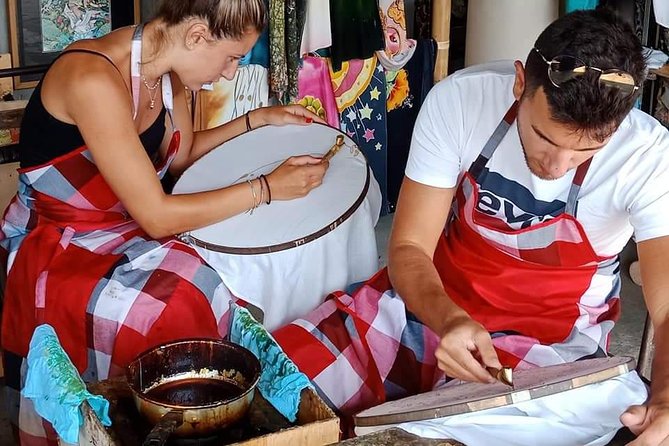
Batik painting turns a quiet afternoon near Ubud into something you can carry home. At Five Arts Studio, you sketch a design, draw the lines with hot wax, then add dye while the wax protects selected areas. When the wax comes away, your original design appears in the cloth.
I like the family compound setting, which gives the class a more personal feel than a large commercial workshop. I also like the patient guidance. Dika, Agong, and the other tutors help beginners without taking over, so you can make your own choices. The catch is that batik takes patience. Wax can land where you did not intend, and the process is harder than it first looks.
Key points at a glance
- A hands-on three-hour class: You make the fabric art yourself, from the first sketch through dyeing.
- A working family studio: Five Arts Studio operates in a Balinese family compound near Ubud.
- Helpful but flexible teaching: You can work on your own or ask tutors such as Dika and Agong for close help.
- Good for beginners: You do not need to consider yourself artistic, and children have been helped through the process.
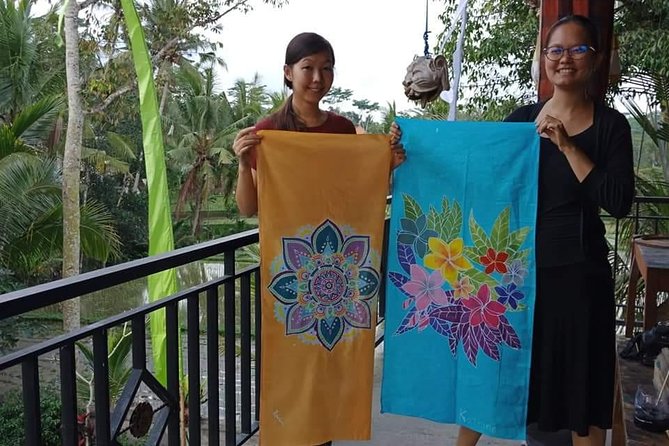
- A useful Bali souvenir: Your finished batik is personal, light to pack, and tied to an experience rather than a shop shelf.
- Simple refreshments included: Tea, coffee, snacks, and mineral water are part of the session.
Why this batik class feels different from a souvenir stop
Batik is not simply painting cloth. The wax acts as a barrier, keeping dye away from selected parts of the fabric. You build the design in stages, and the final result depends on how carefully you draw, place the wax, and blend the colors.
That process makes the class a good match for anyone who wants to understand Indonesian craft by doing it. You are not just watching a demonstration or buying a finished textile. You are learning why the lines matter and why small flaws are part of handmade work.
The studio sits on Jalan Raya Keliki in Keliki, in the Tegallalang area outside Ubud. The setting is casual and connected to the artist’s family home. You may see the space as both a classroom and a working studio, which gives the visit a more local character than a polished art attraction.
The tone is relaxed. You can bring your own idea or choose from suggested motifs prepared by the studio. Designs range from simple patterns to more detailed choices, so you can pick a starting point that matches your patience and confidence.
More Workshops and Classes in the world:
- Dubai Evening Heritage Safari by Vintage G Class Al Marmoom Oasis
★ 5.0 · 1,500 reviews - Undiscovered Charleston: Half Day Food, Wine & History Tour with Cooking Class
★ 5.0 · 948 reviews - Amsterdam: 3-Course Meal in Historic 1st Class Waiting Rooms
★ 4.5 · 292 reviews
Arriving at Five Arts Studio near Ubud
The meeting point is Five Arts Studio, Jl. Raya Keliki, Keliki, Kecamatan Tegallalang, Gianyar, Bali 80561. The activity begins and ends there, so you should plan your transport to the studio and not expect a separate drop-off at your hotel.
The experience lasts about three hours. That is enough time to make the class feel substantial without taking up your whole day. You can schedule it as a creative break between Ubud visits, though the exact pace depends on your design and how much help you want.
The studio allows up to 30 participants. That maximum is fairly broad, so the atmosphere may vary from a small class to a busier session. Some people have had one-on-one instruction when attendance was low, while families and mixed groups have also worked comfortably in the space.
You receive confirmation when booking, and the ticket is mobile. Public transportation is nearby, and service animals are allowed. The stated fitness requirement is strong physical fitness, though the activity itself is primarily a seated or stationary art class. If mobility is a concern, contact the provider before booking rather than relying on the general listing.
From sketch to hot wax
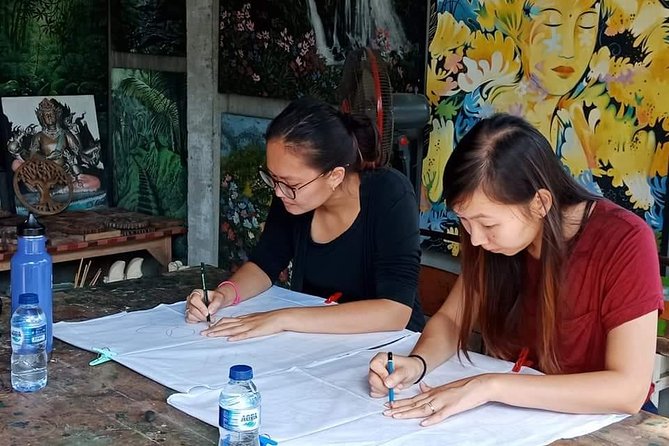
The first stage is choosing or creating your design. You may use one of the studio’s hand-drawn suggestions or bring your own motif. This choice matters more than it might seem. A simple design lets you spend more time learning the technique, while a detailed pattern can give you a more ambitious final piece.
Next, you transfer the design to the fabric. You then use hot wax to draw the lines that will resist the dye. This is the part that demands the steadiest hand. Wax can drip or spread, and it is not always easy to correct a misplaced line.
The tutors guide you through the process step by step. Dika and Agong are two names associated with the teaching, and the instruction is designed for first-time painters. You can ask for close assistance or take a more independent approach once you understand the basic method.
Do not expect instant precision. One of the useful lessons here is accepting small surprises. If you try to make every line perfect, you may spend the session tense and frustrated. A relaxed approach works better, especially because the final piece often looks more interesting once the colors and wax effects come together.
Adding color without losing the design
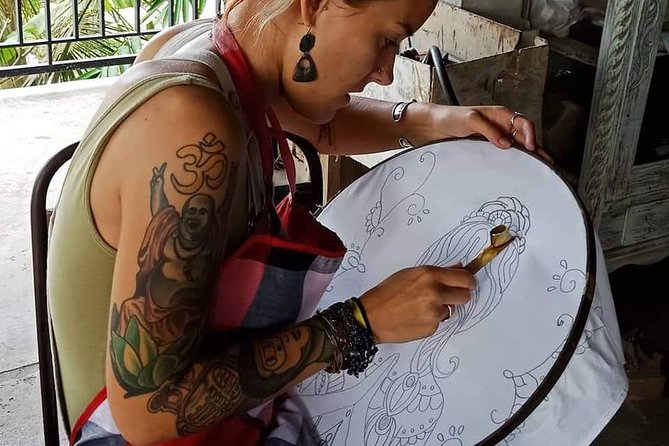
After the wax lines are in place, you apply colorful dyes to selected sections of the cloth. The wax keeps the dye from reaching certain areas, allowing the original fabric color to remain as part of the image.
Color blending gives you room to make the work your own. You can follow a suggested design closely or change the tones and add your own touches. The class supplies the materials, so you do not need to bring paints, brushes, fabric, wax, or other equipment.
The process is easier to understand once you see the relationship between wax and dye. It also explains why batik takes time when made by hand. Every line has a job, and each color needs to be placed with some care.
The studio team helps you recover from mistakes rather than treating them as failures. That is important for children and for adults who do not think of themselves as artistic. One family completed the activity with help for a six-year-old, and the teaching approach appears flexible enough for different ages and abilities.
More History Tours in the world:
- New York City: American Museum of Natural History Ticket
★ 4.5 · 15,447 reviews - History and Hauntings of Salem Guided Walking Tour
★ 5.0 · 14,564 reviews - Colosseum: Underground and Ancient Rome Tour
★ 4.7 · 12,691 reviews - Lisbon: History, Stories and Lifestyle Walking Tour
★ 4.8 · 10,902 reviews
What the family compound adds

The location is part of the appeal. You are working in a family home compound used as an active art studio, not in an anonymous classroom. That gives you a glimpse of how a Balinese artist lives and works, while keeping the focus on the craft.
The setting is described as rustic, peaceful, and comfortable. That combination suits batik. You need enough calm to concentrate, but the space does not feel formal or intimidating. The friendly team provides guidance, tea, coffee, snacks, and mineral water, which makes the three-hour session easier to settle into.
The class can also feel social. You may work alongside local artists, children, expatriates, or other visitors, depending on the group. At the same time, the studio gives you space to focus on your own cloth rather than forcing everyone to move at exactly the same pace.
This is not a full cultural tour of Bali, and the historical introduction is brief. You do receive background on batik and its place in Indonesian culture, but the main value is practical. You learn through your hands.
Is $29 good value?
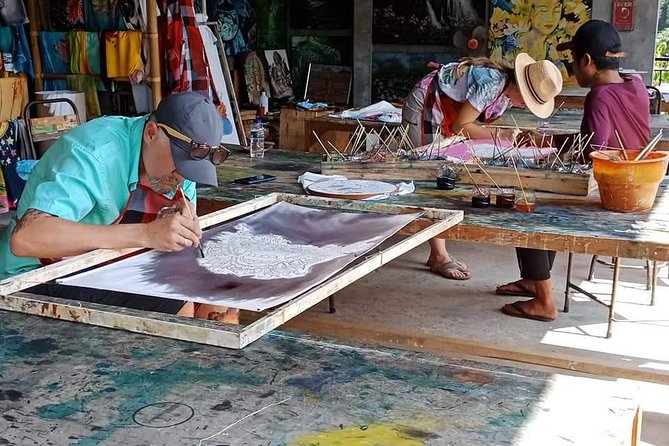
At $29 per person, the class offers solid value for a three-hour activity. The price includes instruction, the fabric and art materials, and refreshments. Most important, it includes a finished piece you create yourself, rather than only a demonstration or a small sample.
A handmade batik souvenir bought in a shop may be more polished, but it will not carry the same memory. Your piece may have uneven lines or a color choice you would not find in a standard design. That is part of the point.
The value is strongest if you enjoy making things. If you only want a quick photo or a ready-made textile, the class may feel slow. The wax stage calls for patience, and you should not book it expecting a quick craft project with an instant result.
Lunch is not included, though local food can be ordered. Alcohol is available for purchase. These details are minor, but they help you plan if the class falls across the middle of the day.
Who should book this experience
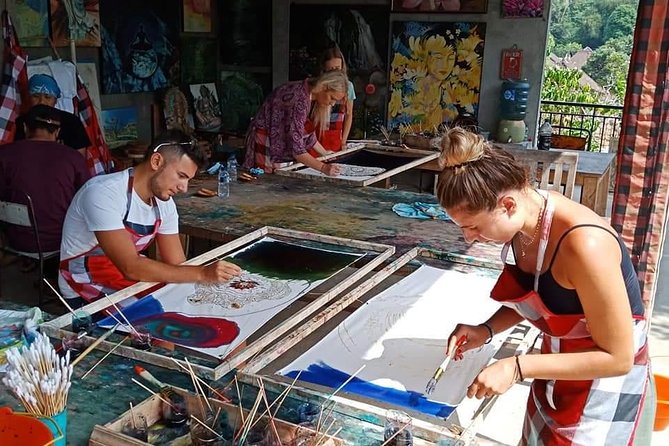
I would recommend the class to first-time artists, families, couples, and solo visitors who want a quieter activity near Ubud. You do not need formal art training. The tutors explain the steps and help you choose a manageable design.
It is also a good pick for anyone who likes souvenirs with a story. You leave with something you worked on, and the process helps you appreciate the time involved in finished batik textiles.
Children can take part, but adult help may still be useful, especially around hot wax. The activity is not aimed only at adults, and the staff can guide younger participants, but parents should expect to stay engaged.
You may want to skip it if you dislike careful, repetitive work or want a highly structured sightseeing tour. The class is creative rather than fast-moving. Its pleasure comes from slowing down and letting the artwork develop.
Practical tips for a smoother class
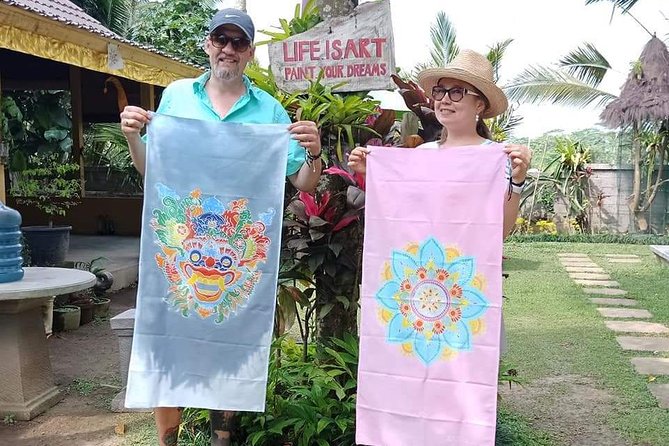
Choose a simple motif if this is your first attempt. You can always add personal details, but a crowded design leaves less room for learning the wax technique.
Ask for help early. Tutors such as Dika and Agong are there to guide you, and the best results come from using them as a resource while still making your own decisions.
Wear something suitable for an art class. The supplied information does not state a dress code, but wax and dye are part of the work, so practical clothing makes sense.
Bring your booking confirmation on your phone. The ticket is mobile, and the meeting point is the studio itself.
Allow extra patience for the final result. The finished fabric may need to go through the last stages of removing wax and revealing the pattern. The supplied information confirms that you take home your own creation, but it does not specify a precise finishing or drying time, so ask the studio team if you have a tight departure schedule.
Cancellation is free if you cancel at least 24 hours before the local start time. Cancellations or changes within 24 hours are not refunded.
Should you book Five Arts Studio?
Book it if you want a personal, hands-on introduction to Indonesian batik and like the idea of making a souvenir rather than buying one. The family-compound setting, supportive teaching, included materials, and three-hour format make it a strong use of an afternoon near Ubud.
Go in with realistic expectations. Your first piece may not look perfect, and the wax work can be surprisingly difficult. That is also where the class earns its value. You learn a traditional technique, work beside practicing artists, and leave with a colorful reminder of your time in Bali.
FAQ
Where does the batik workshop take place?
The class takes place at Five Arts Studio, Jl. Raya Keliki, Keliki, Kecamatan Tegallalang, Gianyar, Bali 80561, Indonesia.
How long does the experience last?
The workshop lasts approximately three hours.
What does the $29 price include?
The price includes the batik class, art materials, instruction, snacks, coffee or tea, and mineral water.
Do I take home the batik I make?
Yes. You create your own original fabric artwork and take it home as a souvenir.
Do I need previous art experience?
No. The activity is suitable for beginners as well as people who already enjoy art. The tutors guide you through each stage.
Can children join the class?
Yes. The teaching team has helped children through the process, including a six-year-old. Adult supervision and support may still be useful around the hot wax.
Is lunch included?
No. Lunch is not included, but local food can be ordered at the studio.
What is the cancellation policy?
You can cancel for a full refund up to 24 hours before the experience start time. Cancellations or changes made less than 24 hours in advance are not refunded.
Latest history tours reviewed in the world
- From Athens: Ancient Olympia Full-Day Private Tour★ 4.8 · 22 reviews
- From Athens: Explore Ancient Corinth & Charming Nafplion★ 4.6 · 102 reviews
- From Athens: Explore Ancient Greece 4-Day Tour★ 4.7 · 73 reviews
- From Albufeira: Wine Tasting & Historic Silves Tour★ 4.9 · 421 reviews
- From Albufeira: Historical Algarve Region Tour★ 4.7 · 585 reviews
- From Alexandria: Full-Day Guided Tour of Historical Sights★ 4.5 · 54 reviews
- Franklin: Ghost Tour in Historic Franklin★ 4.8 · 65 reviews
- Freiburg: Exciting City Tour with sightseeing and history★ 4.3 · 103 reviews
Indonesia History Tours, compared.

Bali: Tanah Lot UNESCO World Heritage Sites Full-Day Tour
Read our review →

Jakarta Heritage of Old Batavia Private City Tour (Historical)
Read our review →Browse the lists this tour appears in